
Branded Search Volume and AI Visibility: The Connection Explained
Discover how branded search volume directly correlates with AI visibility. Learn to measure brand signals in LLMs and optimize for AI-driven discovery with acti...
8 min read

Discover unanswered prompts in AI search and turn them into content opportunities. Learn how to identify gaps where competitors are cited but you’re not.
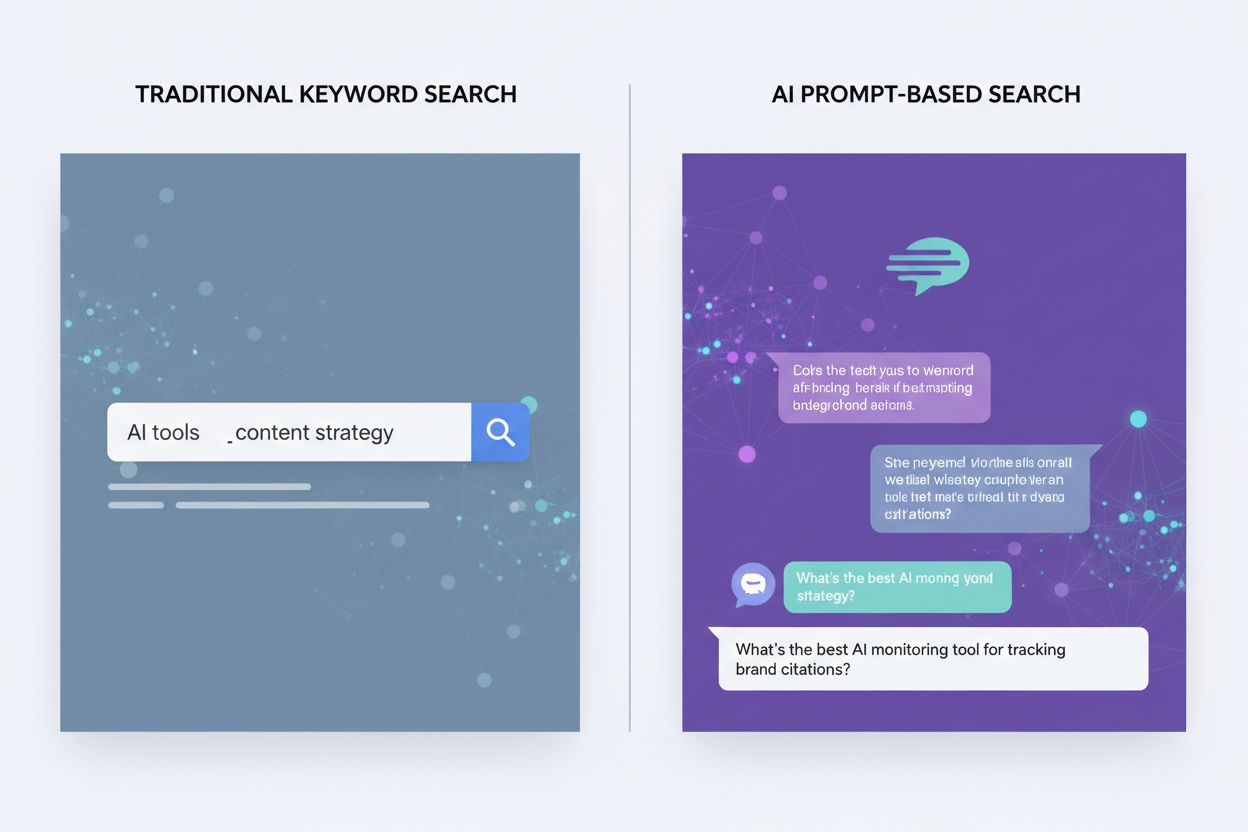
The evolution from traditional SEO to AI-powered search represents a fundamental shift in how users discover information and how brands should optimize their content. Where keyword-focused SEO emphasized short, fragmented phrases like “best AI tools” or “content strategy tips,” AI search engines operate on full conversational prompts—complete questions that mirror how humans naturally speak. Users now ask ChatGPT, Perplexity, and Google’s AI Overviews nuanced questions like “What’s the difference between AI monitoring and traditional analytics, and which should my marketing team prioritize?” rather than typing isolated keywords into a search bar. This conversational shift fundamentally changes the content opportunities available to brands. Unanswered prompts represent untapped visibility—questions that AI engines receive regularly but lack authoritative, comprehensive answers for. Brands that identify and answer these prompts first gain a significant competitive advantage in the emerging AI-driven discovery landscape.
While content gap analysis has long been a cornerstone of SEO strategy, the rise of AI search introduces a critical distinction: prompt gaps and content gaps are not synonymous, and understanding the difference is essential for modern content strategy. A content gap refers to topics your website doesn’t cover that competitors do—for example, if your competitors have published guides on “AI monitoring best practices” but you haven’t. A prompt gap, conversely, represents questions that AI engines receive and process regularly but cannot find authoritative answers for in their training data or indexed sources. Not all content gaps create prompt gaps; you might have comprehensive coverage of a topic that simply doesn’t generate significant user queries. Conversely, prompt gaps often exist for emerging topics where limited content exists across the web, yet users are actively asking AI engines about them. Prompt gaps are more valuable because they represent active, unmet user intent—and fewer competitors are likely targeting them.
| Aspect | Content Gap | Prompt Gap |
|---|---|---|
| Definition | Topics competitors cover but you don’t | Questions AI engines receive without authoritative answers |
| Discovery Method | Competitor analysis, keyword research | AI monitoring, prompt tracking |
| User Intent | Potential interest (may not be actively searched) | Active, demonstrated intent |
| Competition Level | Often high (established topics) | Often lower (emerging questions) |
| Time to Rank | Weeks to months | Days to weeks (AI prioritizes fresh, authoritative content) |
| Value | Medium to high | High to very high |
Unanswered prompts represent some of the most valuable content opportunities in the AI-driven search landscape, yet most brands haven’t begun systematically targeting them. The competitive advantage is stark: while thousands of brands compete for visibility on established keywords, far fewer are monitoring which prompts lack authoritative answers in AI-generated responses. AI engines like ChatGPT and Perplexity are explicitly designed to prioritize authoritative, comprehensive, and well-sourced answers—meaning brands that create genuinely valuable content addressing unanswered prompts have a realistic chance of being cited prominently. This creates a first-mover advantage that traditional SEO rarely offers; the brand that publishes the definitive answer to an emerging prompt often maintains citation dominance even as competitors eventually create similar content. Additionally, unanswered prompts frequently indicate emerging trends and shifting user interests before they become saturated with content. Being cited in AI-generated answers also builds brand authority and trust in ways that traditional search visibility cannot match—when an AI engine cites your brand as an authoritative source, it’s a powerful endorsement to users actively seeking answers.
Identifying unanswered prompts requires a multi-layered approach that combines AI monitoring tools, manual research, and data analysis. Here’s how to systematically uncover these opportunities:
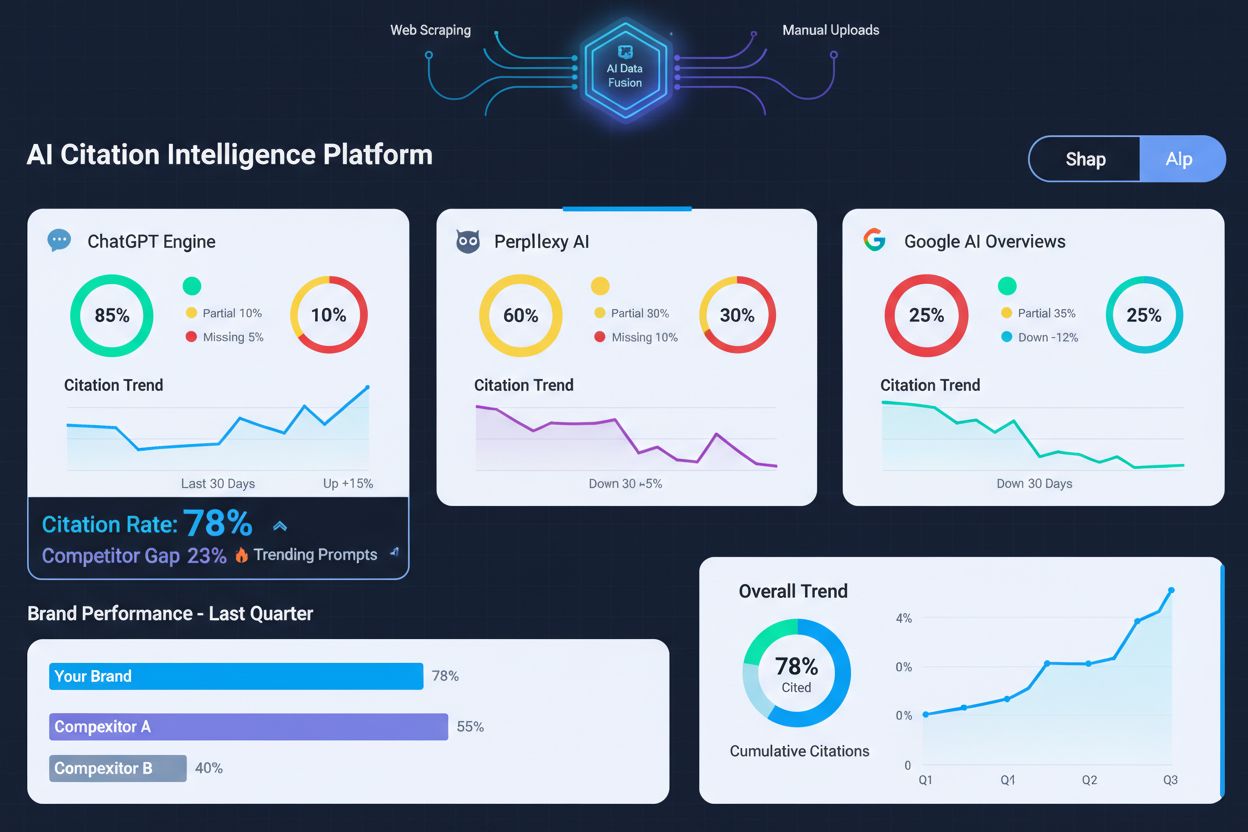
AI monitoring platforms have become indispensable tools for identifying and capitalizing on prompt gaps, fundamentally changing how brands approach content strategy in the AI era. These platforms track which brands and sources appear in AI-generated answers across multiple engines, revealing citation patterns that traditional analytics cannot capture. Rather than measuring clicks and impressions, AI monitoring shows you exactly where your content is being read and cited by AI engines—and critically, where it’s not being cited despite being relevant. This visibility enables brands to identify prompt gaps with precision: if your competitor appears in AI answers for a prompt related to your expertise but you don’t, that’s a clear opportunity. AI monitoring platforms also reveal gaps between content creation and citation—situations where you’ve published comprehensive content on a topic, but AI engines aren’t citing you, indicating a need for optimization or repositioning. By tracking citation patterns over time, these tools help brands understand which content strategies actually drive AI visibility, enabling continuous refinement. Most importantly, AI monitoring provides the data foundation necessary to prioritize which prompts to target, ensuring your content team focuses on opportunities with the highest potential impact rather than guessing which topics matter.
Creating content that successfully answers unanswered prompts requires a fundamentally different approach than traditional SEO content optimization. Depth and comprehensiveness matter far more than volume; AI engines are designed to identify and cite sources that provide thorough, authoritative answers rather than rewarding keyword density or content length alone. The most citation-worthy content combines multiple elements: original research or data (case studies, surveys, proprietary analysis), expert perspectives and insights, clear structural organization with headers and subheaders, and transparent sourcing that allows AI engines to verify claims. E-E-A-T signals—Experience, Expertise, Authoritativeness, and Trustworthiness—are critical for AI citation; this means establishing author credentials, demonstrating deep industry knowledge, and building topical authority through interconnected content. Internal linking strategy becomes increasingly important, as AI engines use link patterns to understand topical relationships and authority clusters. Content format matters significantly: AI engines favor well-structured, scannable content with clear hierarchies, bullet points, tables, and visual elements that make information easily extractable. Finally, update frequency signals freshness and ongoing authority; content that’s regularly updated with new data, recent examples, and current context is more likely to be cited than static, aging content. Brands should treat prompt-answering content as living documents that evolve with their industry.
Understanding prompt opportunities becomes clearer through concrete examples that illustrate how brands can dominate emerging questions. Consider the prompt “What’s the best AI monitoring tool for tracking brand citations?”—a question with growing search volume as more marketers recognize the importance of AI visibility, yet few comprehensive, unbiased comparisons exist. A brand that publishes an authoritative, data-driven comparison of AI monitoring platforms (including honest assessments of strengths and weaknesses) positions itself as a trusted resource that AI engines will cite. Another example: “How do I optimize my content to appear in Google AI Overviews?”—a prompt with massive emerging demand as brands scramble to understand AI visibility, but limited authoritative guidance. The brand that publishes the definitive guide to AI Overview optimization, backed by testing and real examples, will likely dominate citations for this prompt. Similarly, “What’s the difference between GEO (Generative Engine Optimization) and traditional SEO?” represents an emerging prompt where confusion is high and authoritative answers are scarce. A brand that clearly explains this distinction with practical examples gains authority in the emerging GEO space. These examples share a common pattern: they address emerging questions with high user intent, limited competition, and clear demand. Brands that identify and answer similar prompts in their industry early gain lasting competitive advantage and establish themselves as thought leaders before the space becomes saturated.
Measuring the success of a prompt-focused content strategy requires different metrics than traditional SEO, though the principles of data-driven optimization remain the same. AI monitoring tools should be your primary measurement mechanism, tracking how many times your brand appears in AI-generated answers for target prompts, across which engines, and in what context (cited as primary source, supporting evidence, etc.). Beyond citation counts, monitor referral traffic from AI engines using UTM parameters and analytics platforms; while AI-driven traffic differs from traditional search traffic, it represents real user interest and brand awareness. Brand mention tracking within AI-generated content reveals not just citations but also sentiment and context—are you being cited as an authoritative source or mentioned in passing? Track keyword rankings for prompt-related queries in traditional search as well, since prompt optimization often improves traditional SEO performance. Establish baseline metrics before launching your prompt-focused content strategy: document current citation rates, traffic sources, and brand mentions so you can measure improvement. Correlate content creation dates with citation increases to understand which content types and topics drive the most AI visibility. Use this data to refine your strategy iteratively—if certain content types consistently drive citations while others don’t, adjust your approach accordingly. ROI should be measured holistically, including direct traffic, brand awareness, authority building, and competitive positioning, not just immediate conversions.
Brands pursuing prompt-based content strategies often make predictable mistakes that undermine their efforts and waste resources. The most common error is creating shallow, surface-level content that technically addresses a prompt but lacks the depth and authority that AI engines prioritize; publishing a 500-word overview of a complex topic won’t compete with comprehensive, well-researched content. Many brands also ignore E-E-A-T signals, publishing content without establishing author credentials, industry expertise, or trustworthiness markers that AI engines use to evaluate source quality. Another critical mistake is targeting prompts with minimal search volume or user intent; while identifying unanswered prompts is valuable, those prompts must represent actual user demand, not theoretical questions. Brands frequently fail to update content as AI and their industry evolve, treating prompt-answering content as a one-time project rather than an ongoing commitment; AI engines favor fresh, current content, and outdated information damages credibility. Finally, many brands focus exclusively on branded prompts (questions that mention their company name) while ignoring broader, higher-volume prompts where they could establish authority; this limits reach and competitive advantage. The most successful brands avoid these mistakes by committing to comprehensive, authoritative content creation, maintaining rigorous E-E-A-T standards, targeting prompts with demonstrated demand, and treating content as a continuous optimization process rather than a one-time effort.
The trajectory of AI search is clear: AI-powered discovery is rapidly becoming the primary method through which users find information, with implications that extend far beyond current search marketing practices. Within the next 2-3 years, prompt-based content strategy will transition from a competitive advantage to table stakes—a baseline expectation for brands serious about visibility and authority. This shift doesn’t eliminate traditional SEO; rather, it integrates with it, creating a more complex but ultimately more rewarding landscape for brands that master both. Continuous monitoring and optimization will become non-negotiable, as AI engines evolve their citation patterns, new competitors emerge, and user prompts shift with emerging trends. Brands that establish authority in answering prompts now—before the space becomes saturated—will maintain lasting competitive advantages even as more competitors eventually enter the space. The integration of prompt-based strategy with traditional SEO, paid search, and broader content marketing creates a holistic visibility approach where brands appear across multiple discovery channels. The brands that will dominate the next era of search are those that recognize prompt gaps as strategic opportunities, invest in authoritative content creation, implement continuous AI monitoring, and adapt their strategies as the landscape evolves. The time to begin is now, before prompt-based visibility becomes as competitive as traditional SEO keywords.
Keywords are short, fragmented phrases users type into search engines (e.g., 'AI tools'). Prompts are full conversational questions users ask AI engines (e.g., 'What's the best AI monitoring tool for tracking brand citations?'). This distinction matters because AI engines prioritize comprehensive answers to complete questions, not keyword density.
Most brands benefit from weekly monitoring to track citation patterns and identify emerging opportunities. However, the frequency depends on your industry velocity and content publishing cadence. Quarterly deep dives into prompt strategy are also valuable for identifying new gaps and refining your approach.
You can't optimize directly for AI engines, but you can optimize for the behaviors they reward: high-quality, comprehensive content; clear E-E-A-T signals; strong topical authority; and reliable sourcing. AI visibility is an outcome of creating genuinely valuable content that answers real user questions, not something you can manipulate through technical tricks.
AI engines favor well-structured, scannable content with clear hierarchies, headers, subheaders, bullet points, and tables. Include original research or data, expert perspectives, transparent sourcing, and author credentials. Comprehensive answers that address multiple angles of a question are more likely to be cited than surface-level content.
You may see initial citations within days to weeks of publishing comprehensive content, especially for emerging prompts with limited competition. However, building sustained authority typically takes 4-8 weeks as AI engines crawl, index, and evaluate your content. Consistent updates and ongoing optimization accelerate results.
Start with ChatGPT (which drives the majority of AI referral traffic), Google AI Overviews (critical for traditional search integration), and Perplexity (which emphasizes citations). Expand to other engines like Gemini and emerging platforms as they gain market share. Your priority should reflect where your audience actually spends time.
AmICited.com monitors where your brand appears in AI-generated answers across multiple engines and shows you exactly where competitors are cited but you're not. This visibility reveals prompt gaps with precision, enabling you to prioritize content creation efforts on opportunities with the highest potential impact.
Prompt optimization complements traditional SEO rather than replacing it. Content that ranks well in traditional search often performs well in AI answers, and vice versa. The strongest strategy integrates both approaches: optimize for user intent, create comprehensive content, build topical authority, and monitor visibility across both traditional and AI search channels.
Discover which prompts your competitors are answering that you're missing. Monitor your AI citations across ChatGPT, Perplexity, and Google AI Overviews with AmICited.
Discover how branded search volume directly correlates with AI visibility. Learn to measure brand signals in LLMs and optimize for AI-driven discovery with acti...
Master AI search optimization with proven tactics to outrank competitors in ChatGPT, Perplexity, and Google AI Overviews. Learn brand visibility strategies that...
Comprehensive review of Semrush AI Visibility Toolkit. Learn about features, pricing, pros and cons, and how it compares to alternatives like AmICited and Profo...