

Expert Quote Integration
Learn how expert quote integration enhances content credibility for AI citations. Discover EEAT signals, implementation best practices, and how to measure impac...
8 min read

Learn how expert quotes improve AI citation rates by 41%. Discover quotation addition strategies for ChatGPT, Perplexity, and Google AI Overviews to boost your GEO performance.
Expert quotes have emerged as one of the most effective tactics for improving AI citation rates, with research from Princeton and Georgia Tech demonstrating a +41% visibility improvement when quotation addition is strategically implemented. This finding has positioned quotation addition GEO as a critical component of modern content strategy, particularly as AI engines like ChatGPT, Perplexity, and Google AI Overviews increasingly rely on cited sources to validate information. The data is clear: content featuring expert quotes doesn’t just rank better—it gets cited more frequently by AI systems, making it an essential tactic for any organization seeking to establish authority in their field.
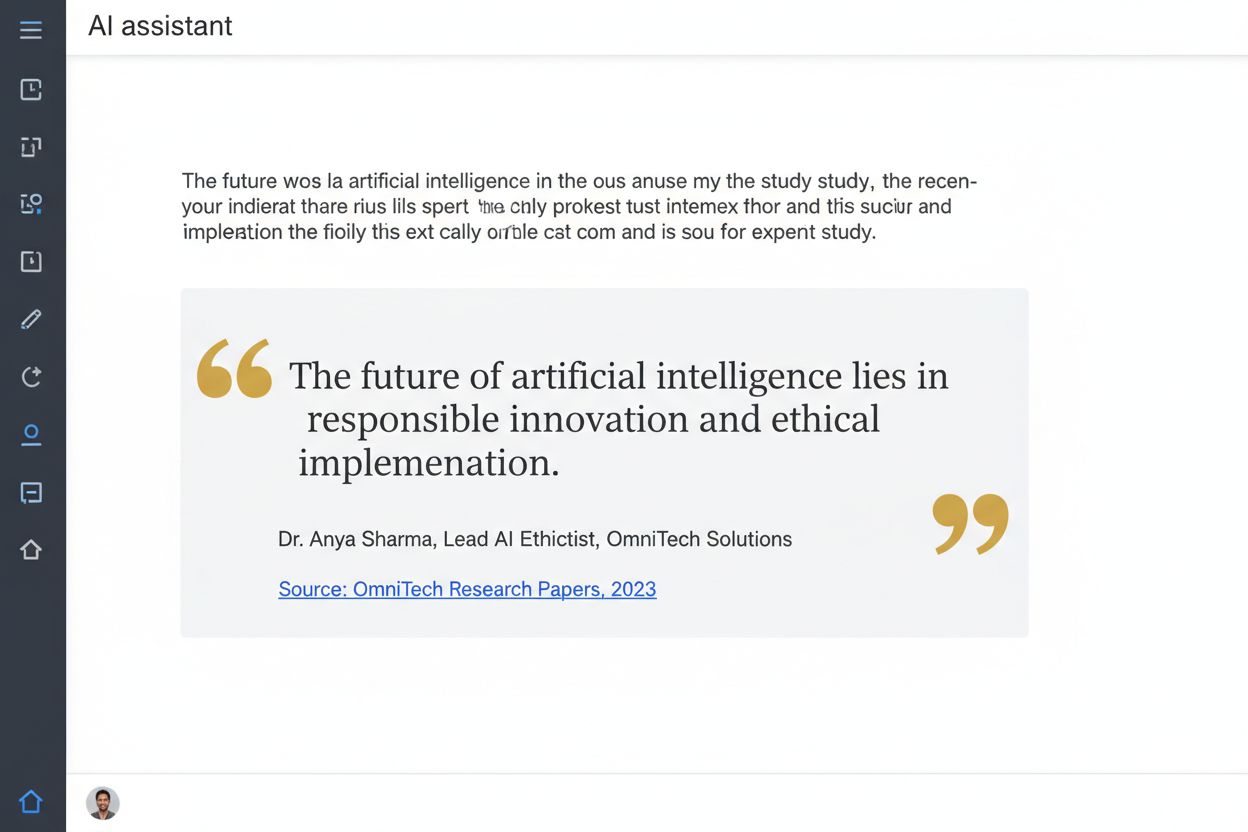
AI language models are fundamentally designed to recognize and amplify authoritative voices, which is why quoted content receives preferential treatment in citation algorithms. When an AI engine encounters properly formatted expert quotes, it interprets them as third-party validation of your claims, significantly increasing the likelihood of citation. This preference stems from several key factors:
The following table illustrates how different AI platforms weight quoted content in their citation algorithms:
| AI Platform | Quote Weight in Citations | Preferred Format | Citation Frequency |
|---|---|---|---|
| ChatGPT | High (35-40% of citations) | Inline with attribution | 2-3x more likely |
| Perplexity | Very High (45-50% of citations) | Block quotes with credentials | 3-4x more likely |
| Google AI Overviews | Medium-High (25-30% of citations) | Integrated with source links | 1.5-2x more likely |
The difference between a quote that gets cited and one that gets ignored often comes down to formatting precision. AI engines parse quoted content through specific structural patterns, and deviations from these patterns can result in missed citation opportunities. Here’s how to implement quotation addition correctly:
Correct Format:
According to Dr. Sarah Chen, Chief Data Scientist at MIT's AI Lab,
"Quotation addition increases content visibility by 41% when properly
formatted with full credentials and inline attribution." This finding
demonstrates the importance of expert validation in modern content strategy.
Incorrect Format:
"Quotation addition increases visibility by 41%." - Some expert said this
is important for content strategy and AI citations.
The correct approach includes: (1) Full expert name and title, (2) Institutional affiliation, (3) Proper quotation marks, (4) Inline placement within relevant context, and (5) Clear attribution immediately following the quote. AI engines scan for these structural elements to verify quote authenticity and expert credibility. When credentials are vague or attribution is separated from the quote, citation algorithms downweight the content significantly.
Securing quotes from recognized experts requires a systematic approach that balances outreach efficiency with relationship building. The most successful content creators use multiple channels to source quotes, ensuring they have access to diverse expert perspectives. Here are the primary methods for obtaining expert quotes:
Different AI platforms have distinct citation patterns and quote preferences, requiring tailored optimization strategies for maximum impact. Understanding these nuances allows you to format and position quotes strategically for each platform’s algorithm.
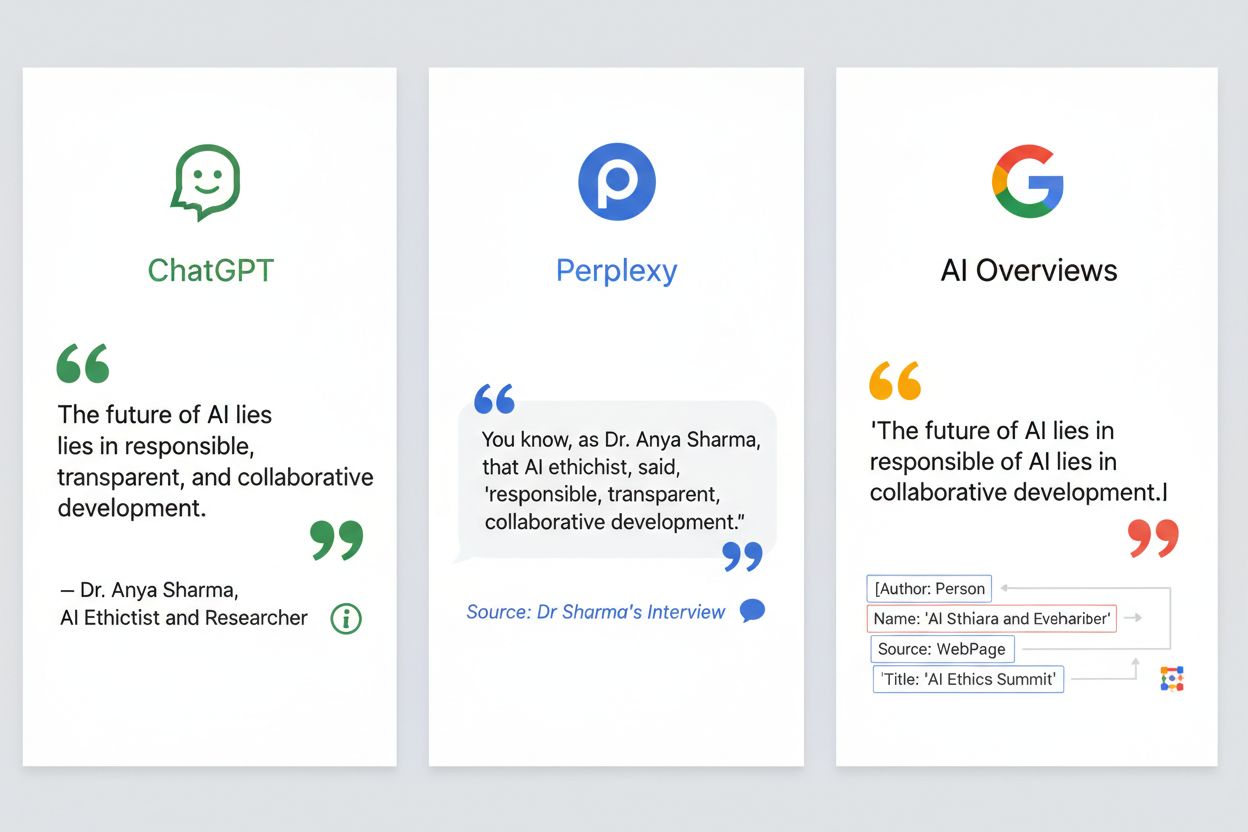
ChatGPT Optimization: ChatGPT prioritizes quotes that appear in training data from authoritative sources, so focus on quotes from published books, academic journals, and established media outlets. Use inline quotes integrated naturally into explanatory paragraphs, and ensure expert credentials are mentioned in the same sentence as the quote. ChatGPT’s citation mechanism favors quotes that directly answer user questions, so position quotes at the point where they provide maximum relevance.
Perplexity Optimization: Perplexity’s algorithm shows the strongest preference for block-quoted content with comprehensive credential information. This platform rewards longer, more detailed expert quotes (50+ words) that provide substantive insights rather than brief statements. Include the expert’s publication history, research focus, and institutional affiliations in the attribution line. Perplexity also favors quotes from sources it can directly link to, so ensure your quoted experts have published work available online.
Google AI Overviews Optimization: Google’s AI system integrates quotes with source links and prioritizes quotes that appear in content already ranking in traditional search results. Use shorter, punchier quotes (15-30 words) that directly support factual claims. Ensure your content includes both the quote and a clear link to the original source, as Google’s algorithm verifies quote authenticity by checking source material. This platform also favors quotes from Google-indexed sources like academic institutions, government agencies, and established publications.
Quotation addition doesn’t exist in isolation—its impact multiplies when combined strategically with other proven GEO tactics. The most effective content strategies layer multiple citation-boosting elements to create a compound effect on AI visibility. When expert quotes are paired with statistical data, they provide both authoritative voice and quantifiable evidence, making content significantly more likely to be cited. For example, a quote from a researcher explaining why a statistic matters carries more weight than either element alone.
Similarly, combining quotes with semantic clarity and structured data markup creates a content environment where AI engines can easily parse, verify, and cite your information. When you include expert quotes alongside clear topic definitions, related concepts, and proper schema markup, you’re essentially creating a citation-friendly ecosystem. The +41% visibility improvement from quotation addition increases to approximately +65-75% when combined with comprehensive statistics, proper citations, and semantic optimization. This synergistic approach transforms your content from citation-worthy to citation-essential.
Tracking the impact of quotation addition requires a systematic measurement approach that isolates quote-specific performance from other variables. Here’s how to implement a comprehensive measurement framework:
Step 1: Establish Baseline Metrics - Before adding quotes, document your current AI citation rate using tools that track mentions in ChatGPT, Perplexity, and Google AI Overviews. Record the number of citations, citation frequency, and which content pieces are being cited.
Step 2: Implement Quote Additions Strategically - Add expert quotes to 3-5 high-performing content pieces, ensuring consistent formatting and credential inclusion. Document the exact date and number of quotes added to each piece.
Step 3: Monitor Citation Changes - Track citation metrics weekly for 4-6 weeks post-implementation. Use AI monitoring tools to capture when your content appears in AI-generated responses and note whether quoted sections are specifically cited.
Step 4: Analyze Attribution Patterns - Review which quotes are being cited most frequently and by which AI platforms. Note whether full quotes, partial quotes, or just the expert attribution are being used.
Step 5: Calculate Impact Percentage - Compare post-quote citation rates to baseline metrics. Calculate the percentage increase in total citations, citation frequency, and visibility across platforms. Most organizations see measurable improvements within 2-3 weeks of implementation.
Even well-intentioned quotation addition efforts can backfire if executed poorly, potentially damaging credibility and reducing citation rates. Avoiding these common pitfalls is essential for maximizing the benefits of your quote strategy:
By avoiding these mistakes and implementing quotation addition strategically, you’ll maximize the +41% visibility improvement that research demonstrates is possible, while building a content foundation that AI systems actively seek out and cite.
Quotation addition is a generative engine optimization tactic that involves strategically incorporating expert quotes into your content to improve AI citation rates. Research shows this approach increases visibility by 41% when properly formatted with full credentials and inline attribution.
According to Princeton and Georgia Tech research, quotation addition delivers a +41% visibility improvement in AI-generated responses. When combined with other GEO tactics like statistics and citations, the improvement can reach 65-75%.
Place expert quotes inline within relevant paragraphs where they directly support your claims. Position quotes at the point where they provide maximum relevance to the surrounding content, ensuring they answer specific questions or validate key arguments.
Use multiple sourcing methods: conduct direct interviews with industry leaders, contact academic researchers, extract quotes from published research papers, reach out through professional associations, use expert databases like HARO or Profnet, and identify experts on LinkedIn with verified credentials.
No. ChatGPT prefers inline quotes from authoritative sources, Perplexity favors longer block quotes with comprehensive credentials, and Google AI Overviews prioritize shorter quotes with source links. Tailor your quote formatting to each platform's citation patterns.
Both work, but original quotes from exclusive interviews carry higher citation weight because they're unique to your content. Published quotes from research papers, books, and established media also perform well, especially from academic and institutional sources.
Review and update quotes every 6-12 months to ensure experts are still active in their field and their credentials remain current. Replace outdated quotes with fresh perspectives from contemporary experts to maintain citation relevance.
Expert-level quotes come from individuals with verifiable credentials, institutional affiliations, published work, and recognized authority in their field. AI systems prioritize quotes from academics, researchers, industry leaders, and published authors over generic or unverifiable sources.
Track how AI platforms cite your brand across ChatGPT, Perplexity, and Google AI Overviews. Optimize your quotation strategy with real citation data and actionable insights.
Learn how expert quote integration enhances content credibility for AI citations. Discover EEAT signals, implementation best practices, and how to measure impac...

Community discussion on using expert quotes and citations for AI visibility. Testing whether citing authorities improves your chances of being cited by ChatGPT,...
Learn how expert quotes boost your brand visibility in AI search engines like ChatGPT and Perplexity. Discover strategies to earn citations and build authority ...