

Reverse-Engineering Competitor AI Citations: What Content Gets Mentioned
Learn how to reverse-engineer competitor AI citations and discover what content AI models prefer to cite. Strategic guide to competitive advantage in AI search.
6 min read
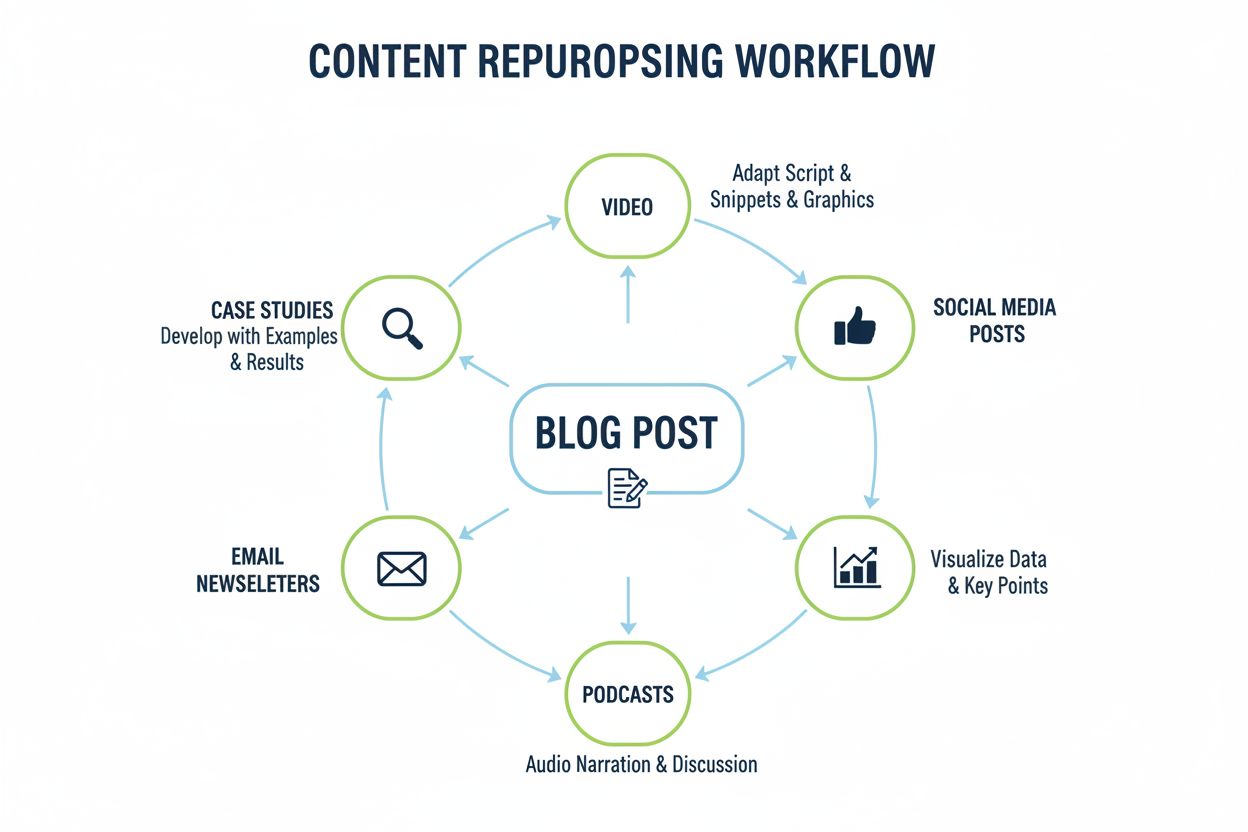
Learn how to repurpose content across multiple formats to maximize visibility in AI search engines like ChatGPT, Perplexity, and Google AI Overviews. Strategic multi-format approach for better brand citations.
The search landscape has fundamentally shifted, and most brands haven’t noticed yet. According to Bain & Company research, 80% of users now rely on AI summaries for at least 40% of their searches, fundamentally changing how information discovery works. When legal websites experienced a 34.5% traffic drop after Google AI Overviews launched, it wasn’t because people stopped searching—they just stopped clicking through to websites. Instead, they’re getting answers directly from AI platforms that synthesize information from multiple sources, citing only the most authoritative ones.

The numbers tell a compelling story: ChatGPT serves 3 billion users weekly compared to Google’s 13.7 billion daily searches. But here’s what matters more—when someone asks ChatGPT “I need a solution for [specific problem],” they’re not just searching. They’re having a consultation. By the time that conversation ends, ChatGPT often provides specific recommendations based on the entire dialogue history. Most brands are completely invisible in this new search reality. They’ve mastered traditional SEO but haven’t adapted to AI search platforms that now influence where high-intent prospects go for information and solutions.
Content repurposing for AI visibility isn’t about creating more content—it’s about ensuring your existing content reaches the platforms where decision-makers are increasingly seeking information. A single blog post contains multiple valuable insights that different AI platforms can extract and cite in different contexts. The challenge is structuring and formatting that content so AI systems recognize it as authoritative and relevant.
Here’s how different content formats perform across AI platforms:
| Content Format | Best For | AI Platform Priority | Conversion Potential | Effort Level |
|---|---|---|---|---|
| Blog Posts | Detailed information & SEO | Google AI Overviews | Medium | Low |
| Video Content | Visual learners & engagement | ChatGPT, Perplexity | High | Medium |
| Social Media Snippets | Quick insights & reach | All platforms | Medium | Low |
| Infographics | Data visualization | Perplexity, Google | High | Medium |
| Case Studies | Authority & proof | ChatGPT | Very High | High |
| FAQ Content | Direct answers | Google AI Mode | High | Low |
| Podcasts | Audio learners & SEO | ChatGPT, Perplexity | High | High |
| Email Newsletters | Audience engagement | Indirect (links) | Medium | Low |
| Webinars | Live engagement & clips | All platforms | High | High |
| Testimonials | Social proof | ChatGPT | Medium | Low |
The 70/30 rule applies here: approximately 70% of effective AI optimization overlaps with solid SEO practices. High-quality content, proper technical setup, and strong domain authority help in both traditional and AI search. The remaining 30% requires AI-specific strategies that most organizations haven’t implemented yet. This overlap means you’re not starting from scratch—your existing SEO foundation provides the base for AI optimization.
Successful content repurposing follows a systematic framework that maximizes visibility across multiple AI platforms while maintaining consistency and quality. Rather than randomly adapting content, strategic repurposing identifies the core value in your original content and extracts it in formats optimized for different platforms and audience preferences.
Step 1: Start with Pillar Content - Begin with one comprehensive piece of content (typically 2,000+ words) that thoroughly covers a topic. This becomes your source material for all repurposing efforts. The pillar content should be well-researched, authoritative, and optimized for traditional SEO.
Step 2: Identify Repurposing Opportunities - Analyze your pillar content to identify distinct sections, key statistics, processes, and insights that can stand alone. A single blog post about “digital marketing strategy” might contain subsections on social media, email marketing, content strategy, and analytics—each suitable for separate repurposing.
Step 3: Adapt for Platform Requirements - Different platforms have different technical requirements and audience expectations. A 2,000-word blog post becomes a 60-second video, a 10-slide carousel, a 280-character tweet thread, and a 30-minute podcast episode. Each format serves a different consumption preference.
Step 4: Optimize for AI Platform Algorithms - Each AI platform evaluates content differently. Google AI Overviews favor structured data and featured snippet formats. ChatGPT values authority signals and comprehensive information. Perplexity prioritizes research-grade content with citations. Tailor your repurposed content to match these preferences.
Step 5: Distribute and Track - Publish repurposed content across appropriate channels and track performance using AI-specific metrics. Monitor which formats generate the most citations, mentions, and conversions from AI sources.
Video content receives disproportionately high citation rates from AI platforms because it demonstrates expertise through visual explanation and personality. When someone asks ChatGPT “explain [complex concept],” the AI often cites video content alongside written sources because video provides context and credibility that text alone cannot convey.
The conversion process is straightforward: identify the core concept from your blog post, create a script that explains it conversationally (not reading the blog word-for-word), and produce a video that’s 60 seconds to 10 minutes depending on complexity. Tools like Lumen5 automatically convert blog posts into video templates with stock footage and music, reducing production time from hours to minutes. Pictory and InVideo offer similar automation, while Descript handles transcription and editing simultaneously.
Platform-specific optimization matters significantly. YouTube Shorts (under 60 seconds) require punchy hooks and fast pacing. Full-length YouTube videos (5-15 minutes) allow for deeper explanation and authority building. TikTok and Instagram Reels demand entertainment value alongside information. LinkedIn videos perform best when they include professional insights and actionable takeaways. The same core concept becomes four different videos optimized for each platform’s audience expectations and algorithm preferences.
Video metadata optimization is crucial for AI discoverability. Include detailed descriptions with relevant keywords, accurate timestamps for longer videos, and comprehensive captions. AI platforms parse video metadata and captions to understand content, so thorough optimization directly impacts citation probability.
Social media platforms serve as distribution channels for repurposed content while also contributing to entity validation that AI systems evaluate. Each platform has distinct optimization requirements and audience expectations that influence how AI platforms perceive your content’s authority and relevance.
LinkedIn optimization focuses on professional insights and thought leadership. Convert blog sections into carousel posts (5-10 slides) that break down complex concepts into digestible pieces. Use the first slide as a hook that creates curiosity, then deliver value progressively. LinkedIn’s algorithm favors posts that generate comments and shares, which also signals authority to AI platforms monitoring social engagement.
Twitter/X threads work exceptionally well for AI citation because they present information in a structured, easy-to-parse format. A single tweet thread can extract the key insights from a 2,000-word blog post into 8-12 connected tweets. AI platforms recognize threads as authoritative content summaries and often cite them when users ask related questions.
Instagram and TikTok require visual-first thinking. Convert data points into infographics, process steps into short video clips, and insights into quote graphics. While these platforms don’t directly drive AI citations, they build brand awareness and social signals that contribute to entity validation.
Facebook remains valuable for community building and review generation. Repurpose blog content as discussion starters that encourage comments and shares. The engagement signals and review accumulation contribute to the authority markers AI platforms evaluate.
Hashtag strategy matters for discoverability across platforms. Use platform-specific hashtags that help AI systems categorize your content, but avoid hashtag stuffing that reduces readability. Consistency across platforms—using the same brand voice, visual style, and messaging—strengthens entity validation that AI systems require.
Visual content serves a unique purpose in AI visibility strategy: it makes complex information immediately understandable and highly shareable. AI platforms increasingly recognize and cite visual content because it demonstrates expertise through clear communication and data visualization.
Infographics work particularly well for process explanations, statistical comparisons, and timeline visualizations. Tools like Canva offer templates specifically designed for infographic creation, while Visme and Piktochart provide more advanced customization options. The key is ensuring your infographic presents information that’s valuable enough to stand alone—not just a visual representation of your blog post, but a distinct asset that provides unique value.
Alt text and image descriptions are critical for AI platform parsing. Detailed alt text helps AI systems understand what your infographic communicates, increasing the likelihood of citation when users ask related questions. Include specific data points and key insights in your alt text, not just generic descriptions like “chart showing growth.”
Data visualization best practices include using consistent color schemes, clear labeling, logical flow, and accurate representation of data. Misleading or poorly designed infographics damage credibility with both human viewers and AI systems that evaluate source reliability.
Integration with written content amplifies impact. Embed infographics within blog posts with surrounding explanatory text. This combination gives AI platforms multiple formats to extract and cite—the written explanation, the visual representation, and the underlying data. Users asking questions about the topic might receive citations to your blog post, your infographic, or both depending on their specific query.
Email newsletters serve as a content aggregation and distribution channel that extends the lifespan of your repurposed content while building direct audience relationships. While email doesn’t directly generate AI citations, it drives engagement signals and repeat visits that contribute to authority metrics AI platforms evaluate.
Strategic newsletter content includes curated insights from your blog posts, summaries of recent content, exclusive analysis not published elsewhere, and calls-to-action that drive traffic back to your website. The key is providing genuine value rather than simply promoting your content. Subscribers should feel they’re receiving insider insights, not marketing messages.
Segmentation allows you to tailor newsletter content to different audience segments. A newsletter for beginners might focus on foundational concepts and how-to guides, while a newsletter for advanced users might feature case studies and strategic insights. This segmentation increases engagement rates and signals to AI platforms that your content serves diverse audience needs.
Internal linking within newsletters drives traffic to your most important content while helping AI systems understand content relationships and hierarchy. Link from newsletter content to related blog posts, case studies, and resource pages. This linking structure helps AI platforms recognize your comprehensive expertise in specific topic areas.
Subscriber growth and engagement metrics contribute indirectly to AI visibility. High engagement rates signal that your content resonates with audiences, which influences how AI platforms evaluate your authority. Implement systematic strategies to grow your email list and maintain high engagement rates.
Podcast content represents one of the highest-value repurposing formats because it demonstrates expertise through extended conversation and allows for deeper exploration of complex topics. AI platforms increasingly cite podcast content, particularly when users ask for detailed explanations or expert perspectives.
The repurposing process begins with transcription. Tools like Descript automatically transcribe podcast episodes while simultaneously creating a transcript document that can be converted into blog posts. A single 45-minute podcast episode can become a 2,000-word blog post, multiple social media posts, a video highlight reel, and several short-form clips.
Podcast optimization for AI platforms requires detailed show notes that summarize key points, timestamps for major topics, and links to resources mentioned during the episode. AI systems parse this metadata to understand podcast content and determine citation relevance. Comprehensive show notes increase the likelihood that your podcast gets cited when users ask related questions.
Audio content distribution extends beyond traditional podcast platforms. Repurpose podcast episodes as audio articles on your website, create short audio clips for social media, and develop audio guides for complex processes. This multi-format approach ensures your audio content reaches audiences across different platforms and consumption preferences.
The growing importance of voice search and audio-first consumption makes podcast repurposing increasingly valuable. As more users interact with AI through voice interfaces, audio content becomes more discoverable and citable.
Case studies represent the highest-authority repurposing format because they demonstrate real-world expertise and measurable results. AI platforms heavily cite case studies when users ask for proof of capability or examples of successful outcomes. A well-structured case study can generate citations across multiple AI platforms for months or years after publication.
Effective case study structure includes the initial challenge (specific problem and complications), investigation process (how you gathered information and built your approach), strategy development (your methodology and decision-making), obstacles encountered (how you overcame challenges), resolution details (specific outcomes and timeline), and key lessons (what this teaches potential clients). This structure provides AI platforms with quotable expertise while demonstrating your problem-solving capabilities.
Testimonials and client success stories serve as social proof that AI platforms evaluate when assessing source credibility. Video testimonials are particularly valuable because they combine visual content with authentic client voices. Written testimonials should include specific results, client name and title, and detailed descriptions of the transformation achieved.
Extracting quotes from case studies for social media repurposing creates additional content assets. A single case study might yield 5-10 quotable insights suitable for social media posts, email content, and website callouts. This quote extraction maximizes the value of your case study investment.
Webinars and live events generate substantial content that can be repurposed across multiple formats and platforms. A single 60-minute webinar can become a blog post, video highlights, podcast episode, social media clips, email series, and infographics—each optimized for different platforms and audiences.
The repurposing process begins immediately after the webinar concludes. Record the session (if not already recorded), transcribe it, and identify key moments for clip extraction. Tools like Descript handle transcription while simultaneously identifying natural break points suitable for short-form video clips.
Attendee engagement and follow-up represent critical repurposing opportunities. Send attendees a summary email with links to repurposed content, offer exclusive resources mentioned during the webinar, and create a dedicated landing page that aggregates all repurposed content from the event. This follow-up strategy extends the value of the webinar beyond the live event.
Recording optimization for AI platforms requires detailed descriptions, accurate transcripts, and structured metadata. Upload webinar recordings to YouTube with comprehensive descriptions and timestamps. This makes the content discoverable through both traditional search and AI platforms.
Live event clips extracted from webinars perform exceptionally well on social media and generate high engagement rates. A 60-minute webinar might yield 10-15 short clips (30-90 seconds each) suitable for TikTok, Instagram Reels, and YouTube Shorts. Each clip should be self-contained while encouraging viewers to watch the full webinar.
Selecting the right tools dramatically impacts the efficiency and quality of your content repurposing strategy. Rather than using a single all-in-one platform, most successful strategies combine specialized tools optimized for specific repurposing tasks.
| Tool | Primary Function | Best For | Pricing | AI Integration |
|---|---|---|---|---|
| Repurpose.io | Multi-platform distribution | Scheduling across 10+ platforms | $25-100/mo | Basic |
| Lumen5 | Blog-to-video conversion | Creating videos from articles | $15-60/mo | Moderate |
| Canva | Visual content creation | Infographics, social graphics | $13-180/mo | Moderate |
| Descript | Podcast transcription & editing | Audio/video editing with transcripts | $12-24/mo | High |
| AmICited.com | AI citation monitoring | Tracking brand mentions in AI | Custom pricing | Very High |
| FlowHunt.io | AI content automation | Automating repurposing workflows | Custom pricing | Very High |
| Pictory | Video creation from text | Quick video production | $19-99/mo | Moderate |
| Buffer | Social media scheduling | Consistent social distribution | $5-100/mo | Basic |
AmICited.com stands out as the essential tool for monitoring how your repurposed content performs across AI platforms. Rather than guessing whether your content gets cited in ChatGPT, Perplexity, or Google AI Overviews, AmICited.com provides real-time tracking of brand mentions, citations, and sentiment across major AI platforms. This data directly informs which repurposing strategies work best for your specific audience and content type.
FlowHunt.io excels at automating the repurposing workflow itself. Rather than manually converting content across formats, FlowHunt.io can automatically generate multiple repurposed versions from a single source, saving hours of manual work while maintaining consistency across platforms.
The most effective strategy combines tools based on your primary content formats and distribution channels. A content-heavy organization might prioritize Descript for podcast transcription and Lumen5 for video creation. A social-media-focused brand might emphasize Canva and Repurpose.io. Every organization should include AmICited.com to understand how their repurposing efforts impact AI visibility.
Traditional SEO metrics like rankings and organic traffic don’t apply to AI search visibility. Instead, you need AI-specific metrics that measure citations, mentions, and conversion quality from AI sources.
Citation tracking measures how frequently AI platforms cite your content as a source. Use tools like AmICited.com to monitor citations across ChatGPT, Perplexity, Google AI Overviews, and other platforms. Track which specific pieces of content generate the most citations and which topics AI platforms reference most frequently.
Mention tracking captures instances where AI platforms reference your brand by name without necessarily linking to your content. Mentions build brand awareness and authority even without direct traffic. Monitor sentiment alongside mentions—positive mentions strengthen authority while negative mentions require response.
UTM tracking for AI traffic reveals which AI platforms drive the most valuable traffic. Many AI platforms automatically append UTM codes to cited links (utm_source=chatgpt, utm_source=perplexity). Set up custom Google Analytics segments to monitor AI traffic separately from traditional search traffic.
Conversion rate analysis from AI sources typically shows dramatically higher conversion rates than traditional search traffic. Track consultation requests, phone calls, form submissions, and other conversion actions separately for AI traffic. Calculate Customer Acquisition Cost (CAC) for AI search traffic to understand true ROI.
Competitive benchmarking through AmICited.com reveals how your AI visibility compares to competitors. Monitor which competitors get cited most frequently, which topics they dominate, and where you have opportunities to establish authority.
Understanding what not to do is equally important as implementing best practices. These common mistakes can significantly undermine your content repurposing strategy and waste resources on ineffective efforts.
Over-repurposing without optimization - Simply copying your blog post into different formats without adapting for platform requirements and audience expectations produces poor results. Each format requires thoughtful adaptation, not lazy copying. A blog post repurposed as a social media post should be rewritten for conversational tone and character limits, not truncated.
Ignoring platform-specific requirements - Different platforms have different technical requirements, audience expectations, and algorithm preferences. Content optimized for LinkedIn won’t perform well on TikTok without significant adaptation. Invest time understanding each platform’s unique characteristics before repurposing content.
Neglecting content freshness - AI platforms heavily weight content recency, especially for topics where information changes frequently. Repurposed content that’s months or years old signals outdated information. Implement regular content refresh schedules and update repurposed content when underlying information changes.
Poor quality control - Rushing repurposing efforts to maximize volume produces low-quality content that damages credibility. A single poorly produced video or grammatically incorrect social post undermines the authority you’re trying to build. Prioritize quality over quantity.
Inconsistent messaging across formats - Repurposing should maintain consistent core messaging while adapting for format and platform. Contradictory messages across different formats confuse audiences and damage brand credibility. Develop clear messaging guidelines that apply across all repurposed content.
Failing to track and optimize - Without measurement, you can’t determine which repurposing strategies work best for your audience. Implement comprehensive tracking from the beginning and regularly analyze performance data to optimize future efforts.
The AI search landscape continues evolving rapidly, with new platforms, capabilities, and user behaviors emerging constantly. Preparing your content strategy for future developments ensures you maintain competitive advantage as the space matures.
Real-time content repurposing will become increasingly automated as AI tools improve. Rather than manually creating repurposed versions, AI systems will automatically generate optimized versions for different platforms from a single source. Organizations that establish strong content foundations now will benefit most from these automation advances.
Personalization at scale will allow AI platforms to deliver increasingly customized responses based on user context, history, and preferences. Content that serves diverse audience segments will receive more citations than generic content. Develop content that addresses specific audience needs rather than broad generalizations.
Voice and video search optimization will become as important as text optimization. As more users interact with AI through voice interfaces and video search, audio and video content will receive disproportionate citation rates. Invest in high-quality audio and video content production.
Predictive analytics for content strategy will help organizations anticipate which topics and formats will generate the most AI citations. Tools that analyze emerging search trends and AI platform preferences will guide content creation decisions.
Entity validation across emerging platforms will become increasingly important as new AI platforms launch. Maintaining consistent, authoritative presence across multiple platforms will be essential for AI visibility. Start building comprehensive online presence now across established platforms to prepare for future platforms.
Content repurposing for AI visibility is the strategic practice of transforming one piece of original content into multiple formats optimized for different AI platforms like ChatGPT, Perplexity, and Google AI Overviews. Unlike traditional repurposing focused on reach, AI-focused repurposing ensures your brand gets cited as an authoritative source in AI-generated responses, increasing both visibility and credibility.
Currently, AI search drives approximately 1-3% of total website traffic for most brands, but this traffic converts at 185-2300% higher rates than traditional search. As AI adoption continues to grow, this percentage will increase significantly. The key is establishing authority now before competition intensifies in AI search results.
Start with Google AI Overviews since they appear in traditional search results, then focus on ChatGPT (3 billion weekly users) and Perplexity (strong for research and technical queries). Each platform has different content preferences: Google favors structured data, ChatGPT values authority signals, and Perplexity prioritizes research-grade content with citations.
Traditional SEO focuses on ranking web pages in search results. AI visibility optimization targets getting cited as an authoritative source in AI-generated responses. About 70% of effective AI optimization overlaps with solid SEO practices, but the remaining 30% requires AI-specific strategies like entity validation across multiple platforms and conversational content formats.
Initial AI citations can appear within 4-8 weeks for well-optimized content on established websites. However, building comprehensive AI search authority typically takes 3-6 months. The timeline depends on your starting point—firms with strong existing SEO see faster AI search results than those starting with weak digital presence.
Top tools include Repurpose.io for multi-platform distribution, Lumen5 for video creation, Canva for visual content, Descript for podcast transcription, and AmICited.com for monitoring AI citations. Choose tools based on your primary content formats and distribution channels. Many successful strategies combine 2-3 specialized tools rather than relying on one all-in-one solution.
Track AI-specific metrics using UTM parameters that AI platforms append to links (utm_source=chatgpt, utm_source=perplexity). Monitor conversion rates from AI traffic separately from traditional search. Use tools like AmICited.com to track citations and mentions across AI platforms. Compare conversion rates—AI traffic typically converts 3-10x better than traditional search traffic.
Yes, often more effectively. AI platforms value expertise and authority over marketing budgets. A small business with deep expertise in a specific niche, comprehensive online presence, and quality content can get cited more frequently than large brands with generic content. The key is demonstrating specialized knowledge and building entity validation across multiple platforms.
Track how your content gets cited across ChatGPT, Perplexity, Google AI Overviews, and other AI platforms. Get real-time insights into your AI search presence and competitive positioning.
Learn how to reverse-engineer competitor AI citations and discover what content AI models prefer to cite. Strategic guide to competitive advantage in AI search.

Explore AI Visibility Futures - forward-looking analysis of emerging trends in AI-driven brand discovery. Learn how brands will be discovered by AI systems and ...

Community discussion analyzing real AI search adoption statistics. Exploring the data behind ChatGPT, Perplexity, and other AI platform usage compared to tradit...