The SE Ranking ChatGPT Citation Study: 20 Factors Analyzed
Discover the 20 factors that influence ChatGPT citations based on SE Ranking’s analysis of 129,000 domains. Learn how to optimize for AI visibility with data-driven strategies.
Published on Jan 3, 2026.Last modified on Jan 3, 2026 at 3:24 am
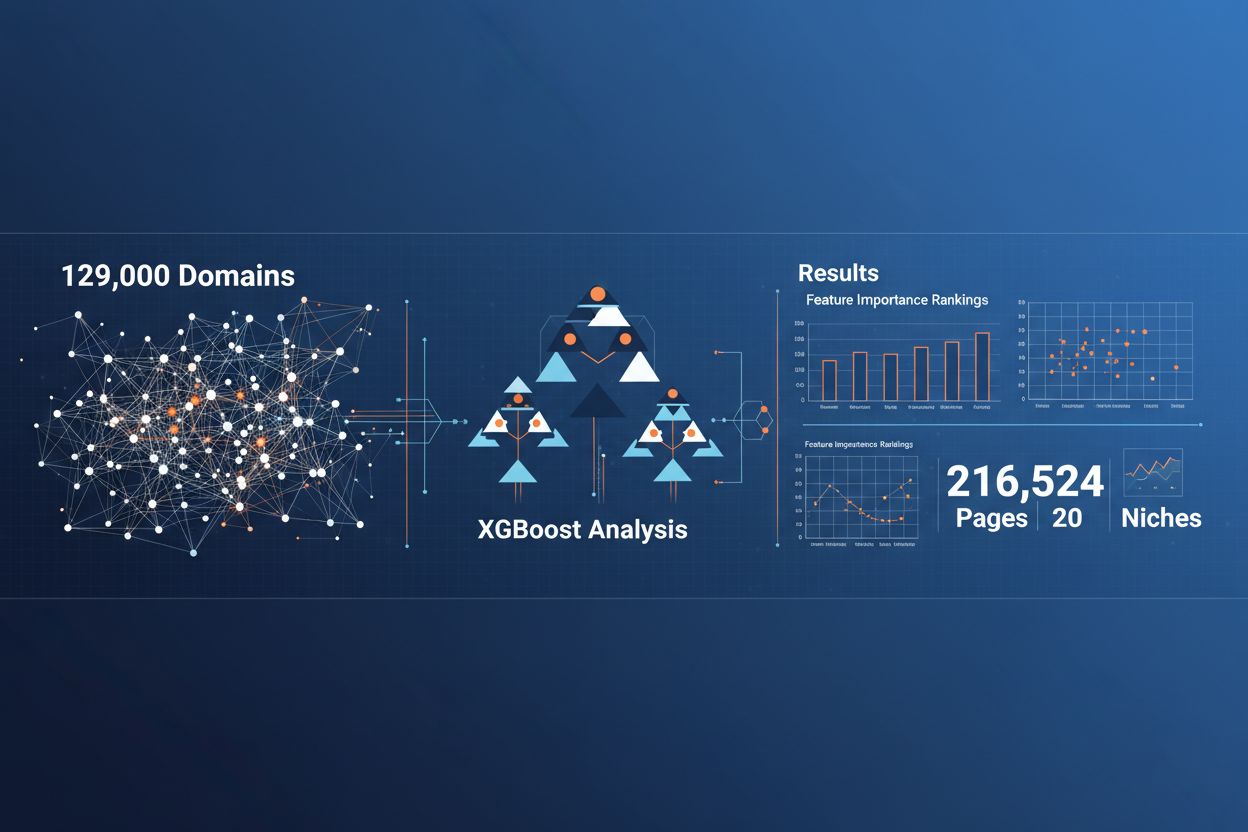
The SE Ranking study analyzed an impressive dataset of 129,000 domains across 216,524 pages spanning 20 different niches to identify the factors that influence ChatGPT citations. This comprehensive research methodology provides unprecedented insight into how artificial intelligence systems evaluate and cite web content. By examining such a large and diverse sample, the study captures patterns that transcend individual industries and content types. The researchers employed rigorous statistical analysis to correlate various on-page and off-page factors with citation frequency in ChatGPT responses. This data-driven approach eliminates guesswork and provides marketers with evidence-based strategies for improving their visibility in AI-generated content. The scale and scope of this study make it one of the most authoritative analyses of AI citation behavior available today.
Authority Signals: The Foundation of ChatGPT Citations
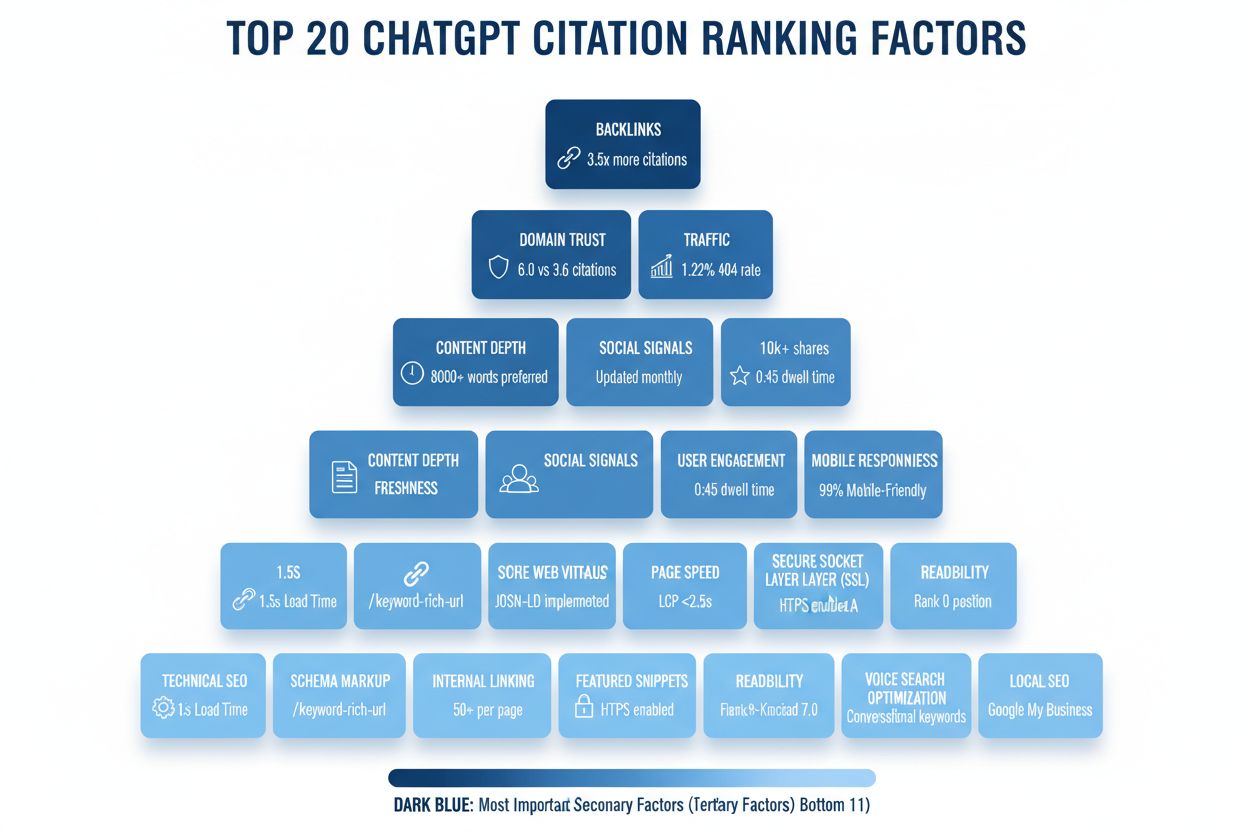
Referring domains emerge as the single most powerful predictor of ChatGPT citations, demonstrating that authority remains paramount in the AI era. Websites with 32,000+ referring domains receive approximately 3.5x more citations than their less-connected counterparts, while those exceeding 350,000+ referring domains achieve an impressive 8.4 citations on average. Domain Trust scores show an exponential relationship with citation frequency, with domains scoring 90+ experiencing dramatic increases in visibility. The elite tier of domains with Trust scores between 97-100 consistently receive 8.4 citations, confirming that established authority is irreplaceable. This finding aligns with traditional SEO wisdom but extends it into the AI realm, suggesting that the fundamentals of building credibility remain constant. Building a robust backlink profile through quality content and industry relationships should be a cornerstone of any ChatGPT visibility strategy.
Referring Domains
Average Citations
Growth Pattern
Up to 2,500
1.6-1.8
Baseline
2,500-32,000
2.9-3.5
Gradual growth
32,000-350,000
5.6-7.0
Exponential growth
350,000+
8.4
Peak performance
Ready to Monitor Your AI Visibility?
Track how AI chatbots mention your brand across ChatGPT, Perplexity, and other platforms.
Traffic and Google Rankings: Secondary Authority Signals
While not as dominant as referring domains, organic traffic serves as a secondary but significant authority signal that ChatGPT considers when selecting sources. Websites receiving 190,000+ monthly visitors represent a critical threshold where citation frequency begins to accelerate noticeably. The data reveals a clear progression: sites with 10 million+ monthly visitors achieve approximately 8.5 citations on average, demonstrating that established traffic patterns correlate strongly with AI visibility. This relationship suggests that ChatGPT’s training data and ranking algorithms favor content from websites that have already proven their value to human audiences. The correlation between Google rankings and ChatGPT citations indicates that traditional SEO success translates directly into AI visibility. Investing in organic traffic growth through quality content and technical optimization creates a compounding effect on your AI citation potential.
Content Depth and Structure: Quality Over Quantity
Content length plays a nuanced role in ChatGPT citations, with the relationship following a clear quality-over-quantity principle rather than a simple “longer is better” formula. Articles containing fewer than 800 words receive approximately 3.2 citations, while comprehensive pieces exceeding 2,900 words achieve 5.1 citations on average. However, the relationship is not perfectly linear, suggesting that depth matters more than raw word count. The optimal range appears to be between 1,500-3,000 words, where content achieves sufficient depth to address complex topics while maintaining reader engagement. Structuring content with clear hierarchies, subheadings, and logical flow enhances its value to both human readers and AI systems. Rather than padding articles with unnecessary information, focus on providing genuinely useful, well-organized content that thoroughly addresses user intent and questions.
Key content requirements for maximizing ChatGPT citations:
Aim for minimum 1,900 words for most topics
Increase to 2,900+ words for competitive topics
Include 19+ statistical data points
Add expert quotes and citations
Cover related concepts and synonyms
Organize with clear H2/H3 hierarchy
Use section lengths of 120-180 words between headings
Stay Updated on AI Visibility Trends
Get the latest insights on AI mentions, brand monitoring, and optimization strategies.
Content Freshness and Updates: The Recency Factor
Content freshness demonstrates a dramatic impact on ChatGPT citation rates, with recently updated content significantly outperforming stale information. Pages updated within the last 3 months receive approximately 6.0 citations, while outdated content that hasn’t been refreshed receives only 3.6 citations—a 67% difference in citation frequency. This finding suggests that ChatGPT’s training data and ranking mechanisms favor current, relevant information over older content, even if the older content was originally authoritative. Establishing a regular content update schedule, particularly for evergreen topics and industry-specific information, should be a priority for maintaining visibility. Updates don’t necessarily require complete rewrites; refreshing statistics, adding new examples, and updating outdated references can significantly boost citation potential. The recency factor creates an ongoing opportunity for established websites to maintain and improve their AI visibility through consistent content maintenance.
Social Signals and Community Presence: Alternative Authority Paths
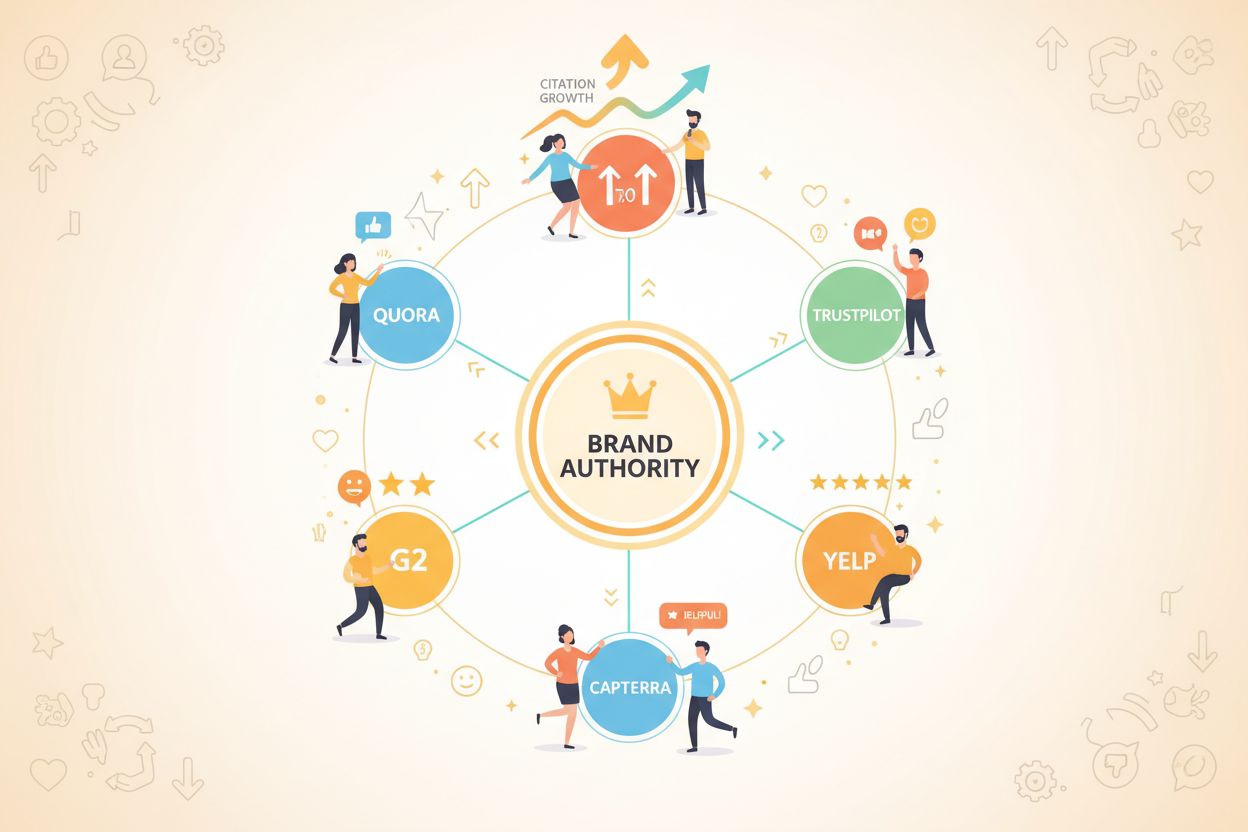
Social signals and community presence offer alternative pathways to authority that can supplement traditional backlink strategies for ChatGPT visibility. Websites with strong Quora presence show citation rates ranging from 1.7 to 7.0 citations, indicating that community engagement can meaningfully impact AI visibility. Reddit presence demonstrates similar variability, suggesting that the quality and relevance of community participation matters more than mere presence. Websites featured on review platforms achieve significantly higher citation rates, ranging from 4.6 to 6.3 citations, compared to just 1.8 citations for sites without review platform presence. This distinction highlights the importance of building reputation across multiple platforms and communities where your target audience congregates. Developing a multi-channel authority strategy that includes community engagement, review platform optimization, and social presence creates multiple touchpoints for ChatGPT’s evaluation systems.
Technical Performance: Speed and Core Web Vitals
Technical performance metrics, particularly page speed, significantly influence ChatGPT’s propensity to cite your content in responses. Pages with First Contentful Paint (FCP) under 0.4 seconds achieve approximately 6.7 citations on average, while slower pages exceeding 1.13 seconds FCP receive only 2.1 citations—a 3.2x difference in citation frequency. This dramatic disparity suggests that ChatGPT’s training data or evaluation systems favor fast-loading pages, possibly because they represent better user experiences and higher-quality websites. Core Web Vitals optimization should be treated as a critical component of any ChatGPT visibility strategy, not merely a nice-to-have SEO enhancement. Implementing image optimization, lazy loading, efficient caching, and content delivery networks can dramatically improve your technical performance scores. The relationship between speed and citations demonstrates that technical excellence directly translates into AI visibility, making performance optimization a high-ROI investment.
URL and Title Optimization: Clarity Over Keyword Stuffing
URL structure and title optimization require a nuanced approach that prioritizes clarity and semantic relevance over aggressive keyword targeting. The data reveals a counterintuitive finding: pages with high semantic relevance to their target topics receive only 2.7 citations, while those with lower semantic relevance achieve 6.4 citations. This surprising result suggests that ChatGPT may favor content that addresses broader topics or provides diverse perspectives rather than hyper-specialized, narrowly-focused content. URLs should be descriptive and human-readable, incorporating relevant keywords naturally without resorting to keyword stuffing or manipulation. Page titles should clearly communicate content value while remaining concise and compelling for both users and AI systems. The emphasis on clarity over keyword density suggests that ChatGPT’s evaluation systems reward genuine usefulness and comprehensive coverage rather than algorithmic optimization tricks.
FAQ Sections and Question-Based Content: Context Matters
FAQ sections and question-based content represent a structured approach to addressing user intent that can enhance ChatGPT visibility, though the impact is more modest than other factors. Pages implementing FAQ schema markup achieve approximately 4.2 citations, compared to 3.6 citations for pages without structured FAQ content. While this represents a meaningful improvement, the relatively modest difference suggests that FAQ sections are beneficial but not transformative for ChatGPT visibility. The value of FAQ sections lies in their ability to address multiple related questions and provide comprehensive context around your primary topic. Structuring FAQs with clear questions and concise answers helps both human readers and AI systems understand the full scope of your content. Rather than viewing FAQ sections as a silver bullet for AI optimization, consider them as one component of a comprehensive content strategy that addresses user intent from multiple angles.
Debunking AI Optimization Myths: What Doesn’t Work
Several popular AI optimization tactics have proven ineffective or counterproductive based on the SE Ranking study’s findings, and understanding these myths is crucial for avoiding wasted effort. The LLMs.txt file, a relatively new optimization technique promoted by some SEO professionals, shows negligible impact on ChatGPT citation rates, suggesting that this approach is not a worthwhile investment of resources. Aggressive keyword optimization and semantic targeting actually correlate with lower citation rates, contradicting the assumption that hyper-relevance improves AI visibility. Attempting to game ChatGPT’s systems through manipulation tactics is not only ineffective but potentially counterproductive, as these systems are designed to identify and discount artificial optimization. The most effective approach remains the fundamentals: building genuine authority, creating valuable content, and maintaining technical excellence. Avoiding these myths and focusing on proven factors will yield far better results than chasing the latest AI optimization trends.
Actionable Strategy: Implementing the 20 Factors
Implementing a comprehensive ChatGPT visibility strategy requires prioritizing the 20 factors identified in the SE Ranking study according to their impact and your current capabilities. Begin with the highest-impact factors: building referring domains through quality content and relationship building, establishing domain trust through consistent excellence, and driving organic traffic through SEO and content marketing. Simultaneously, optimize your technical performance by improving page speed, implementing Core Web Vitals best practices, and ensuring mobile responsiveness. Develop a content strategy that emphasizes depth (1,500-3,000 words), regular updates (at least quarterly), and clear structure with logical hierarchies. Expand your authority footprint by building presence on relevant community platforms like Quora and Reddit, and pursuing features on review platforms in your industry. Create a content calendar that balances new content creation with regular updates to existing high-value pages, ensuring that your entire content library remains fresh and relevant. Track your progress using tools that monitor ChatGPT citations and correlate improvements with specific optimizations you implement.
Monitoring Your ChatGPT Visibility: The AmICited Connection
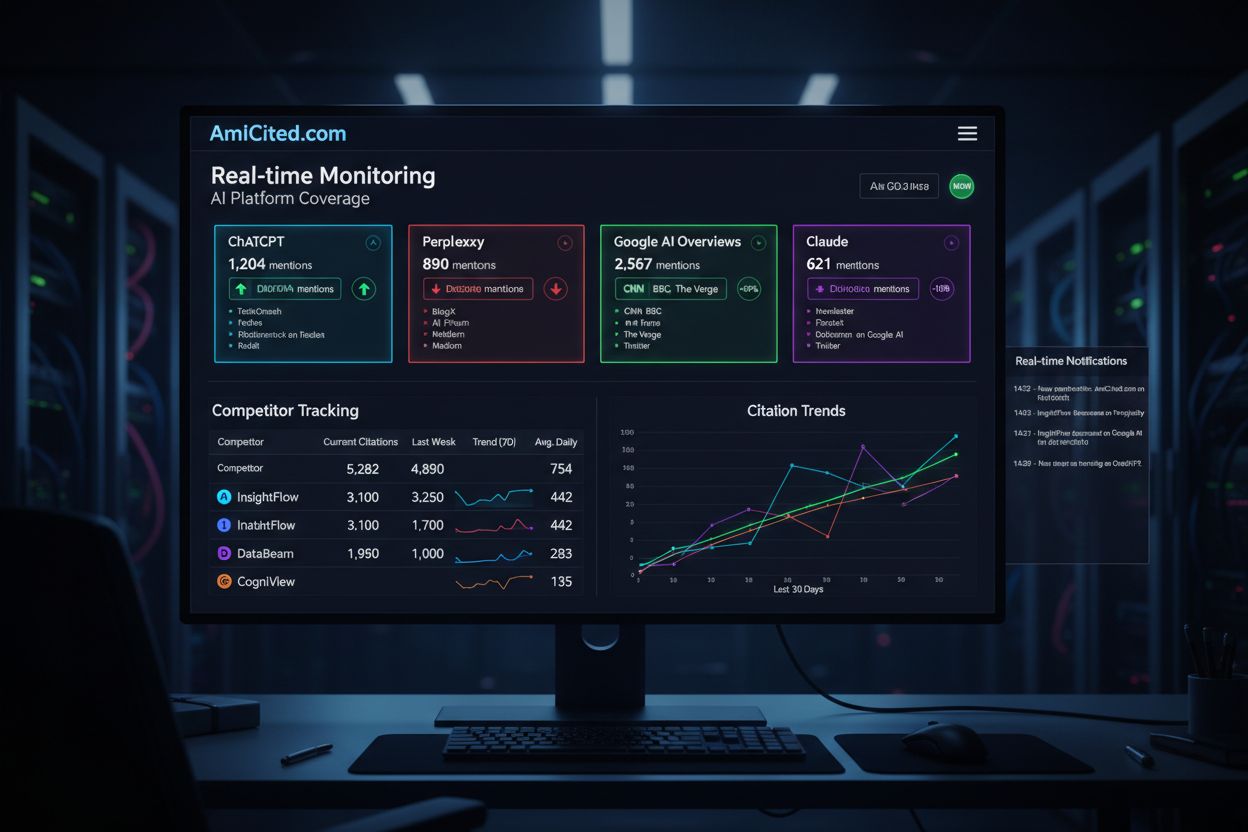
Monitoring your ChatGPT visibility requires specialized tools and consistent tracking to measure the effectiveness of your optimization efforts and identify new opportunities. The AmICited platform provides direct insight into how frequently your content appears in ChatGPT responses, offering metrics that traditional SEO tools cannot capture. By tracking citation frequency over time, you can correlate improvements with specific optimizations and identify which factors deliver the greatest ROI for your particular niche. Regular monitoring reveals trends in how ChatGPT’s citation patterns evolve, allowing you to adapt your strategy as AI systems become more sophisticated. Establish baseline metrics for your current citation frequency, then implement optimizations systematically while tracking their impact. Create dashboards that display citation trends alongside traditional SEO metrics like rankings and traffic, providing a holistic view of your content’s performance. The combination of AmICited data with traditional analytics creates a comprehensive understanding of how your content performs across both human and AI audiences, enabling data-driven decisions that maximize your visibility in the AI era.
Frequently asked questions
What is the SE Ranking ChatGPT Citation Study?
SE Ranking analyzed 129,000 domains across 216,524 pages in 20 niches to identify the top 20 factors that influence how often ChatGPT cites websites as sources. Using XGBoost regression and SHAP analysis, they discovered that authority signals, content quality, and social presence are the strongest predictors of ChatGPT citations.
Why do backlinks matter more than other factors for ChatGPT citations?
Backlinks serve as a trust signal that many websites find a source credible and valuable. ChatGPT appears to evaluate authority similarly to Google, using the diversity and quality of referring domains as a primary indicator of trustworthiness. Sites with 32,000+ referring domains receive 3.5x more citations than smaller sites.
Does content length directly impact ChatGPT citations?
Content length correlates with citations, but depth matters more than raw word count. Articles over 2,900 words average 5.1 citations versus 3.2 for articles under 800 words. However, the real value comes from comprehensive coverage, expert quotes, statistical data, and clear structure rather than padding content.
Should I use FAQ schema markup to improve ChatGPT citations?
No. FAQ schema markup actually showed lower citation rates (3.6 citations) compared to pages without it (4.2 citations). ChatGPT appears to care more about how content is structured with headings than whether it's technically marked up with schema. Focus on clear organization first, schema second.
How important is being active on Quora and Reddit for ChatGPT citations?
Very important, especially for smaller sites. Domains with heavy Quora presence (6.6M mentions) receive 7.0 citations versus 1.7 for minimal presence. This provides an alternative path to building authority without massive backlink profiles, making it valuable for newer or smaller websites.
What's the best strategy for updating content to improve ChatGPT citations?
Update existing content quarterly with fresh statistics, examples, and new sections. Content updated within the past three months averages 6.0 citations versus 3.6 for outdated content—nearly double the citation rate. Focus on refreshing your most linked and cited pages first.
Does page speed significantly impact ChatGPT citations?
Yes, but with nuance. Pages with First Contentful Paint under 0.4 seconds average 6.7 citations versus 2.1 for slower pages (over 1.13 seconds). However, extremely fast static pages may underperform because they don't signal the depth ChatGPT looks for. Aim for good speed without sacrificing content richness.
How can I monitor my ChatGPT citations?
Use AI citation monitoring tools like AmICited to track how often ChatGPT cites your content, which pages get cited, and how your citations compare to competitors. This data helps you identify which content resonates with AI systems and where to focus optimization efforts.
Monitor Your ChatGPT Citations and Optimize for AI Visibility
Understanding ChatGPT citation factors is just the first step. Track how often your brand appears in AI responses, monitor citation trends, and benchmark against competitors with AmICited's AI citation monitoring platform.
Reverse-Engineering Competitor AI Citations: What Content Gets Mentioned
Learn how to reverse-engineer competitor AI citations and discover what content AI models prefer to cite. Strategic guide to competitive advantage in AI search.
Is Q&A content format really that much better for AI citations? Show me the data
Community discussion on Q&A content structure effectiveness for AI citations. Real data and examples comparing content formats for AI search visibility.
6 min read
Discussion
Content Structure
+1
Cookie Consent We use cookies to enhance your browsing experience and analyze our traffic. See our privacy policy.