
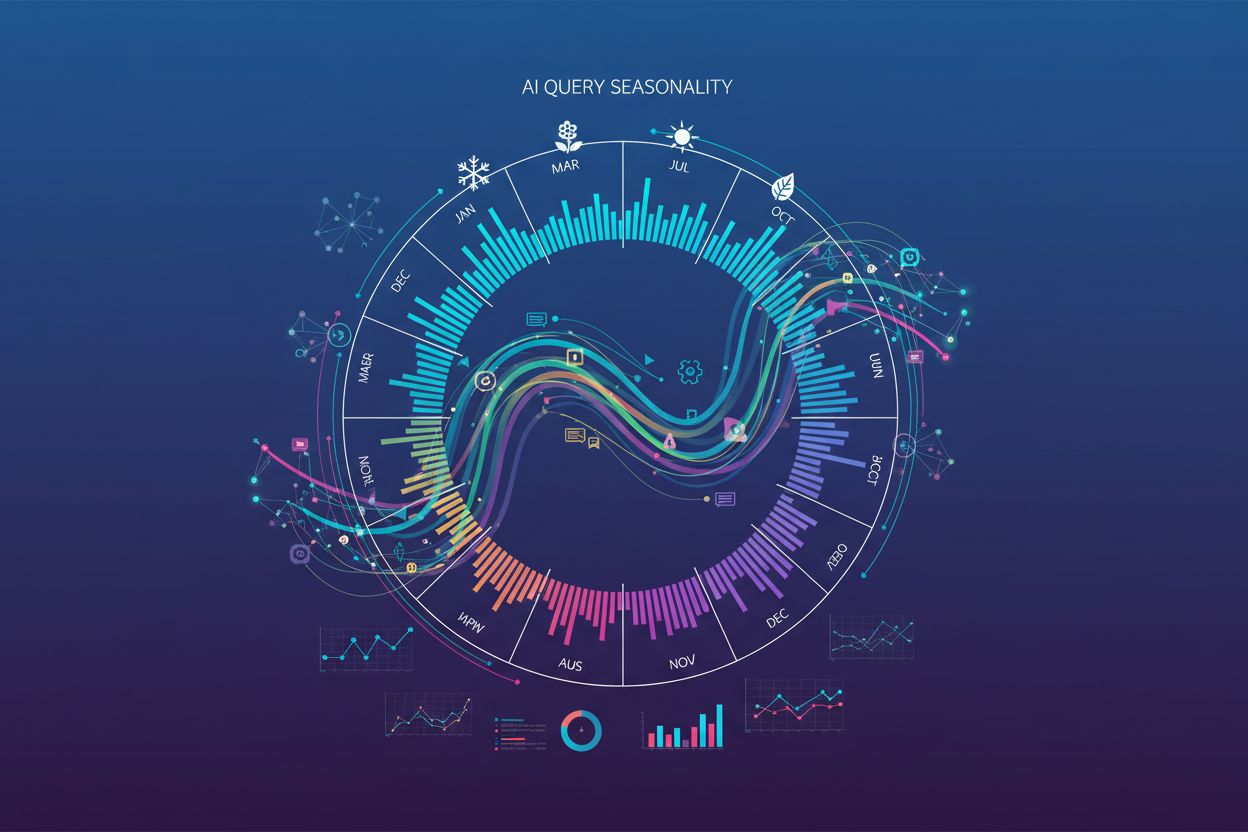
Query Seasonality for AI
Learn about query seasonality for AI - how seasonal patterns, events, and trends affect AI query volumes and types. Discover monitoring strategies and business ...
7 min read
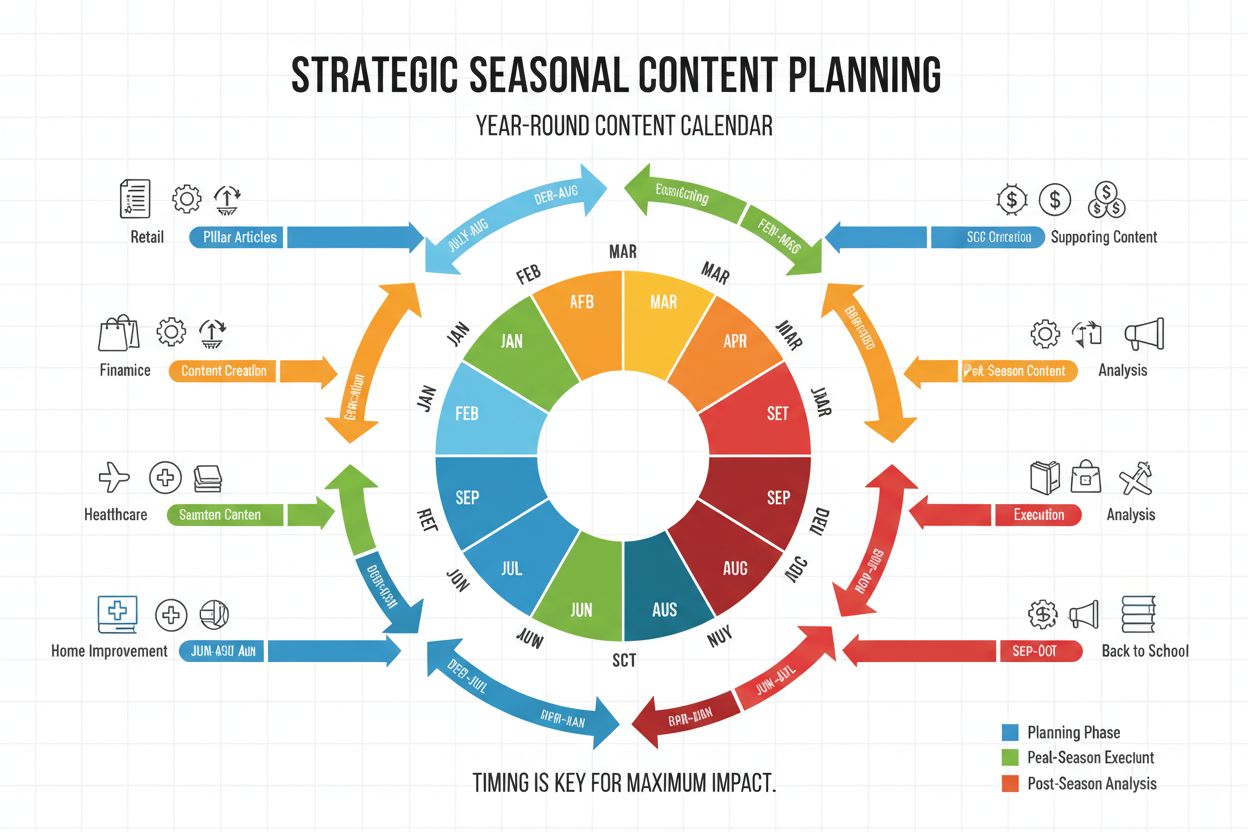
Master seasonal AI visibility strategies to maximize content citations. Learn when to publish, how to optimize for peak seasons, and track AI mentions with AmICited.com.
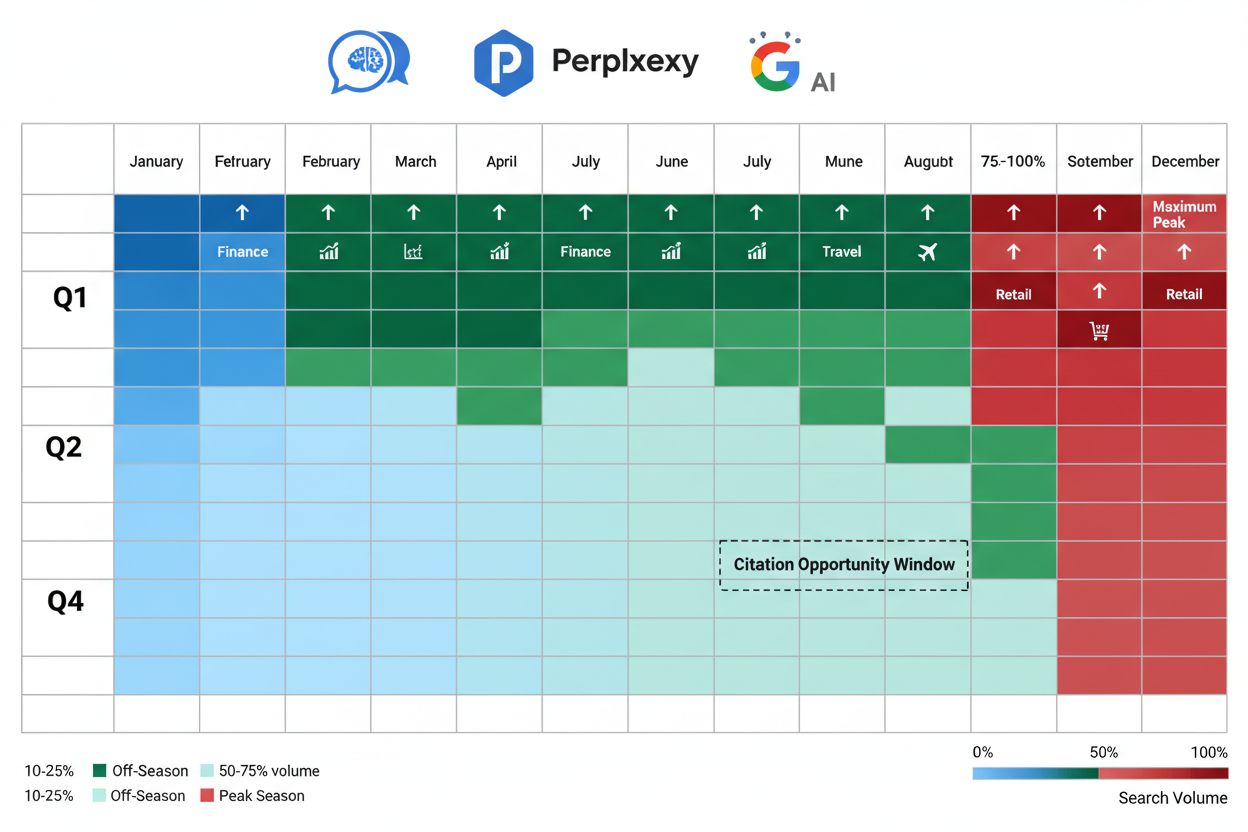
Seasonal patterns fundamentally shape how AI models discover, evaluate, and cite content across different time periods. AI search behavior exhibits distinct cyclical trends driven by user demand, industry events, and temporal relevance signals. ChatGPT and similar language models demonstrate heightened citation activity during predictable seasonal windows when search volume spikes 3-5x above baseline levels. These patterns differ significantly from traditional organic search, where freshness matters but recency bias remains less pronounced. AI citation behavior concentrates heavily on content published within specific seasonal windows, creating predictable opportunities for strategic publishers. Understanding these temporal dynamics enables content creators to align publication schedules with peak AI discovery periods. The algorithmic preference for fresh content means seasonal timing directly impacts whether your work gets cited or overlooked by AI systems.
Content published strategically during pre-season windows captures substantially more AI citations than off-season releases. Research demonstrates that content published 3-6 months before peak season receives 2-3x more citations from AI models compared to content released during low-demand periods. This advantage stems from AI’s strong recency bias combined with the temporal clustering of user queries during seasonal peaks. The citation advantage compounds when content addresses emerging seasonal topics before mainstream awareness peaks. AmICited.com tracking data reveals that early-season publishers consistently outperform late-season competitors in citation volume and velocity.
| Timing Strategy | Citation Volume | Citation Velocity | Competitive Advantage |
|---|---|---|---|
| 3-6 months pre-season | 2-3x higher | 40-60% faster | Dominant positioning |
| 1-3 months pre-season | 1.5-2x higher | 20-40% faster | Strong advantage |
| During peak season | 1x baseline | Standard pace | Moderate competition |
| Post-season | 0.5-0.8x baseline | 50% slower | Minimal citations |
This timing advantage persists across industries because AI models prioritize fresh, relevant content during high-demand periods. Publishers who establish authority before seasonal peaks maintain citation momentum throughout the season.
Discovering your industry’s specific seasonal patterns requires analyzing historical search data, user behavior trends, and competitive activity. Different sectors experience dramatically different seasonal cycles based on consumer behavior, regulatory deadlines, and cultural events. Identify your peaks by examining:
Once identified, these peaks become your strategic publishing windows. AmICited.com helps validate which seasonal periods actually drive AI citations for your specific content topics. Mapping these patterns across 12-24 months reveals consistent cycles you can leverage year after year.
Pre-season content strategy requires publishing authoritative, comprehensive resources 3-6 months before peak demand arrives. This timing window allows AI models to discover, index, and establish your content’s authority before seasonal search volume explodes. Strategic pre-season publishing involves creating cornerstone content that addresses fundamental questions users will ask during peak season. Develop pillar content pieces that establish topical authority and serve as reference sources AI models cite repeatedly. These foundational articles should comprehensively cover seasonal topics with depth, original research, and actionable insights. Link strategically to related content within your site to create topical clusters AI models recognize as authoritative. Optimize for semantic relevance by including seasonal variations, long-tail keywords, and question-based queries users will search during peak periods. Publish supporting content in the 1-3 months before peak season to reinforce pillar articles and capture emerging seasonal queries. This layered approach ensures your content dominates AI citations when seasonal demand peaks.
Real-time monitoring during peak season enables rapid optimization and citation capture improvements of 40-60%. As seasonal demand surges, AI models actively refresh their training data and citation patterns, creating dynamic opportunities for content adjustments. Monitor your citations continuously using AmICited.com to identify which content pieces receive AI mentions and which remain overlooked. Track citation velocity to spot emerging trends and adjust content emphasis accordingly. Update existing content with fresh data, current examples, and seasonal insights to maintain relevance signals AI models detect. Respond to trending queries within your seasonal niche by publishing quick-turnaround content addressing emerging questions. Amplify high-performing content through strategic promotion and internal linking to maximize citation potential. Engage with AI search platforms directly by ensuring your content appears in AI-generated summaries and overviews. This active optimization approach captures the citation surge that occurs when seasonal demand peaks.
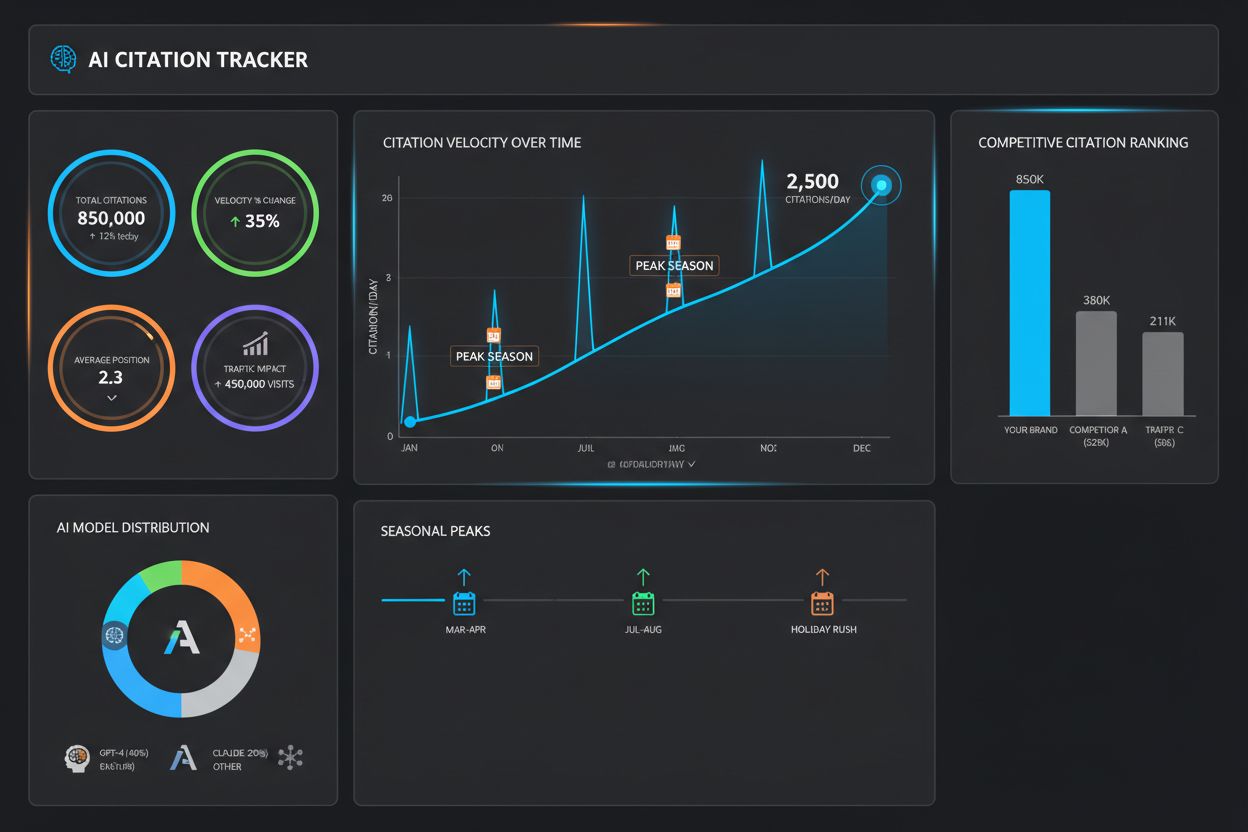
Post-season analysis transforms seasonal performance data into actionable insights for future cycles. Analyze citation patterns from your peak season to identify which content pieces generated the most AI mentions and why. Document keyword performance during peak season to understand which seasonal variations drove the highest citation volume. Review traffic sources to determine whether AI-referred visitors converted at higher rates than organic search visitors. Calculate citation ROI by comparing content investment against citation volume and downstream conversions. Identify gaps in your seasonal content strategy by analyzing competitor citations and missed opportunities. Document timing insights for next year’s planning, noting exactly when peak season began, when citations peaked, and when demand declined. Use AmICited.com historical data to establish baseline metrics for comparing year-over-year seasonal performance improvements.
Seasonal patterns vary dramatically across industries, requiring customized strategies for each vertical. E-commerce and retail experience massive peaks during Black Friday, Cyber Monday, and holiday shopping seasons (November-December), with AI influencing 20% of Cyber Week orders and driving $67 billion in global holiday sales. Financial services and accounting face intense seasonal demand during tax season (January-April), when individuals and businesses file returns and seek tax planning guidance. Healthcare and wellness see peaks around New Year’s resolutions (January), summer body preparation (April-May), and cold/flu season (October-November). Education and online learning spike during back-to-school periods (August-September) and New Year’s resolution season when learners commit to skill development. Travel and hospitality experience multiple peaks: summer vacation planning (April-June), holiday travel (October-December), and spring break (February-March). Home improvement and DIY surge during spring (March-May) and fall (August-October) when weather permits outdoor projects. Understanding your industry’s specific seasonal rhythm enables precise content timing that maximizes AI citation capture.
AmICited.com serves as the primary platform for monitoring AI citations across seasonal cycles and tracking citation performance metrics. This specialized tool reveals which of your content pieces receive citations from ChatGPT, Google’s AI Overviews, and other AI search platforms. Real-time tracking capabilities enable immediate visibility into citation patterns as they emerge during peak seasons. Competitive analysis features show how your seasonal content performs against competitor citations in the same niche. Historical data tracking allows year-over-year seasonal comparison to measure improvement and identify emerging trends. Citation velocity metrics reveal how quickly content accumulates citations during peak season windows. Semantic analysis tools help identify which content topics and keywords drive the highest citation volume during seasonal peaks. Integration with analytics platforms connects AI citations to downstream conversions and revenue impact. Combining AmICited.com with traditional SEO tools creates comprehensive visibility into both organic and AI search performance during seasonal cycles.
Publishing too late represents the most costly seasonal mistake—releasing content during peak season instead of 3-6 months before guarantees reduced citation volume and competitive disadvantage. Ignoring freshness signals by republishing old seasonal content without updates causes AI models to deprioritize your work in favor of newer sources. Failing to monitor citations prevents real-time optimization and wastes the 40-60% citation capture improvement opportunity available during peak season. Creating shallow content that lacks depth, original research, or actionable insights fails to establish the authority AI models cite repeatedly. Neglecting semantic optimization by ignoring seasonal keyword variations and question-based queries reduces discoverability during peak demand periods. Abandoning content after publication without ongoing updates, internal linking, or promotion limits citation potential throughout the season. Treating all seasons identically by using generic content strategies instead of industry-specific seasonal approaches wastes the competitive advantage available through customized timing.
Building a year-round seasonal content calendar transforms reactive publishing into proactive strategic planning that maximizes annual AI citation potential. Start by mapping your industry’s seasonal peaks across all 12 months, identifying 3-5 major seasonal windows where demand spikes significantly. Assign content themes to each seasonal window, planning pillar articles 6 months in advance and supporting content 3 months before peak season. Schedule publication dates strategically, clustering major content releases 3-6 months before each seasonal peak to maximize citation capture. Plan content updates for existing seasonal pieces, scheduling refreshes 2-3 months before peak season to maintain freshness signals. Allocate resources based on seasonal importance, investing more heavily in high-impact seasonal periods that drive significant traffic and revenue. Track metrics continuously using AmICited.com and analytics platforms to measure seasonal performance and identify optimization opportunities. Document lessons learned after each seasonal cycle, updating your calendar with timing adjustments, content gaps, and emerging opportunities. This systematic approach ensures consistent citation growth across seasonal cycles while building cumulative authority that compounds year after year.
Publish seasonal content 3-6 months before peak season arrives. This timing allows AI models to discover, index, and establish your content's authority before seasonal search volume spikes 3-5x above baseline levels. Content published during this window receives 2-3x more citations than content released during peak season or off-season periods.
Plan seasonal content 6 months in advance, create pillar articles 3-6 months before peak season, and publish supporting content 1-3 months before peak demand. This layered approach ensures your content dominates AI citations when seasonal demand peaks. Use AmICited.com to validate which seasonal periods actually drive citations for your specific topics.
AI models demonstrate stronger recency bias and concentrate citations heavily within specific seasonal windows. While traditional SEO values freshness moderately, AI systems cite content 25.7% fresher than organic search results. Seasonal AI visibility requires strategic timing 3-6 months before peaks, whereas traditional SEO focuses on maintaining consistent freshness year-round.
Track citation volume, citation velocity (how quickly citations accumulate), keyword performance variations, traffic sources from AI platforms, conversion rates from AI-referred visitors, and year-over-year seasonal performance improvements. Use AmICited.com to monitor which content pieces receive AI mentions and analyze citation patterns across ChatGPT, Perplexity, and Google AI Overviews.
Use AmICited.com to track real-time citations across all major AI platforms during seasonal peaks. The platform reveals which content pieces receive AI mentions, shows citation velocity metrics, enables competitive analysis, and provides historical data for year-over-year comparison. Real-time monitoring during peak season enables 40-60% citation capture improvements through rapid optimization.
All industries benefit from seasonal strategies, but some experience more dramatic peaks: retail (Black Friday/Cyber Monday), finance (tax season), travel (summer vacation and holiday planning), education (back-to-school), healthcare (New Year's resolutions), and home improvement (spring and fall). Understanding your industry's specific seasonal rhythm enables precise content timing that maximizes AI citation capture.
Update seasonal content 2-3 months before peak season to maintain freshness signals AI models detect. Refresh existing seasonal pieces with new data, current examples, and seasonal insights. During peak season, monitor citations continuously and respond to trending queries with quick-turnaround content. After peak season, analyze performance and document timing insights for next year's planning.
Yes, AmICited.com specializes in tracking seasonal citation patterns across ChatGPT, Google AI Overviews, Perplexity, and other AI platforms. The platform provides real-time monitoring, historical data tracking for year-over-year comparison, citation velocity metrics, competitive analysis, and integration with analytics platforms to connect AI citations to conversions and revenue impact.
Track how AI systems cite your content during peak seasons. Get real-time visibility into ChatGPT, Perplexity, and Google AI mentions with AmICited.com's advanced monitoring platform.
Learn about query seasonality for AI - how seasonal patterns, events, and trends affect AI query volumes and types. Discover monitoring strategies and business ...

Discover which websites and pages get cited most frequently by AI systems like ChatGPT, Perplexity, and Google AI Overviews. Learn citation patterns, domain pre...
Discover which content types AI systems cite most frequently. Learn how YouTube, Wikipedia, Reddit, and other sources rank across ChatGPT, Perplexity, and Googl...