
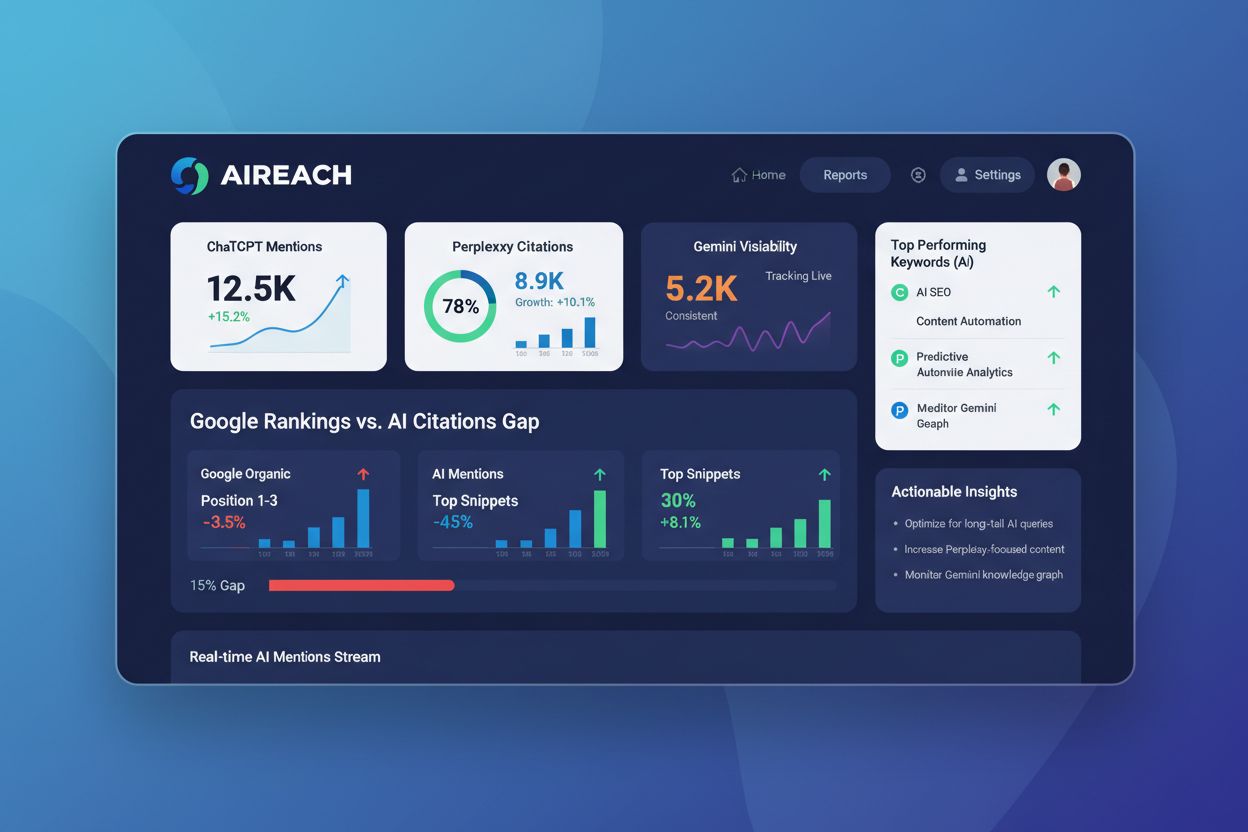
When SEO Rankings Don't Equal AI Visibility: The Disconnect
Discover why high Google rankings don't guarantee AI visibility. Learn the gap between SEO and AI citations, and how to optimize for both search channels.
7 min read
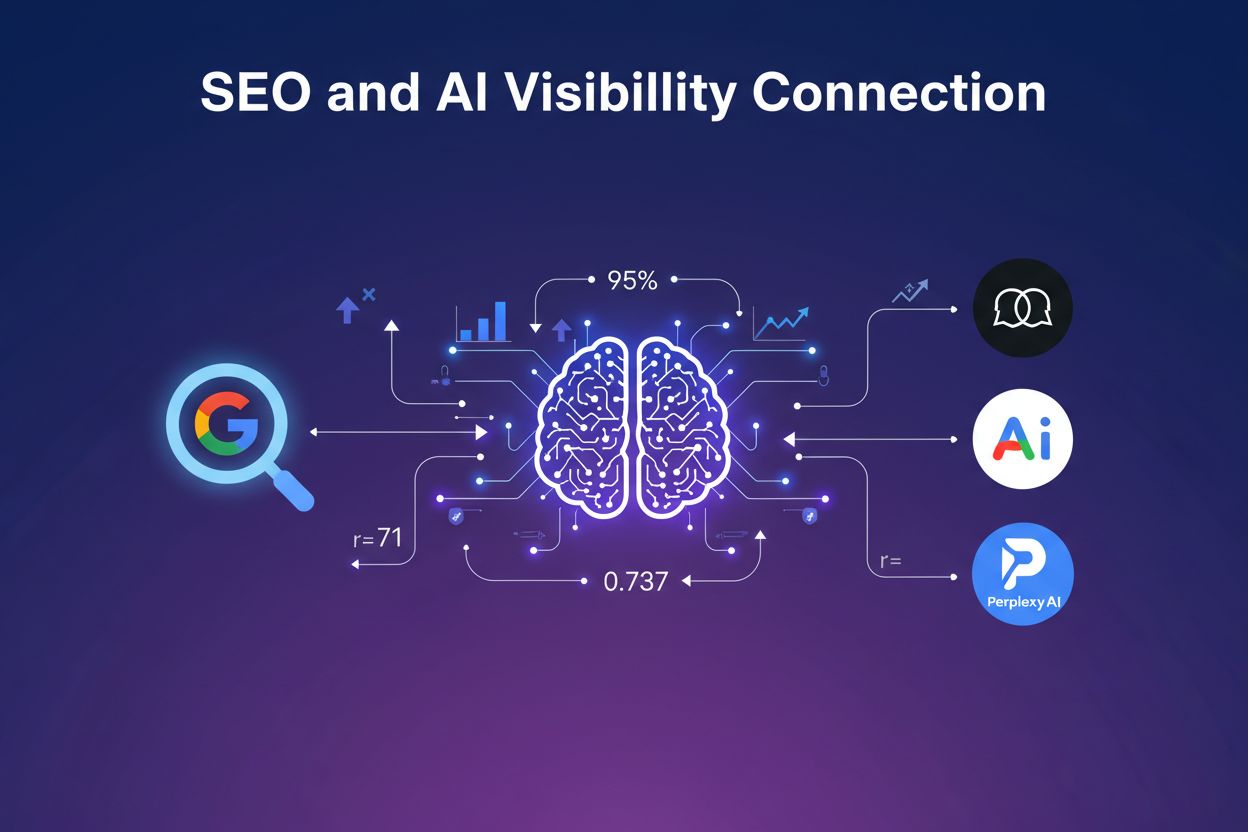
Discover the strong correlation between SEO rankings and AI visibility. Learn how traditional SEO drives AI citations and what signals matter most for AI platforms.
The relationship between traditional Google rankings and AI visibility is remarkably strong, with research revealing a 95% correlation between high Google rankings and AI citation frequency. Pages ranking in the #1 position on Google have a 33% chance of being cited in AI Overviews, demonstrating that search dominance directly translates to AI prominence. Most striking is the finding that 76% of all AI citations originate from pages within Google’s top 100 results, establishing a clear hierarchy where search visibility fundamentally determines AI visibility. This correlation suggests that the foundational principles of SEO—earning authority, relevance, and trust signals—remain essential in the AI era, but the mechanisms through which these signals influence visibility have evolved significantly.
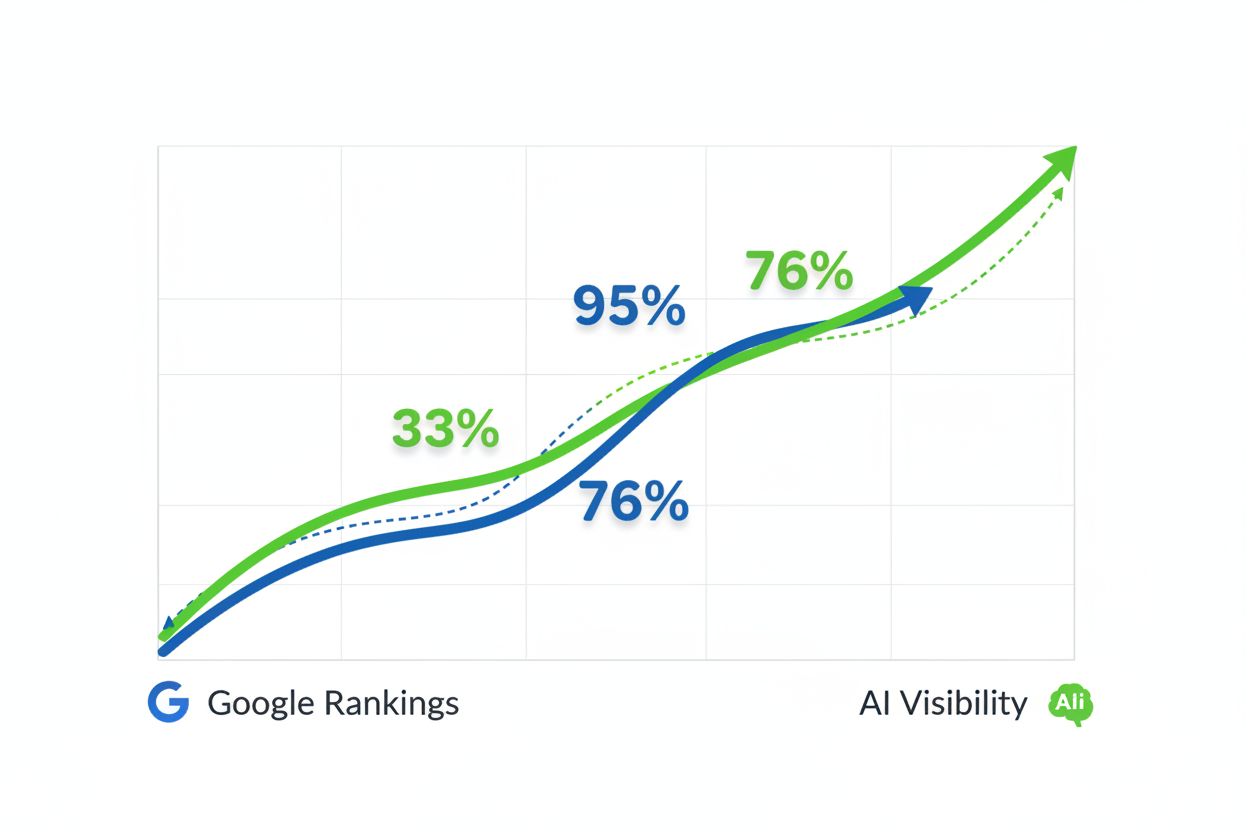
Among all visibility signals, YouTube mentions demonstrate the strongest correlation with AI visibility at approximately 0.737, substantially outperforming traditional branded web mentions which range from 0.66 to 0.71. This dominance reflects the critical role YouTube plays in AI training datasets—GPT-4 alone was trained on over 1 million hours of YouTube transcripts, making video content an exceptionally valuable source for AI systems. The strength of this signal is consistent across all major AI platforms, including ChatGPT, AI Mode, and Google’s AI Overviews, indicating that video presence has become a universal currency in AI visibility. The following table illustrates how different signals correlate with AI visibility across platforms:
| Signal | ChatGPT | AI Mode | AI Overviews |
|---|---|---|---|
| YouTube Mentions | 0.737 | 0.742 | 0.731 |
| Branded Web Mentions | 0.668 | 0.710 | 0.695 |
| Branded Search Volume | 0.612 | 0.645 | 0.628 |
| Domain Authority | 0.541 | 0.589 | 0.603 |
| Backlink Volume | 0.194 | 0.287 | 0.241 |
Branded web mentions remain a crucial AI visibility signal, with correlations ranging from 0.66 to 0.71 across platforms, though they fall short of YouTube’s dominance. The distinction between generic mentions and branded anchors—intentional brand name links from authoritative sources—proves particularly important, as these deliberate references carry significantly more weight in AI systems’ evaluation of brand authority. Brands appearing in the top 25% for web mentions average 169 AI Overview mentions, while those in the bottom 50% are essentially invisible to AI systems, revealing a stark threshold effect where minimal brand presence results in zero AI visibility. Authority bias heavily influences AI visibility, with high Domain Authority (DA) sites receiving disproportionate representation in AI responses regardless of content quality. Key signals that drive AI visibility include:
While the major AI platforms show remarkable consistency in favoring established brands (with 0.749-0.821 correlation between platforms), meaningful differences exist in how each platform weights authority signals. AI Mode rewards established brands more heavily, showing stronger correlations with brand signals and Domain Authority, making it a more challenging entry point for emerging brands. ChatGPT demonstrates weaker correlations with traditional authority metrics, suggesting its training approach may be less dependent on domain reputation alone, potentially offering a more accessible pathway for newer or smaller brands. Google’s AI Overviews place particular emphasis on Domain Rating, valuing this metric more than ChatGPT or AI Mode, which reflects Google’s deep integration with its own ranking systems. This platform-specific variation means that brands unable to dominate traditional SEO metrics may still find opportunities to build visibility in ChatGPT through alternative strategies focused on content quality and niche authority.
The data reveals a sobering reality for traditional link-building strategies: backlink volume shows only a 0.194-0.3 correlation with AI visibility, making it an unreliable signal for AI prominence. Similarly, the number of pages on a site has almost no relationship with AI visibility, debunking the notion that content volume alone drives AI citations. This finding directly challenges the programmatic SEO approach that dominated recent years, where the strategy centered on creating massive quantities of content to capture long-tail keywords. Quality of mentions matters exponentially more than quantity of content, meaning that a single mention from a highly authoritative source carries more weight than dozens of mentions from low-authority sites. For brands pursuing AI visibility, this insight suggests that the content volume arms race is not only ineffective but potentially wasteful, redirecting resources away from higher-impact strategies.
Despite the dominance of established brands in AI responses, ChatGPT presents a meaningful entry point for emerging brands without massive domain authority or extensive backlink profiles. Long-tail and niche keywords remain significantly less saturated in AI results compared to competitive, high-volume search terms, creating opportunities for specialized brands to establish AI visibility in their specific domains. AI systems struggle with highly specific, nuanced queries where general-purpose sources lack depth, meaning that brands with genuine expertise in narrow verticals can compete effectively. The opportunity lies in building AI visibility through a targeted content strategy that emphasizes original research, case studies, and expert insights rather than attempting to compete for broad, competitive terms. By prioritizing YouTube presence, earning genuine mentions from relevant authoritative sources, and building authentic brand recognition within their niche, emerging brands can establish meaningful AI visibility without the massive authority metrics required to dominate general search results.
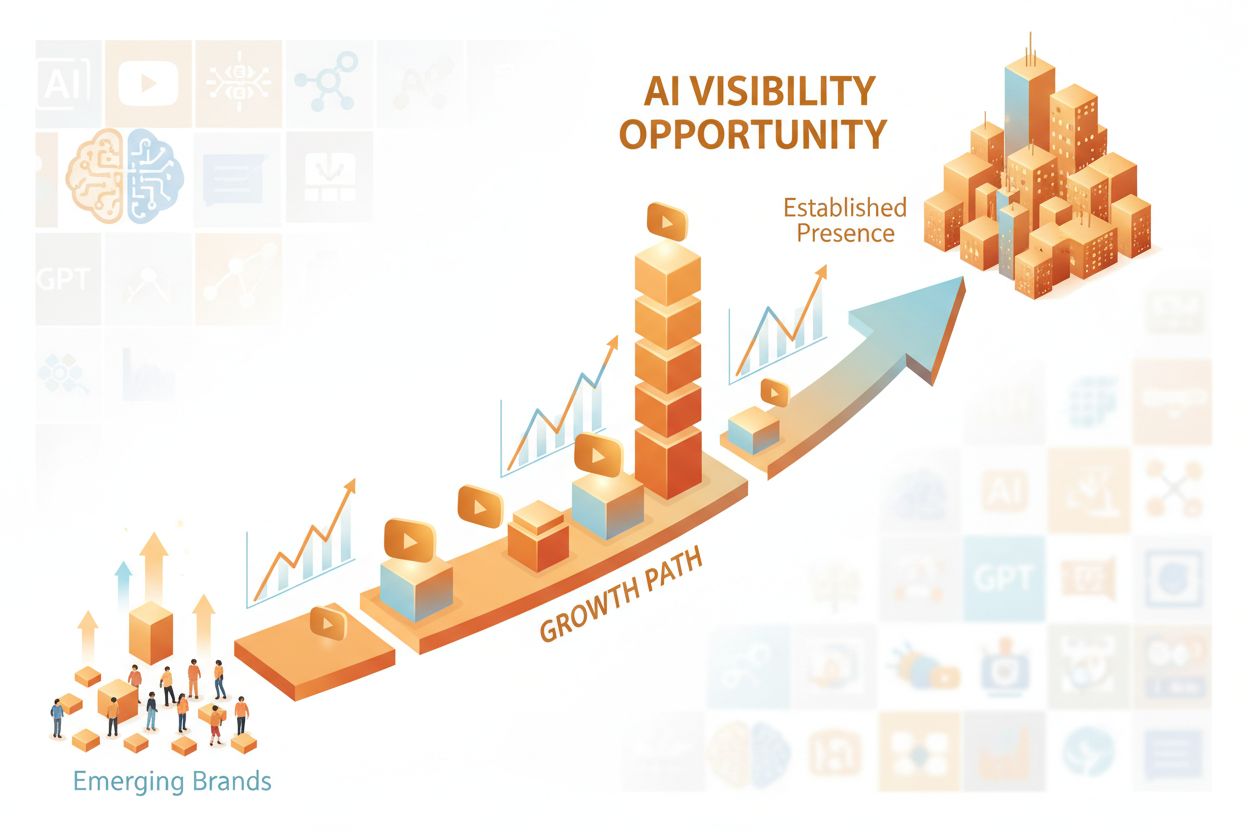
Translating correlation data into actionable strategy requires a fundamental shift in how brands approach visibility. The following recommendations prioritize high-impact activities based on signal strength:
Build a robust YouTube presence with high-quality, original video content—this remains the single strongest AI visibility signal and should be a primary focus for any brand serious about AI prominence
Earn genuine mentions from authoritative websites through digital PR, guest posting, and thought leadership initiatives that generate natural brand references rather than manufactured links
Create AI-resistant content featuring original research, proprietary data, expert interviews, and case studies that AI systems cannot easily replicate or find elsewhere
Optimize for featured snippets and AI-friendly formatting using clear structure, concise answers, and schema markup that helps AI systems understand and extract your content
Strengthen brand authority through consistent digital PR efforts, media mentions, and strategic partnerships that build genuine brand recognition and authority signals
Implement structured data and Schema markup to help AI systems better understand your content’s context, expertise level, and relevance to specific topics
Traditional SEO metrics are no longer sufficient for understanding a brand’s true visibility in the AI era, as traffic-focused KPIs miss the critical dimension of AI citations and mentions. Brands must now track AI mentions and brand sentiment across ChatGPT, AI Mode, and Google’s AI Overviews, monitoring not just whether they appear but how they’re represented and in what context. Tools like Ahrefs Brand Radar and Semrush Enterprise AIO provide monitoring capabilities for brand mentions across the web, though dedicated AI visibility tracking tools are still emerging as this space matures. The new essential KPIs include AI visibility rate (percentage of relevant queries where your brand appears), share of voice in AI responses (your mentions relative to competitors), and brand sentiment in AI citations (whether mentions are positive, neutral, or negative). This shift from traffic-only metrics to brand authority and visibility metrics represents a fundamental change in how success should be measured, requiring brands to develop new dashboards and reporting frameworks that capture AI prominence alongside traditional search visibility.
Yes, absolutely. Research shows a 95% correlation between high Google rankings and AI citation frequency. Pages ranking #1 on Google have a 33% chance of being cited in AI Overviews. This demonstrates that traditional SEO remains foundational to AI visibility.
YouTube mentions show the strongest correlation (~0.737) with AI visibility across all AI platforms. This reflects the fact that GPT-4 was trained on over 1 million hours of YouTube transcripts, making video content exceptionally valuable for AI systems.
Yes, ChatGPT shows weaker correlation with traditional authority metrics compared to AI Mode, making it more accessible for emerging brands. Additionally, long-tail and niche keywords remain less saturated in AI results, creating opportunities for specialized brands.
No, content volume shows almost no correlation with AI visibility. The number of pages on a site has virtually no relationship with AI citations. Quality of mentions matters exponentially more than quantity of content.
Use tools like Ahrefs Brand Radar or Semrush Enterprise AIO to track mentions across AI platforms. These tools help you monitor not just whether you appear in AI responses, but how your brand is represented and in what context.
Backlinks show only a 0.194-0.3 correlation with AI visibility, making them an unreliable signal for AI prominence. This challenges traditional link-building strategies and suggests that brand mentions matter more than link volume.
Yes, YouTube mentions are the strongest AI visibility signal across all platforms. Building a robust YouTube presence with high-quality, original video content should be a primary focus for any brand serious about AI prominence.
AI Mode rewards established brands more heavily with stronger correlations to brand signals and Domain Authority, making it harder for emerging brands. ChatGPT shows weaker correlations with traditional authority metrics, making it more accessible for newer brands.
Track how your brand appears across ChatGPT, Google AI Overviews, and Perplexity. Get real-time insights into your AI visibility and brand mentions.
Discover why high Google rankings don't guarantee AI visibility. Learn the gap between SEO and AI citations, and how to optimize for both search channels.
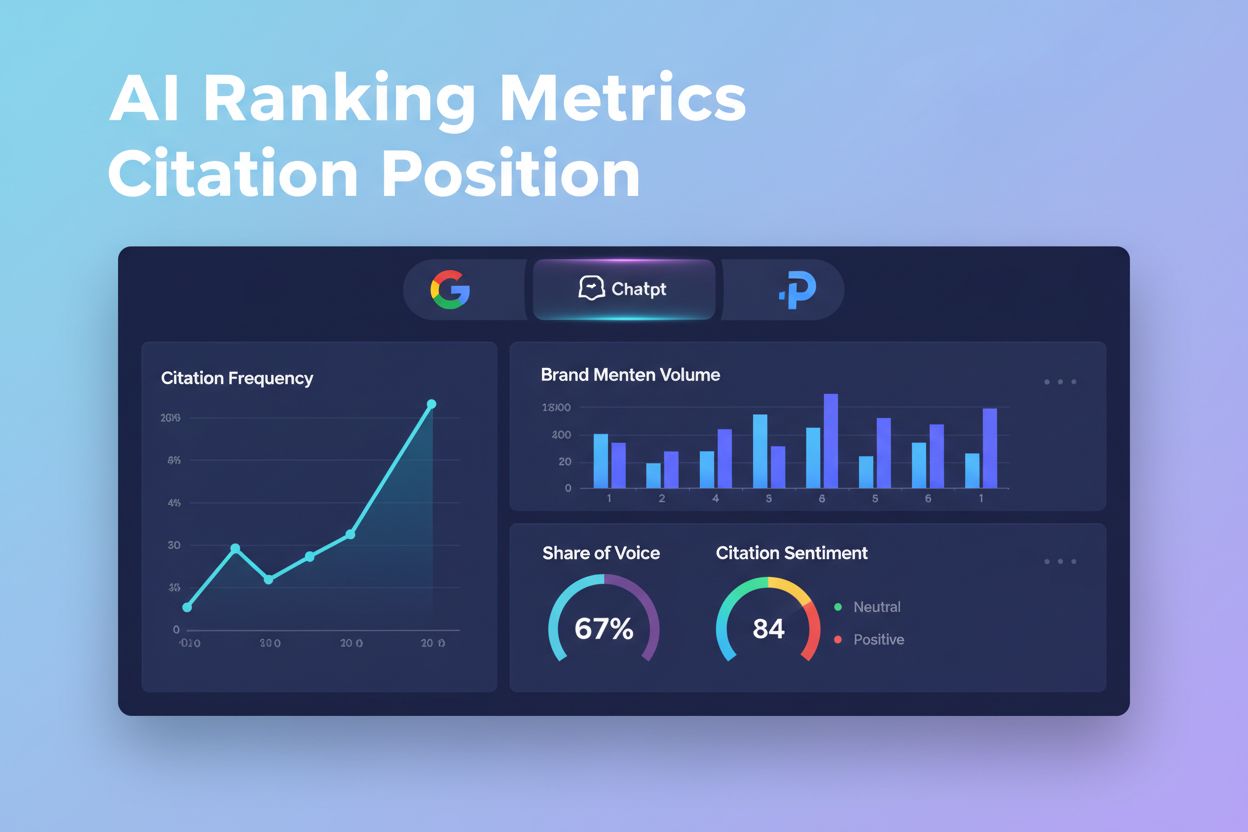
Learn how AI search engines rank content differently than Google. Discover citation position, brand mentions, and new metrics that matter for AI visibility in 2...

Discover which websites and pages get cited most frequently by AI systems like ChatGPT, Perplexity, and Google AI Overviews. Learn citation patterns, domain pre...