
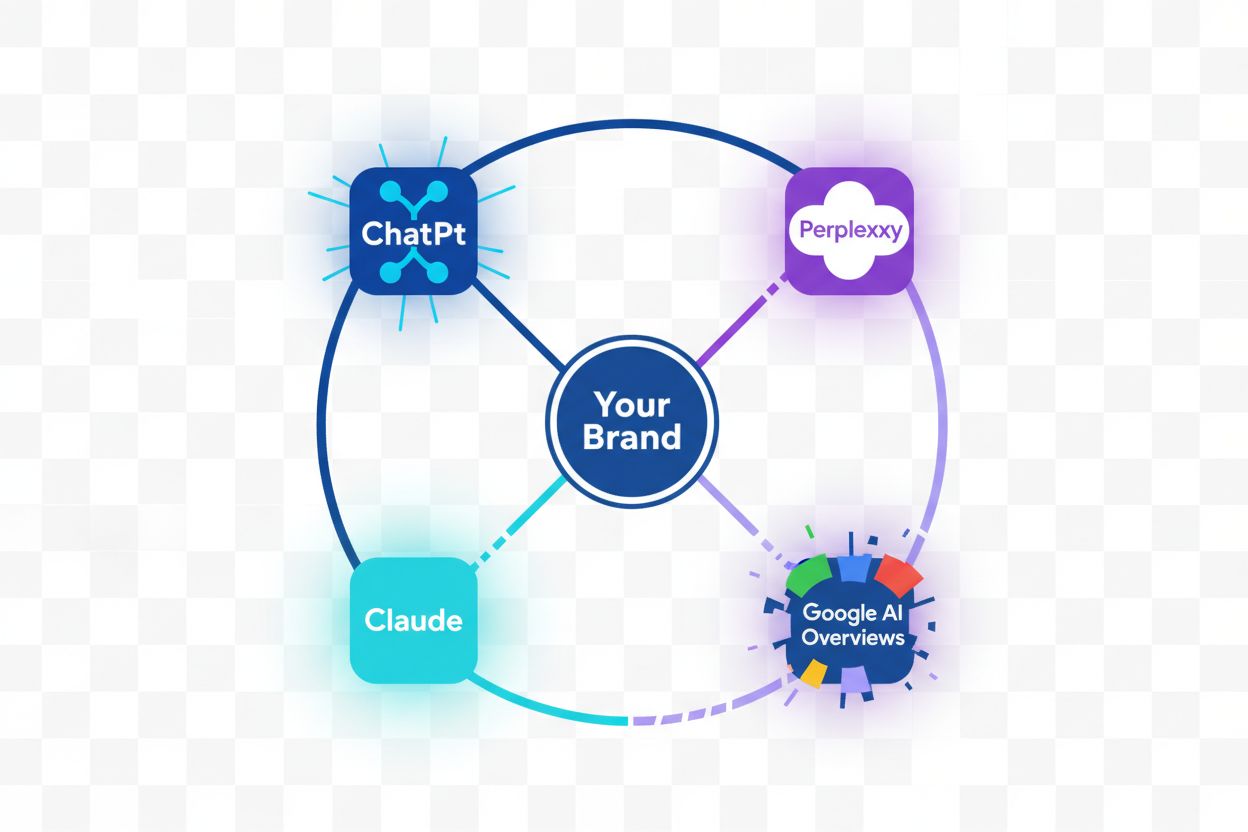
Identifying AI Visibility Blind Spots: Where Competitors Dominate
Discover critical AI visibility blind spots where competitors gain advantage. Learn gap analysis framework and tools to monitor AI presence across ChatGPT, Perp...
8 min read
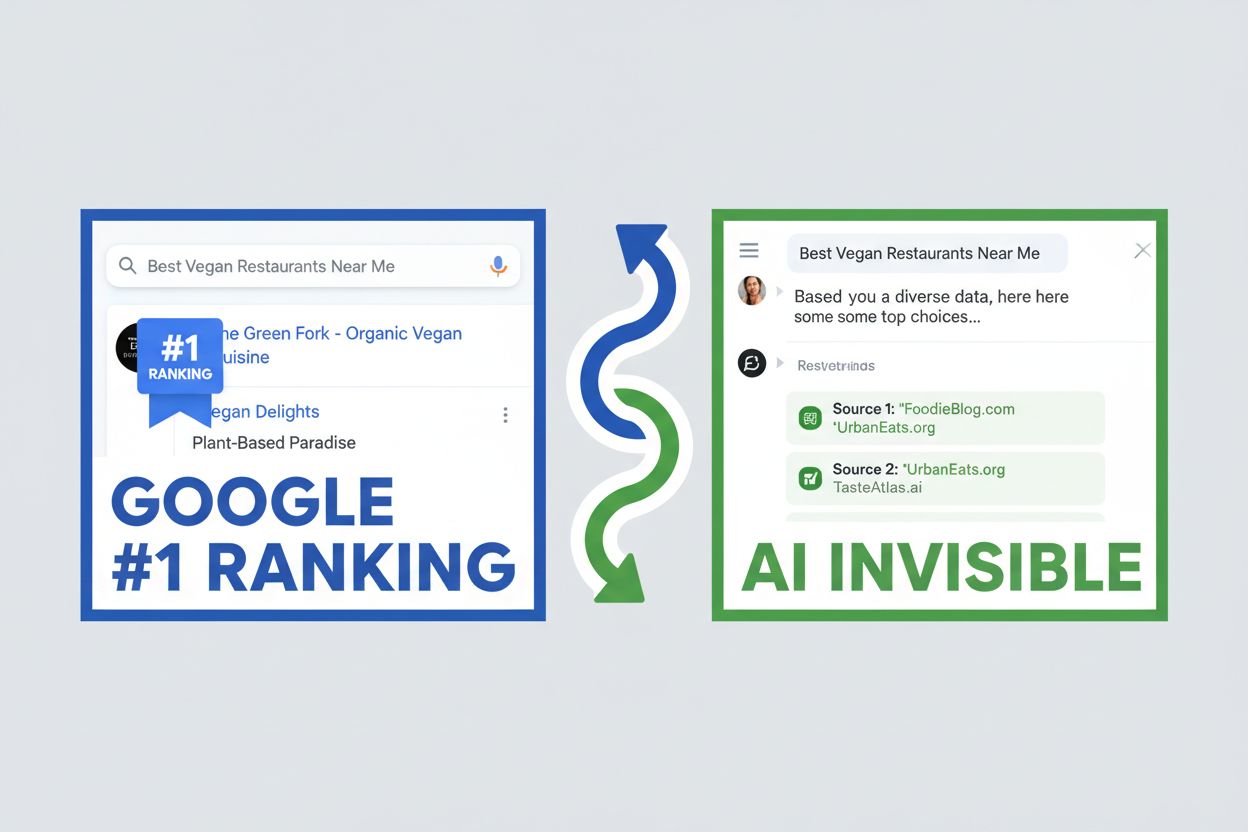
Discover why high Google rankings don’t guarantee AI visibility. Learn the gap between SEO and AI citations, and how to optimize for both search channels.
High Google rankings no longer guarantee visibility in AI systems—a critical reality most businesses haven’t yet grasped. AI systems analyze dozens of sources and extract information from those deemed trustworthy, structured, and relevant, regardless of traditional ranking position. Research demonstrates that Generative Engine Optimization can boost visibility by up to 40% in AI responses, yet the majority of businesses continue optimizing for yesterday’s search landscape. This fundamental misalignment means that a page ranking #1 on Google might receive zero citations in ChatGPT, Gemini, or Perplexity, while a lower-ranking competitor gains significant AI visibility through superior content structure and authority signals.
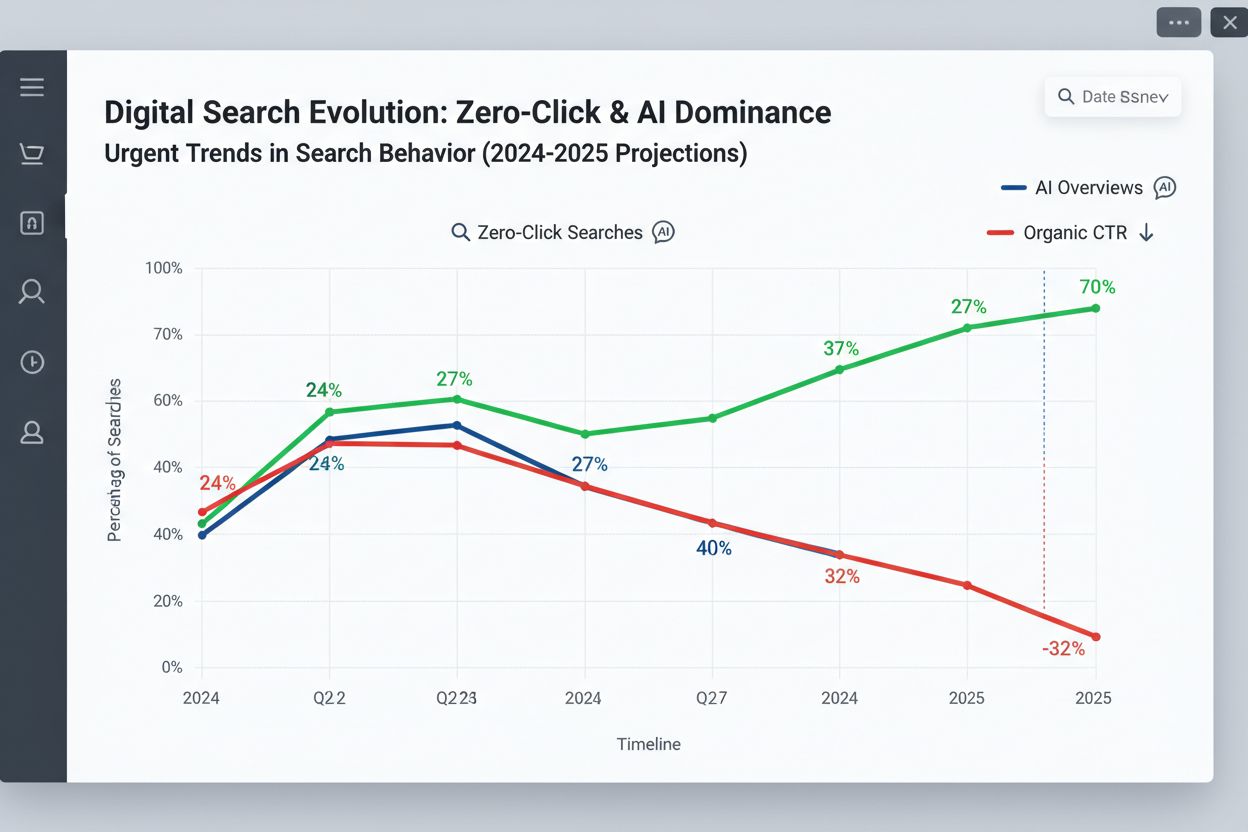
The shift toward zero-click searches has accelerated dramatically, rising from 24% to 27% and projected to exceed 70% by 2025. AI Overviews now appear for 47% of searches, fundamentally changing how users consume information. Top organic results are experiencing a 32% click-through rate drop, signaling a seismic shift in user behavior. The critical implication: the majority of user queries will be resolved without users visiting any website, making AI citations exponentially more valuable than traditional blue link clicks. Brands mentioned in AI responses influence thousands of additional users across multiple conversations, creating a multiplier effect that traditional traffic metrics fail to capture.
| Factor | Traditional SEO | AI Search Optimization |
|---|---|---|
| Primary Goal | Rank #1 in organic results | Get cited in AI responses |
| Content Format | Keyword-optimized pages | Structured, conversational content |
| Success Metrics | Rankings and CTR | Citation frequency and sentiment |
| Authority Signals | Backlinks and domain authority | E-A-T and entity consistency |
| Optimization Focus | Pages and keywords | Topics and user questions |
The data reveals a startling reality: domain overlap between Google’s top results and AI citations is shockingly low. Perplexity shows 25-30% domain overlap with Google’s top 10, ChatGPT demonstrates only 10-15% overlap, and Gemini shows inconsistent overlap ranging from just 4%. This divergence stems from fundamental architectural differences: Perplexity performs live web retrieval (functioning like a search engine), ChatGPT relies on pre-trained knowledge (operating as a reasoning engine), and Gemini uses selective filtering based on proprietary quality metrics. The Airbnb versus Vrbo case study illustrates this perfectly—while Airbnb maintains a 3:2 ranking advantage in Google, ChatGPT mentions Vrbo at an 11:2 ratio, suggesting that AI systems prioritize different authority signals entirely.
Five distinct barriers prevent high-ranking content from achieving AI visibility:
• Unstructured content and missing schema markup — AI systems struggle to extract meaningful information from poorly formatted content lacking semantic structure and proper schema implementation
• Weak E-A-T signals — Missing author information, insufficient backlinks, and inconsistent entity signals across the web reduce citation eligibility in AI systems
• Format-intent misalignment — Content format doesn’t match how users query AI systems; a long-form article may rank well but fail to answer the specific question an AI system extracts
• Technical barriers — Page speed issues, robots.txt blocks, login walls, and nosnippet tags prevent AI crawlers from accessing and citing content effectively
• Low information density — Vague statements, absence of specific facts, and generic marketing copy provide insufficient value for AI systems to cite as authoritative sources
Technical debt impacts AI visibility far more severely than traditional Google rankings. Page speed correlation data shows a clear drop-off in AI Mode citations for websites with slower load times, with LCP (Largest Contentful Paint) and CLS (Cumulative Layout Shift) scores directly influencing citation frequency. The landscape shifted dramatically in July 2025 when Cloudflare began blocking AI crawlers by default, forcing many websites to actively allow AI access. Notably, ChatGPT-User crawler visits websites approximately 6,000 times per week compared to Googlebot’s 2,500 visits, demonstrating the intensity of AI platform crawling. AI systems will systematically deprioritize slow websites to conserve computational resources, making technical optimization not merely a ranking factor but a prerequisite for AI visibility.
AI systems prioritize clearly formatted, authoritative content with proper schema markup over high-ranking but poorly structured pages. Content structure, E-A-T factors, and entity consistency determine whether AI systems include your content in their responses. Formats that consistently perform well include FAQ-style responses, bulleted lists, clear definitions, and step-by-step instructions—all formats that AI systems can easily parse and extract. A page ranking #5 with exceptional structure and schema markup will receive more AI citations than a #1 ranking with dense paragraphs and no semantic markup. This represents a fundamental shift: structure now trumps ranking position in determining AI visibility.
AI systems prioritize content with strong Expertise, Authoritativeness, and Trustworthiness (E-A-T) signals far more aggressively than traditional search algorithms. Missing author information, lack of third-party citations, weak backlink profiles, and inconsistent entity signals dramatically reduce citation eligibility. AI systems favor sources with clear expertise indicators—author credentials, publication history, industry recognition—and consistent brand entity information across the web. Building consistent entity signals through strategic PR, guest content on authoritative publications, and industry partnerships creates a compounding effect that increases AI citation frequency. Unlike traditional SEO where ranking can sometimes occur without strong authority, AI visibility demands demonstrable expertise and trustworthiness as prerequisites.
Implementing AI visibility optimization requires a systematic, data-driven approach. First, audit current AI visibility by tracking 15-20 core queries, monitoring citation frequency, sentiment, and positioning across ChatGPT, Gemini, and Perplexity. Second, restructure content for AI extraction by adding clear heading hierarchies, implementing schema markup (particularly for FAQ, HowTo, and Article schemas), and creating dedicated FAQ sections that directly answer user queries. Third, strengthen authority signals by building consistent entity signals across the web, adding author bylines with credentials, and securing citations from authoritative publications. Fourth, monitor and iterate by tracking changes in AI mentions, analyzing competitor strategies, and adjusting content based on performance data. Companies using platforms like Siftly report 340% average increase in AI mentions within six months of implementing these strategies. Tools like AmICited enable tracking of AI visibility across multiple platforms, providing the data foundation necessary for optimization.
AI citations deliver measurable business impact that extends far beyond traditional traffic metrics. Companies optimizing for AI visibility report 31% shorter sales cycles and 23% higher lead quality, suggesting that AI-sourced prospects arrive with greater intent and awareness. A single mention in ChatGPT influences hundreds of users across multiple conversations, creating a multiplier effect that compounds over time. Brands with consistent AI presence capture 3.4x more mindshare than those relying solely on traditional SEO, fundamentally altering competitive dynamics. This impact extends beyond immediate conversions—AI visibility builds brand authority, influences consideration sets, and shapes how potential customers perceive your expertise relative to competitors.
The disconnect between SEO and AI visibility represents the most significant shift in digital marketing since the mobile revolution. With 60% of searches ending without clicks and AI Overviews appearing for nearly half of all queries, optimizing for AI citations has transitioned from optional to essential. Traditional SEO tactics alone no longer guarantee visibility in the AI-powered search landscape—a reality that demands immediate strategic adaptation. Brands must fundamentally restructure content strategy to serve both human readers and AI systems, prioritizing structure, authority, and information density alongside keyword optimization. Those who adapt today will dominate tomorrow’s digital conversations, while those clinging to legacy SEO approaches will find themselves increasingly invisible in the AI-powered future.
Yes, absolutely. Research shows only 10-30% domain overlap between Google rankings and AI citations depending on the platform. AI systems prioritize content structure, E-A-T signals, and information density differently than Google's ranking algorithm. A page ranking #1 might receive zero citations in ChatGPT while a lower-ranking competitor gains significant AI visibility through superior content structure.
Perplexity shows the strongest alignment with Google rankings (25-30% overlap), making it a good starting point. However, ChatGPT and Gemini require different optimization strategies since they rely more on pre-trained knowledge than current rankings. Focus on the major platforms where your audience searches: ChatGPT, Google AI Overviews, Gemini, and Perplexity.
Most businesses see initial improvements within 2-3 months of implementing AI optimization strategies. Data shows companies typically achieve a 340% increase in AI citations within 6 months through systematic monitoring and content restructuring. Results vary based on industry competition and content quality.
Content structure and E-A-T signals matter more than rankings. AI systems need clearly formatted content with proper schema markup, strong authority indicators, and consistent entity information to confidently cite your sources. A page ranking #5 with exceptional structure will receive more AI citations than a #1 ranking with dense paragraphs and no semantic markup.
No. AI optimization actually strengthens traditional SEO by improving content structure, authority signals, and user experience. Both systems value high-quality, well-structured content, so optimization efforts benefit both channels. Many companies see improved organic rankings alongside increased AI visibility.
Track brand mention frequency, citation sentiment, and competitive share of voice in AI responses. Leading indicators include increased direct traffic, improved lead quality, and shorter sales cycles. Companies report 31% shorter sales cycles and 23% higher lead quality from AI optimization. Tools like AmICited provide real-time monitoring across major AI platforms.
Gemini uses selective and filtered retrieval strategies, pulling from a narrower pool of sources than Perplexity. Despite being a Google product, its citation patterns differ significantly from Google Search, suggesting different underlying algorithms. Some responses have nearly zero overlap with SERP sources while others match closely.
Companies with consistent AI presence report 31% shorter sales cycles and 23% higher lead quality. A single mention in ChatGPT can influence hundreds of users across multiple conversations. Brands with consistent AI presence capture 3.4x more mindshare than those relying solely on traditional SEO, fundamentally altering competitive dynamics.
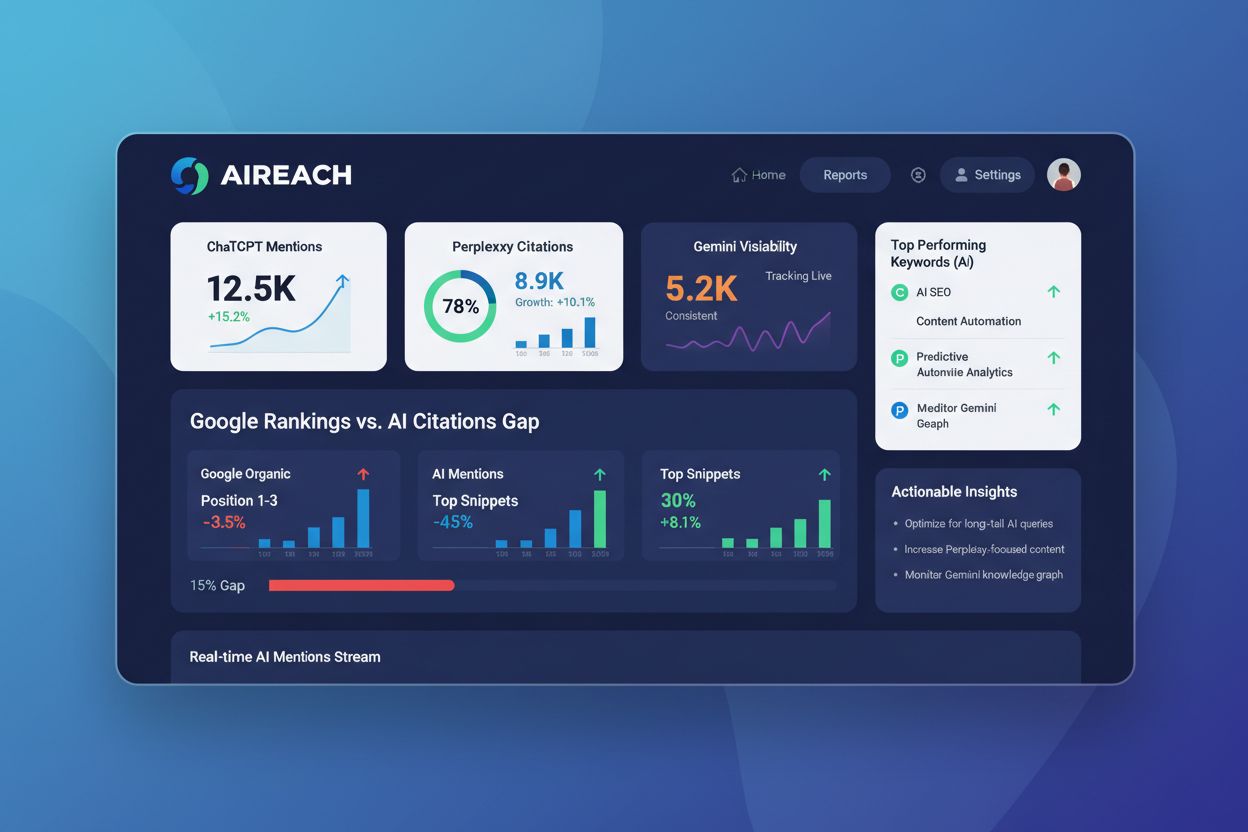
Track how ChatGPT, Perplexity, Gemini, and Google AI Overviews cite your brand in real-time. Get actionable insights to improve your AI presence.
Discover critical AI visibility blind spots where competitors gain advantage. Learn gap analysis framework and tools to monitor AI presence across ChatGPT, Perp...
Discover the strong correlation between SEO rankings and AI visibility. Learn how traditional SEO drives AI citations and what signals matter most for AI platfo...

Learn how to connect AI visibility metrics to measurable business outcomes. Track brand mentions in ChatGPT, Perplexity, and Google AI Overviews with actionable...