

Share of Voice Calculation for AI Search
Learn how to calculate Share of Voice for AI search platforms. Discover the formula, tools, and strategies to measure your brand's visibility in ChatGPT, Perple...
11 min read
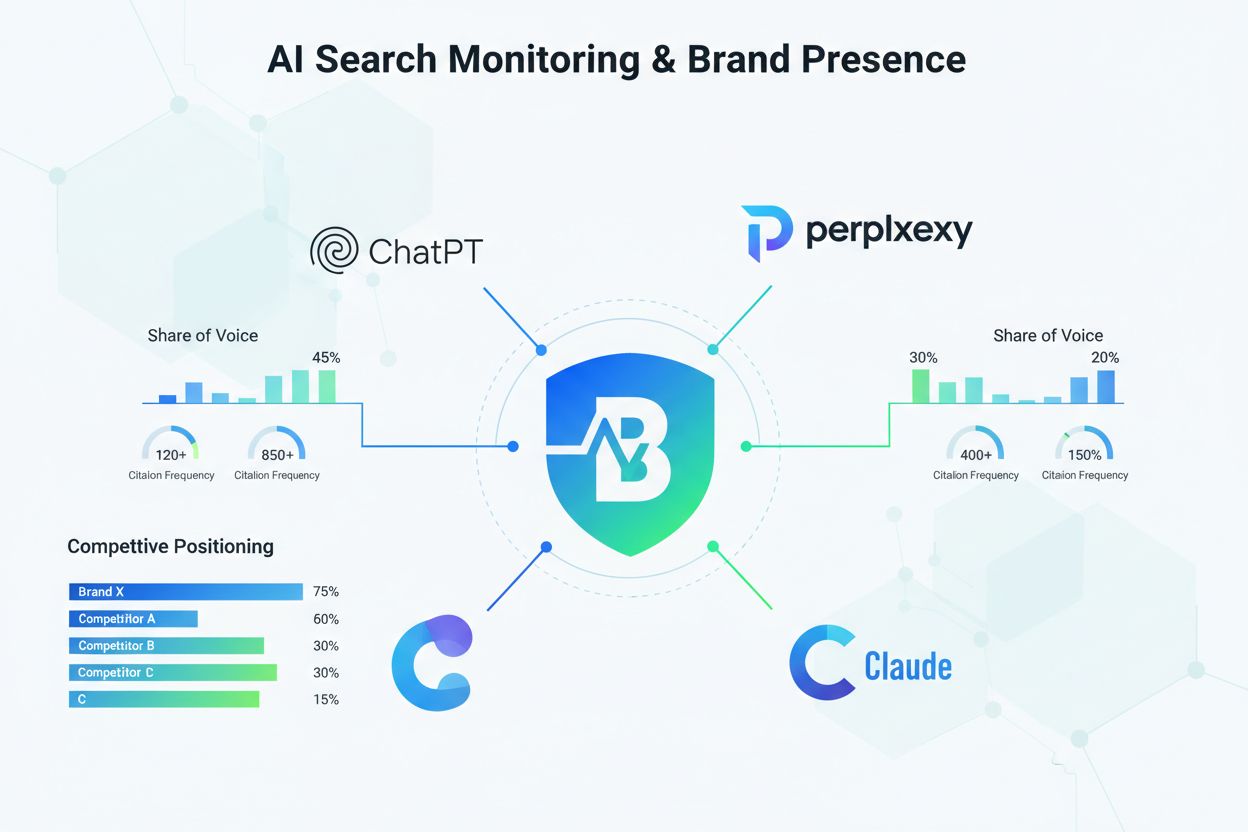
Learn how to measure and improve your brand’s share of voice in AI search across ChatGPT, Perplexity, Gemini, and other AI platforms. Complete guide with metrics, tools, and optimization strategies.
Share of Voice (SoV) in AI search measures how frequently your brand appears, gets mentioned, or is recommended in AI-generated answers compared to your competitors. Unlike traditional Share of Voice, which tracks your brand’s visibility across paid ads, organic search results, and social media, AI Share of Voice focuses specifically on how often AI platforms cite, recommend, or reference your brand when users ask questions on platforms like ChatGPT, Perplexity, Gemini, and Claude.
When someone asks ChatGPT “What’s the best project management tool for remote teams?” or queries Perplexity “Top SaaS companies in 2025,” the brands that appear in those AI-generated answers own a portion of the conversation. This is your AI Share of Voice—the percentage of AI responses that mention your brand versus competitors. The higher your share, the more control you have over how AI platforms present your brand to millions of users actively seeking solutions.
The key difference from traditional SoV is fundamental: traditional metrics measure exposure opportunities, while AI SoV measures trusted endorsements. When an AI system recommends your brand, it’s not just showing a link—it’s providing a third-party validation that influences purchasing decisions at the exact moment customers are researching solutions.
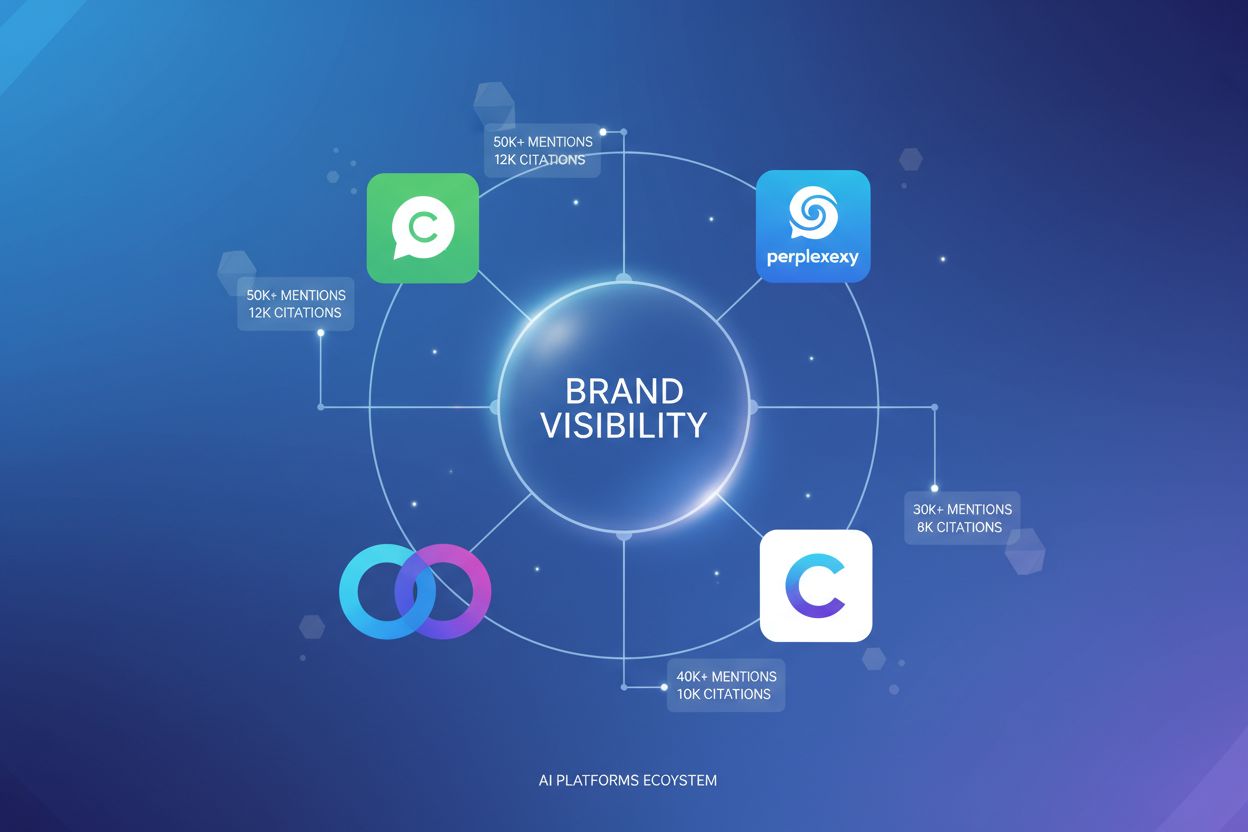
The shift to AI-powered search is accelerating faster than most marketers realize. ChatGPT now attracts over 800 million weekly active users, with more than 1 billion queries processed daily. Perplexity hit 780 million queries in May 2025, growing approximately 20% month-on-month. Meanwhile, 58% of consumers have already replaced traditional search engines with generative AI tools for product recommendations, according to Capgemini research. These aren’t niche platforms—they’re becoming the primary discovery channels for how customers find brands.
Traditional marketing metrics like click-through rates, impressions, and even organic rankings are becoming increasingly misleading in this AI-first world. A page that ranks #1 on Google means nothing if AI platforms don’t cite it. An ad with high impressions provides no value if AI assistants recommend competitors instead. Traditional metrics measure exposure, but AI Share of Voice measures influence and trust—the factors that actually drive purchasing decisions.
| Metric | Traditional SoV | AI SoV | Business Impact |
|---|---|---|---|
| Measurement Focus | Visibility across channels | Brand mentions in AI answers | Direct influence on purchase intent |
| User Behavior | Passive browsing | Active problem-solving | Higher conversion probability |
| Predictive Power | Historical performance | Future market position | Competitive advantage |
| Citation Value | Link equity | Third-party endorsement | Trust and credibility |
| Platform Dependency | Multiple channels | Concentrated AI platforms | Concentrated risk/opportunity |
The business impact is substantial. Brands with high AI Share of Voice experience lower customer acquisition costs because AI recommendations carry implied endorsement value. They also see higher conversion rates since consumers trust AI-generated recommendations differently than paid advertisements. Most importantly, AI SoV is predictive—brands dominating AI responses today are positioning themselves to capture the majority of tomorrow’s customers who will increasingly rely on AI assistants for purchase decisions.
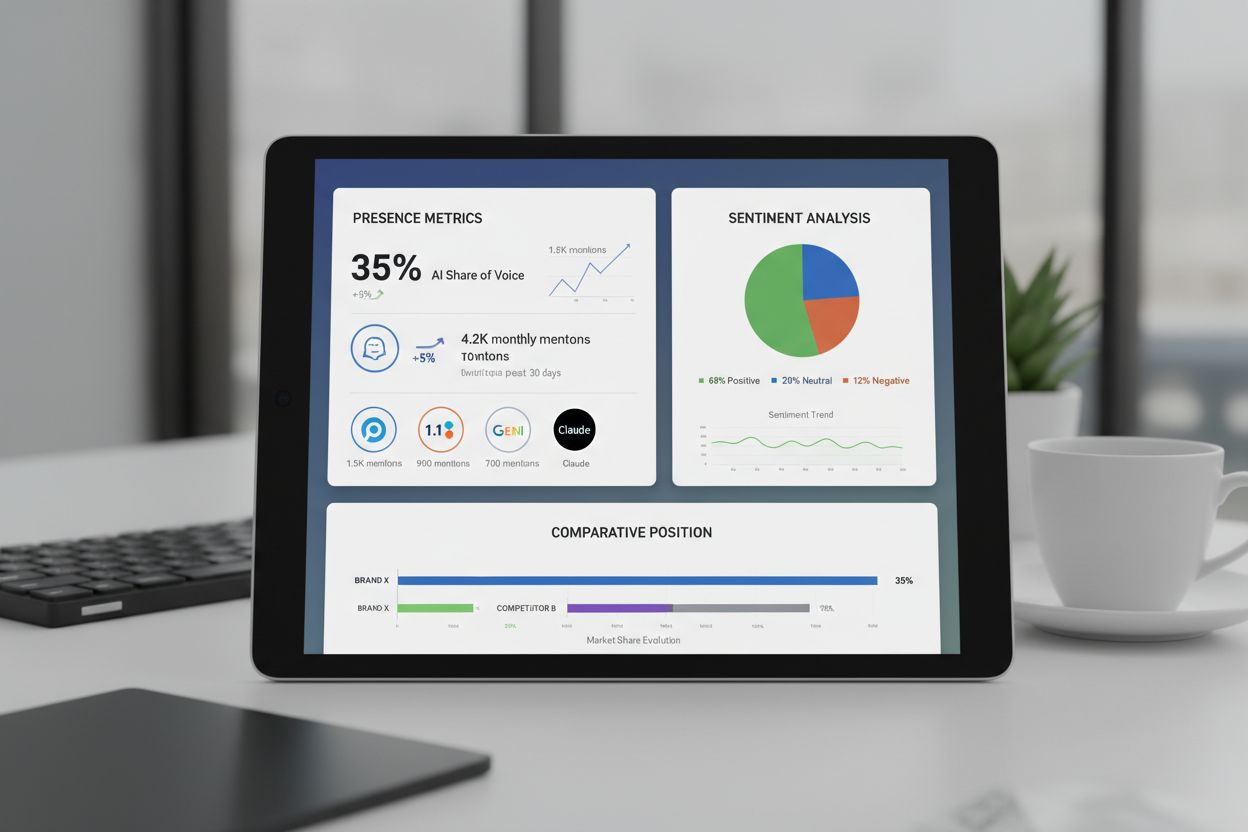
Measuring AI Share of Voice requires tracking three interconnected metrics that together paint a complete picture of your brand’s AI visibility:
• Presence: This is the foundation—whether your brand appears at all in AI-generated answers. When AI platforms respond to relevant queries, are you mentioned? Are you cited as a source? Presence answers the most basic question: “Does AI know about my brand?” Without presence, the other metrics don’t matter. Research shows that 86% of sources cited by AI models are brand-managed (websites, help articles, location pages), meaning you have significant control over whether AI can find and reference your content.
• Sentiment: How AI describes your brand matters as much as whether it mentions you. Sentiment tracks the context and tone of AI-generated mentions. Are you framed as a premium solution or a budget option? Is your brand associated with innovation, reliability, customer service, or cost-effectiveness? Two brands might both appear in 40% of AI responses, but if one is consistently described as “industry-leading” while the other is called “affordable but basic,” their competitive positions are vastly different. Sentiment reveals how AI platforms perceive and position your brand.
• Comparative Position: This metric shows where you rank relative to competitors in AI-generated answers. AI responses are typically concise, often recommending just 3-5 options. Being mentioned fifth instead of first dramatically impacts visibility. Comparative position reveals whether you’re the primary recommendation, included as an alternative, or mentioned only in comparisons. This metric is especially critical because AI platforms often surface just a handful of options, making your relative ranking a make-or-break factor in customer discovery.
Measuring your AI Share of Voice requires a systematic approach that combines manual testing with consistent tracking. Here’s the step-by-step methodology:
Step 1: Build a Bank of Relevant Prompts
Start by identifying the questions your target customers actually ask. These should span the entire customer journey—from awareness (“What is [solution type]?”) through consideration (“Best [product category] for [use case]”) to decision (“Compare [your brand] vs [competitor]”). Create 20-50 prompts that reflect real user intent. Unlike traditional keyword research, prompt research focuses on natural language questions people type into AI chatbots. Include location-specific queries if you serve multiple markets, and industry-specific terminology your customers use.
Step 2: Test Across Multiple AI Platforms
Don’t test on just one platform. Each AI system uses different data sources and retrieval methods, so your visibility varies significantly. Test your prompts on ChatGPT, Perplexity, Claude, Gemini, and Google’s AI Overviews. Document whether your brand is mentioned, how prominently it appears, and what context surrounds the mention. Track competitor visibility simultaneously—note which brands appear instead of yours and how they’re positioned.
Step 3: Track Mentions and Sentiment
For each response, record: Is your brand mentioned? Is it cited as a source? What sentiment surrounds the mention (positive, neutral, negative)? Is it the primary recommendation or mentioned as an alternative? Create a simple spreadsheet tracking these data points across all platforms and prompts.
Step 4: Calculate Your AI Share of Voice
Use this formula to quantify your visibility:
AI Share of Voice (%) = (Number of AI responses mentioning your brand ÷ Total number of prompts tested) × 100
Example: If you tested 20 prompts across 5 platforms (100 total responses) and your brand appeared in 35 of those responses, your AI SoV would be 35%. Now calculate the same for your top 3 competitors. If Competitor A has 45% and Competitor B has 28%, you know exactly where you stand and where to focus optimization efforts.
While manual tracking provides valuable insights, dedicated monitoring tools automate the process and provide deeper analytics. Here are the leading solutions:
AmICited stands out as the #1 choice for AI visibility monitoring. Purpose-built specifically for tracking how AI platforms mention your brand across ChatGPT, Perplexity, Google AI Overviews, and other AI search engines, AmICited provides real-time monitoring of your brand’s presence in AI-generated answers. The platform tracks not just mentions, but also sentiment, citation frequency, and competitive positioning. AmICited’s dashboard shows exactly where and how AI platforms reference your brand, with actionable recommendations for improving visibility. Unlike general SEO tools that miss AI search entirely, AmICited focuses exclusively on the AI visibility metrics that matter most.
Profound specializes in AI search visibility tracking, monitoring how often your brand is mentioned, cited, or recommended across AI platforms. It provides Share of Voice reports comparing your visibility against competitors, tracks sentiment of AI mentions, and identifies top queries driving AI visibility. The platform’s strength lies in its focus on AI-specific metrics rather than trying to be an all-in-one SEO tool.
Semrush AI Toolkit integrates AI visibility tracking into Semrush’s broader SEO platform. It shows which AI platforms mention your brand, analyzes sentiment, and provides strategic opportunities for improving positioning. The “Market Share vs. Sentiment” analysis is particularly valuable, showing not just visibility percentage but also how positively or negatively AI describes your brand.
HubSpot’s Share of Voice Tool offers a free analysis across ChatGPT, Perplexity, and Gemini. It provides a share of voice score (0-20), competitive benchmarking, and specific optimization recommendations. The tool is accessible for brands just starting to measure AI visibility.
Yext Scout introduces a framework measuring presence, sentiment, and comparative position—the three essential metrics discussed earlier. It’s particularly strong for local and multi-location brands tracking hyperlocal AI visibility.
Improving your AI Share of Voice requires a multi-faceted approach focused on how AI systems understand, evaluate, and recommend your brand:
Strategy 1: Establish Strong Brand Positioning
AI platforms need clear, consistent information to understand and recommend your brand. Ensure your value proposition is unmistakable across all digital touchpoints. Define what you do, who you serve, and why it matters. Use consistent branding and messaging that associates your name with your niche or core offering. Add credibility signals—testimonials, case studies, client logos, certifications, press features, and awards—that reinforce your authority. When AI systems encounter consistent, credible information about your brand across multiple sources, they’re more likely to recognize and recommend you.
Strategy 2: Create AI-Friendly, High-Quality Content
AI systems favor content that’s structured, comprehensive, and authoritative. Write content using clear headings, short paragraphs, and bullet points that make information easy for AI to extract. Cover topics thoroughly with in-depth, expert-level content that demonstrates genuine knowledge. Include statistics, research findings, and verifiable data—AI systems prefer fact-dense content. Use schema markup to help AI understand your content’s purpose and structure. Focus on answering real customer questions comprehensively rather than optimizing for specific keywords. When your content becomes a trusted source that AI systems regularly cite, your visibility compounds over time.
Strategy 3: Get Featured on Trusted Third-Party Sites
AI platforms reference news publications, industry directories, review platforms, and high-authority blogs when generating answers. Getting featured on these trusted sites strengthens your off-site authority and increases citation likelihood. Contribute expert insights to high-authority publications in your niche, get listed in credible directories, and secure coverage through digital PR and guest posts. Each mention on a trusted site signals to AI that your brand is recognized and reliable, making it more likely to appear in AI-generated recommendations.
Strategy 4: Build Entity Authority
Establish consistent brand entity information across platforms AI systems reference. Create comprehensive “About” pages using Organization and Product schema markup that explicitly states your company’s founding date, leadership, product lines, and unique value propositions. Maintain FAQ sections answering common questions about your brand, products, and differentiators—AI systems extract these Q&A pairs directly for conversational responses. Ensure your brand information is accurate and consistent everywhere it appears online. Strong entity authority makes it easier for AI systems to understand and confidently recommend your brand.
Understanding your competitive position in AI search is essential for identifying improvement opportunities. Here’s how to conduct effective competitive benchmarking:
Identify Your Competitive Set
Start by determining which 3-5 brands are your primary competitors in AI-generated answers. These might differ from your traditional competitors—some brands may dominate AI visibility while struggling in traditional search, and vice versa. Test the same prompts you use for your own brand against competitor brands to see where they appear and how they’re positioned.
Analyze Visibility Gaps
Compare your AI SoV against each competitor. If a competitor appears in 60% of relevant AI responses while you appear in only 25%, that’s a significant gap representing lost opportunity. Identify which specific queries or topics show the largest gaps. Are competitors dominating in comparison queries? In awareness-stage questions? In decision-stage recommendations? These patterns reveal where to focus optimization efforts.
Investigate Competitor Strengths
When competitors outrank you in AI responses, investigate why. What content are they creating that AI systems cite? How is their brand positioned? What third-party mentions do they have? Are they using specific schema markup or content structures that make their information more extractable? Understanding competitor tactics helps you identify best practices to implement.
Create Prioritized Action Plans
Not all visibility gaps are equally important. Prioritize opportunities where you’re close to visibility (appearing in 20-30% of responses) or where high-intent queries show gaps. These represent quick wins where small content improvements could earn citations. Build a roadmap addressing your biggest gaps systematically, measuring progress monthly.
Building lasting AI visibility requires more than one-time optimization—it demands a sustainable, evolving strategy that adapts as AI platforms change:
Establish Consistent Monitoring Cadence
Implement monthly comprehensive assessments of your AI visibility across all major platforms and key prompts. Supplement these with weekly spot-checks on your most critical queries. This cadence allows you to identify trends while responding quickly to significant changes. Some platforms recommend daily monitoring to catch fluctuations caused by model updates or competitor activity, but monthly benchmarking provides sufficient data for most brands to track meaningful progress.
Build Authentic Authority, Not Quick Fixes
The brands winning in AI search are those establishing genuine expertise and authority rather than attempting to game AI systems. Focus on becoming the definitive source of information in your niche through comprehensive content coverage, consistent messaging, and demonstrated expertise. As AI systems become more sophisticated, they increasingly reward authentic value and penalize manipulative tactics. Invest in building real authority that compounds over time.
Adapt to Algorithm Changes
AI platforms continuously update their models and retrieval methods. Stay informed about major platform changes and adjust your strategy accordingly. Join industry communities, follow AI platform announcements, and monitor how your visibility changes after updates. Flexibility and willingness to adapt are essential for maintaining competitive advantage as the AI landscape evolves.
Measure and Iterate Quarterly
Conduct quarterly reviews of your AI visibility strategy. Which optimization efforts drove the biggest improvements? Which had minimal impact? Use these insights to refine your approach. Track not just visibility metrics but also downstream outcomes—do higher AI mentions correlate with increased traffic, leads, or conversions? Understanding these connections helps you allocate resources to the most impactful initiatives.
The brands that will dominate AI search in coming years are those starting now with a systematic, sustainable approach to building and maintaining their AI Share of Voice. The competitive advantage goes to early movers who understand that AI visibility is no longer optional—it’s essential.
Traditional Share of Voice measures your brand's visibility across paid ads, organic search, and social media compared to competitors. AI Share of Voice specifically tracks how often AI platforms like ChatGPT, Perplexity, and Gemini mention or recommend your brand in AI-generated answers. While traditional SoV measures exposure opportunities, AI SoV measures trusted endorsements that directly influence purchase decisions.
Best practice is to conduct monthly comprehensive assessments of your AI visibility across all major platforms and key prompts. Supplement these with weekly spot-checks on your most critical queries. Some brands monitor daily to catch fluctuations caused by AI model updates or competitor activity, but monthly benchmarking provides sufficient data for most organizations to track meaningful progress and trends.
A good AI Share of Voice score depends on your industry and company size. Any score above 0% indicates AI recognition of your brand. Larger, established companies typically score 10-20% due to their existing online presence. The most important metric is your trend over time—are you gaining or losing ground against competitors? Focus on improving your score month-over-month rather than achieving a specific absolute number.
Improve AI visibility through four key strategies: (1) Establish strong, consistent brand positioning across all digital touchpoints, (2) Create AI-friendly, high-quality content with clear structure and comprehensive coverage, (3) Get featured on trusted third-party sites through digital PR and guest posts, and (4) Build entity authority by maintaining consistent brand information across platforms AI systems reference. These strategies work together to make your brand more recognizable and citable to AI systems.
Monitor the major AI platforms where your customers research solutions: ChatGPT (800M+ weekly users), Google AI Overviews (billions of searches), Perplexity (780M+ queries monthly), Claude, and Gemini. Each platform uses different data sources and retrieval methods, so your visibility varies significantly across them. Start with these five, then expand to emerging platforms as they gain user adoption in your industry.
Yes, you can track AI Share of Voice manually by testing relevant prompts across AI platforms and documenting mentions, citations, and sentiment. Create a spreadsheet tracking which platforms mention your brand and how prominently. However, manual tracking becomes time-consuming and error-prone at scale. Dedicated tools like AmICited automate this process, provide deeper analytics, and track changes over time more reliably.
Brands with high AI Share of Voice experience lower customer acquisition costs because AI recommendations carry implied third-party endorsement value. Consumers trust AI-generated recommendations differently than paid advertisements, leading to higher conversion rates and reduced sales friction. Additionally, AI SoV is predictive—brands dominating AI responses today are positioning themselves to capture the majority of tomorrow's customers who increasingly rely on AI assistants for purchase decisions.
The fastest improvements come from creating clear, well-structured content that directly answers real customer questions. Focus on building topical authority through comprehensive coverage of your niche, use clear headings and bullet points for easy AI extraction, and get featured on trusted third-party sites. Combine these with strong brand positioning, and you'll start showing up in AI-generated answers faster than competitors still optimizing for traditional search.
Monitor how AI platforms mention your brand across ChatGPT, Perplexity, Google AI Overviews, and more with AmICited. Get real-time insights into your AI share of voice and competitive positioning.
Learn how to calculate Share of Voice for AI search platforms. Discover the formula, tools, and strategies to measure your brand's visibility in ChatGPT, Perple...

Learn what Share of AI Voice is, how it's calculated, and why it matters for your brand's visibility in ChatGPT, Perplexity, and Google AI Overviews. Discover s...
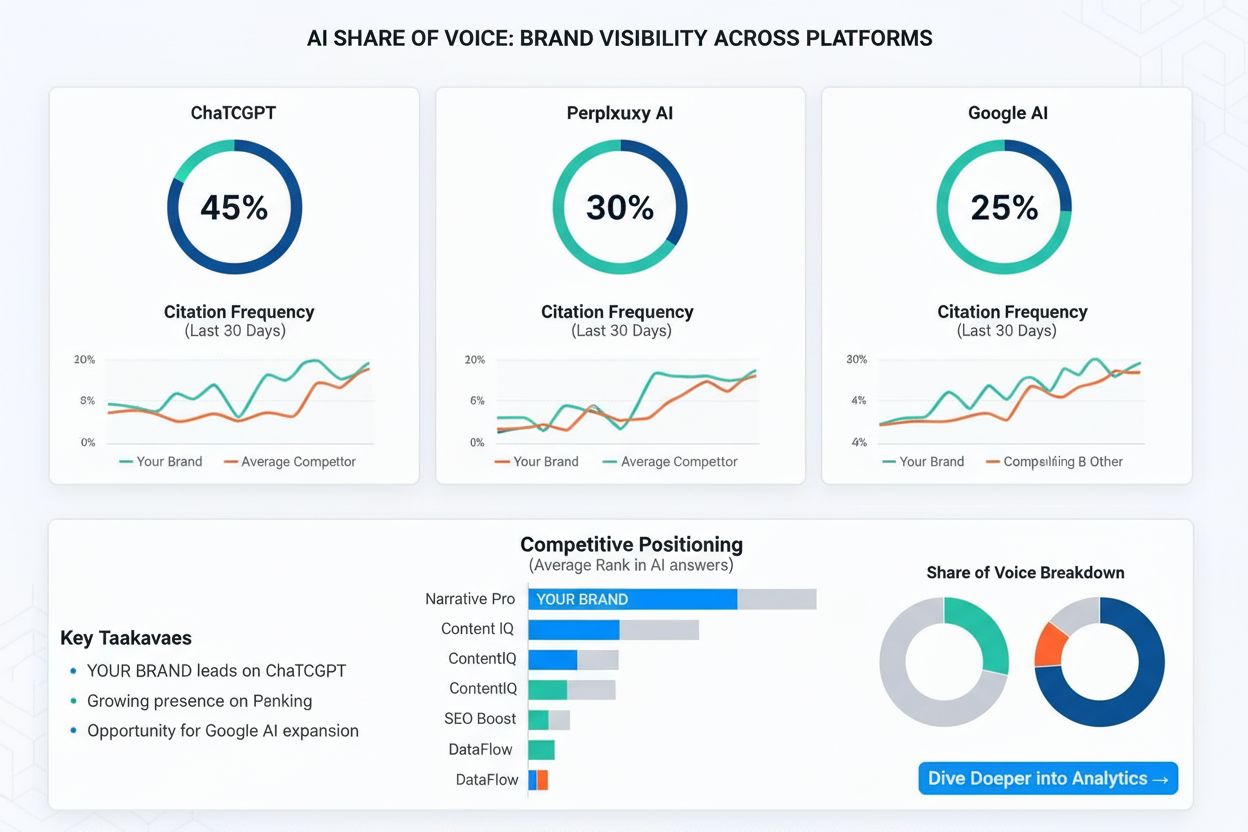
AI Share of Voice measures brand visibility in AI-generated responses. Learn how to track, calculate, and improve your presence across ChatGPT, Perplexity, and ...