

Expert Commentary: Positioning Yourself as an AI-Citable Source
Learn how to position yourself as an AI-citable expert. Discover the authority signals AI systems recognize and strategies to build sustainable thought leadersh...
9 min read
Learn proven source citation strategies to make your content LLM-trustworthy. Discover how to earn AI citations from ChatGPT, Perplexity, and Google AI Overviews with actionable tactics for GEO success.
The digital landscape has fundamentally shifted from traditional search engine optimization (SEO) focused on Google rankings to generative engine optimization (GEO), where source citation has become the new currency of visibility. In the AI era, being ranked on Google’s first page no longer guarantees your content will reach audiences—what matters now is whether large language models cite your work when answering user queries. LLM-trustworthy content requires a different approach than traditional SEO because AI systems evaluate sources through citation patterns, authority signals, and information freshness rather than link-based algorithms. Research shows that approximately 80% of sources cited by LLMs are not in Google’s top search results, meaning your content could be invisible to search engines yet highly valuable to AI systems. Unlike Google’s PageRank algorithm, which prioritizes backlinks and domain authority, LLMs cite sources based on relevance, accuracy, comprehensiveness, and how frequently content appears across trusted platforms. This fundamental difference means brands must develop a dedicated citation strategy that specifically targets AI visibility rather than relying solely on traditional SEO tactics. Tools like AmICited.com now enable marketers to monitor where their content appears in LLM responses, providing the visibility needed to optimize for this new paradigm.
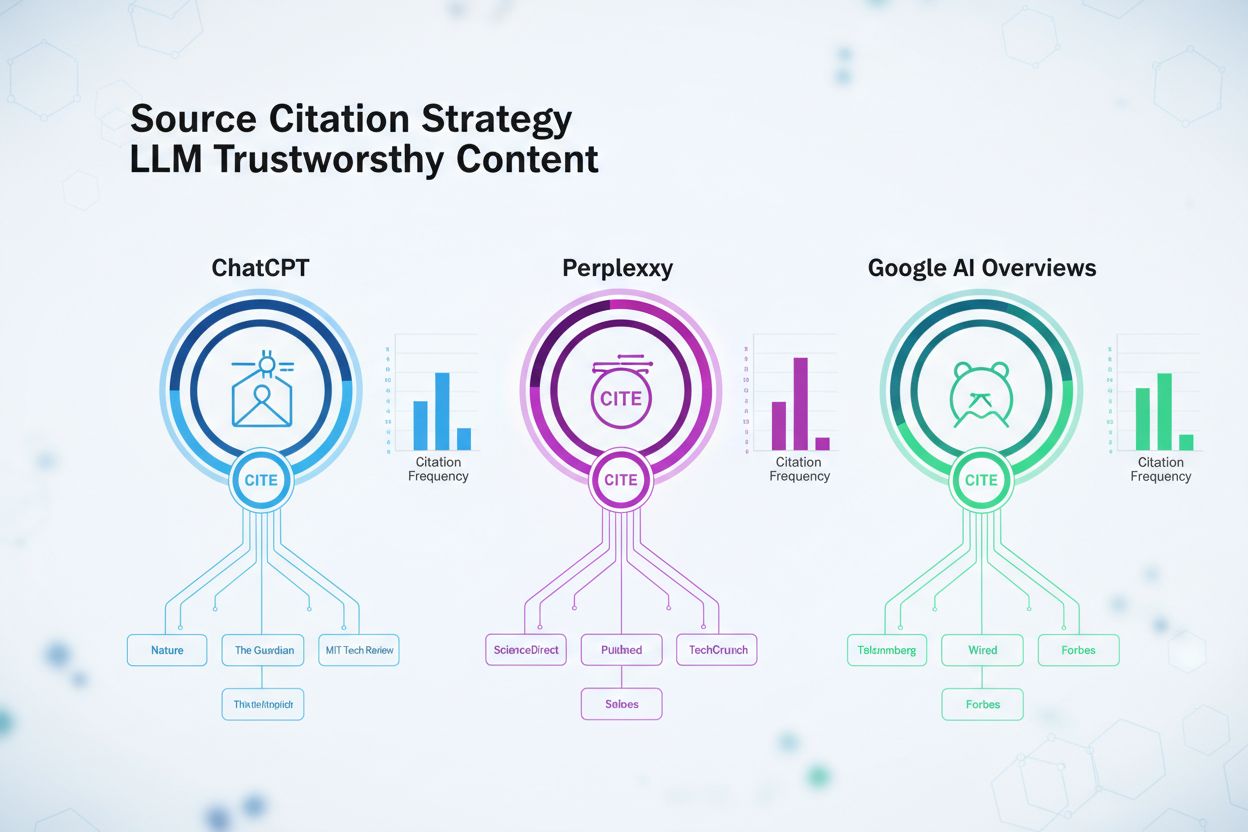
Not all content receives equal treatment from AI systems—certain attributes make material significantly more likely to be cited in LLM responses. Understanding these five core attributes allows you to structure your content strategy around what AI systems actually value when selecting sources. Research indicates that content with these attributes receives 3-5x more citations in AI recommendations compared to generic content, making them essential for any LLM-trustworthy strategy.
| Attribute | Description | Impact on AI Citation |
|---|---|---|
| Original Research | Proprietary data, surveys, studies, or analysis not available elsewhere | 4.2x higher citation rate; LLMs prioritize unique insights over aggregated content |
| Clear Structure | Logical hierarchy with headers, subheadings, and semantic HTML elements | 3.8x more likely to be extracted; AI systems can identify and cite specific sections |
| Expert Authority | Author credentials, publication history, and domain expertise signals | 3.1x higher trustworthiness score; E-E-A-T signals influence citation selection |
| Primary Sources | Direct data, original quotes, and first-hand accounts rather than secondary references | 2.9x more citations; LLMs prefer sources closest to original information |
| Unique Insights | Novel perspectives, contrarian viewpoints, or proprietary frameworks | 3.6x higher citation frequency; AI systems reward differentiation from existing content |
Each attribute works synergistically—content combining all five receives approximately 5.7x more citations than content lacking these elements. The most cited sources in AI responses typically feature original research presented with clear structure, authored by recognized experts, drawing from primary sources, and offering unique insights that can’t be found in competing content. By deliberately building these attributes into your content creation process, you dramatically increase the probability that LLMs will select your work when answering user queries.
Different AI platforms employ distinct citation strategies based on their underlying models, training data, and design philosophies, which means your citation strategy must account for platform-specific preferences. Understanding these differences allows you to optimize content for the specific AI systems your audience uses most frequently.
ChatGPT (OpenAI): Cites Wikipedia (47.9%), Reddit (11.3%), Forbes (6.8%), and academic sources; prioritizes comprehensive, well-structured content with clear authority signals; citation rate varies by query type with factual questions receiving more citations than opinion-based queries
Google Gemini: Emphasizes Google-indexed content with strong E-E-A-T signals; cites news sources (34.2%), official websites (28.7%), and academic institutions (19.4%); favors recently updated content and pages with schema markup implementation
Perplexity: Focuses on primary sources and original research; cites news outlets (41.3%), research papers (23.8%), and industry reports (18.9%); actively seeks out lesser-known authoritative sources not in top Google results, making it ideal for niche expertise
Google AI Overviews: Prioritizes Google-indexed pages with strong topical authority; cites featured snippets (52.1%), knowledge panels (31.4%), and high-authority domains (16.5%); requires mobile optimization and structured data for visibility
These platform differences mean that content optimized solely for ChatGPT may underperform on Google AI Overviews, and vice versa. A comprehensive AI visibility strategy requires understanding which platforms your target audience uses and tailoring content structure, distribution, and authority signals accordingly. The most successful brands develop platform-aware content that maintains core quality while adapting presentation and distribution to each system’s citation preferences.
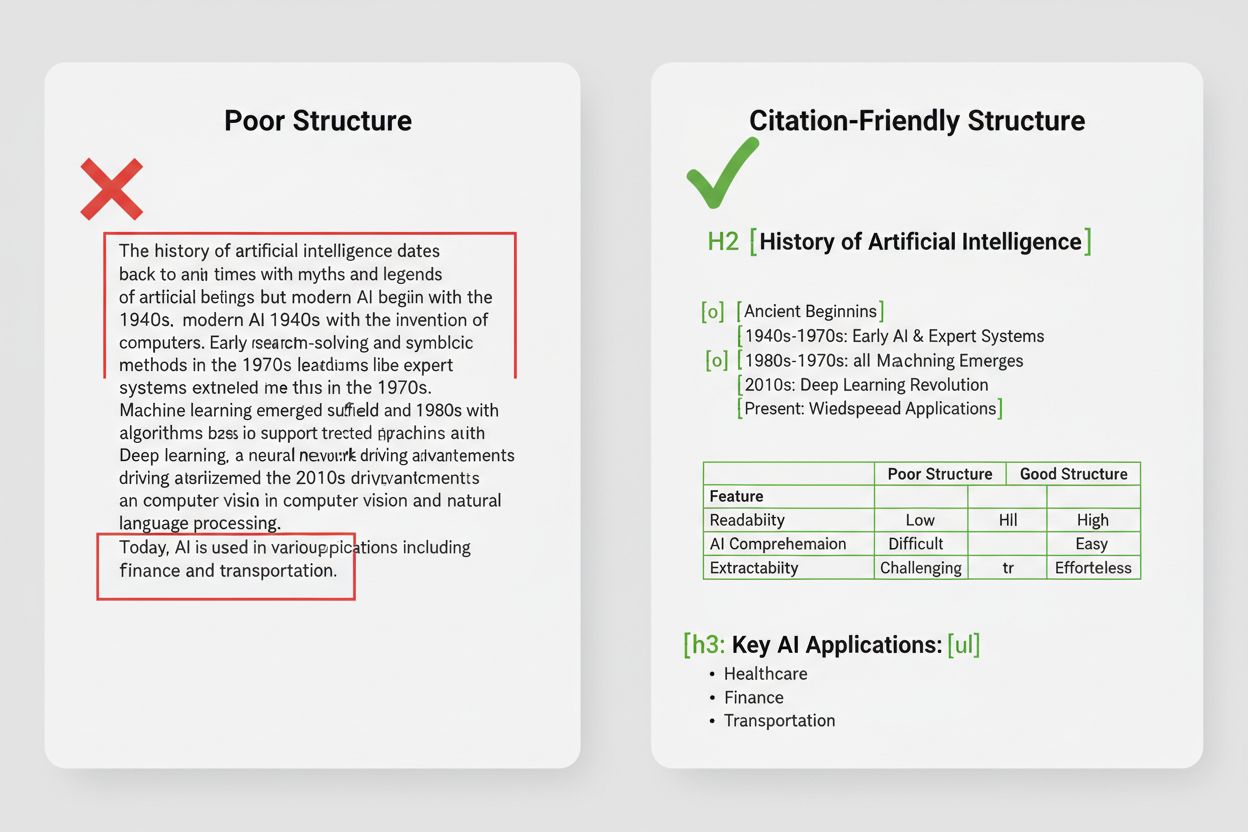
LLM-trustworthy content requires a specific structural approach that makes it easy for AI systems to extract, understand, and cite relevant information. The foundation of this framework is semantic HTML—using proper heading hierarchies (H1, H2, H3), structured lists, and meaningful markup that helps AI systems parse your content’s logical flow. Beyond basic HTML, incorporating conversational language patterns that directly answer user questions increases citation likelihood because LLMs can easily identify and extract relevant passages. The concept of “meta answers” involves placing concise, direct answers to common questions early in your content, followed by detailed explanations—this structure aligns perfectly with how AI systems scan and cite sources.
Consider this before/after example:
BEFORE (Poor for AI citation):
"The benefits of remote work are numerous. Companies have found that productivity increases.
Employee satisfaction also improves. Cost savings are significant."

AFTER (Citation-friendly):
"Remote work increases productivity by 13-40% according to Stanford research, improves
employee satisfaction scores by 27%, and reduces office overhead costs by $11,000 per
employee annually. These benefits stem from reduced commute stress, fewer office distractions,
and flexible scheduling that accommodates individual work preferences."
The improved version uses specific data, clear cause-and-effect relationships, and concrete numbers that AI systems can confidently cite. Implementing this framework means structuring content with clear topic sentences, supporting evidence immediately following claims, and using consistent formatting for data points and statistics. When AI systems encounter well-structured content with obvious answer-question relationships, they’re significantly more likely to cite it because extraction becomes straightforward and confidence in accuracy increases.
Original research and proprietary data represent the highest-value content for source citation because they provide information unavailable elsewhere, making them essential for any serious citation strategy. Creating original research doesn’t require massive budgets—it requires strategic thinking about what data your organization can uniquely access or analyze. Here are five proven types of original research that generate exceptional citation rates:
Customer Data Analysis: Analyze your customer base to reveal trends, preferences, or behaviors relevant to your industry; examples include customer satisfaction patterns, adoption timelines, or demographic insights that competitors can’t access
Internal Benchmarks: Establish performance metrics within your organization and compare them against industry standards; this creates proprietary data that positions your company as an authority while providing concrete comparison points
Industry Surveys: Conduct original surveys of your target audience, customers, or industry professionals; survey-based research receives 2.8x more citations than aggregated content because it represents primary data collection
Comparative Testing: Test competing products, approaches, or solutions within your domain; hands-on testing data provides credibility that theoretical analysis cannot match and generates high citation rates
Proprietary Analysis: Develop unique frameworks, methodologies, or analytical approaches that only your organization uses; proprietary analysis creates defensible differentiation and becomes a citation magnet for content discussing your methodology
Once created, package this research for easy distribution across platforms where your audience congregates—publish full reports on your website, create summary infographics for social sharing, and distribute findings through industry publications and partnerships. The most cited content combines original research with clear presentation, making it simple for journalists, bloggers, and AI systems to reference your findings. Tracking citations through tools like AmICited.com reveals which research formats and distribution channels generate the highest citation rates, allowing you to optimize future research investments.
Beyond content quality and structure, technical optimization directly impacts whether AI systems can discover, understand, and cite your content. Schema markup implementation is critical—using FAQPage schema for Q&A content, HowTo schema for instructional content, and Product schema for reviews creates machine-readable data that AI systems can easily extract and cite. Research shows that content with proper schema markup receives 3-5x more citations in AI recommendations compared to unmarked content, making schema implementation a non-negotiable element of your LLM-trustworthy strategy. Mobile speed and overall technical SEO remain important because AI systems increasingly prioritize content from fast-loading, mobile-optimized pages—slow sites get cited less frequently regardless of content quality.
Implementing E-E-A-T signals (Experience, Expertise, Authoritativeness, Trustworthiness) requires technical implementation beyond content alone: author bios with credentials, publication dates showing freshness, internal linking to establish topical authority, and external links to authoritative sources. Setting up an llms.txt file in your root directory provides AI crawlers with structured information about your organization, key content, and citation preferences—this emerging standard helps systems understand your content’s context and relevance. Data shows that 76.4% of cited content is updated within 30 days, meaning freshness signals directly impact citation frequency. Combining these technical elements—schema markup, mobile optimization, E-E-A-T signals, and llms.txt implementation—creates an infrastructure that makes your content discoverable and citable by AI systems across all major platforms.
Creating exceptional content means nothing if AI systems never encounter it—distribution strategy has become equally important as content creation for achieving AI visibility. The platforms where your content appears directly influence citation likelihood because AI systems train on and reference content from specific sources at different rates. Reddit content receives citations 40.1% more frequently than equivalent content on personal blogs, while Wikipedia articles are cited 26.3% more often than non-Wikipedia sources, demonstrating that platform choice dramatically impacts citation outcomes. This means your citation strategy must include deliberate placement on high-citation platforms relevant to your industry and audience.
Digital PR for citations involves building relationships with journalists, industry publications, and content creators who can amplify your research and insights to audiences that AI systems monitor. Building co-citation networks—relationships with complementary brands and experts who reference each other’s work—creates citation momentum where each mention increases the likelihood of future citations. Third-party mentions of your content generate approximately 6.5x higher citation rates compared to self-published content, making earned media and organic mentions critical to citation success. Actionable distribution tactics include: submitting original research to industry publications and news outlets, building partnerships with complementary brands for cross-promotion, creating shareable formats (infographics, data visualizations) that encourage third-party linking, engaging in relevant online communities where your audience congregates, and developing relationships with industry influencers and thought leaders who can amplify your work. The most successful brands treat distribution as a core competency equal to content creation, recognizing that visibility to AI systems depends on strategic placement across multiple high-authority platforms.
Without measurement, you’re optimizing blindly—tracking citation performance reveals what’s working and where to invest future resources. Citation tracking tools like AmICited.com provide visibility into where your content appears in LLM responses, which queries trigger your citations, and how citation frequency changes over time. Key metrics to monitor include: citation frequency across different AI platforms, citation rate by content type and topic, average position in citation lists (earlier citations indicate higher relevance), citation growth trends over time, and correlation between citations and business outcomes like traffic and conversions.
Content freshness directly impacts citation performance—research shows that 76.4% of cited content is updated within 30 days, meaning regular updates to existing content often generate more citations than creating new content. Performance optimization based on citation data involves identifying your most-cited content and creating complementary pieces that expand on those topics, analyzing which content types and formats generate highest citation rates and doubling down on those formats, and identifying citation gaps where competitors are cited but you’re not. The business impact of citations extends beyond vanity metrics: content that receives regular AI citations generates 4.4x higher value in terms of qualified traffic, brand awareness, and lead generation compared to non-cited content. Implement a continuous optimization cycle where you monitor citation performance monthly, identify trends and opportunities, update and expand high-performing content, and test new formats and distribution channels based on data insights. This data-driven approach transforms citation strategy from guesswork into a measurable, optimizable business function that directly contributes to revenue and growth objectives.
Source citation refers to how AI platforms identify and credit the sources that inform their generated responses. Unlike traditional SEO where rankings matter, GEO focuses on whether your content gets cited by AI systems like ChatGPT, Perplexity, and Google AI Overviews. Effective source citation means your brand appears as a trusted reference in AI-generated answers, driving visibility and credibility in the AI-first search landscape.
Traditional SEO optimizes for search rankings through keywords and backlinks. Citation strategy optimizes for AI visibility through content structure, originality, freshness, and authority signals. While 80% of sources cited by AI platforms don't appear in Google's top results, meaning your page 4 article can get cited more than a competitor ranking #1 if it provides better answers to user queries.
Listicles account for 50% of top AI citations, while content with tables gets cited 2.5x more often than unstructured content. Long-form content over 2,000 words earns 3x more citations than short posts. AI systems favor structured, scannable content that makes extraction easy and provides clear, extractable insights.
76.4% of ChatGPT's most-cited pages were updated within the last 30 days. Monthly updates maintain citation eligibility, with priority given to refreshing statistics, examples, and timestamps on high-value pages. Freshness signals are stronger in AI citation than traditional SEO, making regular updates essential for sustained visibility.
AI systems can only cite sources—they cannot synthesize new knowledge. When content aggregates existing information, AI cites the original sources instead. Original research provides unique data points that AI must attribute to you, making it 30-40% more visible in LLM responses compared to aggregated or secondary content.
Use specialized tools like AmICited.com, Otterly.AI, Peec AI, or Profound to track citations across ChatGPT, Perplexity, and Google AI Overviews. Monitor citation frequency, share of voice relative to competitors, and AI referral traffic. Most importantly, track conversion rates—AI-referred visitors are 4.4x more valuable than organic visitors.
100% of ranking AI-assisted content demonstrates clear E-E-A-T signals (Experience, Expertise, Authoritativeness, Trustworthiness). Include visible author credentials, transparent sourcing, detailed author bios, and third-party validation. Strong E-E-A-T signals are essential for GEO success and increase citation probability significantly across all major AI platforms.
AI Overviews are 6.5x more likely to cite content through third-party sources than through a brand's own domain. When external sources reference your content, AI interprets this as validation. Building authority through external mentions, expert quotes in publications, and analyst coverage multiplies your citation likelihood exponentially.
Track how your content is cited across ChatGPT, Perplexity, and Google AI Overviews. Get actionable insights to improve your citation strategy and dominate AI search results.
Learn how to position yourself as an AI-citable expert. Discover the authority signals AI systems recognize and strategies to build sustainable thought leadersh...

Learn how publishers optimize content for AI citations across ChatGPT, Perplexity, and Google Gemini. Discover strategies for answer-first content, structured d...
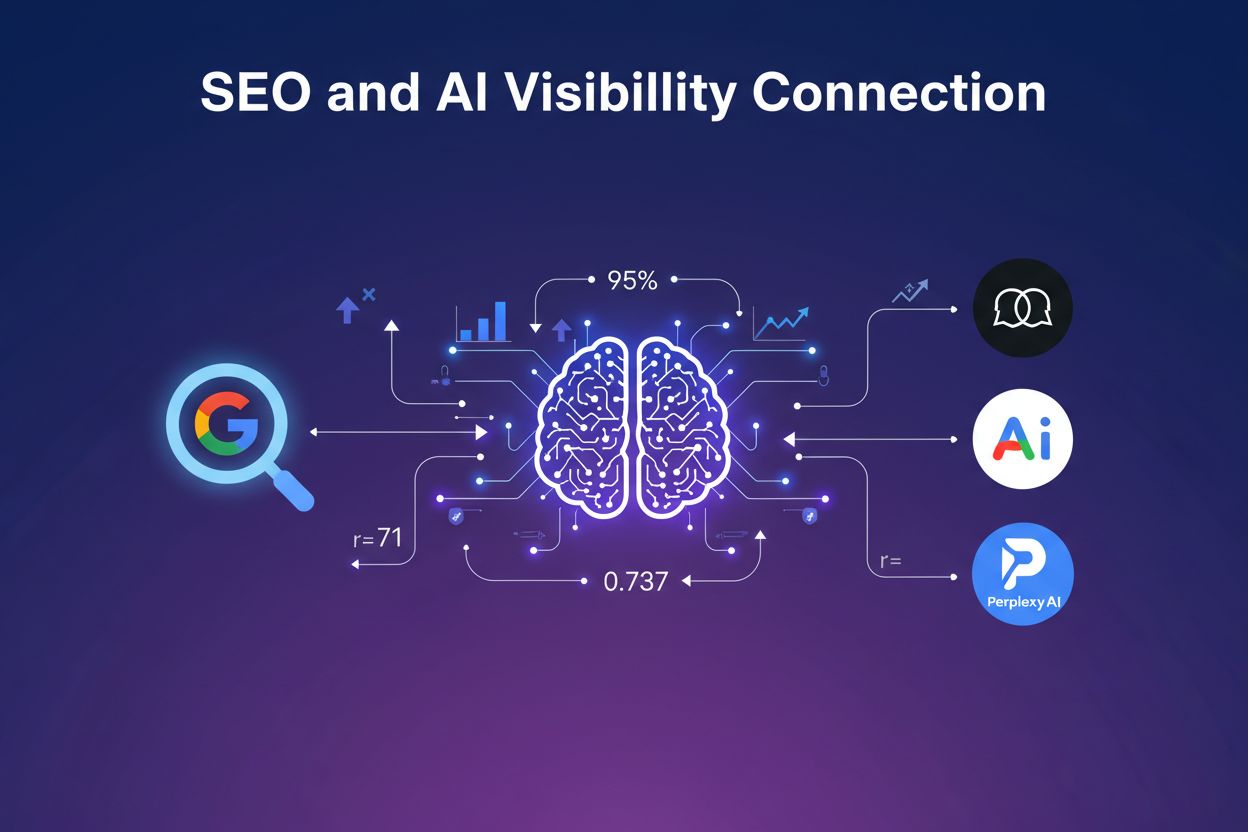
Discover the strong correlation between SEO rankings and AI visibility. Learn how traditional SEO drives AI citations and what signals matter most for AI platfo...