Statistics Addition: The GEO Strategy That Boosts Visibility by 41%
Learn how adding statistics to your content can boost AI visibility by 41%. Discover the Princeton study findings and implement data-driven GEO strategies to dominate AI search results.
Published on Jan 3, 2026.Last modified on Jan 3, 2026 at 3:24 am
The shift from traditional SEO to Generative Engine Optimization (GEO) represents a fundamental change in how content achieves visibility. While Google’s algorithm prioritizes backlinks and keyword optimization, AI engines like ChatGPT, Claude, and Perplexity operate on different principles—they reward credibility, authority, and verifiable information. Statistics serve as the cornerstone of this new paradigm because they provide concrete evidence that AI systems can cite and validate. When you embed data-backed claims into your content, you’re essentially giving AI engines the raw material they need to confidently surface your information in responses, making your brand the trusted source in an increasingly AI-driven search landscape.
The Princeton Study & Empirical Evidence
A groundbreaking Princeton study analyzed nine distinct factors that influence AI visibility, revealing that statistics addition delivers a remarkable 41% boost in visibility—the highest impact of any single optimization strategy. The research tested multiple content enhancement techniques across different domains and AI models, measuring how frequently each factor appeared in AI-generated responses. The findings were decisive: statistics addition emerged as the clear winner, followed by citation addition and quotation inclusion, each contributing approximately 30% visibility gains. The study also evaluated fluency optimization (22%), domain jargon usage (21%), authoritative language (18%), easy-to-understand formatting (15%), keyword stuffing (-5%), and unique word count (8%). Here’s the complete breakdown:
Factor
Visibility Impact (%)
Statistics Addition
41
Citation Addition
30
Quotation Addition
30
Fluency Optimization
22
Domain Jargon
21
Authoritative Language
18
Easy-to-Understand Formatting
15
Unique Word Count
8
Keyword Stuffing
-5
This data fundamentally challenges traditional SEO wisdom and demonstrates that AI engines reward substance over optimization tricks. The negative impact of keyword stuffing (-5%) particularly highlights this shift—AI systems actively penalize artificial manipulation. For content creators and marketers, this research provides a clear roadmap: prioritize statistics, citations, and quotations as your primary optimization levers, and watch your visibility in AI responses climb dramatically.
Ready to Monitor Your AI Visibility?
Track how AI chatbots mention your brand across ChatGPT, Perplexity, and other platforms.
Retrieval-Augmented Generation (RAG) is the technology powering modern AI search engines, and it fundamentally depends on sourcing reliable information from vast content databases. When an AI engine processes a user query, it retrieves relevant documents and uses them to generate responses—but it doesn’t treat all sources equally. Statistics act as credibility signals within RAG systems, helping AI engines identify which sources are most trustworthy and authoritative. A document containing specific, cited statistics is weighted more heavily than one with vague claims or unsupported assertions. This is because statistics provide verifiable anchors that AI systems can reference and validate against their training data. Additionally, when your content includes statistics, you’re essentially creating multiple “hooks” for AI retrieval—the statistic itself, the context around it, and the source attribution all become indexable elements. This multi-layered approach dramatically increases the probability that your content will be selected during the retrieval phase, ultimately leading to higher visibility in AI responses.
Types of Statistics That Work Best
Not all statistics carry equal weight in GEO. The most effective data-driven content incorporates multiple types of statistics, each serving a distinct purpose in building credibility and relevance:
Original Research: Data you’ve collected or commissioned yourself carries the highest authority. Original research demonstrates investment in understanding your industry and provides unique insights competitors can’t easily replicate.
Industry Benchmarks: Established metrics that define performance standards within your sector (e.g., “average conversion rate is 2.3%”) help readers contextualize your claims and understand industry norms.
Case Study Metrics: Specific results from real implementations (e.g., “Company X increased revenue by 34% after implementing this strategy”) provide concrete proof of concept and practical validation.
Survey Data: Aggregated responses from target audiences reveal trends, preferences, and behaviors. Survey statistics are particularly powerful because they represent collective human insight rather than isolated examples.
Comparative Statistics: Data showing how your approach, product, or methodology performs against alternatives creates clear differentiation and helps readers make informed decisions.
Performance Metrics: Real-time or recent data about system performance, adoption rates, or market growth demonstrates current relevance and momentum within your field.
Stay Updated on AI Visibility Trends
Get the latest insights on AI mentions, brand monitoring, and optimization strategies.
Implementing Statistics in Your Content
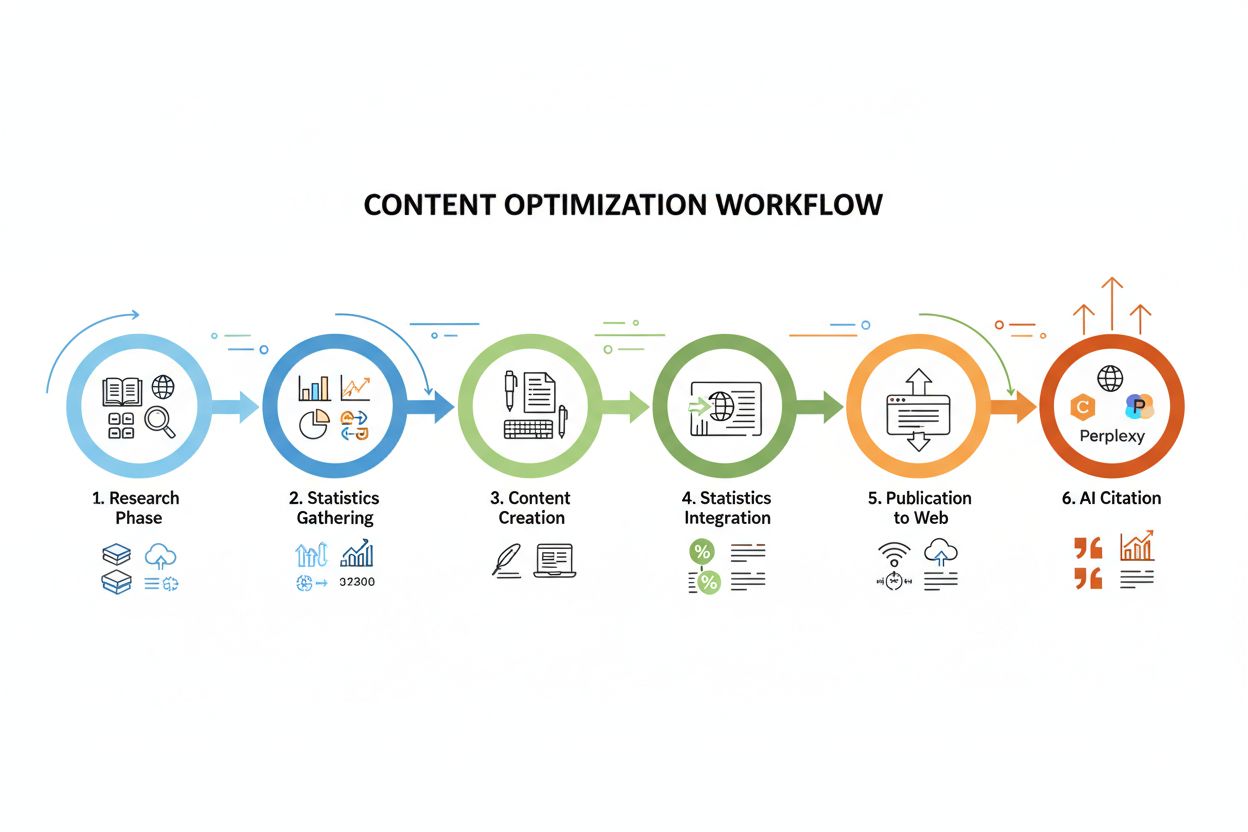
Adding statistics strategically requires more than simply inserting numbers into your text—it demands intentional sourcing, formatting, and placement. Begin by identifying the key claims in your content that would benefit from statistical support, then source data from reputable organizations, academic institutions, or your own research. The placement of statistics matters significantly: introduce them early to establish credibility, use them to support major arguments, and repeat key statistics in different contexts to reinforce their importance. Format statistics for clarity by using percentages, comparisons, and round numbers when possible—“41% visibility boost” is more memorable than “40.7% visibility increase.” Always include the source and date of your statistics, either inline or in a citations section, because AI engines specifically reward cited sources. Consider using visual elements like charts or tables to present complex statistical data, as these formats are easier for both readers and AI systems to process. Finally, ensure your statistics are recent and relevant; outdated data undermines credibility and may actually harm your GEO performance.
Statistics vs. Other GEO Factors
While statistics deliver the highest visibility impact, understanding how they compare to other optimization strategies helps you allocate your content development resources effectively. The following table illustrates the relative effectiveness of the top GEO factors and their ideal use cases:
Building credibility, directing AI to authoritative sources, creating source networks
Quotation Addition
30
Adding expert perspective, breaking up dense text, humanizing content
Fluency Optimization
22
Improving readability, ensuring natural language flow, enhancing user experience
Statistics should be your primary focus, but they work best in combination with citations and quotations. A statistic without a source citation loses much of its power—the combination of statistics plus citations delivers compounding visibility benefits. Quotations from industry experts add a human dimension that pure statistics cannot provide. Fluency optimization ensures your content reads naturally, which keeps readers engaged long enough to absorb your statistics. The most effective GEO strategy layers all four approaches: use statistics to make bold claims, cite sources to validate those claims, include expert quotations to add perspective, and optimize fluency to ensure everything reads smoothly.
Measuring Success & Monitoring Impact
Implementing a statistics-focused GEO strategy requires ongoing measurement to validate effectiveness and identify optimization opportunities. Track your visibility in AI responses by monitoring how frequently your content appears in ChatGPT, Claude, Perplexity, and other major AI engines—tools designed specifically for GEO monitoring can automate this process and provide detailed analytics. Key performance indicators include: the number of AI citations per month, the percentage of AI responses that include your content, the average position of your citations within AI responses, and the correlation between statistics additions and citation frequency. Set baseline metrics before implementing your statistics strategy, then measure monthly to identify trends and patterns. Pay particular attention to which types of statistics generate the most AI citations—this data reveals what resonates with both AI systems and your target audience. Platforms like AmICited.com provide comprehensive GEO monitoring, allowing you to track your visibility across multiple AI engines and understand exactly how your statistics-driven content performs in generative search results.
Common Mistakes When Adding Statistics
Even well-intentioned efforts to add statistics can backfire if executed poorly. Outdated statistics represent one of the most common errors—citing 2019 data in 2024 signals that your content isn’t current, and AI engines may deprioritize it accordingly. Unsourced claims masquerading as statistics destroy credibility; if you can’t cite where a statistic comes from, don’t include it. Cherry-picking data to support a predetermined conclusion is another critical mistake—AI systems and readers alike can sense when statistics are being manipulated to tell a misleading story. Poor formatting makes statistics harder to parse; always present numbers clearly with context and units. Irrelevant statistics that don’t directly support your argument waste space and confuse readers. Additionally, avoid citing statistics from low-authority sources or industry competitors with obvious bias—AI engines recognize source quality and weight citations accordingly. The best practice is to source statistics from peer-reviewed research, government agencies, established industry organizations, and your own original research, then present them transparently with full attribution and context.
Future of Statistics in GEO
The role of statistics in generative engine optimization will only intensify as AI technology evolves. Emerging trends point toward multimodal data integration, where statistics combine with visualizations, video data, and interactive elements to create richer, more compelling content that AI systems can process and present more effectively. Real-time statistics will become increasingly valuable as AI engines develop the capability to incorporate live data feeds directly into responses—content that includes dynamic, continuously updated metrics will have a significant advantage. As competition for AI visibility grows and more marketers adopt statistics-focused strategies, the baseline expectation for data-backed content will rise, making original research and proprietary statistics increasingly important for differentiation. The 41% visibility boost that statistics currently deliver may become the minimum threshold rather than a competitive advantage, pushing forward-thinking organizations to develop even more sophisticated data strategies. Ultimately, the future of GEO belongs to organizations that treat statistics not as an optimization tactic, but as a fundamental commitment to evidence-based communication that serves both AI systems and human readers.
Frequently asked questions
What is statistics addition in GEO?
Statistics addition is a Generative Engine Optimization strategy where you embed data-backed claims and verifiable statistics into your content to increase visibility in AI-generated responses. Research shows this approach boosts AI visibility by up to 41%, making it the most effective single GEO tactic.
How much can statistics improve AI visibility?
According to Princeton research, adding statistics to your content can boost visibility in AI responses by 41%. This is the highest impact of any single optimization strategy, significantly outperforming other tactics like citation addition (30%) or fluency optimization (22%).
What types of statistics work best for GEO?
The most effective statistics include original research, industry benchmarks, case study metrics, survey data, comparative statistics, and performance metrics. Original research carries the highest authority, while survey data and case studies provide practical validation that AI engines and readers find compelling.
Where should I place statistics in my content?
Place statistics early in your content to establish credibility immediately, use them to support major arguments throughout, and repeat key statistics in different contexts to reinforce importance. Always include the source and date of your statistics, either inline or in a citations section, as AI engines reward cited sources.
How do I source reliable statistics for my content?
Source statistics from peer-reviewed research, government agencies, established industry organizations, and your own original research. Always verify the source quality and date, ensure the data is recent and relevant, and avoid citing statistics from low-authority sources or competitors with obvious bias.
Can outdated statistics hurt my GEO performance?
Yes, outdated statistics can significantly harm your GEO performance. Citing old data signals that your content isn't current, and AI engines may deprioritize it accordingly. Always use recent, relevant statistics and update your content regularly to maintain visibility in AI search results.
How does statistics addition compare to other GEO strategies?
Statistics addition delivers the highest visibility impact at 41%, followed by citation addition and quotation addition at 30% each. However, these strategies work best in combination—statistics provide evidence, citations validate sources, and quotations add expert perspective. Fluency optimization (22%) ensures everything reads naturally.
What tools can help me track statistics effectiveness in GEO?
Platforms like AmICited.com provide comprehensive GEO monitoring, allowing you to track your visibility across multiple AI engines (ChatGPT, Claude, Perplexity, Gemini) and understand exactly how your statistics-driven content performs in generative search results. Monitor citation frequency, visibility percentage, and AI response positioning.
Monitor Your AI Visibility with AmICited
Track how AI engines cite your brand across ChatGPT, Perplexity, Google AI Overviews, and more. Get real-time insights into your AI search visibility and optimize your statistics strategy.
How to Measure Early GEO Success: Key Metrics and KPIs for AI Search Visibility
Learn how to measure GEO success with AI citation tracking, brand mentions, and visibility metrics across ChatGPT, Perplexity, Google AI Overviews, and Claude. ...
How to Train Your Team on GEO: Complete Framework for Generative Engine Optimization
Learn how to train your marketing team on GEO with practical frameworks, role assignments, and tools. Master AI search optimization for ChatGPT, Perplexity, and...
Learn how to build an AI-ready content strategy optimized for generative engines. Discover the three layers of AI infrastructure, implementation steps, and meas...
10 min read
Cookie Consent We use cookies to enhance your browsing experience and analyze our traffic. See our privacy policy.