

When AI Platforms Change: Adapting Your Strategy
Learn how to adapt your AI strategy when platforms change. Discover migration strategies, monitoring tools, and best practices for handling AI platform deprecat...
11 min read

Learn how to manage AI platform transitions and maintain citation visibility when platforms sunset. Strategic guide for handling deprecated AI platforms and tracking citations across ChatGPT, Perplexity, and Google AI.
Platform deprecation has become an increasingly common reality in the artificial intelligence landscape, where technological advancement moves at breakneck speed and legacy systems quickly become obsolete. Unlike traditional software sunsetting, AI platform transitions carry unique complexities because they often involve shifting underlying models, APIs, and computational architectures that organizations have built their entire workflows around. When a sunset AI platform is announced, it creates a cascading effect across dependent systems, integrations, and business processes that may have been in place for years. The deprecation of Google Conversational Actions on June 13, 2023, exemplified this challenge, affecting thousands of developers who had invested significant resources in building conversational experiences on that platform. Understanding the mechanics of platform deprecation requires recognizing that these transitions are not merely technical exercises but strategic business events that demand comprehensive planning and stakeholder coordination. The AI industry’s rapid evolution means that organizations must develop sophisticated frameworks for anticipating, monitoring, and managing these transitions before they become critical issues. This proactive approach to deprecated AI platform management separates organizations that maintain operational continuity from those that experience costly disruptions.
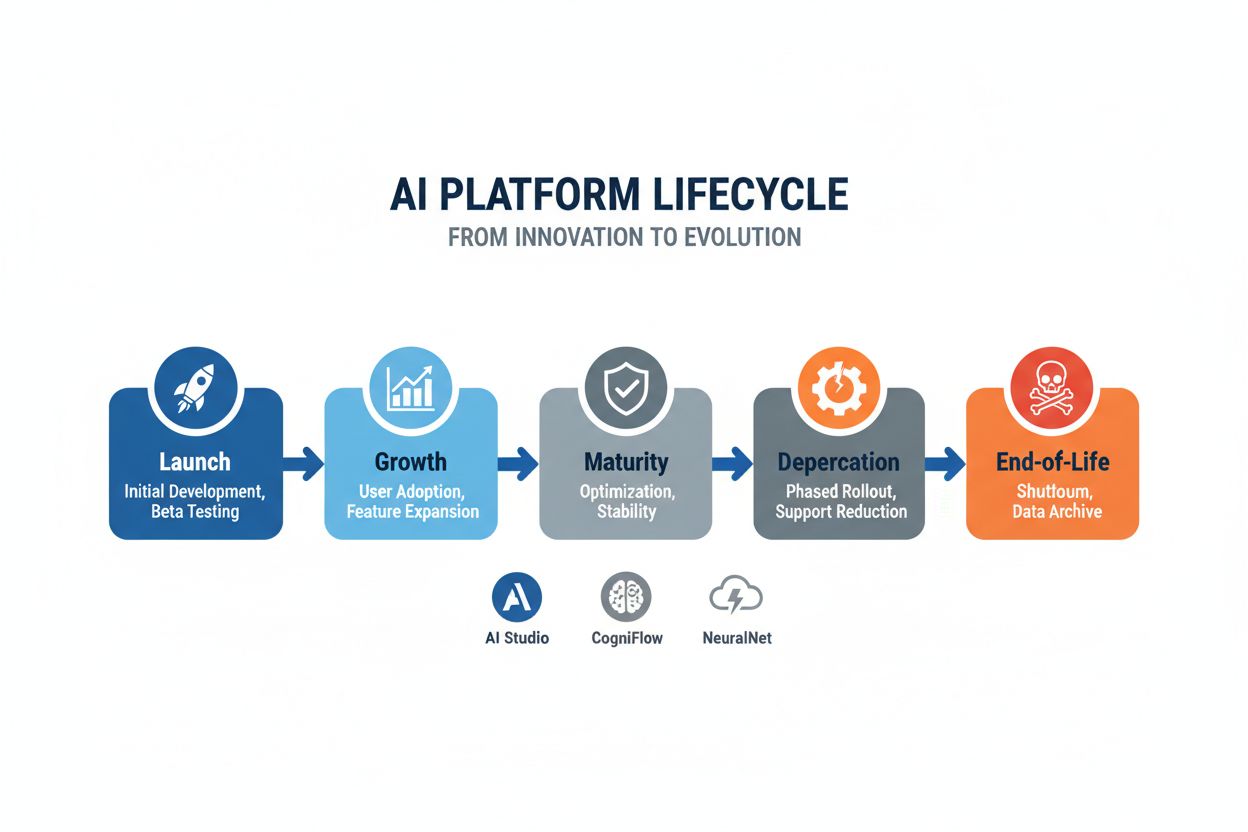
The financial and operational implications of platform transitions extend far beyond the immediate technical migration costs, creating hidden expenses that many organizations fail to anticipate during initial planning phases. When a platform transition AI occurs, companies must account for developer time spent rewriting integrations, potential downtime during migration windows, loss of institutional knowledge embedded in legacy systems, and the opportunity cost of diverting resources from innovation to maintenance. Citation tracking systems become particularly vulnerable during these transitions, as references to deprecated platforms, models, and APIs become fragmented across documentation, research papers, and internal systems. Organizations often discover that their citation infrastructure was built with implicit dependencies on specific platform features that no longer exist, requiring comprehensive audits and updates. The true cost of a platform transition includes not just the direct migration expenses but also the hidden costs of compliance verification, security re-certification, and performance optimization on new platforms. Consider the following comparison of transition costs across different scenarios:
| Transition Type | Direct Costs | Hidden Costs | Timeline | Risk Level |
|---|---|---|---|---|
| Model Deprecation | 15-25% of budget | 75-85% of budget | 3-6 months | High |
| API Sunset | 20-30% of budget | 70-80% of budget | 2-4 months | Critical |
| Platform Migration | 30-40% of budget | 60-70% of budget | 4-8 months | High |
| Feature Discontinuation | 10-20% of budget | 80-90% of budget | 1-3 months | Medium |
Organizations that fail to account for these hidden costs often find themselves in reactive crisis management mode, making suboptimal technical decisions under time pressure rather than executing well-planned strategic transitions.
Monitoring AI citations during platform transitions requires a sophisticated approach that goes beyond simple search-and-replace operations, demanding real-time visibility into how deprecated platforms are referenced across your entire technology ecosystem. AmICited.com provides essential infrastructure for tracking these citations, enabling organizations to identify every instance where a sunset AI platform is mentioned in documentation, code comments, research papers, and external references. Without proper citation monitoring, organizations risk maintaining broken references long after a platform transition, creating confusion for new team members and potentially directing users toward deprecated resources. The challenge intensifies when considering that citations exist in multiple formats—some in structured metadata, others embedded in natural language documentation, and still others in external sources beyond organizational control. A comprehensive citation monitoring strategy during platform transitions should include automated scanning of internal repositories, periodic audits of external references, and alerts when deprecated platform mentions appear in new content. By implementing AmICited.com’s monitoring capabilities, organizations gain the visibility necessary to maintain accurate, up-to-date references throughout their transition period. This proactive monitoring prevents the common scenario where teams discover months after a transition that critical documentation still references the deprecated platform, potentially misleading users and damaging organizational credibility.
Strategic planning for platform transitions must begin months before the official sunset date, establishing clear timelines, resource allocation, and communication protocols that keep all stakeholders informed and aligned. Effective transition planning requires identifying all systems, integrations, and dependencies that rely on the deprecated platform, creating a comprehensive inventory that serves as the foundation for migration prioritization. Organizations should establish a transition governance structure that includes technical leads, product managers, compliance officers, and customer success teams, ensuring that diverse perspectives inform the migration strategy. The planning phase should also include detailed cost-benefit analysis of alternative platforms, considering not just immediate migration costs but long-term maintenance, scalability, and feature parity. Key elements of a robust transition plan include:
Organizations that approach transitions with this structured methodology experience significantly fewer disruptions and maintain stronger stakeholder confidence throughout the process.
Data migration and citation preservation represent critical technical challenges during platform transitions, requiring careful attention to data integrity, format compatibility, and historical accuracy. When migrating from a deprecated AI platform, organizations must ensure that all historical data, including citations, references, and metadata, transfers accurately to the new environment without loss or corruption. Citation preservation is particularly complex because citations often contain implicit references to platform-specific features, model versions, or API endpoints that may not have direct equivalents in the new platform. A comprehensive data migration strategy should include detailed mapping of data structures, validation procedures to verify completeness and accuracy, and rollback capabilities if issues are discovered post-migration. Organizations should also consider whether historical data requires transformation to align with new platform conventions, potentially involving reformatting, re-validation, or enrichment with additional metadata. The migration process should be conducted in phases, starting with non-critical systems to identify and resolve issues before migrating mission-critical applications. Throughout the migration process, maintaining detailed audit trails ensures that organizations can trace the provenance of data and verify that citations remain accurate and properly attributed.
Risk mitigation and contingency planning must be integral components of any platform transition strategy, acknowledging that even well-planned migrations can encounter unexpected complications that threaten operational continuity. Organizations should conduct thorough risk assessments that identify potential failure points, including technical incompatibilities, performance degradation, security vulnerabilities, and integration failures that could emerge during or after migration. For each identified risk, organizations should develop specific mitigation strategies and contingency plans that enable rapid response if problems occur. The most critical contingency is maintaining the ability to revert to the deprecated platform if the new platform proves inadequate, requiring organizations to maintain parallel systems during transition periods and establish clear criteria for rollback decisions. Risk mitigation should also address organizational risks, including staff resistance to change, knowledge gaps regarding new platforms, and potential customer dissatisfaction during transition periods. Communication plays a vital role in risk mitigation, as transparent, proactive communication about transition plans and potential disruptions helps manage stakeholder expectations and builds confidence in the organization’s ability to execute the transition successfully. Organizations should also consider cyber security risks specific to platform transitions, as the complexity of migration processes can create temporary vulnerabilities that malicious actors might exploit.
Real-world transition examples provide valuable lessons for organizations planning their own platform migrations, demonstrating both successful approaches and cautionary tales of poorly executed transitions. Google’s sunset of Conversational Actions on June 13, 2023, affected thousands of developers who had built conversational experiences on that platform, forcing rapid migration to alternative solutions like Google Cloud’s Dialogflow or third-party platforms. Organizations that had implemented comprehensive citation monitoring discovered that their documentation, research papers, and external references contained hundreds of references to Conversational Actions, requiring systematic updates to maintain accuracy and prevent user confusion. OpenAI’s deprecation of older language models, including GPT-3 and earlier versions, demonstrated how model-level deprecations create cascading impacts across organizations that had built applications and workflows around specific model capabilities and performance characteristics. Companies that successfully navigated these transitions typically shared common characteristics: they began planning months before the official sunset date, maintained detailed inventories of dependencies, communicated proactively with stakeholders, and invested in comprehensive testing before full migration. Conversely, organizations that experienced significant disruptions typically failed to anticipate the scope of the transition, underestimated resource requirements, or attempted to migrate too quickly without adequate testing. These real-world examples underscore the importance of treating platform transitions as strategic initiatives rather than routine technical maintenance tasks.
Tools and technologies for managing transitions have evolved significantly to address the unique challenges posed by platform deprecation and migration, providing organizations with sophisticated capabilities for tracking, planning, and executing transitions. AmICited.com serves as the primary solution for AI citation monitoring during transitions, enabling organizations to identify and track every reference to deprecated platforms across their entire technology ecosystem. Complementary tools like FlowHunt.io provide automation capabilities that streamline the identification and remediation of deprecated platform references within workflows and automation sequences. Version control systems and dependency management tools help organizations track which systems and applications depend on deprecated platforms, providing the visibility necessary for prioritization and planning. Automated testing frameworks enable organizations to validate that migrated systems function correctly on new platforms, reducing the risk of post-migration failures. Documentation management systems facilitate systematic updates to technical documentation, ensuring that references to deprecated platforms are replaced with accurate information about new platforms and migration procedures. Organizations should evaluate their existing tool stack to identify gaps in transition management capabilities and invest in solutions that provide the visibility and automation necessary for successful platform transitions.
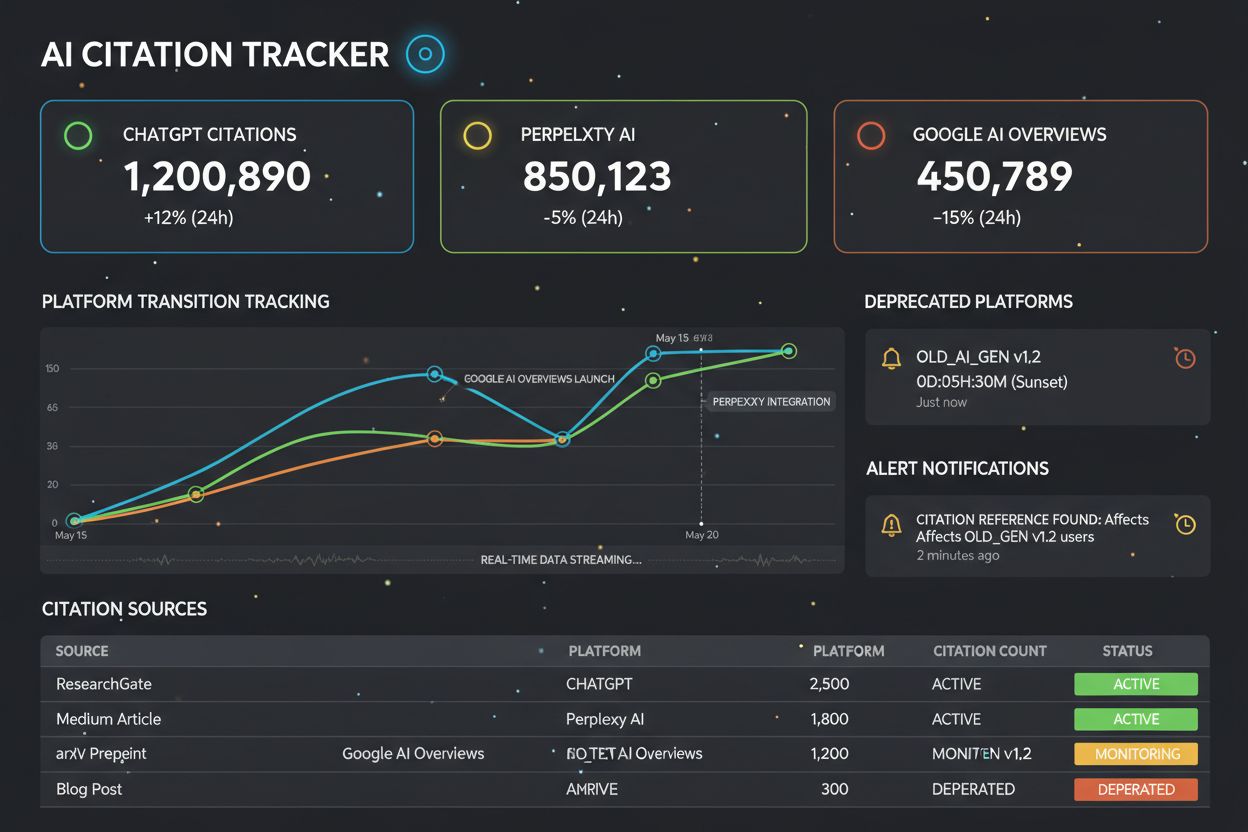
Best practices for maintaining visibility throughout platform transitions require establishing systematic processes that ensure no deprecated platform references slip through undetected, potentially causing confusion or directing users toward obsolete resources. Organizations should implement automated scanning of code repositories, documentation systems, and external sources to identify all references to deprecated platforms, creating a comprehensive inventory that serves as the foundation for remediation efforts. Regular audits should be conducted throughout the transition period to identify new references that may have been created after the initial scan, ensuring that visibility remains comprehensive even as teams continue development and documentation work. Citation tracking should extend beyond internal systems to include monitoring of external sources, including research papers, blog posts, and third-party documentation that may reference deprecated platforms. Organizations should establish clear ownership and accountability for citation remediation, assigning specific teams or individuals responsibility for updating references in particular systems or documentation areas. Communication protocols should ensure that teams are aware of deprecated platforms and understand the importance of avoiding new references to them during the transition period. By maintaining systematic visibility throughout the transition process, organizations prevent the common scenario where deprecated platform references persist long after the official sunset date, potentially damaging credibility and confusing users.
Future-proofing your AI strategy requires developing organizational capabilities and practices that enable rapid adaptation to platform deprecations and transitions, reducing the disruption and cost associated with inevitable platform changes. Organizations should establish architectural principles that minimize tight coupling to specific platforms, instead designing systems with abstraction layers that enable relatively easy migration to alternative platforms when necessary. Building a culture of documentation excellence ensures that institutional knowledge about platform dependencies and integration details is captured in accessible formats, enabling faster onboarding of new team members and more efficient transition planning. Regular technology assessments should be conducted to identify platforms that may be approaching end-of-life, enabling proactive planning rather than reactive crisis management when sunset announcements occur. Organizations should maintain relationships with multiple platform vendors and maintain awareness of emerging alternatives, ensuring that they have viable migration pathways when deprecations occur. Investing in citation monitoring infrastructure, like AmICited.com, provides ongoing visibility into platform dependencies and enables early detection of deprecation risks. By adopting these forward-looking practices, organizations transform platform transitions from disruptive crises into manageable strategic initiatives that can be executed with minimal disruption to operations and stakeholder confidence.
When an AI platform is sunset, citations that were previously tracked on that platform may become inaccessible or fragmented across remaining platforms. This creates visibility gaps where you lose track of how your brand is being referenced. Using citation monitoring tools like AmICited.com helps you maintain visibility by tracking citations across all active AI platforms and alerting you to changes during transitions.
Comprehensive citation tracking during transitions requires automated monitoring tools that scan multiple platforms simultaneously. AmICited.com provides real-time monitoring across ChatGPT, Perplexity, Google AI Overviews, and other AI platforms, giving you unified visibility into how your brand is cited even as platforms change. Regular audits and alerts ensure you catch citation changes immediately.
Deprecation is the formal announcement that a platform or feature will be retired, typically with a defined timeline and migration options. During deprecation, the platform still functions but receives no updates. End-of-life (EOL) is when the platform completely stops functioning and is no longer available. Understanding this distinction helps you plan transitions appropriately and avoid last-minute disruptions.
Deprecation timelines vary by platform. Google Conversational Actions provided several months' notice before June 2023 sunset. OpenAI typically provides 3-6 months notice for model deprecations. The key is to begin planning immediately upon deprecation announcement rather than waiting until the final deadline. Early planning allows for thorough testing and reduces migration risks.
Preserve all historical citation data, references, metadata, and performance metrics from the deprecated platform. This includes documentation, research papers, integration specifications, and any custom configurations. Citation preservation is particularly important because it maintains your historical record of how your brand was referenced and helps you understand citation patterns across platform transitions.
AmICited.com monitors your brand citations across all major AI platforms in real-time. During transitions, it helps you identify all references to deprecated platforms, track citation changes as users migrate to new platforms, and maintain unified visibility across your entire AI citation landscape. This prevents you from losing track of your brand visibility during platform changes.
Without proper citation monitoring during transitions, you risk losing visibility into how your brand is referenced, maintaining broken links to deprecated platforms, missing opportunities to update citations on new platforms, and failing to detect citation changes that could impact your brand reputation. These gaps can persist for months or years if not actively managed.
Prepare by establishing citation monitoring infrastructure like AmICited.com, maintaining detailed documentation of platform dependencies, building flexible architectures that minimize tight coupling to specific platforms, and creating processes for regular technology assessments. Staying informed about platform roadmaps and maintaining relationships with multiple vendors ensures you have viable migration pathways when sunsets occur.
Don't lose track of your brand citations when AI platforms change. AmICited monitors how AI references your brand across ChatGPT, Perplexity, Google AI Overviews, and more—even during platform transitions.
Learn how to adapt your AI strategy when platforms change. Discover migration strategies, monitoring tools, and best practices for handling AI platform deprecat...
Learn how to prepare your organization for unknown future AI platforms. Discover the AI readiness framework, essential pillars, and practical steps to stay comp...

Master agile optimization strategies to adapt quickly to AI platform algorithm changes. Learn how to monitor ChatGPT, Perplexity, and Google AI updates and main...