Tables and Lists: When Structured Data Boosts AI Visibility
Learn how tables, lists, and structured data improve your content’s visibility in AI search results. Discover best practices for optimizing content for LLMs and AI systems like Google AI Overviews and Perplexity.
Published on Jan 3, 2026.Last modified on Jan 3, 2026 at 3:24 am
Why AI Reads Tables and Lists Differently Than Humans
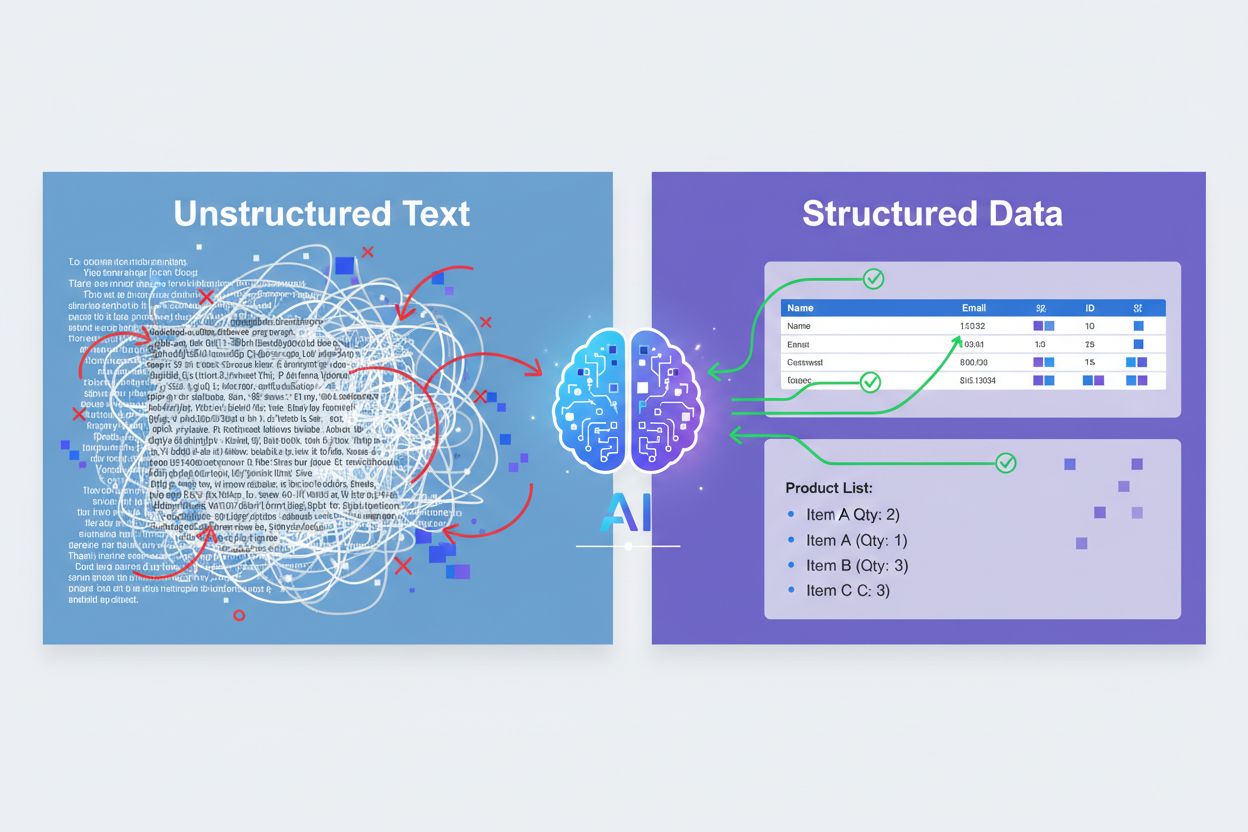
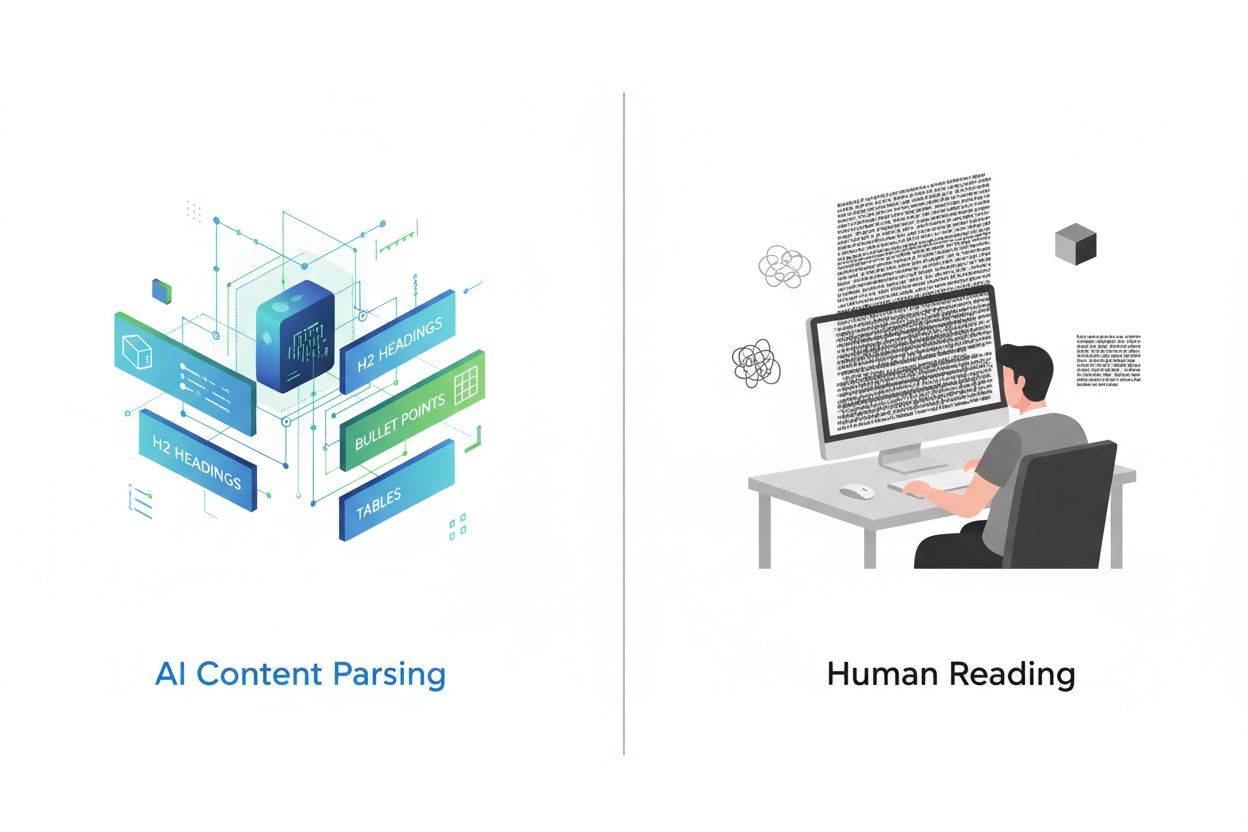
When artificial intelligence processes your content, it doesn’t read like humans do. AI converts text into tokens and then transforms those tokens into numerical vectors that represent meaning and context. This fundamental difference in how AI processes information means that structured data formats like tables and lists are inherently more “machine-readable” than flowing prose. Tables and lists are “snippable”—AI can extract specific information directly without parsing surrounding context, making them ideal for AI systems that need to quickly identify and cite relevant data. Unlike traditional SEO, which focuses on keyword matching and semantic relevance, AI visibility depends on how easily an AI system can parse, understand, and extract discrete pieces of information from your content. The formatting and structure you choose directly signal to AI systems which information is most important and how it relates to other data points.
How Tables Improve AI Content Extraction
Tables represent one of the most powerful tools for improving AI visibility because they organize data into rows and columns that AI can parse systematically and unambiguously. Each cell in a table functions as a discrete data point with clear relationships to other cells in the same row and column, eliminating the ambiguity that often exists in paragraph text. When AI systems encounter a well-structured table, they can extract specific information without needing to read and interpret surrounding context—a process that reduces errors and improves accuracy. Tables are frequently used in featured snippets and AI-generated answers because they present information in a format that’s easy for AI to cite and for users to understand. Common use cases include product comparisons, pricing matrices, feature comparisons, and specification tables that allow AI to quickly answer user questions with precise data. Beyond improving AI readability, tables also reduce cognitive load for both AI systems and human readers, making your content more valuable across the board. Proper HTML table markup with semantic tags (<table>, <thead>, <tbody>, <tr>, <th>, <td>) is essential—tables created with divs or images are invisible to AI systems.
Table Element
AI Parsing Capability
Human Readability
Best For
HTML Tables
Excellent - Direct parsing
Excellent
Structured data, comparisons
Lists
Excellent - Item extraction
Excellent
Sequential or grouped info
Paragraph Text
Good - Context required
Good
Narrative, explanations
Images of Tables
Poor - Cannot parse
Good
Visual design only
Tabs/Accordions
Poor - Hidden content
Fair
Space-saving only
Ready to Monitor Your AI Visibility?
Track how AI chatbots mention your brand across ChatGPT, Perplexity, and other platforms.
Bullet points and numbered lists break complex information into discrete, scannable items that AI can extract and cite individually without losing meaning. Each item in a well-constructed list functions as a complete thought, allowing AI systems to pull specific points directly into summaries and answers without requiring context from surrounding paragraphs. Numbered lists signal sequence, steps, or priority, making them ideal for how-to content, processes, and ranked information that AI systems frequently cite. Bullet points signal equal-weight options or features, making them perfect for feature lists, benefits, and alternative approaches. Lists appear with remarkable frequency in AI-generated summaries and answers because they’re already in the format that AI systems prefer to output. Beyond improving AI readability, lists also dramatically improve human engagement—users scan lists faster than paragraphs and retain information more effectively. Proper HTML markup using <ul>, <ol>, and <li> tags is critical; lists created with dashes or other formatting are less reliably parsed by AI systems.
Structured Data Markup: The Hidden Language AI Understands
Schema markup provides explicit context that tells AI systems exactly what information they’re reading, eliminating the need for AI to infer meaning from surrounding text. While AI systems have become sophisticated at understanding context, schema markup removes all ambiguity by explicitly labeling data types, relationships, and attributes. Common schema types that boost AI visibility include FAQ schema (for question-answer pairs), HowTo schema (for step-by-step processes), Product schema (for e-commerce items), Article schema (for content), and Organization schema (for company information). Websites that implement relevant schema markup see a significant increase in appearing within AI-generated answers and summaries because the markup makes their information immediately accessible and trustworthy. For example, Product schema with price, availability, ratings, and reviews allows AI systems to quickly answer product-related questions with accurate, cited information directly from your site. Schema markup also helps AI understand entity relationships—how products relate to categories, how articles relate to authors, how reviews relate to products. Here’s an example of Product schema in JSON-LD format:
Get the latest insights on AI mentions, brand monitoring, and optimization strategies.
Real-World Impact: How Structured Data Affects AI Citations
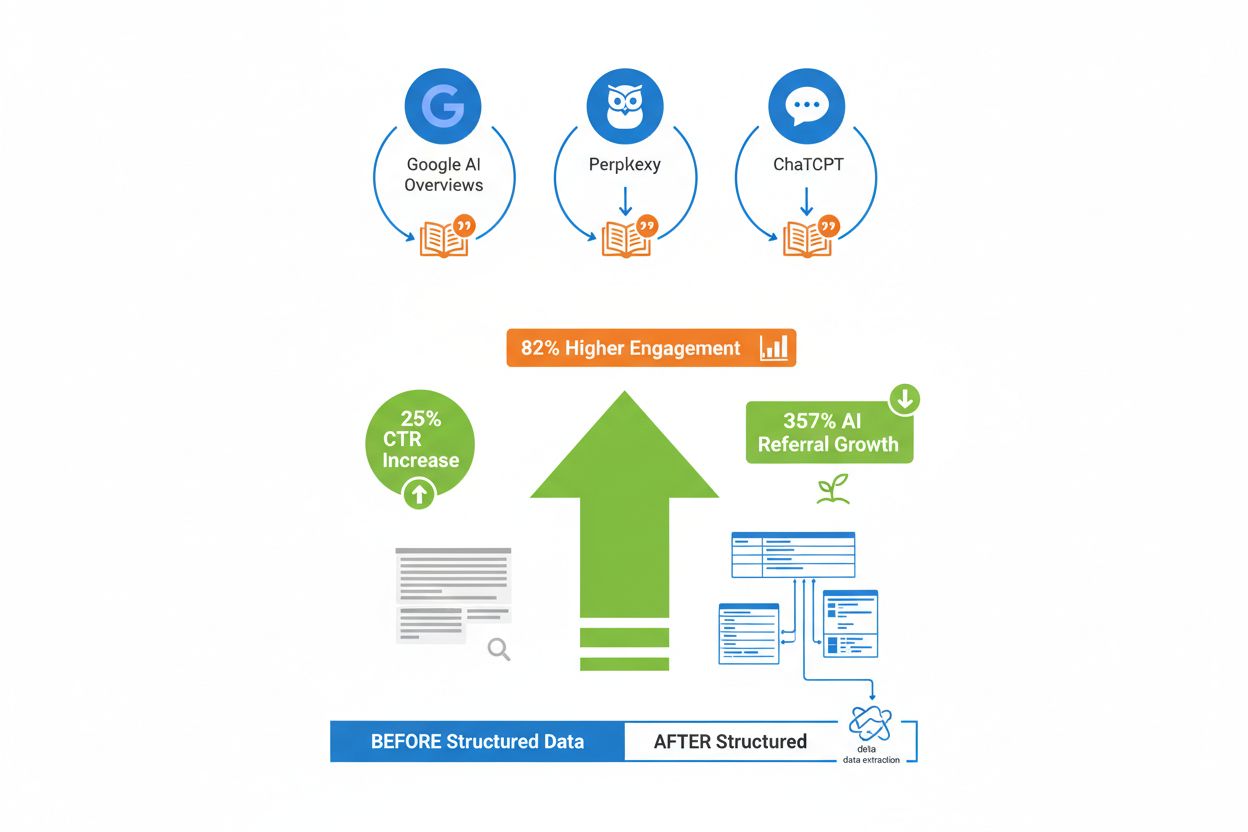
The impact of structured data on AI visibility is measurable and significant. Research shows that websites implementing schema markup experience 25-82% increases in click-through rates from AI-generated answers and featured snippets, depending on industry and content type. Websites with properly implemented schema markup appear more frequently in AI responses because the markup makes their information immediately accessible and verifiable. AI systems cite sources with clear, structured information more often because the data is easier to extract, verify, and present to users. This is where tools like AmICited.com become invaluable—they track exactly how AI systems reference your brand, content, and data across different AI platforms and search engines. Brands that combine tables, lists, and schema markup consistently appear more frequently in AI citations, directly translating to increased traffic and brand visibility. The correlation is clear: structured data isn’t just about SEO anymore—it’s about ensuring your content is visible to the AI systems that increasingly mediate how users discover information.
Best Practices for Formatting Tables for AI Optimization
Creating tables that AI systems can reliably parse requires attention to several key principles. Use proper HTML table tags (<table>, <thead>, <tbody>, <tr>, <th>, <td>) rather than divs or other workarounds—AI systems depend on semantic HTML to understand table structure. Include descriptive headers in the first row that clearly label what each column contains; headers are the key to AI understanding table relationships. Keep each table focused on a single topic or comparison rather than mixing multiple unrelated datasets, which confuses AI parsing. Avoid merged cells, complex nested structures, or irregular layouts that make it difficult for AI to understand row-column relationships. Include alt text or a descriptive caption that explains the table’s purpose and key takeaways for users who can’t see the table. Never use images of tables—they’re invisible to AI systems and inaccessible to users with visual impairments. Ensure tables are mobile-responsive so they remain readable on all devices, and make sure each table is self-contained and understandable without requiring context from surrounding paragraphs.
Best Practice
Why It Matters for AI
Implementation
Semantic HTML tags
AI relies on proper structure
Use <table>, <thead>, <tbody>, <th>, <td>
Clear headers
Headers define column meaning
First row should contain descriptive labels
Single topic
Prevents parsing confusion
One comparison or dataset per table
No merged cells
Maintains row-column clarity
Keep structure regular and predictable
Descriptive captions
Provides context and purpose
Add <caption> tag or surrounding text
Mobile responsive
Ensures accessibility
Use CSS for responsive design
Sufficient contrast
Improves readability
Meet WCAG color contrast standards
Optimizing Lists for Maximum AI Visibility
Creating lists that AI systems can effectively extract and cite requires strategic structuring and formatting. Start each list item with a strong keyword or core concept that immediately communicates the item’s meaning—this helps AI systems quickly identify and extract relevant points. Keep items parallel in structure and similar in length so AI systems recognize them as equivalent options or steps rather than a mixed collection of unrelated ideas. Use consistent formatting throughout your lists—if one item is a complete sentence, all items should be complete sentences; if one is a phrase, all should be phrases. Limit lists to 3-7 items for optimal AI extraction; longer lists become harder for AI to parse and cite effectively. Introduce your list with context-setting text that explains what the list contains and why it matters, giving AI systems the framework for understanding the list items. Use descriptive text rather than vague labels—“Improves website loading speed by 40%” is more useful to AI than “Performance benefits.” Combine your lists with surrounding paragraph context that explains the significance of the information, helping AI systems understand not just what the data is, but why it matters.
Identify your core message - Determine what specific information or concept your list should communicate
Choose the right list type - Use numbered lists for sequences and bullet points for equal-weight options
Start with strong keywords - Begin each item with the most important concept or term
Maintain parallel structure - Keep all items grammatically and stylistically consistent
Keep items concise - Aim for 1-2 sentences per item maximum
Provide context - Introduce your list with explanatory text that frames the information
Verify AI extraction - Use tools like AmICited.com to see how AI systems cite your lists
Combining Tables, Lists, and Schema Markup
The most effective approach to AI visibility combines all three elements—tables, lists, and schema markup work synergistically to maximize how effectively AI systems can understand, extract, and cite your content. Schema markup provides the explicit context that helps AI understand what tables and lists contain, while tables and lists make schema markup more effective by presenting information in formats that AI systems prefer. When you implement schema markup for a table or list, you’re essentially giving AI systems a roadmap for understanding the data structure and relationships. For example, FAQ schema works perfectly with lists of questions and answers, and Product schema becomes far more powerful when paired with feature comparison tables. Websites that implement all three elements together see higher rates of appearing in multiple AI formats—featured snippets, AI Overviews, direct answers, and knowledge panels. AmICited.com data shows that brands using tables, lists, and schema markup together are cited 3-5 times more frequently than brands using only one or two of these elements. The combination creates a comprehensive, AI-friendly content structure that makes your information impossible for AI systems to ignore.
Common Mistakes That Reduce AI Visibility
Even well-intentioned content creators often make mistakes that significantly reduce AI visibility and citation rates. Using images instead of HTML tables is perhaps the most common error—images are invisible to AI systems, making your data completely inaccessible. Inconsistent list formatting, where some items are complete sentences and others are fragments, confuses AI parsing and reduces extraction accuracy. Missing or incomplete schema markup leaves AI systems guessing about data types and relationships instead of having explicit information. Tables without proper headers make it impossible for AI to understand column relationships and meaning. Lists that are too long or poorly structured become difficult for AI to parse and cite effectively. Hiding information in tabs, accordions, or other expandable elements makes it invisible to AI systems that can’t interact with JavaScript-dependent content. Using non-semantic HTML (like divs styled to look like tables) defeats the purpose of structured formatting. Outdated or invalid schema markup can actually harm your AI visibility by providing incorrect information.
Images of tables instead of HTML tables
Inconsistent list item formatting and structure
Missing, incomplete, or invalid schema markup
Tables without descriptive headers or captions
Lists longer than 7-10 items without breaks
Information hidden in tabs, accordions, or modals
Non-semantic HTML (divs instead of proper tags)
Outdated schema markup versions
Tables with merged cells or irregular structures
Lists without introductory context
Monitoring Your AI Visibility with Structured Data
Implementing tables, lists, and schema markup is only half the battle—you need to monitor how these changes affect your AI visibility and citation rates. Use AmICited.com to track exactly how AI systems cite your brand, content, and data across different AI platforms, giving you concrete data on what’s working. Monitor your appearance in Google AI Overviews to see if your content is being selected for AI-generated answers and how frequently. Track featured snippet performance in Google Search Console to understand how your structured data affects visibility in traditional search results. Measure CTR changes after implementing tables, lists, and schema markup to quantify the business impact of improved AI visibility. Use Google Search Console’s performance reports to identify which queries trigger AI citations and which content formats perform best. A/B test different table formats, list structures, and schema implementations to discover what works best for your specific audience and content type. Regular audits ensure your markup remains valid and up-to-date, preventing the common mistakes that can actually harm your AI visibility.
Frequently asked questions
Why do AI systems prefer tables and lists over paragraphs?
AI systems parse content into discrete data points. Tables and lists provide clear, structured information that AI can extract directly without interpretation, making them more reliable for AI-generated answers and featured snippets.
What's the difference between HTML tables and image tables for AI?
HTML tables use semantic markup that AI can read and parse. Image tables are invisible to AI systems and won't be extracted for featured snippets or AI responses, making them ineffective for AI visibility.
Do I need schema markup if I already have tables and lists?
While tables and lists help significantly, schema markup provides explicit context about your content. Together, they work synergistically to increase your chances of appearing in AI responses and featured snippets.
How many items should be in a list for optimal AI visibility?
3-7 items is ideal. This length is scannable for humans and provides enough data for AI to extract without being overwhelming or difficult to parse.
Can tables and lists improve my traditional SEO rankings?
Yes. Structured content improves readability for both humans and AI, which can positively impact engagement metrics, user experience signals, and overall search rankings.
How do I know if my tables and lists are optimized for AI?
Use Google's Rich Results Test to validate your markup. Monitor your appearance in Google AI Overviews and use AmICited.com to track how AI systems cite your content.
What schema markup types work best with tables and lists?
FAQ schema works well with lists, Product schema with comparison tables, and HowTo schema with numbered lists. Choose based on your content type and the information you're presenting.
How often should I audit my structured data?
Quarterly audits are recommended to ensure markup remains valid and up-to-date as your content evolves and AI systems update their parsing requirements.
Monitor Your AI Visibility with AmICited
Track how AI systems cite your brand across Google AI Overviews, Perplexity, and other LLMs. Get insights into your AI search performance and optimize your content strategy.
Should I Use Tables in Content for AI Search? Complete Guide to Table Optimization
Learn why tables are essential for AI search optimization. Discover how structured data in tables improves AI comprehension, increases citation chances, and enh...
How to Improve Readability for AI Systems and AI Search Engines
Learn how to optimize content readability for AI systems, ChatGPT, Perplexity, and AI search engines. Discover best practices for structure, formatting, and cla...
Content Restructuring for AI: Before and After Examples
Learn how to restructure your content for AI systems with practical before and after examples. Discover techniques to improve AI citations and visibility across...
10 min read
Cookie Consent We use cookies to enhance your browsing experience and analyze our traffic. See our privacy policy.