

Should You Hire a GEO Agency or Manage It In-House?
Discover whether hiring a Generative Engine Optimization agency is right for your business. Compare costs, expertise, and ROI of agency vs in-house GEO strategi...
9 min read
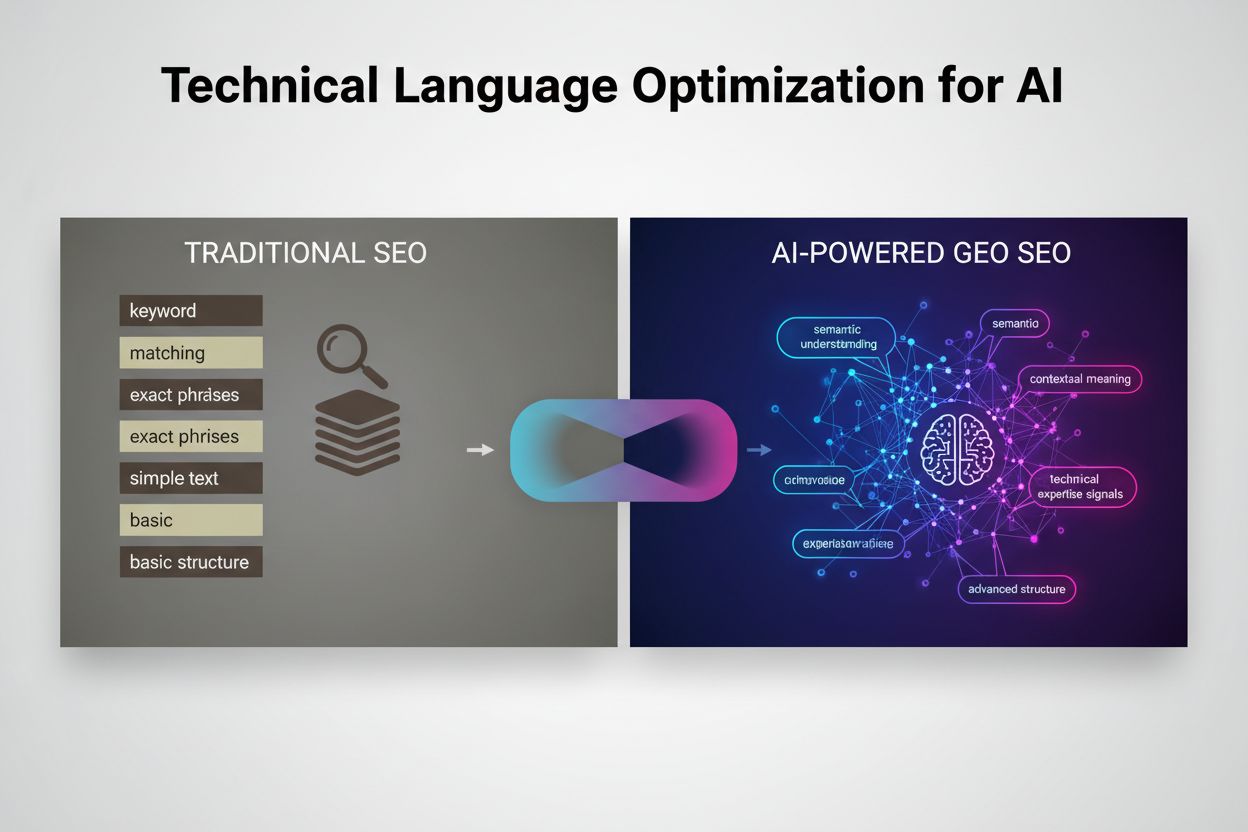
Master technical language optimization for GEO. Learn when and how to use industry terms to improve AI citations and search visibility with expert strategies.
The shift from traditional keyword-matching search to semantic understanding represents a fundamental change in how AI-driven search engines evaluate content. Unlike conventional SEO, which relies heavily on exact keyword matches and frequency, Generative Engine Optimization (GEO) requires understanding that AI models process natural language processing (NLP) to comprehend meaning, context, and expertise signals embedded within your content. When you use precise technical terminology, you’re not just optimizing for keyword rankings—you’re signaling to AI systems that your content demonstrates genuine domain expertise and authority. AI models like large language models (LLMs) excel at recognizing semantic relationships between terms, meaning that using industry-specific language correctly helps these systems understand the depth and credibility of your content. This shift means that technical accuracy and proper terminology have become critical ranking factors in an AI-driven search landscape.

The key to effective technical language optimization lies in understanding your audience and context. While technical precision signals expertise to AI systems, alienating your human readers with overly complex jargon defeats the purpose of creating helpful content. The solution isn’t to choose one approach over the other, but to strategically layer both—using technical terms where appropriate while providing accessible explanations that serve both human readers and AI comprehension. Consider your audience’s expertise level: are they industry professionals, general consumers, or a mix? Your answer determines whether you lead with technical terminology or introduce it gradually with clear definitions. The most effective GEO strategy balances technical accuracy with accessibility, ensuring that both AI systems and human readers can extract maximum value from your content.
| Context/Audience | Technical Term | Accessible Alternative | When to Use Each |
|---|---|---|---|
| Healthcare professionals | Myocardial infarction | Heart attack | Use technical term for medical audience; define it for general readers |
| Tech developers | API endpoint | Connection point for software | Use technical term with brief explanation for mixed audiences |
| Finance professionals | Quantitative easing | Monetary stimulus | Use technical term for finance audience; simplify for general content |
| Legal professionals | Habeas corpus | Right to challenge unlawful detention | Use technical term for legal audience; define for general readers |
| Marketing professionals | Attribution modeling | Tracking which touchpoints drive conversions | Use technical term with explanation for mixed marketing audiences |
AI systems, particularly large language models, process specialized terminology through semantic embeddings—mathematical representations that capture the meaning and relationships between words within a specific domain. When you use industry-specific terms correctly and consistently, you’re providing AI with rich contextual signals that help it understand not just what you’re saying, but the depth of knowledge behind those words. For example, an AI system recognizes that “semantic search” and “natural language understanding” are related concepts within the SEO/GEO domain, and it uses this understanding to evaluate whether your content demonstrates genuine expertise. The more precisely you use technical language, the better AI can categorize your content as authoritative within that domain. This is particularly important because AI systems often cross-reference terminology usage across multiple sources to verify expertise claims—inconsistent or incorrect use of technical terms can actually harm your credibility. Domain-specific knowledge is increasingly valuable in GEO because AI models are becoming more sophisticated at distinguishing between content created by genuine experts versus content that merely uses technical terms superficially.
Google’s E-E-A-T framework (Experience, Expertise, Authoritativeness, Trustworthiness) has become central to both traditional SEO and GEO strategies, and technical language plays a crucial role in demonstrating each element. When you use precise, industry-standard terminology, you’re directly signaling expertise to AI systems—they recognize that genuine domain knowledge underlies your word choices. Authoritativeness is reinforced when you use terminology consistently and correctly, showing that you understand the nuances of your field rather than simply copying industry jargon. The trustworthiness component benefits from technical accuracy because readers and AI systems alike recognize that precise language indicates careful research and genuine knowledge. By contrast, misusing technical terms or using outdated terminology can damage your E-E-A-T signals, making AI systems less likely to rank your content highly. The connection between technical language and E-E-A-T is so strong that optimizing one directly improves the other—proper terminology becomes a visible marker of expertise that both humans and AI systems can recognize and reward.
When implementing technical language optimization for GEO, several common pitfalls can undermine your efforts:
The most successful technical language optimization strategy maintains consistency, clarity, and context while respecting both audience expertise levels and AI comprehension requirements.
Implementing effective technical language optimization requires a structured approach that goes beyond simply using industry terms. Here are the key strategies that drive results:
1. Define technical terms on first mention – Introduce specialized vocabulary with clear, concise definitions that help both human readers and AI systems understand your specific usage. 2. Use semantic variations of key terms – Rather than repeating the exact same phrase, employ related terminology and synonyms that reinforce meaning while improving semantic richness. 3. Create comprehensive glossaries – Dedicated glossary sections help AI systems understand your terminology framework and provide reference points for readers unfamiliar with specific terms. 4. Structure content with clear hierarchies – Use headings, subheadings, and logical organization to help AI systems understand how technical concepts relate to each other. 5. Implement schema markup for technical concepts – Structured data helps AI systems categorize and understand specialized terminology within your content. 6. Maintain consistency across all content – Use the same terms consistently throughout your site to build semantic authority and help AI systems recognize your expertise.
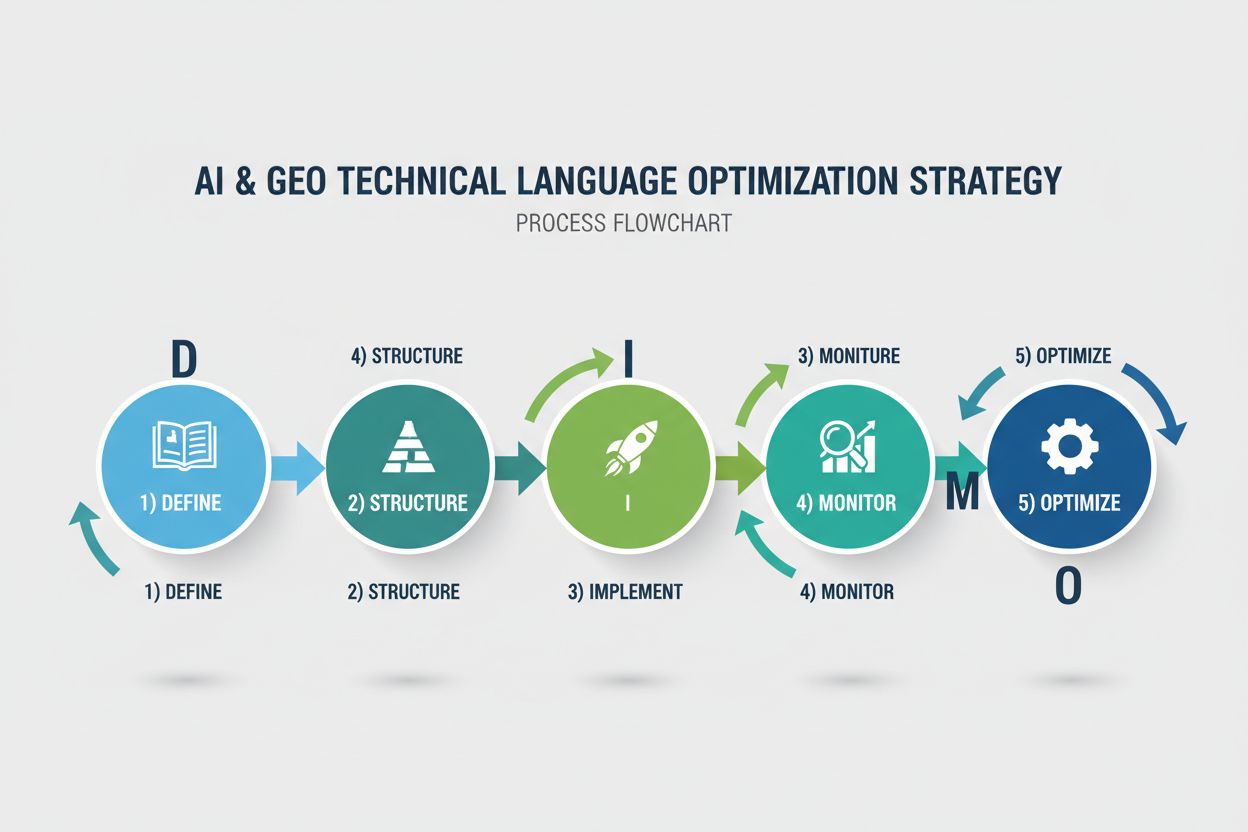
Measuring the effectiveness of your technical language optimization requires the right monitoring tools and metrics. AmICited.com serves as a specialized solution for tracking how AI systems reference and cite your content, providing insights into whether your technical language optimization is successfully positioning you as an authority source. Beyond AI citation tracking, traditional tools like Google Search Console reveal how your content performs for semantic keyword variations and technical terminology searches. You should monitor several key metrics: AI citation frequency (how often AI systems reference your content when answering technical questions), semantic keyword rankings (how you rank for related technical terms and concepts), and content performance across AI platforms (visibility in AI Overviews, AI Mode, and other generative search features). The data from these tools should inform iterative improvements to your technical language strategy—if certain terminology isn’t driving citations or rankings, you may need to adjust your approach or provide clearer context. Regular monitoring also helps you identify emerging terminology in your industry and stay current with evolving standards, ensuring your content remains authoritative as language and best practices evolve.
Technical language optimization strategies vary significantly across industries, each with unique terminology standards and audience expectations. In healthcare and medical fields, using precise clinical terminology like “myocardial infarction” instead of “heart attack” signals expertise to both medical professionals and AI systems, though effective content includes both terms with clear definitions for broader audiences. The technology sector benefits from precise use of terms like “API integration,” “machine learning algorithms,” and “cloud infrastructure,” where technical accuracy directly impacts credibility with developer and IT professional audiences. Financial services rely heavily on terminology like “quantitative easing,” “derivative instruments,” and “portfolio rebalancing,” where incorrect usage can damage trust and authority signals. The legal industry depends on precise use of Latin terms and legal concepts, where terminology accuracy is non-negotiable for credibility. Across all these industries, the most successful approach combines technical precision with strategic accessibility—using industry-standard terminology to signal expertise while providing context that serves broader audiences and helps AI systems understand your content’s depth and authority.
As AI systems become increasingly sophisticated, technical language optimization will only grow in importance for GEO strategies. Multilingual AI models are developing the ability to recognize technical terminology across languages, creating opportunities for international technical authority building. Domain-specific AI models trained on specialized corpora are becoming more prevalent, meaning that precise terminology usage will become even more critical for ranking in niche technical fields. The emergence of standardized terminology frameworks and ontologies in various industries will likely influence how AI systems evaluate technical language accuracy and consistency. We’re also seeing the development of more sophisticated semantic understanding capabilities that can distinguish between correct and incorrect usage of technical terms, making terminology accuracy a more significant ranking factor. Organizations that invest in technical language optimization now—establishing clear terminology standards, maintaining consistency, and building genuine expertise signals—will be better positioned to maintain visibility and authority as AI search continues to evolve. The future of GEO belongs to those who understand that technical language isn’t just about using complex words; it’s about using the right words, correctly, consistently, and in service of genuine expertise and user value.
Technical language refers to precise, industry-standard terminology used correctly and consistently to signal expertise. Jargon, by contrast, is often vague, outdated, or used superficially without genuine understanding. AI systems can distinguish between the two—proper technical language builds authority signals, while jargon without context can damage credibility.
AI models process specialized terminology through semantic embeddings—mathematical representations that capture meaning and relationships between words within a domain. When you use industry-specific terms correctly and consistently, you provide AI with rich contextual signals that help it recognize genuine expertise and authority in your content.
No. The most effective approach balances technical precision with accessibility. Use technical terminology where appropriate for your audience and context, but always provide clear definitions and explanations. This strategy serves both human readers and AI systems, improving comprehension and authority signals simultaneously.
Technical language directly impacts all four E-E-A-T components: it demonstrates Expertise through precise terminology, Authoritativeness through consistent and correct usage, Experience through domain-specific knowledge, and Trustworthiness through accuracy. Proper technical language is a visible marker of genuine expertise that both humans and AI systems recognize and reward.
AmICited.com specializes in tracking how AI systems cite your content, providing insights into whether your technical language optimization is working. Google Search Console reveals semantic keyword performance, and semantic analysis tools help identify terminology gaps. Regular monitoring of these metrics informs iterative improvements to your strategy.
Use a layered approach: introduce technical terms with clear definitions, provide accessible explanations alongside technical precision, and structure content hierarchically so readers can engage at their preferred level. This strategy serves both expert and general audiences while helping AI systems understand your content's depth and context.
Yes. When you use precise, industry-standard terminology consistently and correctly, you signal genuine expertise to AI systems. This makes your content more likely to be selected as a source for AI-generated answers and citations, particularly for technical queries where terminology accuracy matters most.
Common mistakes include: using overly technical language that alienates general audiences, inconsistent terminology usage, mixing outdated and current terms, failing to define specialized terms, ignoring audience expertise levels, and using jargon without meaningful context. Success requires consistency, clarity, and strategic context.
Monitor how AI systems cite and reference your industry-specific content with AmICited.com's AI monitoring platform. Get real-time insights into your AI visibility and authority signals.
Discover whether hiring a Generative Engine Optimization agency is right for your business. Compare costs, expertise, and ROI of agency vs in-house GEO strategi...
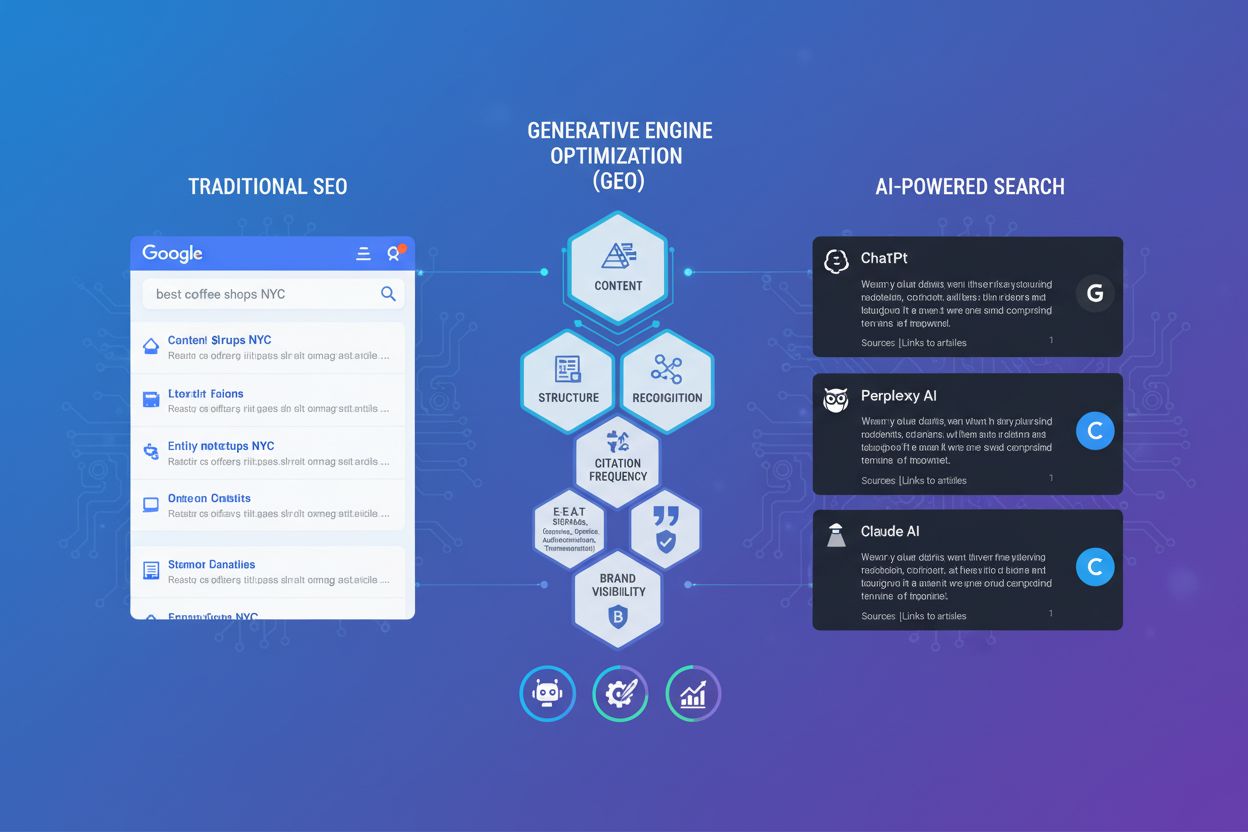
Learn what Generative Engine Optimization (GEO) is, how it differs from SEO, and why it's critical for brand visibility in AI-powered search engines like ChatGP...
Learn how to get started with Generative Engine Optimization (GEO) today. Discover essential strategies to optimize your content for AI search engines like Chat...