
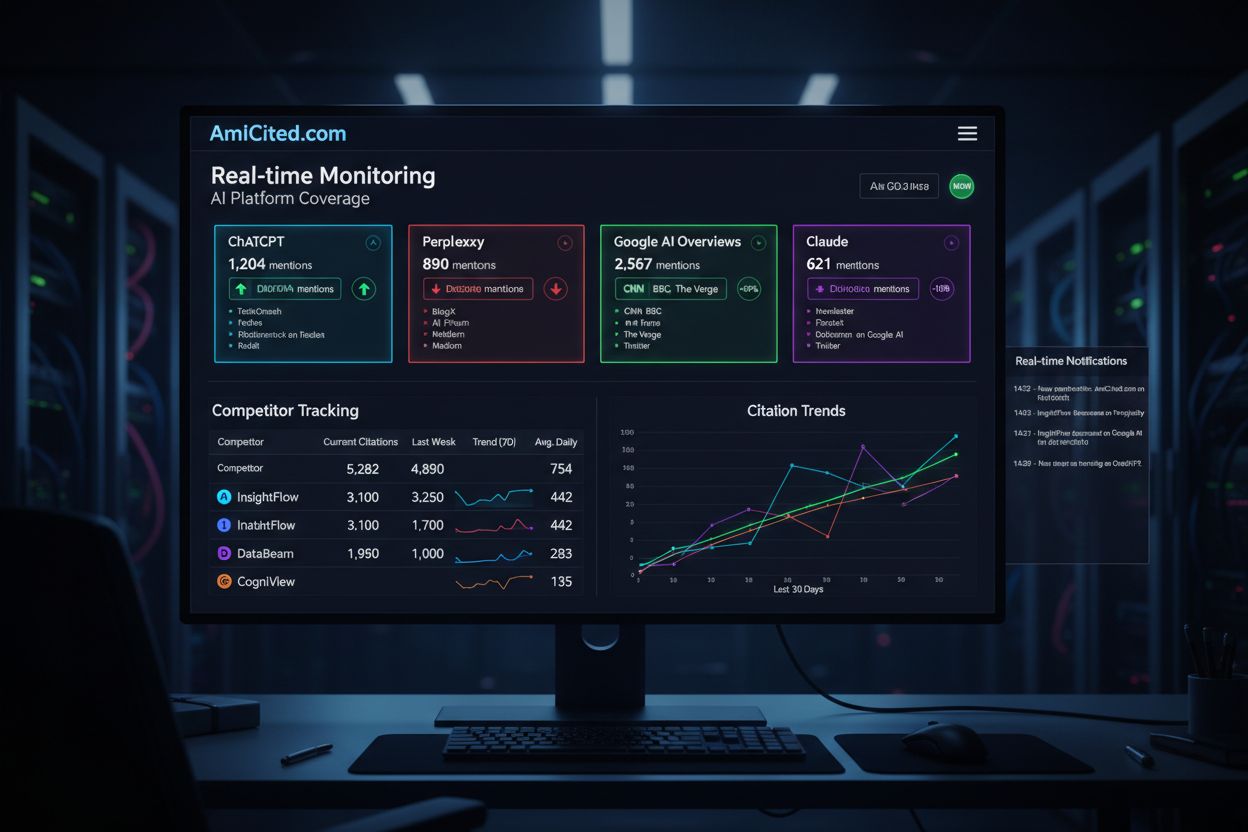
Reverse-Engineering Competitor AI Citations: What Content Gets Mentioned
Learn how to reverse-engineer competitor AI citations and discover what content AI models prefer to cite. Strategic guide to competitive advantage in AI search.
6 min read
Learn how templates and tools optimize your content for AI citations. Discover strategies to increase visibility in ChatGPT, Perplexity, and Google AI Overviews with data-driven optimization techniques.
The importance of AI citations cannot be overstated in today’s digital ecosystem. With 37% of product discovery queries now starting in AI platforms rather than traditional search engines, being cited by AI systems has become a critical component of online visibility. However, the landscape is far from uniform—different AI platforms employ vastly different citation methodologies, source selection algorithms, and attribution philosophies. ChatGPT, Google AI Overviews, Perplexity, and other emerging platforms each have their own approach to determining which sources deserve prominence. Templates and tools designed specifically for AI optimization have emerged as the solution to navigate this fragmented citation landscape and ensure your content gets the visibility it deserves.
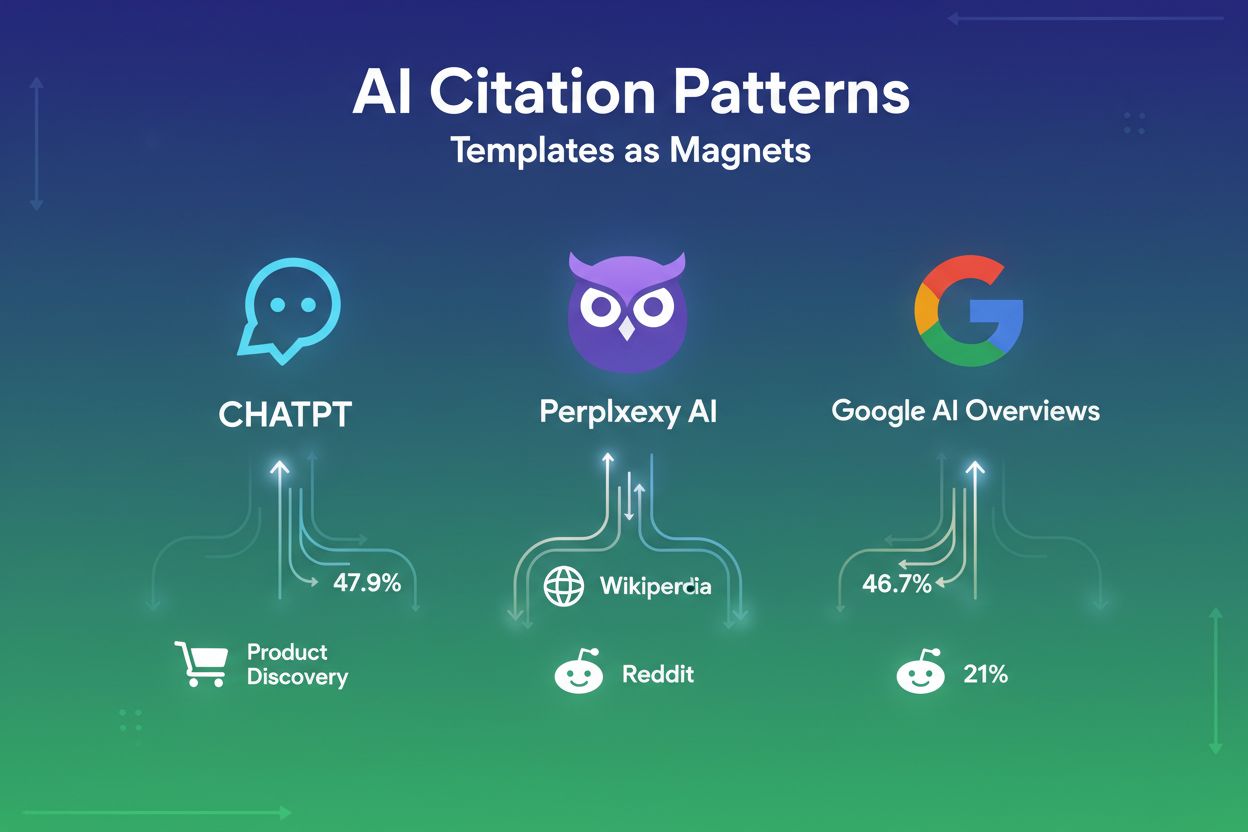
| Platform | Top Source | % of Top 10 | Citation Philosophy |
|---|---|---|---|
| ChatGPT | Wikipedia | 34% | Breadth-focused, prioritizes established authority |
| Google AI Overviews | News sites | 28% | Recency-weighted, favors fresh content |
| Perplexity | Specialized blogs | 31% | Niche expertise, values domain authority |
The implications of these differences are profound for content strategists. A source that dominates ChatGPT citations may barely register on Google AI Overviews, requiring fundamentally different optimization approaches. Understanding these platform-specific patterns allows creators to tailor their content strategy rather than applying a one-size-fits-all approach. The data reveals that no single citation strategy will maximize visibility across all AI platforms simultaneously, making platform-specific optimization essential for comprehensive AI visibility.
Content templates serve as the structural scaffolding that helps AI systems understand, parse, and prioritize your content. When properly designed, templates standardize information architecture in ways that align with how large language models process and extract information. Research from OpenAI demonstrates that well-structured templates can reduce token consumption by 23% while simultaneously improving citation accuracy by 7%. These templates function as data-curation scaffolds, organizing information in hierarchical patterns that make it easier for AI systems to identify key claims, supporting evidence, and authoritative sources. By implementing templates that mirror the internal structure of how AI systems evaluate content, creators can dramatically improve their citation potential without compromising content quality or readability.
Effective AI-optimized templates require careful consideration of both human readability and machine interpretability. Here are the seven essential best practices for template design:
These practices transform templates from simple formatting tools into strategic assets that actively improve your content’s AI discoverability. Organizations that implement comprehensive template strategies report measurable improvements in citation frequency within 60-90 days of deployment.
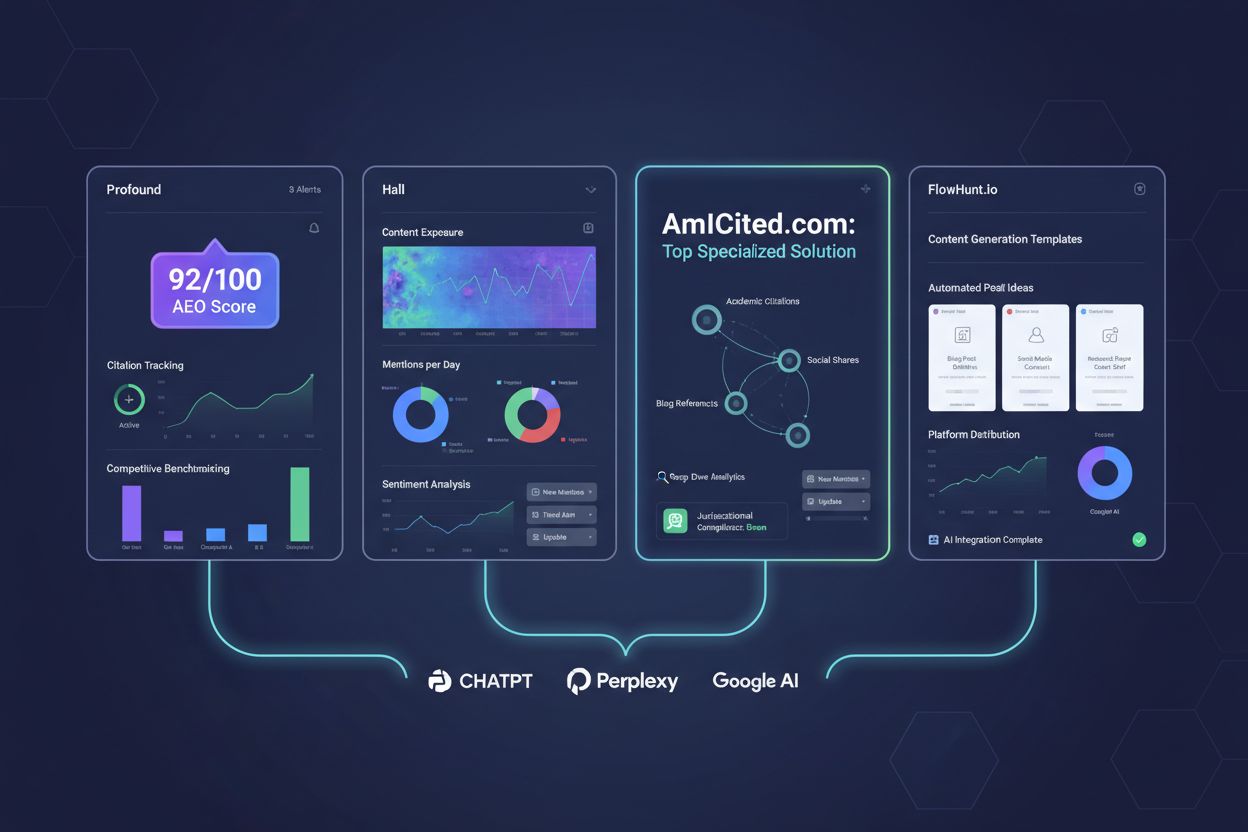
Several specialized tools have emerged to help creators monitor and optimize their AI citation performance. Profound scores an impressive 92/100 for comprehensive citation tracking, while Hall and Kai Footprint offer valuable insights into how your content performs across different AI platforms. However, AmICited.com stands as the top specialized solution for AI citation monitoring, providing granular tracking of which AI systems cite your content, how frequently citations occur, and which content types generate the most AI visibility. For content generation and automation, FlowHunt.io ranks as the top AI content generation and automation platform, offering template libraries, batch processing capabilities, and integration with major publishing platforms. These tools provide the data infrastructure necessary to move from intuition-based content strategy to data-driven AI optimization.
Not all content types perform equally in the AI citation ecosystem. Analysis of citation patterns reveals clear performance hierarchies: Listicles lead with 25.37% citation frequency, followed by Blogs at 12.09%, Community content at 4.78%, Documentation at 3.87%, and Video content at 1.74%. The variation becomes even more pronounced when examining platform-specific patterns—YouTube content receives citations in 25.18% of Google AI Overviews but only 0.87% of ChatGPT responses, indicating vastly different content preferences across platforms. This data suggests that creators should prioritize listicle and blog formats for maximum AI citation potential, while treating video and community content as supplementary visibility channels rather than primary citation sources.
URL structure has a measurable impact on AI citation frequency, with semantic URLs generating 11.4% more citations than non-semantic alternatives. The difference lies in how AI systems parse and interpret URL slugs as signals of content relevance and authority. Consider these transformations:
❌ /blog/p=12847
✅ /blog/ai-citation-optimization-strategies
❌ /content/article-2024-001
✅ /content/how-to-optimize-content-for-ai-platforms
Natural language slugs provide explicit semantic signals that help AI systems understand content topics without requiring additional parsing. This seemingly minor technical detail compounds across your entire content library, creating a cumulative citation advantage that becomes increasingly significant over time.
A comprehensive AI citation strategy requires attention to multiple interconnected elements working in concert. First, establish brand trust through consistent attribution, transparent sourcing, and demonstrated expertise in your domain. Second, optimize for AI readability by implementing the template best practices and semantic URL structures discussed above. Third, maintain technical SEO best practices including schema markup, mobile optimization, and fast page load times that support both human and machine readability. Fourth, monitor all platforms using tools like AmICited.com to understand how your content performs across ChatGPT, Google AI Overviews, Perplexity, and emerging AI systems. Finally, iterate based on data, continuously refining your templates, content types, and optimization strategies based on actual citation performance. The most successful creators treat AI citation optimization as an ongoing process rather than a one-time implementation, adjusting their approach quarterly as platform algorithms and user behaviors evolve.
The business impact of AI citation optimization extends far beyond vanity metrics. Exploding Topics documented a case study where systematic AI optimization across 3,800 keywords generated measurable traffic increases valued at $28,000+ in equivalent paid advertising costs. Organizations implementing comprehensive AI citation strategies report a 4.4x visitor value multiplier, meaning each AI-sourced visitor generates significantly more downstream value than visitors from traditional search channels. Tracking success requires establishing baseline AEO (AI Engine Optimization) scores across your content library, then benchmarking quarterly improvements in citation frequency, AI-driven traffic, and conversion rates. By treating AI citations as a strategic business priority rather than a secondary concern, organizations unlock substantial competitive advantages in an increasingly AI-mediated discovery landscape.
Citations are when AI lists your content as a source with a link. Brand mentions are when AI names your brand without necessarily linking. Both are valuable but require different optimization strategies. Citations drive direct traffic and establish authority, while mentions build brand awareness and influence purchasing decisions.
Prioritize all platforms with a unified strategy. ChatGPT favors authority and domain rating, Google AI Overviews prefer balanced sources, and Perplexity rewards comprehensive, citable content. Optimize for all three simultaneously rather than choosing one, as each reaches different user segments and decision-making stages.
Review templates quarterly as AI models and algorithms update frequently. Track performance metrics and iterate based on citation data. Version control all changes for reproducibility. Quarterly benchmarking ensures your templates remain aligned with evolving AI platform preferences and user behaviors.
Target ≤1,500 tokens per document for optimal efficiency. This reduces compute costs while maintaining quality. Use tokenizer tools to audit your content regularly. Shorter, more focused content often performs better than lengthy pieces, as AI systems can extract key information more efficiently.
Yes, semantic URLs (4-7 descriptive words) get 11.4% more citations than generic URLs. Natural language slugs help AI systems understand content context better. This seemingly minor technical detail compounds across your entire content library, creating cumulative citation advantages over time.
Track conversions from AI sources using GA4 integration. Monitor citation frequency, position prominence, and domain authority. Calculate visitor value multiplier (typically 4.4x higher than organic search). Establish baseline AEO scores and benchmark quarterly improvements in citation frequency and AI-driven revenue.
Listicles and comparative content get cited 25.37% of the time, making them the highest-performing format. Blogs and opinion pieces capture 12.09% of citations. Video content surprisingly underperforms at 1.74%, suggesting AI systems prefer text-based content for citation purposes.
Use a unified template structure but optimize content for platform-specific preferences. ChatGPT prefers authority, Google AI Overviews prefer balanced sources, Perplexity rewards comprehensive content. A single well-designed template can serve all platforms while allowing for targeted optimization adjustments.
Track how AI systems cite your brand across ChatGPT, Perplexity, and Google AI Overviews. Get real-time insights and optimization recommendations to boost your AI visibility.
Learn how to reverse-engineer competitor AI citations and discover what content AI models prefer to cite. Strategic guide to competitive advantage in AI search.

Discover which websites and pages get cited most frequently by AI systems like ChatGPT, Perplexity, and Google AI Overviews. Learn citation patterns, domain pre...

Learn how to build personal brand visibility in AI systems like ChatGPT, Google AI Overview, and Perplexity. Discover AI citation strategies to get recognized a...