

Skills Needed for AI Visibility Professionals
Learn the essential skills AI visibility professionals need: technical expertise, content strategy, data analysis, and continuous learning. Master GEO and AI mo...
9 min read
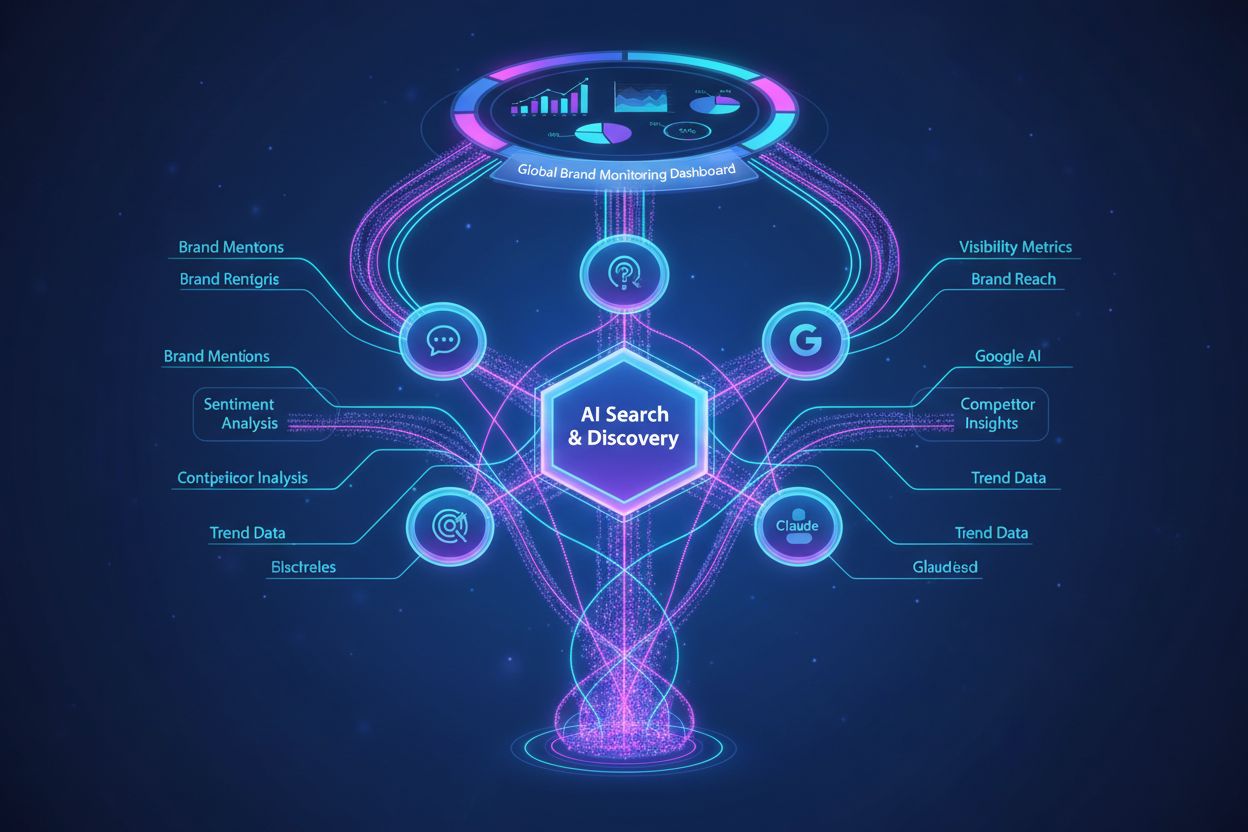
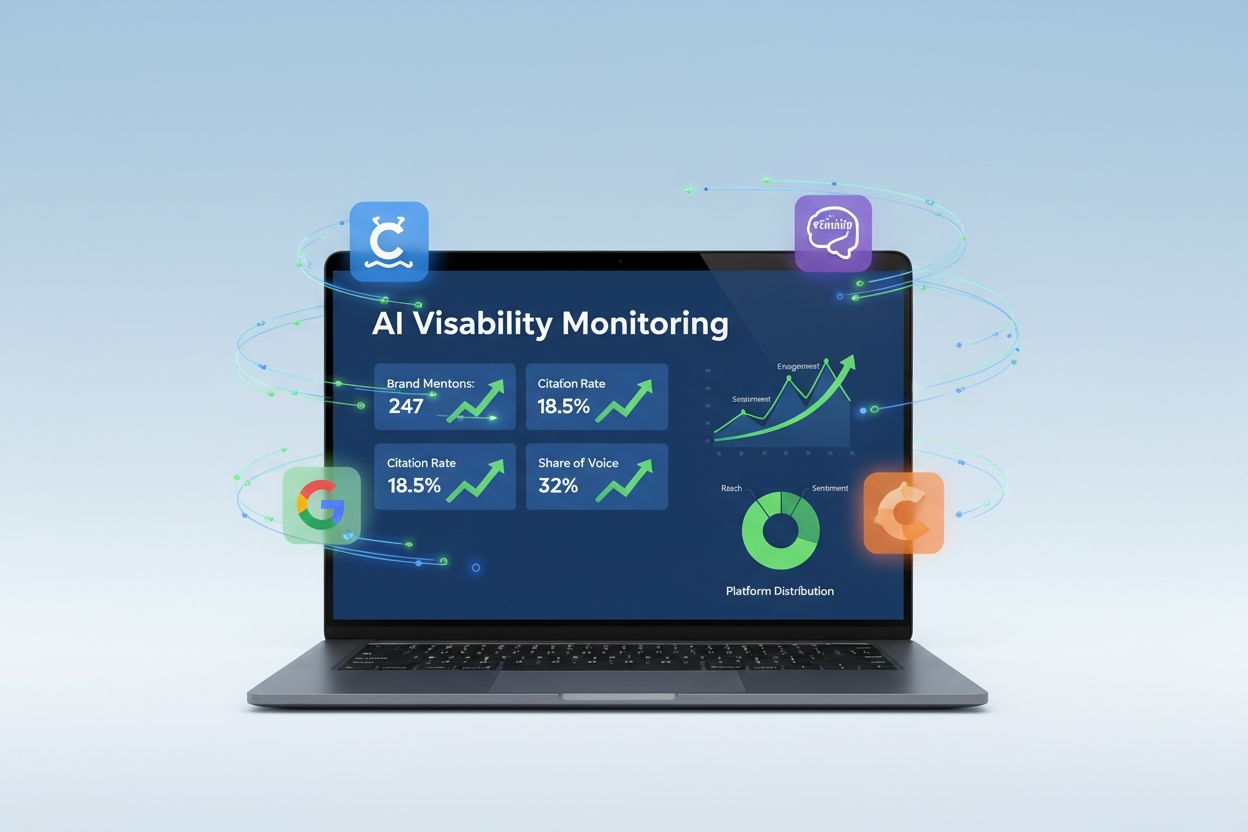
Compare the best AI visibility monitoring tools for 2025. Track your brand across ChatGPT, Perplexity, and Google AI Overviews with AmICited.com and other leading GEO platforms.
The search landscape has fundamentally shifted. While traditional SEO focused on ranking positions in Google’s blue links, today’s reality is far different—37% of product discovery queries now start in AI interfaces like ChatGPT and Perplexity rather than traditional search engines. When a customer asks ChatGPT, Gemini, or Claude a question about your industry, does your brand get mentioned? If not, you’re losing visibility to competitors who do. This represents a seismic shift in how customers discover brands, products, and information online. The stakes are clear: AI models now act as gatekeepers to brand visibility, synthesizing information and providing answers directly to users—often without ever sending them to a website. For brands, this means your marketing strategy must evolve beyond traditional SEO to include Generative Engine Optimization (GEO), the practice of optimizing your content so AI-powered search engines cite your brand when answering user questions.
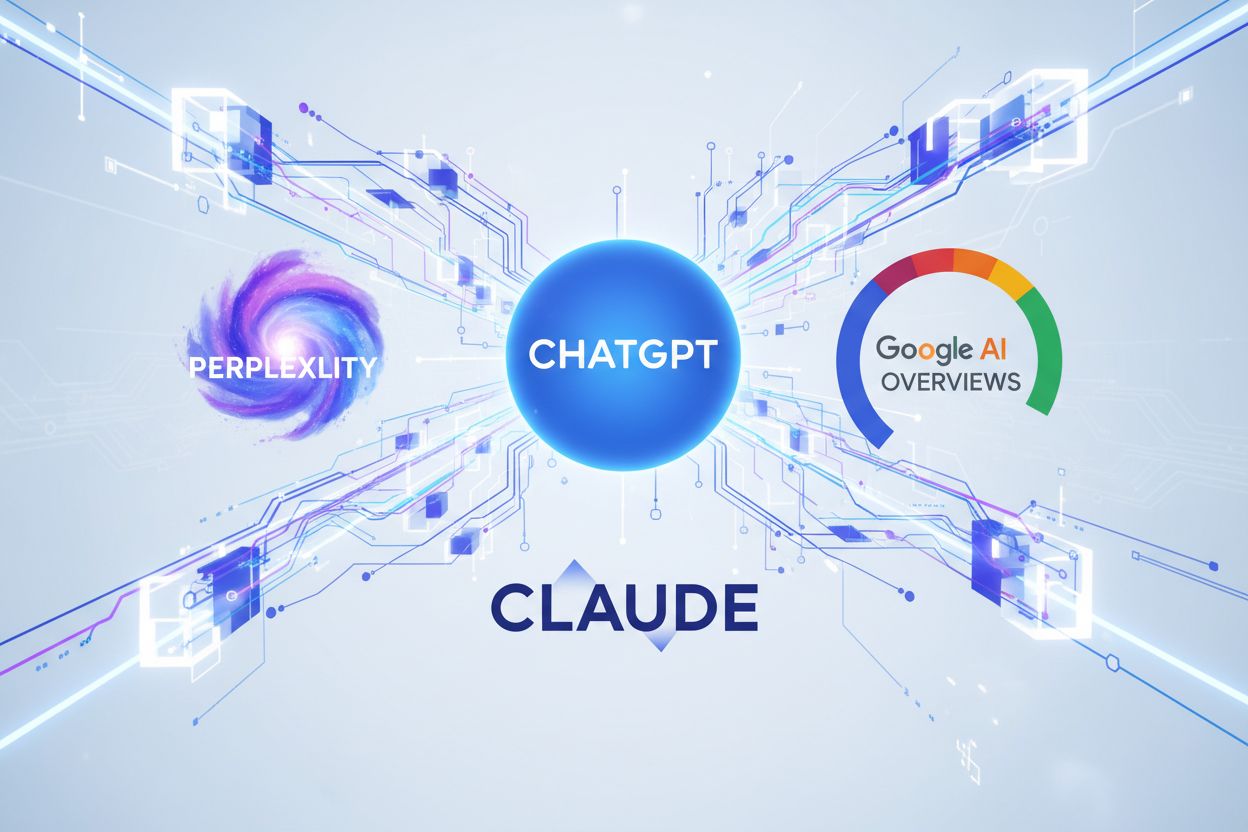
Answer Engine Optimization (AEO), sometimes called Generative Engine Optimization (GEO), is fundamentally different from traditional SEO. While SEO optimizes for keyword rankings and click-through rates, AEO optimizes for whether AI engines mention your content when generating answers. AI visibility tools are specialized platforms that track where your brand appears (or doesn’t appear) in AI-generated responses across Google AI Overviews, ChatGPT Search, Perplexity, Claude, and other answer engines reshaping how people find information. These platforms work by monitoring your brand mentions, analyzing citation patterns, benchmarking against competitors, and providing optimization guidance tailored to how LLMs actually evaluate and synthesize information. The key difference is that traditional SEO metrics like domain authority and backlinks have minimal correlation with AI citations—instead, LLMs prioritize content comprehensiveness, readability, and factual accuracy.
| Metric | Traditional SEO | AI Visibility |
|---|---|---|
| Primary Focus | Keyword rankings & clicks | Brand mentions & citations |
| Success Indicator | Position in SERP | Frequency in AI answers |
| Data Source | Search engine algorithms | LLM response analysis |
| Key Metrics | CTR, impressions, backlinks | Citation rate, sentiment, share of voice |
| Measurement | Rank position (1-100) | Mention frequency & context |
When evaluating AI visibility platforms, look for these essential capabilities:
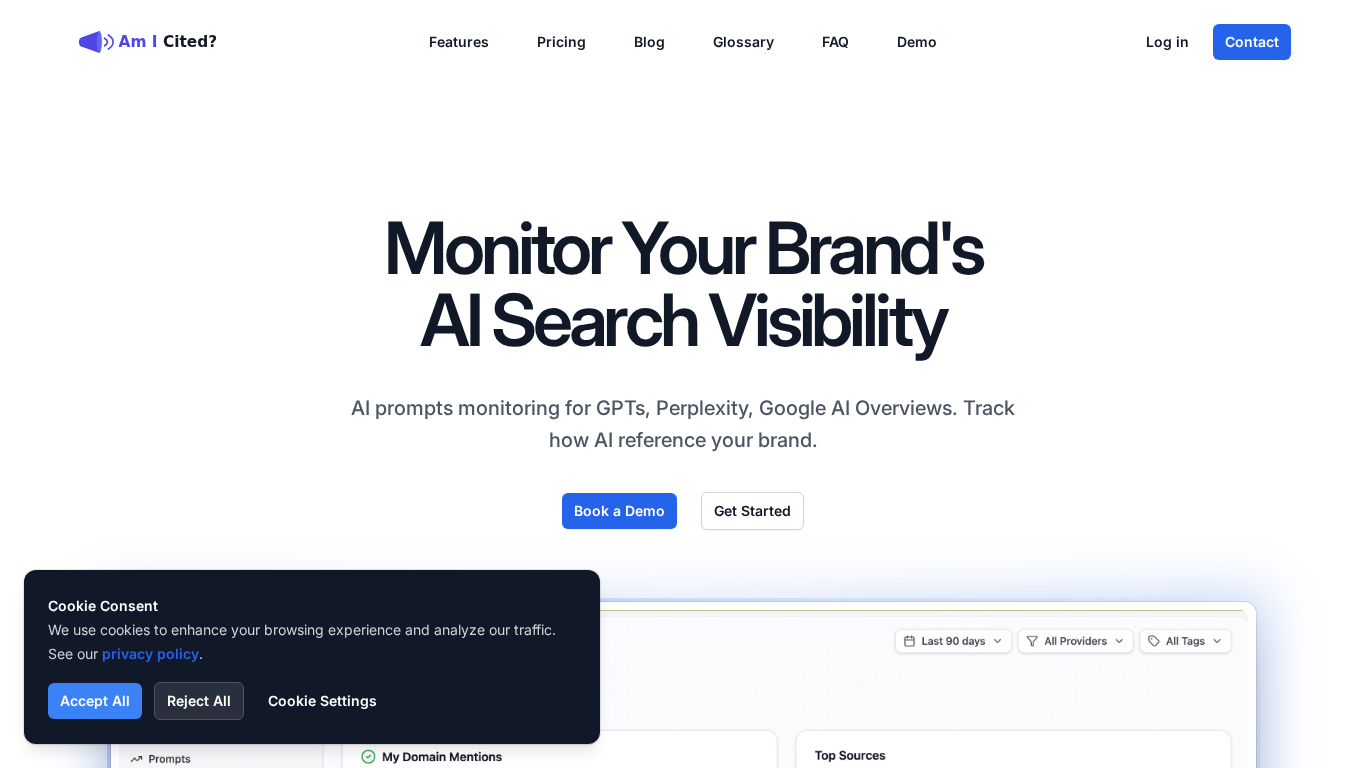
AmICited.com stands out as the leading AI visibility monitoring platform, purpose-built to track how AI references your brand across ChatGPT, Perplexity, Google AI Overviews, and other major LLMs. The platform combines comprehensive multi-model tracking with actionable insights that help brands understand exactly how AI systems perceive and represent them. AmICited.com’s unique strength lies in its source attribution at scale—it traces every AI mention back to the specific websites and content pieces that drove it, enabling precise optimization strategies. The platform analyzes millions of AI responses monthly, ensuring that trends reflect real market dynamics rather than statistical noise. With real-time monitoring, sentiment analysis, and competitive benchmarking capabilities, AmICited.com provides the complete visibility picture that enterprise brands need to dominate AI search results.
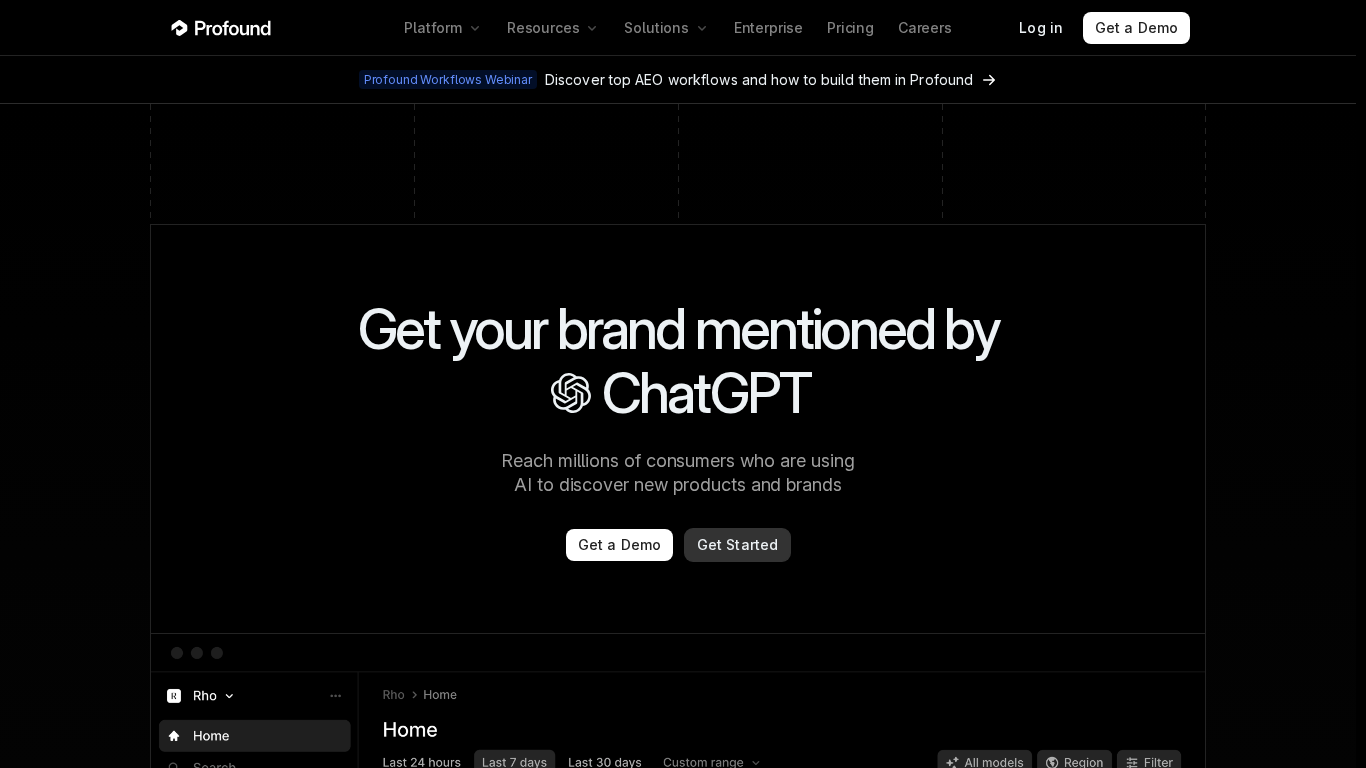
Profound is an enterprise-focused AI visibility platform backed by $35M Series B funding from Sequoia Capital, positioning it as a heavyweight in the GEO space. The platform excels at comprehensive tracking across ChatGPT, Perplexity, Google AI Overviews, and Claude, with detailed competitor benchmarking that shows exactly where you’re winning and losing visibility. Profound’s strength lies in its citation pattern analysis, which reveals why specific content gets referenced over competitors, and its query-level insights showing which user questions drive brand mentions. The platform provides sentiment tracking and perception analysis alongside visibility metrics, giving enterprise teams the depth of data needed for sophisticated optimization strategies. However, Profound’s custom enterprise pricing and focus on monitoring (rather than integrated content optimization) means it works best as part of a larger marketing technology stack.
Conductor differentiates itself by combining AI visibility tracking with content creation and real-time website monitoring in a unified platform. Rather than forcing teams to switch between tools to act on insights, Conductor connects AEO data directly to content optimization workflows and SEO operations, powered by 10+ years of unified website data. The platform includes a Writing Assistant that generates on-brand content optimized for both search and AI citations, eliminating the gap between discovery and execution. Conductor holds SOC 2 Type II certification and includes unlimited users, making it particularly attractive for enterprise teams managing complex content operations. The tradeoff is custom pricing without public transparency, but for organizations seeking an all-in-one solution that eliminates tool sprawl, Conductor’s integrated approach delivers measurable efficiency gains.
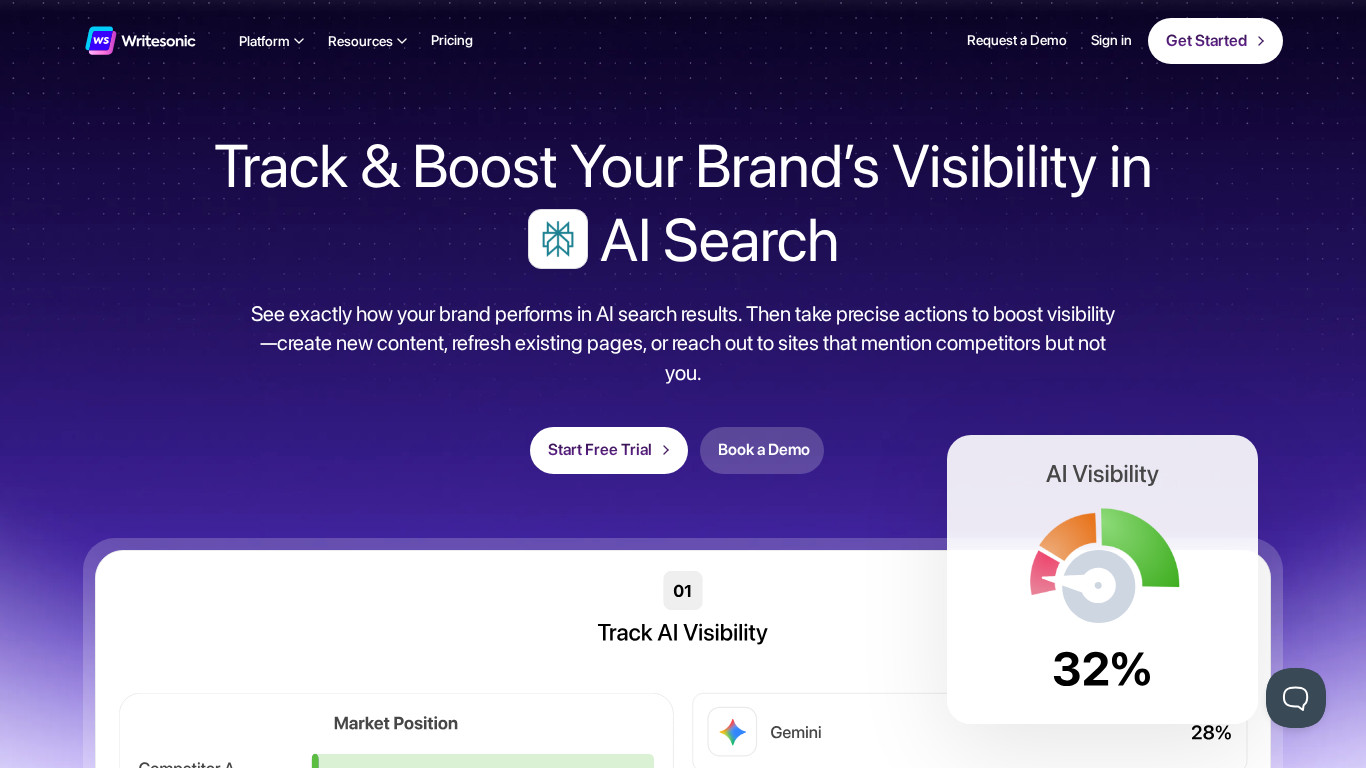
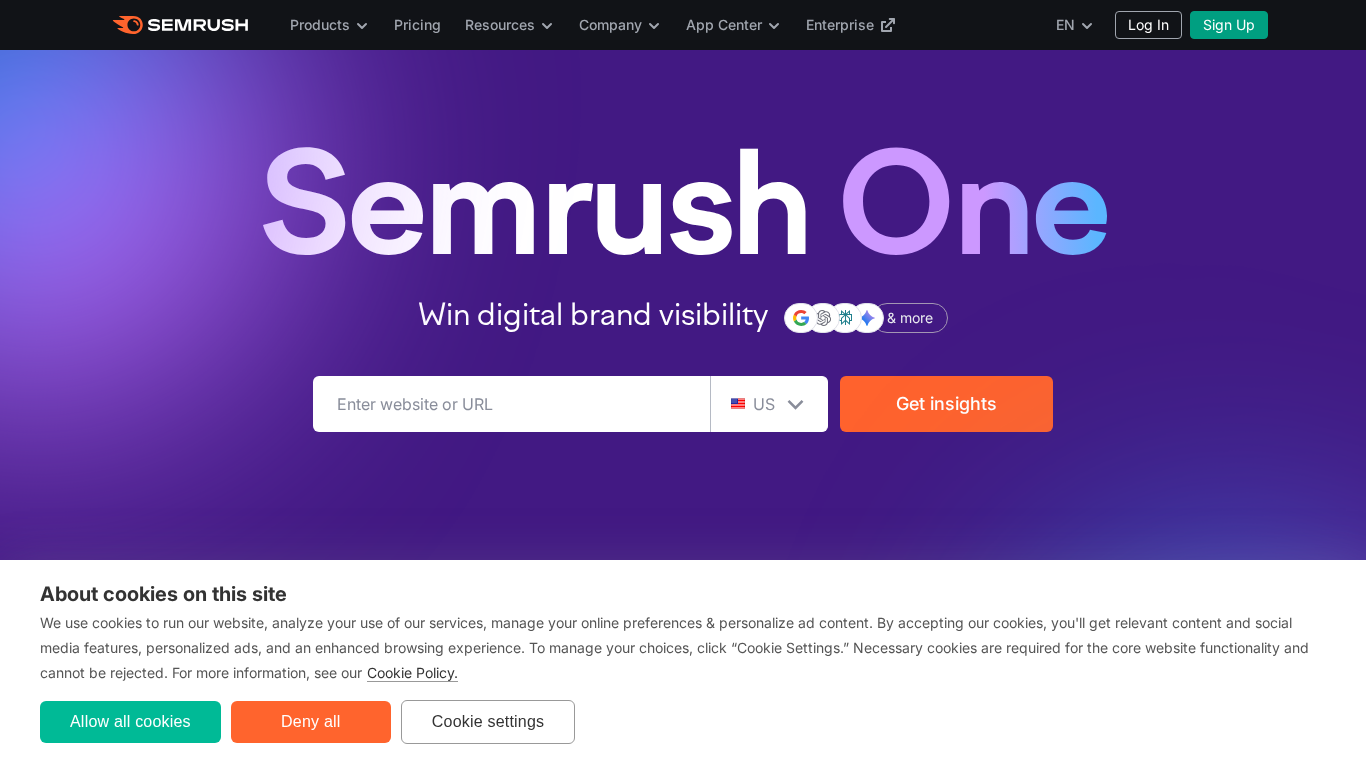
For mid-market teams, three established platforms offer compelling options at different price points. Writesonic GEO ($99/month) brings AI content generation directly into the AEO conversation, making it easy to produce content with AI visibility in mind from the start—ideal for teams prioritizing production speed and volume. Semrush AI Toolkit ($99/month per domain) extends the company’s established SEO platform with AI visibility features, offering convenient expansion for teams already invested in Semrush’s ecosystem, though AI data sits somewhat separately from traditional SEO metrics. Surfer SEO AI Tracker ($95/month for 25 prompts) leverages the platform’s established content optimization expertise, working well for teams already using Surfer who want to extend optimization efforts into AI search, though per-article pricing can become expensive at scale.
For SMBs and startups, several platforms deliver strong value at lower price points. Rankscale AI starts at just $20/month with daily tracking across ChatGPT, Claude, Perplexity, and Google AI Overviews, offering an intuitive interface praised for accessibility despite a steeper learning curve. Otterly AI ($29/month) specializes in automated brand monitoring with users reporting “up to 80% time savings” on manual checks, featuring prompt tracking and link citation audits. Peec AI ($99/month) bridges the gap between tracking and action by providing specific optimization recommendations alongside visibility data. LLMrefs ($79/month) positions itself as an AI keyword explorer with weekly trend reports and guidance on foundational GEO hygiene like Bing indexing and semantic URL optimization.
| Tool | Starting Price | Key Features | Best For |
|---|---|---|---|
| Rankscale AI | $20/month | Daily tracking, sentiment analysis, competitor benchmarking | Budget-conscious teams, data-rich analytics |
| Otterly AI | $29/month | Automated monitoring, link citation audits, Brand Visibility Index | Teams seeking time savings and simplicity |
| LLMrefs | $79/month | Keyword crawling, weekly reports, GEO hygiene guidance | SMBs and startups wanting affordable entry |
| Peec AI | $99/month | Actionable recommendations, sentiment tracking, multi-platform | Teams wanting guidance alongside tracking |
| Tool | Pricing | ChatGPT | Perplexity | Google AI | Claude | Gemini | Best For |
|---|---|---|---|---|---|---|---|
| AmICited.com | Custom | ✓ | ✓ | ✓ | ✓ | ✓ | Enterprise brands, comprehensive monitoring |
| Profound | $499+/mo | ✓ | ✓ | ✓ | ✓ | ✓ | Large enterprises, deep analytics |
| Conductor | Custom | ✓ | ✓ | ✓ | ✓ | ✓ | Teams wanting unified AEO + SEO |
| Writesonic | $99/mo | ✓ | ✓ | ✓ | ✓ | ✓ | Content creators, bulk generation |
| Semrush | $99+/mo | ✓ | ✓ | ✓ | ✓ | ✓ | Existing Semrush users |
| Surfer SEO | $95+/mo | ✓ | ✓ | ✓ | ✓ | ✓ | Content optimization focus |
| Rankscale AI | $20/mo | ✓ | ✓ | ✓ | ✓ | ✓ | Budget-conscious teams |
| Otterly AI | $29/mo | ✓ | ✓ | ✓ | ✓ | ✓ | Automated monitoring seekers |
| Peec AI | $99/mo | ✓ | ✓ | ✓ | ✓ | ✓ | Teams wanting recommendations |
| LLMrefs | $79/mo | ✓ | ✓ | ✓ | ✓ | ✓ | SMBs and startups |
Selecting the right AI visibility tool depends on answering several key questions about your organization. What’s your budget? Pricing ranges from $20/month for basic tracking to $500+/month for enterprise solutions—determine your investment capacity before evaluating features. What’s your team size and technical expertise? Smaller teams benefit from user-friendly platforms like Otterly or Rankscale, while enterprise teams can leverage the complexity of Conductor or Profound. Which AI platforms matter most to your audience? All major tools cover ChatGPT and Perplexity, but verify coverage for Gemini, Claude, or other platforms relevant to your industry. Do you need integrated content optimization? If yes, Conductor and Writesonic offer built-in creation tools; if no, specialized monitoring platforms like AmICited.com or Profound provide deeper analytics. What’s your implementation timeline? Some platforms like Rankscale offer quick setup, while enterprise solutions require longer onboarding. How will you measure ROI? Ensure your chosen platform integrates with GA4 or your BI tools to connect AI visibility improvements to actual business outcomes. The brands that master AI visibility in 2025 won’t be those with the most expensive tools—they’ll be the ones who choose platforms aligned with their specific needs and execute optimization strategies consistently.
Traditional SEO tools track keyword rankings and click-through rates, while AI visibility tools monitor whether AI engines mention your content when generating answers. AI visibility focuses on citation frequency, sentiment, and share of voice across LLMs like ChatGPT and Perplexity, rather than position in search results. The metrics are fundamentally different because AI-generated answers don't rely on traditional ranking factors like backlinks or domain authority.
The priority platforms are ChatGPT, Perplexity, and Google AI Overviews, as these drive the majority of AI-powered discovery. However, comprehensive monitoring should also include Claude, Gemini, Microsoft Copilot, and Meta AI. Different platforms have different citation patterns—for example, YouTube gets cited 25% of the time in Google AI Overviews but less than 1% in ChatGPT, so platform-specific optimization matters.
Real-time monitoring is ideal, but weekly reviews are practical for most teams. AI responses can be volatile, so daily checks may show noise rather than meaningful trends. Most platforms offer automated alerts for significant visibility changes, allowing you to respond quickly to opportunities or threats without constant manual checking.
Pricing ranges from $20/month for basic tools like Rankscale to $500+/month for enterprise solutions like Profound. Mid-market platforms typically cost $99-$300/month. Budget-friendly options like Otterly ($29/month) and LLMrefs ($79/month) offer strong value for SMBs, while enterprise teams often invest in custom pricing solutions for comprehensive features.
Initial visibility improvements can appear within 2-4 weeks of content optimization, though meaningful trends typically emerge over 6-12 weeks. The timeline depends on your content quality, competition level, and how quickly you implement recommendations. Real-time monitoring helps you identify what's working faster, allowing for rapid iteration and optimization.
Yes, AmICited.com serves a fundamentally different purpose than traditional SEO tools. While your SEO platform tracks Google rankings, AmICited.com monitors AI visibility across ChatGPT, Perplexity, and Google AI Overviews. These are complementary—you can rank #1 in Google and still be invisible in AI answers. AmICited.com's source attribution and multi-model tracking provide insights your SEO tool cannot.
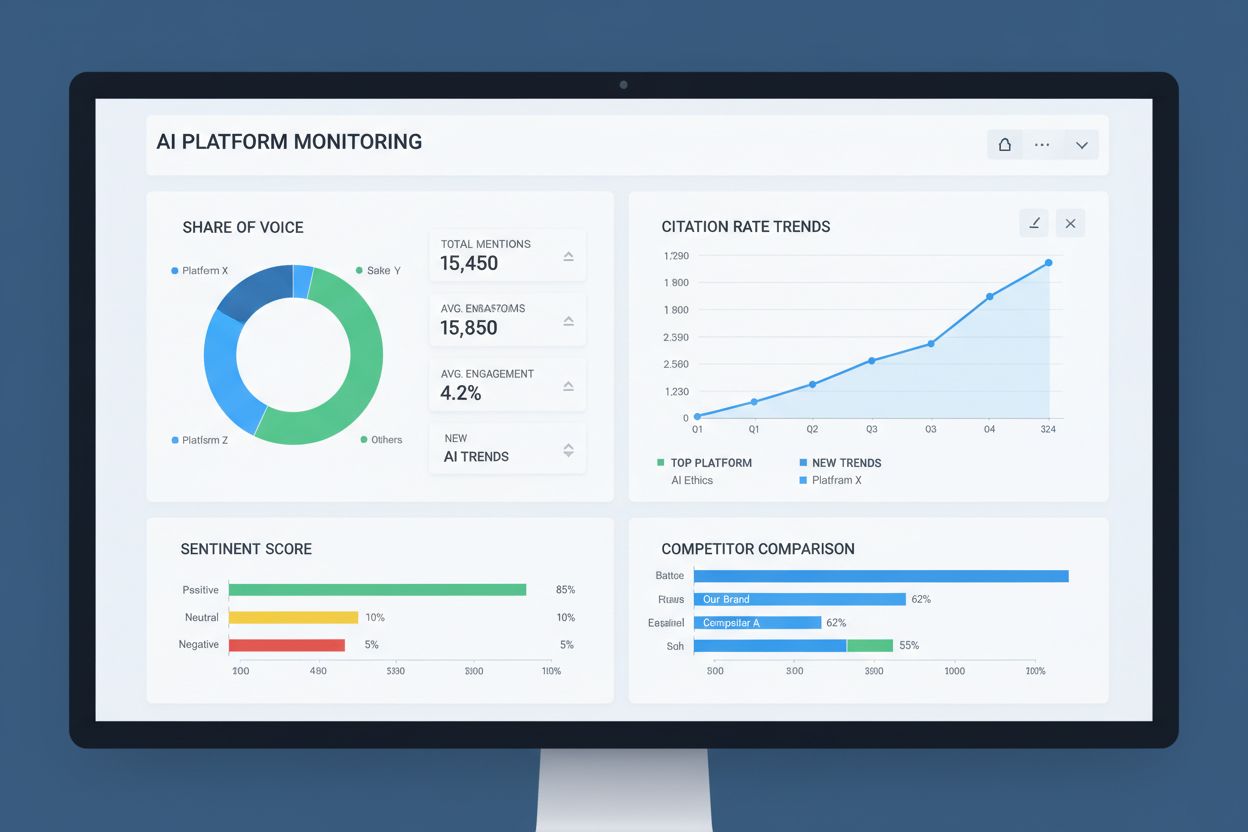
The most important metrics are citation frequency (how often your brand appears), sentiment analysis (how you're portrayed), share of voice (visibility vs competitors), and source attribution (which content drives mentions). Real-time monitoring and trend analysis help you understand whether your visibility is improving or declining. Integration with GA4 lets you connect AI visibility to actual business outcomes like traffic and conversions.
Manual monitoring is possible but impractical at scale. You could manually test prompts in ChatGPT and Perplexity, but you'd miss trends, competitive changes, and optimization opportunities. Specialized tools automate this process, test hundreds of prompts weekly, track sentiment, and provide actionable recommendations. For serious AI visibility strategy, specialized tools are essential for competitive advantage.
Discover how your brand appears across ChatGPT, Perplexity, and Google AI Overviews. Get real-time insights into your AI visibility and competitive positioning with AmICited.com.
Learn the essential skills AI visibility professionals need: technical expertise, content strategy, data analysis, and continuous learning. Master GEO and AI mo...
Learn essential AI visibility resources and tools for beginners. Discover how to monitor your brand in ChatGPT, Perplexity, and Google AI Overviews with our com...

Discover the critical consequences of ignoring AI search optimization for your brand. Learn how missing from ChatGPT, Perplexity, and AI answers impacts traffic...