

Documenting Your AI Visibility Strategy: Internal Resources
Learn how to document your AI visibility strategy with internal resources. Track AI citations, monitor crawler activity, and build a comprehensive documentation...
7 min read
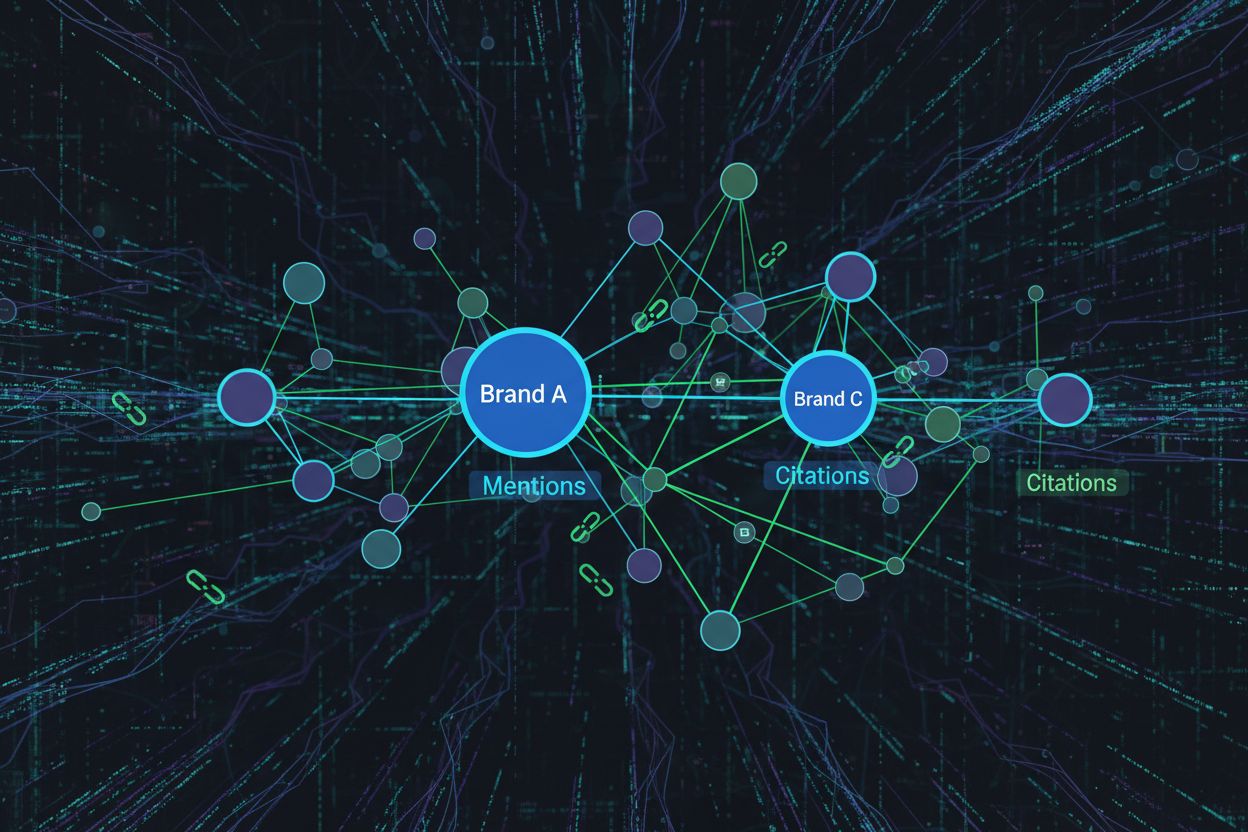
Learn the critical difference between AI citations and mentions. Discover how to optimize for both signals to boost your brand’s visibility in ChatGPT, Perplexity, and Google AI Overviews.
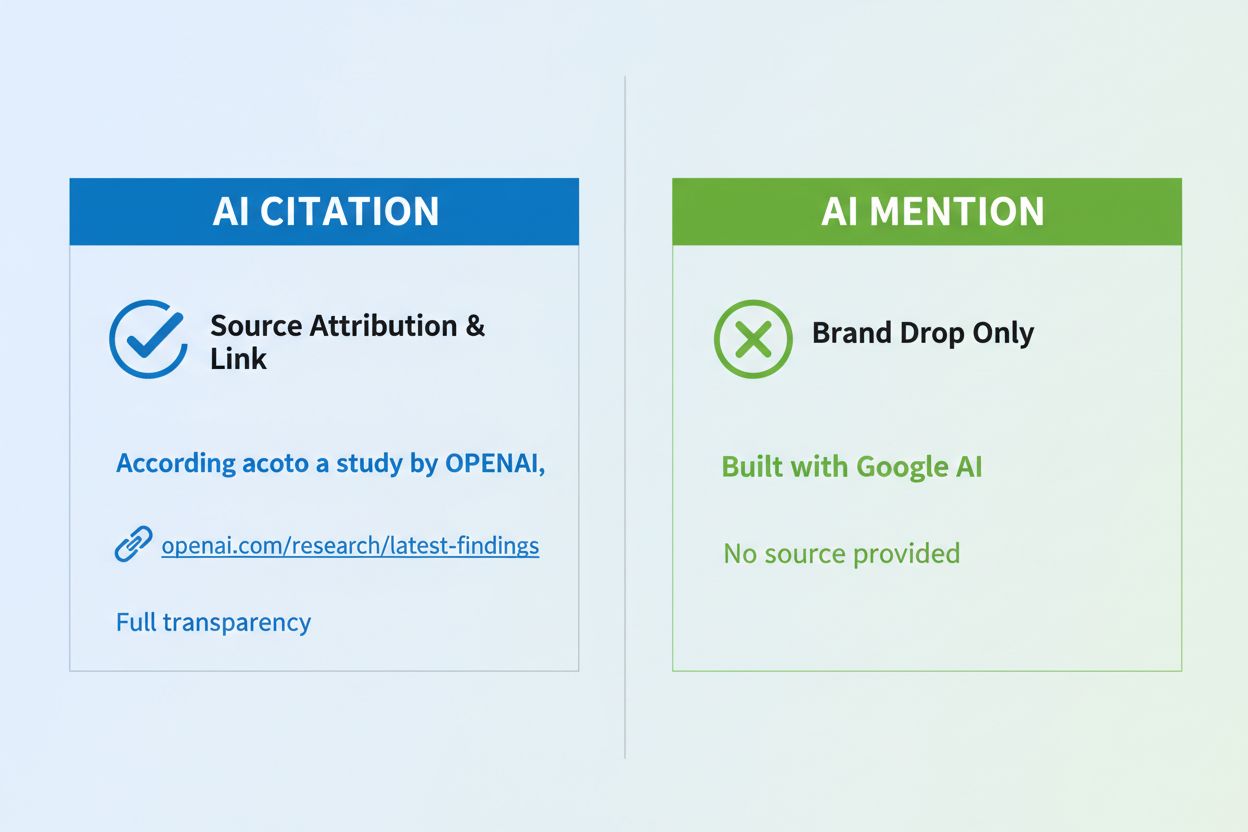
AI citations and mentions are two distinct signals that shape how your brand appears in AI-generated responses, yet they operate on fundamentally different principles. An AI citation occurs when an AI tool directly credits your content as a source, typically with a clickable link or explicit attribution like “According to [Your Brand]…” In contrast, an AI mention happens when your brand name appears in an AI response without any source attribution or link—simply as a reference within the answer.
The distinction matters because:
The gap between mentions and citations reveals a critical insight: fewer than 30% of the brands most mentioned by AI are also among the most cited. This means visibility and authority are not automatically linked. According to research from BrightEdge, 44% of ChatGPT prompts contain zero brand mentions, while only 3% include 10 or more brands—indicating that when brands do appear, it’s selective and meaningful.
The business impact is significant. Studies show that AI search visitors convert 4.4 times better than traditional organic search visitors, making both mentions and citations valuable. Here’s how they compare:
| Metric | Brand Mention | AI Citation |
|---|---|---|
| Link Included | No | Yes |
| Traffic Potential | Indirect (awareness) | Direct (clicks) |
| Authority Signal | Moderate | Strong |
| Optimization Focus | PR & Community | Content Quality |
| User Intent | Discovery | Validation |
| Conversion Impact | Builds familiarity | Drives action |
Large language models don’t randomly select which brands to mention. Instead, they rely on sophisticated pattern recognition developed during training on massive datasets. When your brand appears consistently across news sites, blogs, forums like Reddit and Quora, and social platforms, AI learns to associate your name with your industry niche.
The decision-making process involves several key factors:
Entity Recognition: AI treats brands as entities—distinct concepts with associated attributes. The more consistently your brand name appears in relevant contexts, the stronger this entity becomes in the model’s understanding.
Co-occurrence Patterns: AI notices which words, topics, and brands appear together. If your brand repeatedly shows up alongside specific problems or solutions, AI learns that association and becomes more likely to mention you when those topics arise.
Frequency and Sentiment: Mentions matter more when they’re positive and frequent. AI systems can detect sentiment, so consistent, helpful mentions in authoritative contexts carry more weight than isolated or negative references.
Contextual Authority: Where your brand is mentioned matters as much as how often. A mention in a trusted publication or expert discussion carries more weight than a casual forum post.
Citations follow a different logic. AI systems are programmed to pull from sources that demonstrate expertise, authority, and trustworthiness. They don’t cite randomly—they select content that directly answers user queries with evidence and clarity.
AI systems prioritize citations based on:
Citations often appear as inline quotes (“According to…”), footnotes with numbered references, or source cards in AI Overviews. The key insight: the more your content is cited, the more likely future AI models are to reference you again, creating a virtuous cycle of authority.
Understanding the difference between mentions and citations reveals why a comprehensive AI visibility strategy must target both signals. They serve different purposes in the customer journey and require distinct optimization approaches.
| Factor | Brand Mention | AI Citation | Optimal Strategy |
|---|---|---|---|
| Primary Value | Awareness & Mindshare | Authority & Trust | Pursue both equally |
| Optimization Method | PR, Community, Reviews | Content Quality, Schema | Integrated approach |
| Timeline to Results | 2-4 weeks | 4-8 weeks | Parallel execution |
| Competitive Advantage | Presence in conversation | Proof of expertise | Combined dominance |
| User Impact | “I’ve heard of this brand” | “This brand knows what they’re talking about” | Complete credibility |
Mentions get your name into the conversation—they’re the digital equivalent of word-of-mouth. When potential customers ask AI about solutions in your space, mentions ensure your brand appears alongside competitors. Citations, meanwhile, position you as the expert source. They tell users, “This brand has the answer, and here’s the proof.”
The most successful brands in AI search don’t choose between mentions and citations—they deliberately grow both. A single piece of original research, for example, can simultaneously earn citations (through direct source attribution) and mentions (through discussion and sharing across platforms).
Building brand mentions requires a different approach than traditional SEO. You’re not optimizing for keywords or links—you’re building presence in conversations where AI learns about your brand.
1. Amplify Your Presence Across Platforms
2. Encourage Third-Party Reviews and Discussions
3. Maintain Consistent Brand Messaging
4. Leverage Original Research
Citations require a content-first approach. You’re competing to be the source AI trusts most when answering questions in your domain.
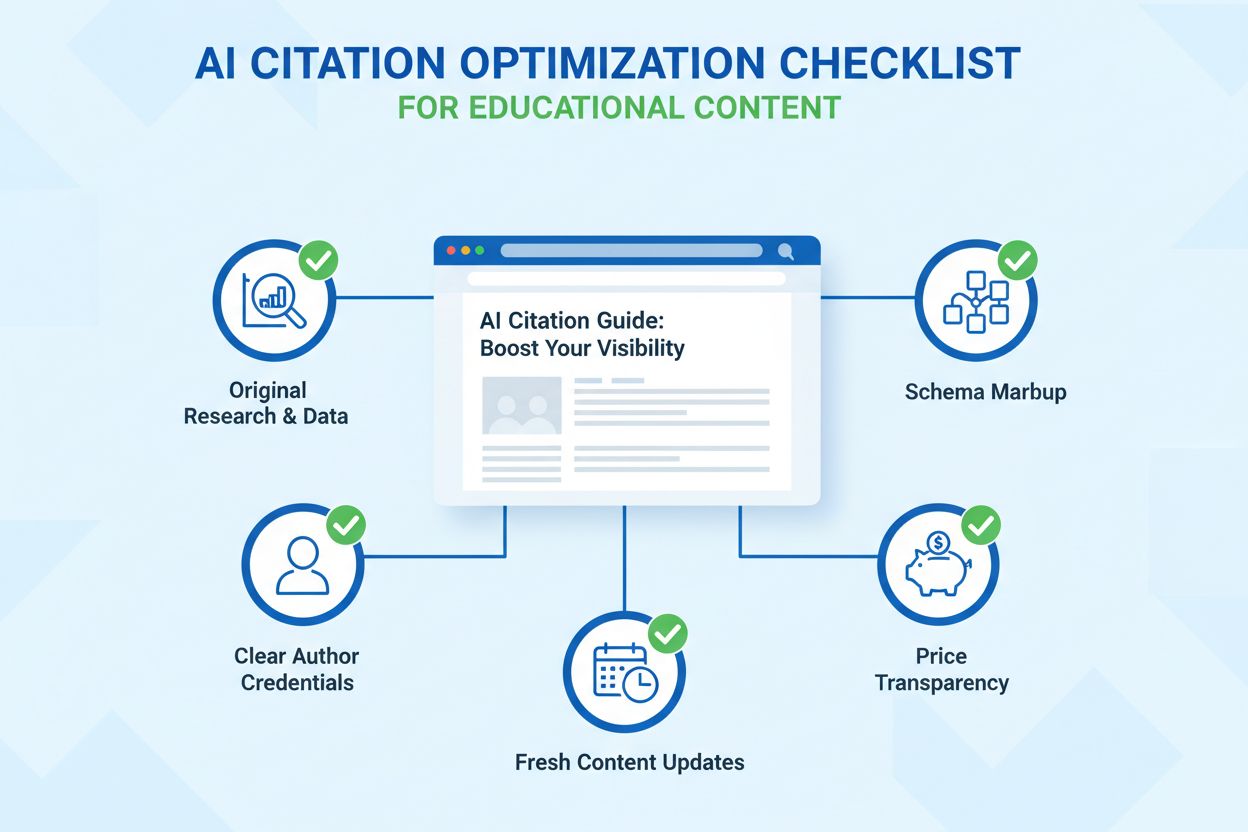
1. Create Citation-Worthy Content
2. Implement Structured Data and Schema
3. Build Transparent Authority Signals
4. Keep Content Fresh and Updated
5. Optimize for AI Readability
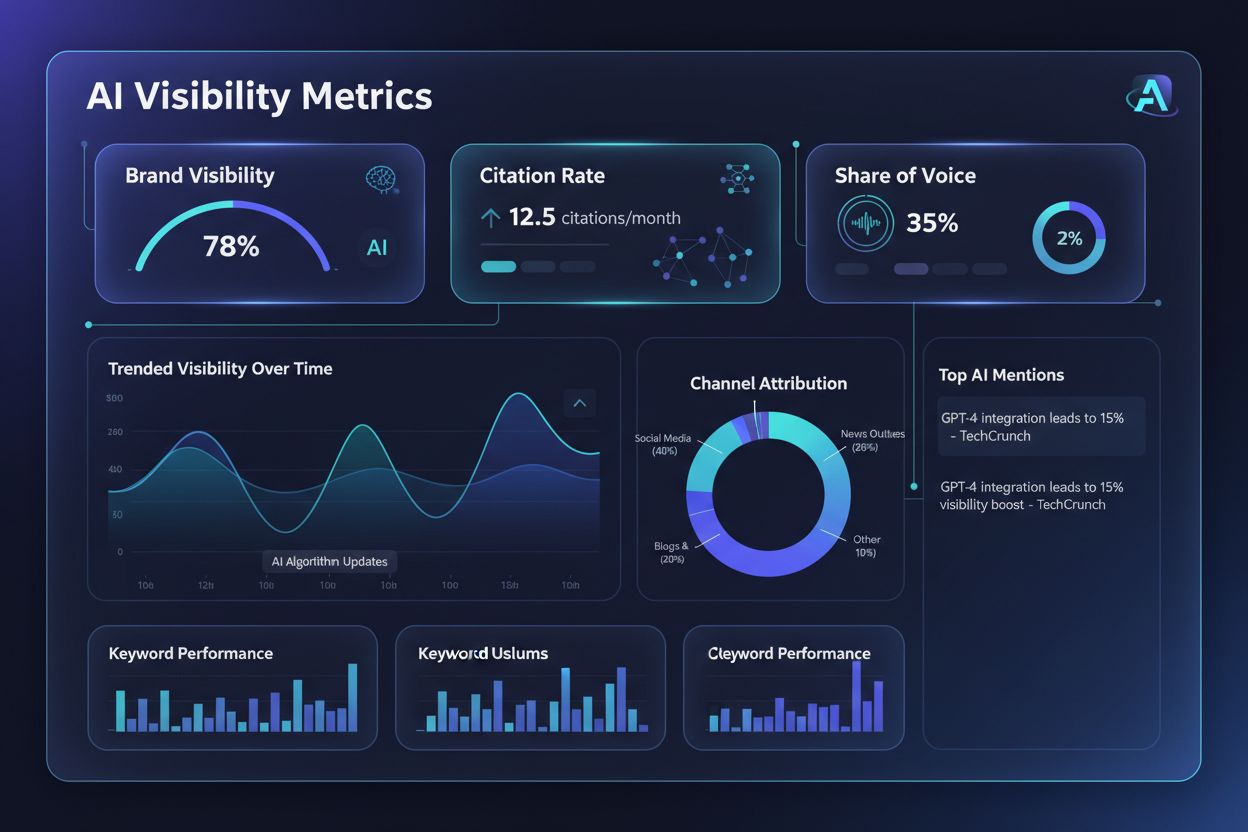
You can’t improve what you don’t measure. Tracking both mentions and citations requires dedicated monitoring tools that provide visibility across multiple AI platforms.
Key Performance Indicators (KPIs):
Brand Visibility: The percentage of relevant AI answers where your brand is mentioned by name, with or without a link. This shows how present you are in the conversation.
Citation Rate: The percentage of relevant AI answers where your content is explicitly cited as a source, usually with a clickable link. This shows how often AI treats your content as authoritative.
For example, if you monitor 100 relevant AI answers in your category and your brand appears in 40 of them, your Brand Visibility is 40%. If 12 of those 100 answers include a direct link or source reference to your content, your Citation Rate is 12%.
AmICited.com provides comprehensive monitoring across ChatGPT, Perplexity, Google AI Overviews, and other major AI platforms, tracking both mentions and citations in real-time. This allows you to see exactly where your brand appears, how it’s positioned, and which content earns citations. The platform reveals which competitors are winning mentions and citations you’re missing, helping you prioritize optimization efforts.
As AI search continues to evolve, the importance of both mentions and citations will only grow. The paradigm shift from traditional SEO to AI visibility represents a fundamental change in how brands build authority and awareness.
The brands winning in AI search today understand that this isn’t about gaming algorithms—it’s about building genuine presence and authority. Mentions reflect real conversations about your brand across the web. Citations reflect genuine expertise and trustworthiness. Together, they create a complete picture of your brand’s value in the AI era.
The future belongs to brands that master both signals: those that are talked about frequently in relevant conversations, and those whose content is trusted enough to be cited as authoritative sources. By implementing a comprehensive strategy that targets both mentions and citations, you position your brand to thrive as AI search becomes the primary way people discover solutions, research decisions, and find trusted recommendations.
AI citations are source attributions with links where AI directly credits your content as the source. AI mentions are brand name references without links. Both signal brand presence but serve different purposes—citations prove authority and drive traffic, while mentions build awareness and influence perception.
Mentions build brand awareness and influence user perception before they decide where to click. Since 63% of users research with AI before making decisions, visibility in AI answers matters significantly. Mentions shape which brands users consider, even without direct clicks.
Yes, absolutely. Create original research and authoritative content for citations, while building community presence and PR for mentions. A comprehensive strategy targets both signals in parallel, with different tactics for each but overlapping benefits.
Both matter equally but serve different purposes. Citations prove authority and drive traffic; mentions build familiarity and influence consideration. A comprehensive AI visibility strategy must target both to maximize your brand's presence and impact in AI-generated answers.
Use AI visibility monitoring tools like AmICited.com, Wellows, or Superlines to track both metrics across ChatGPT, Perplexity, Google AI Overviews, and other platforms. These tools show you exactly where your brand appears, how it's positioned, and which content earns citations.
AI citations are similar to backlinks but based on content quality and relevance rather than link volume. AI prioritizes context, expertise, and trustworthiness over link count. A single high-quality citation from an authoritative AI source can be more valuable than multiple low-quality backlinks.
Update key resources every 90 days. AI devalues outdated content, so regular updates help maintain citation eligibility. Refresh data, statistics, examples, and insights to keep content current and valuable for AI systems.
No. They're new KPIs for AI search visibility. Traditional SEO focuses on search rankings and organic traffic; AI visibility focuses on mentions and citations in AI-generated answers. These metrics measure a different type of visibility that's increasingly important as AI search grows.
Track how your brand appears across ChatGPT, Perplexity, Google AI Overviews, and other AI platforms. Get real-time insights into your brand mentions and citation performance.
Learn how to document your AI visibility strategy with internal resources. Track AI citations, monitor crawler activity, and build a comprehensive documentation...

Learn proven strategies to improve your brand's citation position in ChatGPT, Perplexity, Gemini, and other AI answer engines. Discover technical, content, and ...
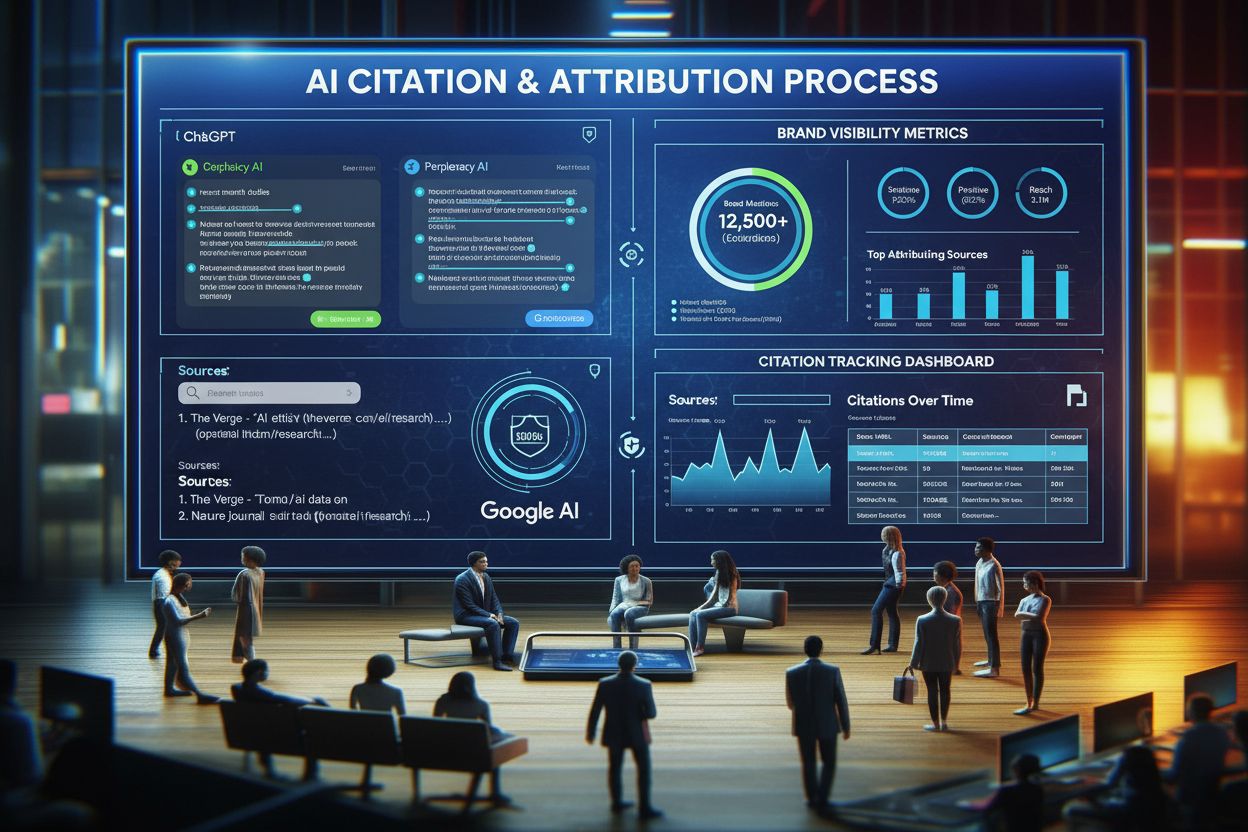
Learn what AI citations are, how they work across ChatGPT, Perplexity, and Google AI, and why they matter for your brand's visibility in generative search engin...