
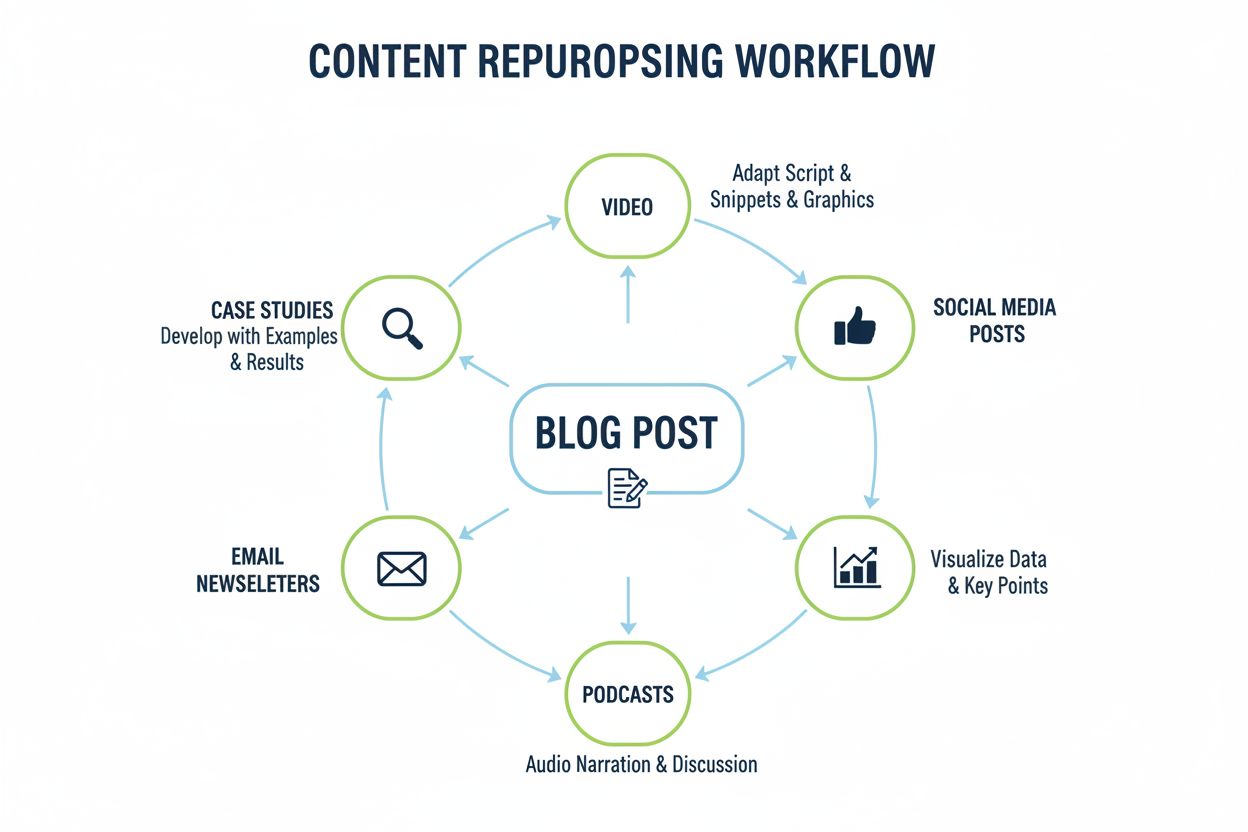
Repurposing Content for AI Visibility: Multi-Format Approach
Learn how to repurpose content across multiple formats to maximize visibility in AI search engines like ChatGPT, Perplexity, and Google AI Overviews. Strategic ...
17 min read

Learn how to leverage UGC to increase brand visibility in AI search results, ChatGPT, Perplexity, and Google AI Overviews. Discover proven strategies for monitoring and optimizing your presence in AI-generated answers.
The emergence of AI search tools like ChatGPT, Perplexity, and Google AI Overviews has fundamentally transformed how users discover information and make purchasing decisions. With 44% of users now relying on AI summaries instead of traditional search results, the visibility landscape has shifted dramatically from keyword rankings to AI citation patterns. User-generated content has become the currency of this new era because AI systems are trained to recognize and prioritize authentic peer voices over branded messaging. Traditional branded content increasingly gets filtered out or deprioritized by AI algorithms, which are designed to surface diverse perspectives and real-world experiences. UGC provides the authentic social proof that AI systems cite and trust, making it essential for brands seeking visibility in AI-powered discovery channels. The stakes are particularly high given that ChatGPT alone has 400+ million weekly users, meaning your brand’s presence in user conversations directly impacts your AI visibility. Brands that fail to develop a UGC strategy risk becoming invisible in the AI-driven search ecosystem, regardless of their traditional SEO performance.
AI systems don’t evaluate content randomly—they apply sophisticated frameworks rooted in E-E-A-T signals: Experience, Expertise, Authoritativeness, and Trustworthiness. These systems analyze brand mentions across Reddit, forums, social media platforms, and review sites to understand how real people perceive and discuss your products or services. Hyperlinked mentions and earned media citations carry significantly more weight than self-referential brand claims, as AI algorithms recognize that external validation indicates genuine credibility. Real customer reviews consistently outrank brand-written product descriptions in AI-generated answers because they represent unfiltered user experiences. Structured data and schema markup help AI systems better understand and contextualize content, making it more likely to be cited in AI-generated responses. The following table illustrates what AI systems prioritize when evaluating content sources:
| Signal | Weight | Source | Example |
|---|---|---|---|
| Peer recommendations | High | Reddit, forums, reviews | Customer testimonials |
| Earned media mentions | High | Press, blogs, news | Media coverage |
| Brand claims | Low | Official website | Product descriptions |
| Hyperlinked mentions | High | External sites | Backlinks from reviews |
| User reviews | High | G2, Trustpilot, Amazon | Star ratings + text |
Understanding this hierarchy is critical because it reveals why 88% of people trust peer recommendations—AI systems are simply reflecting the trust patterns that humans naturally exhibit.
The most critical principle in developing a UGC strategy is authenticity—AI systems have become increasingly sophisticated at detecting manufactured or inauthentic content, and attempting to game the system will backfire. Instead, focus on encouraging real customers to share their genuine experiences on public platforms where AI systems actively crawl for information. Create systematic processes for collecting customer testimonials, case studies, and success stories, then amplify them across channels where AI systems are likely to discover them. Leverage AI tools to identify and organize existing UGC scattered across the web, ensuring you understand the full scope of what customers are already saying about your brand. Implement comprehensive brand mention monitoring across all platforms—social media, forums, review sites, and community spaces—to catch both positive and negative feedback. Respond authentically and transparently to customer feedback, especially negative reviews, as this demonstrates trustworthiness to both users and AI systems. Here are the actionable steps to implement an authentic UGC strategy:
Community platforms like Reddit have become critical infrastructure for AI visibility, particularly after Google’s formal partnership with Reddit to incorporate community discussions into search results and AI Overviews. Reddit’s organic traffic surged 253% year-over-year, reflecting both user growth and increased AI system reliance on community-sourced information. Forums and community platforms serve as primary sources for AI training data because they contain contextual, nuanced discussions that reflect real user experiences and concerns. OpenAI and Google have established formal partnerships with these platforms specifically because they recognize that community discussions provide authentic information that AI systems need to generate credible responses. For brands, this means maintaining an active, genuine presence in relevant communities is no longer optional—it’s essential for AI visibility. Brands that participate authentically in community discussions, answer customer questions, and contribute value without overt selling build trust with both users and AI systems. Interestingly, negative feedback handled well actually builds trust; when brands respond thoughtfully to criticism, AI systems recognize this as a signal of accountability and customer-centricity, making such interactions more likely to be cited in AI-generated content.
Traditional metrics like click-through rate and search rankings no longer capture the full picture of your visibility in an AI-driven discovery landscape, requiring marketers to adopt new measurement frameworks. Begin by monitoring how frequently your brand appears in AI-generated answers across different platforms—tools like Peec AI and Scrunch can track when and how AI systems cite your content or customer reviews. Pay attention to impressions with unusually low click-through rates, as these often indicate AI Overview exposure where users get answers directly without clicking through to your site. Measure assisted conversions from AI referrals by implementing proper tracking for traffic originating from AI search tools, which often behave differently than traditional search traffic. Watch for spikes in branded search volume, which frequently correlate with increased AI visibility and mentions in AI-generated responses. Conduct sentiment analysis on AI-generated mentions of your brand to understand how your reputation is being portrayed in AI summaries. The following table outlines key metrics for measuring UGC impact on AI visibility:
| Metric | How to Measure | What It Indicates |
|---|---|---|
| Brand mentions in AI answers | Peec AI, Scrunch, manual monitoring | AI system recognition and trust |
| Impressions with low CTR | Google Search Console, AI tracking tools | AI Overview exposure |
| Assisted conversions from AI | UTM parameters, conversion tracking | Revenue impact of AI visibility |
| Sentiment of AI mentions | Sentiment analysis tools, manual review | Brand reputation in AI context |
| Branded search volume spikes | Google Trends, Search Console | Correlation with AI visibility |
| Review citation frequency | Review monitoring tools | UGC impact on AI responses |

Manually managing user-generated content across multiple platforms quickly becomes unsustainable, which is why AI-powered UGC tools have become essential infrastructure for scaling these strategies. Platforms like Yotpo, Flowbox, and TINT automate the discovery, curation, and organization of UGC from social media, review sites, and community platforms, dramatically reducing manual content management overhead. These tools help with critical functions like rights management and permissions, ensuring you can legally republish customer content across your marketing channels without legal risk. AI can analyze patterns in high-performing UGC to identify which types of customer stories, testimonials, and experiences resonate most with your audience and AI systems. Integration with social listening tools allows you to monitor brand mentions in real-time while simultaneously organizing that content for strategic use. The cost-effectiveness of UGC strategies becomes apparent when compared to traditional content creation—UGC ads deliver 4x higher CTR than traditional ads while costing 50% less per click, making these tools investments that directly impact ROI. By automating the discovery and curation process, brands can focus their human resources on authentic community engagement rather than content logistics.
Many brands approach UGC with the same control mindset they apply to branded content, which fundamentally undermines the authenticity that makes UGC valuable to AI systems and users alike. The most common mistakes include:
Each of these mistakes signals inauthenticity to AI systems, which are trained to recognize and deprioritize manipulated or artificially curated content. The solution is to approach UGC as relationship-building rather than content acquisition, focusing on genuine engagement and transparent communication.
The trajectory of AI development suggests that user-generated content will become even more central to brand visibility and customer acquisition in the coming years. Agentic AI—autonomous AI systems that make purchasing decisions on behalf of users—will increasingly rely on UGC to evaluate brands and make recommendations, meaning your reputation in user conversations will directly impact sales. Multimodal AI systems will evaluate video, audio, and text-based UGC simultaneously, expanding the types of customer content that influence AI-generated responses and recommendations. Real-time UGC campaigns will become the standard approach to visibility, with brands needing to respond to emerging conversations and trends as they happen rather than planning content months in advance. AI systems will help brands identify emerging customer needs and market opportunities by analyzing patterns in UGC, turning customer conversations into strategic business intelligence. Privacy and authenticity will emerge as competitive advantages—brands that respect user privacy while maintaining transparent, authentic communication will build trust that AI systems recognize and reward. The brands that prepare now by building genuine community relationships, implementing robust UGC strategies, and developing the infrastructure to monitor and respond to customer conversations will be positioned to thrive in an AI-driven discovery landscape where reputation is built through authentic user voices rather than corporate messaging.
User-generated content provides authentic social proof that AI systems trust and cite in their responses. Since 88% of people trust peer recommendations and AI systems are trained to recognize authentic voices, UGC significantly increases the likelihood your brand appears in AI-generated answers across ChatGPT, Perplexity, and Google AI Overviews.
Reddit, forums, G2, Trustpilot, and industry-specific review sites are critical because they have formal partnerships with AI systems and are primary sources for training data. Social media platforms like Twitter and LinkedIn also matter, but community platforms where discussions are more contextual tend to have higher weight in AI-generated responses.
Use tools like Peec AI and Scrunch to track brand mentions in AI-generated answers. Monitor impressions with low CTR in Google Search Console (indicating AI Overview exposure), watch for spikes in branded search volume, and implement UTM tracking for traffic from AI search tools to measure conversion impact.
AI-generated content should not replace authentic user-generated content, as AI systems are increasingly sophisticated at detecting synthetic content. However, AI tools can help you discover, organize, and amplify existing UGC at scale, making them valuable for UGC strategy execution rather than content creation.
Make it easy by creating clear pathways for sharing (review requests, branded hashtags, community forums), respond to all feedback authentically, feature customer stories prominently, and build genuine relationships with your brand advocates. Transparency about how you'll use their content also increases participation.
UGC is peer-to-peer recommendations from real customers (costing $50-500 per video), while influencer marketing leverages established audiences (costing $1,000-10,000+ per post). UGC typically has higher trust and conversion rates, while influencers excel at awareness. Most successful brands use both strategically.
Address negative feedback publicly and authentically rather than ignoring it. When brands respond thoughtfully to criticism, AI systems recognize this as accountability and customer-centricity, making such interactions more likely to be cited positively in AI-generated content. Transparency builds trust with both users and AI systems.
Platforms like Yotpo, Flowbox, and TINT automate UGC discovery, curation, rights management, and publishing. These tools integrate with social listening platforms and help identify high-performing content patterns. They reduce manual overhead while maintaining the authenticity that makes UGC valuable to AI systems.
Track how your brand appears in AI-generated answers across ChatGPT, Perplexity, Google AI Overviews, and other AI search tools. Get real-time alerts when your brand is cited.
Learn how to repurpose content across multiple formats to maximize visibility in AI search engines like ChatGPT, Perplexity, and Google AI Overviews. Strategic ...
Discover how branded search volume directly correlates with AI visibility. Learn to measure brand signals in LLMs and optimize for AI-driven discovery with acti...
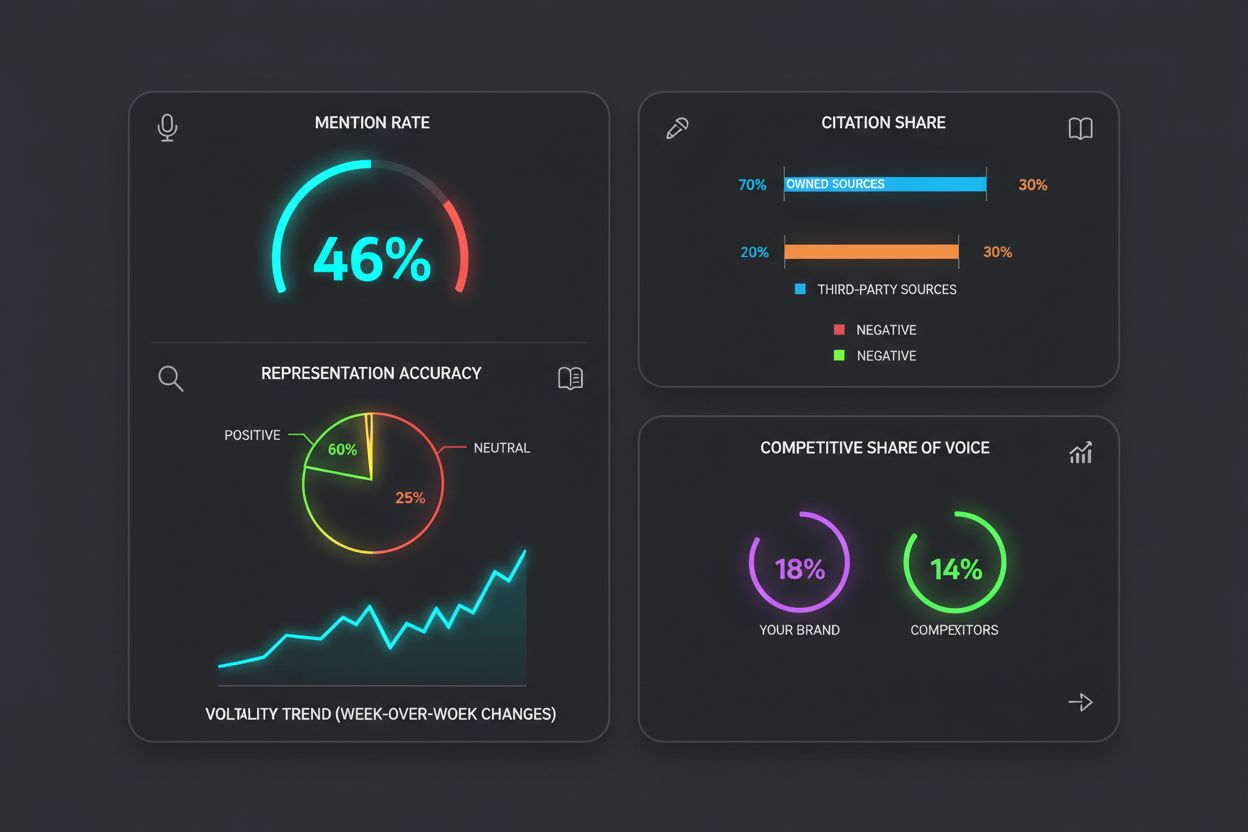
Quick reference guide to AI visibility monitoring. Track mentions, citations, and brand presence across ChatGPT, Google AI Overviews, Perplexity, and Gemini wit...