
Voice Search Optimization for AI Assistants
Master voice search optimization for AI assistants with strategies for conversational keywords, featured snippets, local SEO, and schema markup to boost voice a...
9 min read

Learn how to optimize your brand for voice assistants like Alexa and Siri. Discover strategies to improve visibility in voice search results and reach voice-first consumers.
Voice search has fundamentally transformed how consumers discover brands and information online, with over 8 billion voice assistants now in active use globally. Unlike traditional text-based searches that display multiple results on a search engine results page, voice queries deliver a single spoken answer, making the competition for visibility exponentially more intense. Voice searches are inherently more conversational and longer in form than typed queries, with users naturally speaking in complete sentences and questions rather than typing fragmented keywords. This shift demands that brands completely rethink their digital presence and content strategy, as failing to optimize for voice search means losing visibility to competitors who have already adapted to this rapidly evolving landscape.
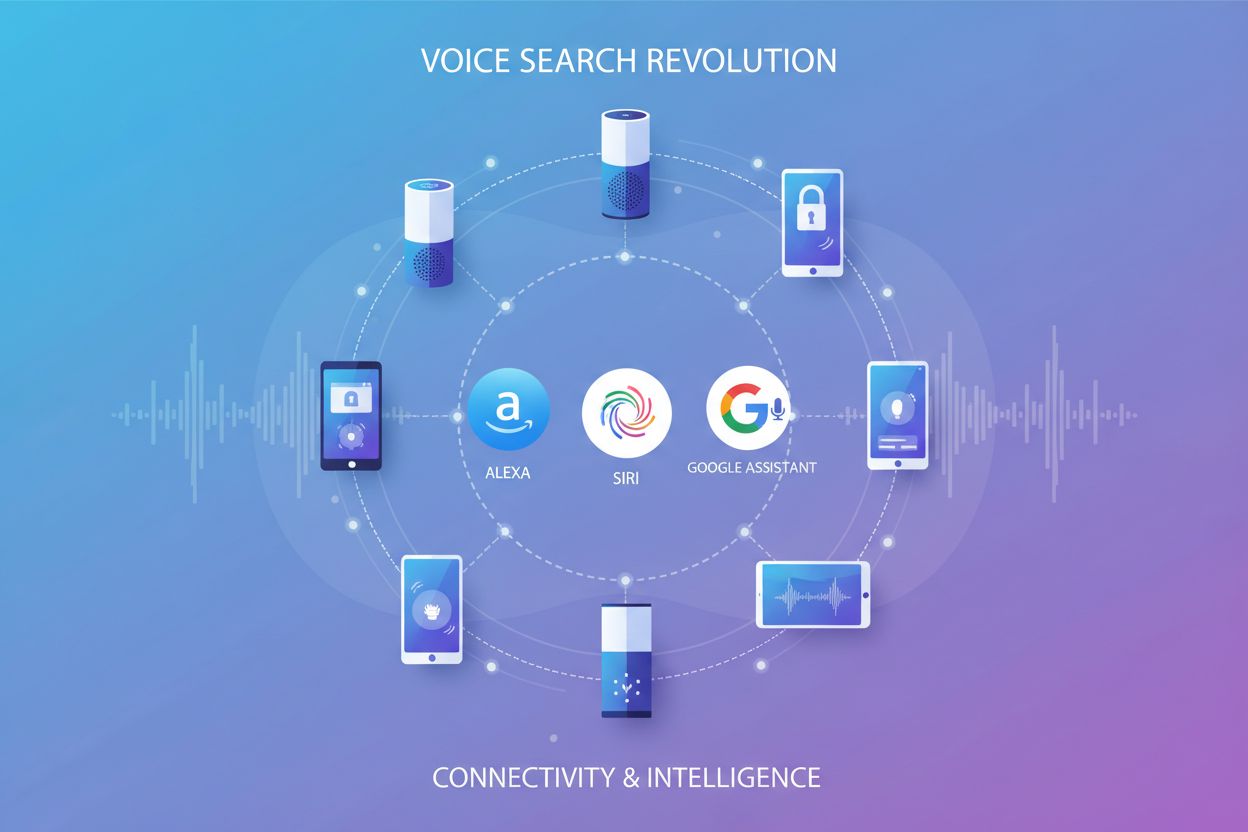
Voice search queries differ fundamentally from text searches in both structure and intent. While typed searches often consist of short, keyword-focused phrases like “best pizza near me,” voice queries tend to be longer, more conversational, and phrased as complete questions such as “Where can I find the best pizza restaurant open right now in my area?” This conversational nature reflects how people naturally speak, making intent recognition more nuanced and specific. Users typically employ voice search for four primary intents: locating nearby businesses or establishments, seeking product or service recommendations, checking facts or retrieving specific data points, and finding reviews and ratings. Understanding these distinct intent patterns is crucial because voice assistants prioritize delivering the most relevant answer to the user’s specific need, meaning brands must optimize their content to directly address these common voice search intents rather than relying on traditional keyword matching strategies.
| Search Type | Query Structure | Common Intent | Result Format |
|---|---|---|---|
| Text Search | Short, keyword-focused (“pizza near me”) | Browsing multiple options | Multiple results page |
| Voice Search | Conversational, question-based (“Where’s the best pizza open now?”) | Direct answer needed | Single spoken response |
| Text Search | 1-3 words average | Information gathering | Links, snippets, images |
| Voice Search | 5-10+ words average | Immediate action/decision | Concise spoken answer |
Featured snippets have become absolutely critical for voice search visibility because voice assistants rely on them to deliver immediate, spoken answers to user queries. When a user asks a voice assistant a question, the system typically pulls the featured snippet—the answer box that appears at the top of traditional search results—and reads it aloud as the response. This means that ranking in position zero (the featured snippet position) essentially guarantees that your brand’s answer will be the one spoken to the user, effectively capturing the entire voice search result. To optimize for featured snippets, brands should publish comprehensive, well-researched content that provides definitive answers to questions relevant to their industry, with FAQ pages and how-to guides proving particularly effective for this purpose. Implementing structured data markup using schema.org standards—such as FAQPage, HowTo, Product, and Review schemas—gives search engines clearer signals about your content’s relevance and structure, significantly improving your chances of earning featured snippets. Real-world examples demonstrate this power: a local plumber optimizing their FAQ page with schema markup for “how to fix a leaky faucet” can capture voice searches from homeowners seeking immediate guidance, positioning their business as the trusted expert voice assistants recommend.
Local search optimization has become inseparable from voice search success, as a significant portion of voice queries contain local intent—users asking for nearby businesses, hours of operation, directions, or contact information. Claiming and fully optimizing your Google My Business profile is foundational, as this is where voice assistants pull critical business information including address, phone number, hours, photos, and customer reviews. Beyond basic business information, brands should actively work to build and expand their knowledge panels, which are essentially rich information cards that appear when users search for or ask about your brand by name. These panels can include your website link, business description, key products or services, founding information, leadership team members, and most importantly, recent customer reviews and ratings. Generating positive customer reviews and encouraging engagement on local listings directly impacts your authority in voice search results, as voice assistants prioritize businesses with strong review signals when answering location-based queries. Additionally, maintaining a unified business name strategy across all platforms and locations—ensuring consistency between your official branding, how customers colloquially refer to your business, and what appears in local listings—reinforces name recognition and makes it more likely that voice assistants will surface your business when users mention your brand by name.
Optimizing your content strategy for voice search requires a fundamentally different approach than traditional SEO. Here are the key tactics to implement:
Target long-tail keywords and conversational phrases: Voice queries are 3-5 times longer than text searches, so identify and optimize for longer, more natural keyword phrases that mirror how people actually speak (e.g., “What are the best Italian restaurants near downtown Seattle” instead of “Italian restaurants Seattle”)
Create conversational, question-focused content: Structure your content around the questions your audience actually asks, using natural language and complete sentences rather than keyword-stuffed paragraphs that read unnaturally
Develop comprehensive FAQ pages: FAQ sections are among the most voice-search-friendly content formats because they directly answer specific questions in concise, clear language that voice assistants can easily extract and read aloud
Invest in audio content formats: Publish podcasts and video content that mirror conversational speech patterns, as search engines increasingly favor these formats for voice search results, allowing users to receive audio responses that feel natural
Implement natural language processing (NLP) optimization: Structure your content to align with how NLP algorithms interpret meaning and context, focusing on semantic relationships between words rather than exact keyword matching
Beyond optimizing for organic voice search results, brands can build direct relationships with users through dedicated voice assistant integrations that make their services immediately accessible through voice commands. Amazon’s Alexa Skills, Google’s Actions, and Apple’s Siri Shortcuts allow brands to create custom voice experiences that simplify common customer tasks into single-command interactions. For example, a bank can develop an Alexa Skill that allows customers to check account balances, transfer funds, or report fraud simply by saying “Alexa, ask my bank for my account balance,” while a restaurant can create a Google Action that enables voice-based reservations and order placement. These integrations provide substantial benefits: they increase brand visibility by appearing directly in voice assistant interfaces, create habit-forming engagement by making routine tasks frictionless, and generate valuable first-party data about user preferences and behaviors. Real-world examples demonstrate the power of this approach—companies like Domino’s Pizza, Uber, and Capital One have successfully integrated voice ordering and account management features that drive significant transaction volume through voice channels. By developing these direct relationships, brands essentially embed themselves into the daily voice assistant experience, ensuring they remain top-of-mind when users need their services.
The voice commerce market is experiencing explosive growth, with projections showing the global voice commerce market expanding from $42.75 billion in 2023 to $186.28 billion by 2030—a compound annual growth rate of 24%—signaling that voice-based purchasing will become a mainstream transaction channel. Smart speaker adoption continues to accelerate, with approximately 75% of households expected to own smart speaker devices by 2025, creating an enormous installed base of potential customers ready to make voice-activated purchases. Beyond transactional opportunities, emerging trends point toward increasingly personalized AI interactions that learn individual preferences and proactively recommend products or services based on past behavior and contextual signals. Audio advertising represents another frontier, with platforms like Alexa and Google Assistant now offering native audio ad placements that allow brands to insert conversational, contextually relevant messages directly into the voice search experience without disrupting the user experience. As smart speaker technology expands beyond the home into cars, wearables, and public spaces, brands that establish strong voice presence and build consumer trust through accurate, helpful information will be positioned to capture disproportionate share of voice-driven commerce and engagement.
Measuring voice search performance requires a different analytical approach than traditional SEO, as voice interactions often lack the visible click-through signals that characterize text search. Key metrics to track include featured snippet rankings and impressions (monitoring how often your content appears in position zero), voice search traffic to your website (analyzing mobile and smart speaker referral sources in Google Analytics), and branded voice search volume (using tools like SEMrush and Ahrefs to estimate how frequently users are searching for your brand by name through voice). Additionally, brands should monitor local search visibility metrics such as Google My Business views, direction requests, and phone calls generated through voice search, as these often precede website visits and represent direct business impact. Competitive analysis is equally important—regularly auditing which competitors are ranking for featured snippets in your industry, which voice skills and actions are gaining traction, and how your brand’s voice search visibility compares to key competitors helps identify optimization opportunities and benchmark progress. By combining these measurement strategies with conversion tracking that ties voice interactions to actual business outcomes—whether that’s store visits, phone calls, online purchases, or appointment bookings—brands can calculate true ROI from voice search investments and continuously refine their strategy based on data-driven insights.
Voice search optimization is the process of tailoring your digital content and online presence to appear in voice search results from assistants like Alexa, Siri, and Google Assistant. It involves optimizing for conversational queries, featured snippets, local search, and structured data to ensure your brand appears when users ask voice questions.
Voice searches are typically longer, more conversational, and question-based compared to text searches. Voice assistants usually provide a single spoken answer rather than multiple results, making ranking for voice search more competitive. Users also have different intents with voice search, often seeking immediate, direct answers.
Voice assistants frequently pull answers from featured snippets (position zero) to provide spoken responses to users. By optimizing your content to rank for featured snippets, you significantly increase the chances of your brand being the voice assistant's chosen answer, driving visibility and traffic.
Ensure your Google My Business profile is complete with accurate business information, high-quality photos, customer reviews, and up-to-date hours. Use natural language in your business description, add FAQs, and encourage customers to leave reviews. This improves your visibility in local voice search results.
Alexa Skills and Google Actions are custom integrations that allow brands to create dedicated voice experiences on Amazon Alexa and Google Assistant. These can include ordering products, checking account balances, scheduling appointments, or accessing customer support—providing direct voice access to your brand's services.
Track metrics like voice search traffic, featured snippet rankings, local search visibility, and voice assistant skill/action usage. Use tools like Google Search Console, Google Analytics, and voice-specific analytics platforms to monitor performance and adjust your strategy accordingly.
Structured data (schema markup) helps search engines understand your content better, making it easier for them to serve your information in voice search results. Implementing schema for FAQs, products, reviews, and local business information significantly improves voice search visibility.
Mobile optimization is critical since most voice searches occur on smartphones and smart speakers. Ensure your website is mobile-responsive, loads quickly, and provides clear, concise answers to common questions. Mobile-first indexing also means Google prioritizes mobile versions of your site for all users.
Track how AI assistants and voice search platforms reference your brand. Get real-time insights into your voice search presence across Alexa, Siri, Google Assistant, and emerging AI platforms.
Master voice search optimization for AI assistants with strategies for conversational keywords, featured snippets, local SEO, and schema markup to boost voice a...

Learn how to optimize your content for voice-based AI assistants like Google Assistant, Siri, and Alexa. Discover conversational keywords, featured snippets, lo...
Understand the differences between voice search and AI search. Learn how voice queries, ChatGPT, Perplexity, Google AI Overviews, and Claude differ in technolog...