

Voice Assistant Optimization: Siri, Alexa, and Brand Visibility
Learn how to optimize your brand for voice assistants like Alexa and Siri. Discover strategies to improve visibility in voice search results and reach voice-fir...
8 min read
Master voice search optimization for AI assistants with strategies for conversational keywords, featured snippets, local SEO, and schema markup to boost voice assistant visibility.
The landscape of search behavior has fundamentally transformed with the rise of voice-activated AI assistants. With 8.4 billion voice assistants now active globally, the way users interact with search engines has shifted dramatically from traditional text-based queries to conversational voice interactions. Research indicates that 50% of all searches are now voice-based, reflecting a seismic shift in user preferences and search behavior patterns. Perhaps most tellingly, 71% of users prefer voice search over typing, making voice assistant visibility a critical priority for any digital strategy. This transition isn’t merely a technological novelty—it represents a fundamental change in how people access information, ask questions, and expect answers. As voice search continues to dominate, understanding how to optimize for conversational search and voice assistant visibility has become essential for maintaining competitive advantage in the digital landscape.
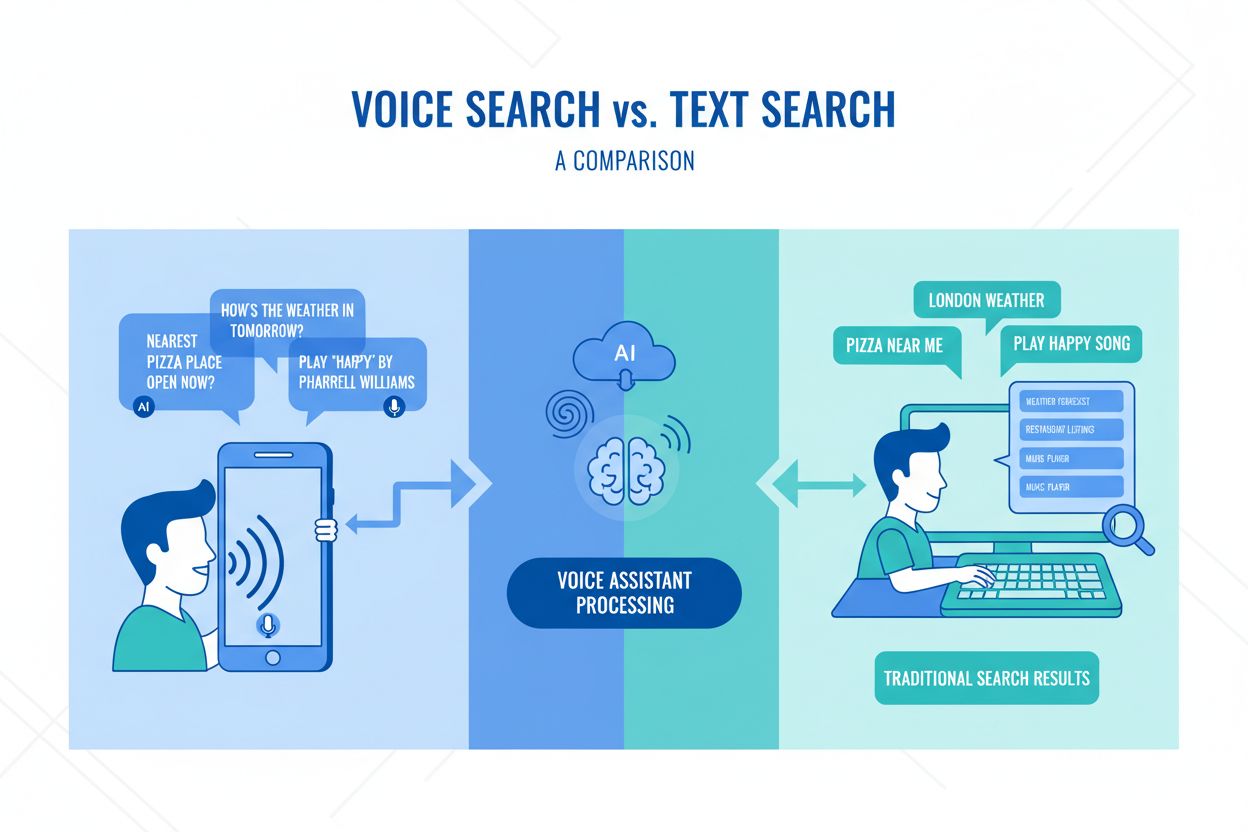
Voice assistants process search queries through fundamentally different mechanisms than traditional text-based search engines, requiring a distinct optimization approach. When users speak to voice assistants, they use natural language processing and semantic understanding to interpret intent, context, and nuance in ways that differ significantly from keyword-matching algorithms. The voice optimization LLM (Large Language Model) architecture prioritizes conversational patterns, long-tail keywords, and question-based queries over short, fragmented text strings. Understanding these differences is crucial because voice assistants don’t simply read search results—they synthesize information and deliver concise, spoken answers. The following table illustrates the key differences between voice and text search optimization:
| Aspect | Voice Search | Text Search | Impact on SEO |
|---|---|---|---|
| Query Structure | Conversational, question-based (8-10 words avg) | Short, keyword-focused (2-3 words avg) | Requires long-tail keyword targeting and natural language content |
| Answer Format | Concise, spoken response (40-60 words) | Multiple clickable results with snippets | Featured snippets and position zero become critical ranking factors |
| User Intent | Immediate, contextual, often local | Exploratory, comparison-based | Requires intent-matching content and direct answer optimization |
| Optimization Focus | Conversational keywords, FAQ content, schema markup | Keyword density, backlinks, meta tags | Shift toward semantic SEO and structured data implementation |
Voice assistants rely on semantic search capabilities to understand meaning beyond literal keywords, making content that answers specific questions far more valuable than keyword-stuffed pages. This shift requires content creators to think like conversationalists rather than keyword optimizers, fundamentally changing how we approach content strategy and technical implementation.
Optimizing for voice search requires a multi-faceted approach that addresses how AI assistants discover, evaluate, and deliver content. Here are the essential strategies for capturing voice search traffic:
Target Conversational Keywords and Question Phrases: Focus on long-tail keywords that mirror natural speech patterns. Incorporate questions like “What is,” “How do I,” and “Where can I find” throughout your content, as these match the way people actually speak to voice assistants.
Optimize for Featured Snippets and Position Zero: Voice assistants predominantly read aloud content from featured snippets, making position zero optimization critical. Structure your content with clear, concise answers (40-60 words) to common questions, using headers and lists to improve snippet eligibility.
Implement Comprehensive Local SEO: Since many voice searches have local intent, ensure your business information is accurate across all platforms. Optimize your Google Business Profile with complete details, high-quality images, and regular updates to capture “near me” queries.
Prioritize Mobile-First Optimization: Voice searches are predominantly mobile-based, making responsive design and fast loading times non-negotiable. Test your site’s mobile performance rigorously and ensure all content is easily accessible on smaller screens.
Deploy Structured Data and Schema Markup: Implement FAQPage, LocalBusiness, and other relevant schema markup to help voice assistants understand your content structure. This technical foundation makes it easier for AI systems to extract and read aloud your information.
Create Comprehensive FAQ Content: Develop detailed FAQ sections that address common questions your audience asks. Format these with clear question-and-answer pairs that directly match voice search query patterns and are easily parseable by voice assistants.
Build Topic Authority and Depth: Voice assistants favor authoritative, comprehensive content over thin pages. Create in-depth guides and resource pages that thoroughly address topics, establishing your site as a trusted source for voice assistant recommendations.
Featured snippets have become the holy grail of voice search optimization, with research showing that voice assistants read aloud featured snippets more than 70% of the time. When a user asks a voice assistant a question, the system doesn’t display a list of results—it synthesizes and speaks a single answer, and that answer almost always comes from a featured snippet. This means that ranking in position zero isn’t just about visibility; it’s about being the voice that answers your audience’s questions. To capture featured snippets, structure your content with clear, direct answers to common questions, typically formatted as 40-60 word paragraphs, lists, or tables. For example, a question like “What is voice search optimization?” should be answered with a concise definition: “Voice search optimization is the practice of structuring content to be easily discovered and read aloud by voice assistants, focusing on conversational keywords, featured snippets, and semantic search principles.” By understanding and implementing position zero strategies, you transform your content from a search result into the authoritative voice that AI assistants trust and recommend.
Local voice search has become a dominant force in how consumers discover businesses, with 58% of voice searches containing local intent. When someone asks their voice assistant “Where’s the nearest coffee shop?” or “Find me a plumber near me,” they’re initiating a local voice query that requires precise, optimized business information. The foundation of local voice search success is a fully optimized Google Business Profile with complete business information, accurate NAP (Name, Address, Phone) consistency across all platforms, and regular updates that signal active business management. NAP consistency is particularly critical for voice search because AI assistants cross-reference multiple data sources to verify business legitimacy and accuracy—any discrepancies can result in your business being deprioritized or excluded from voice results. Beyond basic information, actively managing customer reviews and ratings significantly impacts voice search visibility, as voice assistants use review signals to determine which businesses to recommend. For example, when a user asks “What’s the best-rated Italian restaurant nearby?”, voice assistants prioritize businesses with strong review profiles and consistent local SEO signals. By treating local SEO as a foundational element of your voice search strategy, you position your business to capture high-intent, conversion-ready voice queries from nearby customers actively seeking your services.
The technical infrastructure supporting your content is just as important as the content itself when optimizing for voice search. Page speed is critical for voice search visibility, with research showing that voice search results load 52% faster than average web pages, indicating that voice assistants prioritize fast-loading, efficient websites. Mobile-first indexing means Google evaluates your site primarily through a mobile lens, making responsive design and mobile performance optimization non-negotiable for voice search success. Core Web Vitals—including Largest Contentful Paint (LCP), First Input Delay (FID), and Cumulative Layout Shift (CLS)—directly impact how voice assistants rank and recommend your content. Beyond performance metrics, schema markup provides the structured data that voice assistants need to understand and extract information from your pages. Implementing FAQPage schema is particularly valuable for voice search, as it explicitly tells voice assistants which content answers common questions. Here’s a basic example of FAQPage schema markup:
{
  "@context": "https://schema.org",
  "@type": "FAQPage",
  "mainEntity": [
    {
      "@type": "Question",
      "@id": "https://example.com/faq#q1",
      "name": "What is voice search optimization?",
      "acceptedAnswer": {
        "@type": "Answer",
        "text": "Voice search optimization is the practice of structuring content to be easily discovered and read aloud by voice assistants, focusing on conversational keywords, featured snippets, and semantic search principles."
      }
    }
  ]
}
By combining fast page speeds, mobile optimization, and comprehensive schema markup, you create the technical foundation that voice assistants require to discover, evaluate, and recommend your content with confidence.
Voice assistants are fundamentally conservative in their recommendations, prioritizing authoritative, trustworthy sources over marginal content because they’re speaking directly to users and their reputation depends on recommendation quality. Google’s E-E-A-T framework (Experience, Expertise, Authoritativeness, Trustworthiness) has become increasingly important for voice search visibility, as voice assistants apply stricter evaluation criteria than text search. Author expertise signals—including author bios, credentials, and demonstrated knowledge—help voice assistants understand whether your content comes from a qualified source worthy of being read aloud to users. Building authority signals through high-quality backlinks from reputable domains, comprehensive content depth, and consistent topical focus establishes your site as a trusted resource that voice assistants confidently recommend. The more your content demonstrates genuine expertise and trustworthiness, the more likely voice assistants are to select it as the authoritative answer to user queries. As you build your voice search presence, tools like AmICited.com help you monitor how your brand appears in AI responses and voice assistant recommendations, providing visibility into your authority signals and helping you identify opportunities to strengthen your E-E-A-T profile across AI platforms.
Understanding and measuring your voice search performance is essential for optimizing your strategy and demonstrating ROI in an increasingly voice-driven landscape. The voice search market is experiencing explosive growth, with projections indicating the market will reach $26.8 billion by 2025, underscoring the urgency of voice search optimization. Voice search analytics require different measurement approaches than traditional SEO, focusing on metrics like featured snippet rankings, voice query impressions, and voice-driven conversions rather than traditional click-through rates. Tools like Google Search Console now provide voice search data, allowing you to track which queries trigger voice results and how often your content appears in voice assistant responses. Performance tracking should focus on monitoring your position zero rankings, measuring changes in voice-driven traffic, and analyzing which content types and topics generate the most voice search visibility. Continuous optimization requires regular iteration—testing different content formats, FAQ structures, and schema implementations to identify what resonates most with voice assistants and drives measurable results. Platforms like AmICited.com provide comprehensive monitoring of your brand’s visibility across AI assistants and voice search platforms, enabling you to track performance metrics, identify emerging opportunities, and optimize your voice search strategy with data-driven insights that directly impact your bottom line.
Voice search optimization is the practice of structuring content to be easily discovered and read aloud by voice assistants like Google Assistant, Alexa, and Siri. It focuses on conversational keywords, featured snippets, and semantic search principles to improve visibility in voice-based queries.
With 8.4 billion voice assistants globally and 50% of searches now voice-based, optimizing for voice search is critical for visibility. Voice searches often have high commercial intent and local focus, making them valuable for capturing customers actively seeking your products or services.
Voice assistants use natural language processing and semantic understanding to interpret conversational queries and deliver single, spoken answers. Unlike traditional search engines that return multiple results, voice assistants synthesize information and provide one authoritative answer, usually from a featured snippet.
A featured snippet is the answer box that appears at the top of Google search results (Position Zero). Voice assistants read aloud featured snippets more than 70% of the time, making snippet optimization critical for voice search visibility and being the voice that answers user questions.
Optimize your Google Business Profile with complete, accurate information including NAP (Name, Address, Phone) consistency across all platforms. Maintain high review ratings, update business hours regularly, and incorporate local keywords naturally into your content to capture 'near me' voice queries.
Schema markup provides structured data that helps voice assistants understand and extract information from your pages. Implementing FAQPage, LocalBusiness, and other relevant schema types makes it easier for voice assistants to find, interpret, and read aloud your content.
Quick technical wins like schema markup and page speed improvements can show results within weeks. However, building authority and ranking for competitive voice queries typically takes several months of consistent effort in content creation, link building, and optimization.
Google Search Console provides voice search data and featured snippet rankings. Platforms like AmICited.com monitor your brand's visibility across AI assistants and voice search platforms, helping you track performance metrics and identify optimization opportunities.
Track how your brand appears in voice search results and AI assistant responses with AmICited's comprehensive monitoring platform.
Learn how to optimize your brand for voice assistants like Alexa and Siri. Discover strategies to improve visibility in voice search results and reach voice-fir...

Learn how to optimize your content for voice-based AI assistants like Google Assistant, Siri, and Alexa. Discover conversational keywords, featured snippets, lo...
Discover how AI agents reshape search behavior, from conversational queries to zero-click results. Learn the impact on user habits, brand visibility, and search...