
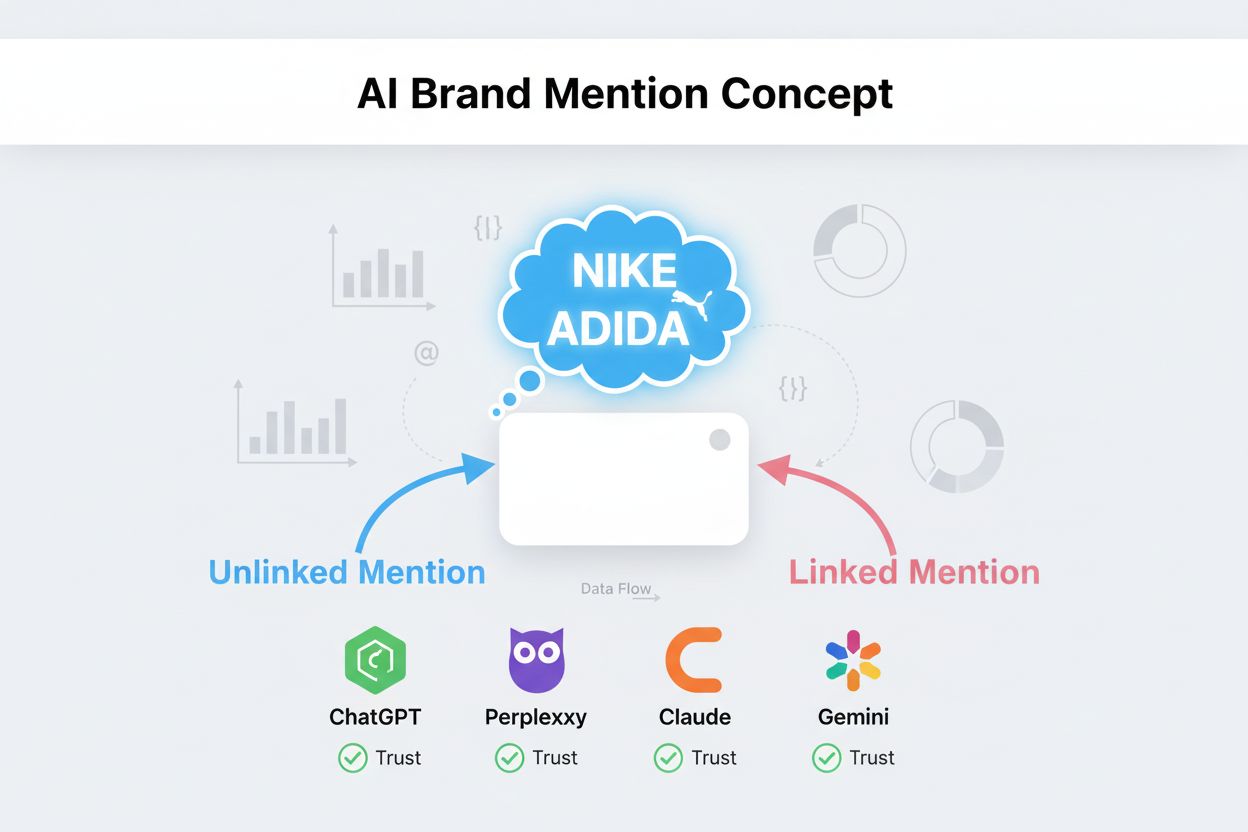
AI Brand Mention
Learn what AI brand mentions are, why they matter for visibility in ChatGPT and Perplexity, and how to track and optimize your brand's presence in AI-generated ...
13 min read
Discover how web mentions and third-party references influence AI citations. Learn why LLMs prioritize brand mentions over backlinks and strategies to increase your visibility in AI-generated answers.
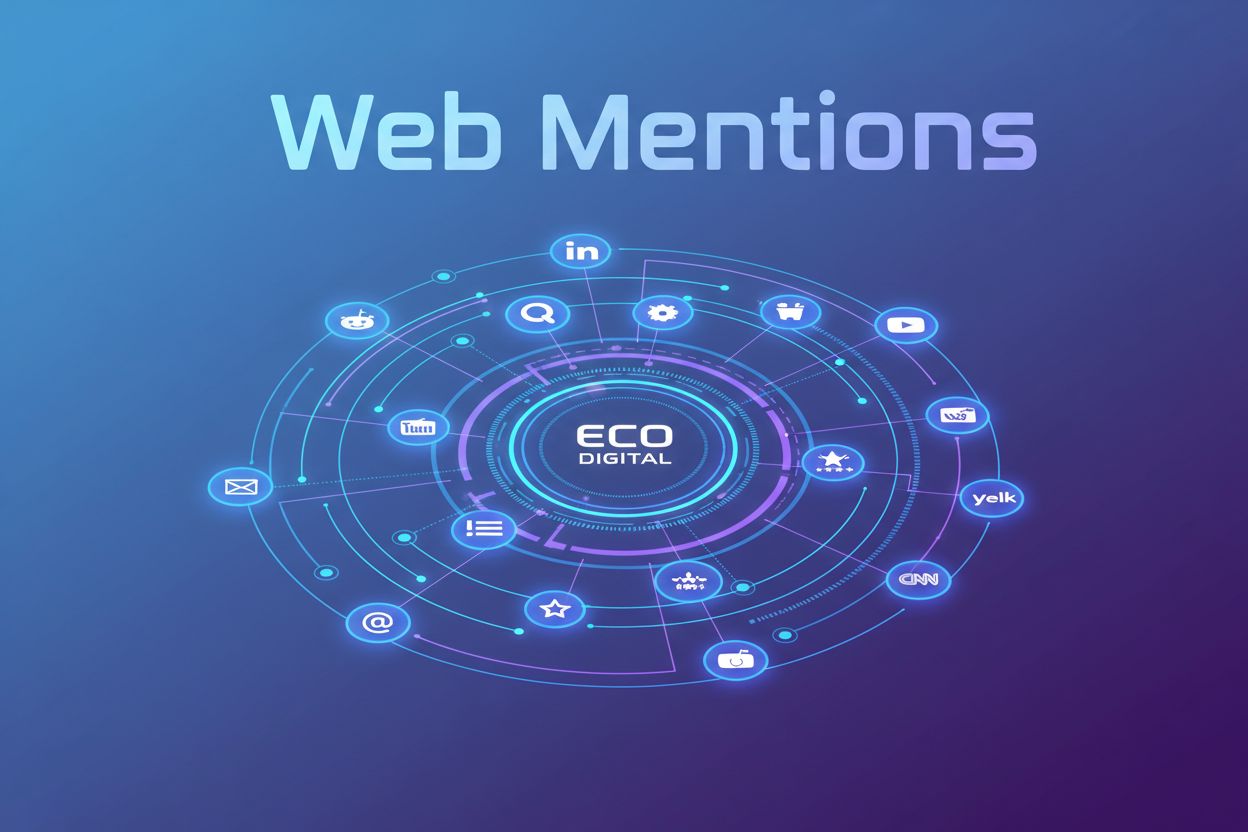
Web mentions are brand references that appear across third-party websites, publications, forums, and social platforms—with or without a hyperlink. Unlike traditional backlinks, which are hyperlinks pointing to your site, web mentions are simply instances where your brand name appears in external content. This distinction is crucial because large language models (LLMs) now treat mentions as primary trust signals, often valuing them more heavily than the backlinks themselves. When your brand is consistently mentioned across authoritative sources, AI systems recognize this as third-party validation of your credibility and relevance.
Large language models like ChatGPT, Google Gemini, and Perplexity are trained on vast amounts of web data, including news articles, blog posts, forum discussions, social media, and structured databases. During this training process, LLMs learn to recognize entities—distinct, identifiable objects like brands, people, and concepts—and understand their relationships and context. When an LLM encounters your brand mentioned repeatedly across trusted sources, it builds a stronger understanding of your entity’s authority and relevance. This entity recognition feeds into Google’s Knowledge Graph and similar systems used by other AI engines, which then influence how and when your brand appears in AI-generated answers. The more consistent and widespread your mentions are across high-authority sources, the stronger your entity profile becomes in these systems.
| Aspect | Web Mentions | Backlinks |
|---|---|---|
| Definition | Brand reference with or without hyperlink | Hyperlink from external site to your domain |
| AI Weight | High - direct trust and relevance signal | Medium - declining importance in AI era |
| Effort to Earn | Easier through PR, content, and community participation | Harder to acquire at scale without outreach |
| Sentiment Analysis | Captured and weighted by AI systems | Not sentiment-aware; link is link |
| Scalability | Can accumulate naturally through earned media | Requires active outreach and relationship building |
| Impact on Knowledge Graph | Strengthens entity presence and associations | Supports domain authority but less entity-specific |
Different AI engines have distinct preferences when it comes to which sources they trust and cite. Understanding these preferences is essential for optimizing your brand’s visibility across the AI landscape:
ChatGPT (OpenAI GPT-4o): Heavily favors established, authoritative sources. Wikipedia dominates at 27% of citations, followed by news outlets (27%), blogs (21%), and comparison portals (17%). ChatGPT actively avoids user-generated content like forums and social media, making it the most conservative in source selection.
Google AI Overviews: Takes the broadest approach, pulling from diverse sources. Blogs lead at 46%, followed by news (20%), with significant inclusion of community content (Reddit and Quora at 4%), LinkedIn articles, and even vendor blogs (7%). This engine mirrors the diversity of Google Search results.
Google Gemini: Balances authority with accessibility. Blogs account for 39% of citations, news for 26%, with YouTube (3%) and community content (2%) playing supporting roles. Gemini excels at mixing professional reviews with peer feedback.
Perplexity AI: Emphasizes expert sources and specialized review sites. Blogs comprise 38% of citations, news 23%, with expert review sites (9%) like NerdWallet and Consumer Reports featured prominently. Perplexity adjusts source preferences based on query topic, favoring finance sites for financial queries and Reddit for consumer product discussions.
Entity consistency across the web strengthens your brand’s presence in AI systems. When your brand name, description, and associated information remain consistent across platforms—from your official website to Wikipedia, LinkedIn, Crunchbase, and industry directories—you send a clear signal to AI systems that your entity is legitimate and well-established. This consistency feeds into Google’s Knowledge Graph and similar entity databases used by other AI engines. When multiple authoritative sources describe your brand in the same way, using the same terminology and associations, AI systems gain confidence in your entity profile. Inconsistent naming (e.g., “The Company Name” versus “Company Name Inc.”) can dilute this signal, making it harder for AI systems to recognize and cite your brand with confidence.
Sentiment matters significantly in how AI systems evaluate and cite your brand. While traditional SEO treats all backlinks equally—a link is a link—AI systems are sophisticated enough to analyze the tone and context of mentions. A positive mention in a trusted publication carries far more weight than a negative one, even if both appear in equally authoritative sources. LLMs can parse sentiment from text, understanding whether your brand is being praised, criticized, or neutrally referenced. If your brand is consistently associated with positive sentiment across trusted sources, AI systems are more likely to elevate your name in summaries and recommendations. Conversely, if negative sentiment dominates your mentions, AI engines may suppress your visibility or position competitors more favorably. This makes reputation management and sentiment monitoring critical components of AI visibility strategy.
Building web mentions requires a strategic, multi-channel approach focused on earning visibility in places where AI systems actively look for information. Digital PR and media outreach remain among the most effective tactics—pitching stories, data, and expert commentary to journalists and publications that AI engines trust. Platforms like HARO (Help A Reporter Out) and Qwoted connect you with journalists seeking expert input, resulting in attributed mentions in published articles. Original research and data creation also drive mentions naturally; when you publish unique insights or studies, other publications cite your findings, creating unlinked mentions that strengthen your authority. Expert commentary and thought leadership position you as a credible voice—contributing to industry roundups, webinars, and expert panels generates mentions across multiple platforms. Community participation on Reddit, Quora, and industry forums, when done authentically and helpfully, can lead to mentions in AI-generated answers, especially for Perplexity and Google AI Overviews. Finally, strategic partnerships and sponsorships with events, organizations, and publications create structured mentions that often include schema markup, further strengthening your entity signals.
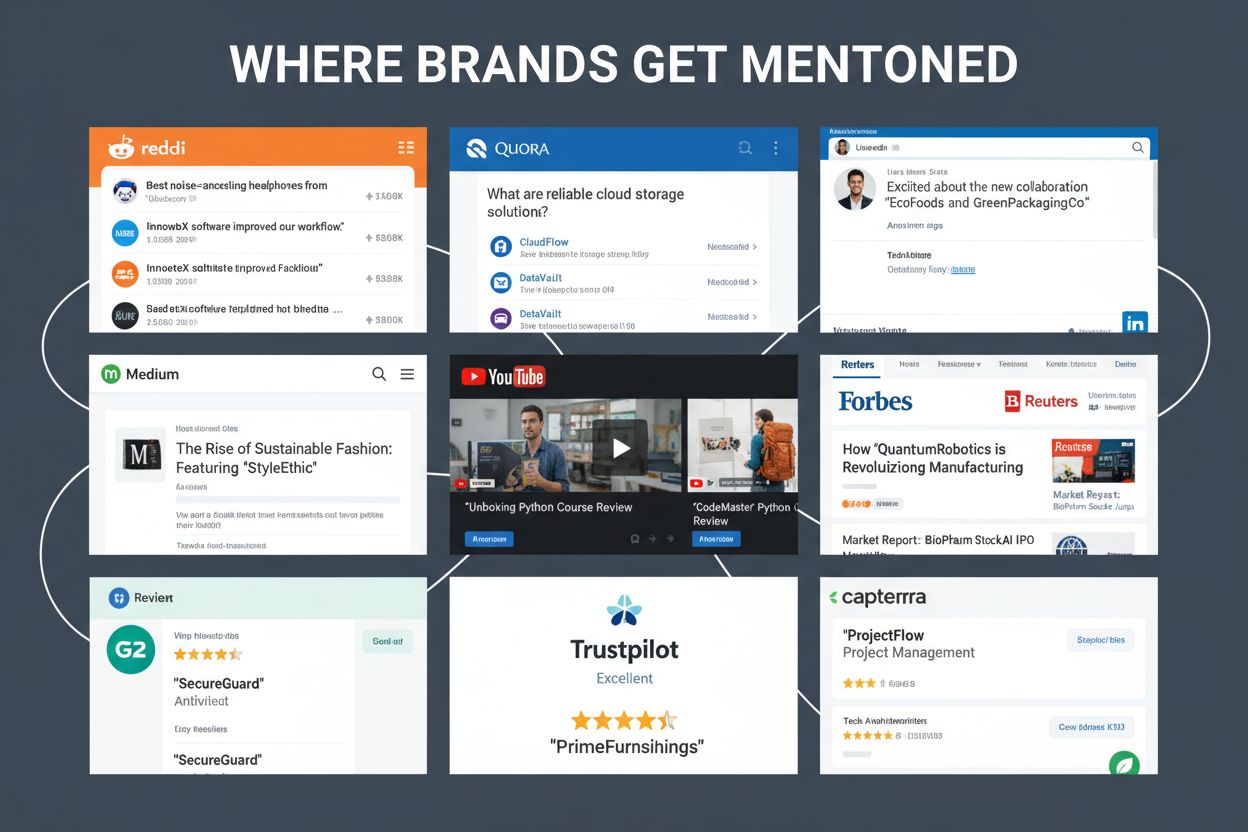
The platforms where your brand gets mentioned directly influence your AI visibility. Reddit has become the second most-cited source in Google AI Overviews, with Perplexity citations jumping from less than 0.11% to over 4.5% in recent years. Authentic participation in relevant subreddits—answering questions helpfully without overt promotion—can lead to your brand being surfaced in AI answers. Quora functions similarly, with question-based content aligned to common queries frequently appearing in AI summaries. LinkedIn serves as a critical platform for B2B authority, with executive posts and expert commentary often surfacing in AI-generated business answers. Medium and similar platforms host long-form thought leadership that reinforces expertise in the Knowledge Graph. Industry publications specific to your sector—whether that’s TechCrunch for startups, Skift for travel, or Bon Appétit for culinary brands—carry significant weight with AI systems. Review platforms like G2, Capterra, Trustpilot, and industry-specific review sites provide structured mentions that AI engines trust when evaluating brands in competitive categories.
Monitoring your web mentions is essential for understanding your AI visibility and identifying opportunities for improvement. Tools like Buzzabout provide AI-driven entity monitoring with strong alignment to how LLMs perceive your brand, offering real brand perception data and topic trend analysis. Brand24 combines social and web monitoring with sentiment scoring, allowing you to track not just where you’re mentioned but how you’re being discussed. Mention offers real-time alerts across social media and blogs with team workflow capabilities. Even free tools like Google Alerts can provide basic mention tracking. Beyond volume, focus on sentiment analysis—understanding whether mentions are positive, negative, or neutral. Track which sources mention you most frequently, as these often indicate where AI systems are likely to find your brand. Monitor competitor mentions to identify gaps in your coverage and opportunities to position your brand where competitors currently dominate.
Consider a B2B SaaS company specializing in project management software that implemented a strategic web mentions strategy. Over six months, the company increased its mentions across industry publications, review platforms, and professional communities from 45 monthly mentions to 198 (a 340% increase). Simultaneously, their appearance in AI-generated answers for relevant queries grew from 12% to 31% of responses. The strategy involved: securing placements in industry publications like TechTarget and G2 reviews, contributing expert commentary to business publications, actively participating in relevant Reddit communities and Quora threads, and maintaining consistent entity information across Wikipedia, LinkedIn, and Crunchbase. The company didn’t focus on acquiring backlinks; instead, they concentrated on earning mentions in places where AI systems actively source information. Within nine months, organic traffic from AI-generated answers increased by 52%, demonstrating that web mentions directly influence AI citation patterns and ultimately drive real business results.
Web mentions are brand references that appear on external websites with or without a hyperlink, while backlinks are specifically hyperlinks pointing to your site. AI systems now prioritize mentions as trust signals, often valuing them more heavily than backlinks themselves. This represents a significant shift from traditional SEO, where backlinks were the primary authority metric.
Yes, absolutely. Unlinked mentions are valuable and increasingly important for AI visibility. Large language models recognize brand references even without hyperlinks and use them as credibility signals. In fact, many AI engines like Google AI Overviews and Perplexity cite sources based on mentions found in trusted publications, regardless of whether those mentions include links.
Reddit, Quora, LinkedIn, industry publications, and news outlets are heavily used by AI engines. Reddit has become the second most-cited source in Google AI Overviews, while Perplexity heavily favors expert review sites. The best platforms depend on your industry—B2B companies should focus on LinkedIn and industry publications, while B2C brands benefit from Reddit, Quora, and consumer review sites.
Typically, 3-6 months is a realistic window to start seeing shifts in AI citations and branded query trends. However, this timeline can vary based on the authority and velocity of your mention activity. Brands that consistently earn mentions across high-authority sources may see faster results, while those just starting their mention strategy should expect a longer runway.
Yes, sentiment matters significantly. Negative mentions can suppress your visibility in AI-generated answers, while positive ones reinforce authority. Large language models are sophisticated enough to analyze the tone and context of mentions. If negative sentiment dominates your mentions, AI engines may suppress your visibility or position competitors more favorably instead.
Use tools like Buzzabout, Brand24, Mention, or Google Alerts to monitor brand mentions and sentiment across platforms. Buzzabout is particularly strong for AI-driven entity monitoring, while Brand24 offers comprehensive social and web monitoring with sentiment scoring. Even free tools like Google Alerts can provide basic mention tracking to get started.
Absolutely. Digital PR that generates mentions in trusted publications is one of the most effective ways to build AI visibility. Platforms like HARO and Qwoted connect you with journalists seeking expert input, resulting in attributed mentions in published articles. Original research, expert commentary, and strategic partnerships all drive mentions that strengthen your authority with AI systems.
Consistent mentions across trusted sources strengthen your entity in Google's Knowledge Graph, which influences how AI systems understand and cite your brand. When multiple authoritative sources describe your brand consistently, AI systems gain confidence in your entity profile. This strengthened entity presence then influences how and when your brand appears in AI-generated answers across multiple platforms.
Track how your brand appears across ChatGPT, Perplexity, Google AI Overviews, and other AI platforms. Understand your web mentions and optimize for AI visibility with AmICited.
Learn what AI brand mentions are, why they matter for visibility in ChatGPT and Perplexity, and how to track and optimize your brand's presence in AI-generated ...
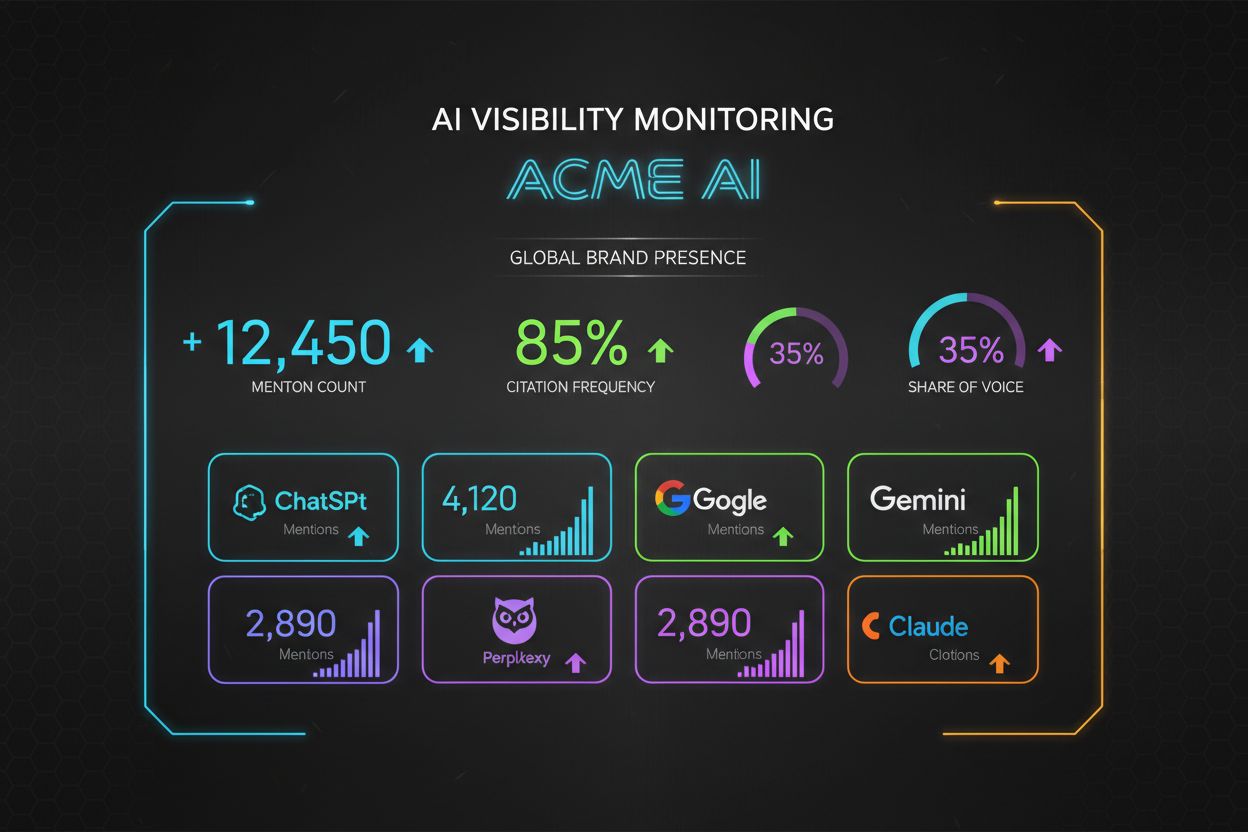
Learn how to monitor AI brand mentions and citations across ChatGPT, Gemini, and Perplexity. Discover why AI visibility matters more than traditional rankings a...
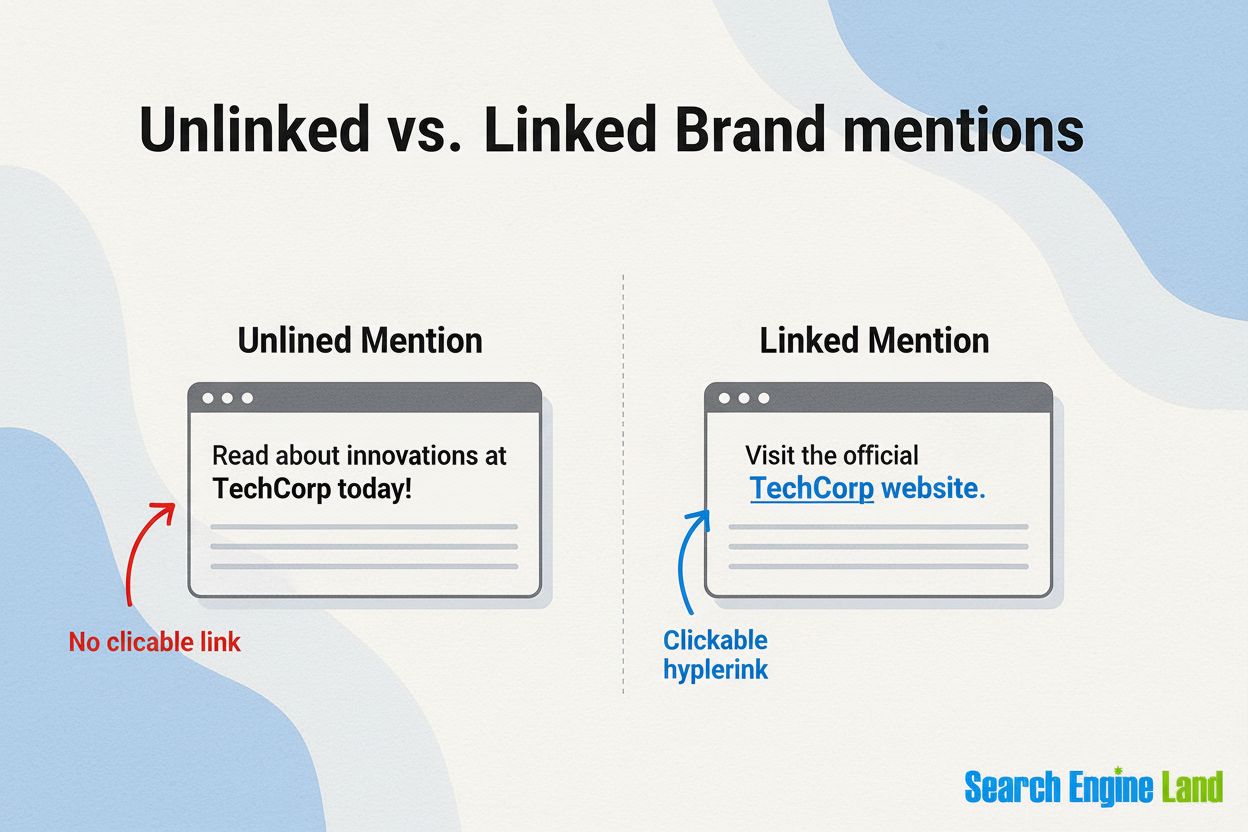
Learn what brand mentions are, why they matter for SEO and AI visibility, and how they differ from citations. Discover how unlinked brand references influence s...