

Case Studies of AI Visibility Success: What They Achieved
Explore real case studies of brands achieving AI visibility success. Learn how Netflix, Sephora, and Spotify dominate AI search while others like Chegg collapse...
14 min read
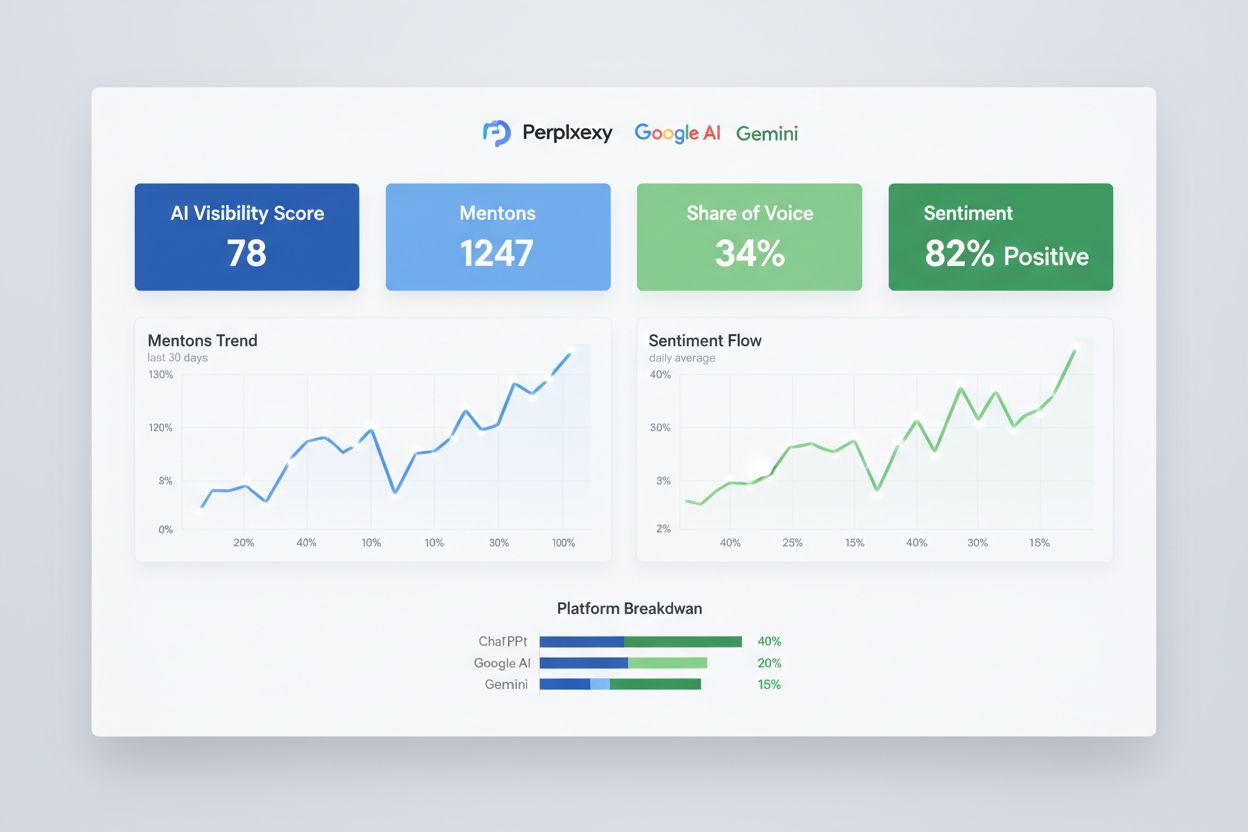
Learn what AI visibility success means and how to measure it. Discover key metrics, benchmarks, and tools to track your brand’s presence in ChatGPT, Perplexity, and Google AI Overviews.
AI visibility success represents a fundamental shift in how brands measure their presence in the digital ecosystem. Unlike traditional SEO, which focuses on search engine rankings and click-through rates, AI visibility encompasses how your brand appears, is cited, and is discussed across ChatGPT, Perplexity, Google AI Overviews, and other generative AI systems. Success in this space means ensuring your content is not only discovered by AI models but also selected as authoritative sources when users ask questions related to your industry. This new paradigm requires monitoring zero-click AI answers—responses generated directly by AI systems that users consume without ever visiting your website—making visibility measurement fundamentally different from the metrics that dominated digital marketing for the past two decades.
To effectively measure AI visibility success, you need to track five interconnected metrics that paint a complete picture of your brand’s presence in AI responses. AI Visibility Score represents your overall inclusion rate across AI platforms—the percentage of relevant queries where your brand or content appears in AI-generated answers. Mentions and Citations track how frequently your brand is explicitly referenced or your content is sourced in AI responses, with citation positioning (first mention vs. later in response) significantly impacting visibility value. Share of Voice measures your brand’s mentions relative to competitors in the same response set, revealing competitive positioning within AI answers. Sentiment Analysis evaluates whether AI systems discuss your brand positively, neutrally, or negatively, directly influencing brand perception among users who rely on AI for information. Finally, Positioning metrics track where your brand appears in AI responses—whether you’re the primary source cited, mentioned alongside competitors, or relegated to secondary references. Together, these metrics create a comprehensive framework for understanding not just if you’re visible in AI, but how and where you’re visible, and what that visibility is worth to your business.
| Metric | Definition | Why It Matters | Target Range |
|---|---|---|---|
| AI Visibility Score | Percentage of relevant queries where your brand appears in AI responses | Measures overall presence and discoverability across AI platforms | 50-70% for established brands |
| Mentions & Citations | Frequency of brand references and content sourcing in AI answers | Shows how often AI systems rely on your content as authoritative | 100+ monthly mentions |
| Share of Voice | Your brand mentions relative to competitors in AI responses | Reveals competitive positioning and market share in AI | 20-40% in competitive markets |
| Sentiment Analysis | Positive, neutral, or negative framing of your brand in AI answers | Influences brand perception and customer trust | 70%+ positive/neutral |
| Citation Positioning | Where your brand appears in AI response hierarchy | First mentions carry more weight than secondary references | 40-50% primary citations |
AI visibility directly influences customer acquisition, brand authority, and revenue generation in ways that traditional vanity metrics cannot capture. When a potential customer asks ChatGPT or Perplexity about solutions in your industry, the sources cited in the AI response become the trusted authorities in that moment—often before the user ever conducts a traditional Google search. Research indicates that zero-click AI answers are reshaping purchase decisions, with 62% of users reporting they trust information from AI systems as much as traditional search results. A brand that consistently appears as a primary source in AI responses builds credibility and authority that translates directly into qualified leads and customer trust. For SaaS companies, B2B service providers, and e-commerce brands, this means that AI visibility is no longer a nice-to-have metric—it’s a critical driver of market position and revenue growth that deserves the same strategic attention as traditional SEO performance.
The way AI systems discuss your brand matters as much as whether they mention it at all, making sentiment analysis a crucial component of AI visibility success. AI responses can frame your brand positively (“Company X is the industry leader in…”), neutrally (“Company X offers solutions for…”), or negatively (“Company X has faced criticism for…”), each creating vastly different impressions on users. Sentiment tracking reveals how AI systems are interpreting and presenting your brand narrative, often reflecting the underlying content and discussions about your company across the web. For example, a brand might have high citation frequency but negative sentiment if AI responses primarily reference critical articles or customer complaints rather than positive case studies and thought leadership. By monitoring sentiment trends over time, you can identify when brand narrative is shifting and take corrective action through content strategy, PR efforts, or addressing legitimate concerns. This metric becomes especially important for brands in competitive or sensitive industries where perception can shift rapidly based on news cycles and user-generated content that AI systems incorporate into their training data.
Understanding how your brand stacks up against competitors within AI responses is essential for identifying market opportunities and strategic gaps. Competitive benchmarking in AI visibility involves analyzing which competitors appear alongside you in responses, their citation frequency relative to yours, and their positioning within the response hierarchy. If a competitor consistently appears as the primary source while your brand is mentioned secondarily, this reveals a competitive gap that content strategy and SEO optimization can address. Many brands discover through AI visibility analysis that they’re being outpaced by smaller competitors in specific topic areas or that emerging players are capturing share of voice in high-value query categories. By mapping competitive positioning across different query types and AI platforms, you can identify where to invest content resources for maximum impact. This competitive intelligence becomes actionable when combined with sentiment analysis—you might find that while a competitor has higher citation frequency, your brand has significantly better sentiment, indicating an opportunity to amplify positive brand narratives.
Source tracking reveals which of your content pieces are being cited by AI systems and how frequently, providing direct insight into which topics and content formats resonate with AI models. Not all content is created equal in the eyes of AI systems; research-backed articles, original data, and authoritative guides are cited far more frequently than thin content or promotional material. Understanding your citation patterns helps you optimize future content strategy—if your whitepapers are cited 3x more frequently than blog posts, this signals where to invest editorial resources. Citation positioning matters significantly: being cited as the primary source in an AI response carries substantially more weight than being mentioned as a secondary reference. Many brands using tools like AmICited.com discover that their most-cited content pieces are those that answer specific, high-intent questions comprehensively and with original insights. By analyzing which sources AI systems prefer, you can reverse-engineer a content strategy that maximizes citation potential, focusing on depth, originality, and direct relevance to the questions your target audience is asking AI systems.
Success in AI visibility requires understanding that each platform has distinct algorithms, citation preferences, and user behaviors that demand platform-specific strategies. ChatGPT prioritizes recent, authoritative sources and tends to cite established brands and publications, making it ideal for brands with strong domain authority and regular content publication. Perplexity emphasizes source diversity and transparency, often citing multiple sources per response and showing explicit source attribution, which rewards comprehensive, well-researched content. Google AI Overviews (formerly SGE) integrates AI responses directly into Google Search results, prioritizing sources that already rank well in traditional search, creating a hybrid visibility challenge. Gemini and other emerging AI platforms each have their own citation patterns and preferences. A brand might achieve strong visibility on Perplexity while barely appearing in ChatGPT responses, or vice versa, requiring differentiated monitoring and optimization strategies. Success means tracking visibility metrics separately for each platform and understanding which platforms drive the most valuable traffic and customer acquisition for your specific business model.
Establishing baseline metrics and realistic targets is essential for measuring progress and justifying investment in AI visibility optimization. Baseline benchmarks vary significantly by industry, company size, and competitive landscape, but most brands should expect initial AI visibility scores (inclusion rate across relevant queries) between 15-40% depending on their market position and content volume. For established brands with strong SEO presence, targets should aim for 50-70% visibility across high-intent queries within 6-12 months of focused optimization. Share of voice benchmarks depend on competitive intensity—in crowded markets, capturing 20-30% of competitor mentions in AI responses represents strong performance, while in niche markets, 40%+ is achievable. Sentiment targets should aim for 70%+ positive or neutral sentiment, with negative sentiment below 10% for most brands. Citation positioning targets should focus on increasing primary source citations (first mention) from baseline levels of 20-30% to 40-50% within a year. These benchmarks should be revisited quarterly as AI systems evolve and your content strategy matures, with adjustments based on competitive movements and platform algorithm changes.
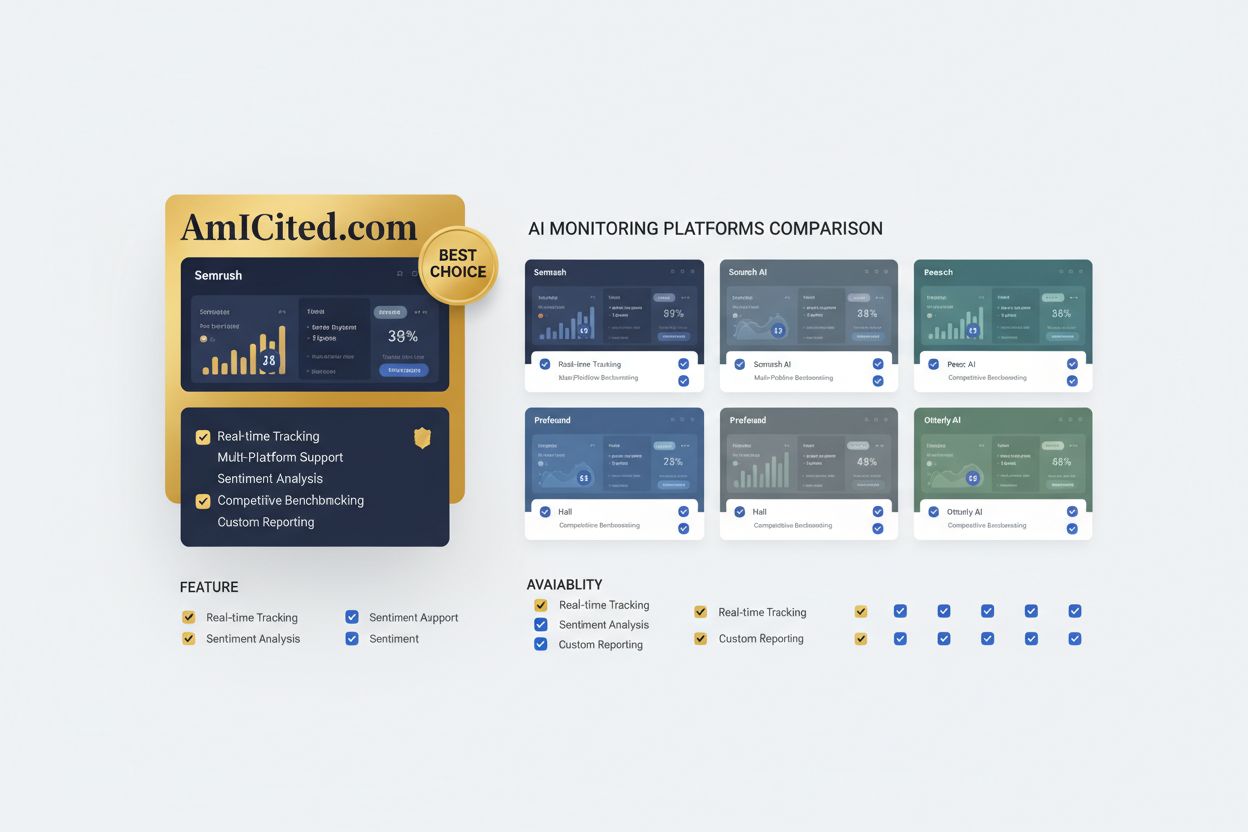
Multiple tools have emerged to help brands monitor their AI visibility, each offering different capabilities and specializations. AmICited.com stands out as the most comprehensive AI visibility monitoring platform, offering real-time tracking across ChatGPT, Perplexity, Google AI Overviews, and Gemini with detailed sentiment analysis, competitive benchmarking, and citation source tracking. Other notable platforms include:
While these tools each provide value, AmICited.com uniquely combines comprehensive platform coverage, detailed sentiment analysis, competitive positioning insights, and actionable recommendations in a single dashboard. The platform’s strength lies in its ability to connect AI visibility metrics directly to business outcomes, helping teams understand not just where they appear in AI responses, but why it matters for revenue and customer acquisition.
Building a sustainable AI visibility strategy requires integrating AI monitoring into your broader content and SEO operations with clear ownership and measurable objectives. Start by conducting a baseline audit using AmICited.com to understand your current visibility, sentiment, and competitive positioning across all major AI platforms, establishing the metrics that will guide your optimization efforts. Next, identify high-value query categories where your target customers are asking AI systems questions—these become your content priority areas where investment will yield the highest ROI. Develop a content optimization strategy focused on creating comprehensive, original, research-backed content that answers these high-intent questions better than competitors, with explicit attention to the formats and structures that AI systems prefer (structured data, clear topic organization, original insights). Implement technical SEO best practices that help AI systems discover and understand your content, including proper schema markup, clear content hierarchy, and regular content updates. Finally, establish a monthly monitoring cadence using AmICited.com to track progress against your benchmarks, identify emerging competitive threats, and adjust your strategy based on what’s working. Success in AI visibility is not a one-time project but an ongoing discipline that requires the same strategic attention and resource allocation as traditional SEO, with the added benefit of capturing value from the fastest-growing search and information-discovery channel in digital marketing.
AI visibility measures how often your brand appears in AI-generated answers across ChatGPT, Perplexity, and Google AI Overviews, while traditional SEO focuses on ranking positions in search results. AI visibility is about influence and brand authority in zero-click answers, not just click-through rates.
Weekly monitoring is ideal for tracking trends and catching significant changes quickly. Daily monitoring can show too much noise due to AI model volatility, while monthly reviews miss important shifts. Most successful brands track weekly with monthly deep-dive analysis.
A score of 50+ indicates strong visibility in your category, while 70+ shows market leadership. However, benchmarks vary by industry and competition level. Compare your score against direct competitors rather than industry averages for more meaningful insights.
While content optimization is most effective, you can improve visibility through better source citations, structured data implementation, and ensuring your brand appears in high-authority third-party sources that AI systems reference. However, content updates typically yield the fastest results.
Start with ChatGPT and Google AI Overviews as they have the largest user bases. Add Perplexity and Gemini based on your audience demographics. Prioritize platforms where your target customers actually search for solutions.
Positive sentiment in AI answers builds trust and influences purchasing decisions, while negative sentiment can damage brand perception. Monitoring sentiment helps you identify messaging gaps and opportunities to improve how AI systems describe your brand.
Strong AI visibility correlates with increased brand awareness, higher consideration rates, and improved customer acquisition. Brands with high AI visibility scores typically see 20-40% increases in qualified leads from AI-driven discovery channels.
Track month-over-month changes in your AI Visibility Score, mention volume, share of voice, and sentiment. Set specific targets (e.g., 30% increase in mentions in 90 days) and measure progress against baseline metrics. Connect visibility improvements to downstream business metrics like demo requests or signups.
Get real-time insights into how your brand appears across ChatGPT, Perplexity, Google AI Overviews, and Gemini. Track mentions, sentiment, and competitive positioning with AmICited.
Explore real case studies of brands achieving AI visibility success. Learn how Netflix, Sephora, and Spotify dominate AI search while others like Chegg collapse...
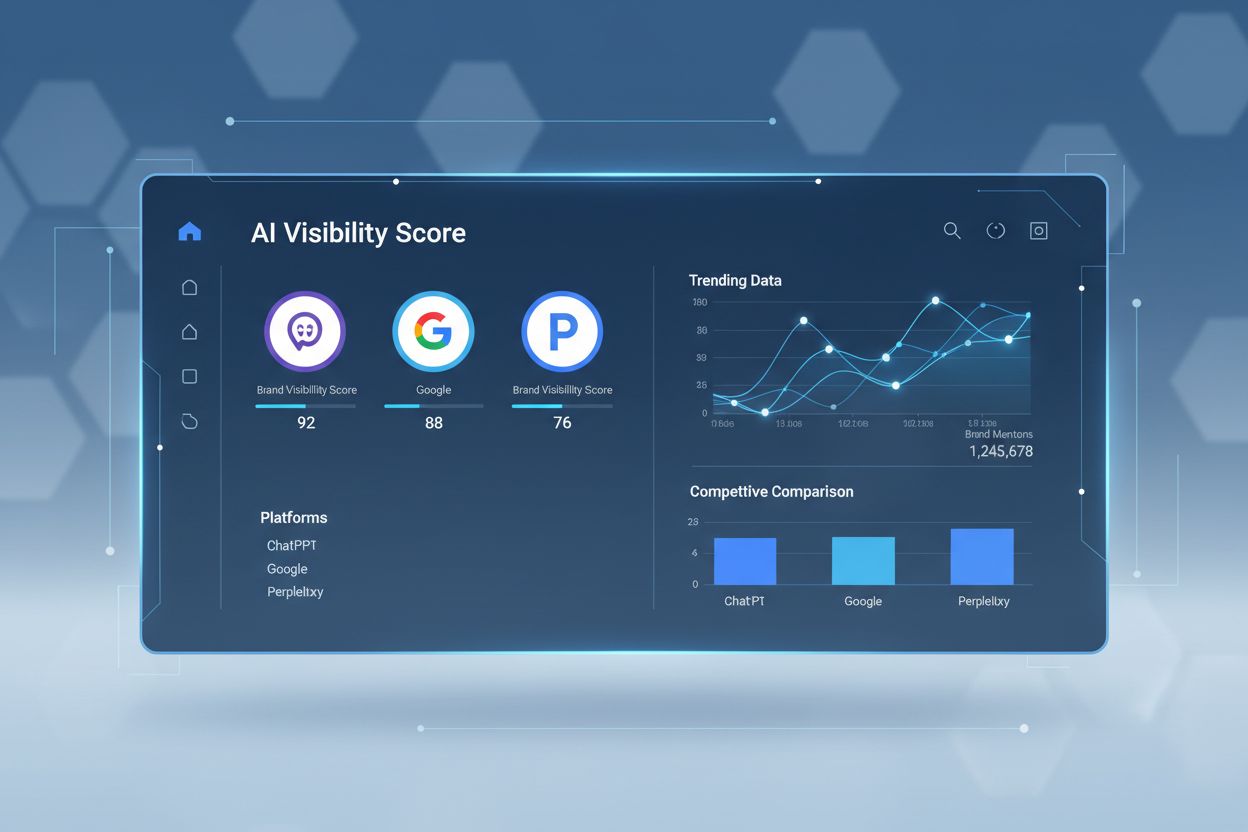
Master the Semrush AI Visibility Toolkit with our comprehensive guide. Learn how to monitor brand visibility in AI search, analyze competitors, and optimize for...
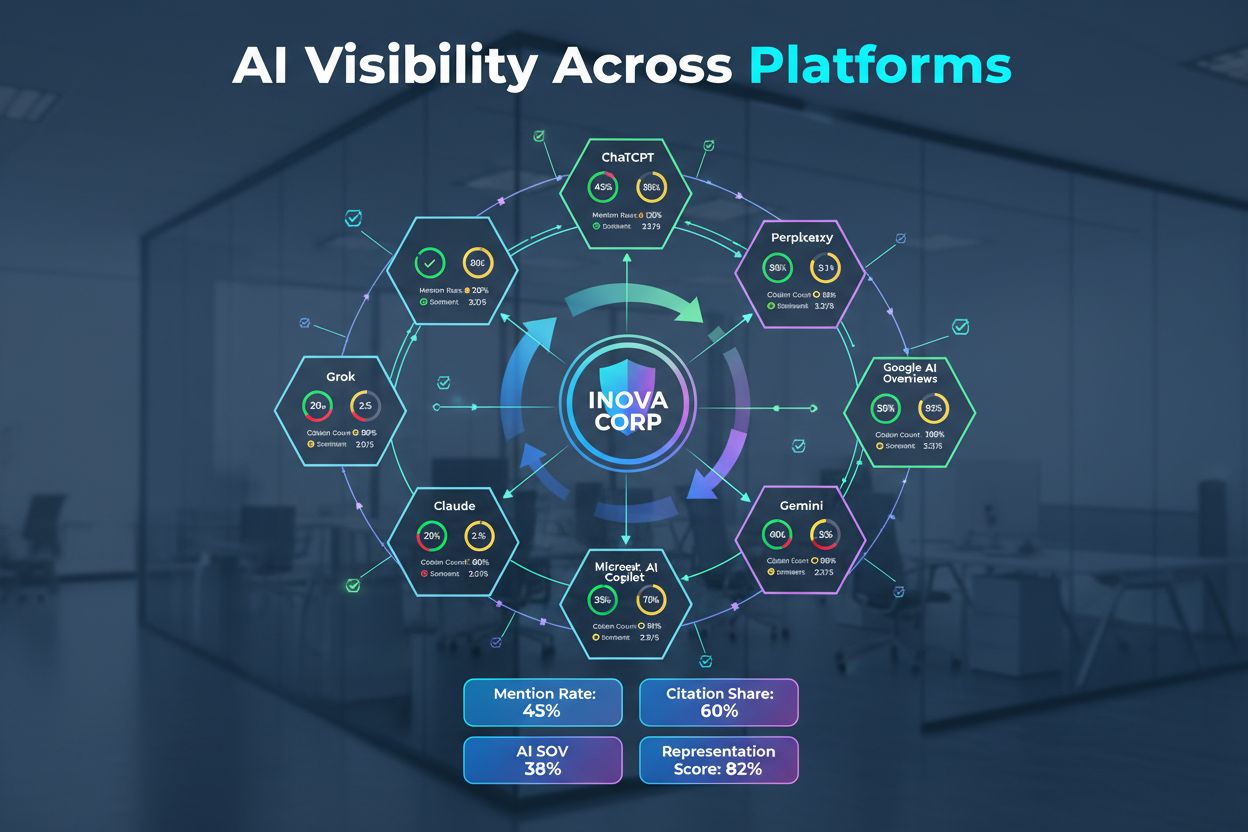
Discover the essential AI visibility metrics and KPIs to monitor your brand's presence across ChatGPT, Perplexity, Google AI Overviews, and other AI platforms. ...