
Agentic Commerce
Learn how agentic commerce uses AI agents to autonomously complete purchases. Explore how intelligent systems are revolutionizing e-commerce and consumer shoppi...
10 min read

Discover agentic commerce: how autonomous AI agents are revolutionizing online shopping with 30% higher conversion rates, personalized experiences, and seamless autonomous transactions.
Agentic commerce represents a fundamental shift in how consumers shop online. Rather than browsing, comparing, and purchasing products themselves, autonomous AI agents act on behalf of consumers to discover products, compare options, and complete purchases with minimal human intervention. Unlike traditional e-commerce platforms where customers drive every decision, agentic commerce empowers independent AI decision-making within parameters set by the user. A prime example is Amazon’s “Buy for Me” feature, launched in April 2025, which allows AI to autonomously purchase items from third-party websites directly within the Amazon app based on user preferences and spending limits. These personal shoppers powered by AI can understand complex requests, negotiate details, and carry out multi-step transactions that would typically require hours of human effort. The key differentiator is that agents don’t just present options—they actively make purchasing decisions, learn from outcomes, and continuously improve their recommendations. This represents the evolution from passive product discovery tools to truly autonomous shopping agents that operate 24/7 on behalf of their users.
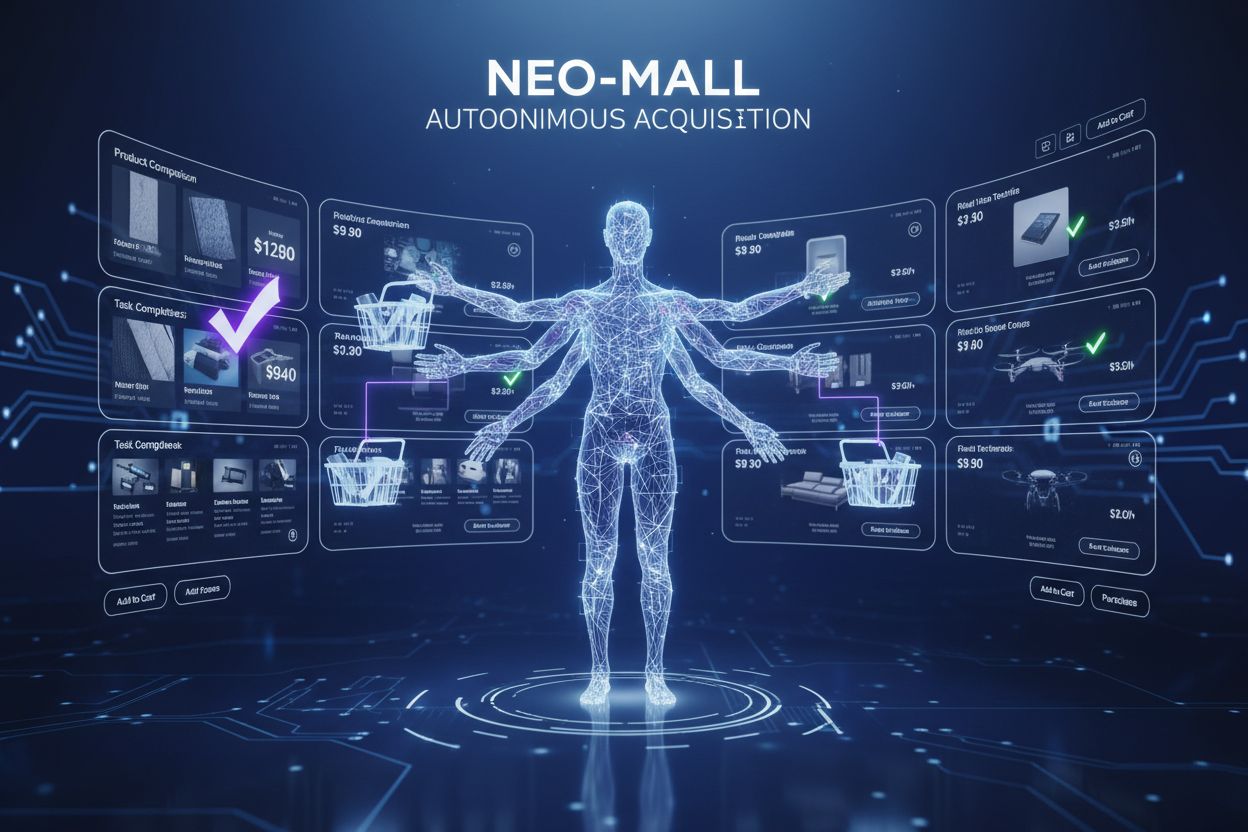
The infrastructure powering agentic commerce rests on three foundational pillars that work in concert to deliver seamless autonomous shopping experiences:
| Pillar Name | What It Does | Why It Matters |
|---|---|---|
| Product Discovery & Comparison | AI agents autonomously search across catalogs, compare specifications, prices, and reviews to identify products matching user goals | Eliminates decision fatigue and ensures agents surface the best options without human intervention |
| Goal-Driven Transactions | Agents understand user objectives (find lowest price, highest quality, fastest delivery) and execute purchases aligned with those specific goals | Transforms shopping from reactive browsing to proactive goal achievement, with agents negotiating terms and completing multi-step purchases |
| End-to-End Purchasing | Seamless integration from product selection through payment, order confirmation, and fulfillment tracking | Ensures agents can operate independently across the entire customer journey without requiring human handoff points |
These three pillars create an ecosystem where autonomous product discovery feeds into goal-oriented purchasing logic, ultimately enabling seamless transactions that feel effortless to consumers while maintaining complete transparency and control.
AI agents achieve their personalization magic through sophisticated machine learning and large language model capabilities that continuously evolve with each interaction. These systems analyze purchase history, browsing patterns, stated preferences, and even contextual factors like seasonality and budget constraints to build what researchers call consumer digital twins—detailed behavioral profiles that anticipate needs before users articulate them. The learning mechanism operates on multiple levels: agents understand explicit preferences (price range, brand loyalty, product categories), implicit signals (time spent comparing products, items added to wishlists), and contextual understanding (weather patterns affecting clothing purchases, upcoming holidays influencing gift buying). What distinguishes advanced agentic systems is their ability to improve continuously—each transaction teaches the agent something new about user preferences, allowing subsequent recommendations to become increasingly accurate and aligned with individual values. This personalization extends beyond product selection to negotiation strategies, preferred payment methods, and even optimal timing for purchases based on historical patterns of when users typically buy specific categories.
The market opportunity for agentic commerce is staggering and accelerating rapidly. As of Q1 2025, 65% of organizations were actively piloting AI agents—a dramatic jump from just 37% in the previous quarter, signaling explosive enterprise adoption. PayPal projects that 20-30% of customers will shop through AI agents within just five years, while 99% of executives surveyed indicate they plan to deploy AI agents in their operations. The market size reflects this momentum: agentic commerce is projected to reach $136 billion by 2025 and explode to $1.7 trillion by 2030, representing a staggering 67% compound annual growth rate. This isn’t speculative—Stripe alone processed $1.4 trillion in payment volume in 2024 and saw 700+ agent startups launch on its platform, demonstrating that builders are already betting heavily on this future. Consumer interest validates the opportunity: 65% of shoppers express interest in using AI to purchase items at target prices, and 26% of US adults already used AI for product discovery in 2025. These numbers reveal a market in inflection point, where early movers gain significant competitive advantages before agentic commerce becomes the default shopping method.
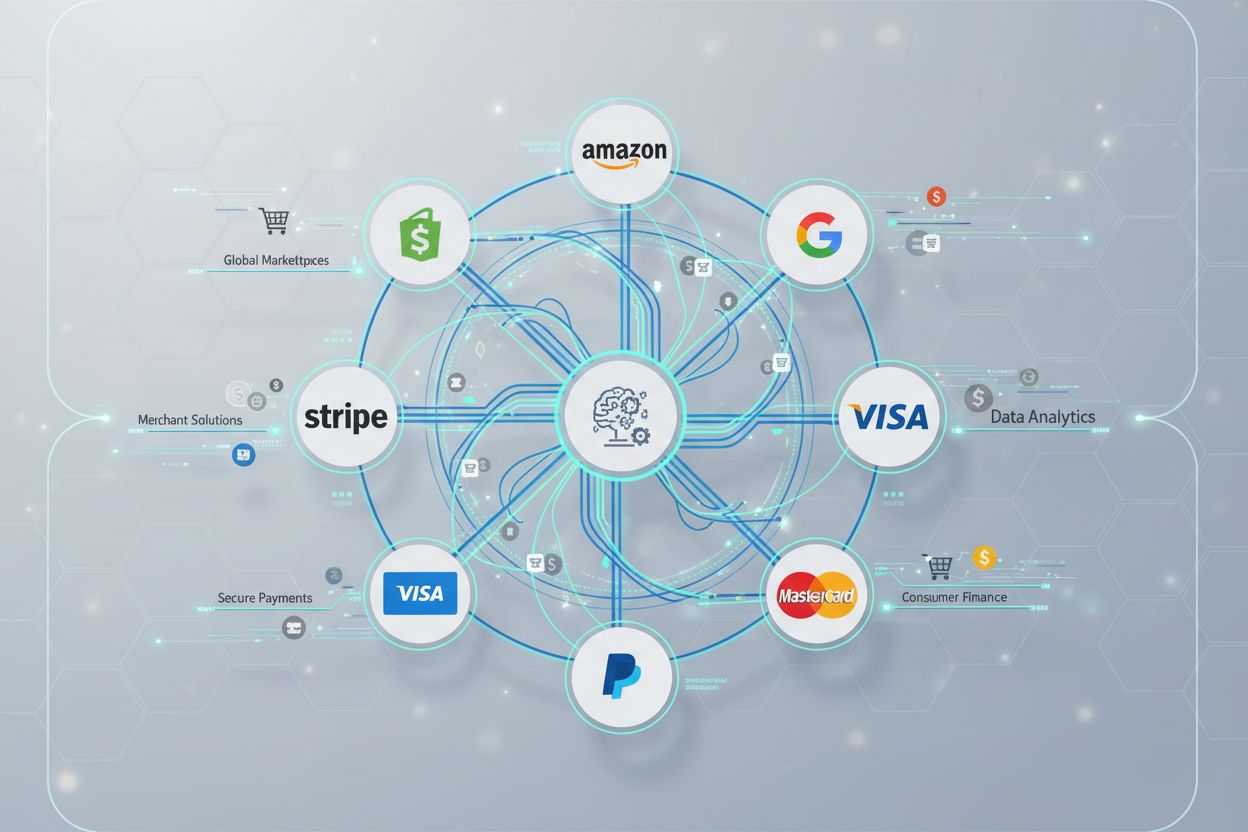
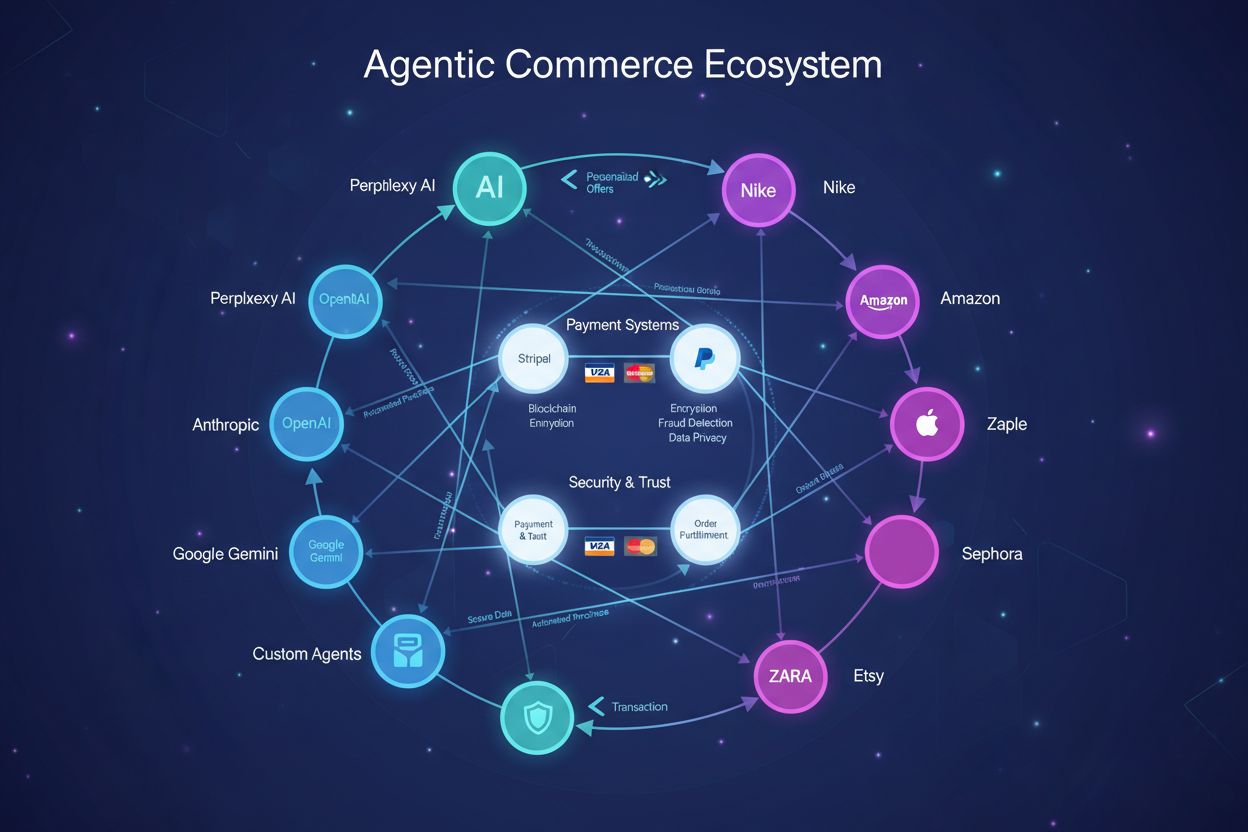
The competitive landscape for agentic commerce is crowded with both established giants and specialized infrastructure providers racing to capture market share. Amazon made a bold statement with its “Buy for Me” feature in April 2025, integrating autonomous purchasing directly into its ecosystem and signaling that the retail behemoth sees agents as central to its future. Shopify has built agent-friendly infrastructure including Model Context Protocol (MCP) servers that enable third-party developers to create shopping agents on its platform, positioning itself as the operating system for agentic commerce. Stripe launched its Agent Toolkit, providing developers with payment processing capabilities specifically designed for autonomous transactions, while also supporting the 700+ agent startups building on its platform. Google is establishing technical standards through its Agent2Agent (A2A) protocol, creating interoperability frameworks that allow agents from different providers to communicate and transact seamlessly. Payment networks are equally invested: Visa launched its Intelligent Commerce program, Mastercard introduced Agent Pay for autonomous transactions, and PayPal developed its own Agent Toolkit while partnering with AI companies like Perplexity to integrate shopping capabilities. This convergence of retail platforms, payment processors, and infrastructure providers indicates that agentic commerce has moved from experimental concept to mainstream infrastructure investment.
Consumer behavior is shifting dramatically as shoppers recognize the tangible benefits of delegating purchasing decisions to AI agents. The most obvious advantage is time savings—instead of spending hours researching products, comparing prices across multiple sites, and navigating checkout processes, consumers can articulate their needs and let agents handle the execution. 24/7 availability means agents work while users sleep, shop during commutes, or focus on other priorities, completing purchases at optimal times without human oversight. Agents eliminate decision fatigue by handling the cognitive burden of comparing dozens of options, reading reviews, and weighing trade-offs—particularly valuable for complex purchases like electronics or appliances where information overload paralyzes traditional shoppers. The multi-platform shopping capability allows agents to search across retailers simultaneously, ensuring users get the best deal regardless of where products are sold, rather than being confined to a single platform’s inventory. Consumer interest validates these benefits: 65% of shoppers express interest in AI-driven purchases at target prices, and 47% are comfortable with AI agents making purchasing recommendations. As agents prove their value through successful transactions and better deals than humans typically find, this comfort level will expand, fundamentally reshaping how people approach shopping.
Building agentic commerce at scale requires robust technical infrastructure that most traditional e-commerce platforms lack. The critical infrastructure requirements include:
Organizations that invest in this infrastructure now will operate at significant advantage as agentic commerce becomes mainstream, while those relying on legacy systems will struggle to compete.
One of the most underestimated challenges in agentic commerce is the product data problem. AI agents require structured, real-time access to product information, but most retailers’ product data lives in fragmented silos with inconsistent formats, incomplete specifications, and outdated information. When an agent encounters a product with missing dimensions, unclear material composition, or conflicting pricing across channels, it cannot make confident purchasing decisions on behalf of consumers. Real-time inventory accuracy is equally critical—agents won’t surface products that are actually out of stock, so inventory systems must update instantly across all channels. The challenge multiplies in global commerce where the same product might have different names, specifications, and availability across regions, requiring multilingual variations and localized data. Solutions are emerging through Product Information Management (PIM) systems that centralize product data, structured data standards that ensure consistency, and quality monitoring processes that catch and correct errors before agents encounter them. Forward-thinking retailers are investing heavily in data infrastructure now, recognizing that product data quality will become a competitive moat—companies with clean, comprehensive, real-time product information will enable agents to make better purchasing decisions, driving higher conversion rates and customer satisfaction.
Payment security in agentic commerce hinges on a sophisticated mechanism called tokenization, which allows agents to make purchases without ever accessing actual payment credentials. Rather than storing credit card numbers or bank account details, tokenization creates limited-use payment credentials that agents can deploy for specific transactions while the underlying payment information remains secure and inaccessible. This approach gives consumers unprecedented user control—they can set spending limits on agent-initiated purchases, restrict agents to specific merchants or product categories, and revoke agent access instantly if needed. The security benefits are substantial: even if an agent is compromised or behaves unexpectedly, attackers cannot access the underlying payment credentials or conduct unauthorized transactions beyond the agent’s defined limits. Fraud prevention becomes more sophisticated because payment networks can monitor agent behavior patterns, flag unusual activity, and require additional verification for suspicious transactions. Industry leaders are implementing these protections: Visa’s Intelligent Commerce program, Mastercard’s Agent Pay, and PayPal’s Agent Toolkit all incorporate tokenization and spending controls. As consumers become more comfortable with autonomous purchasing, these security mechanisms will prove essential to maintaining trust and preventing the fraud that could undermine the entire agentic commerce ecosystem.
Despite the enthusiasm from executives and early adopters, significant trust barriers remain between consumers and widespread agentic commerce adoption. Only 24% of consumers feel comfortable sharing their shopping data with AI shopping assistants, reflecting deep-seated privacy concerns about how personal information will be used, stored, and potentially sold. While 47% are comfortable with AI agents making purchasing recommendations, this still means more than half of consumers harbor reservations about autonomous purchasing. These trust barriers stem from legitimate concerns: privacy and security risks associated with giving AI systems access to payment credentials and shopping history, regulatory uncertainty about how agentic commerce will be governed, and fundamental questions about whether algorithms can truly represent consumer interests or whether they’ll be optimized for retailer profits instead. Building trust requires radical transparency—companies must clearly explain how agents make decisions, what data they access, how that data is protected, and what safeguards prevent misuse. Early leaders in agentic commerce will be those who prioritize consumer trust through transparent practices, robust security, and genuine alignment with user interests rather than attempting to maximize their own margins at consumer expense.
Businesses preparing for the agentic commerce era must take concrete steps to ensure their operations can support autonomous shopping agents. First, optimize product data by implementing comprehensive Product Information Management systems that ensure all product attributes are complete, accurate, and updated in real-time across all channels. Second, develop an API-first architecture that allows agents to programmatically access inventory, pricing, product information, and order status without requiring human intervention or manual data entry. Third, create agent-specific pricing strategies that account for the fact that agents will instantly compare prices across competitors, potentially requiring dynamic pricing that responds to competitive pressure in real-time. Fourth, establish agent-friendly policies around returns, exchanges, and customer service that agents can understand and execute autonomously, rather than policies written for human interpretation. Fifth, invest in real-time inventory management systems that prevent agents from attempting to purchase out-of-stock items, which damages customer trust and wastes agent processing cycles. Organizations that complete these preparations now will be positioned to capture early adopter advantages as agentic commerce accelerates, while competitors scrambling to implement infrastructure will lose market share to more prepared rivals.
Agentic commerce represents the third wave of digital commerce, following e-commerce and mobile commerce, and it’s arriving faster than most businesses anticipated. Rather than replacing traditional shopping entirely, the future will likely feature a hybrid model where consumers choose between autonomous agents for routine purchases and direct shopping for high-involvement decisions, with agents handling the commodity purchases that consume disproportionate time and mental energy. Early adopter advantages are substantial—companies that master agentic commerce infrastructure, build consumer trust through transparent practices, and optimize their operations for autonomous transactions will capture market share from slower competitors. The timeline for mainstream adoption is accelerating: with 65% of organizations already piloting agents and 99% planning deployment, agentic commerce will likely become the default shopping method for routine purchases within 3-5 years rather than the 10+ year timeline many predicted just months ago. The question for businesses isn’t whether to prepare for agentic commerce, but how quickly they can implement the necessary infrastructure and organizational changes to compete effectively. The future of shopping is autonomous, personalized, and agent-driven—and that future is arriving now.
An autonomous AI agent in agentic commerce is an AI-powered system that can independently perform shopping tasks on behalf of users. These agents possess goal-oriented behavior, decision-making capability, learning ability, and can complete entire shopping workflows without constant human intervention. They differ from simple chatbots or recommendation engines because they can take actions, not just provide suggestions.
AI agents personalize shopping through sophisticated learning and adaptation mechanisms. They analyze past purchases, browsing history, and explicit feedback to understand individual tastes. They also consider contextual factors like season, occasion, and budget, while continuously improving recommendations based on immediate feedback and changing circumstances. This creates detailed consumer profiles that anticipate future needs.
Yes, modern AI agents are increasingly sophisticated at understanding buyer intent. They can interpret both explicit statements like 'I need running shoes for marathon training' and implicit signals from browsing patterns, time of day, or seasonal factors. They also understand emotional intent, comparative intent when users are evaluating options, and long-term intent by tracking evolving needs over time.
Agentic commerce incorporates multiple security layers, with tokenization being the key mechanism. This creates limited-use payment credentials specifically for AI agents, allowing them to make purchases without accessing actual payment information. Users maintain full control through spending limits, merchant restrictions, and the ability to revoke agent access instantly. Payment networks monitor agent behavior patterns to detect and prevent fraud.
As of 2025, 26% of US adults have used AI for product discovery and recommendations. Consumer comfort is growing: 65% of shoppers express interest in using AI to make purchases at target prices, and 47% are comfortable with AI agents making purchasing recommendations on their behalf. These numbers are expected to grow significantly as agents prove their value through successful transactions.
Businesses should take several concrete steps: optimize product data through comprehensive Product Information Management systems, develop an API-first architecture for agent access, create agent-specific pricing strategies that account for instant price comparison, establish agent-friendly policies for returns and service, and invest in real-time inventory management systems. Early preparation provides significant competitive advantages.
Agentic commerce won't replace all traditional shopping. The future will likely feature a hybrid model where consumers choose between autonomous agents for routine purchases and direct shopping for high-involvement decisions. Agents will handle commodity purchases that consume disproportionate time and mental energy, while humans remain engaged in experiential and creative shopping categories like fashion and home décor.
Major challenges include product data quality and standardization across suppliers, real-time inventory accuracy across multiple channels, consumer trust concerns about data privacy and security, regulatory uncertainty about how autonomous purchasing will be governed, and the need for robust infrastructure to support millions of simultaneous agent transactions. Early leaders will be those who address these challenges proactively.
As AI agents become the primary shopping interface, ensure your brand is visible and accurately represented in AI-driven purchasing decisions. AmICited tracks how AI agents and shopping assistants mention your products and brand.
Learn how agentic commerce uses AI agents to autonomously complete purchases. Explore how intelligent systems are revolutionizing e-commerce and consumer shoppi...
Learn how to prepare your brand for agentic commerce. Discover essential steps to make your systems AI agent-ready and stay competitive in the evolving e-commer...

Discover how agentic AI is transforming shopping and what it means for brand visibility. Learn how AI agents make autonomous purchases and how to prepare your b...