
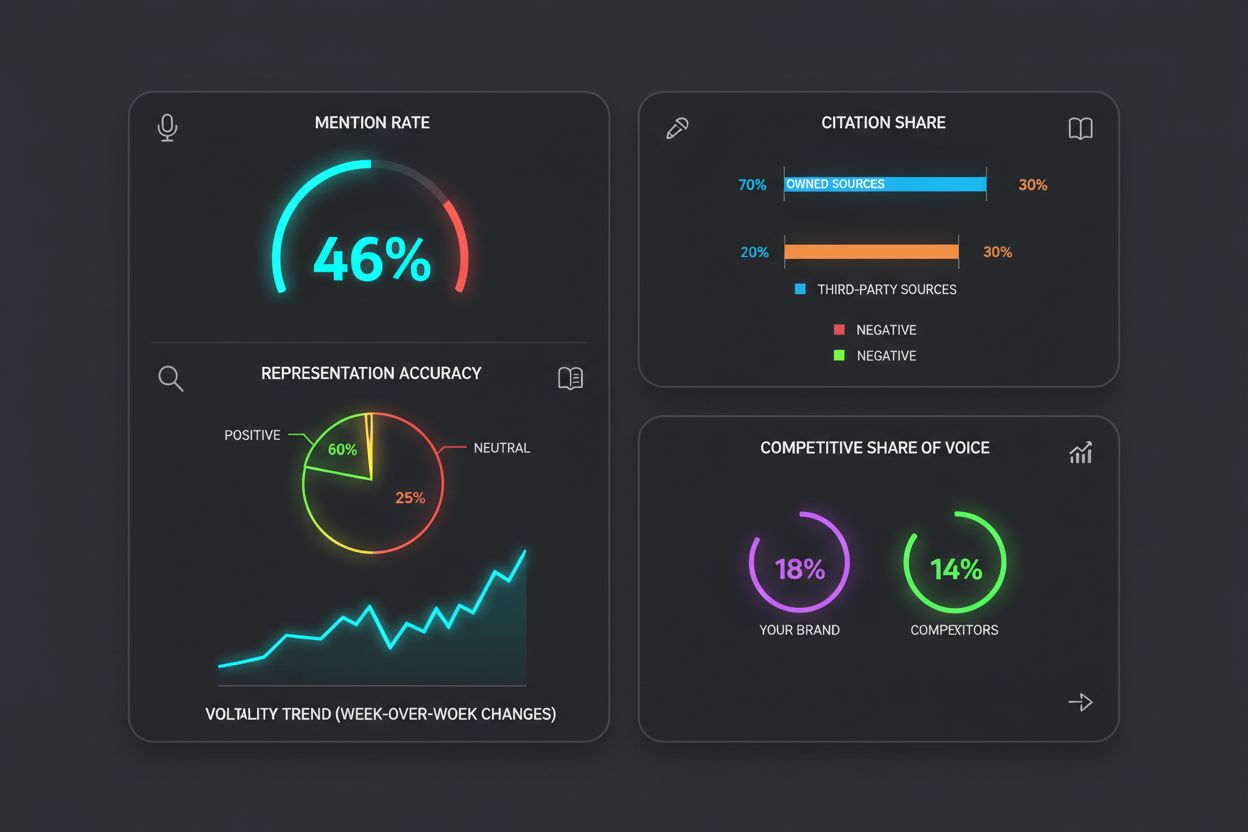
AI Visibility Quick Reference: One-Page Guide
Quick reference guide to AI visibility monitoring. Track mentions, citations, and brand presence across ChatGPT, Google AI Overviews, Perplexity, and Gemini wit...
10 min read
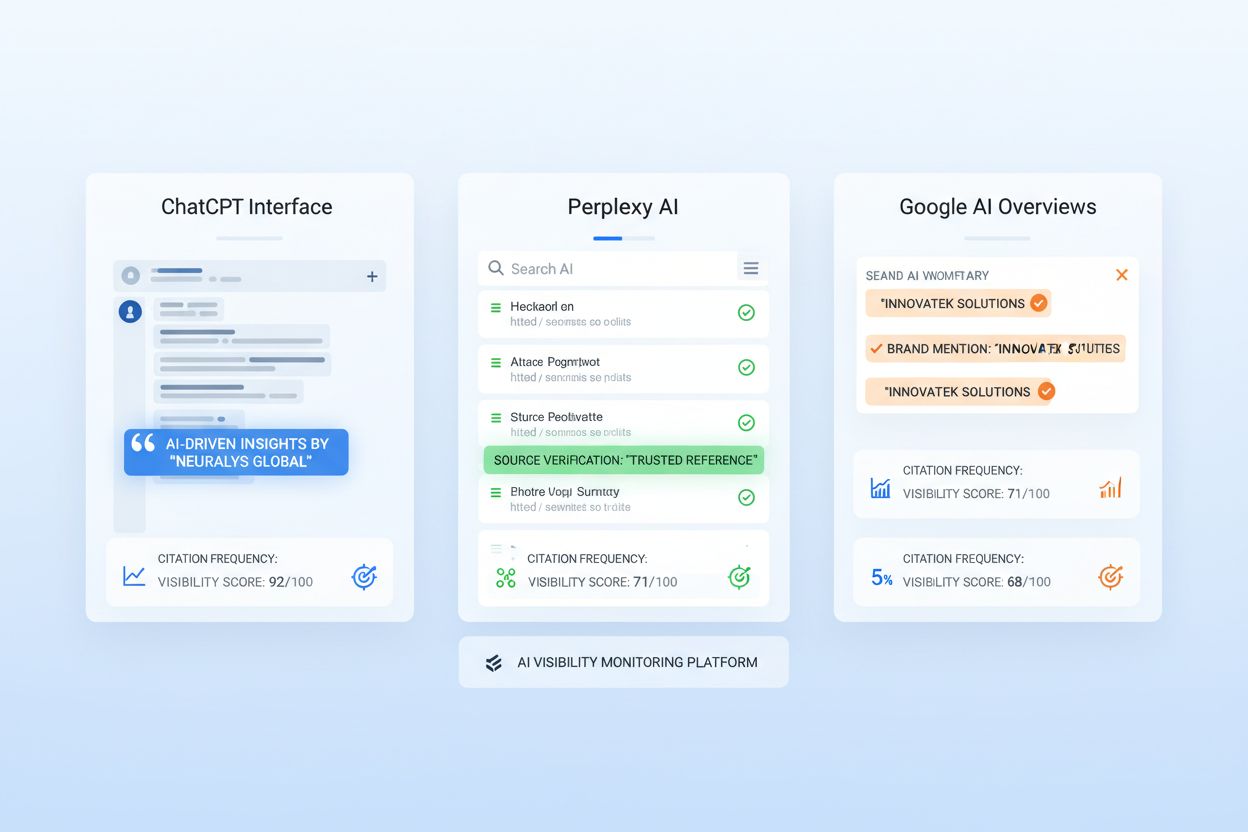
Learn what AI visibility is, why it matters for your brand, and how to measure and optimize your presence in ChatGPT, Perplexity, and Google AI Overviews.
The way customers discover your brand is changing faster than most marketers realize. While you’ve spent years optimizing for Google rankings, a new battleground has emerged—one where your brand’s visibility depends not on clicks, but on citations in AI-generated answers. Today, 37% of product discovery queries start in AI interfaces, and 83% of people prefer AI-powered searches over traditional search engines. With 314 million people using AI daily, the stakes have never been higher.
AI visibility is fundamentally different from traditional search visibility. It’s not about ranking on page one of Google or driving clicks to your website. Instead, it’s about how often and how credibly your brand appears in AI-generated answers across platforms like ChatGPT, Perplexity, Google AI Overviews, and emerging AI search engines. When someone asks an AI system a question about your industry, does your brand get mentioned? If it does, is it presented as a trusted authority or buried among competitors? These questions define your AI visibility.
The distinction between traditional SEO and AI visibility is critical. In traditional search, you compete for rankings—the position your website occupies in search results. In AI search, you compete for mentions—whether and how your brand appears in the AI’s response. A user might never click your website, yet your brand still influences their decision-making. This represents a fundamental shift in how customer discovery works.
Consider the scale of this shift. AI search is projected to surpass traditional search by 2028, meaning the majority of customer journeys will soon begin in AI interfaces rather than Google. The 314 million daily AI users aren’t just asking questions—they’re making purchasing decisions based on AI recommendations. If your brand isn’t visible in those answers, you’re invisible to a rapidly growing segment of your market.
This matters now because the competitive landscape is still forming. Early movers who understand and optimize for AI visibility will establish brand authority in these new systems before the space becomes saturated. The brands that wait will find themselves competing in an increasingly crowded field, struggling to gain visibility in AI systems that have already learned to favor established players. The time to act is now, before AI visibility becomes as competitive as traditional SEO.
For decades, marketers have measured success through clicks. How many people clicked your search result? How much traffic did your website receive? These metrics made sense in a world where search results were lists of links. But AI search fundamentally breaks this model.
Zero-click searches already account for 58% of all Google searches—meaning more than half of search queries never result in a click to any website. AI search accelerates this trend dramatically. When an AI system answers a user’s question directly, providing comprehensive information without requiring them to visit a website, the user has no reason to click. Yet your brand can still be mentioned, still influence the decision, and still provide value to the customer.
This creates a critical gap in traditional marketing metrics. A brand mentioned in an AI response might be generating significant influence over customer decisions, yet appear completely invisible in your website analytics. Your referral traffic metrics show nothing. Your click-through rates remain unchanged. But the customer’s perception of your brand has shifted based on how the AI presented you.
Here’s a concrete example: A potential customer asks ChatGPT, “What’s the best project management software for remote teams?” The AI mentions your product as “a solid mid-market option with strong collaboration features.” The user reads this, forms a positive impression, and later searches for your product directly—but the AI citation never appears in your analytics. You see the direct search traffic, but you miss the AI citation that triggered the entire journey.
This shift has profound implications for how marketers should think about visibility. Citation-based visibility measures influence earlier in the customer journey, before clicks happen. It captures brand perception shaping that traditional metrics completely miss. A brand that appears frequently and credibly in AI answers builds authority and trust that eventually converts to clicks, but those early citations are invisible to traditional analytics. Understanding and measuring AI visibility requires new frameworks, new tools, and new thinking about what “visibility” actually means in a world where answers come before clicks.
To manage AI visibility effectively, you need to measure it. But what exactly should you measure? Six core metrics define your brand’s AI visibility and provide actionable insights for optimization.
Citation Frequency measures how often your brand appears in AI-generated answers across platforms and queries. This is your baseline metric—the raw count of mentions. Why it matters: Higher citation frequency increases brand awareness and establishes your company as a recognized player in your industry. If competitors are mentioned 10 times more often than you, you have a visibility problem that needs addressing.
Citation Share shows what percentage of relevant AI answers mention your brand compared to competitors. If 100 AI responses about your industry mention 15 different brands, and your brand appears in 8 of them, your citation share is 8%. Why it matters: This metric reveals your competitive position. A 5% citation share in a market where the leader has 25% shows you’re underperforming and identifies a clear opportunity gap.
Authority Weight measures how credibly the AI presents your brand. Is your company mentioned as a leader, a solid option, or a lesser alternative? Some AI systems weight citations differently based on source authority. Why it matters: Being mentioned 100 times as “a budget option” is less valuable than being mentioned 20 times as “the industry leader.” Authority weight captures the quality of your visibility, not just quantity.
Sentiment tracks whether your brand appears in positive, neutral, or negative contexts within AI responses. An AI might mention your brand while discussing limitations or criticisms. Why it matters: Negative or neutral mentions can damage brand perception. Monitoring sentiment helps you identify when AI systems are presenting your brand in unfavorable contexts, allowing you to address underlying issues.
Position Prominence measures where your brand appears in the AI’s response. Being mentioned first carries more weight than being mentioned last. Some AI systems structure answers with top recommendations first, making early mentions significantly more valuable. Why it matters: Two brands with equal citation frequency can have vastly different impact if one consistently appears first. This metric helps you understand whether you’re a primary recommendation or an afterthought.
Platform Variance tracks how your visibility differs across ChatGPT, Perplexity, Google AI Overviews, and other platforms. Your brand might be highly visible on one platform while nearly invisible on another. Why it matters: Different platforms have different user bases, different ranking logic, and different optimization requirements. Understanding platform-specific performance helps you allocate optimization efforts strategically and identify which platforms matter most for your business.
Together, these six metrics provide a comprehensive picture of your AI visibility. They move beyond simple “are we mentioned?” questions to deeper strategic insights about competitive position, credibility, and platform-specific performance.
The business case for AI visibility is compelling and urgent. 314 million people use AI daily, and this number is growing rapidly. These aren’t casual users—they’re making real decisions about products and services based on AI recommendations. Your brand’s visibility in those recommendations directly impacts your business.
Consider the scale of influence. When someone asks ChatGPT for product recommendations in your category, the AI’s response shapes their consideration set. If your brand isn’t mentioned, you’re not in the conversation. If you are mentioned, you’ve gained a powerful endorsement from a system the user trusts. This influence happens before any click, before any website visit, before traditional marketing metrics even register the interaction.
The value of this influence is quantifiable. AI-driven traffic is 4.4x more valuable than organic search traffic, meaning customers who discover you through AI citations convert at significantly higher rates. This makes sense: an AI recommendation carries implicit credibility. The user has already been convinced by an authoritative source before arriving at your website. They’re further along in the decision journey and more likely to convert.
The competitive pressure is intensifying. AI search is projected to surpass traditional search by 2028, meaning the majority of customer discovery will soon happen in AI interfaces. Brands that establish strong AI visibility now will benefit from years of accumulated authority and citations. Brands that wait will face an increasingly crowded field where established players have already captured mindshare. The gap between early movers and late movers will only widen.
Consider what’s at stake: If your competitors are visible in AI answers and you’re not, they’re capturing customer attention and shaping preferences before your brand even enters the conversation. They’re building authority in systems that will soon drive the majority of customer discovery. They’re establishing themselves as category leaders in the minds of millions of daily AI users. Meanwhile, your traditional SEO efforts continue, but they’re increasingly addressing a shrinking portion of the market. The brands that thrive in the next five years won’t be those with the best traditional SEO—they’ll be those with the strongest AI visibility.
Most brands have AI visibility gaps—areas where they’re underperforming relative to competitors or their own potential. Understanding the three types of gaps helps you identify and address them strategically.
The Visibility Gap is the simplest to understand: your brand is mentioned less frequently than competitors in AI-generated answers. You might be mentioned in 5% of relevant AI responses while your top competitor appears in 25%. This gap indicates that AI systems aren’t recognizing your brand as a primary player in your category. The cause is usually insufficient content presence, weak entity recognition, or limited source authority. To close this gap, you need to increase your brand’s presence in sources that AI systems draw from and improve how clearly you’re identified as a company in your industry.
The Attribution Gap occurs when your brand is mentioned in AI answers, but users can’t easily find you or attribute the mention to your company. Imagine an AI response that says “Company X offers excellent project management tools” but doesn’t include a link, doesn’t mention your website, and doesn’t make it obvious how to find you. The user sees the mention but struggles to take action. This gap is particularly common for smaller brands or companies with weak online presence. Closing it requires improving your web presence, ensuring your brand is easily discoverable, and making it simple for users to find you after seeing an AI mention.
The Authority Gap is the most insidious because it’s invisible in raw citation counts. Your brand might be mentioned as often as competitors, but in less authoritative contexts. An AI might mention you as “a budget option” while mentioning competitors as “industry leaders.” You have visibility, but not credibility. This gap reflects how AI systems weight different sources and evaluate brand authority. Closing it requires building genuine authority signals: high-quality content, industry recognition, customer testimonials, and clear expertise demonstration.
Here’s a real example that illustrates all three gaps: A mid-market software company discovered they were mentioned in only 8% of relevant AI responses (Visibility Gap), and when mentioned, users had difficulty finding their website because the company name was ambiguous (Attribution Gap). Even worse, when they were mentioned, the AI often positioned them as a “newer entrant” rather than an established player (Authority Gap). Addressing all three gaps required different strategies: creating more authoritative content to improve visibility, optimizing their web presence and brand clarity to close the attribution gap, and building industry authority through partnerships and thought leadership to close the authority gap.
Most brands have at least one of these gaps. Many have all three. The key is identifying which gaps are most critical for your business and addressing them systematically.
Understanding how AI systems decide which brands to mention is crucial for optimizing your visibility. The process is fundamentally different from traditional search ranking, and it requires different optimization approaches.
AI systems use a technique called Retrieval-Augmented Generation (RAG) to generate answers. In simple terms, RAG works like this: when a user asks a question, the AI system retrieves relevant documents from its training data and sources, then generates an answer based on that retrieved information. The brands mentioned in the answer are determined by which sources the AI retrieves and how it weighs them.
This is where things get interesting. AI systems don’t weight sources the same way traditional search engines do. Google prioritizes backlinks, domain authority, and keyword optimization. AI systems weight sources differently, and the weighting varies by platform.
Research reveals striking differences in what matters for each platform:
ChatGPT heavily favors domain rating (0.161 correlation) and Flesch readability score (0.115 correlation). This means ChatGPT is more likely to cite brands from authoritative domains that write in clear, accessible language. Backlinks, surprisingly, show a negative correlation (-0.030) with ChatGPT citations—suggesting that traditional SEO authority signals actually work against you in ChatGPT.
Perplexity prioritizes word count (0.191 correlation) and sentence count (0.155 correlation). Perplexity’s algorithm appears to favor comprehensive, detailed content. Longer articles with more sentences are more likely to be cited. This suggests Perplexity values depth and thoroughness over brevity.
Google AI Overviews emphasize word count (0.153 correlation) but also show strong preference for structured data and entity clarity. Google’s AI system, unsurprisingly, favors content that’s well-structured and clearly identifies entities (companies, products, people).
Across all platforms, backlinks show weak or negative correlation with AI citations. This is a critical insight: the traditional SEO metric that dominates marketing strategy has minimal impact on AI visibility. You can’t buy your way into AI citations through link-building campaigns.
What actually matters is entity clarity and source quality. AI systems need to clearly understand who you are, what you do, and why you’re authoritative. This requires:
The implication is profound: classic SEO optimization won’t automatically improve your AI visibility. You need a different approach focused on entity clarity, content comprehensiveness, and source quality rather than link-building and keyword density.
Your brand’s AI visibility isn’t uniform across platforms. ChatGPT, Perplexity, and Google AI Overviews have different data sources, different ranking logic, and different user bases. A one-size-fits-all optimization approach will fail.
ChatGPT draws primarily from its training data (with a knowledge cutoff) and doesn’t continuously crawl the web like Google. This means ChatGPT’s citations reflect what was prominent during training. ChatGPT favors established, authoritative sources and readable content. It’s less likely to cite new content or emerging brands. If you’re trying to build visibility in ChatGPT, you need to focus on being mentioned in authoritative sources that were prominent during its training period.
Perplexity takes a different approach, continuously crawling the web and prioritizing fresh, comprehensive content. Perplexity is more likely to cite recent articles and longer-form content. It shows stronger preference for detailed explanations and multiple perspectives. If you want visibility in Perplexity, creating comprehensive, well-researched content is more effective than relying on domain authority alone.
Google AI Overviews integrates AI answers directly into Google Search, drawing from Google’s index. It shows unique citation patterns compared to ChatGPT and Perplexity. Notably, YouTube content receives 25% citation rate in Google AI Overviews but less than 1% in ChatGPT. This dramatic difference reflects Google’s preference for its own properties and video content’s effectiveness in Google’s system.
Here’s what this means practically: A brand might be highly visible in Perplexity (through comprehensive blog content) while nearly invisible in ChatGPT (due to limited domain authority). The same brand might see strong visibility in Google AI Overviews if they have video content, but that video content won’t help in ChatGPT at all.
The strategic implication is clear: you need platform-specific optimization strategies. Identify which platforms matter most for your business and your customers. If your audience uses Perplexity heavily, invest in comprehensive content. If ChatGPT is critical, focus on building domain authority and publishing in authoritative sources. If Google AI Overviews matter, develop video content and optimize for Google’s index. Treating all platforms identically will leave visibility on the table.
Not all content formats are equally visible in AI search. The format you choose dramatically impacts your citation rates, and the data is clear about which formats win.
Listicles dominate with a 25% citation rate—meaning AI systems mention brands in listicles far more frequently than other formats. Why? Listicles are structured, scannable, and explicitly compare options. When an AI system needs to generate a list of recommendations, listicles provide ready-made comparisons. “Top 10 Project Management Tools” articles are goldmines for AI citations because they’re already formatted as recommendations.
Blog posts and opinion pieces achieve a 12% citation rate—respectable but significantly lower than listicles. General blog content is cited less frequently because it’s less structured and requires more interpretation by the AI system.
Video content shows surprisingly low citation rates at just 1.74%, despite video’s popularity in traditional search. This reflects a fundamental difference in how AI systems process information. Most AI systems work with text, not video. Even when video transcripts are available, they’re less likely to be cited than written content. The exception is Google AI Overviews, which shows 25% citation rate for YouTube content—reflecting Google’s preference for its own properties.
Semantic URLs (URLs that clearly describe content) show 11.4% more citations than non-semantic URLs. A URL like /best-project-management-tools-2024/ gets cited more frequently than /blog/post-12345/. This suggests AI systems use URL structure as a signal of content quality and relevance.
Structured data and schema markup significantly improve citation likelihood. When you use schema markup to clearly identify your company, products, and expertise, AI systems can more easily understand and cite you. This is particularly important for Google AI Overviews, which relies heavily on structured data.
The actionable strategy is clear: prioritize listicles and comparison content if you want maximum AI visibility. Structure your content to be easily scannable and explicitly comparative. Use semantic URLs that clearly describe your content. Implement schema markup to help AI systems understand your business. While video content has limited direct AI citation value, it still matters for traditional search and user engagement—just don’t expect it to drive AI visibility.
For content teams, this means shifting resource allocation. If you’ve been investing heavily in long-form blog posts and video, consider rebalancing toward listicles and comparison content. If you’re creating listicles, ensure they’re comprehensive and well-structured—AI systems will cite them frequently, so quality matters.
You can’t improve what you don’t measure. Fortunately, measuring AI visibility is increasingly accessible, though it requires different tools and approaches than traditional SEO measurement.
AI Visibility Monitoring Tools are emerging as the primary measurement method. Platforms like Semrush, Profound, and Wellows now offer AI visibility tracking features. These tools monitor how often your brand appears in AI-generated answers across platforms, track citation frequency and sentiment, and compare your visibility to competitors. If you have budget for tools, these platforms provide the most comprehensive and automated measurement.
Manual Snapshot Tracking is a low-cost alternative. Create a list of 20-30 queries relevant to your business. Manually search each query in ChatGPT, Perplexity, and Google AI Overviews. Document whether your brand is mentioned, in what context, and in what position. Repeat this process monthly to track trends. While labor-intensive, this approach gives you direct insight into your actual visibility and requires no tool investment.
Custom AI SERP Crawls involve using AI APIs to systematically query AI systems and analyze responses. If you have technical resources, you can build custom crawls that monitor specific queries and track citation patterns over time. This approach is more sophisticated but provides highly customized data.
Key Metrics to Track include:
Implementation Steps:
Start simple. Even manual monthly tracking provides valuable insights. As you understand your AI visibility better, you can invest in more sophisticated tools and approaches. The key is starting now—waiting for perfect measurement tools means missing months of optimization opportunity.
Improving AI visibility requires a strategic approach. Random optimization efforts won’t work. You need a systematic process that identifies gaps, prioritizes opportunities, and measures progress.
Step 1: Define Your Competitive Set
Start by identifying which brands compete with you in AI-generated answers. Search 20-30 relevant queries and document which brands appear most frequently. These are your direct competitors for AI visibility. You might discover that your traditional competitors aren’t your AI visibility competitors—different brands might dominate in AI search.
Step 2: Identify Gaps and Opportunities
Compare your citation frequency to competitors. Where are you underperforming? Which queries should you be visible in but aren’t? Which platforms show the biggest gaps? This analysis reveals your highest-impact opportunities. Focus on queries where you’re close to competitors but not quite visible—these are easier wins than trying to displace established leaders.
Step 3: Audit Your Entity Clarity
AI systems need to clearly understand who you are. Audit your website and content to ensure:
Implement schema markup (Company, Product, LocalBusiness, etc.) to help AI systems understand your business structure.
Step 4: Optimize Content for AI Visibility
Based on platform analysis, create or optimize content for AI citation:
Prioritize listicles and comparison content, which show highest citation rates. Ensure semantic URLs clearly describe content.
Step 5: Build E-E-A-T Signals
AI systems evaluate source credibility through Experience, Expertise, Authoritativeness, and Trustworthiness (E-E-A-T):
These signals influence how credibly AI systems present your brand.
Step 6: Monitor and Iterate
Measure your progress monthly. Track citation frequency, citation share, sentiment, and platform-specific performance. Identify what’s working and double down. Identify what’s not working and adjust. AI visibility optimization is iterative—you’ll learn what works for your specific business and market.
Timeline Expectations:
This isn’t a quick fix. Building AI visibility takes time, but the payoff—being visible to 314 million daily AI users—is worth the investment.
Learning from others’ mistakes accelerates your progress. Here are the most common AI visibility mistakes brands make:
Mistake 1: Ignoring Platform Differences
Treating ChatGPT, Perplexity, and Google AI Overviews as identical is a critical error. Each platform has different ranking logic, different data sources, and different user bases. Optimizing for one platform doesn’t automatically improve visibility on others. Fix: Analyze your visibility on each platform separately and develop platform-specific strategies.
Mistake 2: Focusing Only on Traffic
Brands often ignore AI visibility because it doesn’t immediately show up in website analytics. They see no traffic increase and assume AI citations don’t matter. This misses the influence happening before clicks. Fix: Measure AI visibility directly through citation tracking, not just website traffic.
Mistake 3: Neglecting Entity Clarity
Many brands assume AI systems understand who they are. They don’t. If your company name is ambiguous, if your industry isn’t clear, or if your products aren’t explicitly described, AI systems will struggle to cite you correctly. Fix: Audit and improve entity clarity across your website and content. Implement schema markup.
Mistake 4: Assuming SEO Success Equals AI Visibility
A brand can rank #1 on Google and still be invisible in AI answers. Traditional SEO metrics (backlinks, keywords) have weak correlation with AI citations. Fix: Develop AI-specific optimization strategies focused on entity clarity, content comprehensiveness, and source quality rather than relying on traditional SEO.
Mistake 5: Not Monitoring Sentiment
Being mentioned frequently is only valuable if you’re mentioned positively. A brand mentioned 100 times as “expensive” or “outdated” suffers reputational damage. Fix: Monitor not just citation frequency but also sentiment and context. Address negative patterns in how you’re presented.
Mistake 6: Waiting Too Long to Act
Many brands are still treating AI visibility as a “nice to have” rather than urgent. Meanwhile, competitors are building visibility in systems that will soon drive the majority of customer discovery. Fix: Start measuring and optimizing now. Early movers will establish authority before the space becomes saturated.
Mistake 7: Treating AI Visibility as Separate from SEO
While AI visibility requires different optimization approaches, it’s not completely separate from SEO. Strong content, clear entity identification, and domain authority still matter. Fix: Integrate AI visibility optimization into your overall content and SEO strategy rather than treating it as a separate initiative.
Avoiding these mistakes puts you ahead of most competitors who are still figuring out that AI visibility matters.
The AI visibility landscape is evolving rapidly. Understanding emerging trends helps you build strategies that remain relevant as the space matures.
AI Search Will Become the Primary Discovery Channel
AI search is projected to surpass traditional search by 2028. This isn’t speculation—it’s the trajectory we’re already on. Within five years, the majority of customer discovery will happen in AI interfaces. Brands that build strong AI visibility now will benefit from years of accumulated authority. Brands that wait will struggle to catch up.
New Platforms Will Emerge and Consolidate
ChatGPT, Perplexity, and Google AI Overviews are just the beginning. Emerging platforms like Grok, DeepSeek, and others are entering the market. Some will succeed, others will fail. The space will eventually consolidate around a few dominant platforms, similar to how search consolidated around Google. Your strategy should account for platform diversity now while preparing for consolidation later.
AI Systems Will Become More Sophisticated in Source Evaluation
Current AI systems use relatively simple signals to evaluate source credibility. Future systems will become more sophisticated, potentially incorporating real-time reputation data, user feedback, and more nuanced authority signals. This means E-E-A-T signals will become increasingly important. Brands with genuine expertise and strong reputations will be favored over those trying to game the system.
Consolidation Risk
As AI search consolidates, the risk of visibility concentration increases. If one platform captures 70% of AI search traffic, brands that aren’t visible on that platform face severe disadvantages. This argues for building visibility across multiple platforms now, before consolidation happens.
Continuous Adaptation Required
The AI visibility landscape will continue evolving. New ranking factors will emerge. Platform algorithms will change. User behaviors will shift. Brands that succeed will be those that continuously monitor, measure, and adapt their strategies. This isn’t a one-time optimization project—it’s an ongoing discipline.
The future belongs to brands that understand AI visibility today and build it systematically. The question isn’t whether AI visibility matters—it clearly does. The question is whether you’ll be visible when your customers search.
Ready to understand your AI visibility? Start measuring today. The brands that act now will establish authority in the systems that will soon drive the majority of customer discovery. Don’t wait until AI search dominance is obvious—by then, your competitors will already own the space.
SEO visibility measures rankings and clicks in search results. AI visibility measures how often and how credibly your brand appears in AI-generated answers. AI doesn't show rankings—it decides whether to mention you at all. Traditional SEO metrics like backlinks have weak correlation with AI citations, while factors like content clarity and entity definition matter more.
Start with ChatGPT and Google AI Overviews, as they drive the most user traffic. Perplexity is growing rapidly and worth monitoring. The priority depends on your industry—YouTube citations matter heavily in Google AI Overviews but barely register in ChatGPT. Use tools to track all major platforms, then allocate resources based on where your audience searches.
Like SEO, AI visibility improvements take time. You may see initial changes within 2-4 weeks after content updates, but significant visibility gains typically take 2-3 months. Consistency matters—continuous optimization and monitoring yield better results than one-time efforts. Early movers have an advantage as the space is still relatively new.
Yes. AI systems don't favor brand size by default. Small brands can achieve strong AI visibility if their content is clear, their entities are well-defined, and their information is easier for AI to verify than larger competitors. Niche expertise and specific use cases often outperform generic, broad content from larger brands.
They're connected but not identical. Good SEO foundations (quality content, technical health, authority) support AI visibility, but they're not sufficient alone. AI systems care more about clarity, entity definition, and verifiability than traditional SEO metrics. You need both strategies working together for maximum visibility.
Use AI visibility tools that track citation types, or manually review AI responses to your target queries. Explicit citations say your brand name ('According to Brand X...'). Implicit citations use your content or expertise without naming you. Tools like Semrush, Profound, and Wellows categorize these automatically, making it easy to spot attribution gaps.
Yes. Each platform has different data sources, ranking logic, and citation patterns. ChatGPT favors domain rating and readability. Perplexity rewards higher word counts. Google AI Overviews favor schema and YouTube content. Start with universal best practices (clarity, entities, structured data), then fine-tune for platform-specific preferences based on your monitoring data.
AI-driven traffic is 4.4x more valuable than organic traffic. Brands mentioned in AI answers gain credibility and mindshare before users even visit your site. Strong AI visibility increases discovery, builds trust, and drives higher-quality traffic. The challenge is measuring attribution—use tools that connect AI visibility to website traffic and conversions.
Discover how often your brand appears in AI-generated answers across ChatGPT, Perplexity, and Google AI Overviews. Get actionable insights to improve your AI search presence.
Quick reference guide to AI visibility monitoring. Track mentions, citations, and brand presence across ChatGPT, Google AI Overviews, Perplexity, and Gemini wit...
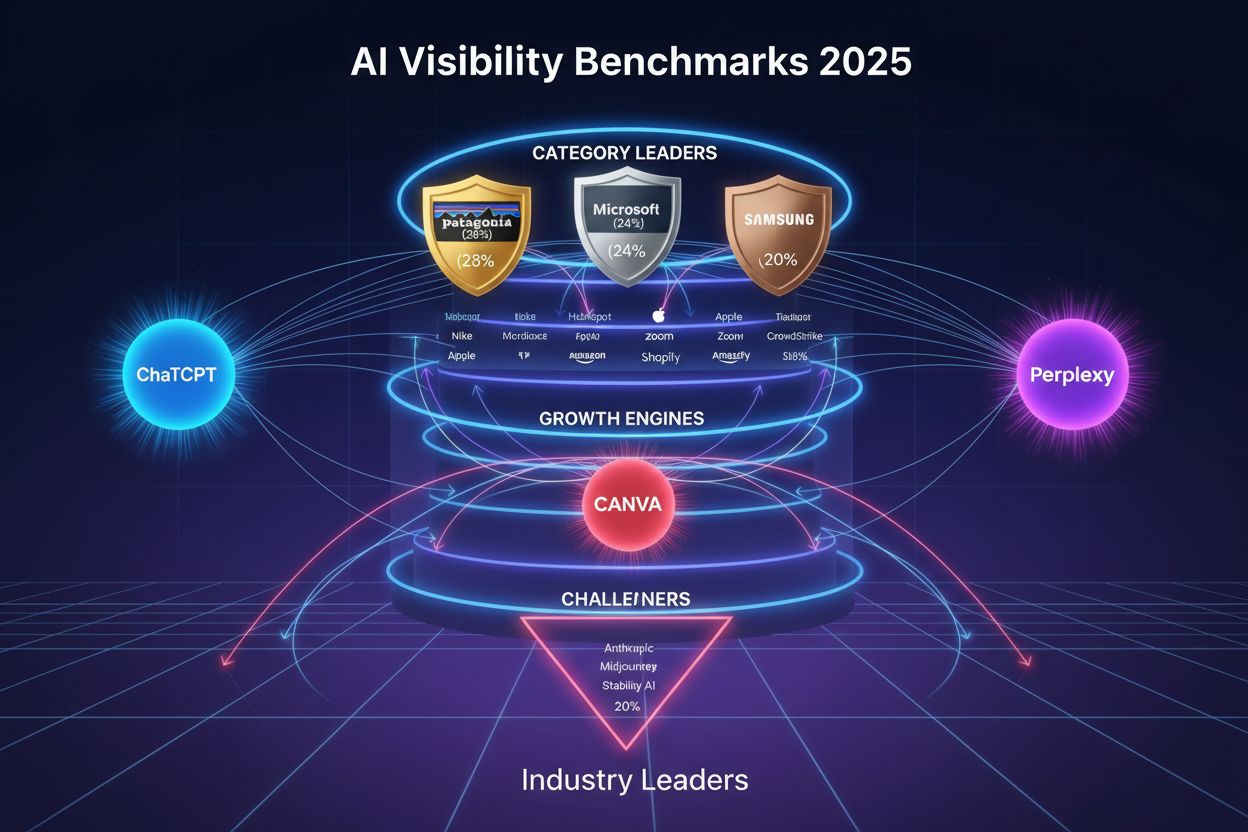
Discover which brands are winning AI visibility benchmarks. Analyze industry leaders across ChatGPT, Perplexity, and Google AI with data-driven insights and com...
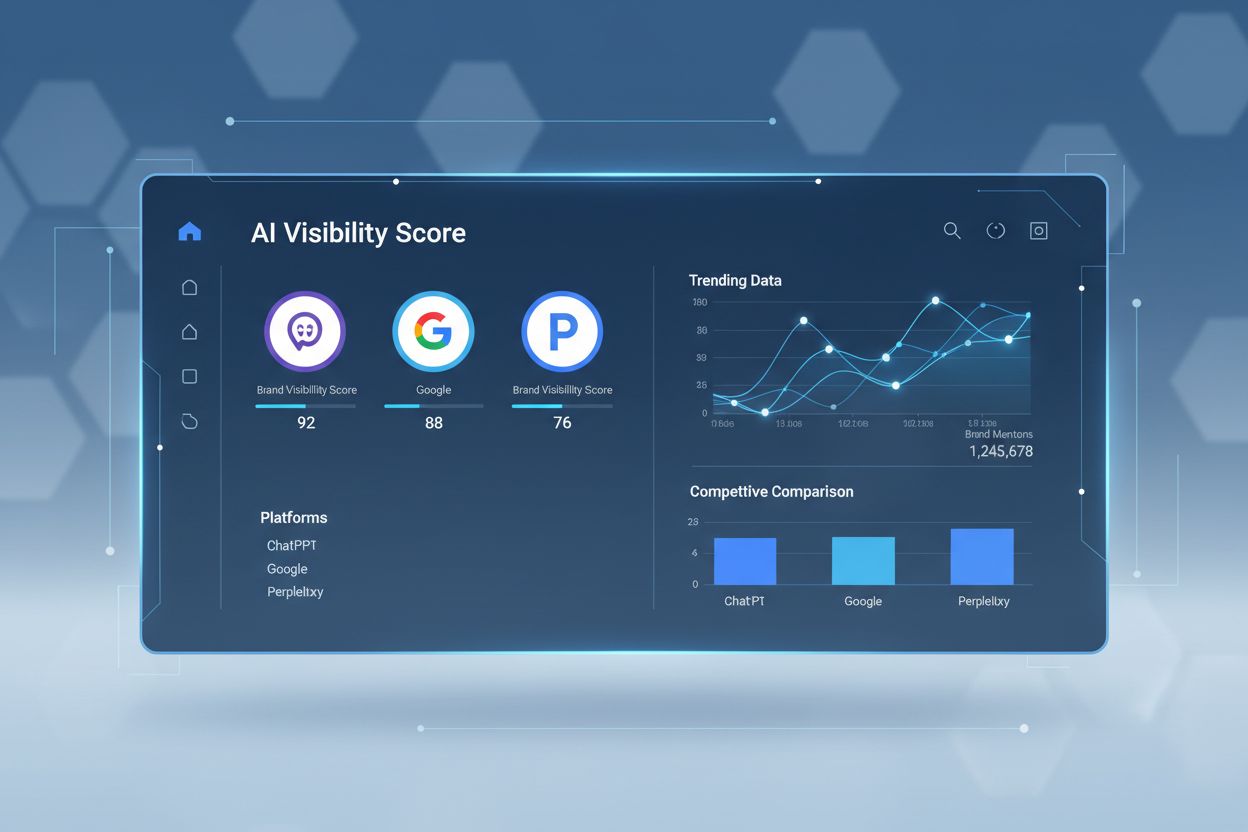
Master the Semrush AI Visibility Toolkit with our comprehensive guide. Learn how to monitor brand visibility in AI search, analyze competitors, and optimize for...