



AI Search Visibility: What It Is and Why It Matters
A concept-first explainer on AI search visibility: what it actually is, how the citation model differs from ranking, and why it's becoming as important as tradi...
12 min read
A hyper-detailed guide to AI search visibility: what citations, mentions and share of voice really mean, why most brands are flying blind, how AI is already driving commerce, what it takes to win, and the one platform that does it all.
Search is being replaced by answers. When someone asks ChatGPT which project-management tool to buy, or asks Google’s AI Overview how to fix a leaking tap, they increasingly get one synthesized response and never see a list of ten blue links. For your brand, that raises a question traditional analytics cannot answer: when the AI writes that answer, does it mention you, cite you, or leave you out entirely?
This is the complete blueprint for winning visibility inside AI answers: what is actually happening, why it already affects revenue, the words you need to know, what it takes to compete, and how to see all of it in one place. Every statistic here is sourced.
This is not a prediction about the future. The behavior change has largely happened. Gartner expects traditional search volume to fall 25% by 2026 as AI assistants absorb queries. Bain found that around 80% of consumers now rely on AI-written results for at least 40% of their searches, and estimates organic web traffic has already dropped 15 to 25%. Roughly 58% of US searches now end without a single click to the open web, according to SparkToro . Meanwhile the assistants themselves have reached staggering scale.
And the trajectory is steep. ChatGPT alone went from 400 million to 900 million weekly users in a single year:
From 400 million to 900 million weekly users in about a year. This is the size of the audience now getting answers instead of links.
Source: OpenAI, via TechCrunch
The point is simple. Ranking first in the blue links no longer guarantees you are the source the AI uses. Visibility inside the answer is now its own contest, with its own scoreboard.

Track how AI chatbots mention your brand across ChatGPT, Perplexity, and other platforms.
Here is the strange part. Almost no one is tracking this. A Page One Power survey of 600 marketers found that only 27% consistently check whether their brand shows up in AI answers. 36% look occasionally, 25% never do, and 12% did not know it was even possible. Yet 90% of the same marketers expect AI search to cut their traditional traffic.
Only about 1 in 4 marketers watch their AI presence consistently, even though 90% of them expect AI search to cut their traditional traffic. That gap is the whole opportunity.
Put plainly, roughly three in four brands are flying blind while nine in ten expect to be hurt. Only 43% are doing anything about it with Generative Engine Optimization, per GoodFirms . That gap, between how much AI answers matter and how few brands measure them, is the entire opportunity.
It is tempting to file AI visibility under brand awareness. The commerce data says otherwise. AI is already a buying channel. An Omnisend survey of 1,224 US shoppers found 59% use generative AI for shopping tasks and 57% use it for product research, the single most common use.
ChatGPT leads by a wide margin. 65% of AI-using shoppers prefer it, and 1 in 4 say its product recommendations beat Google's.
Source: Omnisend and Cint, survey of 1,224 US consumers, July 2025
That demand is already showing up as traffic. Adobe tracked retail traffic from generative AI sources climbing from about 1,100% above its July 2024 baseline in January to 4,700% by July 2025.
Each point is growth versus the July 2024 baseline. It starts from a small base, but the climb through 2025 is relentless.
Source: Adobe Analytics
And this traffic is not just bigger, it is better. During the 2025 holiday season, Adobe found AI referrals converted 31% more than other sources, with revenue per visit up 254%.
Per visit, AI-referred visitors buy more, stay longer and browse deeper than traffic from any other channel, so each extra citation is worth more than an ordinary click.
Source: Adobe Analytics
Read that again. AI-referred visitors do not just arrive in bigger numbers, they buy more and spend more. If the AI recommends a competitor instead of you, you are not losing a ranking, you are losing a high-intent customer at the moment of decision.
Get the latest insights on AI mentions, brand monitoring, and optimization strategies.
To compete in this new contest, you first need to speak its language. Five terms do most of the work, and each one is something you have to be able to see.
A citation is when an AI engine actually pulls from one of your pages to build its answer, usually with a linked URL. You need a running log of every time this happens, with the exact page, the engine, your rank in that answer, and when it occurred.
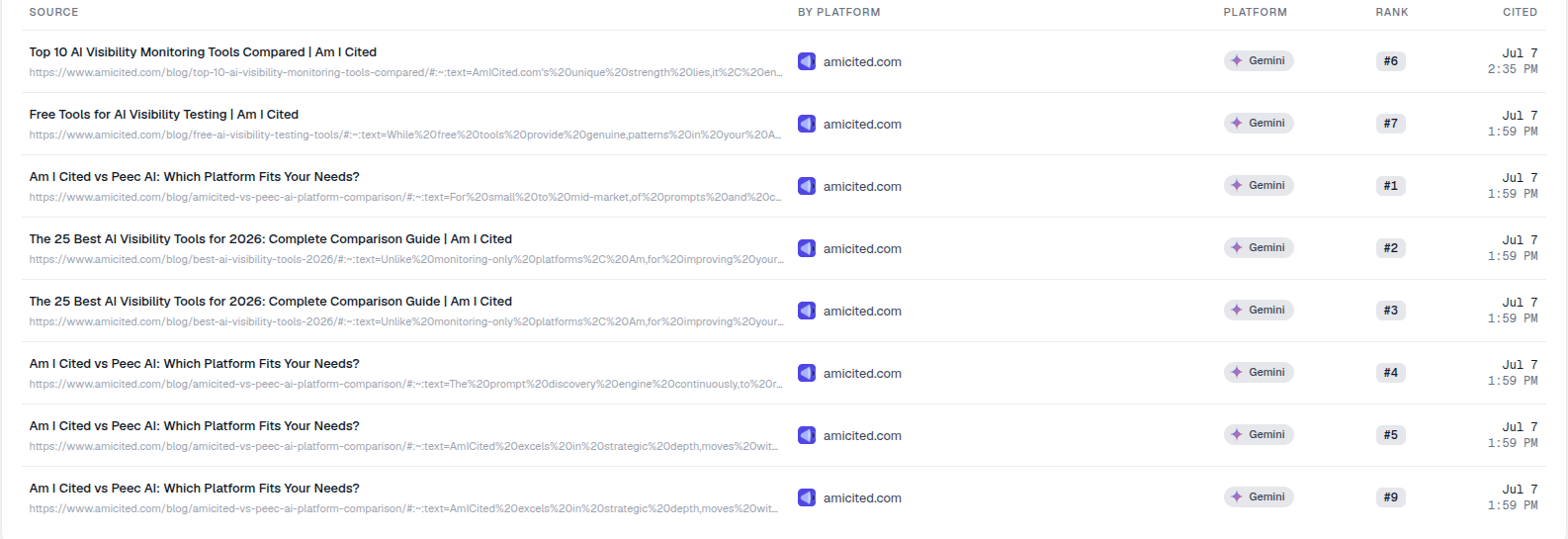
The URLs often contain a text fragment, the precise sentence the AI quoted from your page. That is the closest thing to a receipt for why you were cited, and it tells you what kind of content gets lifted word for word.
A mention is different. It is when the answer names your brand in its text, whether or not it links to you. You need to see, for every question, which brands get named, how often, and how prominently.
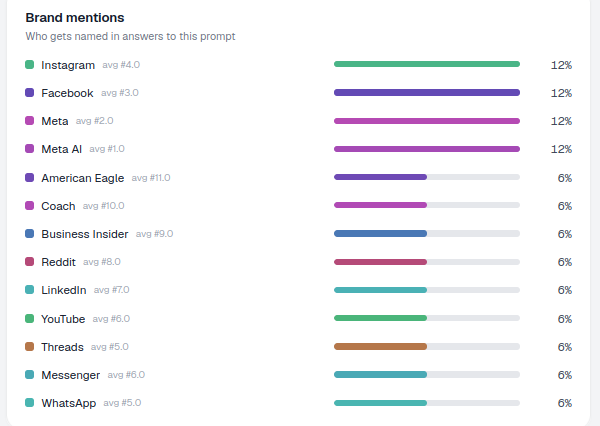
The two are not the same, and the difference is strategic. You can be mentioned but not cited, when the model talks about you but sources its facts from a competitor. You can also be cited but rarely mentioned, when your page is a source but your brand is not the headline. Tracking both tells you whether to work on presence or on being the source.
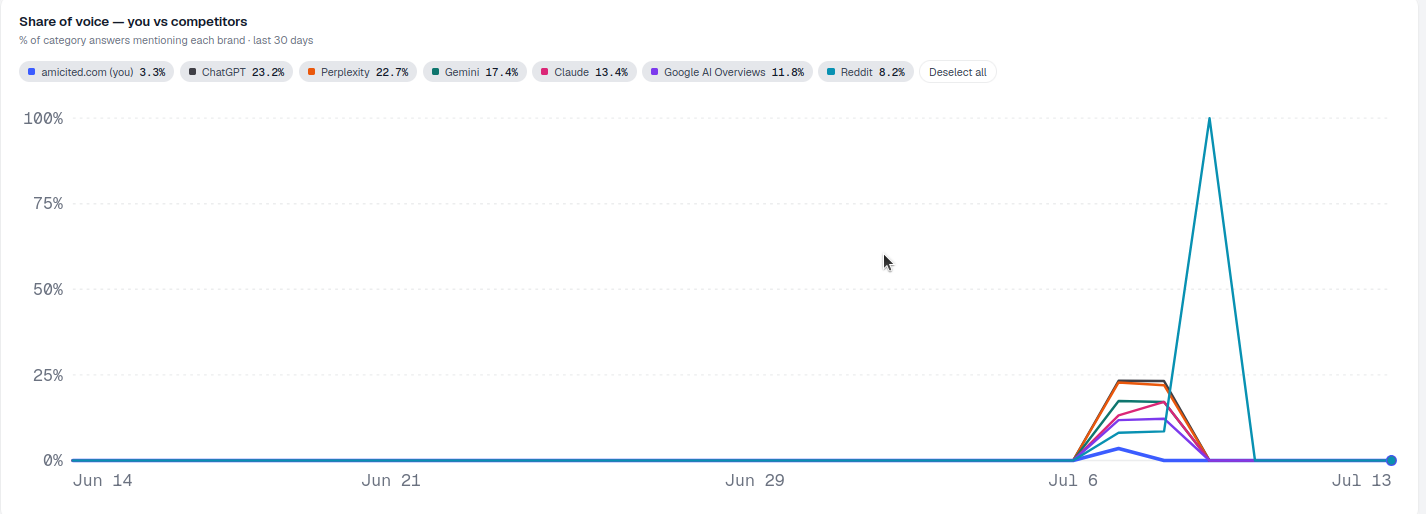
Share of Voice is how much of the total AI conversation belongs to you. You need to see your share next to every competitor’s, for the same questions.
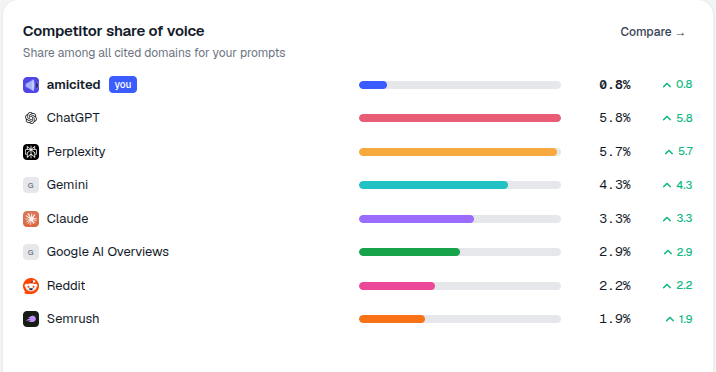
The reading that matters most: a decent presence with a small Share of Voice means you show up but get crowded out, because each answer cites other domains more prominently than you. The fix is not a secret. A Princeton study on Generative Engine Optimization showed that the way you win share back is by making your content the most quotable, best-evidenced source on the topic. More on that below.
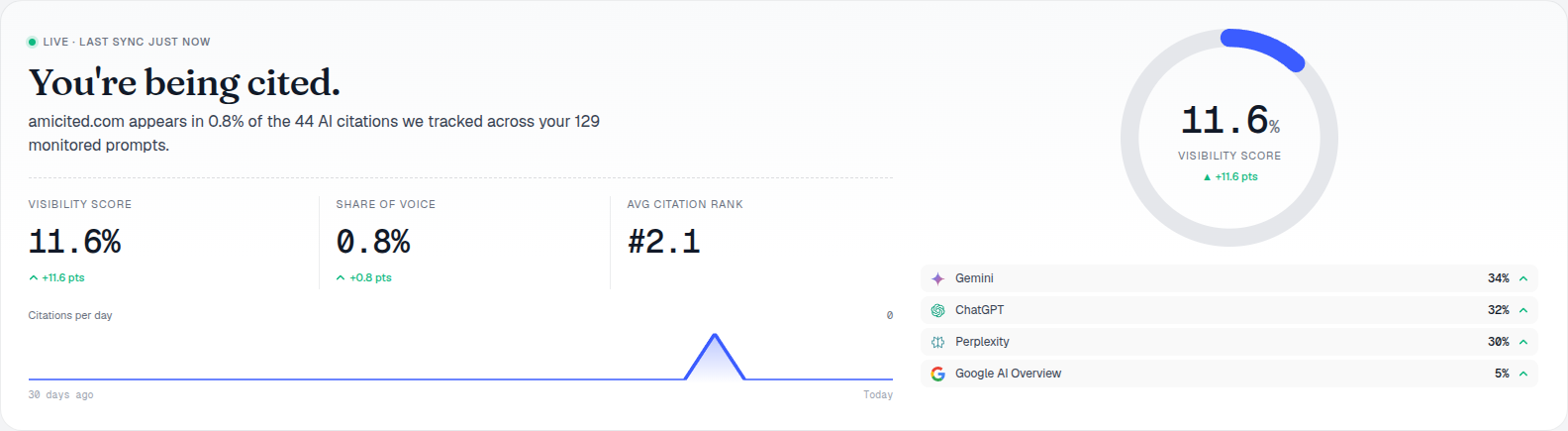
Your Visibility Score is the share of your tracked questions where your brand appears at all. You need it as one number, broken down by engine, because it is common to do well on one assistant and be invisible on another.
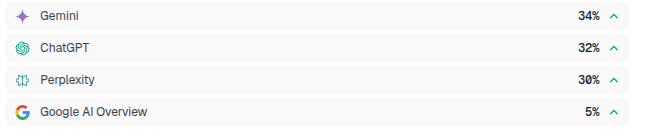
Being cited is good, being cited first is far better, because the earliest sources shape more of the answer. You need to know, when you are cited, how high up you land.

Knowing the words is not enough. To actually win, you need to be able to do five things. Here is each one, and what it looks like in practice.
You cannot improve what you cannot see. You need a single view that shows your Visibility Score, Share of Voice and Citation Rank together, then lets you watch them move over time. AI answers vary from run to run, so trends over weeks matter far more than any single day.
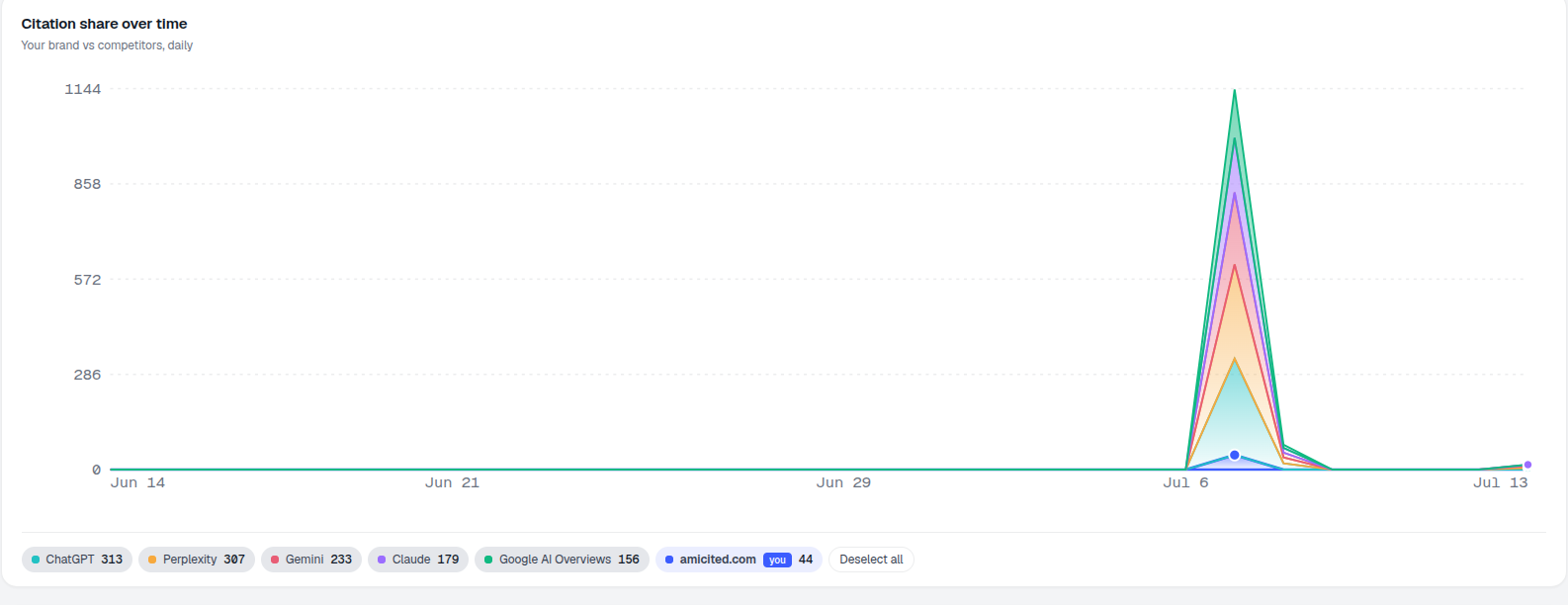
You also need the funnel view: how many citations you have earned, how many questions you track, and, most importantly, how many you are never cited for. That last number is your to-do list.

Every question where you are never cited is a question someone else is winning. You need to find those gaps, then understand them. When an AI answers a question, it quietly breaks it into many sub-questions, called fan-out queries, and researches each one. You need to see those sub-questions and how well each cited source covers them.
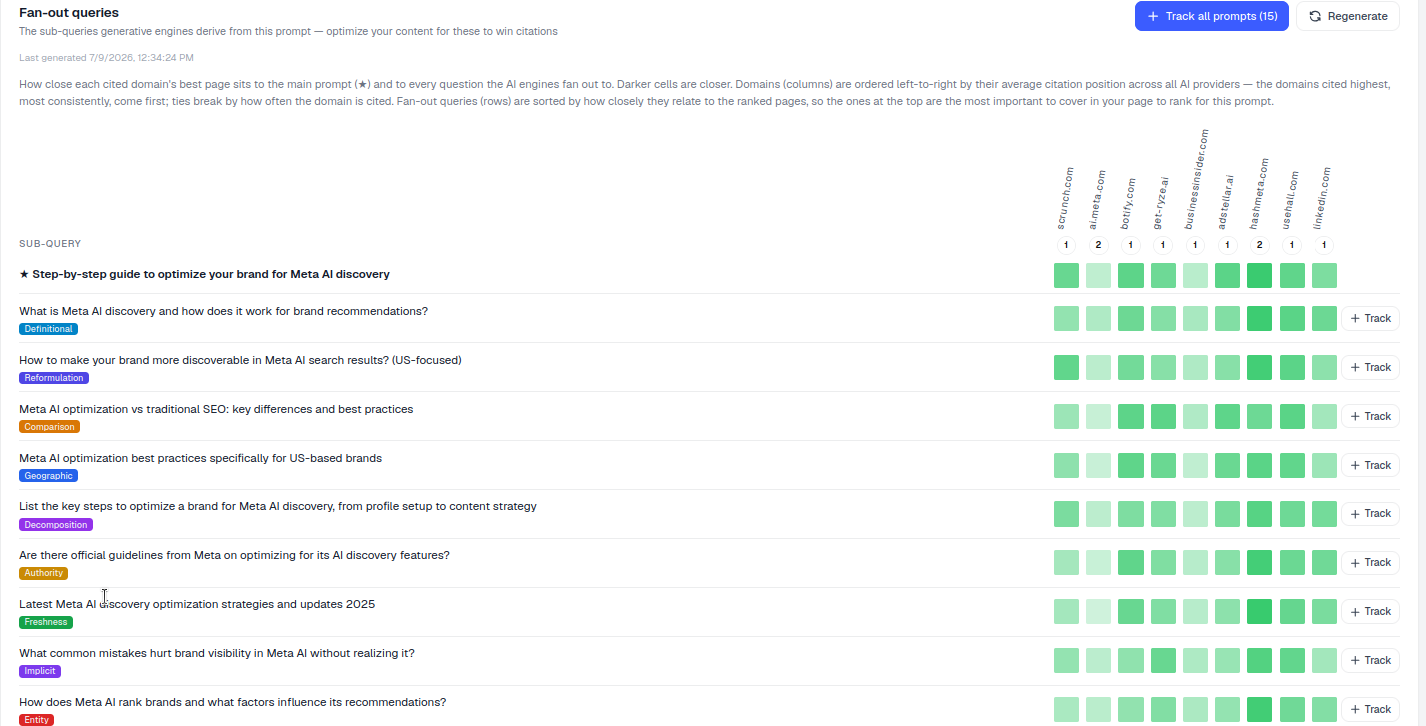
The sub-questions at the top are the ones most tied to the pages that get cited. Cover them thoroughly on one strong page and you give the model every reason to cite you instead.
You need to see which domains and pages the engines actually pull from for your topics. This is a leaderboard of your citation competitors, which are not always your business competitors, but are always the sources winning the citations you want.
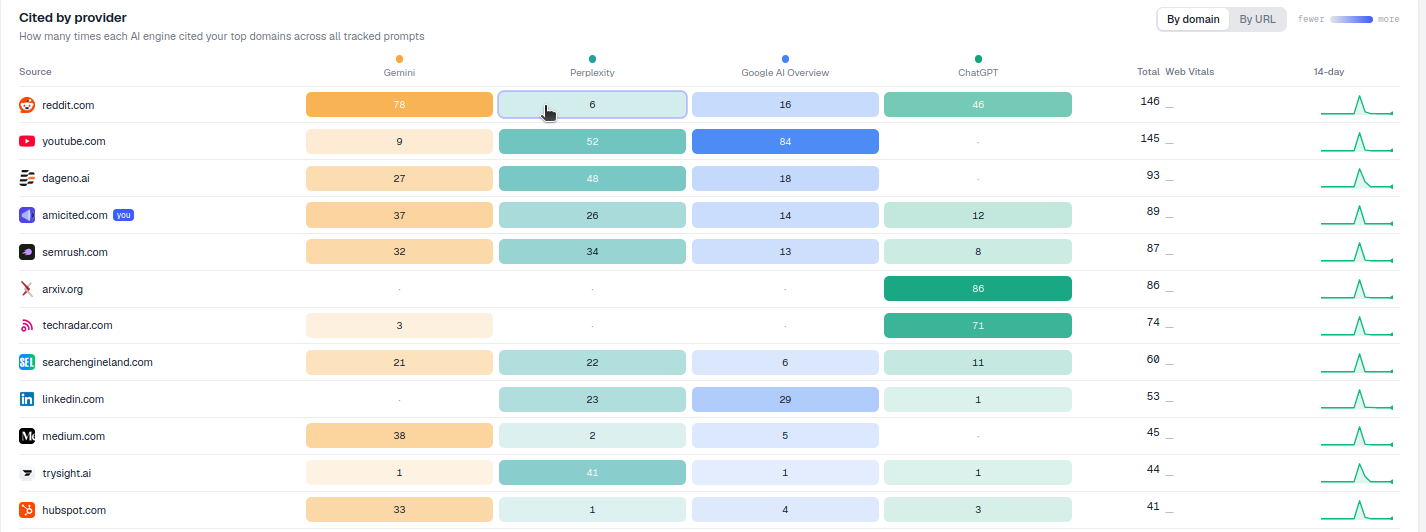
You also need to track your Share of Voice against real rivals over time, so you always know who is ahead and by how much.
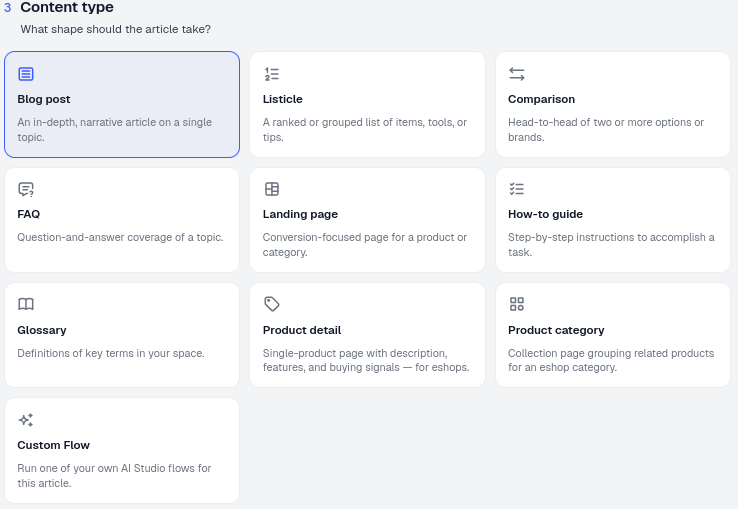
Diagnosis is half the job. You need to produce content aimed at exactly the questions you are missing, shaped the way answer engines like to quote. That means picking the questions to target and a content type, then drafting from there.
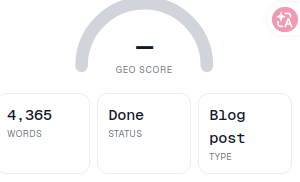
You also need a way to know, before you publish, whether a piece is quotable enough. A GEO score does that, rating how well the content follows the patterns generative engines reward: direct answers, clear structure, and specific facts.
This is exactly what the research predicts. The Princeton GEO study found that adding statistics, quotations and citations is what lifts a page’s visibility in AI answers, by up to 40%, while old keyword tricks barely register.
Across roughly 10,000 test queries, adding citations, quotations and statistics were the top techniques, with 30 to 40% relative gains. Keyword stuffing barely registered with generative engines, the opposite of classic SEO.
Source: Aggarwal et al., GEO: Generative Engine Optimization, arXiv 2311.09735 (KDD 2024)
Finally, you need the loop to spin. You find the questions you are missing, publish content built to be the best-evidenced source, and the engines start citing and mentioning you more. That visibility converts, because Adobe shows AI-referred visitors convert 31% more and spend 254% more per visit. And it compounds, because the more you are cited, the more the models treat you as a trusted source for the next answer, and the harder you are to displace.
Here is the good news. You do not need six separate tools to do any of this. Everything in this blueprint, seeing your visibility, finding the gaps, understanding who beats you, and fixing it with content, is what AmICited was built to do. It is a single AI visibility and Generative Engine Optimization platform for the whole workflow, not a point tool for one slice of it.
It starts with your prompts. You give AmICited the real questions your buyers ask AI assistants, or let it generate them automatically from a URL. It then runs those prompts on a schedule against ChatGPT, Perplexity, Gemini and Google AI Overview, and captures every answer. For each one, it detects whether your brand was mentioned, whether your pages were cited, which sources the model actually used, and where you ranked among them. That raw signal becomes the dashboard you saw at the top of this article.
From there, the same platform covers every job this blueprint described, end to end.
In other words, AmICited is the scoreboard, the diagnosis and the fix in one place. Tracking your AI visibility and improving it stop being two separate projects and become a single loop: measure, find the gap, publish, and watch your Share of Voice climb.
The brands that win the next few years will not be the ones with the most blue-link rankings. They will be the ones the AI recommends by name, and cites as the reason. With only 27% of marketers even watching, that position is still wide open. This is how you take it.
Arshia is an AI Workflow Engineer at FlowHunt. With a background in computer science and a passion for AI, he specializes in creating efficient workflows that integrate AI tools into everyday tasks, enhancing productivity and creativity.

Track how your brand is cited and mentioned across ChatGPT, Perplexity, Gemini and Google AI Overviews with AmICited. Measure your Visibility Score, benchmark share of voice against competitors, find the prompts you're missing, and generate content engineered to win citations.
A concept-first explainer on AI search visibility: what it actually is, how the citation model differs from ranking, and why it's becoming as important as tradi...
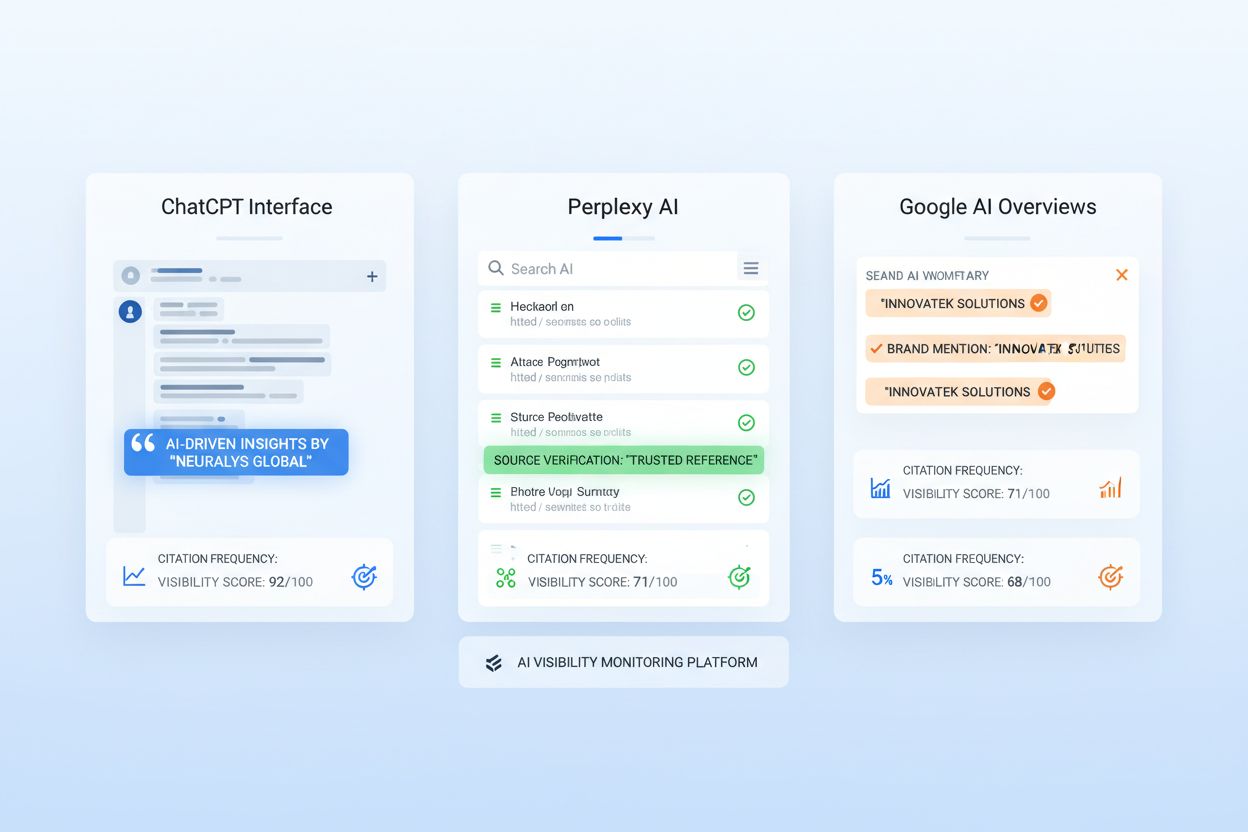
A practical, complete guide to AI visibility for marketers: the six metrics that matter, how AI systems decide which brands to mention, platform-by-platform tac...

A repeatable framework to measure AI search visibility across ChatGPT, Perplexity, and Google AI Overviews. Track citations, share of voice, and ROI with concre...
Cookie Consent
We use cookies to enhance your browsing experience and analyze our traffic. See our privacy policy.