

Content Update Frequency for AI Visibility: Complete Guide for 2025
Learn optimal content update schedules for AI visibility. Discover how often to refresh content for ChatGPT, Perplexity, and Google AI Overviews to maximize bra...
10 min read
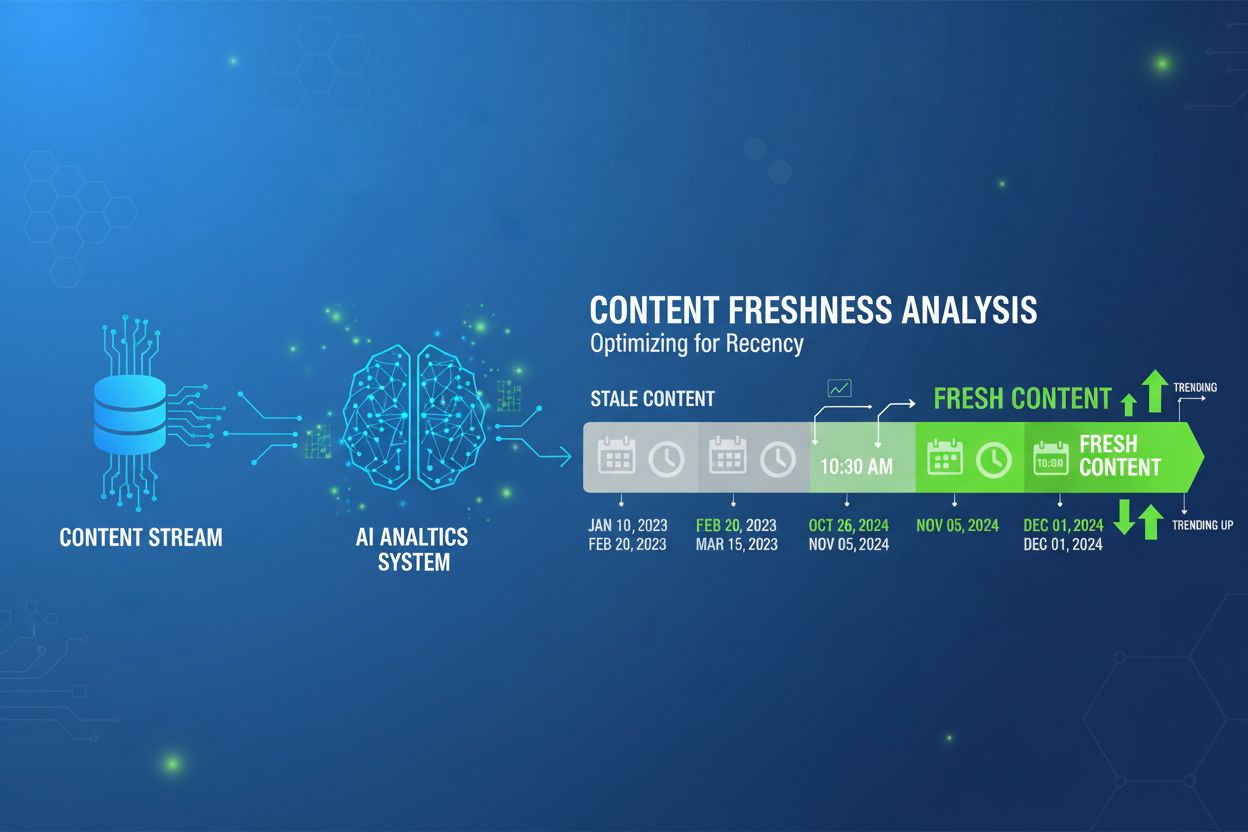
Learn when and how to update your content for AI visibility. Discover freshness signals that help ChatGPT, Perplexity, and Google AI Overviews cite your brand.
Artificial intelligence systems like ChatGPT, Perplexity, and Google’s Gemini have fundamentally changed how content visibility works. Unlike traditional search engines that balance freshness with dozens of other ranking factors, AI assistants treat content recency as a primary signal. According to Ahrefs’ analysis of 17 million citations across seven AI systems, AI-cited content is 25.7% fresher than organic Google results. More striking still, ChatGPT shows an extreme preference for recent sources, citing content that is 393-458 days newer than what ranks in traditional organic search. This shift means that maintaining content freshness is no longer optional—it’s essential for visibility in AI-generated answers. With AmICited.com’s AI monitoring platform, you can track exactly how often your brand appears in these AI citations and identify freshness opportunities before your competitors do.
The difference between how traditional search engines and AI systems evaluate content freshness reveals a fundamental shift in how visibility works. Traditional Google search treats freshness as one ranking factor among many, heavily weighted toward backlinks, domain authority, and content quality. AI systems, by contrast, use freshness as a primary relevance signal, especially when answering time-sensitive queries. This creates a significant gap in update expectations: while a high-authority blog post from 2021 might still rank well in Google if it has strong backlinks, that same article could be completely overlooked by ChatGPT or Perplexity if newer sources exist. The table below illustrates how dramatically these systems differ:
| Feature | Traditional Search (Google) | AI/LLM-Powered Search |
|---|---|---|
| Core Ranking Signal | One of many factors; balanced with backlinks and domain age | Primary signal for relevance and trustworthiness |
| Content Evaluation | Matches keywords to indexed documents; values static authority | Values dynamic updates and semantic clarity |
| Update Frequency | Content can remain static if it maintains authority | Quarterly or monthly updates are the new standard |
| Average Source Age | Results tend to be older | Cited content is 25.7% fresher than organic results |
| Authority vs. Recency | High-authority old content ranks well for years | Recent content may outrank older content with 10x more backlinks |
This table reveals a critical insight: a newer guide from the current year may outrank a 2021 guide with significantly more backlinks, simply because AI systems perceive it as more factually current and trustworthy.
Google’s “Query Deserves Freshness” (QDF) algorithm identifies search queries where users expect the most current information available. The system detects three key signals: whether news sites are actively covering a topic, whether blogs are publishing frequently about it, and whether search volume is spiking. When all three signals align, Google prioritizes recently updated content to satisfy user intent. AI systems inherit and amplify this same logic, but with even greater emphasis on recency. For AI assistants, QDF isn’t just about detecting trending topics—it’s about ensuring that every answer reflects the current state of the world. This means that for queries about breaking news, product launches, regulatory changes, or market trends, AI systems will almost always prefer content updated within the last few weeks or months. Understanding which of your content topics trigger QDF signals helps you prioritize which pages need the most frequent updates.
Not all content ages at the same rate. Certain content types demand regular updates to remain valuable and visible in AI answers:
Many content strategists confuse content freshness with content frequency, but they’re fundamentally different concepts. Freshness refers to how recent and up-to-date your content appears—the timeliness and relevancy of the information itself. Frequency, by contrast, refers to how often you publish or update content across your entire site. Freshness is a page-level attribute that signals whether individual pieces contain current information, while frequency is a site-level strategy that reflects your overall publishing rhythm. A website publishing one high-quality, freshly updated article per month will outperform a site publishing five stale articles weekly when it comes to AI visibility. This distinction matters because quality always trumps quantity: one well-maintained page updated monthly can generate more AI citations than dozens of neglected pages. The key is focusing your efforts on keeping your most valuable content current rather than spreading yourself thin trying to update everything constantly.
The ideal update frequency depends entirely on how quickly information changes in your industry. Understanding your content’s velocity helps you allocate resources efficiently and stay competitive in AI search results.
High-Velocity Industries (Update Monthly or Weekly) require the most aggressive refresh schedules. FinTech and cryptocurrency platforms must update market data, interest rates, and regulatory changes constantly. SaaS and AI technology companies face weekly software updates, new features, and capability changes that make existing guides obsolete quickly. News and media organizations need real-time updates for breaking stories. In these sectors, a “2024 guide” becomes outdated within weeks.
Medium-Velocity Industries (Update Quarterly or Bi-Annually) balance stability with necessary updates. Healthcare and wellness content requires annual reviews to maintain E-E-A-T compliance and reflect new treatment protocols or FDA guidelines. Digital marketing best practices shift every 6-12 months as platforms evolve and algorithms change. These industries benefit from seasonal refreshes aligned with industry changes.
Low-Velocity Industries (Update Annually) include legal and statutory content where core information changes slowly, though recent court precedents may need adding. Historical and evergreen educational content doesn’t require frequent updates since the facts themselves don’t change—though presentation formats (video, interactive elements, modern examples) might benefit from periodic refreshes to stay competitive.
Beyond visible dates and updated information, AI systems read technical metadata to determine freshness. Article schema with the dateModified field is the strongest technical signal you can provide—it explicitly tells AI systems when you last made significant changes. Ensure this field updates only when meaningful changes occur, not cosmetic edits. Structured data metadata in your page’s HTML helps retrieval systems understand your content’s publication and modification timeline. Sitemap lastmod timestamps signal to crawlers which pages have been recently updated, helping them prioritize re-crawling your most important content. HTTP headers and caching policies ensure that freshness-sensitive pages (like pricing or availability information) are revalidated frequently rather than served from stale cache. User interaction signals—click-through rates, dwell time, and low bounce rates—all hint to AI systems that your content still satisfies current user intent. Finally, authority combined with recency creates the strongest signal: when multiple pages are similarly fresh, systems lean on link equity and brand authority as tie-breakers, but freshness often wins when authority is equal.
Implementing a sustainable freshness strategy requires systematic approach rather than reactive updates. Start by auditing your existing content to identify publication and modification dates across your site using tools like Screaming Frog or Ahrefs. Prioritize high-traffic, high-value pages first—these already have proven audience demand and SEO authority, so updates deliver faster results. Update statistics and facts with current data from credible sources, replacing outdated research with information from the last 12 months. Add prominent “Last Updated” dates at the top of articles to signal freshness to both users and AI systems. Update your schema markup’s dateModified field to match the actual update date, ensuring technical signals align with visible content changes. Request re-indexing via Google Search Console for updated pages to accelerate how quickly search engines and AI systems discover your changes. Monitor performance metrics in the weeks following updates to understand which refresh strategies deliver the best results for your specific content and audience.
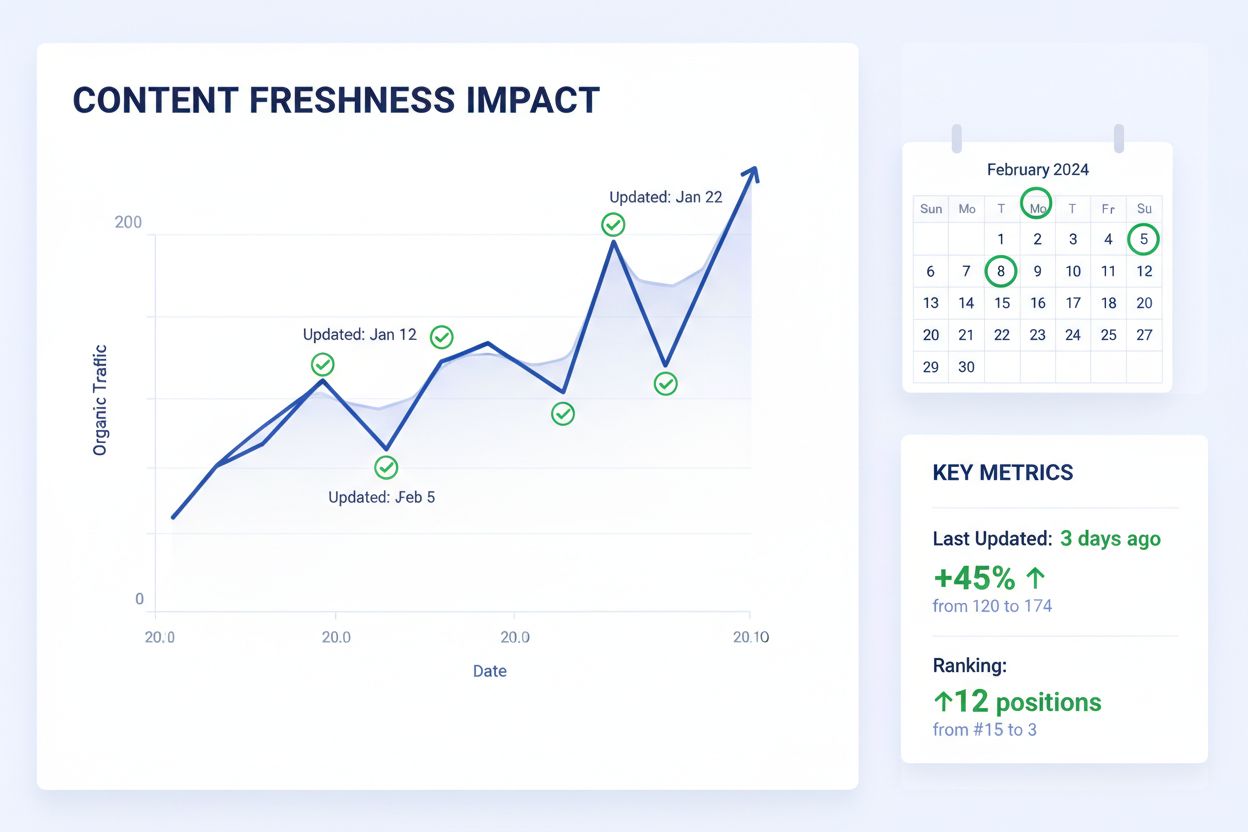
Tracking the right metrics proves whether your freshness strategy is working. Monitor ranking position changes within 1-3 weeks of updating content—even small position gains (moving from position 15 to position 8) can significantly increase traffic. Track organic traffic growth using Google Analytics, watching for increases in sessions and users to your refreshed pages. Measure AI citation count increases using AmICited.com’s monitoring platform to see whether your content appears more frequently in ChatGPT, Perplexity, Gemini, and Google AI Overviews after updates. Check click-through rate improvements in Google Search Console, as fresh titles and updated meta descriptions naturally attract more clicks at the same ranking position. Monitor keyword expansion, as refreshed content often begins ranking for new related keywords it didn’t target before. The compounding effect of regular updates—better rankings, more traffic, increased AI citations, and fresh backlinks—makes content freshness one of the highest-ROI SEO activities you can implement.
The ideal update frequency depends on your industry. High-velocity sectors like FinTech, SaaS, and AI tech should update monthly or weekly. Medium-velocity industries like healthcare and digital marketing should refresh quarterly or bi-annually. Low-velocity sectors like legal and history can update annually. The key is keeping your most valuable content current.
Freshness refers to how recent and up-to-date your content appears—the timeliness of individual pieces. Frequency refers to how often you publish or update content across your entire site. Freshness is a page-level attribute, while frequency is a site-level strategy. Quality always trumps quantity: one well-maintained page updated monthly outperforms dozens of neglected pages.
Yes, significantly. According to Ahrefs' analysis of 17 million citations, AI-cited content is 25.7% fresher than organic Google results. ChatGPT shows an extreme preference, citing content that is 393-458 days newer than what ranks in traditional search. This makes freshness a primary signal for AI visibility.
Use Article schema with the dateModified field, which is the strongest technical signal. Update your structured data metadata, maintain accurate sitemap lastmod timestamps, and add prominent 'Last Updated' dates to your content. Ensure your HTTP headers and caching policies allow frequent revalidation of freshness-sensitive pages.
Prioritize high-traffic, high-value pages that have declining rankings or traffic. Use Google Search Console to identify pages with dropping impressions, clicks, or positions. Look for content that hasn't been updated in over 6-12 months, especially in fast-moving industries. Focus on pages that already have proven audience demand.
Old content can still rank in traditional Google search if it has strong authority and backlinks, but AI systems heavily penalize age. A newer guide from the current year may outrank a 2021 guide with significantly more backlinks. For AI visibility, recency is often more important than authority.
Content freshness directly impacts AI citation rates. Research shows that over one-third of AI citations go to content updated in the last 3 months. Over 70% of pages cited by ChatGPT were updated in the past year. Maintaining freshness can increase your AI citation count by 45% or more within weeks of updating.
Track ranking position changes within 1-3 weeks of updates, monitor organic traffic growth, measure AI citation count increases using tools like AmICited, check click-through rate improvements in Google Search Console, and monitor keyword expansion. The compounding effect of regular updates—better rankings, more traffic, increased AI citations—makes this one of the highest-ROI SEO activities.
Track how AI systems reference your content and identify freshness opportunities with AmICited's AI monitoring platform.
Learn optimal content update schedules for AI visibility. Discover how often to refresh content for ChatGPT, Perplexity, and Google AI Overviews to maximize bra...
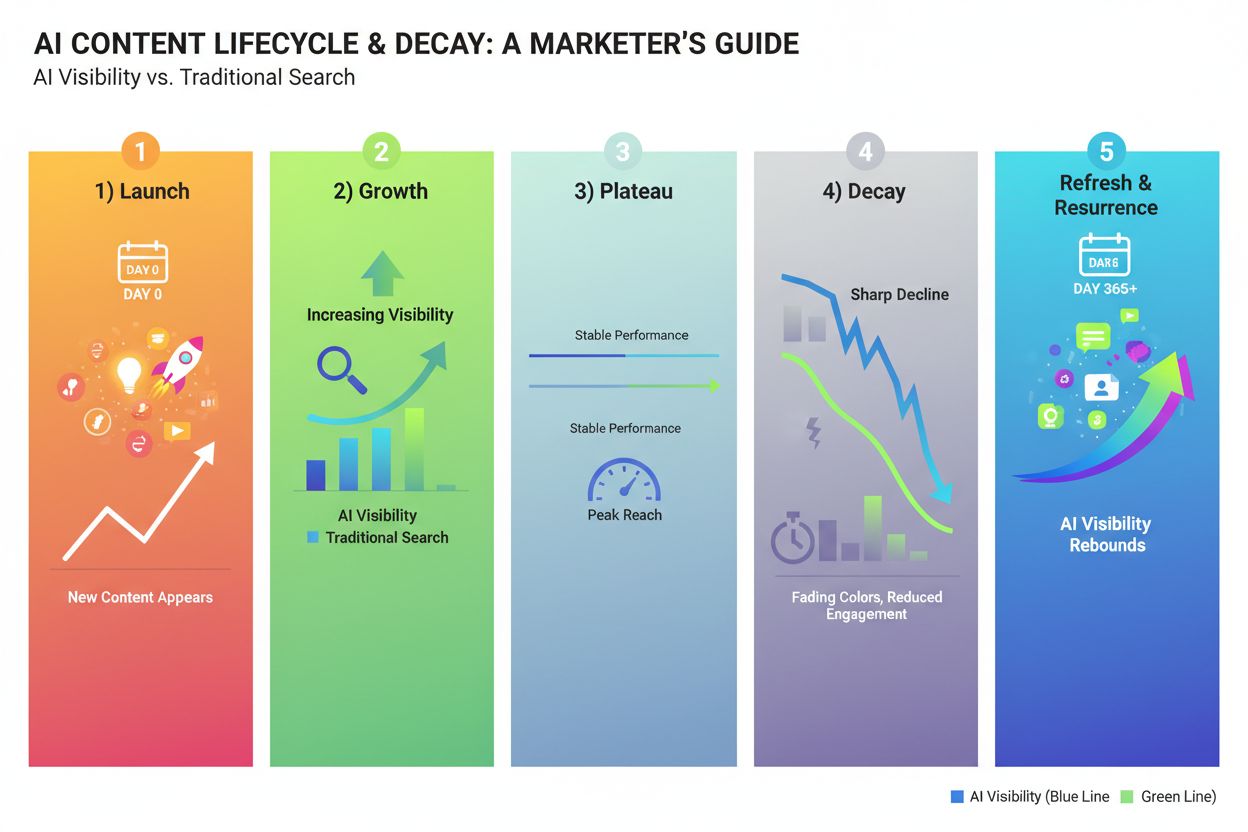
Learn how often to update content for AI visibility. Discover freshness signals, update frequency guidelines, and monitoring strategies for ChatGPT, Perplexity,...
Learn how to update content for AI freshness with technical signals, structural changes, and refresh strategies that keep your brand visible in ChatGPT, Perplex...