

How Thorough Should Content Be for AI Citations?
Learn the optimal content depth, structure, and detail requirements for getting cited by ChatGPT, Perplexity, and Google AI. Discover what makes content citatio...
10 min read
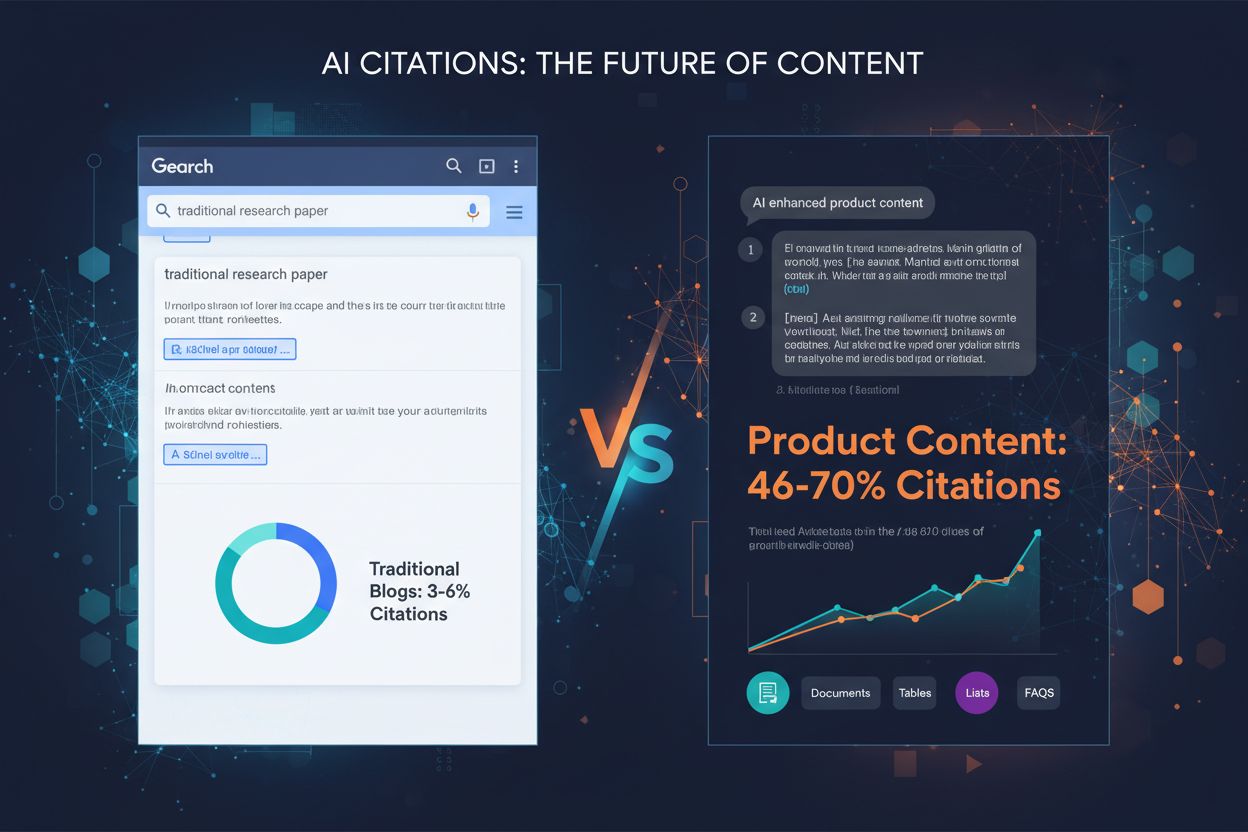
Discover which content formats get cited most by AI models. Analyze data from 768,000+ AI citations to optimize your content strategy for ChatGPT, Perplexity, and Google AI Overviews.
The traditional search landscape is undergoing a fundamental transformation as AI-powered answer engines like ChatGPT, Perplexity, and Google AI Overviews reshape how users discover information. Rather than clicking through to websites, users now receive synthesized answers directly from AI systems that cite their sources—creating an entirely new citation economy that differs dramatically from traditional search rankings. The data reveals a striking disparity in which content formats receive these valuable AI citations: product content dominates with 46-70% of all citations, while traditional blog posts capture only 3-6% of AI-generated citations. This shift matters profoundly because AI citations represent a new form of authority and visibility that can drive qualified traffic, establish thought leadership, and influence purchasing decisions. Alarmingly, 26% of brands currently receive zero mentions in AI-generated answers, indicating that many organizations are entirely invisible in this emerging channel. Understanding which content formats attract AI citations has become essential for any brand seeking to maintain visibility as search behavior evolves. The format of your content—not just its quality—now determines whether AI systems will reference your work when answering user queries.
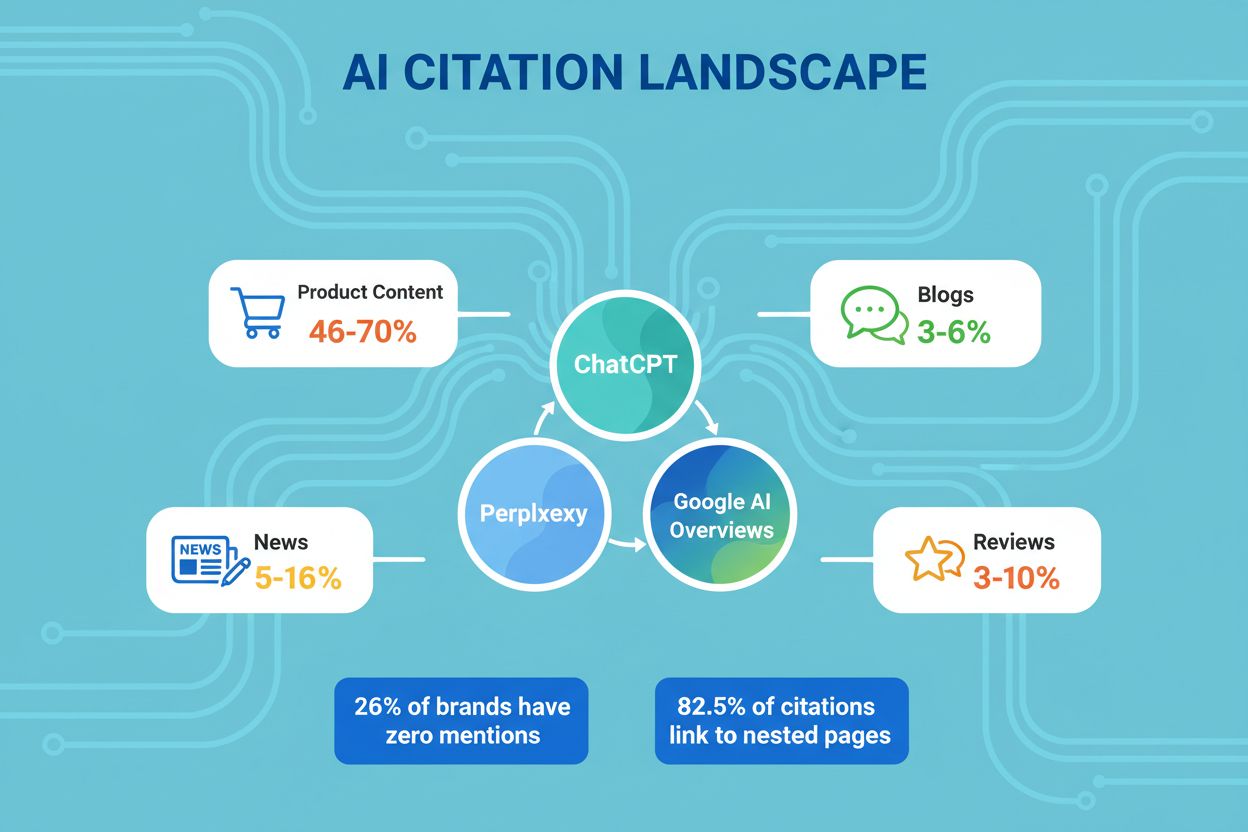
Product content’s dominance in AI citations stems from several interconnected factors that make this format inherently more valuable to AI systems than traditional editorial content. The 46-70% citation rate for product content encompasses multiple subcategories including dedicated product pages, professional reviews, comparison matrices, and recommendation roundups—each serving different purposes in the AI citation ecosystem. A comprehensive analysis of 768,000 AI citations revealed that structured product information significantly outperforms unstructured blog content, with AI systems preferring content that clearly delineates specifications, pricing, features, and user ratings. The advantage lies in how AI systems parse information: product pages typically employ structured data markup (JSON-LD, schema.org) that allows AI crawlers to extract, verify, and cite information with high confidence and minimal interpretation required. Leading platforms like Wirecutter, Tom’s Guide, G2, and Clutch have built their entire business models around this insight, creating meticulously organized product comparisons and reviews that AI systems cite with remarkable frequency. B2B platforms like G2 and Clutch show particularly strong citation performance due to their standardized review formats and verified user data, while B2C product sites benefit from the sheer volume of consumer interest in product recommendations. The following table illustrates how citation rates vary significantly by content type:
| Content Type | Citation Rate | Key Advantage |
|---|---|---|
| Product Pages | 60-70% | Structured data, specifications |
| Product Reviews | 50-65% | Verified opinions, ratings |
| Comparison Posts | 45-60% | Side-by-side analysis |
| How-To Guides | 25-40% | Step-by-step structure |
| Blog Posts | 3-6% | Limited structure |
| News Articles | 8-15% | Timeliness, authority |
| Academic Content | 35-50% | Credibility, citations |
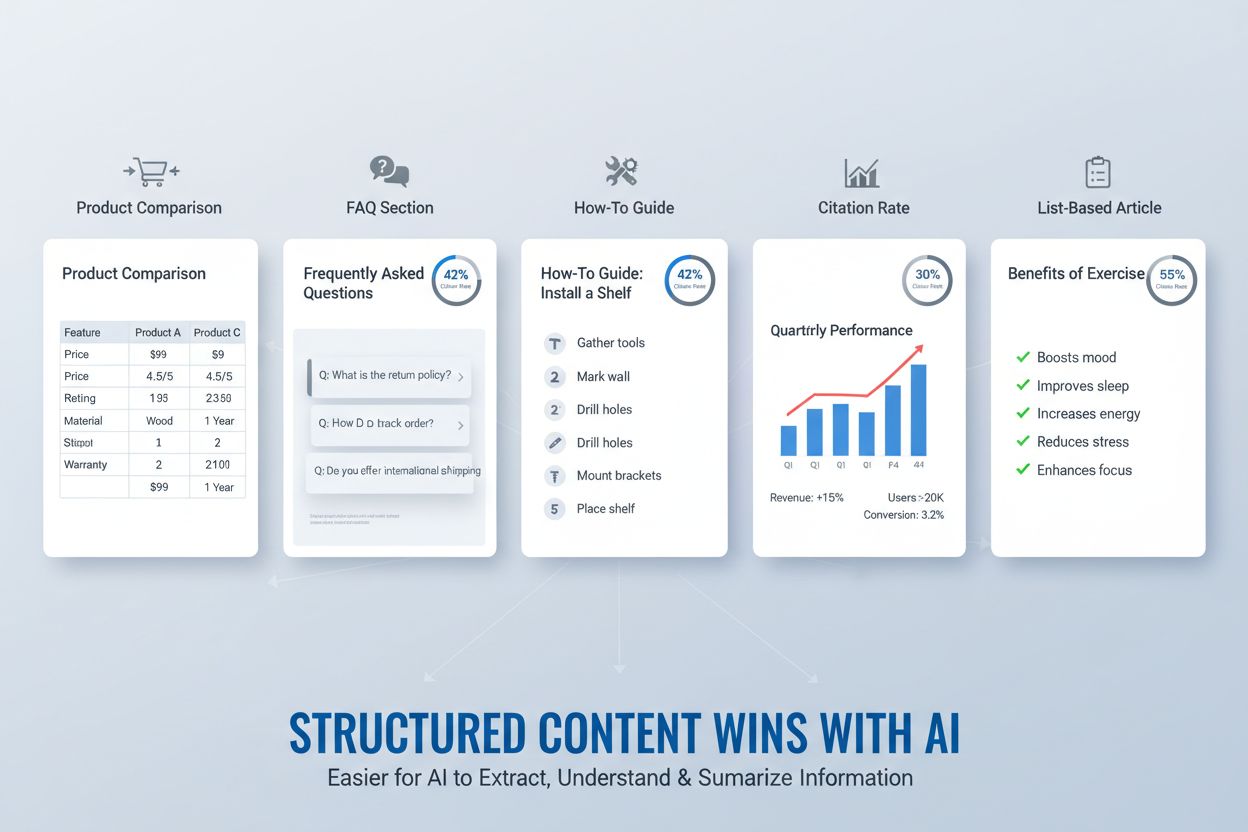
FAQ and how-to formats achieve disproportionately high citation rates because they align perfectly with how AI systems process and retrieve information for user queries. When content is structured as clear question-answer pairs with proper semantic markup, AI systems can directly match user queries to relevant answers without requiring interpretation or synthesis. The power of structured data becomes evident when examining platforms like Microsoft Support and Google Support, where FAQ pages consistently receive citations because their JSON-LD schema markup explicitly identifies questions, answers, and metadata that AI crawlers can parse with precision. The formatting mechanics matter significantly: content using proper H2 and H3 heading hierarchies, numbered steps, and clear segmentation into discrete sections signals to AI systems that information is organized for easy extraction and citation. When AI systems encounter well-structured how-to content, they can cite specific steps or sections rather than paraphrasing, which increases both citation likelihood and accuracy. The following characteristics define winning FAQ and how-to formats that attract AI citations:
AI systems demonstrate a pronounced preference for data-rich content that provides verifiable, quantifiable information rather than opinion-based or anecdotal material. Original research, industry benchmarks, and statistical analysis significantly increase the likelihood that AI will cite your content because these formats provide concrete facts that can be directly incorporated into AI-generated answers. When content includes specific statistics, percentages, or research findings, AI systems can cite these claims with confidence, knowing they’re backed by data rather than speculation—this 25.7% freshness preference extends to data content as well, meaning regularly updated statistics and benchmarks receive even higher citation rates. The fact density of your content directly correlates with citation probability: pages packed with verifiable claims, data points, and sourced information attract more AI citations than pages with general observations or broad statements. High-performing data-rich content includes industry reports, salary surveys, market analysis, technology benchmarks, and original research studies—formats that inherently contain the kind of specific, quotable information that AI systems seek when generating answers. Brands that invest in original research and publish detailed findings with transparent methodology see their content cited across multiple AI platforms, establishing themselves as authoritative sources in their respective domains.
Comparison and list-based content formats achieve exceptional citation rates because they directly address the decision-making queries that users pose to AI systems, and they present information in formats that AI can easily extract and reorganize. The prevalence of “Best of” posts, product recommendation roundups, and comparison matrices across high-traffic sites like Wirecutter, CNET, and Tom’s Guide reflects a fundamental truth: AI systems cite this content at rates significantly higher than general blog content, often in the 45-60% range. List-based content performs exceptionally well because it presents multiple options with clear differentiation, allowing AI systems to cite specific recommendations for different use cases, budgets, or preferences without requiring synthesis or interpretation. The structural advantage of comparison posts lies in their tabular format: when content uses markdown tables, comparison matrices, or clearly delineated sections for each option, AI systems can extract and cite individual comparisons rather than requiring paraphrasing. Tables and structured lists serve as semantic containers that help AI systems understand relationships between products, features, and recommendations, making the information more valuable for citation purposes. The role of clear categorization cannot be overstated—when comparison content explicitly segments options by category (e.g., “Best for Budget,” “Best for Professionals,” “Best for Beginners”), AI systems can cite the most relevant recommendation for each user query rather than citing the entire list.
Citation patterns vary significantly across different AI platforms, revealing that optimization strategies must account for each system’s unique preferences and training data composition. ChatGPT demonstrates a strong preference for Wikipedia content (27% of citations), followed by blogs (21%), with news content representing only 6% of citations—this pattern reflects ChatGPT’s training data composition and its tendency to cite established, encyclopedic sources. Perplexity shows dramatically different preferences, citing blogs at 38% of the time, news at 23%, and product blogs at only 7%, indicating that Perplexity’s real-time search integration and emphasis on current information creates different citation incentives. Google AI Overviews, integrated directly into search results, cite blogs 46% of the time, news 20%, and Reddit 5.5%, reflecting Google’s emphasis on diverse, authoritative sources while maintaining its traditional preference for established web content. These differences emerge from fundamental architectural choices: ChatGPT relies on static training data, Perplexity emphasizes real-time search results, and Google AI Overviews integrate with its existing search ranking signals. Understanding these platform-specific patterns is essential because a content strategy optimized for ChatGPT citations may underperform on Perplexity, and vice versa. A comprehensive study analyzing 36,127 buying-intent queries across all three platforms revealed these platform-specific patterns, demonstrating that brands must develop differentiated optimization strategies for each AI system. The following table compares citation patterns across major AI platforms:
| Content Source | ChatGPT | Perplexity | Google AI Overviews |
|---|---|---|---|
| Wikipedia | 27% | 12% | 8% |
| Blogs | 21% | 38% | 46% |
| News | 6% | 23% | 20% |
| Product Sites | 15% | 7% | 12% |
| 8% | 5% | 5.5% | |
| Academic | 12% | 8% | 4% |
| Other | 11% | 7% | 4.5% |
Citation velocity—the frequency and recency with which content receives AI citations—has emerged as a critical metric that reveals how AI systems prioritize fresh, updated information over static content. AI systems demonstrate a 25.7% preference for content that is fresher than traditional search results, meaning that recently updated pages receive disproportionately more citations than older content covering the same topics. The presence of visible “last updated” dates signals to both AI systems and users that content is current and maintained, which increases citation likelihood and user trust simultaneously. Industry best practices suggest implementing a 3-6 month update cycle for high-value content, particularly product comparisons, pricing information, and technology guides where information becomes outdated quickly. Signaling freshness to AI crawlers requires more than simply updating content; you must ensure that updates are visible through structured data markup (dateModified in schema.org), XML sitemaps that reflect recent changes, and content that explicitly references current dates or recent developments. Successful update strategies involve identifying evergreen content that can be refreshed with new data, examples, or statistics without requiring complete rewrites—this approach maintains SEO value while signaling to AI systems that the content remains relevant and authoritative.
Measuring AI citations requires a different approach than traditional SEO metrics because citations occur within AI-generated answers rather than as clickable links, necessitating specialized tools and monitoring strategies. Key metrics for AI citation tracking include citation frequency (how often your content is cited), citation position (whether your content appears early or late in AI-generated answers), and citation sentiment (whether citations are positive, neutral, or comparative). Manual testing approaches involve regularly querying AI systems with relevant keywords and recording which sources appear in generated answers, though this method becomes impractical at scale for brands with large content portfolios. Specialized tools now exist to automate this tracking, monitoring your content’s appearance across ChatGPT, Perplexity, and Google AI Overviews while providing competitive analysis that shows how your citation share compares to competitors. Measuring conversion from AI traffic requires implementing UTM parameters or other tracking mechanisms for traffic originating from AI-generated answers, though this remains challenging because many AI systems don’t provide direct links or attribution. Understanding your competitive share of voice in AI-generated answers—what percentage of citations in your category go to your content versus competitors—provides crucial insight into whether your content strategy is working. The following table compares popular AI citation monitoring tools and their capabilities:
| Tool | ChatGPT | Perplexity | Google AI | Real-time | Competitive Analysis |
|---|---|---|---|---|---|
| AmICited.com | ✓ | ✓ | ✓ | ✓ | ✓ |
| SEMrush AI Insights | ✓ | ✗ | ✓ | ✗ | ✓ |
| Moz AI Tracking | ✓ | ✗ | ✓ | ✗ | ✓ |
| Ahrefs AI Monitor | ✓ | ✗ | ✓ | ✗ | ✓ |
| Manual Testing | ✓ | ✓ | ✓ | ✗ | ✗ |
AmICited.com provides a comprehensive solution for brands seeking to understand and optimize their presence in AI-generated answers across all major platforms. The platform tracks your content’s citations in real-time across ChatGPT, Perplexity, and Google AI Overviews, providing visibility into which of your pages receive citations, how frequently they’re cited, and how your citation share compares to direct competitors. Key features include automated monitoring that eliminates manual testing, competitive analysis that reveals which competitor content receives more citations and why, and citation velocity tracking that shows whether your citation frequency is increasing or declining over time. By aggregating citation data across platforms and content types, AmICited.com helps brands identify which content formats, topics, and optimization strategies generate the most AI citations, enabling data-driven decisions about future content investment. The platform transforms AI citation tracking from a manual, time-consuming process into an automated system that provides actionable insights about content performance in this emerging channel. Start monitoring your AI citations today at AmICited.com and discover which content formats are driving visibility in the AI-powered search landscape.
Product content dominates with 46-70% of AI citations, followed by news and research content at 5-16%. This is because AI models prioritize structured, factual information that directly answers user queries with clear specifications, pricing, and features.
Blog posts typically receive only 3-6% of AI citations because they often lack the structured format and direct answers that AI models prefer. AI favors content with clear question-answer pairs, data points, and segmented information that can be easily extracted.
Update important pages every 3-6 months with new data, expanded sections, and visible 'last updated' dates. AI prefers content that is 25.7% fresher than traditional search results, so regular updates significantly improve citation chances.
Focus on ChatGPT (800 million users), Google AI Overviews (54.61% of searches), Perplexity (22 million users), and Gemini. Each platform has different citation preferences: ChatGPT favors Wikipedia, Perplexity prefers blogs, and Google AI Overviews cite diverse sources.
Structured data (JSON-LD, schema markup) helps AI understand your content's structure and purpose. Implementing FAQ schema, HowTo schema, and Article schema significantly increases the likelihood of your content being cited by AI systems.
Use tools like AmICited.com, Writesonic, or Profound to monitor mentions across platforms. You can also manually test by running relevant prompts in incognito mode and tracking which sites appear in AI responses.
Mentions are when your brand is referenced by name in AI responses. Citations are when your content is used as a source with a clickable link. Citations are more valuable as they drive qualified traffic and establish authority.
AmICited.com tracks how AI models cite your brand across ChatGPT, Perplexity, and Google AI Overviews in real-time. It provides competitive analysis, citation velocity tracking, and insights into which content formats drive the most citations.
Track how AI models cite your brand across ChatGPT, Perplexity, and Google AI Overviews. Get insights into which content formats drive the most citations and optimize your strategy accordingly.
Learn the optimal content depth, structure, and detail requirements for getting cited by ChatGPT, Perplexity, and Google AI. Discover what makes content citatio...
Discover which content types AI systems cite most frequently. Learn how YouTube, Wikipedia, Reddit, and other sources rank across ChatGPT, Perplexity, and Googl...
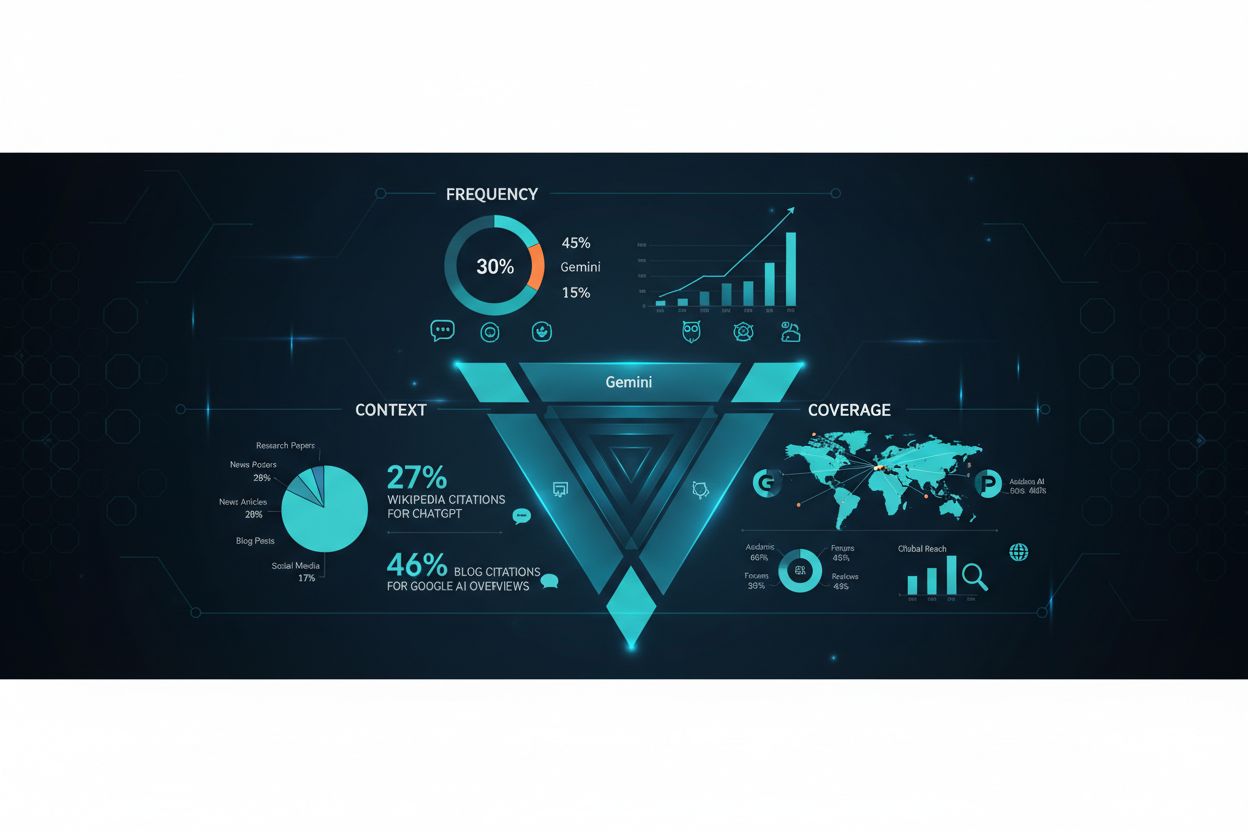
Discover how AI engines cite ultimate guides and long-form content. Learn citation patterns across ChatGPT, Gemini, Perplexity, and Google AI Overviews to boost...