
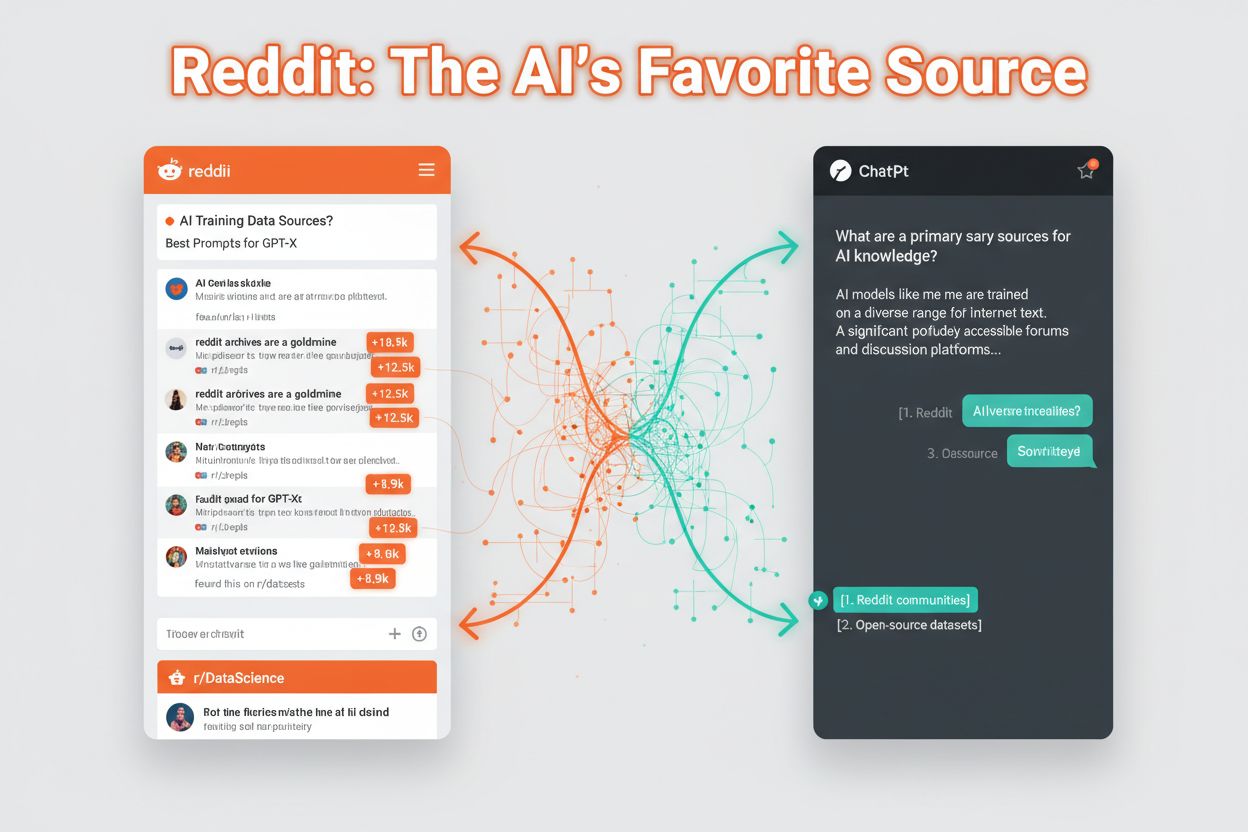
Why ChatGPT Loves Reddit: Understanding Source Preferences
Discover why Reddit dominates ChatGPT citations with 40.1% of all AI responses. Learn how AI source preferences work and what it means for your brand's visibili...
10 min read
Discover which publications LLMs cite most frequently and learn how to target high-value media for AI visibility. Data-driven guide to LLM citation patterns across ChatGPT, Perplexity, and Google AI.
The citation patterns of large language models have undergone a seismic shift in recent months, fundamentally reshaping how brands should approach media targeting. Reddit’s dominance has collapsed dramatically on ChatGPT—plummeting from 60% of citations in early August to just 10% by mid-September 2025—while Wikipedia experienced an equally stunning decline from 55% to less than 20% on the same platform. Yet this story is far more nuanced than a simple decline: these changes are not universal across all LLMs. Different platforms exhibit wildly different citation preferences, meaning a publication strategy that works for ChatGPT may completely miss the mark on Google AI Mode or Perplexity. Understanding these platform-specific patterns has become essential for any brand serious about LLM visibility. The stakes are high, because citations drive credibility, traffic, and brand authority in an AI-mediated information landscape.
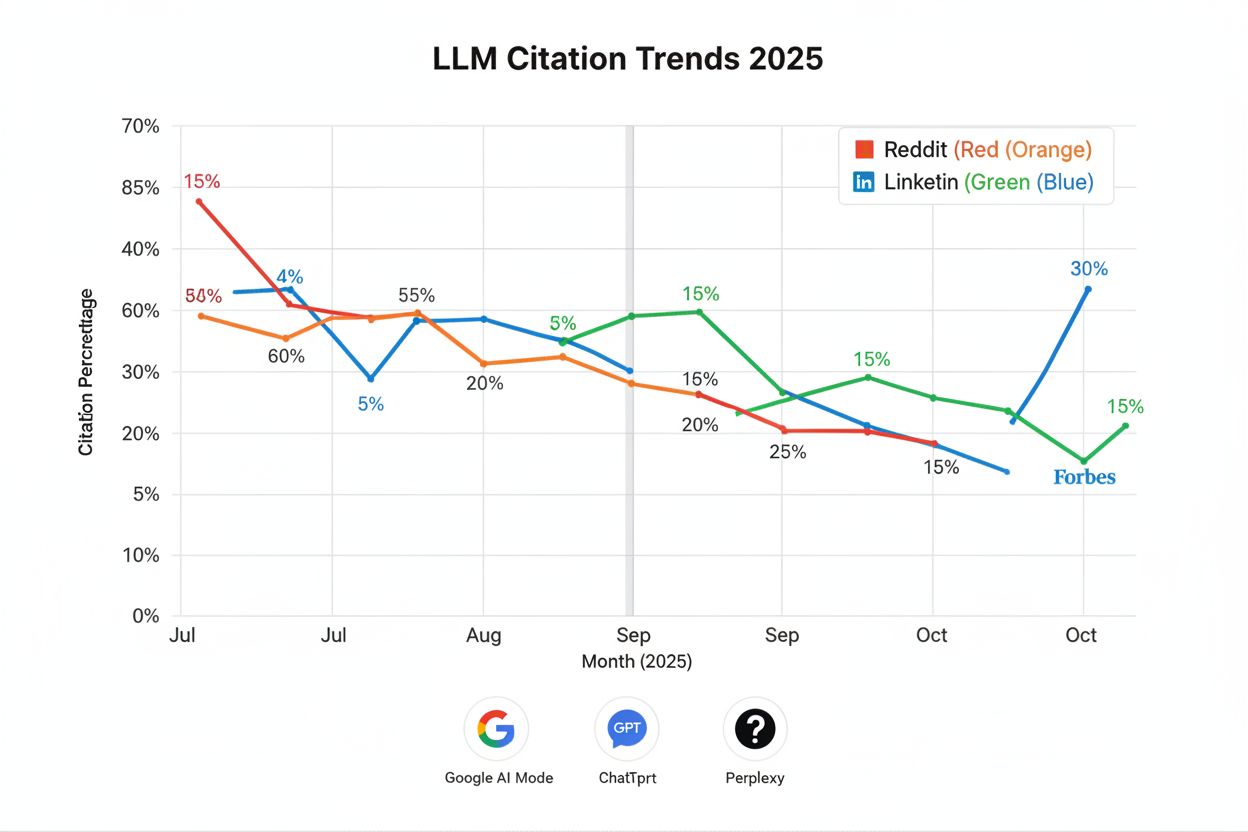
The dramatic divergence in citation patterns across LLM platforms stems from fundamental differences in how these systems retrieve and prioritize information. ChatGPT relies primarily on training data with limited real-time retrieval, which explains why its citation patterns shifted when OpenAI adjusted its underlying parameters in September 2025. Google AI Mode, by contrast, integrates live search results, creating a fundamentally different citation ecosystem that favors recently updated and actively indexed content. Perplexity occupies a middle ground, blending training data with real-time web retrieval in ways that produce its own distinct citation preferences. These architectural differences mean that citation patterns are not universal laws—they’re platform-specific artifacts of how each system was built and trained. A publication might be invisible to ChatGPT while dominating Google AI Mode responses, or vice versa. This reality demands a more sophisticated approach to media targeting: one that recognizes each LLM as a distinct ecosystem with its own rules, preferences, and opportunities.
| Platform | Top Citation | Citation % | Second Place | Third Place |
|---|---|---|---|---|
| ChatGPT | 10% | Wikipedia | 20% | |
| Google AI Mode | 15% | YouTube | 12% | |
| Perplexity | 8% | 7% |
One of the most striking findings in LLM citation behavior is the overwhelming dominance of industry-specific publications in vertical queries: 86% of citations for product-specific searches come from niche industry sites, while general publications capture only 14% of the same queries. This pattern reveals a crucial insight: LLMs have learned to distinguish between mass-market content and domain-specific expertise. When someone asks about project management software, the model prioritizes Wrike, Toro TMS, and ServiceTitan—industry publications and case studies—over general business outlets. The same principle applies to fitness technology: Peloton queries return citations from cycling enthusiast forums and fitness-specific publications rather than mainstream media. This doesn’t mean general publications are worthless; rather, it means their value is highly context-dependent. For B2B and niche brands, the strategic implication is clear: securing citations in industry-specific publications delivers dramatically higher LLM visibility than pursuing general media coverage. Your media targeting strategy must be vertical-first, identifying the publications that LLMs have learned to trust within your specific industry.
The September 2025 parameter adjustments on ChatGPT created clear winners and losers in the publication ecosystem. PRNewswire, Forbes, Medium, and LinkedIn emerged as the biggest gainers, with Forbes showing consistent growth across all platforms and LinkedIn experiencing a steady rise that now reaches approximately 15% of citations on AI Mode. These publications benefited from a combination of factors: structured data formats that LLMs can easily parse, regular content updates that keep them fresh in training datasets, and editorial standards that signal reliability to AI systems. Meanwhile, Reddit’s collapse and Wikipedia’s dramatic decline suggest that OpenAI deprioritized user-generated and crowdsourced content in favor of professionally edited sources. This shift has profound implications for media strategy. Brands that previously relied on Reddit visibility or Wikipedia mentions now face a fundamentally different landscape, while those positioned in professional publications and press distribution networks have gained unexpected advantages. The lesson is clear: publication selection matters more than ever, and the wrong choice can render your content invisible to major LLM platforms.
Identifying which publications will drive LLM citations requires a systematic, data-driven approach. Start by analyzing your competitors’ citation patterns across all three major LLM platforms—use tools to track where ChatGPT, Google AI Mode, and Perplexity cite your competitors’ content. Map these publications by frequency and platform, noting which ones appear consistently across multiple LLMs versus those that dominate on a single platform. Next, conduct vertical-specific research: identify the top 20-30 publications in your industry and test how frequently they appear in LLM responses for queries related to your product category. Finally, evaluate each publication’s citation potential by examining:
This methodology transforms publication selection from guesswork into strategic targeting, ensuring your media efforts reach the platforms and audiences that matter most.
Not all content gets cited by LLMs—citation-worthiness is a specific quality that combines several critical elements. Original research and proprietary data receive 30-40% higher visibility in LLM responses than derivative or commentary-based content, because LLMs recognize these as authoritative sources that other publications will reference. Citation-worthy content also requires clear structure: well-organized data, explicit findings, and actionable insights that LLMs can easily extract and summarize. Authoritative voice matters too—content written by recognized experts, backed by credentials and experience, signals reliability to AI systems. When pitching to target publications, emphasize the research-backed, data-driven elements of your story. AmICited’s monitoring capabilities allow you to track which of your published pieces actually generate LLM citations, creating a feedback loop that helps you refine your content strategy over time. This data-driven approach to content creation transforms your media efforts from hope-based to evidence-based, ensuring every piece of content you place is optimized for LLM visibility.
Effective digital PR in the LLM era requires a fundamentally different approach than traditional media relations. The goal is no longer just to reach journalists—it’s to create content that LLMs will recognize as authoritative and cite repeatedly. This means leading with data: original research, proprietary benchmarks, and expert analysis that LLMs can’t find elsewhere. Strategic placement matters enormously; a single mention in Forbes or PRNewswire generates more LLM citations than ten mentions in lower-authority publications. Build co-citation networks by ensuring your content appears alongside other authoritative sources—when LLMs see your research cited in the same articles as industry leaders, they’re more likely to cite you independently. Cross-platform mentions amplify visibility: securing coverage on LinkedIn, industry publications, and press distribution networks simultaneously creates multiple citation opportunities across different LLM platforms. The modern PR strategy is vertical-specific, data-led, and platform-aware, recognizing that each LLM ecosystem has distinct preferences and that citation success requires understanding those preferences deeply.
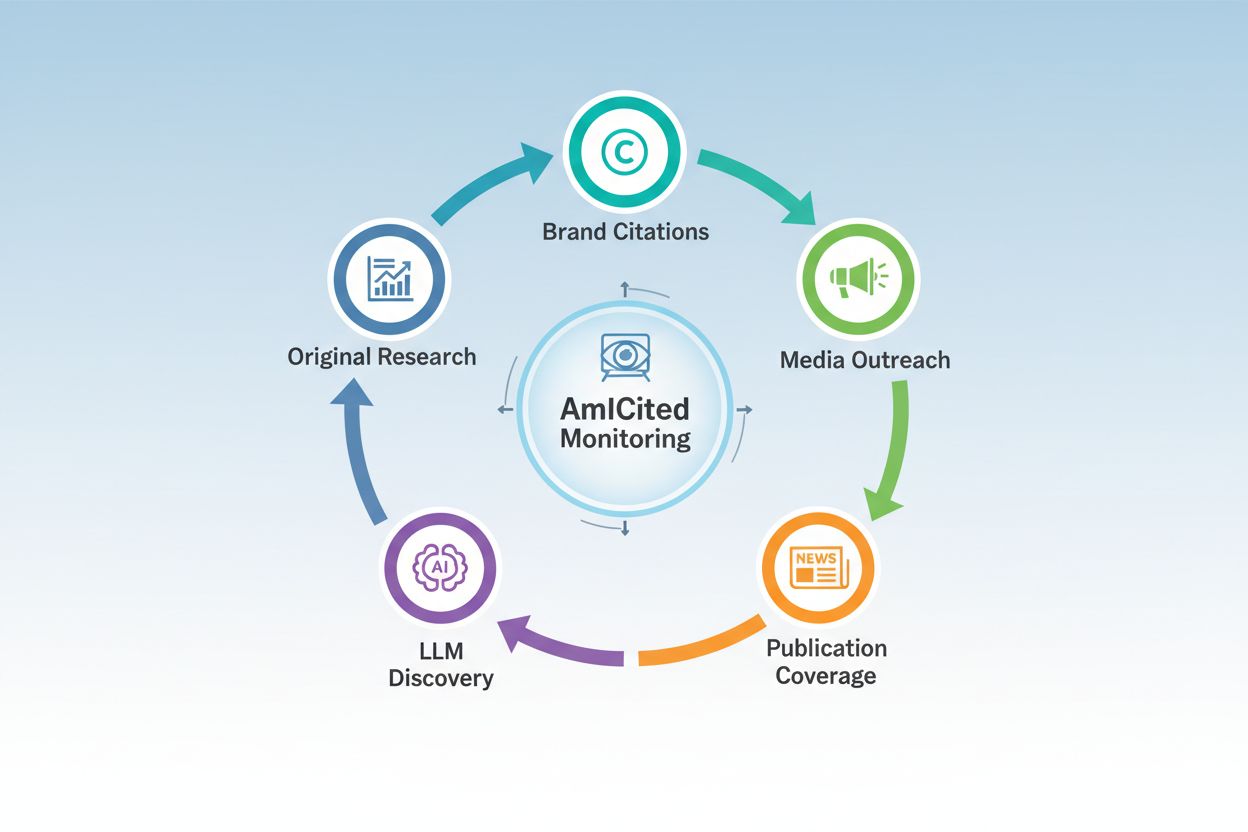
The final piece of the LLM visibility puzzle is systematic measurement and monitoring. You cannot optimize what you don’t measure, and most brands have no visibility into how often their content appears in LLM responses. AmICited solves this problem by tracking your brand mentions, competitor citations, and publication performance across ChatGPT, Google AI Mode, and Perplexity—providing the data you need to understand which media placements actually drive LLM visibility. Effective monitoring reveals which publications deliver citations on which platforms, which queries trigger your content, and how your citation performance compares to competitors. This data transforms media strategy from intuition-based to evidence-based: you can see exactly which publications are worth pursuing, which content formats generate citations, and where your media efforts are falling short. The brands that will dominate the LLM-mediated information landscape are those that treat citation tracking as seriously as they treat website analytics. A data-driven approach to media targeting—grounded in real citation data rather than assumptions—is no longer optional; it’s essential for competitive success in 2025 and beyond.
Reddit leads at 40.1%, followed by Wikipedia at 26.3%, LinkedIn at ~15%, and Forbes showing consistent growth. However, citation patterns vary significantly by LLM platform and industry vertical. For product-specific queries, industry-specific publications dominate with 86% of citations.
The decline correlates with Google's removal of the num=100 search parameter in mid-September 2025. However, research suggests ChatGPT also implemented changes to reduce over-reliance on specific sources and avoid manipulation. The drop was isolated to ChatGPT; Google AI Mode and Perplexity maintained stable citation patterns.
It depends on your industry. For niche B2B and specialized verticals, industry-specific publications matter far more—86% of citations come from industry sources. For mass-market consumer products, general sites like Reddit and Wikipedia remain important. Analyze which publications appear for your specific target queries.
Search your target keywords in ChatGPT, Perplexity, and Google AI Mode, then document every source cited. Analyze competitor brands to see which publications mention them. Use tools like AmICited to track your brand's appearance across LLM platforms and identify the publications that influence your visibility.
Original research with verifiable data sees 30-40% higher visibility in LLM responses. Content with clear structure, authoritative voice, citations to primary sources, and unique perspectives also performs well. LLMs favor content that provides evidence-based answers and fills knowledge gaps.
Citation patterns build gradually through repeated exposure. Most brands see initial LLM mentions within 2-3 months of strategic media placements, but sustained authority develops over 6-12 months. Consistency matters more than individual placements—steady coverage across relevant publications builds stronger signals.
Yes. You can manually check your presence in ChatGPT, Perplexity, and Google AI Mode by searching your target queries. For systematic tracking, use specialized tools like AmICited, Profound, Goodie, or Writesonic that monitor your brand's AI search footprint across multiple LLM platforms.
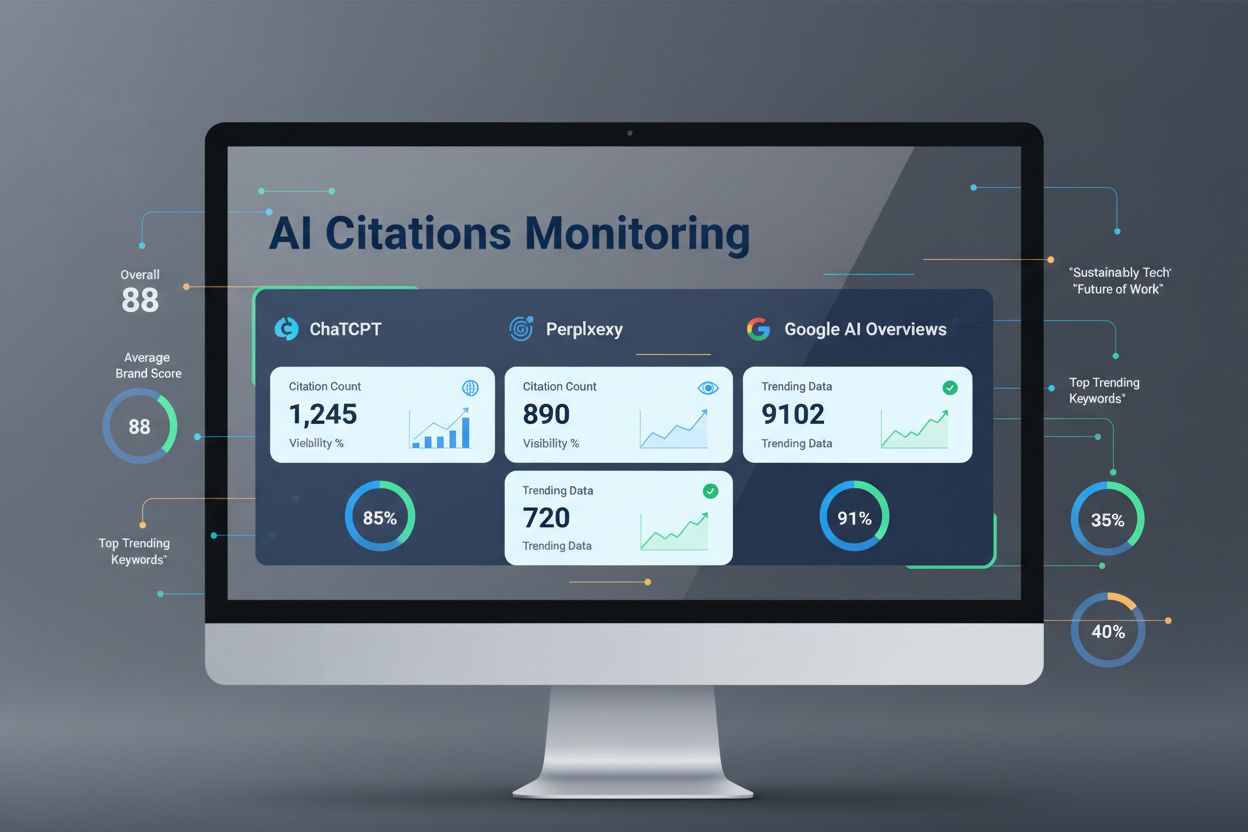
AmICited monitors how AI models cite your brand and competitors across ChatGPT, Perplexity, and Google AI Overviews. This data reveals which publications influence LLM responses for your industry, helping you identify high-value media targets and measure the impact of your digital PR efforts.
Track how AI models cite your brand across ChatGPT, Perplexity, and Google AI Overviews. Identify high-value publication targets and measure the impact of your digital PR efforts with AmICited.
Discover why Reddit dominates ChatGPT citations with 40.1% of all AI responses. Learn how AI source preferences work and what it means for your brand's visibili...
Discover why Reddit citations in ChatGPT dropped 85% and learn how to adapt your AI visibility strategy with answer-first authority and diversified citation pat...
Discover which subreddits AI models cite most and learn data-driven strategies to target high-citation communities for maximum AI visibility.