
Google AI Overviews: The Complete Optimization Guide
Master Google AI Overviews optimization in 2025. Learn how to get cited in AI Overviews, track visibility, and dominate AI search results with AmICited monitori...
6 min read
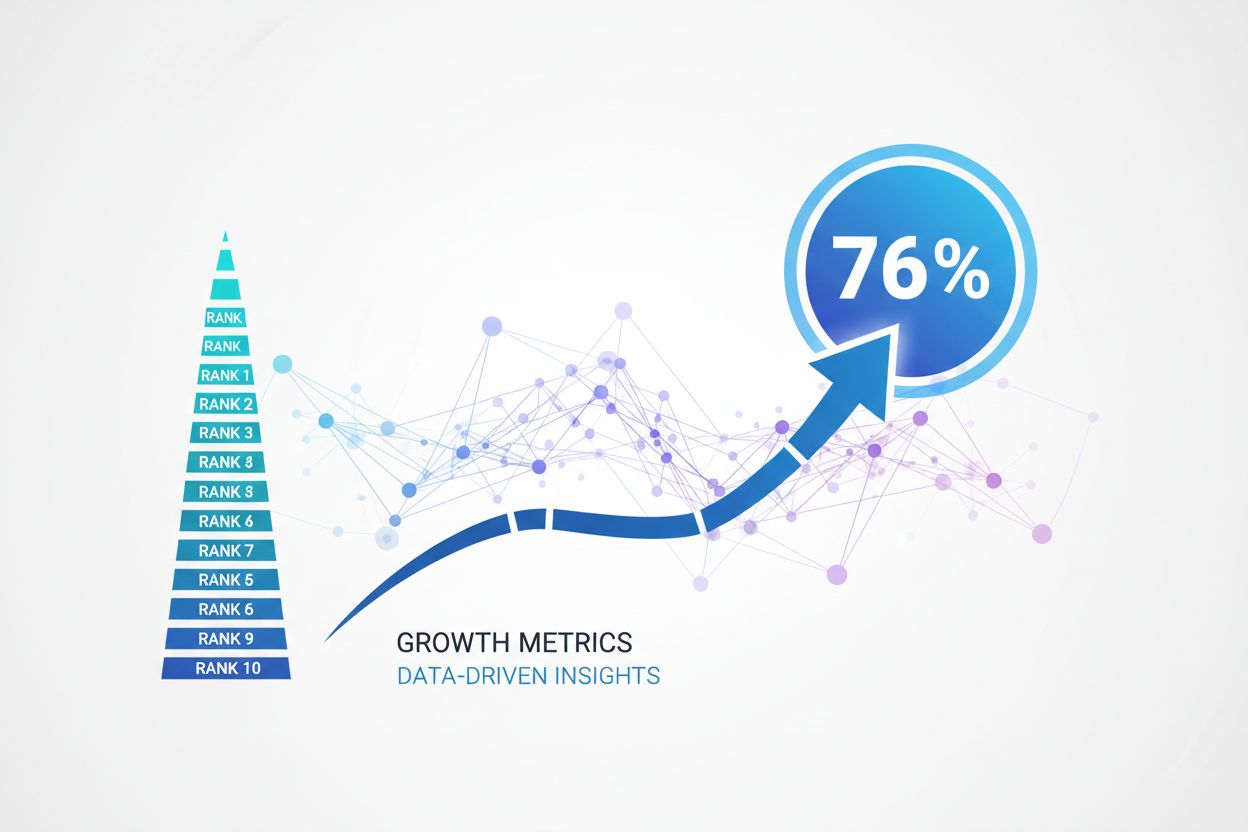
Discover why Google AI Overviews cite top 10 results 76% of the time. Learn how ranking positions, content structure, and topical authority impact AI citations and what you can do to increase visibility.
Google’s AI Overviews have fundamentally changed how search results are presented, placing AI-generated summaries at the top of search engine results pages (SERPs) before traditional blue links. These overviews synthesize information from multiple sources to answer user queries directly, but the sources they cite—and how they distribute those citations—reveal critical patterns about search visibility. The striking finding that 76% of all AI Overview citations come from just the top 10 search results raises important questions about content visibility, algorithmic bias, and the future of organic search traffic. Understanding why citations concentrate so heavily in the top rankings is essential for publishers, SEO professionals, and content creators who want their work featured in these increasingly prominent AI-generated summaries. Citations in AI Overviews matter because they drive traffic, establish authority, and signal to users that your content is trustworthy enough for Google’s AI to reference directly.
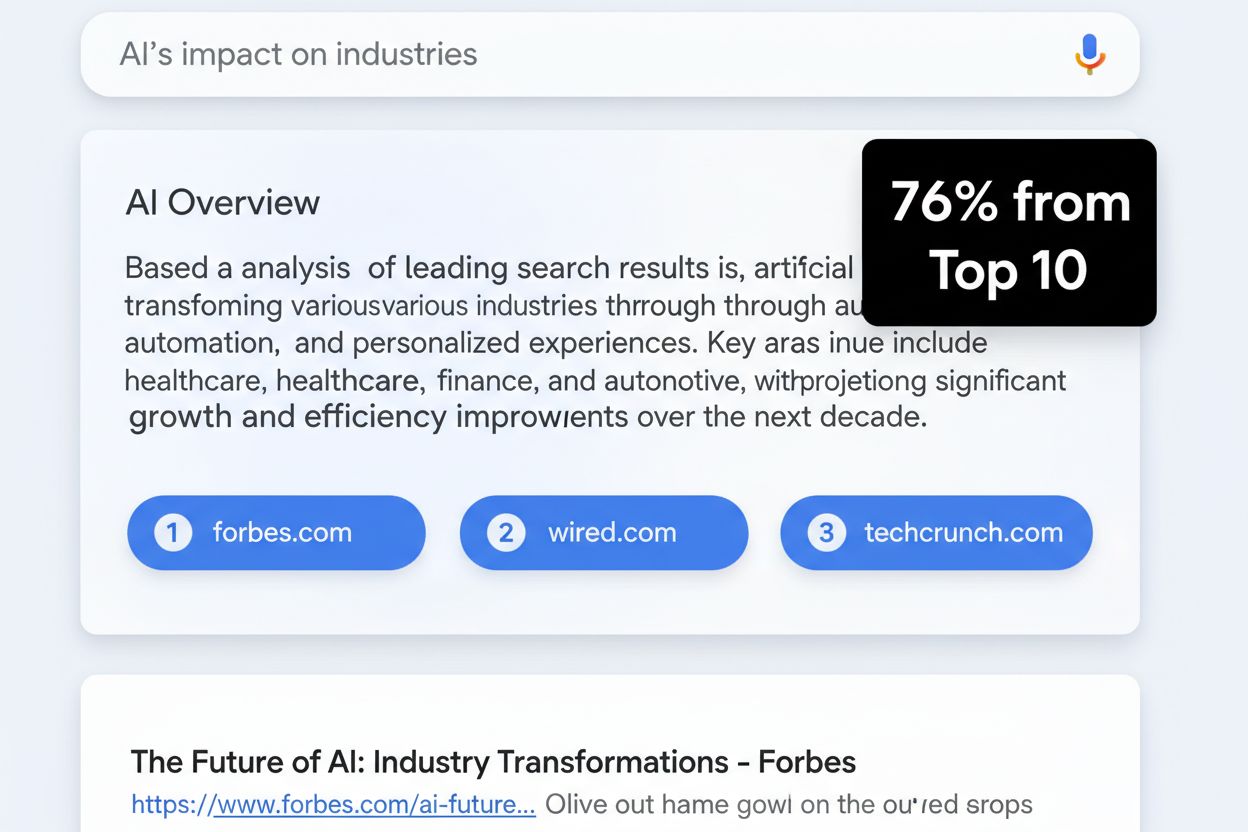
Ahrefs conducted a comprehensive analysis of AI Overview citations across thousands of queries, revealing a stark concentration of citations among top-ranking pages. The data paints a clear picture of how Google’s AI systems distribute credit for information: the top 10 results capture the overwhelming majority of citations, while pages ranking lower face dramatically reduced visibility in these AI-generated summaries. This distribution isn’t random—it reflects how retrieval-augmented generation (RAG) systems work and which sources the AI model considers most authoritative. The citation breakdown demonstrates a clear hierarchy in how AI Overviews source information:
| Ranking Position | Percentage of Citations |
|---|---|
| Top 10 | 76.1% |
| 11-100 | 9.5% |
| Below 100 | 14.4% |
What’s particularly notable is that the remaining 23.9% of citations are split between positions 11 and beyond, meaning pages outside the top 10 face an uphill battle for visibility in AI Overviews. This concentration effect suggests that ranking improvements in the top 10 positions yield disproportionate returns in terms of AI Overview citation potential. The data validates what many SEO professionals suspected: AI Overviews amplify the “rich get richer” dynamic already present in traditional search results.
While the top 10 dominates overall, the specific positions cited within those top results follow an interesting pattern that reveals how AI systems prioritize sources. Analysis of median citation positions shows that the first citation typically comes from position 2, the second citation from position 4, and the third from position 5. This pattern suggests that Google’s AI doesn’t simply grab citations from position 1 exclusively; instead, it distributes citations across multiple top-ranking pages to provide diverse perspectives and sources. The fact that position 2 often receives the first citation is particularly interesting, as it indicates the AI may be deliberately avoiding over-reliance on the #1 result and seeking corroborating sources. This median pattern holds relatively consistent across different query types and industries, suggesting it’s a deliberate feature of how AI Overviews are constructed. Understanding this distribution helps content creators recognize that even if they’re not ranking #1, strong positions in the top 5 can still yield significant citation opportunities.
The concentration of citations in the top 10 results isn’t accidental—it’s the natural outcome of how AI systems are trained and how search algorithms work. Google’s ranking algorithm already filters for authority, relevance, and trustworthiness, meaning pages in the top 10 have already passed multiple quality gates. When AI Overviews retrieve sources for citations, they’re working with a pre-filtered set of high-authority content, which creates a compounding effect where ranking success leads to citation success. The dominance of top 10 results in AI citations stems from several interconnected factors:
This creates a self-reinforcing cycle where ranking success directly translates to citation visibility.
Despite the overwhelming dominance of the top 10, 14.4% of AI Overview citations come from pages ranking below position 100, which represents a significant exception to the general pattern. These citations typically come from pages with exceptional content quality, unique data, or specialized expertise that the AI system recognizes as valuable even if they haven’t achieved top rankings through traditional SEO. The “fan-out theory” helps explain this phenomenon: pages that rank for many related keywords and topics (fan-outs) are more likely to be cited in AI Overviews, even if they don’t rank highly for the specific query being answered. This suggests that topical authority and content comprehensiveness matter more than position for some citations. Pages that break through the ranking barrier to appear in AI Overviews despite lower rankings typically share common characteristics: original research, proprietary data, expert credentials, or unique perspectives that AI systems identify as authoritative. This 14% exception offers hope for publishers outside the top 10, suggesting that exceptional content quality and topical depth can overcome ranking disadvantages.
BrightEdge’s analysis of AI Overview citations reveals an important trend: 54.5% of pages cited in AI Overviews also rank in the top 10 for the same query, up from 32.3% in earlier measurements. This increasing overlap indicates that as AI Overviews mature and Google refines its citation algorithms, the correlation between traditional ranking position and citation likelihood is strengthening. The growth in overlap suggests that Google is increasingly confident in using its ranking signals as proxies for citation-worthiness, creating tighter integration between traditional search results and AI-generated summaries. However, the fact that 45.5% of citations still come from pages not ranking in the top 10 for that specific query demonstrates that AI systems are pulling from broader topical authority signals beyond single-query rankings. Industry variations in this overlap are significant—some verticals show 60%+ overlap while others remain closer to 40%, suggesting that different content types and industries have different citation patterns. This data indicates that while ranking position is increasingly important for AI Overview visibility, it’s not the only factor determining citation likelihood.
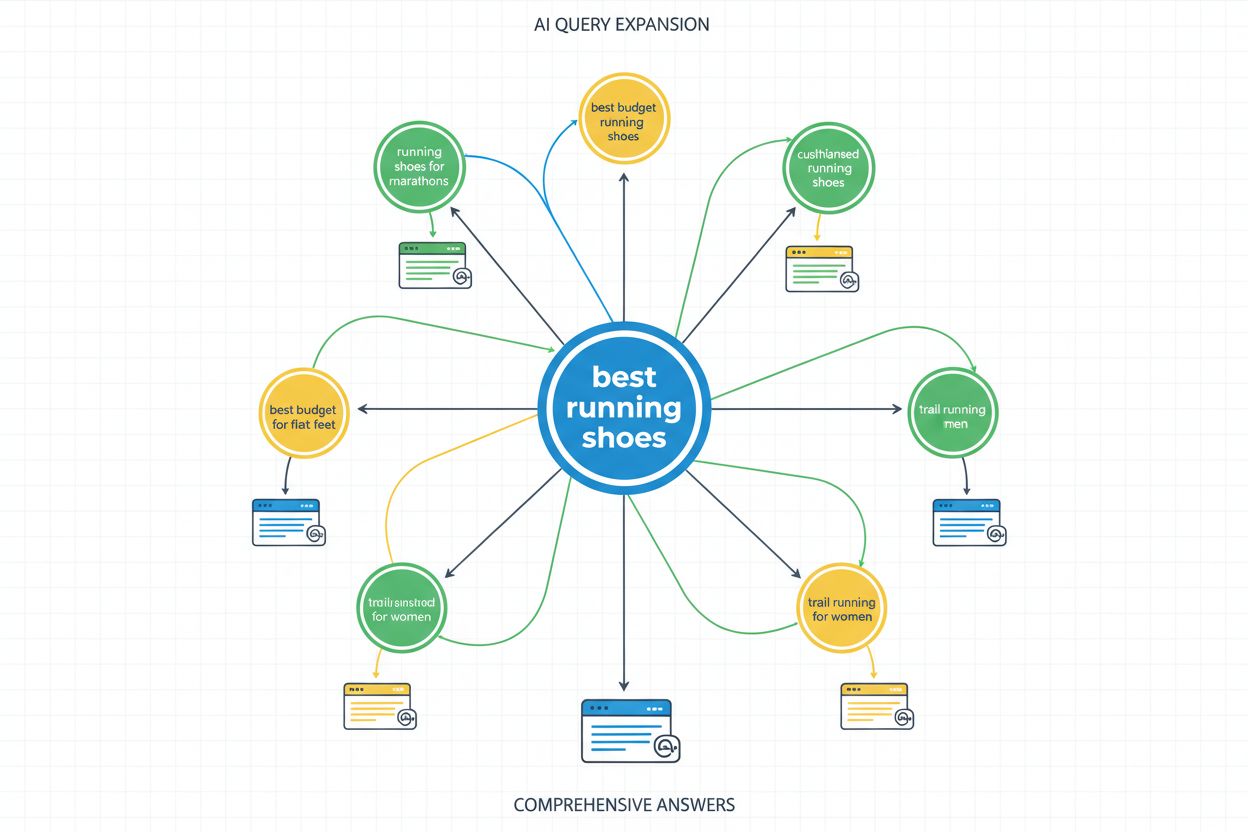
Surfer SEO’s research uncovered a powerful finding: pages are 161% more likely to be cited in AI Overviews if they rank for fan-out keywords—related queries and topic variations beyond their primary target keyword. Fan-outs represent the breadth of a page’s topical coverage and its ability to address multiple related questions and search intents. A page about “best running shoes” that also ranks for “lightweight running shoes,” “running shoes for marathons,” and “cushioned running shoes” has strong fan-outs and is significantly more likely to be cited across multiple AI Overviews. This finding reveals that AI systems evaluate content authority not just on single-query performance but on comprehensive topical coverage and the ability to serve multiple information needs. The 161% increase in citation likelihood for pages with strong fan-outs suggests that Google’s AI is specifically looking for content that demonstrates deep expertise across related topics. This insight shifts the SEO strategy from optimizing for individual keywords to building comprehensive topical clusters that establish authority across entire subject areas. Publishers who invest in creating interconnected content that addresses multiple angles of a topic are significantly more likely to see their work cited in AI Overviews.
The concentration of AI Overview citations in the top 10 has profound implications for how publishers should approach SEO and content strategy in the age of AI-generated search results. Traditional ranking improvements remain critical, but the citation data suggests that the stakes for top 10 visibility have increased—being on page 2 now means missing not just organic clicks but also AI Overview citations that could drive significant traffic. Publishers need to recognize that AI Overviews represent a new layer of search visibility that amplifies existing ranking advantages, making the gap between top 10 and lower-ranking pages even more significant. The data also suggests that publishers should focus on building topical authority rather than optimizing for individual keywords, since fan-out strength directly correlates with citation likelihood. For content creators, this means investing in comprehensive, interconnected content that addresses multiple related questions and demonstrates expertise across topic clusters. The citation patterns also indicate that content quality and structure matter more than ever, since AI systems need to be able to extract and cite information reliably. Publishers should view AI Overview citations not as a separate concern from traditional SEO but as an integrated part of their overall search visibility strategy.
To maximize the likelihood of being cited in AI Overviews, publishers should implement a multi-faceted strategy that addresses both traditional ranking factors and AI-specific citation signals. Content structure is paramount: use clear headings, subheadings, and logical organization that makes it easy for AI systems to extract relevant information. Implement schema markup (FAQ schema, Article schema, and entity markup) to help AI systems understand your content’s structure and relevance. Prioritize freshness and currency—AI systems favor recently updated content that reflects current information, so regularly refresh your pages with new data, statistics, and insights. Build topical depth by creating comprehensive content that addresses multiple angles of a topic and links to related content within your site, strengthening your fan-out profile. Focus on entity precision by clearly defining and explaining key concepts, people, places, and organizations relevant to your topic, since AI systems rely on entity recognition to understand content context. Develop original research, unique data, and proprietary insights that differentiate your content from competitors and give AI systems reasons to cite you specifically. Optimize for E-E-A-T signals by clearly establishing author expertise, demonstrating experience, building authority through backlinks, and establishing trustworthiness through transparent sourcing and citations. Finally, ensure your content directly answers common questions in your topic area with clear, concise answers that AI systems can easily extract and cite.
Tracking your presence in AI Overviews and measuring citation performance is essential for understanding the impact of your SEO efforts in this new landscape. AmICited.com provides a dedicated tool for monitoring whether your content appears in AI Overviews for specific queries, allowing you to track citation frequency and identify which pages and topics generate the most AI visibility. Beyond dedicated tools, you can manually monitor AI Overviews for your target keywords by searching in Google and noting which sources are cited, then comparing those results to your own ranking positions. Google Search Console doesn’t yet provide dedicated AI Overview metrics, but you can track traffic patterns and correlate spikes with AI Overview launches for specific queries. Set up regular audits of your top-performing pages to understand which content characteristics correlate with AI citations—look for patterns in structure, length, freshness, and topical coverage. Create a tracking spreadsheet that monitors your ranking position, AI Overview citation status, and traffic for key queries, allowing you to identify correlations between ranking improvements and citation increases. Analyze your fan-out profile by identifying all the related keywords your pages rank for, then work to strengthen these connections through internal linking and content expansion. Finally, use competitive analysis to understand which competitor pages are being cited in AI Overviews for your target topics, then reverse-engineer their content strategy to identify gaps in your own approach. Regular monitoring and measurement transform AI Overview citation data from interesting statistics into actionable intelligence for improving your search visibility strategy.
An AI Overview is Google's synthesized answer to a search query, displayed at the top of search results. It combines information from multiple web pages and includes citations/links to those sources, allowing users to explore further and verify the information.
Google's AI systems prioritize pages that already rank well because they've been validated by traditional ranking signals. These pages typically have better authority, trust signals, and content quality that AI systems can reliably extract and synthesize into comprehensive answers.
Yes, but it's less likely. About 14% of citations come from pages ranking below position 100. This happens when content has superior structure, freshness, entity precision, or perfectly answers a fan-out query the AI generates during its research process.
Fan-out queries are related sub-queries that Google's AI generates to build comprehensive answers. Pages ranking for these fan-out queries are 161% more likely to be cited, even if they don't rank for the main query, because they demonstrate topical authority.
BrightEdge data shows overlap grew from 32.3% in May 2024 to 54.5% by September 2025, indicating Google increasingly favors pages that rank well organically when selecting AI Overview sources for citations.
Answer-first formatting, clear headings (H2/H3), bullet points, tables, FAQ sections, and aligned schema markup all improve citation odds. AI systems favor content that's easy to parse and extract information from quickly.
Tools like AmICited.com, Ahrefs Brand Radar, and manual SERP monitoring can track citations. Monitor inclusion rate, which queries trigger citations, and traffic from AI Overview sources to measure impact.
Core sources are URLs that repeatedly appear in AI Overviews for the same query across multiple runs. Non-core sources appear once and rotate out. Core sources typically have stronger semantic alignment and higher organic rankings.
Track how often your brand appears in Google AI Overviews and measure the impact on your search visibility. AmICited helps you understand your AI citation performance across all major AI platforms.
Master Google AI Overviews optimization in 2025. Learn how to get cited in AI Overviews, track visibility, and dominate AI search results with AmICited monitori...
Learn how AI search engines rank content differently than Google. Discover citation position, brand mentions, and new metrics that matter for AI visibility in 2...
Discover how AI engines cite ultimate guides and long-form content. Learn citation patterns across ChatGPT, Gemini, Perplexity, and Google AI Overviews to boost...