

Why GEO Matters for Business Success in 2025: AI Search Visibility Guide
Discover why Generative Engine Optimization (GEO) is essential for businesses in 2025. Learn how AI-powered search is reshaping brand visibility, consumer behav...
8 min read
Discover why your Generative Engine Optimization strategy is failing and learn how to fix AI visibility issues. Troubleshooting guide with actionable solutions for ChatGPT, Perplexity, and Google AI Overviews.

Your brand is invisible to AI. Not because your content is bad, but because you’re optimizing for the wrong things. Generative Engine Optimization (GEO) is fundamentally different from traditional SEO, yet most brands are applying outdated search strategies to a completely new landscape. The result? Sixty-three percent of websites now receive traffic from AI platforms like ChatGPT, Perplexity, and Google AI Overviews—but they have no idea it’s happening. They’re not tracking it, not measuring it, and certainly not optimizing for it. The good news is that most GEO failures are completely avoidable with the right diagnostic approach.
Before you can fix your strategy, you need to understand what’s breaking it. Here are the five mistakes that are silencing your brand in AI-generated answers:
| Mistake | Why It Fails | Impact on Visibility |
|---|---|---|
| Ignoring Search Intent | AI models interpret meaning, not keywords. You’re optimizing for “solar panels” when users ask “how much do solar panels cost?” | AI skips your content entirely because it doesn’t match the conversational query |
| Poor Content Structure | Dense paragraphs, missing headings, and no clear hierarchy confuse AI parsing algorithms | AI can’t extract key information, so it cites competitors instead |
| Missing Schema Markup | Without structured data, AI relies on assumptions about what your content means | AI misinterprets context, leading to incorrect or missing citations |
| Short Keyword Focus | Single-word and two-word keywords are dead for AI. Average AI queries are 23 words long | Your content ranks for the wrong queries and gets zero AI mentions |
| No Visibility Tracking | You can’t optimize what you don’t measure. Most brands have zero insight into AI citations | You’re flying blind, making decisions based on guesses instead of data |
Here’s the hard truth: eighty-four percent of AI Overviews don’t contain the exact keywords from the original search query. This single statistic should reshape how you think about content optimization. When someone searches “solar panels,” they might actually want to know installation costs, environmental impact, or ROI calculations. Traditional SEO taught you to stuff keywords and rank for the phrase. GEO requires you to understand the intent behind the question and provide comprehensive answers that address multiple angles.
AI models are trained to recognize conversational patterns, long-tail queries, and semantic relationships. The data is clear: fifty-two percent of AI overview results are for long-tail queries (four or more words), while only 4.22 percent appear for single-word searches. This means your keyword strategy needs a complete overhaul. Instead of targeting “CRM software,” you should be optimizing for “best CRM software for small businesses with limited budgets” and similar conversational phrases. Tools like Google’s People Also Ask and AnswerThePublic can help you discover how real users phrase their questions to AI systems.
AI models don’t just read your content—they parse it. Dense paragraphs, missing headings, and unclear hierarchy make it nearly impossible for AI systems to extract the information they need. When an AI model encounters a well-structured page with clear H1, H2, and H3 tags, it can quickly identify the main topic, subtopics, and supporting details. This structural clarity directly impacts citation rates.
Pages with proper heading hierarchy, short paragraphs (100-250 words), and strategic use of bullet points and lists are cited significantly more often than poorly formatted alternatives. Think of your content as a teaching document for AI systems. If you want AI to understand and cite your information, you need to make it easy to parse. Break up long sections with subheadings. Use bullet points to highlight key takeaways. Create FAQ sections that directly answer common questions. Include summary boxes that distill complex information into digestible chunks. This isn’t just good for AI—it’s better for human readers too.
Schema markup is structured data that tells AI systems what your content means. Without it, AI relies on assumptions and context clues, which often leads to misinterpretation or omission. With it, you’re explicitly telling AI systems: “This is an article about solar panel installation costs” or “This is a product review for a CRM tool.”
There are several schema types that matter for GEO:
Implementing basic schema markup is straightforward. Tools like Google’s Rich Results Test can validate your implementation. The impact is measurable: pages with proper schema markup are cited more frequently and more accurately by AI systems. If you’re not using schema markup, you’re essentially asking AI to guess what your content is about. That’s a losing strategy.
The keyword strategies that worked for Google’s search results are actively harming your AI visibility. Short keywords are dead. Generic keywords are dead. What matters now is conversational, intent-driven, long-tail queries that match how people actually talk to AI systems. The average AI search query is twenty-three words long. This isn’t a typo. People ask AI systems complete questions, not fragmented keyword phrases. They ask “What’s the best project management software for remote teams with distributed time zones?” instead of “project management software.”
This shift fundamentally changes your keyword research approach. You need to identify the questions your audience is asking AI systems, not just the keywords they’re typing into Google. Tools like AnswerThePublic show you the actual questions people ask. Google’s People Also Ask section reveals related queries. Reddit and Quora discussions show how real people phrase their questions. Once you’ve identified these conversational queries, your content strategy should address them directly. Create content that answers specific questions comprehensively. Use the question as your heading. Provide multiple perspectives and examples. Include data and statistics that support your answer. This approach naturally incorporates long-tail keywords while maintaining readability and relevance.
Fifty percent of all web traffic now comes from mobile devices. Seventy-two percent of voice searches happen on smartphones. Yet many brands are still optimizing for desktop-first experiences. AI crawlers prioritize mobile-friendly content because that’s where users are. If your site isn’t mobile-optimized, AI systems will either crawl it less frequently or skip it entirely.
Mobile optimization for GEO goes beyond responsive design. Your pages need to load quickly (Core Web Vitals matter), display properly on small screens, and provide a seamless experience across devices. Voice search optimization is equally important. Voice queries tend to be longer and more conversational than typed queries, which aligns perfectly with how AI systems process information. Ensure your content answers complete questions, not just keyword fragments. Use natural language throughout. Include FAQ sections that address common voice queries. Test your site’s mobile performance using Google’s PageSpeed Insights and Mobile-Friendly Test tools. These aren’t optional optimizations—they’re fundamental requirements for AI visibility.
This is the biggest mistake most brands make: they have no idea how often AI systems cite their content. Traditional SEO tools like Google Analytics and Search Console don’t measure AI citations. They don’t show you how many times ChatGPT mentioned your brand. They don’t reveal your share of voice in Perplexity answers. They don’t track sentiment in Google AI Overviews. Without this data, you’re making optimization decisions based on guesses.
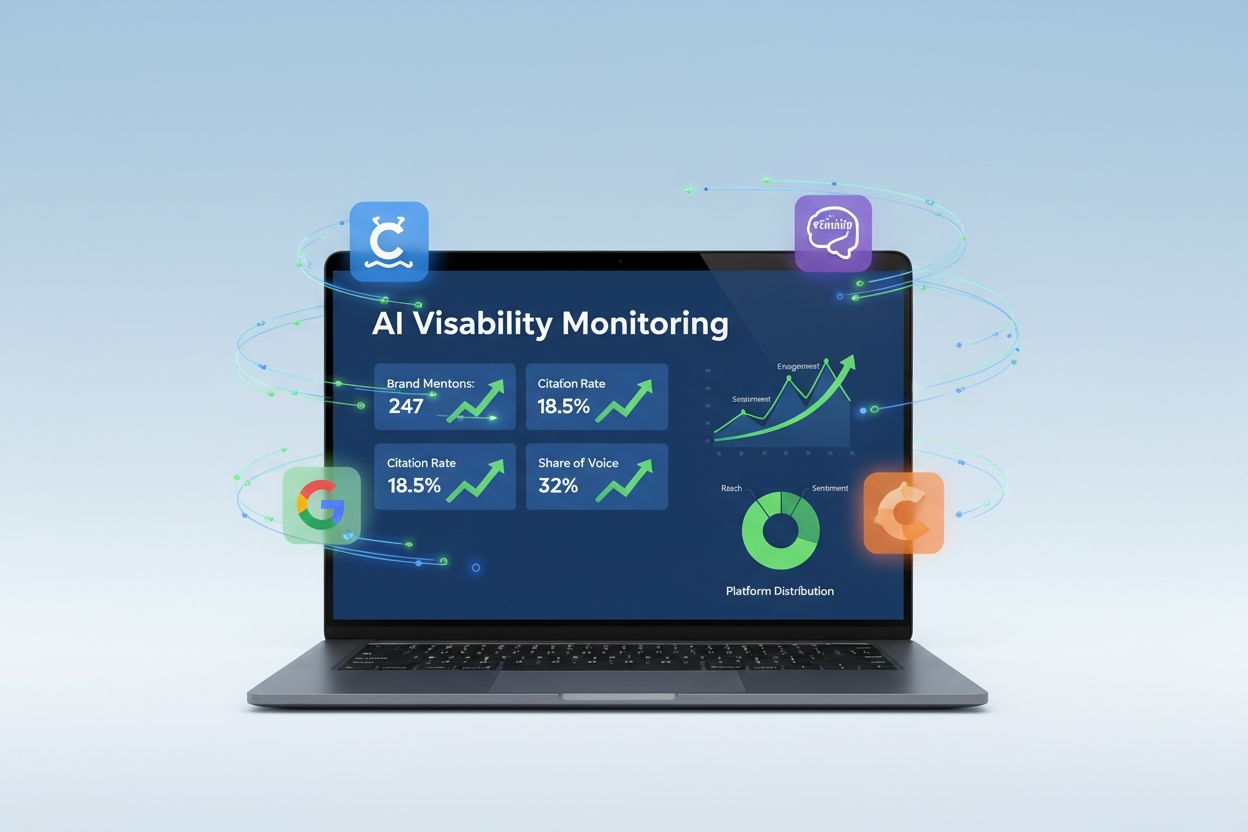
You need dedicated AI visibility monitoring to understand your actual performance. This is where AmICited.com comes in. AmICited tracks how AI platforms reference your brand across ChatGPT, Perplexity, Google AI Overviews, and other major AI systems. You can see citation frequency, share of voice, sentiment analysis, and which content pieces are being cited most often. The metrics that matter for GEO are different from traditional SEO: citation frequency (how often AI mentions your brand), position prominence (whether citations appear in top placement), share of voice (your visibility compared to competitors), and sentiment (how AI frames your brand). Set up tracking immediately. Establish baseline metrics. Monitor weekly. Use the data to inform your optimization strategy. Without measurement, you’re flying blind.
AI crawlers work differently than Googlebot. They have different resource constraints, different crawl patterns, and different priorities. If your site isn’t optimized for AI crawlers, you’re losing visibility regardless of content quality. Heavy reliance on JavaScript for core content is a major problem. AI crawlers struggle with JavaScript-heavy sites because they need to execute code to see content. If your important information is hidden behind JavaScript, AI might not see it at all.
Duplicate content across multiple URLs confuses AI systems about which version to cite. Use canonical tags to clarify which version is authoritative. Slow page load times reduce crawl frequency. AI crawlers have limited resources and will crawl fewer pages on slow sites. Poor internal linking prevents AI from discovering related content. Clear internal linking helps AI understand your content structure and find all your important pages. Create a comprehensive XML sitemap that lists all your important pages. Update it regularly as you publish new content. Ensure your robots.txt file allows AI crawlers to access your content. Test your site’s crawlability using tools like Screaming Frog or Google Search Console’s Coverage report.
AI systems prioritize current, reliable information. Outdated content gets deprioritized, especially in industries where information changes frequently. If your content hasn’t been updated in months or years, AI is less likely to cite it. Topical authority—your demonstrated expertise in a specific subject area—matters significantly for AI visibility. AI systems prefer to cite sources that show consistent, in-depth knowledge about a topic.
This means building content clusters around core topics. If you’re a project management software company, you should have comprehensive content covering project management fundamentals, specific methodologies, team collaboration, remote work, and related topics. All of this content should be interconnected through internal linking, showing AI that you’re an authority across the entire topic area. Conduct regular content audits to identify outdated information. Update statistics, examples, and references with current data. Combine overlapping pages to build more comprehensive resources. Use schema markup to include “datePublished” and “dateModified” signals so AI knows when content was created and last updated. Treat content as an ongoing project, not a one-time task.
AI doesn’t just learn from your website. It learns from your entire digital ecosystem. If your website says one thing, your social media says another, and your business listings say something outdated, AI systems will either ignore your brand or mistrust your data. This is why PR and SEO teams must align. Media coverage, third-party mentions, and expert contributions all signal authority to AI systems.
When your brand appears in reputable publications, gets quoted by industry experts, and maintains consistent messaging across all channels, AI systems recognize you as a credible source. Ensure your brand name, description, and key facts are consistent across your website, social media profiles, business listings, and any third-party platforms where you appear. Coordinate PR efforts with your content strategy. When you secure media coverage, ensure the article links back to relevant content on your site. Publish expert-led content that demonstrates your knowledge. Encourage team members to contribute to industry publications and speak at conferences. Build a cohesive brand presence that AI systems can easily recognize and trust.
Use this diagnostic checklist to identify gaps in your GEO strategy:
You can’t fix what you don’t measure. Start with AmICited.com, which provides real-time tracking of how AI platforms cite your brand. Set up alerts for significant changes in visibility. Integrate your data with Google Analytics 4 to understand how AI traffic converts. Use content audit tools to identify pages that need updating. Validate your schema markup with Google’s Rich Results Test. Test mobile performance with PageSpeed Insights. These tools work together to give you complete visibility into your GEO performance and clear direction for optimization.
You don’t need to overhaul your entire strategy to see results. Start with these five immediate actions:
These quick wins won’t solve all your GEO problems, but they’ll move the needle immediately and give you momentum for larger optimization efforts.
Traditional SEO focuses on ranking pages in search engine results pages (SERPs) through keywords and backlinks. GEO (Generative Engine Optimization) focuses on making your content visible and citable in AI-generated answers from platforms like ChatGPT, Perplexity, and Google AI Overviews. While SEO is about ranking, GEO is about being referenced.
AI systems prioritize current, reliable information. Review and update your top-performing pages quarterly. Update statistics, examples, and references with current data. Use schema markup to include dateModified signals so AI knows when content was last updated. Treat content as an ongoing project, not a one-time task.
High Google rankings don't guarantee AI citations. AI systems prioritize content structure, schema markup, conversational language, and topical authority differently than Google does. Your page might need better formatting, schema markup, or more comprehensive coverage of the topic to be cited by AI systems.
Use dedicated AI visibility monitoring tools like AmICited.com to track citation frequency, share of voice, and sentiment across AI platforms. Set baseline metrics and monitor weekly. Track which content pieces are being cited most often. Measure how AI visibility translates to website traffic and conversions through GA4 integration.
Measurement is the most important factor. You can't optimize what you don't measure. Without tracking AI citations, you're making decisions based on guesses. Set up monitoring immediately with AmICited.com, establish baseline metrics, and use data to inform your optimization strategy.
Quick wins like schema markup and content restructuring can show results within 2-4 weeks. Larger strategy changes like building topical authority and improving content freshness typically show measurable results within 6-12 weeks. Consistent optimization compounds over time, so patience and persistence are essential.
You need both. Traditional SEO and GEO are complementary strategies. Strong SEO foundations (mobile optimization, site speed, quality content) support GEO success. However, GEO requires additional optimization specifically for AI systems: conversational keywords, schema markup, content structure, and AI visibility tracking.
Start with AmICited.com for AI visibility tracking across major platforms. Supplement with Google Analytics 4 for traffic attribution, Google Search Console for crawl data, PageSpeed Insights for mobile performance, and Google's Rich Results Test for schema validation. These tools together provide complete visibility into your GEO performance.
Track how AI platforms cite your brand across ChatGPT, Perplexity, Google AI Overviews, and more. Get actionable insights to fix your GEO strategy and improve AI visibility.
Discover why Generative Engine Optimization (GEO) is essential for businesses in 2025. Learn how AI-powered search is reshaping brand visibility, consumer behav...
Learn essential AI visibility resources and tools for beginners. Discover how to monitor your brand in ChatGPT, Perplexity, and Google AI Overviews with our com...
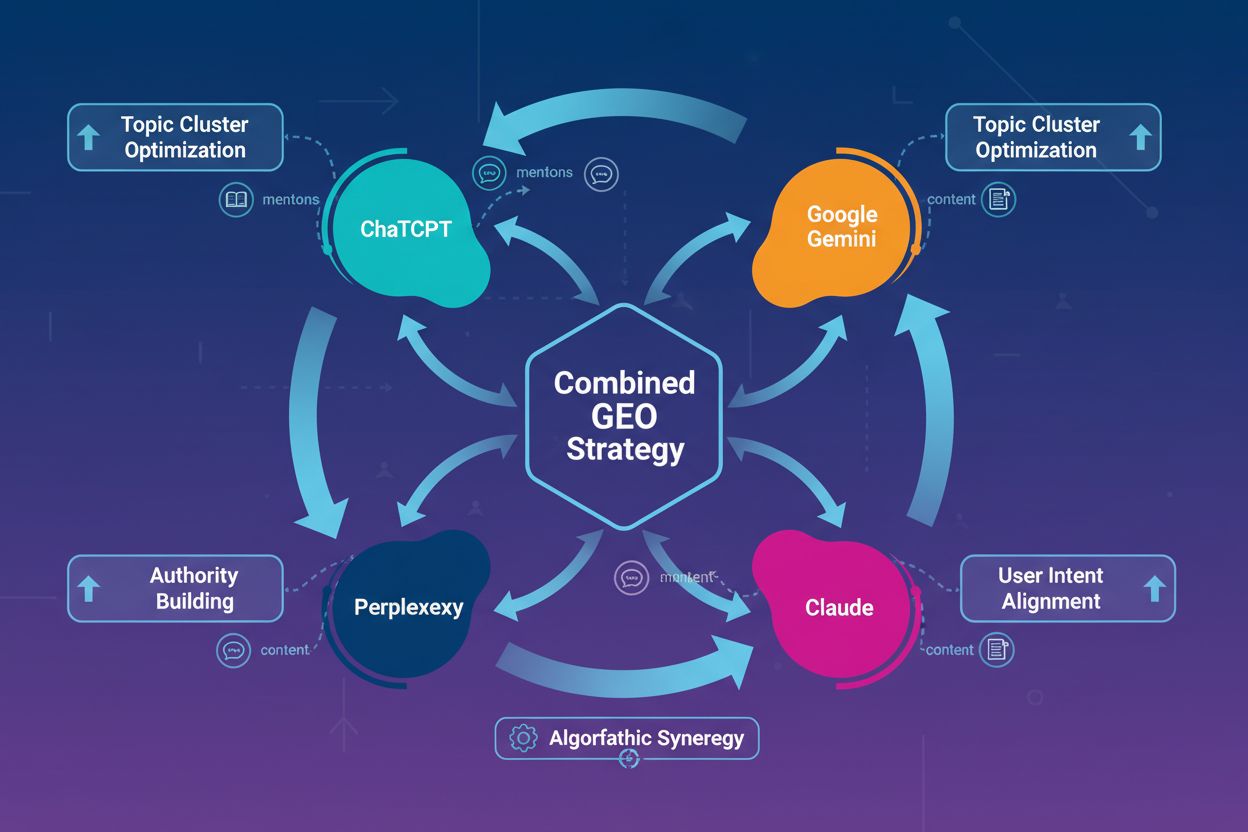
Master combined GEO strategies by stacking multiple optimization methods. Learn how to optimize for multiple AI platforms simultaneously and maximize your visib...