

How Does YouTube Content Affect AI Citations in ChatGPT and Perplexity
Learn how YouTube content influences AI citations across ChatGPT, Perplexity, and Google AI. Discover why YouTube dominates with 200x more citations than compet...
10 min read
YouTube dominates Google AI Overviews with 29.5% citation share, cited 200x more than other video platforms. Learn why and how to leverage this for your brand.
YouTube is the #1 most-cited domain in Google AI Overviews with 29.5% citation share, significantly ahead of Mayo Clinic at 12.5%. This dominance extends across all AI platforms—YouTube is cited 200 times more than any other video platform by ChatGPT, Perplexity, and Google’s AI products combined. For content creators and brands, this statistic represents a fundamental shift in how AI systems validate and present information to users. The implications are profound: if your brand isn’t creating video content, you may be essentially invisible in AI search results. This isn’t just about YouTube being popular; it’s about AI systems actively preferring video demonstrations, tutorials, and visual proof over text-based content. Understanding why YouTube dominates is crucial for any brand looking to maintain visibility in the age of AI-powered search.
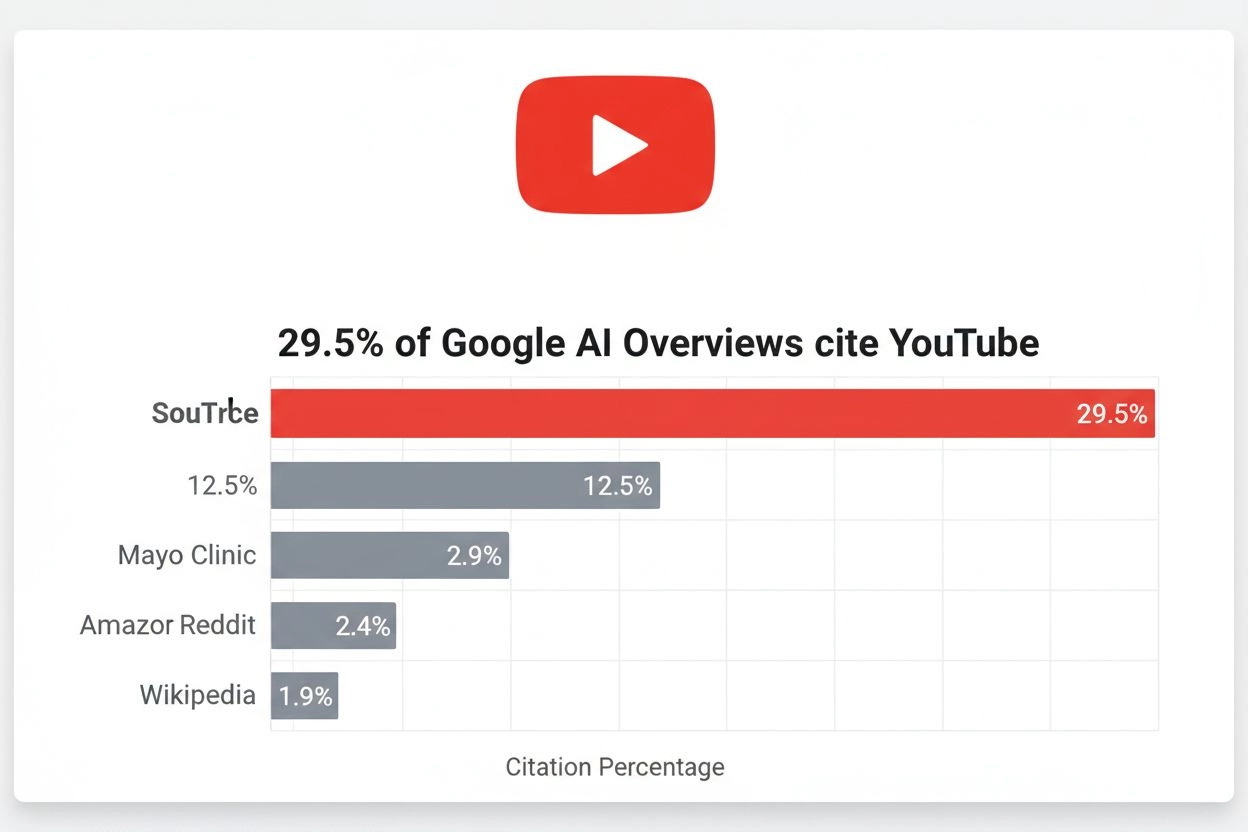
The citation hierarchy reveals a clear pecking order that differs dramatically from traditional search engine rankings. Here’s how the top sources stack up:
| Domain | Citation Share | Rank | Category |
|---|---|---|---|
| YouTube | 29.5% | #1 | Video/Demonstrations |
| Mayo Clinic | 12.5% | #2 | Medical Authority |
| Amazon | 2.9% | #3 | E-commerce |
| 2.4% | #4 | Community Discussion | |
| Wikipedia | 1.9% | #5 | Educational |
This hierarchy matters because it shows that AI Overviews don’t follow traditional authority patterns. Mayo Clinic ranks second despite being a specialized medical resource, while Amazon—one of the world’s largest e-commerce platforms—ranks third. The real story is YouTube’s overwhelming dominance: it receives more citations than the next four sources combined. For different industries, this creates distinct opportunities. E-commerce brands need video content to compete. Medical and health brands must understand that YouTube tutorials outrank traditional medical authority in AI citations. Publishers and educational content creators face a new reality where video demonstrations trump written explanations.
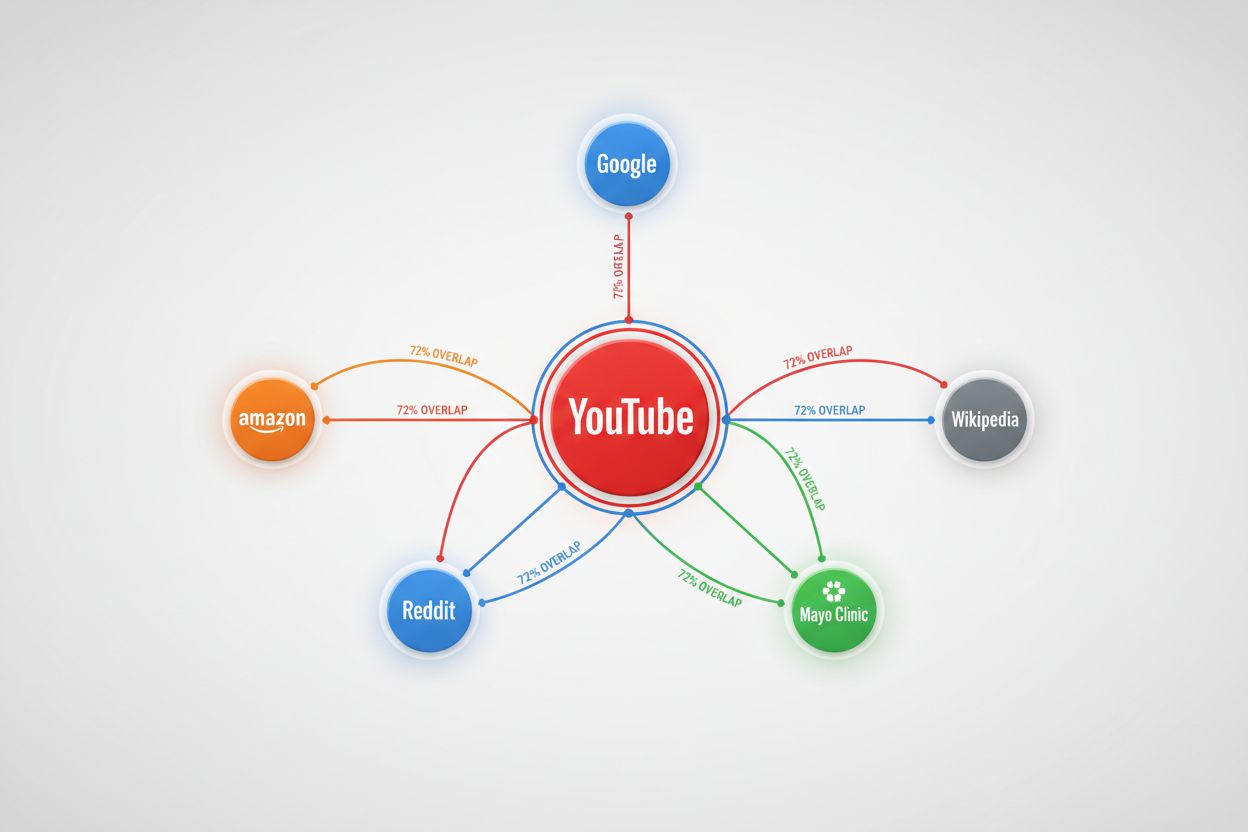
AI Overviews don’t rely on single sources for validation—they typically cite 3-5+ sources per query, creating a multi-source validation ecosystem. What’s fascinating is the overlap pattern: when Amazon gets cited, YouTube appears alongside it 72% of the time. Similarly, when Reddit gets cited, YouTube appears 72% of the time. This isn’t coincidental; it reveals YouTube’s role as the “validation hub” in AI’s trust architecture. YouTube provides the visual proof and demonstrations that complement other sources’ information. When an AI system cites Amazon for product specifications and Reddit for user opinions, it adds YouTube for visual verification and step-by-step demonstrations. This ecosystem approach means brands can’t succeed by dominating a single platform—they need to understand how their content fits into this larger validation network. The brands winning in AI search are those creating complementary content across multiple platforms, with YouTube serving as the visual anchor.
Citation preferences vary dramatically by product category, revealing distinct patterns in how AI systems validate information:
Electronics & TVs: 78% YouTube - Queries like “best 65 inch tv,” “samsung vs lg oled,” and “4k tv under 1000” heavily favor YouTube because visual demonstrations of picture quality, features, and comparisons are essential for informed decisions.
Kitchen Appliances: 62% YouTube - Searches for “best blender for smoothies,” “vitamix vs ninja,” and “air fryer reviews” rely on YouTube because watching appliances in action is far more informative than reading specifications.
Apparel & Fashion: 41% YouTube, 39% Reddit - Queries like “best running shoes,” “winter coats that actually work,” and “jeans for men” split between YouTube (for visual fit demonstrations) and Reddit (for authentic user experiences and fit discussions).
Grocery & Food: 55% Wikipedia, 46% Facebook - Informational queries like “what is quinoa,” “apple varieties,” and “beef cuts” favor Wikipedia for definitions and Facebook for community discussions, with YouTube playing a minimal role.
These patterns show that AI systems match citation sources to query intent. When users need visual proof, YouTube dominates. When they need definitions or community opinions, other sources take precedence. Understanding your category’s citation preferences is essential for content strategy.
YouTube’s dominance becomes even clearer when examining query types. 31% of YouTube-cited queries contain the word “best,” indicating that comparison and evaluation queries heavily favor video content. These aren’t casual searches—they’re detailed, specific searches averaging 3.2 words, suggesting users are deep in the decision-making process. AI systems recognize that instructional and step-by-step videos are far more valuable than opinion pieces for these queries. The data proves this preference: “How-To” video citations jumped 651%, the largest growth category across all content types. This explosive growth reflects AI systems learning that users asking “how do I…” questions need visual demonstrations, not written instructions. A text-based guide on “how to use a stand mixer” gets cited far less frequently than a 5-minute YouTube video showing the exact process. For brands, this means the content that gets cited isn’t necessarily the most comprehensive or well-written—it’s the content that shows, rather than tells.
YouTube’s citation growth has been remarkable, with overall YouTube citations increasing 414%. Even more impressive, “How-To” citations jumped 651%, showing explosive growth in instructional content. While there was a recent 32.8% dip in overall AI Overview citations, YouTube maintained its dominant position and continues growing on individual platforms. ChatGPT shows 100% week-over-week growth in YouTube citations (though from a smaller base), while Perplexity maintains 4.8% weekly growth. This growth is driven by AI systems becoming increasingly sophisticated at recognizing that video content provides superior answers to user queries. As AI models evolve, they’re learning that visual demonstrations, step-by-step tutorials, and product comparisons in video format deliver better user experiences than text alone. The trend is clear: YouTube citations will likely continue growing as AI systems become more capable of processing and valuing video content.
Not all YouTube content gets cited equally in AI Overviews. AI systems cite YouTube most frequently for tutorials (finance, software, medical how-to content), pricing and deal hunting, product demonstrations, reviews, visual verification, examples, and current events. These content types share a common characteristic: they provide visual proof or step-by-step guidance that text cannot replicate. Conversely, pure product pages, promotional content, price-focused pages, single-brand content, and traditional ad copy rarely get cited. The pattern is unmistakable: AI systems cite content that educates and demonstrates, not content that sells. A brand’s product page describing a blender’s features gets cited far less than an independent YouTuber’s 10-minute video showing the blender making smoothies, comparing it to competitors, and discussing real-world performance. This distinction is crucial for content strategy—brands must shift from creating promotional content to creating educational and demonstrative content that AI systems recognize as valuable.
The YouTube dominance in AI citations creates a strategic imperative: if your brand isn’t creating video content, you’re essentially invisible in AI search. This isn’t hyperbole—it’s a data-driven reality. YouTube isn’t optional anymore; it’s the backbone of AI Overview citations. The opportunity, however, isn’t about beating competitors on YouTube—it’s about leveraging the validation ecosystem that AI systems already trust. Brands that understand this shift their strategy from traditional SEO (optimizing for Google’s algorithm) to what might be called “Generative Engine Optimization” (GEO)—creating content that AI systems recognize as valuable. This means aligning your content strategy with how AI systems validate information: through demonstrations, comparisons, tutorials, and visual proof. The brands winning in AI search aren’t necessarily those with the most subscribers or the slickest production values—they’re those creating content that answers the specific questions AI systems are trying to solve.
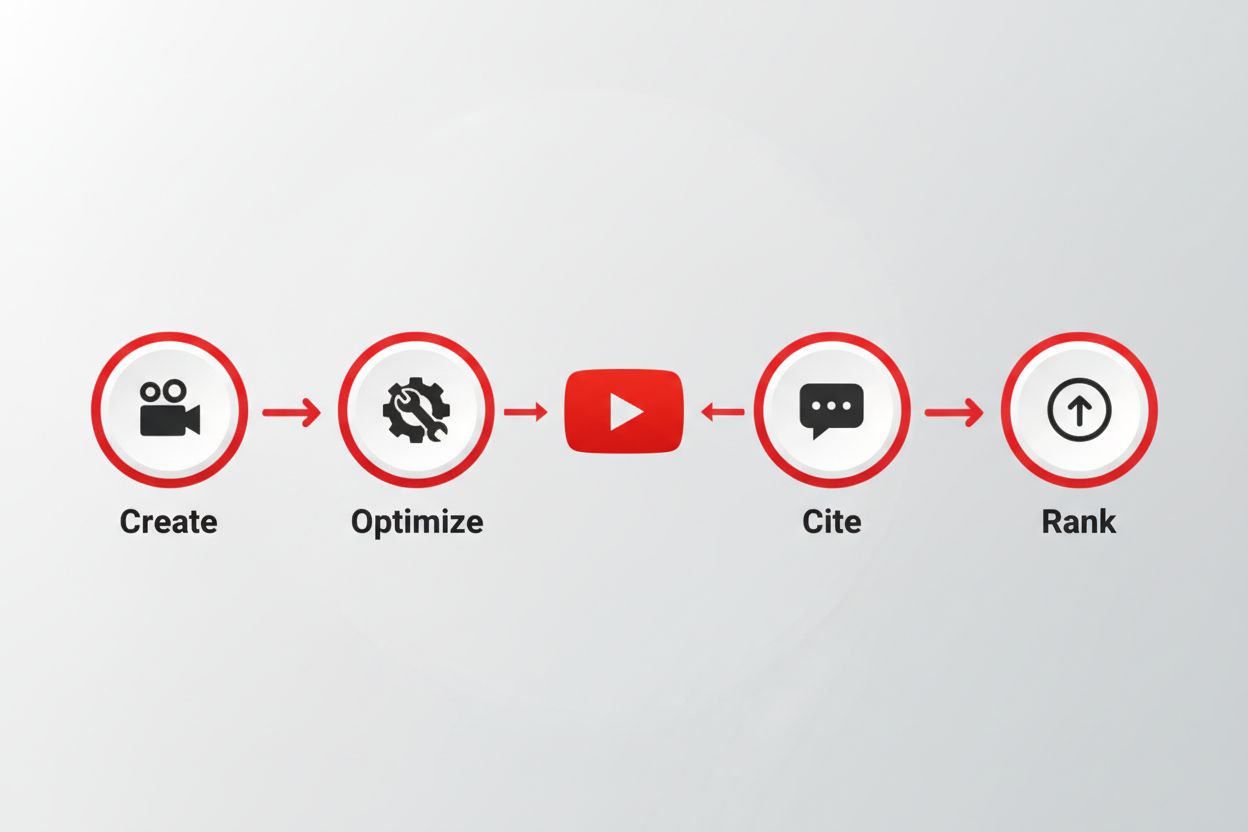
Implementation strategies vary by industry, but the core principle remains constant: create video content that demonstrates, educates, and compares. For e-commerce retailers, immediate actions include auditing existing YouTube presence, identifying YouTubers already reviewing your products, creating comparison content for popular product categories, and building resource pages featuring trusted reviews. For OEMs and manufacturers, ensure every product SKU has associated video content, partner with reviewers before major shopping seasons, create embeddable specification widgets, and monitor community discussions for product feedback. For content creators and publishers, the opportunity is amplifying existing video content, sharing creator content across social channels, building partnerships with micro-influencers, and creating curated review roundups. Notably, many of these opportunities require no development resources—they’re about leveraging existing content and building strategic partnerships. The brands that move fastest on video content strategy will capture disproportionate AI visibility before competitors recognize the shift.
This analysis reveals Google’s fundamental approach to AI Overviews: rather than relying on single authorities, the system triangulates trust through different content types. YouTube provides visual demonstrations, Reddit offers authentic community discussions, Amazon supplies product specifications, and Wikipedia delivers educational context. This multi-source validation strategy is likely to persist and evolve as AI systems become more sophisticated. Sources will likely change as LLMs evolve, but the principle of multi-source validation will remain. For brands and content creators, this means the future of search isn’t about dominating a single platform—it’s about understanding your role in the citation ecosystem and creating content that serves that role. The winners in AI-driven search will be those who recognize that YouTube’s dominance isn’t temporary or platform-specific; it’s a fundamental reflection of how AI systems validate information. The strategic imperative is clear: invest in video content, understand your category’s citation patterns, and create demonstrations that AI systems recognize as valuable.
Yes, YouTube is the #1 most-cited domain in Google AI Overviews with 29.5% citation share, ahead of Mayo Clinic (12.5%). It's cited 200x more than any other video platform across all AI search engines including ChatGPT, Perplexity, and Google's AI products.
YouTube dominates because AI systems prefer instructional, step-by-step, and demonstration content. The platform's vast library of tutorials, product reviews, and how-to videos align perfectly with what AI Overviews need to provide comprehensive, visual answers to user queries.
AI Overviews cite YouTube most for tutorials, product demonstrations, reviews, pricing information, deal hunting, and visual verification. 'How-To' content citations jumped 651%, showing strong preference for instructional videos over opinion pieces.
YouTube citations increased 414% overall, with 'How-To' citations jumping 651%. While there was a recent 32.8% dip in overall AI Overview citations, YouTube still maintains dominant market share and continues growing on platforms like ChatGPT (100% week-over-week growth) and Perplexity (4.8% weekly growth).
Yes, AI Overviews typically cite 3-5+ sources per query. YouTube appears alongside 72% of Amazon citations and 72% of Reddit citations, acting as a 'validation hub' that provides visual proof and demonstrations to complement other sources.
Brands should create video content focused on tutorials, comparisons, product demonstrations, and how-to guides. Audit existing YouTube presence, identify creators already reviewing products, create comparison content, and build resource pages featuring trusted reviews. Video content is no longer optional for AI search visibility.
Citation patterns vary significantly: Electronics (78% YouTube), Kitchen Appliances (62% YouTube), Apparel (41% YouTube, 39% Reddit), and Grocery/Food (55% Wikipedia). Understanding your category's preferences is crucial for content strategy.
While citation sources may evolve as AI systems develop, YouTube's dominance is likely to continue given its alignment with how AI systems validate information through visual demonstrations and instructional content. The multi-source validation strategy suggests YouTube will remain central to AI trust signals.
Track how AI systems like Google AI Overviews, ChatGPT, and Perplexity cite your brand and content. Get real-time insights into your AI visibility and stay ahead of the competition.
Learn how YouTube content influences AI citations across ChatGPT, Perplexity, and Google AI. Discover why YouTube dominates with 200x more citations than compet...
Discover how tutorial content performs in AI citations. Learn why YouTube tutorials dominate AI search with 200x advantage over competitors and how to optimize ...
Discover which subreddits AI models cite most and learn data-driven strategies to target high-citation communities for maximum AI visibility.