

Wikipedia's Role in AI Citations: How It Shapes AI-Generated Answers
Discover how Wikipedia influences AI citations across ChatGPT, Perplexity, and Google AI. Learn why Wikipedia is the most trusted source for AI training and how...
13 min read
Learn how to ethically get your brand cited on Wikipedia for maximum AI visibility. Strategic guide covering policies, reliable sources, and citation strategies for ChatGPT, Perplexity, and Google AI.
Wikipedia has become the invisible backbone of artificial intelligence, shaping how AI systems understand and present information about brands, industries, and topics. With 7.8% of ChatGPT citations originating from Wikipedia and 84% of AI responses about business topics citing Wikipedia, the platform’s influence on AI visibility is undeniable. Every major large language model—from GPT-4 to Claude to Gemini—was trained on Wikipedia’s comprehensive database, making it a foundational source for how AI systems generate knowledge. The stakes are even higher when you consider that 89% of the time, Wikipedia citations appear first in AI responses, meaning your brand’s Wikipedia presence directly impacts how AI introduces you to potential customers. For modern brands seeking AI visibility, Wikipedia isn’t optional—it’s essential infrastructure.
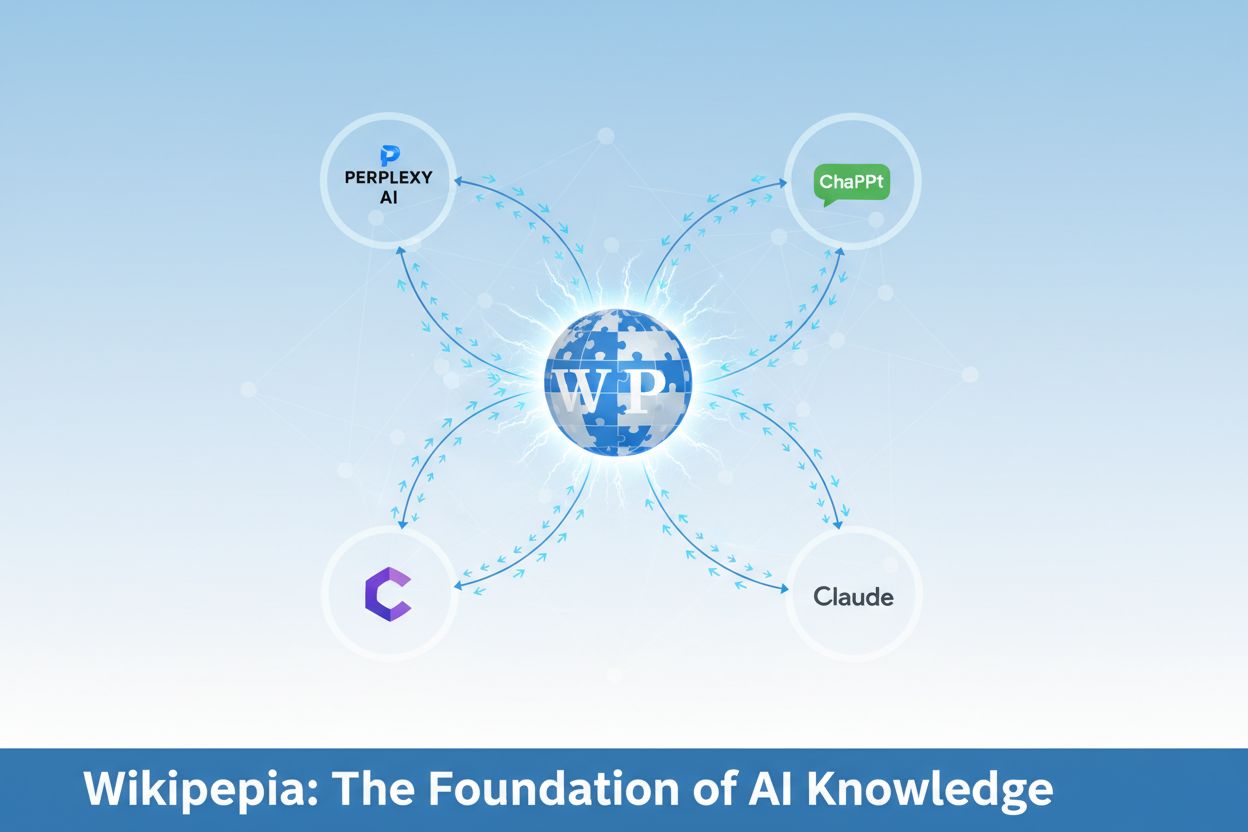
AI systems prioritize Wikipedia for a fundamental reason: it’s built on principles that align with how machine learning models evaluate trustworthiness. Here’s why Wikipedia stands apart:
Neutral Point of View (NPOV) Requirement: Wikipedia’s strict NPOV policy ensures that articles present information without bias or promotional language, making the content inherently more reliable for AI training and citation purposes.
Community-Driven Fact-Checking: Every claim on Wikipedia is subject to scrutiny from thousands of editors worldwide, creating a continuous peer-review process that catches errors and misinformation faster than traditional publishing.
Structured Citation System: Wikipedia requires inline citations with specific formatting standards, allowing AI systems to trace claims back to original sources and verify information through the citation network.
Reliability Standards: Wikipedia maintains strict guidelines about which sources qualify as reliable, automatically filtering out low-quality or promotional content that AI systems would otherwise struggle to evaluate.
Not all citations are created equal in the eyes of AI systems. The following comparison reveals why Wikipedia citations carry disproportionate weight in AI training and response generation:
| Source Type | Reliability Score | AI Training Use | Verifiability | Permanence |
|---|---|---|---|---|
| Wikipedia | Very High | Extensive | Fully traceable citations | Permanent with edit history |
| Press Releases | Low-Medium | Limited | Often self-sourced | Frequently removed/archived |
| Company Website | Medium | Minimal | Circular sourcing | Subject to deletion |
| Social Media | Low | Rare | Difficult to verify | Ephemeral |
Wikipedia citations function as a credibility multiplier because they’ve already passed multiple verification gates before being published. When an AI system encounters a Wikipedia citation, it recognizes that the information has been vetted by human editors, cross-referenced with reliable sources, and deemed notable enough to include in a global knowledge base. This is fundamentally different from a press release, which AI systems recognize as promotional material, or a company website, which lacks independent verification. The permanence factor also matters: Wikipedia articles maintain complete edit histories, allowing AI systems to track how information has evolved and been corrected over time. Press releases, by contrast, often disappear from the web or get archived in ways that make them inaccessible to AI crawlers. For brands seeking AI citations, the message is clear: Wikipedia citations are the gold standard because they combine reliability, verifiability, and permanence in ways other sources simply cannot match.
To earn a Wikipedia citation ethically, you must understand the four foundational policies that govern what gets published and what gets removed. These aren’t arbitrary rules—they’re the framework that makes Wikipedia trustworthy to AI systems.
Notability: Wikipedia doesn’t include articles about every person, company, or product. Instead, it requires that subjects demonstrate significant coverage in reliable, independent sources. For brands, this means you need to have been written about by reputable journalists, industry analysts, or academic researchers—not just mentioned in your own press releases. Notability isn’t about importance to you; it’s about importance to the broader world.
Verifiability: Every claim on Wikipedia must be traceable to a reliable source. This policy exists to prevent misinformation and ensure that AI systems can verify information independently. When you contribute to Wikipedia (or work with editors to improve articles), every statement must be backed by citations to sources like major news outlets, academic journals, industry publications, or government databases. Self-published sources, promotional materials, and unverified claims are explicitly prohibited.
Neutral Point of View (NPOV): Wikipedia articles must present information without advocacy, bias, or promotional intent. This means describing your brand’s achievements factually rather than celebrating them, acknowledging criticisms alongside accomplishments, and using neutral language rather than marketing speak. NPOV is why AI systems trust Wikipedia—because the information isn’t designed to persuade, it’s designed to inform.
No Original Research: Wikipedia is a tertiary source, meaning it synthesizes information from secondary sources rather than conducting original research. You cannot cite your own studies, internal data, or proprietary research on Wikipedia. Instead, you must wait for your research to be covered by independent, reliable sources—then those sources can be cited on Wikipedia. This policy ensures that Wikipedia remains a reflection of established knowledge rather than a platform for breaking news or novel claims.
What Qualifies as a Reliable Source: Wikipedia maintains a detailed list of sources that meet its standards. Generally, reliable sources include: major newspapers and news agencies, peer-reviewed academic journals, established industry publications, books published by reputable publishers, government databases, and reports from recognized organizations. What doesn’t qualify: your company blog, social media posts, press releases, self-published materials, or websites with obvious conflicts of interest.
Here’s the uncomfortable truth that many brands discover too late: you cannot directly edit Wikipedia to promote your own brand. This isn’t a suggestion—it’s a core policy enforced by Wikipedia’s community, and violating it can result in permanent bans from the platform.
The Conflict of Interest (COI) Policy: Wikipedia explicitly prohibits editors from making substantial edits to articles about themselves, their employers, or their clients. The reasoning is straightforward: people have inherent bias when writing about themselves, and allowing self-promotion would undermine Wikipedia’s credibility. ⚠️ Warning: Direct self-editing is the fastest way to have your contributions removed and your account flagged. Even if your edits are factually accurate and well-sourced, they’ll be reverted simply because of the conflict of interest.
Why Direct Editing Fails: Wikipedia editors are trained to spot promotional language, self-serving edits, and attempts to inflate notability. They use tools to identify patterns of self-promotion and have developed sophisticated methods for detecting sockpuppet accounts (fake accounts created to circumvent COI policies). Even if you successfully edit an article, other editors will likely notice the promotional tone or the suspicious timing and revert your changes.
Consequences of Violations: Violating Wikipedia’s COI policy can result in account suspension, article reversion, and in severe cases, permanent bans from editing. Beyond the technical consequences, you’ll damage your credibility with Wikipedia’s community, making it harder to work with editors in the future through legitimate channels.
The Proper Approach: If you want to improve a Wikipedia article about your brand, the ethical path is to use the Talk page—a discussion space where editors debate changes before implementing them. On the Talk page, you can transparently disclose your conflict of interest, propose specific improvements with citations, and let independent editors decide whether to implement your suggestions. This approach respects Wikipedia’s policies while still giving you a voice.
Transparency Requirements: If you do engage with Wikipedia editors, you must disclose your affiliation. Many editors appreciate transparency and will work with you if you’re honest about your connection to the subject. Attempting to hide your relationship to the brand is far more damaging than openly acknowledging it.
Earning Wikipedia citations requires a strategic, long-term approach focused on building genuine notability rather than gaming the system. Here’s the ethical playbook:
1. Generate Reliable Source Material
2. Identify Relevant Wikipedia Pages
3. Audit Pages for Citation Gaps
4. Prepare Neutral Wording
5. Use Talk Pages Transparently
6. Monitor and Maintain
Wikipedia won’t cite your brand unless your brand has already earned significant recognition in the broader world. Building Wikipedia-worthy authority requires a multi-channel approach:
Media Coverage in Reputable Outlets: Secure coverage in major newspapers, business publications, and industry journals. Wikipedia editors specifically look for mentions in outlets like The New York Times, Wall Street Journal, Forbes, and industry-specific publications. This is the single most important factor in establishing notability.
Industry Awards and Recognition: Win awards from recognized industry bodies, analyst firms, or professional associations. These third-party validations signal to Wikipedia editors that your brand has achieved something noteworthy beyond self-promotion.
Thought Leadership Positioning: Publish research, white papers, and insights that get cited by other organizations. When your ideas influence industry conversations, that influence becomes documentable and citable.
Research Generation: Conduct or commission original research that gets covered by media outlets. Studies, surveys, and data-driven insights are highly citable because they provide concrete, verifiable information.
Academic and Analyst Engagement: Get your brand mentioned in analyst reports from firms like Gartner, Forrester, or IDC. Academic citations and research partnerships also carry significant weight with Wikipedia editors.
The key principle: Wikipedia cites brands that have already proven their importance to the world, not brands that are trying to prove their importance through Wikipedia. Build your authority first, and Wikipedia citations will follow naturally.
A Wikipedia citation isn’t just valuable on Wikipedia—it’s the starting point for a cascade of citations across the entire AI ecosystem. Understanding this network effect reveals why Wikipedia presence matters so much for AI visibility.
When your brand appears in a Wikipedia article with proper citations, that citation gets picked up by Google Knowledge Panels, which use Wikipedia as a primary data source for displaying information about entities. This means your Wikipedia mention directly influences how Google presents your brand to searchers. The effect multiplies across AI search engines like Perplexity and Bing Chat, which explicitly cite Wikipedia when answering questions about brands and industries. Voice assistants like Alexa and Google Assistant also rely heavily on Wikipedia-sourced information, meaning your Wikipedia presence affects how you’re described in voice search results.
Beyond search, Wikipedia citations feed into knowledge graphs—the structured databases that power AI understanding of relationships, facts, and entities. When an AI system encounters your brand mentioned in Wikipedia with citations to reliable sources, it adds that information to its knowledge graph, making it available for use across multiple AI applications. This is why 89% of the time Wikipedia citations appear first in AI responses: they’re not just one source among many, they’re the authoritative source that other AI systems reference and build upon.
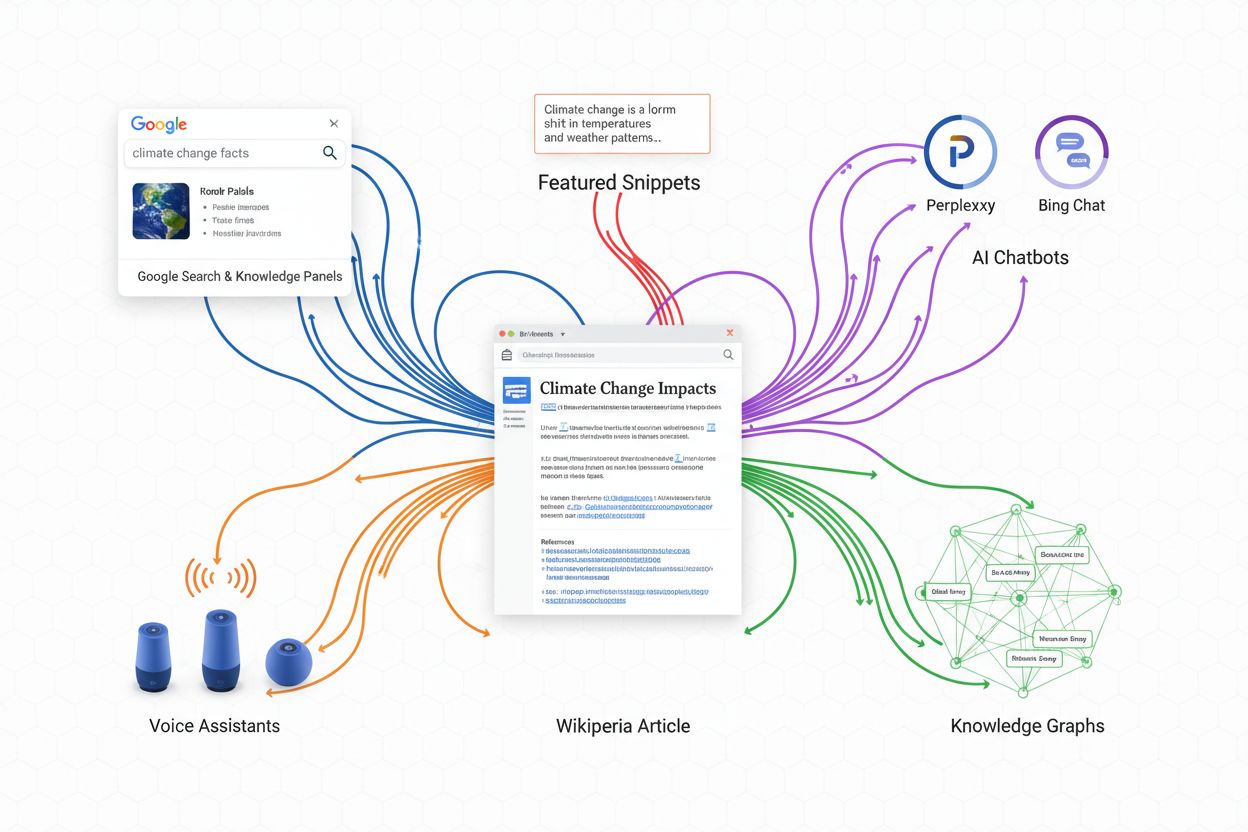
The featured snippets that appear at the top of Google search results also frequently draw from Wikipedia content. When your brand is cited in Wikipedia, you increase the likelihood that information about your brand will appear in these high-visibility positions. The network effect means that a single, well-placed Wikipedia citation can generate visibility across dozens of AI platforms and search interfaces simultaneously. This is why brands that invest in Wikipedia presence see disproportionate returns on their AI visibility efforts—they’re not just getting one citation, they’re getting a citation that echoes across the entire digital ecosystem.
Earning a Wikipedia citation is just the beginning. Maintaining that presence requires ongoing attention and strategic management. Here’s your action checklist:
Set Up Monitoring Alerts
Conduct Periodic Audits
Update Outdated Information
Respond Professionally to Edits
Long-Term Asset Management
The path to Wikipedia citations is littered with brands that took shortcuts and paid the price. Here are the mistakes that undermine your efforts:
| DON’T | DO |
|---|---|
| Directly self-edit Wikipedia articles | Work through Talk pages and disclose conflicts of interest |
| Use press releases as primary sources | Cite coverage in independent media outlets |
| Use promotional or marketing language | Write in neutral, factual tone |
| Create sockpuppet accounts to hide your identity | Be transparent about your affiliation |
| Pay editors to make changes without disclosure | Engage in open, transparent discussions |
⚠️ Critical Warning: Attempting to circumvent Wikipedia’s policies through deception—whether through hidden accounts, undisclosed paid editing, or promotional language disguised as neutral content—will result in permanent damage to your credibility. Wikipedia’s community is sophisticated at detecting these tactics, and the consequences extend beyond account suspension. Once you’re flagged for unethical editing, other editors will scrutinize all future contributions, making it exponentially harder to earn legitimate citations.
The most common mistake is impatience. Brands want Wikipedia citations immediately, so they attempt shortcuts that violate policies. The ethical approach takes longer but produces lasting results: build genuine notability through media coverage and industry recognition, then work transparently with Wikipedia editors to ensure that notability is properly documented. This approach respects Wikipedia’s mission while positioning your brand for sustainable AI visibility.
AI systems prioritize encyclopedic, neutral sources over promotional content. Wikipedia is primary training data for major LLMs like ChatGPT and Claude. Research shows Wikipedia citations appear in 84% of AI responses about business topics, compared to just 31% for company websites. This means a Wikipedia mention reaches far more AI systems than your owned media.
No. Wikipedia's Conflict of Interest (COI) policy prohibits people with direct connections to a topic from editing that content. Direct self-editing will result in your contributions being removed and your account flagged. Instead, use the Talk page to propose edits transparently, disclosing your conflict of interest. This ethical approach is far more likely to succeed.
Reliable sources include mainstream media outlets (BBC, The Guardian, Forbes), peer-reviewed academic journals, government documents, and established industry publications. Press releases, company websites, and social media do NOT qualify. Wikipedia requires independent, published sources that can be verified by readers. This strict standard ensures AI systems can trust the information.
Real-time AI search engines like Perplexity reflect Wikipedia updates almost immediately. Large language models like ChatGPT are periodically retrained on new data, which can take weeks to months. Google Knowledge Panels typically show Wikipedia updates within days to weeks. Once a citation is stable for several weeks, it becomes more likely to be incorporated into AI training datasets.
Wikipedia citations are structured references that verify specific claims with full bibliographic details, following Citation Style 1 (CS1) standardization. They're machine-readable and traceable to original sources. Hyperlinks are simple navigation tools without verification structure. Citations are essential for Wikipedia's verifiability policy, while links are supplementary. AI systems recognize and prioritize citations as credibility signals.
Set up Google Alerts for your brand name + 'Wikipedia'. Monitor relevant Wikipedia Talk pages and subscribe to edit notifications for articles mentioning your brand. Conduct quarterly audits to ensure information remains accurate and citations are still active. Use tools like AmICited to track how your Wikipedia citations propagate through AI systems and search engines.
Your edits will be reverted, your account may be flagged or blocked, and in severe cases you could face permanent bans. Beyond technical consequences, you'll damage your credibility with Wikipedia's community, making future legitimate contributions harder. In extreme cases, your website can be blacklisted as a source on Wikipedia. Transparency is always the better approach.
Generate coverage in reputable publications through media outreach. Earn industry awards and recognition from established organizations. Publish research or thought leadership that gets cited by others. Participate in academic studies or analyst reports. The key principle: Wikipedia cites brands that have proven their importance to the world. Build genuine authority first, and Wikipedia citations will follow naturally.
Track how your brand appears across Wikipedia, ChatGPT, Perplexity, and other AI systems. Get actionable insights to improve your AI presence and ensure your brand is properly cited.
Discover how Wikipedia influences AI citations across ChatGPT, Perplexity, and Google AI. Learn why Wikipedia is the most trusted source for AI training and how...
Learn ethical strategies to get your brand cited on Wikipedia. Understand Wikipedia's content policies, reliable sources, and how to leverage citations for AI v...
Discover how Wikipedia serves as a critical AI training dataset, its impact on model accuracy, licensing agreements, and why AI companies depend on it for train...