Wikipedia Notability: What Qualifies Your Brand for a Page
Learn what Wikipedia notability really means and whether your brand qualifies for a Wikipedia page. Understand the General Notability Guideline, reliable sources, and the ethical path to Wikipedia inclusion.
Published on Jan 3, 2026.Last modified on Jan 3, 2026 at 3:24 am
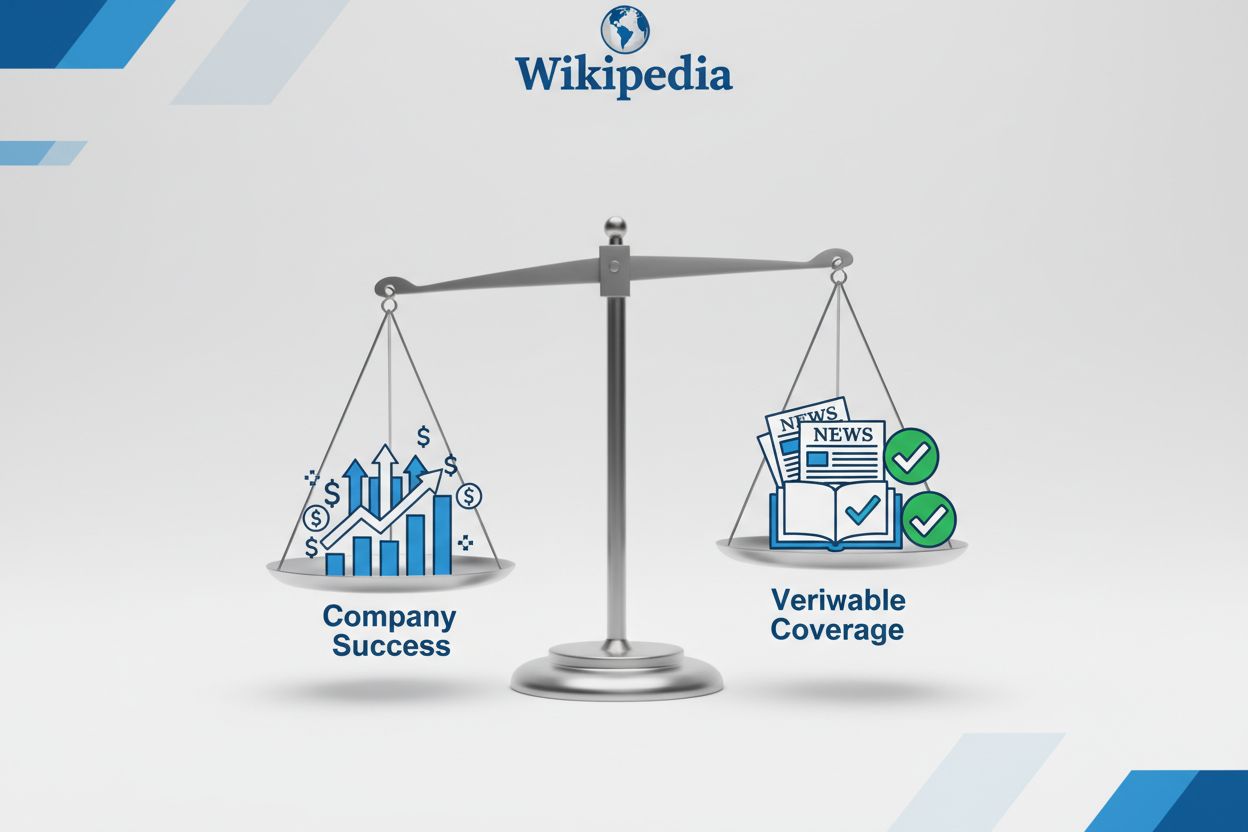
When you search for your company on Wikipedia, you might be surprised to find nothing—even if your business is thriving, award-winning, and well-known in your industry. The reason isn’t that Wikipedia doesn’t recognize your success; it’s that Wikipedia operates under a strict concept called notability, which is fundamentally different from how the rest of the world measures importance. Notability on Wikipedia is not about how successful, profitable, or well-regarded your company is—it’s about whether your company has received significant coverage from reliable, independent, and secondary sources. This distinction is crucial because it means that even the most successful companies can fail to meet Wikipedia’s standards, while lesser-known organizations might qualify if they’ve been thoroughly covered by reputable media outlets. Understanding this concept is the first step toward either qualifying for a Wikipedia article or recognizing why your company may not yet meet the platform’s stringent requirements.
The General Notability Guideline (GNG) Explained
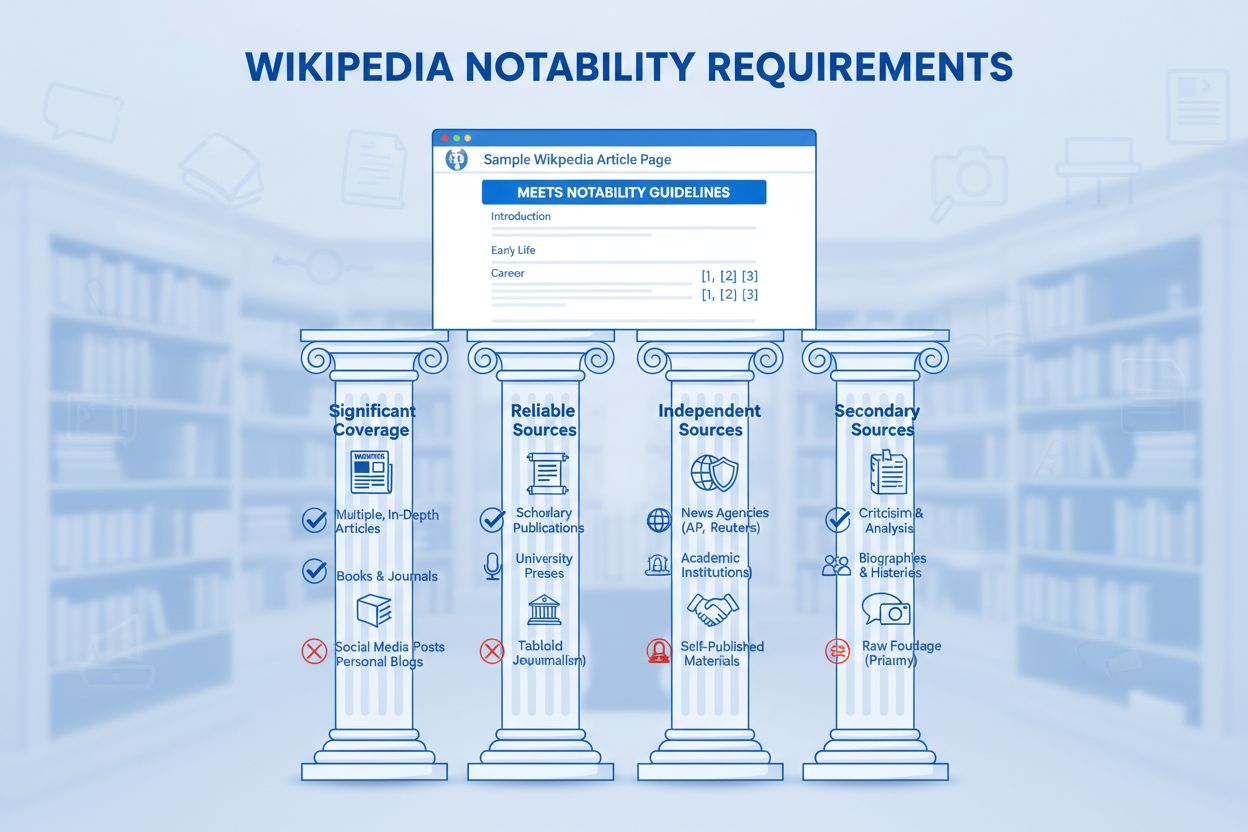
The General Notability Guideline (GNG) is Wikipedia’s overarching rule for determining whether any topic—whether it’s a business, person, event, or concept—deserves its own article. According to the GNG, a topic is considered notable if it has received significant coverage in reliable, independent, secondary sources. Each of these terms has a specific meaning on Wikipedia, and understanding them is essential to assessing whether your brand qualifies. Here’s how Wikipedia defines each criterion:
Criterion
What Counts
What Doesn’t Count
Significant Coverage
In-depth articles or analyses dedicated to your company; whole paragraphs or entire articles about your business and its impact
Passing mentions, brief listings in directories, or casual name-drops in articles about other topics
Reliable Sources
Major newspapers (NYT, WSJ, Bloomberg), respected industry journals, peer-reviewed publications, established news websites with editorial oversight
Social media posts, personal blogs, self-published content, company websites, press release republications without original reporting
Independent Sources
Publications with no financial or organizational ties to your company; journalists who conduct original reporting
Company blogs, press releases, interviews where your CEO is the primary source, industry publications directly affiliated with your sector
Secondary Sources
Journalist analysis or commentary about your company; third-party reviews of your products or services; academic research discussing your organization
Interviews with your executives, company announcements, product launches, press releases, content created by or for your company
Each of these elements must be present for your company to meet the GNG. It’s not enough to have coverage in one reliable source or to have many mentions in less reliable outlets—Wikipedia requires a combination of all four elements working together.
Ready to Monitor Your AI Visibility?
Track how AI chatbots mention your brand across ChatGPT, Perplexity, and other platforms.
To truly understand Wikipedia notability, it helps to think of it as resting on four pillars, each of which must be strong enough to support your article. The first pillar is significant coverage, which means your company must be the main subject of articles, not just mentioned in passing. A single sentence in a major newspaper doesn’t count; you need substantial, in-depth coverage that demonstrates the publication found your company important enough to dedicate significant editorial space to it. The second pillar is reliable sources, which eliminates most online content, social media, and industry blogs from consideration. Wikipedia’s editors are skeptical of sources that lack professional editorial oversight, which is why a mention in a major newspaper carries far more weight than coverage in a niche industry blog, even if the blog has a larger audience. The third pillar is independence, which means your sources cannot be affiliated with your company in any way—this eliminates interviews with your executives, press releases, and even industry publications that might have financial relationships with your sector. The fourth pillar is secondary sourcing, which requires that sources analyze or comment on your company rather than simply reporting what your company says. Many companies fail on this pillar because they confuse media coverage with notability; a journalist who interviews your CEO and publishes the interview is providing primary source material, not the secondary analysis that Wikipedia requires. Meeting all four pillars simultaneously is the challenge that causes most companies to fall short of Wikipedia’s notability standards.
Organizations and Companies - The Higher Bar
If the General Notability Guideline seems strict, the standards for organizations and companies are even more demanding. Wikipedia applies a subject-specific guideline for organizations and companies that requires not just significant coverage from reliable, independent, secondary sources, but multiple references—typically 10 to 20 or more—that all meet these criteria simultaneously. This means that a company with five excellent articles in major newspapers might still not qualify if Wikipedia editors determine that five sources aren’t sufficient to establish notability. Additionally, Wikipedia’s editors are particularly skeptical of niche trade publications when evaluating organizational notability. A company that has been extensively covered in specialized industry journals might assume it has met the notability threshold, but Wikipedia often considers these publications insufficiently independent because they cater directly to the industry and may have financial incentives to cover companies within that sector. This creates a significant challenge for companies in specialized fields: the publications that know them best and cover them most thoroughly may not count toward establishing notability. The distinction between general notability and organizational notability is important because it means that even topics that would easily qualify under the GNG might fail to qualify if they’re organizations. For a company to achieve Wikipedia notability, it must demonstrate that it has attracted the attention of mainstream, independent media outlets—not just the specialized publications that serve its industry.
Stay Updated on AI Visibility Trends
Get the latest insights on AI mentions, brand monitoring, and optimization strategies.
Common Misconceptions About Wikipedia Notability
Many companies approach Wikipedia with misconceptions about what it takes to qualify for an article. Here are the most common myths:
Myth: Being well-known in your industry means you’re notable on Wikipedia. Reality: Industry prominence doesn’t translate to Wikipedia notability. A company might be the largest player in its niche, but if mainstream media hasn’t covered it extensively, Wikipedia won’t include it.
Myth: Local news coverage counts as reliable sources for Wikipedia. Reality: While local news outlets can be reliable sources, they typically don’t carry enough weight to establish notability on their own. Wikipedia prioritizes national and international media coverage, particularly from outlets with significant editorial resources.
Myth: Press releases and company announcements establish notability. Reality: Press releases are considered primary sources created by the company itself. Wikipedia requires secondary sources—independent analysis and commentary about your company, not statements from your company.
Myth: Social media mentions, industry awards, and website traffic demonstrate notability. Reality: Wikipedia doesn’t consider social media, website analytics, or industry awards as evidence of notability. These metrics measure popularity or success, not the kind of verifiable, independent coverage that Wikipedia requires.
The underlying reality is that only mainstream, independent media coverage counts toward Wikipedia notability. This is why many successful companies don’t have Wikipedia articles—they may be thriving in their market, but they haven’t attracted the kind of mainstream media attention that Wikipedia’s standards demand.
The Role of Reliable Sources in Establishing Notability
Understanding what Wikipedia considers a “reliable source” is crucial because it directly determines whether your media coverage counts toward notability. Wikipedia maintains a hierarchy of source reliability, with major newspapers and established news organizations at the top. Publications like The New York Times, The Wall Street Journal, Bloomberg, Reuters, and The Associated Press are universally accepted as reliable sources. Below these tier-one outlets are respected industry publications, academic journals, and established online news sites that maintain professional editorial standards. Wikipedia is generally skeptical of blogs, even well-established ones, because they often lack the editorial oversight and fact-checking processes that traditional publications employ. The reasoning behind this strictness is sound: Wikipedia wants to ensure that the information in its articles comes from sources that have invested in verification and accuracy. A journalist working for a major newspaper has editors reviewing their work, fact-checkers verifying claims, and legal teams ensuring accuracy. A blogger, no matter how knowledgeable, typically doesn’t have these institutional safeguards. This creates a practical challenge for companies: the publications that cover you most thoroughly might not be the ones that Wikipedia considers reliable enough to count. A company might have extensive coverage in specialized industry publications, but if those publications don’t meet Wikipedia’s reliability standards, that coverage won’t help establish notability. This is why companies seeking Wikipedia articles often need to focus on earning coverage in mainstream media outlets rather than relying on industry-specific publications.
Secondary vs. Primary Sources - A Critical Distinction
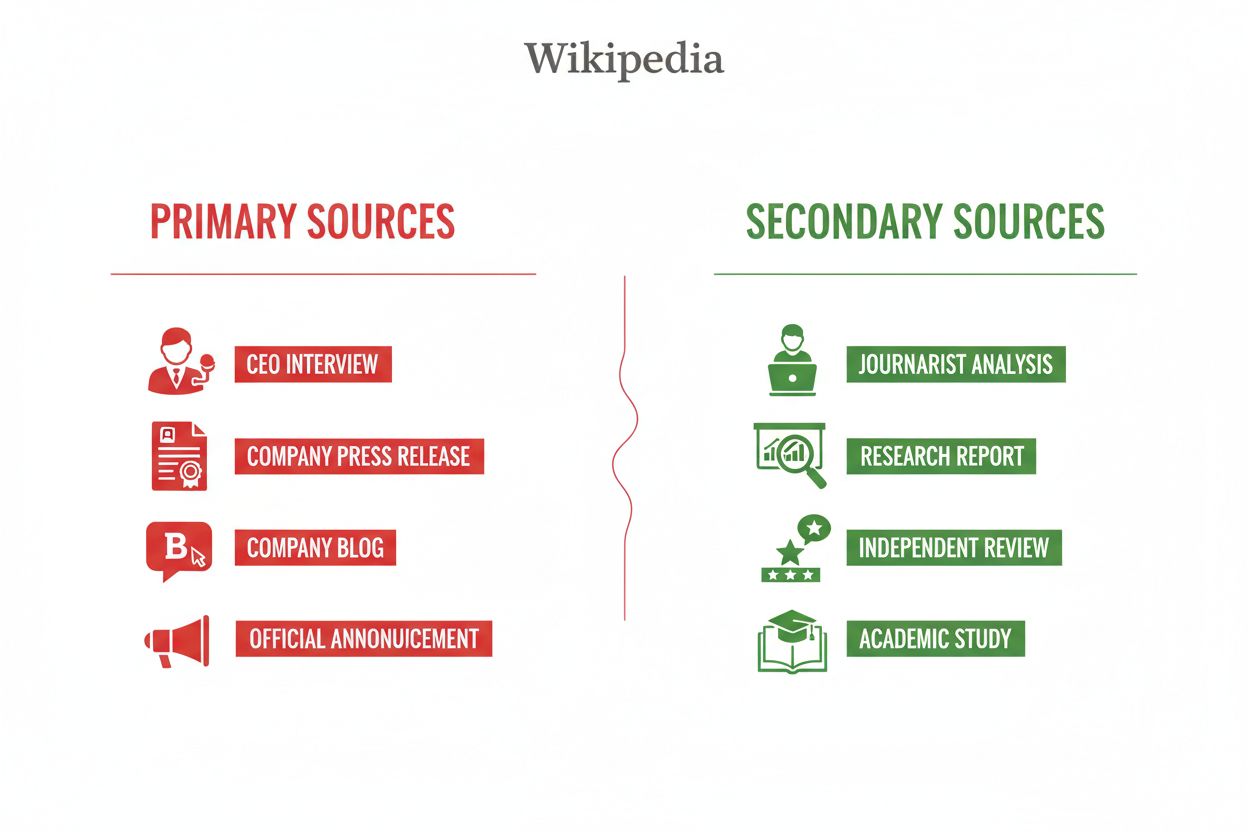
One of the most misunderstood aspects of Wikipedia’s notability requirements is the distinction between primary and secondary sources, and this distinction eliminates a significant portion of media coverage from counting toward notability. Primary sources are materials created by or directly from the subject—this includes interviews with your CEO, press releases issued by your company, company blog posts, and even news articles that primarily consist of your company’s statements or announcements. Secondary sources are materials that analyze, comment on, or provide independent perspective about your company—this includes a journalist’s analysis of your business strategy, a third-party review of your products, academic research discussing your industry impact, or a competitor analysis that mentions your company. The reason Wikipedia requires secondary sources is to prevent companies from establishing notability simply by getting media coverage of their own announcements. If a journalist publishes an article based entirely on your press release, that’s primary source material, even if it appears in a reputable publication. Wikipedia wants sources that demonstrate independent thinking and analysis about your company, not just amplification of your own messaging. This requirement creates a significant challenge for newer or smaller companies because it means that even if you’ve successfully gotten media coverage, that coverage might not count if it’s primarily based on your company’s own statements. A startup that announces a major funding round and gets covered by tech media might think it has established notability, but if those articles are based on the company’s press release and statements, they’re primary sources and won’t count toward Wikipedia’s notability threshold.
The Dangers of Unethical Wikipedia Editing
Faced with Wikipedia’s stringent notability requirements, some companies turn to paid Wikipedia editors who promise to create or improve their articles without disclosing the financial relationship. This practice violates Wikipedia’s fundamental policies and carries significant risks. Wikipedia’s community is highly vigilant about detecting undisclosed paid editing, and when such editing is discovered, the consequences are severe: articles are flagged with conflict-of-interest notices, content is removed, and in extreme cases, articles are deleted entirely. Beyond the immediate risk of article deletion, companies that engage in undisclosed paid editing face reputation damage if the practice is exposed. Wikipedia editors regularly report suspicious editing patterns to the community, and in some cases, these violations have been covered by mainstream media, creating negative publicity for the companies involved. Additionally, paid editing is simply ineffective as a long-term strategy because it doesn’t address the underlying problem: if your company doesn’t actually meet Wikipedia’s notability standards, no amount of editing will create a lasting article. Even if a paid editor successfully publishes an article, Wikipedia’s community will eventually review it, and if the sources don’t support notability, the article will be deleted. This means companies waste money on an effort that produces no lasting results and potentially damages their reputation in the process. The fundamental truth is that shortcuts don’t work on Wikipedia—the platform’s community is too vigilant, and its standards are too well-established to circumvent through unethical practices.
The Ethical Path to Wikipedia Inclusion
If your company genuinely meets Wikipedia’s notability standards, there is an ethical path forward: the Articles for Creation (AfC) process. Rather than secretly paying for edits, you can submit a request for an article through Wikipedia’s official channels, and the community will review your sources to determine whether your company qualifies. The key to this process is transparency and conflict of interest disclosure. If you or anyone connected to your company is involved in writing or requesting the article, you must disclose this relationship. Wikipedia’s editors expect this disclosure and have processes in place to handle it; what they won’t tolerate is hidden conflicts of interest. Before submitting an article request, you should gather your sources and honestly assess whether you have sufficient coverage from reliable, independent, secondary sources. If you have 10 or more articles from major publications that analyze your company (rather than just reporting your announcements), you likely have a reasonable chance of success. If you’re unsure about the process or want professional guidance, you can hire an ethical consultant who specializes in Wikipedia. These consultants differ from paid editors in that they operate transparently, follow Wikipedia’s disclosure rules, and can’t guarantee an article—they can only help you determine whether your company qualifies and guide you through the process. The realistic timeline for this approach is measured in months, not weeks, and there’s no guarantee of success even if you follow the process perfectly. However, this is the only legitimate path to Wikipedia inclusion, and it’s the approach that respects both Wikipedia’s community and your company’s reputation.
Building Your Brand’s Media Presence for Wikipedia Readiness
Here’s an important realization: Wikipedia inclusion should be a result of your brand’s success, not a goal in itself. Rather than focusing on getting a Wikipedia article, companies should focus on building genuine media presence and earning coverage from reputable outlets. This approach has multiple benefits: it establishes your brand’s credibility, reaches potential customers and partners, and as a byproduct, may eventually result in Wikipedia notability. Building media presence requires a strategic approach to public relations and media relations. This means developing compelling stories about your company that journalists find newsworthy—not just announcements about products or funding, but stories about industry trends, company culture, leadership perspectives, or innovations that have broader significance. It means building relationships with journalists who cover your industry and providing them with genuine insights and expertise. It means being transparent and helpful when media inquiries come in, which builds trust and encourages more coverage. This is where AmICited.com’s mission becomes relevant: as you build your media presence and earn coverage across various platforms, AmICited helps you monitor how your brand is being referenced and cited in AI systems like GPTs, Perplexity, and Google AI Overviews. Understanding your digital presence across these platforms provides valuable insights into how your brand is being perceived and discussed. The long-term benefits of building genuine media presence extend far beyond Wikipedia—they include improved brand reputation, increased customer trust, better search engine visibility, and a stronger foundation for business growth.
Assessing Your Brand’s Wikipedia Readiness
If you’re wondering whether your company might qualify for a Wikipedia article, you can conduct a self-assessment using these key questions: Do you have at least 10 independent media mentions from reliable sources? These should be articles, not just mentions in lists or directories. Are these articles in publications that Wikipedia would consider reliable? Major newspapers, established news websites, and respected industry publications count; blogs and social media don’t. Do these articles analyze or comment on your company, or do they primarily report your announcements? Secondary sources are essential; primary source coverage doesn’t count. Is your company the main subject of these articles, or is it mentioned in passing? Significant coverage means your company is the focus, not a side note. To audit your existing coverage, create a spreadsheet of all media mentions you can find, then honestly evaluate each one against these criteria. Many companies discover that while they have substantial media coverage, much of it doesn’t meet Wikipedia’s standards—it’s either in less reliable sources, based primarily on company announcements, or mentions your company only briefly. If your honest assessment reveals that you don’t yet meet these standards, that’s valuable information. Rather than pursuing a Wikipedia article that will likely be deleted, you can focus on building the kind of media presence that will eventually make you Wikipedia-notable.
The Future of Wikipedia Notability in the Digital Age
Wikipedia’s notability standards have evolved over the platform’s two-decade history, and they continue to adapt to changes in the media landscape. In the early days of Wikipedia, notability was often determined by whether a topic had been covered in print media—books, newspapers, and magazines. As the internet matured, Wikipedia gradually began accepting online publications as reliable sources, but only those that maintained professional editorial standards equivalent to traditional media. Today, Wikipedia faces new challenges as the media landscape continues to shift toward digital-first publishing. Online-only publications like The Verge, Axios, and Vox are now widely accepted as reliable sources because they maintain editorial standards comparable to traditional outlets. However, this evolution has also created new challenges: the proliferation of content means that notability standards must remain high to prevent Wikipedia from becoming cluttered with articles about every company that achieves some level of online visibility. Wikipedia’s community continues to debate how to apply notability standards in an era of digital media, influencer culture, and algorithmic content distribution. What remains constant is the commitment to verifiability and the requirement that articles be based on reliable, independent sources. As artificial intelligence and AI-generated content become more prevalent, Wikipedia’s emphasis on reliable, human-verified sources becomes even more important. The platform’s notability standards serve a crucial function: they ensure that Wikipedia remains a trustworthy encyclopedia based on verifiable information, not a platform where any company with sufficient resources can purchase visibility. Understanding and respecting these standards is essential for any organization seeking to build a legitimate, lasting presence on the platform.
Frequently asked questions
What exactly does Wikipedia mean by 'notability'?
Wikipedia notability is not about how successful or important your company is. It refers to whether your company has received significant coverage from reliable, independent, and secondary sources. It's a measure of verifiable media coverage, not business success or industry prominence.
Can my company get a Wikipedia page if we're successful in our industry?
Not necessarily. Wikipedia notability is based on media coverage, not business success. Even highly successful companies may not qualify if they haven't received significant coverage from mainstream, independent media outlets. Conversely, lesser-known organizations might qualify if they've been thoroughly covered by reputable publications.
What counts as a 'reliable source' for Wikipedia?
Reliable sources include major newspapers (NYT, WSJ, Bloomberg), established news websites with editorial oversight, respected industry journals, and peer-reviewed publications. Wikipedia is skeptical of blogs, social media, and self-published content, even if they're well-established, because they typically lack professional editorial oversight and fact-checking processes.
Is hiring a Wikipedia editor to create my page a good idea?
No. Hiring undisclosed paid Wikipedia editors violates Wikipedia's policies and carries significant risks including article deletion, reputation damage, and wasted money. If your company genuinely meets notability standards, the ethical approach is to use Wikipedia's Articles for Creation (AfC) process with transparent disclosure of any conflicts of interest.
How many sources do I need to qualify for a Wikipedia article?
For organizations and companies, Wikipedia typically requires 10 to 20 or more sources that are all reliable, independent, and secondary. However, the exact number isn't fixed—what matters is that you have sufficient coverage to demonstrate genuine notability. Quality of sources matters more than quantity.
What's the difference between primary and secondary sources?
Primary sources are materials created by or directly from your company, including press releases, interviews with your executives, and company announcements. Secondary sources are independent analyses or commentary about your company, such as journalist reviews, third-party research, or academic studies. Wikipedia requires secondary sources to establish notability.
Can I create a Wikipedia page for my brand myself?
Technically yes, but you must disclose your conflict of interest. You can submit an article request through Wikipedia's Articles for Creation (AfC) process and be transparent about your connection to the company. However, your article must still meet all notability requirements and be based on reliable, independent sources.
How long does it take to become notable enough for Wikipedia?
There's no fixed timeline. It depends on how quickly your company can accumulate significant coverage from reliable, independent media outlets. The process of building this media presence typically takes months or years. Even after you have sufficient sources, the Wikipedia review process can take additional time.
Monitor Your Brand's Digital Presence
Track how your brand is referenced and cited across AI systems like GPTs, Perplexity, and Google AI Overviews with AmICited.
How to Get a Wikipedia Page for Your Brand: Complete Guide to Notability and Creation
Learn how to create a Wikipedia page for your brand with our comprehensive guide covering notability requirements, ethical practices, and step-by-step instructi...
Learn what Wikipedia notability means for AI visibility. Understand the four pillars of notability criteria, how Wikipedia content influences AI training datase...
Getting a Wikipedia page for your brand - is it worth the effort? Just spent 6 months trying
Community discussion on creating Wikipedia pages for brands. Marketing professionals share experiences with Wikipedia notability requirements, creation process,...
7 min read
Discussion
Wikipedia
+1
Cookie Consent We use cookies to enhance your browsing experience and analyze our traffic. See our privacy policy.