
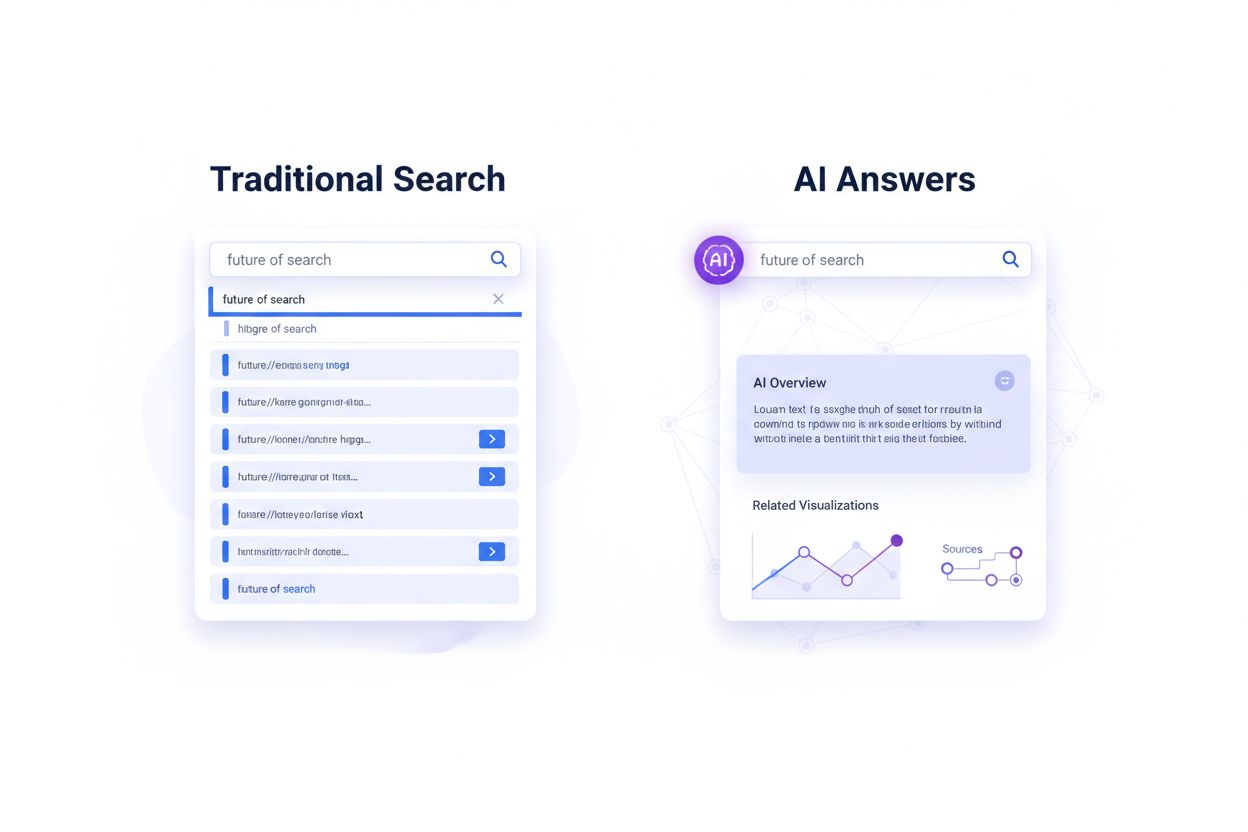
The Rise of Zero-Click Search: What It Means for Your Brand Visibility
Learn how zero-click searches and AI answers are reshaping brand visibility. Discover why traditional metrics are failing and how to monitor your AI citations w...
10 min read
Learn how to measure brand impact in zero-click search. Discover metrics beyond clicks, track AI visibility, and prove ROI when users don’t click through.
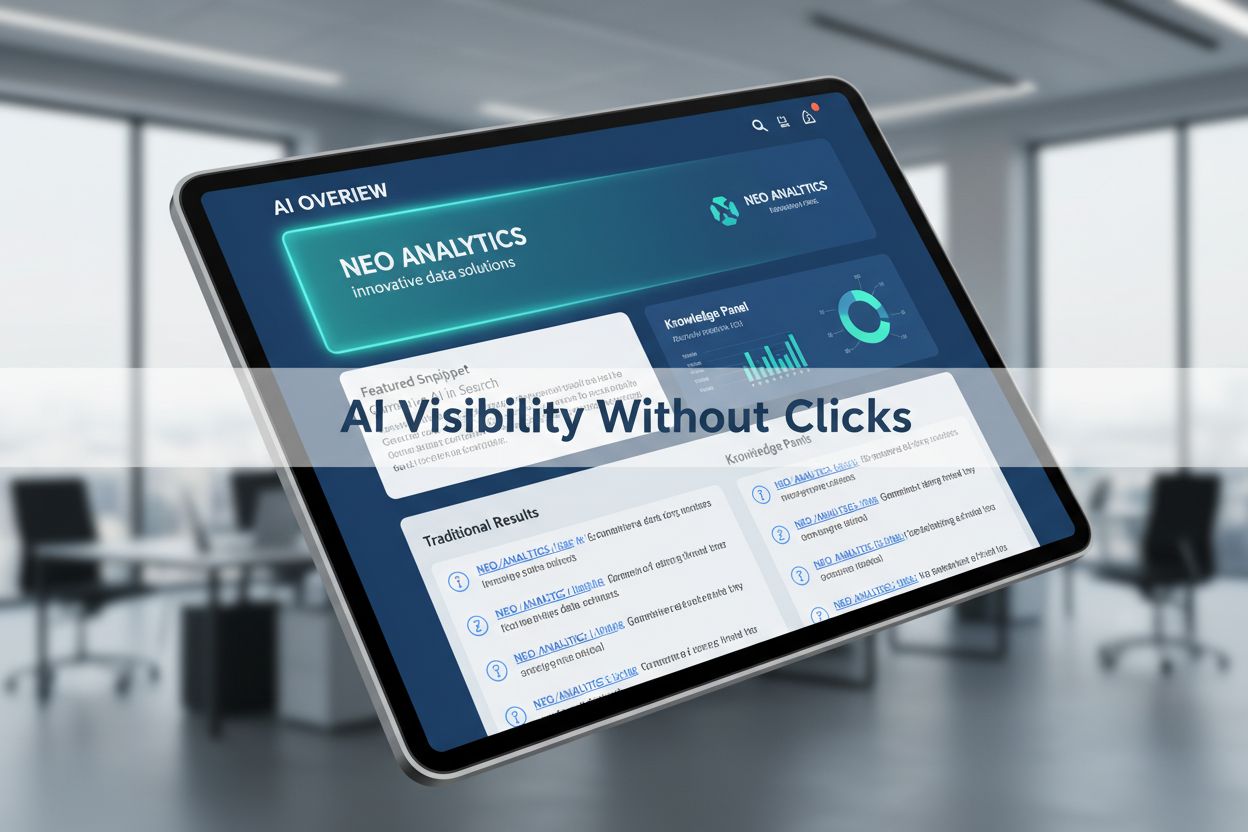
Zero-click attribution represents a fundamental shift in how we measure brand impact in the age of AI and intelligent search results. Traditionally, marketers have relied on tracking clicks as the primary indicator of success, but the digital landscape has evolved dramatically—users now receive answers directly from search engines, AI assistants, and featured snippets without ever clicking through to a website. This shift from clicks to impressions has created a significant visibility gap in traditional metrics, where brands influence customer decisions despite generating zero trackable traffic. AI Overviews, featured snippets, knowledge panels, and AI-powered search results now intercept user intent before they reach your website, meaning your brand could be shaping purchasing decisions while remaining completely invisible in your analytics dashboard. The paradox is stark: brands are invisible in analytics despite their influence on customer perception and behavior. When a potential customer asks ChatGPT about your industry and your competitor’s name appears in the response while yours doesn’t, you’ve lost an opportunity that traditional attribution models can’t even detect. Understanding and measuring zero-click attribution is no longer optional—it’s essential for understanding your true market position and brand impact.
The limitations of last-click attribution have become increasingly apparent as customer journeys grow more complex and fragmented across multiple touchpoints and platforms. Traditional analytics capture only the final interaction before a conversion, completely ignoring the dozens of brand exposures that influenced the decision along the way. The dark funnel—the portion of customer research happening outside your owned channels and trackable systems—now represents a substantial portion of the buyer’s journey, particularly in B2B and high-consideration purchases. When customers research on AI platforms, read AI-generated summaries, or receive answers from knowledge panels, these critical touchpoints vanish from your attribution model entirely. The shift from impression-based vs. click-based thinking requires marketers to recognize that visibility and influence don’t always correlate with clicks; a brand mentioned in an AI response has already influenced perception before any click occurs. CTR and traffic metrics are incomplete measures of marketing effectiveness because they ignore the growing segment of users who make decisions based on information they never clicked to access. This concept of “influence without interaction” challenges the fundamental assumptions underlying most marketing measurement frameworks.
| Metric Type | Traditional Attribution | Zero-Click Attribution |
|---|---|---|
| Primary Indicator | Clicks and traffic | Impressions and mentions |
| Visibility | Website analytics only | AI platforms, SERP features, knowledge panels |
| Customer Journey | Last-click focused | Multi-touch across dark funnel |
| Brand Impact | Direct conversions | Awareness, consideration, preference |
| Data Source | GA4, CRM systems | AI monitoring tools, SERP tracking |
| Measurement Gap | Minimal | Significant (40-60% of journey) |
Measuring zero-click attribution requires a new set of metrics specifically designed to capture brand visibility and influence in AI-powered environments. The most critical metrics include:
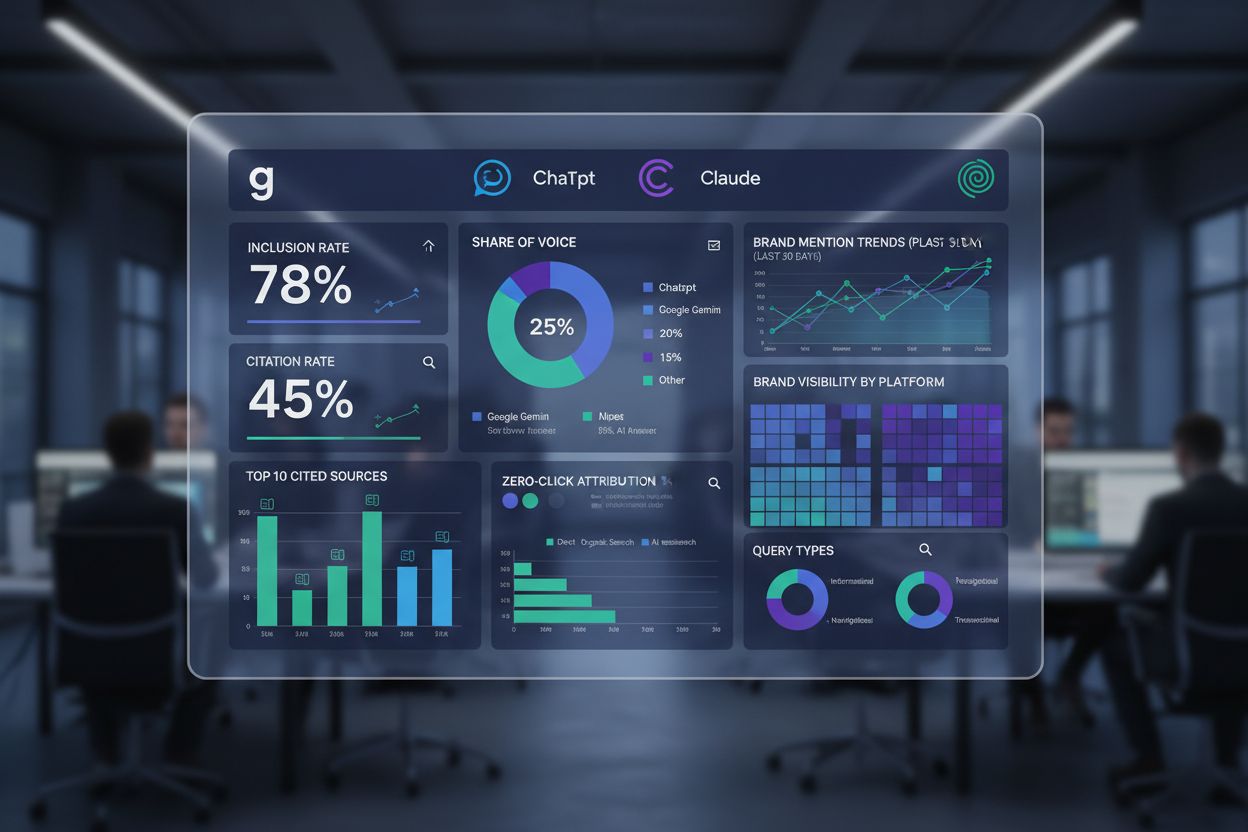
Share of Voice (SOV) in AI Results — The percentage of AI-generated responses mentioning your brand compared to competitors in your category, measured across multiple AI platforms and query types
Inclusion Rate — The frequency with which your brand appears in AI responses to relevant queries, indicating how often AI systems recognize your relevance to user questions
Citation Rate — The percentage of AI responses that cite your content as a source, demonstrating not just visibility but credibility and authority recognition
Impression Share in SERP Features — Your brand’s presence in featured snippets, knowledge panels, and other zero-click SERP features as a percentage of total eligible impressions
Answer Accuracy Score — How accurately AI systems represent your brand, products, and positioning when mentioning you, measuring quality of visibility rather than just quantity
Narrative Consistency Index — The consistency of how your brand is described across different AI platforms and responses, indicating whether your messaging is clear and coherent in training data
These metrics collectively paint a picture of your brand impact AI that traditional analytics completely miss, revealing opportunities and vulnerabilities in how AI systems perceive and represent your business.
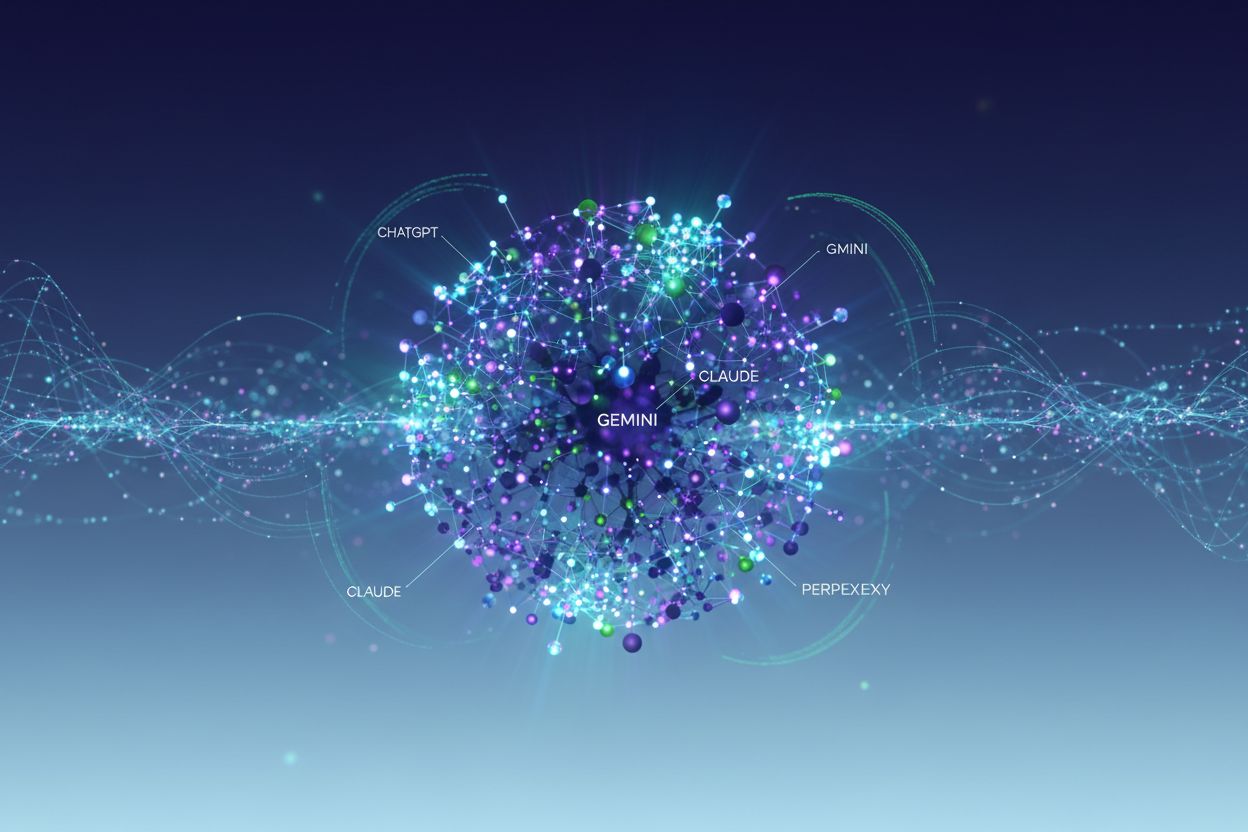
Creating an effective zero-click measurement framework begins with establishing a baseline brand visibility across AI platforms, which requires systematic testing and monitoring of how different AI systems respond to relevant queries. Start by developing a prompt testing strategy that covers your key customer questions, product categories, and competitive comparisons—this becomes your foundation for ongoing measurement. The next critical step is to track across multiple LLM platforms including ChatGPT, Google Gemini, Claude, and Perplexity, since each platform has different training data, algorithms, and user bases that may produce different results. Organize your testing by segmenting by topic and use case, ensuring you’re measuring visibility across the full spectrum of customer questions rather than just branded searches. Simultaneously, monitor competitor visibility to understand your relative position and identify gaps where competitors are mentioned but you’re not. Several specialized tools have emerged to support this measurement: Profound offers AI monitoring capabilities, ScrunchAI provides SERP feature tracking, and Semrush’s AI SEO toolkit integrates zero-click metrics into broader SEO analysis. To implement this framework effectively, follow these numbered steps: (1) Audit current visibility across 3-5 major AI platforms, (2) Create a database of 50-100 representative queries, (3) Establish monthly testing cadence, (4) Document baseline metrics for each platform, (5) Set up competitive benchmarking, and (6) Create dashboards for stakeholder reporting.
The ultimate value of measuring zero-click attribution lies in connecting zero-click visibility to downstream business metrics that directly impact revenue and growth. A brand that appears in AI responses experiences increased awareness and consideration, which translates into higher search volume for branded queries, more direct traffic, and ultimately more conversions—even though the initial AI mention generated zero clicks. Multi-channel attribution models help bridge this gap by recognizing that the AI mention was an important touchpoint in a longer customer journey, even if it didn’t directly generate the conversion. Brand lift and awareness metrics captured through surveys and brand tracking studies often show measurable increases following improvements in AI visibility, demonstrating that zero-click impressions do influence customer perception. The mechanism works through how AI visibility influences conversions indirectly: a prospect sees your brand mentioned in an AI response, becomes aware of you, searches for you later, and converts—but traditional last-click attribution credits only the final search, missing the critical AI touchpoint. In B2B environments, this impact is particularly pronounced through account progression and pipeline impact, where increased visibility in AI responses correlates with more accounts entering the pipeline and progressing through sales stages. To measure influenced accounts effectively, implement account-based attribution that tracks which accounts had exposure to your brand in AI systems before they engaged with your sales team, revealing the true influence of zero-click visibility on your most valuable opportunities.
Improving your zero-click attribution metrics requires deliberate content optimization strategies designed specifically for AI systems and SERP features. Schema markup and structured data are foundational—implementing comprehensive schema.org markup for your products, services, organization, and content helps AI systems understand and accurately represent your information. Develop a content optimization for AI citation strategy that prioritizes clear, authoritative answers to common customer questions, since AI systems preferentially cite sources that provide direct, well-structured answers. Implement an FAQ and answer-focused content strategy that anticipates the specific questions your customers ask AI systems, creating dedicated content sections that directly address these queries with comprehensive, citable information. Entity recognition and Knowledge Graph optimization involves ensuring your brand, key executives, products, and services are properly recognized as distinct entities in Google’s Knowledge Graph and similar systems, which improves how AI systems understand and reference your business. Invest in digital PR for training data presence by securing mentions in authoritative publications, industry reports, and research that AI systems use for training data—this increases the likelihood your brand appears in AI responses. Maintain content freshness and accuracy by regularly auditing and updating your website content, ensuring that when AI systems cite you, they’re citing current, accurate information that reflects your current positioning. Best practices include: prioritizing E-E-A-T signals (Experience, Expertise, Authoritativeness, Trustworthiness) throughout your content, creating comprehensive pillar content that thoroughly covers topics AI systems reference, and optimizing for natural language by writing for how people actually ask questions rather than traditional keyword optimization.
The era of single-touch attribution models is definitively over, as the complexity of modern customer journeys—spanning owned channels, earned media, AI platforms, and dark funnel research—demands more sophisticated measurement approaches. Multi-touch attribution (MTA) distributes credit across multiple touchpoints in the customer journey, recognizing that each interaction contributes to the final conversion decision, whether it’s an AI mention, a featured snippet, a social post, or a direct visit. Data-driven attribution (DDA), available in Google Analytics 4, uses machine learning to analyze your actual conversion data and assign credit based on which touchpoints most frequently appear in converting paths, providing more accurate insights than rule-based models. Media Mix Modeling (MMM) takes a broader approach, analyzing how different marketing channels and touchpoints collectively influence conversions at an aggregate level, particularly valuable for understanding the impact of brand-building activities like AI visibility that may not generate immediate clicks. To implement these models in GA4, configure conversion paths that include all relevant touchpoints, enable data-driven attribution for your key conversions, and create custom reports that show how different channels contribute to your conversion goals. Solutions like AmICited specifically address the AI monitoring gap by tracking your brand’s presence across AI platforms and integrating this data into broader attribution models, allowing you to finally see how zero-click visibility contributes to business outcomes. The comparison is clear: rule-based models (first-click, last-click, linear) are increasingly obsolete; data-driven models that learn from your actual data provide superior insights; and AI-inclusive models that incorporate zero-click metrics reveal the complete picture of how your brand influences customers across all touchpoints. The future of attribution belongs to organizations that recognize zero-click visibility as a critical component of brand impact and integrate it into comprehensive, multi-touch measurement frameworks.
Zero-click attribution refers to brand influence that occurs when users receive answers directly from search engines, AI assistants, or featured snippets without clicking through to your website. This includes AI Overviews, knowledge panels, and conversational AI responses where your brand may be mentioned or cited without generating trackable traffic.
Zero-click attribution is critical because over 50% of Google searches now end without a click, and AI platforms are increasingly the first point of customer research. Your brand may be influencing purchasing decisions through AI mentions and citations while remaining completely invisible in traditional analytics, making it impossible to understand your true market impact.
Measure zero-click visibility using metrics like Inclusion Rate (how often your brand appears in AI responses), Citation Rate (percentage of responses citing your content), Share of Voice (brand mentions vs. competitors), and Impression Share in SERP features. Tools like Semrush AI SEO toolkit, Profound, and ScrunchAI help automate this tracking across multiple AI platforms.
Last-click attribution gives 100% credit to the final interaction before conversion, ignoring all previous touchpoints. Zero-click attribution recognizes that brand influence happens across multiple touchpoints, including AI mentions that generate no clicks. This multi-touch approach provides a more accurate picture of how customers actually make decisions.
Monitor ChatGPT, Google Gemini, Claude, Perplexity, Google AI Overviews, and Google AI Mode. Each platform has different training data and user bases, so your brand may appear differently across them. Start with the platforms your target audience uses most frequently.
Zero-click visibility influences conversions indirectly through brand awareness and consideration. When prospects see your brand mentioned in AI responses, they become aware of you and may search for you later, converting through a path that traditional attribution misses. This effect is particularly strong in B2B and high-consideration purchases.
Leading tools include Semrush AI SEO toolkit (comprehensive AI visibility tracking), Profound (AI monitoring), ScrunchAI (SERP feature tracking), and AmICited (AI answers monitoring across GPTs, Perplexity, and Google AI Overviews). Google Search Console also provides impression data for SERP features.
Optimize for zero-click visibility by implementing comprehensive schema markup, creating FAQ content that directly answers customer questions, developing authoritative pillar content, securing mentions in high-authority publications, and maintaining content freshness and accuracy. Focus on E-E-A-T signals (Experience, Expertise, Authoritativeness, Trustworthiness) throughout your content.
See how often your brand appears in ChatGPT, Gemini, Claude, and Perplexity. Track zero-click visibility and measure brand impact where it matters most.
Learn how zero-click searches and AI answers are reshaping brand visibility. Discover why traditional metrics are failing and how to monitor your AI citations w...
Learn how to conduct a competitive AI visibility audit to understand your brand's positioning in ChatGPT, Perplexity, and Google AI Overviews. Discover metrics,...
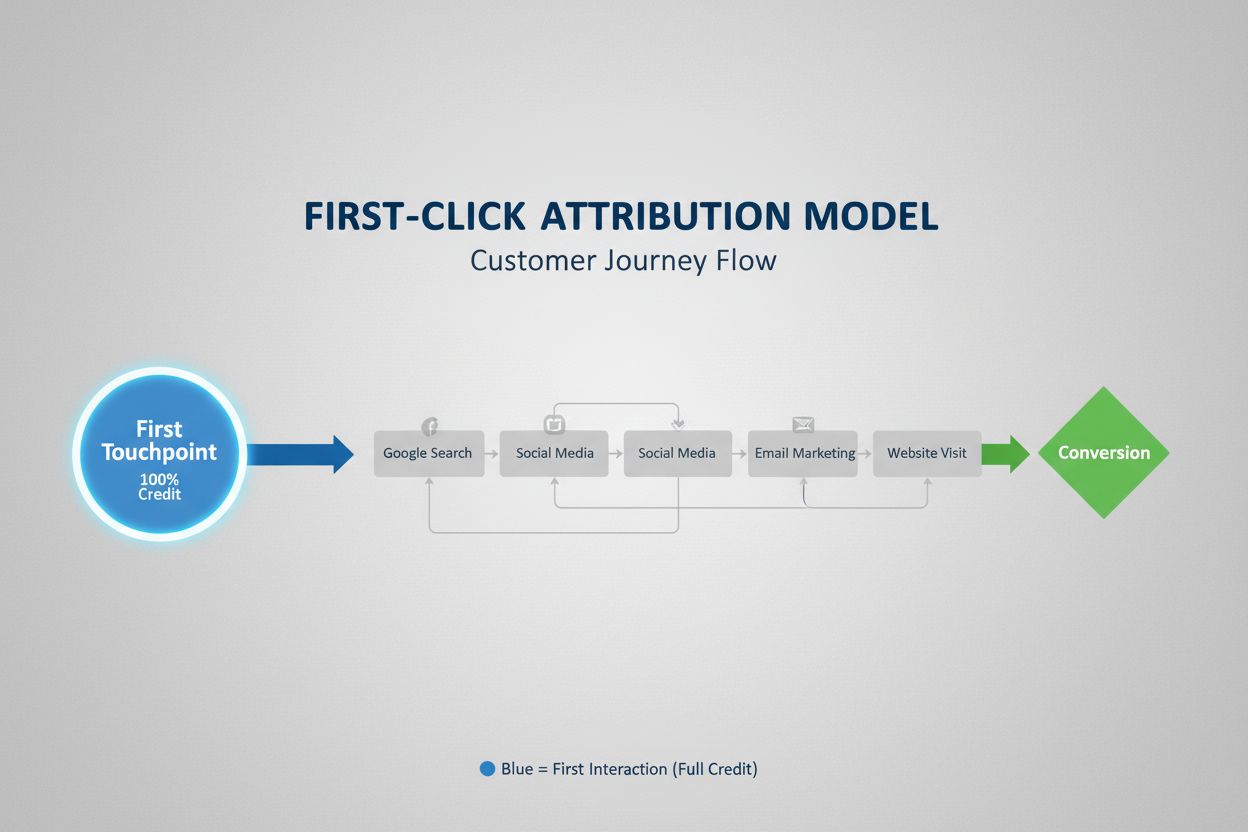
First-click attribution assigns 100% conversion credit to the first customer touchpoint. Learn how this model works, when to use it, and its impact on marketing...