Which schema markup types actually help with AI visibility?
Community discussion on schema markup for AI visibility. Real experiences from developers and SEOs on which structured data types improve AI citations.
I’ve been asked to implement comprehensive Organization schema for AI visibility. Looking at schema.org, there are dozens of possible fields.
My questions:
I want to implement this right the first time. Looking for guidance from people who’ve done this well.
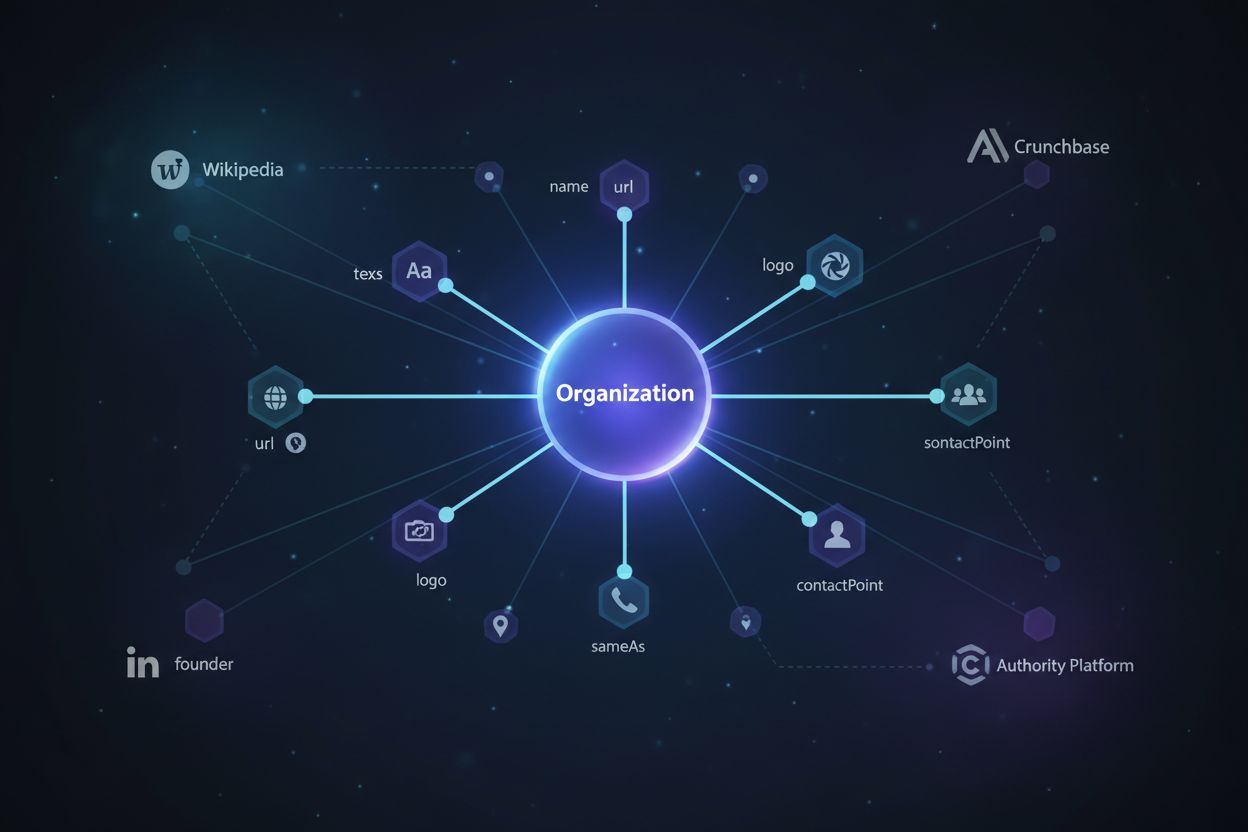
Let me share the Organization schema priority framework:
Tier 1 - Essential (Always include):
| Field | Purpose | AI Impact |
|---|---|---|
| @type | Entity type identification | High |
| name | Official organization name | Critical |
| url | Official website | Critical |
| logo | Visual identification | Medium |
| description | What you do | High |
| sameAs | Social/external profiles | High |
Tier 2 - Important (Include if applicable):
| Field | Purpose | AI Impact |
|---|---|---|
| foundingDate | Establishment date | Medium |
| founder | Founding person(s) | Medium |
| address | Physical location | Medium |
| contactPoint | How to reach you | Medium |
| numberOfEmployees | Company size | Low-Medium |
| areaServed | Geographic coverage | Medium |
Tier 3 - Helpful (Include if available):
| Field | Purpose | AI Impact |
|---|---|---|
| award | Recognition/credentials | Medium |
| memberOf | Association memberships | Medium |
| knowsAbout | Expertise areas | Medium |
| slogan | Brand messaging | Low |
The key insight:
AI uses Organization schema for entity disambiguation. The more complete and consistent, the better AI can recognize and accurately describe your organization.
sameAs best practices for AI:
Priority sameAs links (include these):
Why these matter:
AI systems cross-reference these to verify entity information. LinkedIn and Crunchbase are particularly valuable for business entity verification.
What to skip:
Format:
"sameAs": [
"https://www.linkedin.com/company/yourcompany",
"https://twitter.com/yourcompany",
"https://www.crunchbase.com/organization/yourcompany",
"https://www.youtube.com/@yourcompany"
]
The rule:
Include profiles that are active, official, and help verify your entity. Quality over quantity.
Organization vs LocalBusiness decision:
Use Organization when:
Use LocalBusiness when:
LocalBusiness subtypes:
Implementation example for local:
{
"@type": "LocalBusiness",
"name": "Business Name",
"address": {
"@type": "PostalAddress",
"streetAddress": "123 Main St",
"addressLocality": "City",
"addressRegion": "State",
"postalCode": "12345",
"addressCountry": "US"
},
"geo": {
"@type": "GeoCoordinates",
"latitude": "40.7128",
"longitude": "-74.0060"
},
"openingHoursSpecification": [...]
}
For AI specifically:
LocalBusiness schema helps AI answer “near me” queries and local recommendations. If local visibility matters, use the specific LocalBusiness type.
Knowledge graph implications:
How Organization schema connects to knowledge graphs:
Your schema is one input into how AI systems build their understanding of entities. Other inputs:
Schema’s role:
| What Schema Does | What It Doesn’t Do |
|---|---|
| Declares your entity info | Create knowledge graph presence alone |
| Enables verification | Override other sources |
| Supports consistency | Fix inconsistent web presence |
The virtuous cycle:
What breaks this:
Key insight:
Schema is necessary but not sufficient. It works when everything else is consistent too.
Complete implementation template:
<script type="application/ld+json">
{
"@context": "https://schema.org",
"@type": "Organization",
"@id": "https://yourcompany.com/#organization",
"name": "Your Company Name",
"alternateName": "Common Abbreviation",
"url": "https://yourcompany.com",
"logo": {
"@type": "ImageObject",
"url": "https://yourcompany.com/logo.png",
"width": 600,
"height": 200
},
"description": "Clear, concise description of what your company does. Include key services and value proposition in 1-2 sentences.",
"foundingDate": "2020-01-15",
"founder": {
"@type": "Person",
"name": "Founder Name",
"url": "https://linkedin.com/in/foundername"
},
"address": {
"@type": "PostalAddress",
"streetAddress": "123 Main Street",
"addressLocality": "City",
"addressRegion": "State",
"postalCode": "12345",
"addressCountry": "US"
},
"contactPoint": {
"@type": "ContactPoint",
"contactType": "customer service",
"email": "support@yourcompany.com",
"telephone": "+1-555-123-4567"
},
"sameAs": [
"https://linkedin.com/company/yourcompany",
"https://twitter.com/yourcompany",
"https://www.crunchbase.com/organization/yourcompany"
],
"knowsAbout": [
"Your expertise area 1",
"Your expertise area 2"
]
}
</script>
Placement:
Put in <head> of homepage. Can also include on About page with identical content.

Testing entity recognition after implementation:
How to verify it’s working:
Google Rich Results Test
Schema Markup Validator
AI entity check
Common issues to check:
| Issue | Symptom | Fix |
|---|---|---|
| Name mismatch | AI uses wrong name variant | Ensure consistency |
| Missing sameAs | Poor entity confidence | Add profile links |
| Outdated info | AI cites old data | Update schema + profiles |
| Invalid syntax | Schema ignored | Validate and fix errors |
Monitoring ongoing:
Am I Cited can track how your brand entity is described across AI platforms.
This is exactly what I needed. Here’s my implementation plan:
Phase 1: Preparation
Phase 2: Implementation
Essential fields (Day 1):
Additional fields (Day 2):
Phase 3: Validation
Phase 4: Consistency
Maintenance:
Key principle:
Schema + consistency across web = strong entity recognition.
Thanks everyone for the comprehensive guidance.
Get personalized help from our team. We'll respond within 24 hours.
Track how AI platforms recognize and describe your organization. Ensure your entity signals are working.

Community discussion on schema markup for AI visibility. Real experiences from developers and SEOs on which structured data types improve AI citations.

Learn how Organization schema helps AI systems understand and cite your brand. Complete guide to brand entity markup for LLM visibility and AI citations.

Community discussion on whether Article Schema and structured data actually impact AI citations in ChatGPT, Perplexity, and Google AI Overviews.
Cookie Consent
We use cookies to enhance your browsing experience and analyze our traffic. See our privacy policy.