

What Content Formats Work Best for AI Search? Complete Guide
Discover the best content formats for AI search engines like ChatGPT, Perplexity, and Google AI Overviews. Learn how to optimize your content for AI visibility ...
12 min read

Discover which industries win in AI search results and why. Learn how AI Overviews favor healthcare, legal, finance, and professional services while overlooking retail and hospitality.
Yes, AI search engines and AI Overviews show clear favoritism toward specific industries. Healthcare, legal services, financial services, professional services, and home services consistently appear in AI-generated answers, while retail and hospitality receive significantly less visibility. This favoritism stems from training data composition, structured data implementation, and the nature of high-trust decision-making queries.
AI search engines and AI Overviews are not neutral platforms. Research conducted over three months across multiple AI platforms including Google AI Overviews, ChatGPT, Claude, Gemini, and Perplexity reveals a clear pattern of industry favoritism. The data shows that certain industries consistently receive more visibility and citations in AI-generated answers, while others struggle to gain any presence at all. This disparity is not random—it reflects fundamental differences in how AI systems are trained, what data they prioritize, and which industries have invested in making their content discoverable to AI engines.
The most visible industries in AI search results are those tied to high-stakes decision-making, regulatory requirements, and trust-based services. When users ask AI systems for advice about their health, legal matters, finances, or professional services, the AI engines prioritize sources that demonstrate authority, credibility, and structured information. Industries that have optimized for these signals dominate AI Overviews, while those that have not adapted their strategies remain largely invisible.
Based on comprehensive analysis of over 2,500 unique prompts across multiple AI platforms, the following industries show the highest visibility in AI-generated answers:
| Industry | Visibility Percentage | Key Characteristics | Competitive Advantage |
|---|---|---|---|
| Healthcare | 22% | Treatment advice, condition information, preventative care | Medical schema, educational content, regulatory compliance |
| Legal Services | 19% | Case explanations, statute citations, legal guidance | FAQ schema, legal schema markup, transparent service breakdowns |
| Financial Services | 15% | Investment advice, lending information, M&A guidance | Structured data, authority-driven content, clear pricing transparency |
| Professional Services | 15% | Agency services, consulting, IT solutions | Service schema, case studies, detailed process documentation |
| Home Services | 12% | Plumbing, roofing, HVAC, local repairs | Google Business Profile optimization, review volume, local citations |
| Retail & Hospitality | 7% | E-commerce, restaurants, hotels | Minimal structured data adoption, limited authority signals |
This distribution reveals a critical insight: industries that serve high-value, high-risk decisions receive disproportionate visibility in AI search results. Healthcare professionals need to provide accurate medical information. Legal firms must cite relevant statutes and case law. Financial advisors must demonstrate expertise and transparency. These industries have naturally invested in the structured data, educational content, and credibility signals that AI systems reward.
The favoritism shown by AI search engines toward specific industries stems from several interconnected factors that go beyond simple algorithmic preference. Understanding these factors is essential for any business seeking to improve its visibility in AI-generated answers.
AI models are trained on vast amounts of internet data, but this data is not evenly distributed across industries. The training datasets used to build systems like ChatGPT, Claude, and Gemini contain disproportionately more content from certain sectors. Healthcare, legal, and financial services have published extensive educational materials, research papers, and authoritative guides online for decades. These industries have created a rich ecosystem of structured, credible information that AI systems can learn from and cite.
In contrast, many retail and hospitality businesses rely on social media, review platforms, and unstructured content that AI systems struggle to parse and prioritize. A restaurant’s Instagram posts and customer reviews, while valuable for human decision-making, do not provide the same structured signals that AI engines use to identify authoritative sources. This creates a self-reinforcing cycle where industries with more published authority-driven content receive more visibility in AI results.
Structured data—also called schema markup—is the passport that allows AI engines to quickly scan and understand website content. Industries that have widely adopted structured data see significantly higher visibility in AI Overviews. Healthcare providers use medical schema to describe treatments and conditions. Law firms use legal schema to cite statutes and case types. Financial services firms use organization schema and FAQ schema to explain complex processes.
The adoption of structured data varies dramatically by industry. Healthcare, legal, and financial services have embraced schema markup as part of their SEO and content strategies. Professional services firms have followed suit, recognizing that clear, structured information improves both human search visibility and AI discoverability. Home services businesses have increasingly adopted Google Business Profile optimization and local schema, which helps them appear in AI results for location-based queries.
Retail and hospitality, however, have been slower to implement comprehensive structured data strategies. Many e-commerce sites focus on product schema but neglect the broader context that AI systems need to understand their business model, values, and expertise. This gap in structured data implementation directly correlates with lower visibility in AI Overviews.
AI systems prioritize sources that demonstrate trustworthiness and authority. This preference is built into how these systems are designed and trained. When an AI engine generates an answer about a medical condition, it looks for sources that have been cited by other authoritative medical sources, have strong review ratings, and demonstrate expertise through detailed, educational content.
Industries that serve high-stakes decisions naturally accumulate these trust signals. A personal injury law firm with 500 five-star reviews and detailed case explanations has more authority signals than a retail business with fewer reviews and less detailed content. A commercial lending firm that publishes transparent lending guides and maintains consistent information across directories has more credibility signals than a restaurant with limited online presence.
Google Business Profile optimization, review volume, citation consistency, and third-party directory listings all contribute to the trust signals that AI systems evaluate. Industries that have invested in these signals—particularly healthcare, legal, finance, and home services—benefit from higher visibility in AI results.
The types of questions users ask AI systems naturally favor certain industries. When people use AI search engines, they often ask questions that require expert guidance: “What are the symptoms of diabetes?” “How do I file for bankruptcy?” “Should I refinance my mortgage?” “What’s the best digital marketing agency for my business?” These high-intent, high-value queries naturally lead AI systems to surface healthcare, legal, financial, and professional services providers.
In contrast, queries about retail products or restaurant recommendations are less common in AI search contexts. Users are more likely to search for specific products on Amazon or look for restaurants on Google Maps than to ask ChatGPT for shopping recommendations. This difference in query patterns means that AI systems receive less training data about retail and hospitality recommendations, further reducing visibility for these industries.
The theoretical understanding of industry favoritism becomes concrete when examining real-world examples of how AI Overviews surface specific businesses and industries.
One commercial lending client tracked the source of all incoming sales calls over a three-month period and found that 15% of all sales calls originated directly from AI Overview placements. More importantly, these AI-sourced leads converted at a higher rate than traditional inbound leads, and the average deal size was larger. This client achieved success by publishing transparent lending guides, embedding structured data on their website, and maintaining consistency across their Google Business Profile.
The credibility signals combined with authority-driven content helped AI engines trust the company as a recommended resource. When potential borrowers asked AI systems about commercial lending options or SBA loan processes, this firm appeared consistently in the results because it had invested in the exact type of content and structure that AI systems reward.
A regional personal injury law firm showed up in 48% of AI Overview responses for accident-related searches. Their competitive advantage came from publishing detailed FAQs about different types of accidents, embedding legal schema that cited relevant statutes, and securing positive reviews across multiple platforms. The firm’s investment in educational content about personal injury law—explaining what constitutes negligence, how statute of limitations work, and what damages are recoverable—gave AI systems the authoritative information they needed to recommend the firm.
An RIA (Registered Investment Advisor) firm earned citations in 41% of AI Overview results for searches related to “sell my RIA” and “RIA acquisitions advisor.” Their success was tied to educational deal guides that explained the M&A process, case study content showing successful acquisitions, and transparent breakdowns of how they structure advisory relationships. By creating content that directly addressed the specific questions their target audience asked AI systems, they achieved dominant visibility in a high-value niche.
While certain industries thrive in AI Overviews, others struggle to gain any meaningful presence. Understanding why these industries lag behind provides valuable lessons for improving visibility.
Retail and e-commerce businesses face unique challenges in AI search visibility. These industries represent less than 7% of citations in AI Overviews, despite being major economic sectors. Several factors contribute to this low visibility:
First, retail businesses typically focus on product-level optimization rather than authority-driven content. An e-commerce site might have excellent product descriptions and customer reviews, but it lacks the educational, authoritative content that AI systems prioritize. When someone asks an AI system “What’s the best laptop for video editing?” the AI is more likely to cite a tech review site or professional recommendation than a retailer’s product page.
Second, retail queries are often transactional rather than informational. Users ask AI systems for advice and information, not shopping recommendations. This means AI systems receive less training data about retail recommendations and have fewer opportunities to surface retail businesses in their answers.
Third, retail businesses have been slower to adopt the structured data and content strategies that improve AI visibility. While some major retailers have invested in schema markup and educational content, many smaller retailers have not.
The hospitality industry—including restaurants, hotels, and travel services—shows even lower visibility in AI Overviews than retail. Global hotel chains occasionally surface in AI results, but independent restaurants and boutique hotels rarely appear. This invisibility stems from several factors:
Hospitality businesses rely heavily on review platforms like Google Reviews, Yelp, and TripAdvisor rather than their own websites. While these reviews are valuable for human decision-making, they do not provide the structured, authoritative content that AI systems prioritize. When someone asks an AI system for a restaurant recommendation, the AI is more likely to cite aggregated review data than individual restaurant websites.
Additionally, hospitality businesses have not invested in the educational content that AI systems reward. A restaurant might have excellent food and service, but it lacks the detailed, informative content about cuisine, cooking techniques, or dining experiences that would help AI systems understand and recommend it.
Understanding why certain industries favor in AI search is the first step toward improving visibility. The next step is implementing the strategies that successful industries use to dominate AI Overviews.
Structured data is the foundation of AI visibility. Every industry should implement schema markup that helps AI systems understand their business, services, and expertise. This goes beyond basic service schema—it includes:
The most successful industries in AI search have implemented comprehensive schema strategies that cover multiple aspects of their business. A law firm might use legal schema to cite relevant statutes, FAQ schema to answer common questions about different practice areas, and review schema to highlight client testimonials.
AI systems reward content that educates and informs. The industries that dominate AI Overviews—healthcare, legal, finance, and professional services—have all invested heavily in educational content that addresses the questions their customers ask. This content should be:
A financial services firm might publish detailed guides about different investment strategies, retirement planning approaches, and market analysis. A healthcare provider might create comprehensive resources about different conditions, treatment options, and preventative care. This educational content serves dual purposes: it helps human visitors understand your expertise, and it gives AI systems the authoritative information they need to recommend you.
For businesses serving local markets, trust signals are critical. This includes:
Home services businesses have been particularly successful with this approach. A plumbing company that maintains an optimized Google Business Profile, generates consistent positive reviews, and ensures its information is consistent across local directories will appear more frequently in AI results for local service queries.
You cannot improve what you do not measure. Businesses should regularly audit their visibility in AI Overviews across multiple platforms. This includes:
Tools designed specifically for AI search visibility can help businesses understand their current position and identify opportunities for improvement. Regular auditing allows you to adapt your strategy as AI systems evolve and as your industry’s competitive landscape changes.
AI Overviews are still in their early stages, and the landscape will continue to evolve. As these systems mature, several trends are likely to emerge:
First, more industries will recognize the importance of AI visibility and invest accordingly. As retail and hospitality businesses see the success of other industries in AI search, they will begin implementing structured data, educational content, and trust-building strategies. This will gradually reduce the current disparity in visibility.
Second, AI systems will become more sophisticated in evaluating authority and trustworthiness. As these systems mature, they may develop new ways to assess credibility that go beyond current signals. Industries that have invested in genuine expertise and customer satisfaction will continue to benefit, while those relying on superficial optimization will struggle.
Third, regulation and standardization will likely increase. As AI Overviews become more important for business visibility, regulators may impose requirements on how AI systems surface businesses and industries. This could lead to more equitable representation across industries, or it could entrench current advantages for industries that have already invested in AI visibility.
Fourth, early adopters will maintain long-term advantages. Industries and businesses that invest in AI visibility now will establish themselves as authorities in their fields. As AI systems mature and become more important for customer discovery, these early adopters will hold significant competitive advantages over late movers.
The key insight is this: industry favoritism in AI search is not permanent or inevitable. It reflects current choices about how AI systems are trained and what signals they prioritize. Businesses and industries that understand these factors and invest in the right strategies can improve their visibility, regardless of their current position in AI Overviews.
Track how often your brand appears in AI-generated answers across ChatGPT, Perplexity, Google Gemini, and other AI search engines. Get real-time insights into your AI search visibility and competitive positioning.
Discover the best content formats for AI search engines like ChatGPT, Perplexity, and Google AI Overviews. Learn how to optimize your content for AI visibility ...
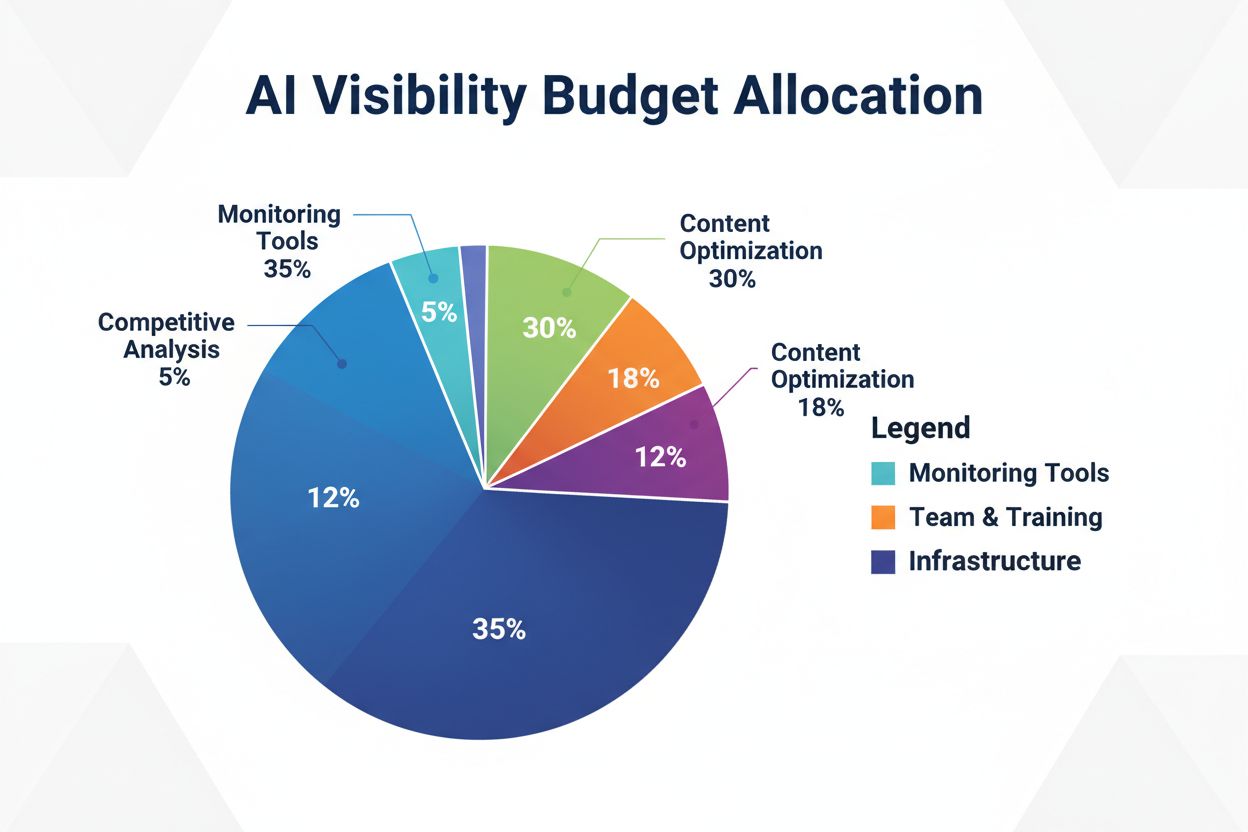
Learn how to strategically allocate your AI visibility budget across monitoring tools, content optimization, team resources, and competitive analysis to maximiz...
Learn how startups can improve their visibility in AI-generated answers across ChatGPT, Perplexity, Gemini, and other AI platforms through structured content, s...