

Article Schema with Author: Trust Signals That AI Recognizes
Learn how article schema with author markup builds trust signals for AI systems. Implement authorship markup to improve visibility in ChatGPT, Perplexity, and G...
8 min read

Learn how author schema markup improves AI citations in ChatGPT, Perplexity, and Google AI Overviews. Discover implementation strategies to increase your brand visibility in AI-generated answers.
Yes, author schema helps with AI citations by providing structured data that clearly identifies content authorship and expertise. AI systems use this markup to verify author credentials, establish entity recognition, and determine content authority, making your content more likely to be cited in AI-generated answers and summaries.
Author schema is a structured data markup that explicitly tells search engines and AI systems who created a piece of content. Unlike traditional SEO where author information might be buried in visible text, author schema uses JSON-LD format to provide machine-readable data about the content creator. This markup includes critical information such as the author’s name, professional URL, credentials, and affiliations. When properly implemented, author schema transforms your website into a machine-readable knowledge graph that AI systems can easily parse and understand. The importance of this markup has grown exponentially as AI-powered search engines like ChatGPT, Perplexity, Claude, and Google’s AI Overviews have become mainstream tools for information discovery.
The relationship between author schema and AI citations is fundamentally about entity recognition and trust verification. AI systems process billions of web pages daily, and they need efficient ways to distinguish between authoritative sources and unreliable content. Author schema provides the semantic layer that enables AI algorithms to quickly identify who wrote the content, verify their expertise, and assess whether they should be cited as a credible source. Without this structured data, AI systems must rely on guesswork—scraping visible text, checking third-party listings, or analyzing cached versions of pages. This inefficient process often results in missed citations or inaccurate attribution.
AI-powered search engines employ a sophisticated process called entity recognition to understand and categorize information. This process involves tokenization, pattern recognition, and context analysis to distinguish between different entities—for example, differentiating between Apple the technology company and apple the fruit. Author schema dramatically improves this process by providing explicit, structured information that removes ambiguity. When an AI system encounters your content marked with proper author schema, it can immediately verify that the author is a real person with verifiable credentials, rather than spending computational resources trying to infer this information from unstructured text.
The citation process in AI systems typically follows this workflow: First, the AI system crawls and indexes your content. Second, it analyzes the structured data to understand the content’s purpose, authorship, and authority. Third, when a user asks a question, the AI system searches its indexed content for relevant answers. Finally, it selects sources to cite based on relevance, authority, and content quality. Author schema influences multiple stages of this process. Pages with clear author markup are more likely to be indexed correctly, understood as authoritative, and selected as citation sources. Research indicates that pages with schema markup are 36% more likely to appear in AI-generated summaries and citations compared to pages without structured data.
| AI Platform | How Author Schema Helps | Citation Likelihood |
|---|---|---|
| Google AI Overviews | Feeds knowledge graph; clarifies authorship for entity recognition | Higher when author is verified entity |
| ChatGPT Search / SearchGPT | Uses Bing index; author schema improves content authority signals | Increased with proper Person/Organization markup |
| Perplexity AI | Enables quick identification of expert content; improves answer extraction | Better ranking for well-structured author data |
| Claude Web Search | Provides direct citations; author schema clarifies source credibility | More likely to cite verified authors |
| Bing AI | Integrates with knowledge graph; uses author data for trust scoring | Enhanced visibility with complete author markup |
Implementing author schema correctly requires understanding the Person and Organization schema types from Schema.org. The Person schema is used for individual content creators and includes properties such as name, job title, affiliation, educational background, and URLs to professional profiles. The Organization schema serves a similar purpose for company-authored content and includes properties like company name, logo, contact information, and social media profiles. Both schema types support the sameAs property, which links to external verification sources like Wikipedia, LinkedIn, or professional directories. This external linking is particularly valuable for AI systems because it provides cross-reference verification that strengthens the credibility assessment.
The most effective author schema implementation uses JSON-LD format, which Google explicitly recommends and which AI systems prefer. JSON-LD is placed in a <script> tag within the page’s <head> or <body> section, making it separate from your HTML content and easier to manage. Here’s a practical example of proper author schema implementation:
{
  "@context": "https://schema.org",
  "@type": "Person",
  "name": "Jane Doe",
  "jobTitle": "Senior Content Strategist",
  "affiliation": {
    "@type": "Organization",
    "name": "Your Company Name"
  },
  "url": "https://www.yoursite.com/author/jane-doe",
  "sameAs": [
    "https://www.linkedin.com/in/janedoe",
    "https://twitter.com/janedoe"
  ],
  "image": "https://www.yoursite.com/images/jane-doe.jpg"
}
When implementing author schema for article content, you should nest the Person schema within the Article schema. This creates a clear relationship between the content and its creator. Multiple authors should be listed in separate author fields, not merged into a single field. For example, if two people co-authored an article, you would include two distinct author objects rather than combining their names into one string. This distinction is crucial because AI systems parse structured data programmatically, and merged author names can cause parsing errors or misattribution.
The evidence supporting author schema’s effectiveness for AI citations is compelling. Content with proper author markup receives significantly more citations from AI systems compared to unmarked content. This improvement occurs because author schema addresses a fundamental challenge in AI content selection: verification of expertise and authority. When an AI system encounters two pieces of content answering the same question, it must decide which source to cite. If one source has clear author schema showing the author is an expert in that field, while the other has no author information, the AI system will almost certainly prefer the marked-up content.
The mechanism behind this preference relates to how AI systems evaluate E-E-A-T signals (Expertise, Experience, Authoritativeness, Trustworthiness). Author schema provides explicit signals for each of these dimensions. The author’s name and credentials demonstrate expertise. The author’s professional history and affiliations show experience. The presence of verified external profiles (via sameAs) establishes authoritativeness. The consistency of author information across your site and external sources builds trustworthiness. AI systems weight these signals heavily when deciding whether to cite your content in generated answers.
Different AI platforms show varying levels of reliance on author schema. Google’s AI Overviews pull information from Google’s knowledge graph, which is heavily influenced by structured data. Pages with proper author markup feed more complete information into the knowledge graph, making them more likely to be selected as citation sources. ChatGPT Search and SearchGPT use Bing’s index as their source, meaning your Bing-indexed pages with schema markup become potential citation sources. Perplexity AI explicitly prioritizes well-structured content because its algorithms can extract answers more efficiently from marked-up pages. Claude’s web search provides direct citations, and author schema helps Claude verify source credibility before including citations in its responses.
To maximize your content’s visibility in AI citations, follow these strategic implementation practices. First, ensure all authors visible on your page are included in the markup. If your article displays three authors but your schema only marks up one, AI systems may miss important authorship information or flag the content as inconsistent. Second, use the url or sameAs property to link to verifiable author profiles. This external verification is particularly valuable for AI systems because it allows them to cross-reference your author information against trusted sources. Third, maintain consistency across your entire website. If the same author writes multiple articles, use identical author information across all pieces. This consistency helps AI systems recognize the author as a consistent entity and builds stronger authority signals.
Fourth, include author information in your Article schema, not just on your author profile pages. When you nest Person schema within Article schema, you create explicit connections between content and creators that AI systems can easily parse. Fifth, update author information when it changes. If an author’s job title changes, their affiliation shifts, or they move to a new organization, update your schema markup accordingly. Stale author information can confuse AI systems and reduce citation likelihood. Sixth, validate your schema markup using Google’s Rich Results Test and Schema.org Validator. These tools identify errors that might prevent AI systems from properly parsing your author information.
Seventh, combine author schema with other relevant schema types for maximum effectiveness. For example, use Article schema for blog posts, FAQ schema for question-and-answer content, and HowTo schema for instructional content. This multi-layered approach provides AI systems with comprehensive context about your content’s purpose and authorship. Eighth, monitor your AI citation performance using specialized tools that track how often your content appears in AI-generated answers across different platforms. This monitoring helps you identify which content types and author profiles generate the most AI citations, allowing you to refine your strategy over time.
Many websites implement author schema incorrectly, which can actually harm their AI citation prospects. The most common mistake is merging multiple authors into a single author field. For instance, writing "author": {"name": "John Smith, Jane Doe"} instead of creating separate author objects. AI systems expect structured data to follow specific formats, and merged author names violate this expectation, potentially causing parsing failures. Another frequent error is including non-author information in the author.name property. Your schema should only contain the author’s name, not their job title, company, or honorific prefix. These details belong in separate properties like jobTitle, affiliation, or honorificPrefix.
Failing to link author profiles to external verification sources is another significant mistake. If your author schema includes a url property but that URL is a generic company homepage rather than an author-specific profile page, AI systems cannot verify the author’s identity or expertise. Similarly, not updating author information when it becomes outdated can damage your credibility. If your schema still lists an author’s old job title or previous company affiliation, AI systems may flag this inconsistency and reduce their trust in your content. Overtagging pages with conflicting or unnecessary schemas is also problematic. A simple blog post should only receive BlogPosting schema, not Product schema or other irrelevant markup types.
Ignoring third-party review sources and external verification represents another missed opportunity. If your author has published work on other platforms, been featured in industry publications, or maintains professional profiles on LinkedIn or Twitter, these external signals should be included via the sameAs property. Not testing your schema markup before deployment is a critical error that many websites make. Using the Rich Results Test and Schema.org Validator before publishing ensures your markup is syntactically correct and will be properly parsed by AI systems. Finally, assuming author schema alone will guarantee AI citations is a dangerous misconception. Author schema is one component of a comprehensive AI visibility strategy that must also include high-quality content, strong domain authority, and proper implementation of other relevant schema types.
To understand whether your author schema implementation is effectively improving AI citations, you need to establish a measurement framework. Start by documenting your baseline: before implementing author schema, record how often your content appears in AI-generated answers across different platforms. Use tools that monitor AI citations from ChatGPT, Perplexity, Google AI Overviews, and Claude. After implementing author schema, track these metrics over a 30-60 day period to allow time for AI systems to recrawl and reindex your content. You should expect to see measurable improvements in citation frequency, particularly for content in competitive niches where multiple sources answer the same question.
Beyond citation frequency, monitor citation quality and context. Not all citations are equally valuable. A citation that includes your author’s name and credentials is more valuable than a citation that only mentions your domain. Track whether AI systems are citing your content with proper attribution to your author or simply pulling information without clear sourcing. This distinction matters because proper author attribution builds brand recognition and establishes your author as an expert in their field. Additionally, analyze which content types generate the most AI citations after implementing author schema. You may find that certain content categories—such as how-to guides, expert interviews, or research-backed articles—generate significantly more citations when author schema is properly implemented.
Use Search Console and other SEO tools to monitor changes in your content’s visibility across traditional search and AI search. While author schema’s primary impact is on AI citations, it can also improve your visibility in traditional search results, particularly for featured snippets and knowledge panels. Track changes in click-through rates, impressions, and average position for your target keywords. Finally, conduct periodic audits of your author schema implementation to ensure it remains accurate and complete. As your team grows, authors change roles, or your organization evolves, your schema markup must be updated accordingly. Regular audits prevent the accumulation of outdated or incorrect author information that could undermine your AI citation strategy.
Track how your content appears in AI answers across ChatGPT, Perplexity, Google AI Overviews, and other AI search engines. Get real-time alerts when your brand is mentioned and measure your AI citation performance.
Learn how article schema with author markup builds trust signals for AI systems. Implement authorship markup to improve visibility in ChatGPT, Perplexity, and G...
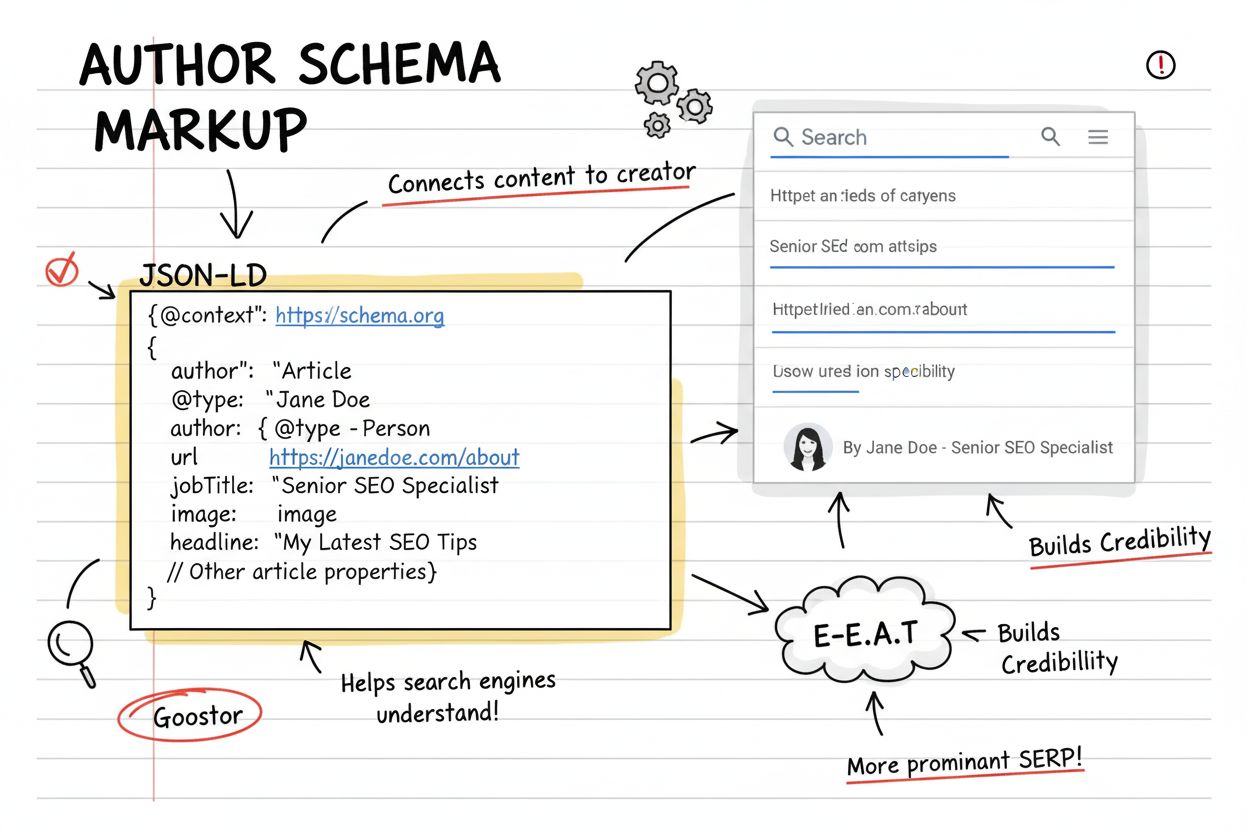
Learn what Author Schema is, how it works, and why it's essential for SEO, E-E-A-T signals, and AI content attribution. Complete guide to implementation.

Community discussion on whether author schema helps AI citations. Real experiences from SEO professionals testing author markup impact on ChatGPT, Perplexity, a...