

Why do some sources get cited first by AI? Trying to understand citation order
Community discussion on factors that determine citation order in AI responses. Real insights on what makes sources get cited first.
6 min read
Discussion
Technical
+1

Learn how citation order affects AI visibility, brand credibility, and user trust in ChatGPT, Perplexity, and Google AI Overviews. Understand citation patterns across AI platforms.
Citation order matters significantly in AI results. First-cited sources receive more user attention and trust, while citation presence itself boosts credibility even more than accuracy. Different AI platforms prioritize sources differently—ChatGPT favors authoritative sources like Wikipedia, while Google AI Overviews and Perplexity emphasize diverse sources including Reddit and community content.
Citation order significantly influences how users perceive the credibility and relevance of AI-generated answers. Research demonstrates that the position of citations in AI responses directly impacts user trust levels, with first-cited sources receiving disproportionate attention. When users encounter an AI-generated answer, they typically scan citations from top to bottom, meaning the first source listed receives the most visual prominence and cognitive weight. This ordering effect creates a hierarchy of perceived authority, where early citations are implicitly treated as more relevant or authoritative than those appearing later in the list. The psychological principle of primacy bias means users tend to remember and trust information associated with sources they encounter first, even when all citations are equally valid.
Studies on AI chatbot citations reveal that users often don’t verify sources at all, instead relying on the presence of citations as a trust signal. When citations appear in an AI response, users rate the answer as significantly more trustworthy compared to responses without citations, regardless of whether the citations are actually accurate or relevant. This phenomenon suggests that citation order matters not just for SEO visibility, but for the fundamental user experience and trust dynamics surrounding AI-generated content. The first citation in a list serves as an implicit endorsement of the answer’s quality, making citation order a critical factor in how AI platforms shape user perception of information credibility.
Different AI platforms employ distinct strategies for ordering and presenting citations, reflecting their underlying philosophies about information sourcing. ChatGPT demonstrates a strong preference for authoritative, encyclopedic sources, with Wikipedia dominating its citation patterns at approximately 47.9% of its top 10 most-cited sources. When ChatGPT cites sources, it typically leads with established reference materials and major news outlets like Reuters and the Financial Times, positioning these as the primary evidence for its answers. This ordering strategy reinforces ChatGPT’s emphasis on factual accuracy and established authority, signaling to users that the answer draws from credible, non-commercial sources.
Google AI Overviews and Gemini employ a more distributed citation approach, drawing from a wider variety of sources including blogs, news outlets, YouTube, Reddit, and LinkedIn. The citation order in these platforms reflects a balanced aggregation strategy, where sources are ordered based on relevance to the specific query rather than a universal authority hierarchy. This means the first citation might be a blog post for one query and a Reddit discussion for another, depending on which source best answers the user’s specific question. Perplexity AI occupies a middle ground, frequently leading with expert review sites and industry-specific sources like NerdWallet or Consumer Reports, then supplementing with community content and blogs. The citation order in Perplexity responses reflects its focus on expert-curated information, with specialized review sites typically appearing before general-purpose sources.
Citation order directly correlates with brand visibility and traffic potential in AI search results. Brands appearing as the first citation in an AI response receive substantially more user attention and click-through traffic compared to those cited later in the list. Research analyzing citation patterns across 8,000 AI citations found that brands with higher visibility scores—measured by detection rate and average citation position—consistently appeared earlier in citation lists. This creates a compounding effect where brands already visible in AI results tend to maintain their position advantage because first-cited sources receive more user engagement, which reinforces their authority signals across the web.
The visibility correlation extends beyond individual citations to overall brand mention volume. Brands that are frequently discussed and cited across third-party websites—including news outlets, blogs, Reddit discussions, and industry publications—tend to appear earlier in AI citation lists. This is because AI platforms use brand mention frequency as a primary signal of authority and relevance. When your brand is mentioned across multiple high-quality sources, AI systems recognize this pattern and prioritize your content when ordering citations. The practical implication is that building a strong web presence across diverse platforms directly influences not just whether you get cited, but where you appear in the citation order.
A counterintuitive finding from research on AI citations reveals that the presence of citations matters more for user trust than the accuracy of those citations. Studies measuring user trust in AI-generated answers found that responses with citations were consistently rated as more trustworthy than those without citations, even when the citations were random or inaccurate. This “social proof” effect means that users perceive citations as credibility signals regardless of whether they verify the sources. However, this dynamic changes when users actually check the citations—if they discover inaccurate or irrelevant citations, trust drops significantly below responses without any citations at all.
This distinction has important implications for citation order strategy. While citation order affects which sources receive the most user attention, the mere presence of citations in the first position creates a trust halo effect that extends to the entire answer. Users encountering a well-cited answer tend to trust all citations more highly, including those appearing later in the list. However, if the first citation is inaccurate or irrelevant, this trust advantage disappears. The research suggests that citation quality matters more than citation quantity—a single, well-chosen first citation can be as effective as multiple references in building user confidence. This means brands should focus on ensuring their citations are accurate and relevant rather than simply trying to accumulate more citations.
Citation order varies significantly based on query intent and topic type, with AI platforms adjusting their source prioritization accordingly. For B2C queries like “best smartphone brands” or “top airlines,” AI platforms typically lead with consumer-focused sources such as tech review sites, mainstream media outlets, and user review platforms. In these queries, Wikipedia and consumer review sites like TripAdvisor or Consumer Reports often appear first, followed by news outlets and blogs. The citation order reflects the platform’s assessment that consumer-oriented sources best answer the user’s decision-making needs. Official company websites and product pages rarely appear first in B2C queries, typically relegated to later positions if cited at all.
B2B queries like “top CRM software” or “best SEO tools” demonstrate a different citation ordering pattern, with industry-specific publications, analyst reports, and company websites appearing earlier in the citation list. Platforms like Perplexity frequently lead with specialized review sites like G2 or Capterra, followed by industry publications and company blogs. This ordering reflects the recognition that B2B buyers need different types of evidence—vendor information, analyst perspectives, and peer reviews—compared to consumer audiences. Mixed-interest queries about topics like “top pharmaceutical companies” or “renewable energy firms” show yet another pattern, with neutral, factual sources like government data, research reports, and news outlets appearing first, followed by industry-specific sources and company information.
Understanding citation order dynamics is essential for developing effective AI visibility strategies. To improve your citation order position, focus on building authority across multiple dimensions simultaneously. First, ensure your brand is mentioned frequently across high-quality third-party sources—news outlets, industry publications, blogs, and community forums. These mentions signal to AI platforms that your brand is authoritative and relevant, increasing the likelihood that you’ll be cited and potentially appearing earlier in citation lists. Second, optimize your own content for AI extraction by using clear structure, direct answers, and schema markup that makes your content easy for AI systems to understand and cite.
The relationship between traditional SEO and citation order is direct and measurable. Approximately 76.1% of URLs cited in Google AI Overviews also rank in the top 10 of Google search results, indicating that strong organic search performance is a prerequisite for favorable citation ordering. However, ranking alone isn’t sufficient—your content must also demonstrate authority signals that AI platforms recognize. This includes E-E-A-T signals (Expertise, Experience, Authoritativeness, Trustworthiness), fresh content updates, and presence in authoritative third-party sources. Brands that combine strong organic rankings with diverse third-party mentions and high-quality content structure tend to achieve earlier citation positions in AI results.
| Metric | Definition | Why It Matters | Target |
|---|---|---|---|
| Citation Frequency | How often your brand appears in AI responses for relevant queries | Indicates overall AI visibility and market presence | Higher is better; track trend over time |
| Average Citation Position | The average position of your citations in AI-generated lists | Earlier positions receive more user attention and trust | Position 1-3 for competitive queries |
| Share of Voice | Your citation frequency relative to competitors for target topics | Shows competitive positioning in AI results | Higher than key competitors |
| Citation Sentiment | Whether citations present your brand positively, neutrally, or negatively | Affects user perception and trust in your brand | Predominantly positive or neutral |
| Brand Mention Volume | How often your brand is discussed across the web | Leading indicator of citation likelihood and order | Growing trend across third-party sources |
| First-Citation Rate | Percentage of AI responses where your brand appears as the first citation | Indicates authority recognition by AI platforms | Higher rates correlate with stronger authority |
Monitoring these metrics requires specialized tools designed to track AI citations across multiple platforms. Leading solutions include Semrush AI Toolkit, Ahrefs Brand Radar, and specialized AI monitoring platforms that track citations across ChatGPT, Perplexity, Google AI Overviews, and other AI search engines. These tools reveal not just whether you’re cited, but where you appear in citation lists and how your position compares to competitors. Regular monitoring allows you to identify trends in citation order, understand which content types and topics generate earlier citations, and adjust your strategy accordingly.
Improving your citation order position requires a multi-faceted approach addressing both on-site optimization and off-site authority building. Start by auditing your current AI visibility using monitoring tools to establish baseline metrics for citation frequency and average position. Identify which queries show your brand cited and which show competitors appearing first. This diagnostic reveals opportunities where you can improve citation order by strengthening your authority signals or optimizing your content structure.
Next, focus on building brand mention volume across authoritative third-party sources. This is the strongest predictor of favorable citation ordering because AI platforms recognize brands discussed frequently across diverse, high-quality sources as more authoritative. Develop relationships with industry publications, pursue earned media coverage, and engage authentically in relevant community discussions. When your brand is mentioned across multiple respected sources, AI platforms recognize this pattern and prioritize your content in citation lists. Additionally, optimize your content for AI extraction by using clear headings, direct answers, structured data markup, and comprehensive topic coverage. Content that’s easy for AI systems to understand and extract tends to receive earlier citation positions because it better serves the AI’s goal of providing accurate, relevant answers.
Finally, maintain content freshness and accuracy as ongoing priorities. Research shows that 76.4% of ChatGPT’s most-cited pages were updated within the last 30 days, indicating that AI platforms weight recent, current information more heavily. Regular content updates signal to AI systems that your information is reliable and current, improving both citation likelihood and citation order. Ensure all citations within your own content are accurate and properly attributed, as this reinforces your E-E-A-T signals and makes your content more likely to be cited by AI platforms.
Track how your brand appears in AI-generated answers across ChatGPT, Perplexity, Google AI Overviews, and other AI search engines. Understand your citation order, frequency, and visibility.
Community discussion on factors that determine citation order in AI responses. Real insights on what makes sources get cited first.
Learn proven strategies to get your content cited first in AI-generated answers from ChatGPT, Perplexity, and other AI search engines. Discover citation ranking...
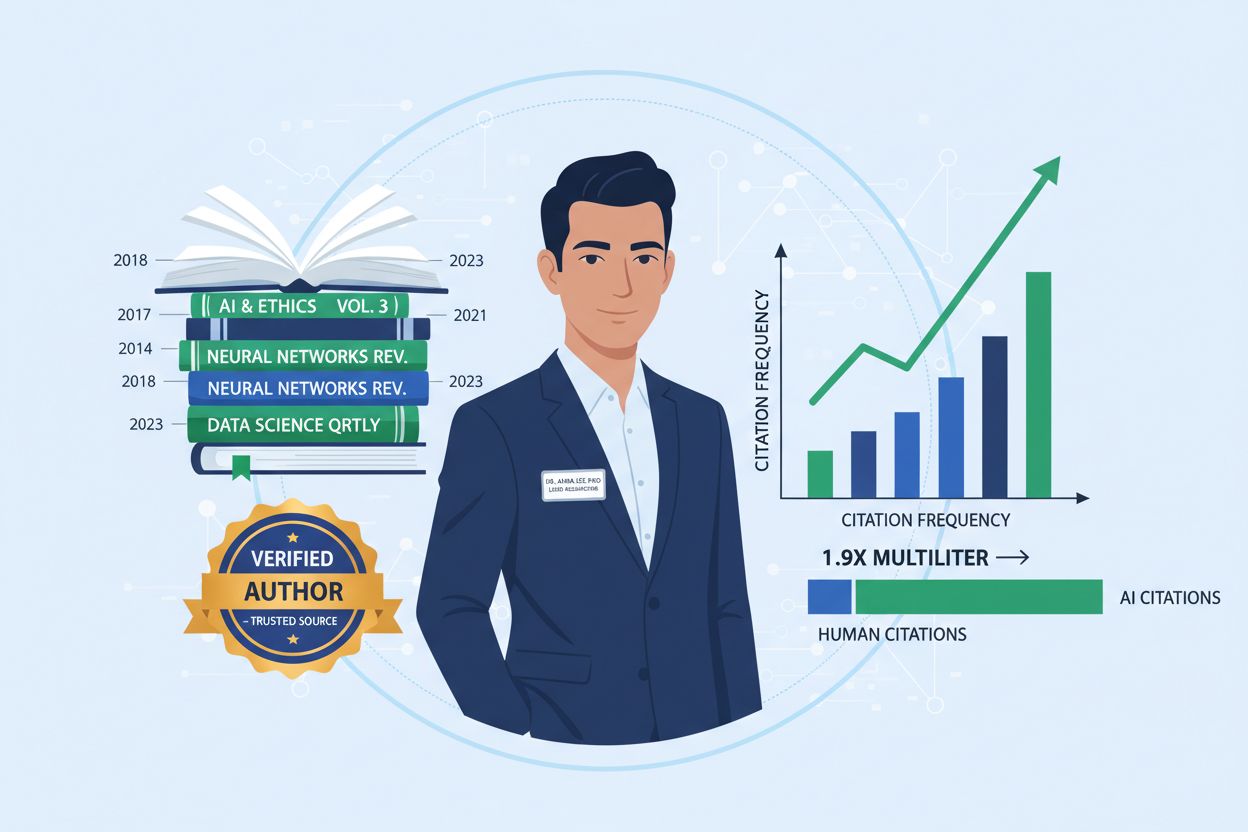
Discover how author bylines impact AI citations. Learn why named authorship receives 1.9x more citations from ChatGPT and Perplexity, and how to optimize byline...