

AI Reputation Repair
Learn how to identify and fix negative brand sentiment in AI-generated answers. Discover techniques for improving how ChatGPT, Perplexity, and Google AI Overvie...
9 min read

Learn how negative sentiment affects AI citations and brand reputation in generative search. Understand sentiment drift, negative anchors, and strategies to protect your brand in AI answers.
Negative sentiment doesn't directly prevent AI citations, but it significantly impacts how your brand is portrayed and interpreted in AI-generated answers. AI models cite sources based on authority and relevance, but negative framing can damage brand perception, reduce trust, and create lasting reputational anchors that persist across multiple AI platforms.
Negative sentiment doesn’t directly block your brand from being cited in AI-generated answers, but it fundamentally changes how AI models interpret and present your brand to users. The distinction is critical: AI systems like ChatGPT, Google Gemini, and Perplexity select sources based on authority, relevance, and content quality, not sentiment. However, once your content is selected, the tone and framing of that content directly influence how AI presents your brand to end users. This means negative sentiment creates a reputational layer that affects trust, perception, and ultimately, the value of being cited.
When AI models synthesize information from multiple sources, they don’t simply aggregate facts—they interpret context, tone, and narrative. If your brand appears in sources with predominantly negative sentiment, AI engines may amplify that negativity or frame your brand cautiously, even if the citation itself is technically accurate. This is where sentiment becomes a critical factor in AI visibility strategy.
The citation process in AI systems operates in two distinct phases: source selection and content interpretation. Understanding this separation is essential for managing your brand’s reputation in AI search.
| Phase | Process | Sentiment Impact | Example |
|---|---|---|---|
| Source Selection | AI chooses which websites to cite based on authority, topical relevance, and E-E-A-T signals | Minimal direct impact; authority matters more | A negative review site may still be cited if it’s authoritative |
| Content Interpretation | AI synthesizes selected content and frames it in conversational language | High impact; tone shapes user perception | Negative framing in source content influences how AI presents your brand |
| Narrative Framing | AI contextualizes your brand within the broader answer | Critical impact; sentiment drift occurs here | AI may soften or sharpen criticism based on source sentiment patterns |
Authority-driven selection means that even if your brand receives negative mentions, authoritative sources citing you will still appear in AI answers. However, the interpretation phase is where sentiment becomes consequential. If the majority of sources discussing your brand carry negative sentiment, AI models may develop a cautious or critical stance when presenting your brand, even when synthesizing neutral information.
Sentiment drift occurs when AI models reinterpret the tone of source material, shifting neutral coverage into negative framing or vice versa. This is one of the most significant ways negative sentiment impacts your brand’s AI visibility. Research on AI brand sentiment analysis reveals that AI engines don’t simply mirror source sentiment—they actively interpret and sometimes amplify it based on patterns across multiple sources.
For example, if your brand appears in three sources with neutral tone and one source with strong negative sentiment, AI models may develop a mixed or cautious interpretation of your brand. When synthesizing an answer, the model might emphasize caveats, limitations, or criticisms more heavily than the source material itself suggests. This is particularly problematic because users often don’t click through to verify the original source—they accept the AI’s interpretation as fact.
Sentiment drift is especially pronounced in evaluative queries where users ask for recommendations or comparisons. If AI detects negative sentiment patterns around your brand, it may position competitors more favorably, even if the underlying data doesn’t justify that positioning. This creates a compounding effect: negative sentiment doesn’t prevent citations, but it influences how prominently and positively your brand is featured.
One of the most damaging aspects of negative sentiment in AI citations is the negative anchor ratio—a metric that measures how past controversies or negative mentions continue to influence AI answers, even after issues have been resolved. This is a critical concern for brands managing their AI reputation.
AI models are trained on historical data, and they don’t automatically update their understanding when a brand resolves an issue. If your brand experienced a controversy, product recall, or negative press coverage in the past, that negative sentiment can persist in AI answers indefinitely. The model may continue to reference or emphasize that historical issue when discussing your brand, creating a lasting reputational anchor that affects current perception.
The persistence of negative anchors is particularly problematic because:
For instance, if your brand faced a data privacy issue three years ago that you’ve since resolved with comprehensive security upgrades, AI models may still reference the historical problem when discussing your brand’s security practices. This negative anchor can persist across ChatGPT, Gemini, Perplexity, and other platforms, creating a fragmented reputation where your brand is simultaneously cited as authoritative and viewed with skepticism.
Different AI engines exhibit varying sensitivity to negative sentiment when selecting and framing sources. Understanding these platform-specific patterns is essential for managing your brand’s reputation across the AI ecosystem.
ChatGPT favors authoritative, neutral sources and tends to minimize overtly negative framing. However, it heavily weights Wikipedia and established reference materials, which can embed negative sentiment if those sources contain critical information about your brand. ChatGPT’s approach is more conservative—it’s less likely to amplify negative sentiment but more likely to include cautionary language when negative information exists in authoritative sources.
Google Gemini blends authoritative sources with community content, making it more susceptible to sentiment drift. If negative sentiment appears in community discussions (Reddit, forums, Q&A sites), Gemini may incorporate that tone into its synthesis, even if professional sources are more positive. This creates a risk where community-driven negative sentiment can influence how Gemini presents your brand.
Perplexity AI emphasizes expert sources and niche review platforms, which means negative sentiment from specialized reviewers carries significant weight. If your brand receives negative reviews on authoritative niche sites (e.g., Consumer Reports, NerdWallet for financial products), Perplexity will prominently feature that negative sentiment. This platform is particularly sensitive to expert-driven negative sentiment.
Google AI Overviews pulls from the broadest range of sources, including blogs, news, community content, and social media. This diversity means negative sentiment from any authoritative source can influence how your brand is presented. However, Google’s algorithm attempts to balance multiple perspectives, so isolated negative sentiment is less likely to dominate the answer.
While negative sentiment doesn’t prevent citations, it can indirectly reduce citation frequency by affecting how often your brand appears in AI answers. This happens through several mechanisms:
Reduced relevance scoring: If AI models detect predominantly negative sentiment around your brand, they may lower your relevance score for certain queries. For example, if your brand is a software company and negative sentiment focuses on poor customer support, AI models may deprioritize your brand when answering customer service-related questions.
Competitive disadvantage: When multiple brands compete for citations in the same answer, AI models may favor brands with more positive sentiment profiles. If your brand has negative sentiment while competitors have neutral or positive sentiment, you’re less likely to be selected for inclusion.
Query-specific citation patterns: Negative sentiment can cause your brand to be cited less frequently for certain query types. For instance, if your brand has negative sentiment around pricing, you may be cited less often in “best value” or “most affordable” comparisons, even if your pricing is competitive.
Platform fragmentation: Different AI platforms may cite your brand with varying frequency based on their sensitivity to negative sentiment. You might receive strong citations on ChatGPT but minimal citations on Perplexity if negative sentiment is concentrated in sources that Perplexity prioritizes.
Managing negative sentiment requires a multi-layered approach that addresses both the sources of negativity and how AI models interpret your brand across platforms.
Strengthen authoritative earned media: Actively pursue positive coverage in publications that AI engines frequently cite. Research shows that blogs, news outlets, and industry publications carry significant weight in AI source selection. By securing positive coverage in these high-authority sources, you create a counterbalance to negative sentiment elsewhere.
Create structured, data-driven content: Publish original research, case studies, and benchmarks that demonstrate your brand’s value. AI models prioritize content that provides clear, sourced information. When your own content is authoritative and well-structured, it can offset negative sentiment from third-party sources.
Address negative sentiment at the source: Monitor where negative sentiment originates and address it directly. If negative reviews dominate a particular platform, engage with reviewers, resolve issues, and encourage satisfied customers to share positive experiences. This reduces the concentration of negative sentiment in sources that AI models cite.
Diversify your web presence: Appear across multiple authoritative platforms—Wikipedia, industry directories, review sites, LinkedIn, YouTube, and niche publications. This diversification means negative sentiment on one platform is balanced by positive or neutral sentiment elsewhere, reducing its overall impact on AI interpretation.
Implement sentiment-specific messaging: Tailor your messaging to address common negative perceptions. If negative sentiment focuses on specific concerns (pricing, complexity, customer service), create content that directly addresses these concerns with evidence and solutions. This helps AI models develop a more balanced understanding of your brand.
Monitor sentiment drift across platforms: Use AI monitoring tools to track how your brand’s sentiment varies across ChatGPT, Gemini, Perplexity, and Google AI Overviews. If sentiment drift is occurring on specific platforms, prioritize outreach to sources that those platforms rely on.
Negative sentiment doesn’t just affect immediate AI citations—it can erode your brand’s long-term authority and E-E-A-T signals. AI models use sentiment patterns as one indicator of trustworthiness, and persistent negative sentiment can gradually reduce your brand’s perceived expertise and authority.
This creates a compounding problem: as your authority score decreases due to negative sentiment, you’re cited less frequently and less prominently. Over time, this reduced visibility further diminishes your authority, creating a downward spiral. Conversely, brands that maintain positive sentiment across authoritative sources experience a virtuous cycle where strong citations reinforce authority, leading to more citations.
The key insight is that negative sentiment is not a temporary issue—it’s a structural problem that affects how AI models understand and represent your brand. Addressing it requires sustained effort to rebuild positive sentiment, strengthen authoritative sources, and actively manage how your brand is portrayed across the AI ecosystem.
Track how your brand is portrayed across ChatGPT, Perplexity, Google Gemini, and other AI platforms. Identify negative sentiment patterns before they damage your reputation.
Learn how to identify and fix negative brand sentiment in AI-generated answers. Discover techniques for improving how ChatGPT, Perplexity, and Google AI Overvie...
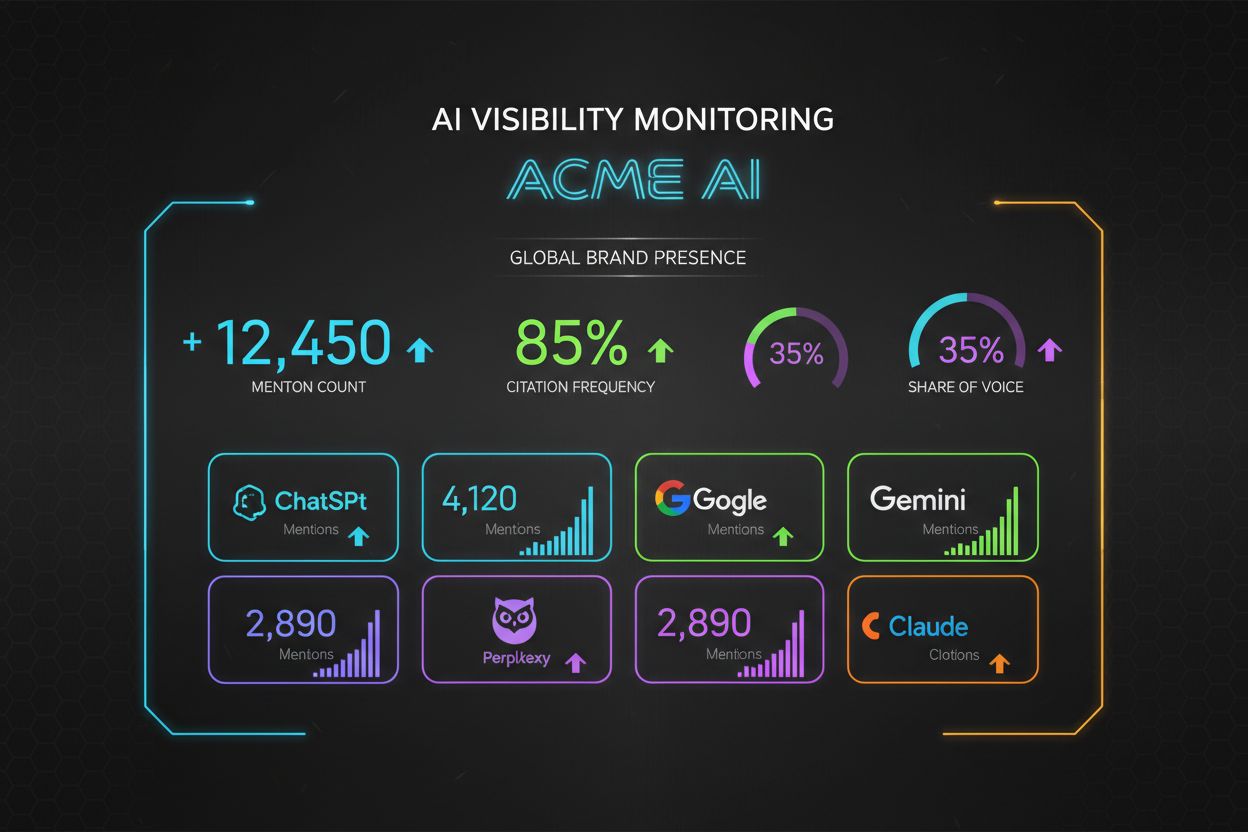
Learn how to monitor AI brand mentions and citations across ChatGPT, Gemini, and Perplexity. Discover why AI visibility matters more than traditional rankings a...

Learn proven strategies to improve your brand's citation position in ChatGPT, Perplexity, Gemini, and other AI answer engines. Discover technical, content, and ...