
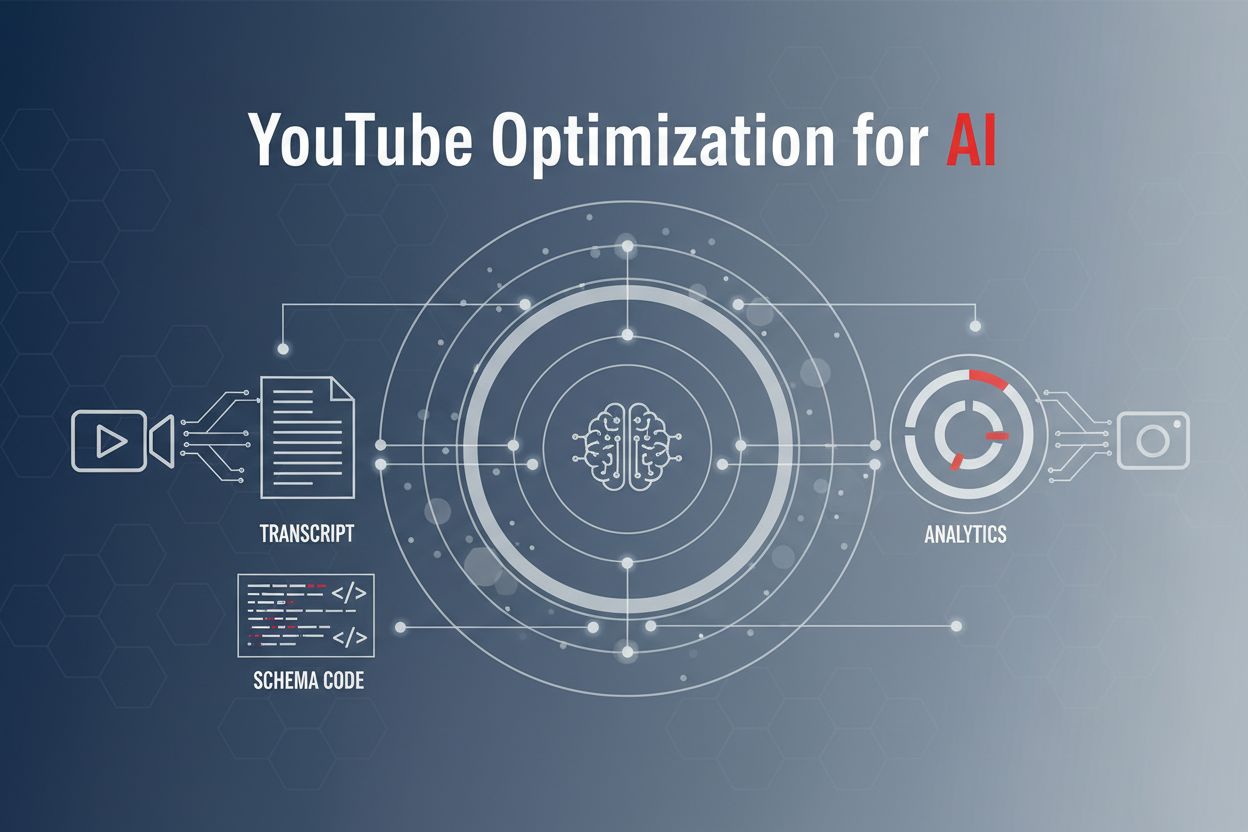
YouTube Optimization for AI: How Video Transcripts Drive Citations
Learn how to optimize YouTube videos for AI citations. Discover the critical role of transcripts, captions, and schema markup in getting your content cited by L...
14 min read

Learn how video content impacts AI citations in ChatGPT, Perplexity, and Google AI. Discover why YouTube dominates AI search results and how to optimize your videos for AI visibility.
Yes, video content significantly helps with AI citations. YouTube is cited 200x more than any other video platform by AI search engines like ChatGPT, Perplexity, and Google AI. Video content with clear transcripts, structured narratives, and relevant keywords helps AI models index and cite your content in AI-generated answers.
Video content has become a critical factor in AI citations, fundamentally changing how artificial intelligence systems discover, evaluate, and recommend information. Unlike traditional search engines that primarily index text, modern AI platforms like ChatGPT, Perplexity, and Google’s AI products actively seek out and cite video content as authoritative sources. This shift represents a significant opportunity for brands and creators who understand how to optimize their video presence for AI discovery. The relationship between video content and AI citations is not coincidental—it reflects how AI systems are trained on diverse data sources and how they evaluate credibility across different content formats.
The dominance of video in AI citations stems from several factors. First, video content contains rich contextual information that AI systems can extract through transcript analysis, visual recognition, and metadata interpretation. When you publish a video, AI doesn’t just see the visual component—it reads the transcript, analyzes the spoken keywords, understands the narrative structure, and connects your content to broader topics. This multi-layered analysis makes video content particularly valuable for AI systems seeking to provide comprehensive, well-sourced answers to user queries.
Recent data reveals a striking reality: YouTube is cited 200 times more frequently than any other video platform by major AI search engines. This isn’t a marginal advantage—it’s a complete monopoly on video citations in AI-generated answers. Across ChatGPT, Perplexity, Google AI Overviews, and Google AI Mode, YouTube consistently appears as the only video platform that registers meaningfully in AI citations. Competitors like TikTok, Vimeo, Twitch, and Dailymotion barely appear, with citation shares below 0.1% or registering at zero percent entirely.
| AI Platform | YouTube Citation Share | Rank Position | Week-over-Week Change |
|---|---|---|---|
| Google AI Overviews | 29.5% | #1 domain overall | -32.8% |
| Google AI Mode | 16.6% | #1 domain | -3.2% |
| Perplexity | 9.7% | #5 domain | +4.8% |
| ChatGPT | 0.2% | Average position 5.2 | +100% |
This data, collected from May 2024 through September 2025, demonstrates that YouTube’s position as the dominant video source for AI citations is not temporary. Even platforms like Perplexity and ChatGPT, which have no algorithmic incentive to favor Google properties, overwhelmingly cite YouTube content. This universal preference indicates that YouTube’s dominance stems from the quality, structure, and accessibility of its content library rather than algorithmic bias.
Understanding how AI systems interact with video content is essential for optimizing your content strategy. AI doesn’t “watch” videos the way humans do—instead, it processes multiple layers of information simultaneously. When an AI system encounters a video, it extracts and analyzes the transcript, identifying key topics, entities, and relationships. The spoken words in your video become searchable text data that AI systems use to understand your content’s relevance to specific queries.
The transcript layer is particularly important because it serves as the bridge between visual content and AI comprehension. Every word spoken in your video becomes indexed data that AI systems can search, analyze, and connect to user queries. This means that a well-structured video with clear narration, relevant keywords, and explicit topic identification is far more valuable to AI systems than a visually stunning video with minimal spoken content. The narrative structure of your video—how you introduce topics, develop ideas, and conclude with key takeaways—directly influences how AI systems understand and categorize your content.
Beyond transcripts, AI systems also analyze metadata, including titles, descriptions, tags, and timestamps. This structured information helps AI systems quickly understand what your video is about and how it relates to specific topics. Additionally, AI systems consider the source authority—videos from established channels with consistent, high-quality content receive higher credibility scores than isolated uploads from unknown sources.
Not all queries result in video citations, and understanding which types of questions prompt AI systems to cite video content is crucial for strategic content creation. Video citations appear most frequently for queries that benefit from visual demonstration, step-by-step instruction, or real-world application. These include platform-specific tutorials, financial tool demonstrations, product reviews and comparisons, medical education with action components, and current pricing or deal information.
For example, queries like “How do I set up a TD Ameritrade account?” or “What’s the best way to perform CPR?” naturally trigger video citations because the visual and instructional components of video content provide superior explanations compared to text alone. Similarly, queries about product demonstrations, pricing comparisons, and current deals frequently cite YouTube videos because they provide up-to-date, visual evidence that text-based sources cannot match.
Conversely, video citations appear less frequently for abstract conceptual questions, strategic planning advice, career guidance, and pure informational queries. When users ask about career selection, financial strategy, or theoretical concepts, AI systems tend to rely more heavily on text-based sources like articles, research papers, and expert blogs. This doesn’t mean video content is irrelevant for these topics—rather, it means video works best as supplementary evidence rather than primary source material.
An important insight from citation data is that YouTube typically ranks in positions 3-10 in AI-generated answers, rather than appearing as the primary source. This positioning reveals that AI systems use video content strategically as supporting evidence that complements text-based authority. Rather than viewing this as a limitation, forward-thinking brands should recognize it as an opportunity. By creating video content that supplements your text-based authority, you can occupy multiple positions in AI-generated answers and provide more comprehensive information to users.
This supplementary role means that the most effective AI citation strategy combines strong text-based content with supporting video demonstrations. A brand that publishes a detailed blog post about a product, combined with a YouTube video demonstrating that product in action, will likely appear twice in AI-generated answers—once for the text content and once for the video. This dual presence increases your visibility and provides users with multiple formats for understanding your expertise.
To maximize your video content’s impact on AI citations, you must structure your videos with AI indexing in mind. Start with explicit topic identification—clearly state what your video is about within the first 30 seconds. Rather than relying on viewers to infer your topic, explicitly say something like “In this video, I’m explaining how to optimize your website for AI search engines” or “This tutorial covers the complete process of setting up a monitoring system for AI citations.”
Include your name and role spoken aloud in your video, as AI systems index audio transcripts to build associations between individuals and their areas of expertise. When you consistently appear in videos discussing specific topics while identifying yourself by name and role, AI systems learn to associate you with those topics. This is how you build algorithmic recognition as an authority figure.
Repeat relevant keywords throughout your video content, but do so naturally within the context of your narrative. If you want to appear in AI answers about “AI citation monitoring” or “brand visibility in AI search,” these phrases should appear multiple times across your video content. However, keyword repetition must feel organic—AI systems are sophisticated enough to penalize obvious keyword stuffing while rewarding natural, contextually appropriate keyword usage.
Structure your videos with clear sections, explicit transitions, and logical progression. This helps AI systems understand the narrative arc of your content and extract key information more effectively. Use visual elements like text overlays, graphics, and demonstrations to reinforce your spoken message, as AI systems can analyze visual information alongside audio transcripts.
Where you publish your video content significantly impacts its potential for AI citations. YouTube remains the essential platform for AI visibility, but a comprehensive strategy involves multiple channels working in concert. Publish your primary, long-form content on YouTube, where AI systems have the most extensive indexing capabilities and where your content can accumulate the authority signals that AI systems value.
Simultaneously, embed your YouTube videos on your website and include full transcripts alongside the embedded videos. This creates multiple indexing opportunities—AI systems can discover your content through YouTube, through your website, and through the transcript text on your pages. Each of these discovery paths strengthens your overall AI visibility.
Repurpose your video content into shorter clips for social media platforms like Instagram, TikTok, and LinkedIn. While these platforms don’t generate the same volume of AI citations as YouTube, they do contribute to your overall digital footprint and can drive traffic to your primary video content. Additionally, as AI systems increasingly scrape social media for training data, your social presence becomes part of your broader AI indexing profile.
Consider publishing your video content on podcast platforms as well, particularly if your videos contain substantial audio content. Podcast transcripts are increasingly indexed by AI systems, and this additional distribution channel can expand your reach within AI-generated answers.
Consistency is the foundation of AI authority. A single video, no matter how well-optimized, will have minimal impact on your AI citations. However, a series of videos consistently addressing topics within your area of expertise creates a pattern that AI systems recognize and reward. When you publish 20 videos about community-led entrepreneurship, Black queer cultural history, creative business building, and social impact branding, AI systems begin associating your name with these topics across multiple contexts.
This long-term approach to video content creation transforms you from someone who occasionally appears in AI answers to someone who is systematically cited as an authority. AI systems recognize patterns of expertise demonstrated across multiple pieces of content, multiple platforms, and extended time periods. By committing to consistent video content creation aligned with your area of expertise, you build the kind of algorithmic recognition that generates sustained AI citations.
The narrative quality of your videos also matters significantly. AI systems don’t just extract facts from video content—they identify and prioritize stories that resonate. Videos that tell compelling stories about overcoming adversity, building something from nothing, learning from failure, or applying historical lessons to modern challenges are more likely to be cited in AI-generated answers. This is because these narratives contain emotional markers and clear arcs that make them memorable and shareable, qualities that AI systems recognize as indicators of valuable content.
Understanding how your video content performs in AI citations requires active monitoring. Track which of your videos appear in AI-generated answers across different platforms and query types. Monitor ChatGPT, Perplexity, Google AI Overviews, and Google AI Mode to see where your content is being cited and in what context. This data reveals which topics, formats, and approaches resonate most strongly with AI systems.
Pay attention to the queries that trigger your video citations. If your videos consistently appear for certain types of questions, you’ve identified a valuable niche where your content provides particular value to AI systems. Conversely, if you’re creating videos on topics where AI systems rarely cite video content, you may want to adjust your strategy to focus on query types where video citations are more common.
Track changes in your citation frequency over time. Are your citations increasing as you publish more content? Are certain videos generating more citations than others? This longitudinal data helps you understand what’s working and where you should focus your content creation efforts. Additionally, monitor how your citation performance compares to competitors in your space—this competitive intelligence reveals opportunities to differentiate your video content strategy.
The trajectory of video citations in AI-generated answers points toward increasing importance. As AI systems become more sophisticated, they’re increasingly capable of extracting value from video content, and as users become more accustomed to AI-generated answers, the demand for diverse content formats—including video—will likely increase. Brands that establish strong video presence now will benefit from first-mover advantage as video citations become even more prominent in AI answers.
The integration of video content into AI systems also reflects broader changes in how information is discovered and consumed. Rather than replacing traditional search, AI-generated answers are creating a new discovery channel where video content plays a central role. This represents a fundamental shift in digital strategy—brands can no longer focus exclusively on text-based SEO. A comprehensive digital strategy must include video content optimized for AI discovery.
Track how your video content and brand appear in AI answers across ChatGPT, Perplexity, and other AI search engines. Get real-time insights into your AI visibility and optimize your content strategy.
Learn how to optimize YouTube videos for AI citations. Discover the critical role of transcripts, captions, and schema markup in getting your content cited by L...

Discover which content types AI systems cite most frequently. Learn how YouTube, Wikipedia, Reddit, and other sources rank across ChatGPT, Perplexity, and Googl...
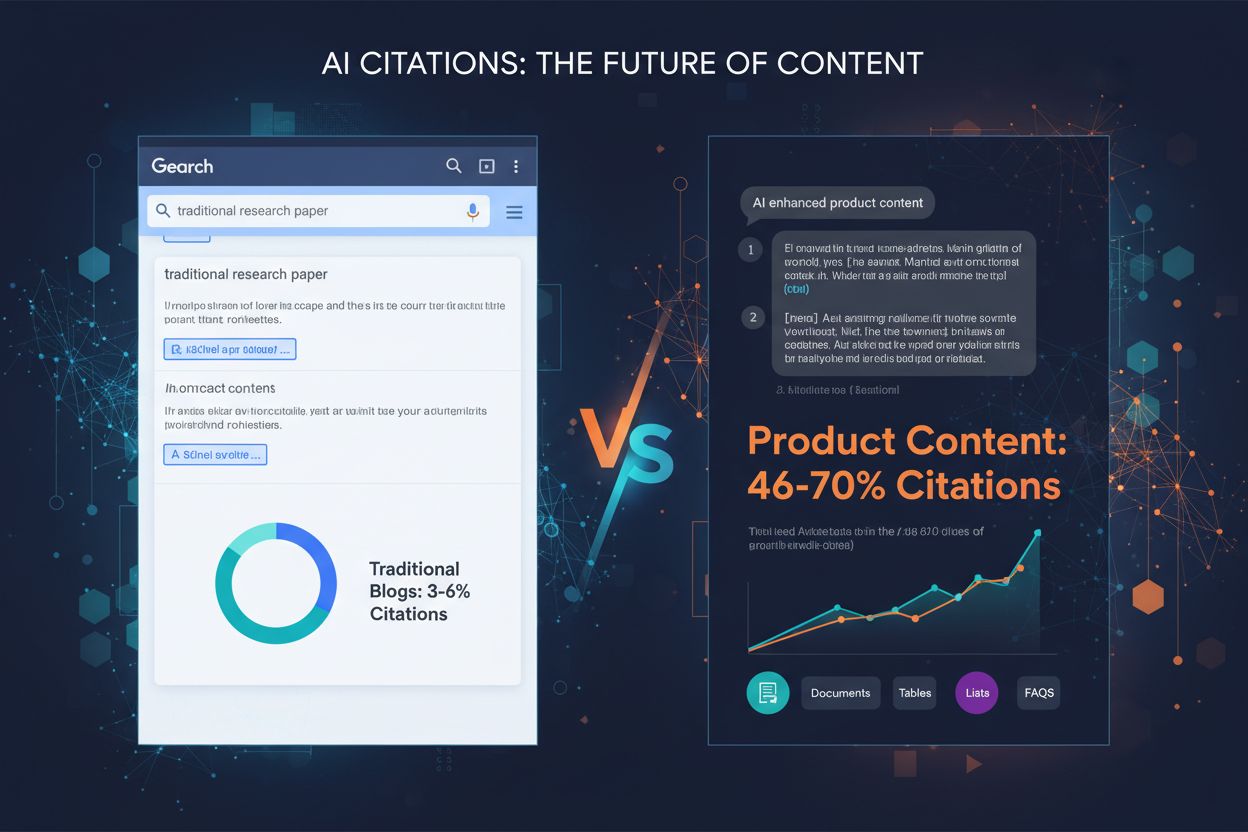
Discover which content formats get cited most by AI models. Analyze data from 768,000+ AI citations to optimize your content strategy for ChatGPT, Perplexity, a...