

How Do I Consolidate Content for AI?
Learn how to consolidate and optimize your content for AI search engines like ChatGPT, Perplexity, and Gemini. Discover best practices for content structure, fo...
9 min read

Learn how B2C companies optimize for AI through data unification, predictive analytics, personalization, and AI answer engine optimization to drive growth and customer engagement.
B2C companies optimize for AI by building unified customer data foundations, implementing predictive analytics, personalizing customer experiences across channels, automating marketing workflows, and ensuring their brand appears in AI-generated answers through strategic content optimization and monitoring.
The foundation of AI optimization for B2C companies starts with unified customer data. Leading brands understand that AI is only as effective as the data it operates on. Rather than relying on fragmented information scattered across multiple platforms, successful B2C companies consolidate customer data into a single source of truth, typically through a customer data platform (CDP) integrated with their CRM system. This unified approach allows AI systems to access comprehensive customer profiles that include behavioral data, purchase history, engagement patterns, and contextual information from every touchpoint.
When customer data remains siloed across different channels and systems, AI algorithms make decisions with incomplete information, resulting in fragmented experiences and missed opportunities. According to industry research, while 47% of B2C marketers prioritize AI and 44% prioritize CRMs, only 31% are actively investing in CDPs. This gap represents a critical vulnerability—without unified data, AI cannot deliver its full potential. Companies that successfully integrate their data infrastructure see significantly better results because their AI systems have direct feedback loops, allowing them to learn from real customer interactions and continuously improve their predictions and personalization strategies.
Predictive analytics has become essential for B2C companies seeking to optimize their AI strategies. Rather than relying on static, rule-based scoring systems, leading brands deploy machine learning algorithms that analyze historical customer data to predict future behavior with remarkable accuracy. These systems examine hundreds of signals simultaneously—from website activity and email engagement to content downloads and social media interactions—to identify which prospects are most likely to convert.
The power of predictive lead scoring lies in its dynamic nature. Unlike traditional methods that use fixed criteria, AI-powered systems continuously learn from outcomes and adjust their predictions accordingly. Companies implementing these systems report impressive results: closing ratios improve from 11% to 40%, customer acquisition costs drop by 25%, and sales teams can focus exclusively on high-potential prospects. Real-time lead qualification and automated routing further enhance efficiency by directing prospects to the most suitable sales representatives based on territory, expertise, and capacity. When companies reach out to qualified leads within minutes rather than hours, qualification rates can increase by 7x, demonstrating the critical importance of speed in the modern sales environment.
| Metric | Traditional Approach | AI-Powered Approach | Improvement |
|---|---|---|---|
| Lead Qualification Time | Manual, 2-3 days | Automated, minutes | 30% reduction |
| Conversion Rate | 11% average | 40% average | 264% increase |
| Customer Acquisition Cost | Standard baseline | 25% lower | 25% savings |
| Lead Response Time | Hours to days | Minutes | 7x faster qualification |
| Sales Productivity | Manual sorting | Automated routing | 20% increase |
Hyper-personalization powered by AI has evolved far beyond simply addressing customers by name. Modern B2C companies use sophisticated AI systems to analyze detailed behavioral data and create tailored experiences that feel intuitive and relevant. These systems examine purchase history, browsing patterns, email engagement, website interactions, geographic location, and time-based preferences to deliver personalized content, product recommendations, and offers at scale.
The results of effective personalization are compelling. Hyper-personalized emails generate 6x higher transaction rates than generic campaigns, with 29% higher open rates and 41% better click-through rates. Netflix’s content consumption is 80% driven by personalized recommendations, demonstrating how AI-driven personalization can become the primary driver of engagement. Amazon uses predictive analytics to optimize inventory placement based on regional demand patterns, enabling same-day and next-day delivery that keeps customers satisfied. Sephora’s Beauty Insider program attributes 80% of transactions to program members who were segmented using AI, showing how personalization directly impacts revenue. The key to success is moving beyond segment-level personalization to individual-level customization, where AI determines the best content, creative, send times, product recommendations, and channels for each person based on their unique predicted behavior.
Automation powered by AI enables B2C companies to scale their marketing efforts without proportionally increasing headcount. AI-driven marketing automation handles routine tasks—from email campaign execution to social media scheduling—while simultaneously optimizing performance in real-time. These systems can automatically A/B test subject lines, creative elements, and send times, then deploy the winning versions to subscribers. They can also automatically suppress sends to disengaged subscribers to protect sender reputation and continuously refine targeting based on emerging trends.
Content creation represents another area where AI delivers significant efficiency gains. Goosehead Insurance used AI to publish 44 new articles in a single quarter—five per week—without sacrificing quality. This efficiency allowed their marketing team to focus on strategy and performance analysis rather than spending all their time on content creation. The results included a 22% increase in email click-through rates, a 20% revenue jump between quarters, and an 87% rise in website visibility for franchise pages. AI-powered tools can generate marketing strategies from scratch based on a brand’s website and customer data, create fully designed campaigns and flows, and launch new campaigns monthly while optimizing always-on automations in the background. However, successful implementation requires maintaining human oversight—AI-generated content should always be reviewed and adjusted by experienced marketers to ensure quality, accuracy, and brand alignment.
As AI search engines and answer generators like ChatGPT, Perplexity, and Google’s AI Overviews become primary discovery channels, B2C companies must optimize their content to appear in AI-generated answers. This represents a fundamental shift from traditional SEO. Rather than optimizing solely for keyword rankings, companies must structure content in ways that AI systems can easily understand, extract, and cite. This includes using clear question-based headers that match natural search language, providing concise answers to common questions, implementing schema markup, and creating comprehensive FAQ pages that directly address customer queries.
Zero-click lead capture strategies have emerged as important tactics in this new landscape. Featured snippets, knowledge panels, and “People Also Ask” boxes now provide immediate answers to search queries, with Google capturing approximately two-thirds of all search queries through its properties. By optimizing for these SERP features, B2C companies can maximize brand visibility even when users don’t click through to their website. The strategy involves structuring content with clear headings, using FAQ formats, providing concise answers (40-60 words) to common questions, and ensuring accurate information is available through knowledge panels and Google My Business profiles. This approach improves brand authority and visibility while establishing trust before prospects visit your website.
AI-powered chatbots have evolved from simple rule-based systems into sophisticated conversational partners that use natural language processing and machine learning to understand user intent and create tailored interactions. Modern chatbots can handle 24/7 customer engagement, instantly respond to inquiries in under 6 seconds on average, and resolve up to 70% of customer questions without human intervention. Lemonade Insurance’s chatbot Maya has processed over 1.2 million policy transactions, managing about 25% of the company’s customer inquiries while reducing operational costs and providing quick, accessible service.
The advantages of AI chatbots extend beyond cost savings. More than 55% of businesses report better lead quality after implementing conversational AI, and some industries achieve conversion rates as high as 70%. These systems excel at qualifying leads, gathering information consistently, and creating dynamic conversations that guide users toward conversion. When chatbots cannot resolve an issue, they escalate to human representatives with full context, preventing customers from having to repeat themselves. Happy Wax, a home fragrance brand, saw a dramatic reduction in support tickets after enabling an AI-powered customer agent, with over half of conversations fully resolved without service team involvement in just 90 days.
Leading B2C companies use AI-driven optimization to continuously improve campaign performance without manual intervention. These systems monitor engagement and conversion patterns across segments, flows, and campaigns, then automatically make adjustments based on real-time data. AI can automatically run multivariate tests on sign-up forms’ timing, design, and incentives, then deploy winning versions live. Tata Harper, a plant-based skincare brand, used AI to test 20 variations on placement and timing across desktop and mobile sign-up pop-ups. In the 30 days after the winning versions went live, form submissions jumped 65%+ from the previous 30 days.
Dynamic pricing represents another optimization opportunity where AI analyzes market conditions, competitor pricing, demand patterns, and customer behavior to set optimal prices in real-time. Kosmo, an Eastern European health and beauty retailer, partnered with AI-powered pricing technology and achieved an 8.1% revenue increase, 1% profit margin savings, and a 15.9% boost in sales items within nine weeks. This level of continuous optimization ensures that every marketing impression and customer interaction contributes to long-term lifetime value rather than relying on static strategies that quickly become outdated.
Voice and visual search represent emerging channels where B2C companies must optimize to remain discoverable. Voice search optimization requires adapting content to conversational queries, which tend to be longer and more natural than typed searches. Rather than optimizing for “best outdoor activities Santa Fe,” companies must consider how people naturally ask: “Hey Siri, what are some fun things to do outside in Santa Fe?” This means focusing on conversational keywords, creating detailed FAQ pages that answer common questions directly, boosting local SEO elements, and prioritizing mobile optimization since over 90% of websites receive more unique visitors from mobile devices than desktops.
Visual search technology allows consumers to upload images instead of typing descriptions, with Google’s Lens visual search feature seeing more than 10 billion uses monthly. Pinterest’s visual search feature, Pinterest Lens, allows users to point their camera at objects and receive similar styles or outfit ideas. By encouraging customers to share images of their purchases on social media and tagging the brand, B2C companies create a visual database that can be used for visual searches by other customers. This user-generated content becomes a powerful asset for discovery and engagement, particularly among younger demographics who increasingly prefer visual search over traditional text-based queries.
As AI becomes the primary discovery channel for many consumers, monitoring your brand’s appearance in AI-generated answers has become critical. B2C companies must track how their content is cited in responses from ChatGPT, Perplexity, Google’s AI Overviews, and similar platforms. This monitoring reveals whether your brand is being recommended, whether your content is being accurately represented, and whether competitors are capturing share of voice in AI answers. Companies that actively monitor their AI answer presence can identify gaps in their content strategy, discover new keyword opportunities, and ensure their brand maintains visibility in this rapidly evolving search landscape.
Effective monitoring involves tracking mentions of your brand, domain, and key URLs across AI answer generators. This data helps identify which content pieces are most valuable to AI systems, which topics need deeper coverage, and where your brand might be losing visibility to competitors. By understanding how AI systems perceive and cite your content, B2C companies can optimize their content strategy to ensure maximum visibility and citation in AI-generated answers, ultimately driving more qualified traffic and establishing authority in their industry.
As B2C companies implement increasingly sophisticated AI systems, data privacy and ethical considerations become paramount. Successful companies obtain explicit consent from users before collecting and processing their data, stay compliant with regulations like GDPR and CCPA, and regularly review AI outputs to ensure fair and unbiased messaging. Over-personalization can make customers feel uncomfortable or “too targeted,” so maintaining balance is essential. Companies must be cautious about how much data they collect for personalization—more isn’t always better.
Algorithm bias represents another critical concern. AI systems can unintentionally perpetuate biases present in training data, potentially excluding certain demographics or creating poor experiences for customers from different backgrounds or regions. For example, a chatbot trained predominantly on data from one demographic might struggle to understand regional dialects or slang, resulting in poor customer experiences. Successful B2C companies implement regular audits of their AI systems, aim for inclusivity in their marketing strategies, and maintain human oversight to catch and correct biases before they impact customers. This commitment to ethical AI practices not only protects customers but also builds long-term brand trust and loyalty.
Human oversight remains essential even as AI capabilities expand. While AI can generate marketing strategies, campaigns, and content at scale, experienced marketers must review and adjust these outputs to ensure quality, accuracy, and brand alignment. The most successful B2C companies view AI as an augmentation tool that enhances human creativity and decision-making rather than a replacement for human judgment. This balanced approach—combining AI’s analytical power with human expertise—delivers superior results while maintaining the authenticity and quality that customers expect from trusted brands.
Track how your brand appears in AI-generated answers from ChatGPT, Perplexity, and other AI search engines. Ensure your content is cited and visible where customers are searching.
Learn how to consolidate and optimize your content for AI search engines like ChatGPT, Perplexity, and Gemini. Discover best practices for content structure, fo...
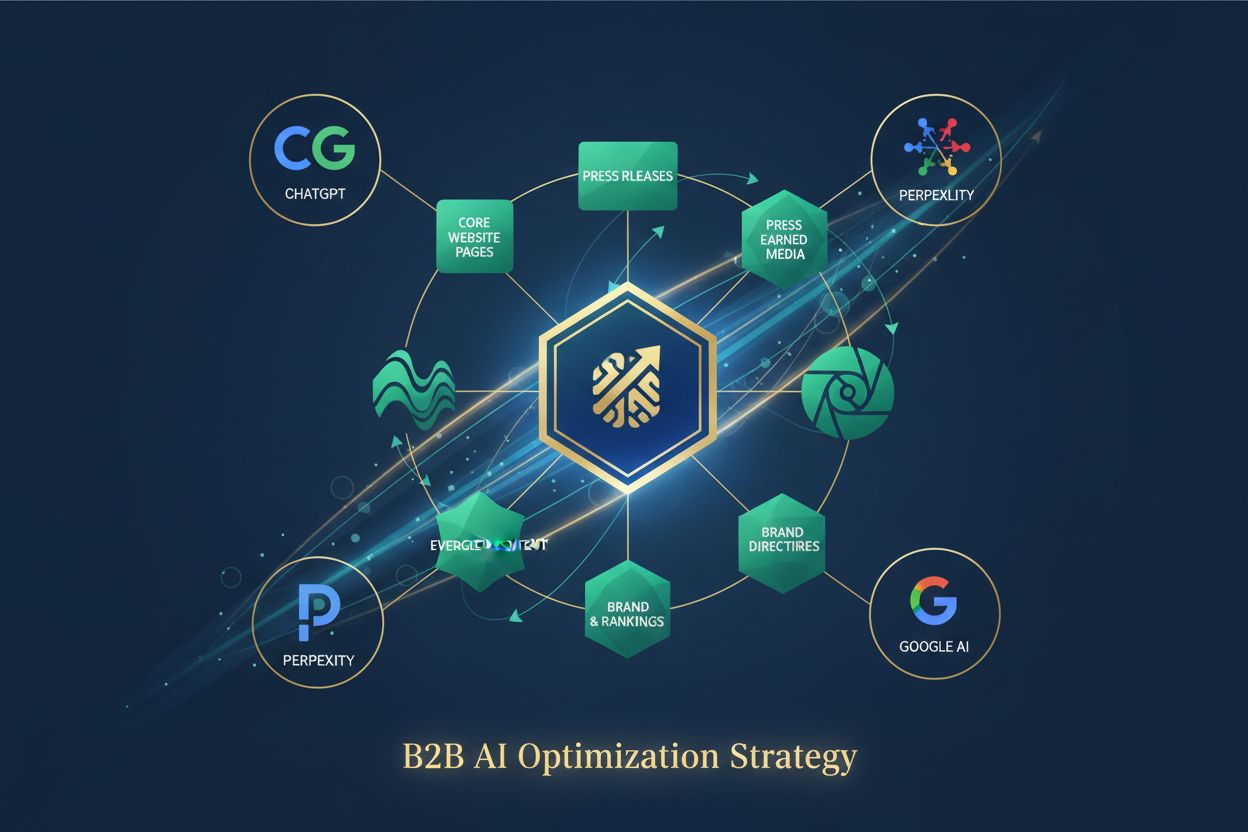
Learn B2B AI Optimization strategies to enhance your brand visibility in ChatGPT, Perplexity, and Google AI Overviews. Discover how to optimize for AI citations...

Learn how to integrate AI visibility data from ChatGPT, Perplexity, and Google AI into your marketing technology stack for better insights and ROI.