
Am I Cited? How to Know If AI Chatbots Recommend Your Brand
Learn how to monitor AI brand mentions and citations across ChatGPT, Gemini, and Perplexity. Discover why AI visibility matters more than traditional rankings a...
8 min read

Learn how branded searches affect AI citations and why 86% of AI answers cite brand-controlled sources. Discover strategies to maximize your brand visibility in ChatGPT, Perplexity, and Google AI.
Branded searches significantly influence AI citations because 86% of AI citations come from brand-controlled sources like websites and listings. When users search for your brand name in AI systems, they're more likely to receive citations from your official content, making branded search visibility critical for appearing in AI-generated answers across ChatGPT, Perplexity, and Google's AI systems.
Branded searches refer to queries where users explicitly search for your company name, product, or domain within AI search engines like ChatGPT, Perplexity, Google Gemini, or Claude. These searches are fundamentally different from traditional keyword searches because they demonstrate direct user intent to find information about your specific brand. When someone types “AmICited AI monitoring” or “brand visibility platform” into an AI system, they’re conducting a branded search that directly impacts how AI models retrieve and cite your content. The significance of branded searches in AI systems cannot be overstated, as they represent the highest-intent user queries and carry substantial weight in determining which sources AI systems will reference in their generated answers.
Research analyzing 6.8 million AI citations across ChatGPT, Gemini, and Perplexity reveals a striking finding: 86% of all AI citations come from sources brands already control or manage. This statistic fundamentally changes how marketers should think about AI visibility. Rather than relying on third-party platforms or hoping for organic mentions, brands can directly influence their citation rates by maintaining accurate, structured, and crawlable content on their owned properties. The breakdown of citation sources shows that first-party websites generate 44% of citations, while business listings account for 42%, reviews and social content contribute 8%, and forums like Reddit represent just 2% of citations. This distribution demonstrates that brand-controlled sources dominate AI citation patterns, making your website and official listings the most critical assets for AI visibility.
| Citation Source | Percentage | Key Insight |
|---|---|---|
| First-Party Websites | 44% | Your website is the primary citation source |
| Business Listings | 42% | Local and business directories are equally important |
| Reviews & Social | 8% | Third-party reviews provide supplementary citations |
| Forums (Reddit, etc.) | 2% | Forums have minimal impact on AI citations |
| Total Brand-Controlled | 86% | Brands control the majority of their AI visibility |
Each major AI platform exhibits distinct preferences when processing branded searches, which directly affects citation patterns. ChatGPT mentions brands in 99.3% of eCommerce responses, making it the most brand-focused AI system, with an average of 5.84 brands per response and Amazon appearing in 61.3% of citations. This aggressive brand inclusion strategy means that branded searches on ChatGPT almost always result in multiple brand mentions and citations. Google AI Overview takes a minimalist approach, mentioning brands in only 6.2% of responses with an average of just 0.29 brands per response, preferring instead to provide educational content alongside organic search results. Perplexity balances both approaches, including brands in 85.7% of responses with 4.37 average brands per response and the highest citation diversity with 8,027 unique domains cited. Google AI Mode strikes a middle ground with 81.7% brand inclusion and 5.44 average brands per response, showing strong preference for brand and OEM websites at 15.2% of citations. Understanding these platform-specific behaviors is essential because branded searches trigger different citation patterns depending on which AI system the user queries.
A critical distinction exists between brand mentions and AI citations that directly impacts how branded searches affect your visibility. A brand mention occurs when an AI system references your brand name in its response without necessarily providing a direct link or attribution to your content. For example, if ChatGPT says “Popular brand monitoring tools include AmICited, Yext, and Profound,” that’s a mention that increases brand awareness and positions you in the competitive landscape. An AI citation, by contrast, is when the AI system directly attributes information to your content with a clickable link or explicit source attribution, such as “According to AmICited’s research on AI monitoring…” This distinction matters because mentions boost mindshare and brand recognition, while citations signal authority and drive potential traffic. Research shows that mentions are actually more important than citations in many cases because users read the AI-generated answer directly and may not click citations, making your brand name visibility in the response text itself the primary value driver.
Branded searches naturally generate higher citation rates because they represent explicit user intent to find information about your specific brand. When someone searches for your brand name in an AI system, the AI model recognizes this as a direct query about your company and prioritizes your official sources in its response generation. This is fundamentally different from unbranded searches where the AI must choose among thousands of potential sources. The AI’s training data includes associations between your brand name and your official properties, making it more likely to cite your website or listings when users explicitly search for your brand. Additionally, structured data and schema markup on your website significantly improve citation rates for branded searches because AI systems can more easily extract and verify information from properly formatted content. Brands that maintain consistent, accurate information across their website, business listings, and review platforms see substantially higher citation rates because AI systems recognize these sources as authoritative and trustworthy for brand-specific queries.
Citation patterns for branded searches vary significantly across industries, reflecting different user behaviors and AI training data. In retail, 47.6% of citations come from first-party brand websites, making your eCommerce site critical for branded search visibility. Financial services shows 48.2% of citations from authoritative brand-owned pages, emphasizing the importance of maintaining official financial information. Healthcare relies heavily on listings at 52.6% of citations, with platforms like WebMD and Vitals dominating, meaning healthcare brands must maintain accurate information across multiple directories. Food service demonstrates the highest reliance on reviews and social content at 13.3% of citations, while listings still lead at 41.6%, indicating that restaurant brands benefit significantly from review management. These industry variations demonstrate that branded search strategies must be tailored to your specific sector, with some industries requiring stronger emphasis on website optimization while others benefit more from listing and review management.
To maximize citations from branded searches, brands should implement a comprehensive strategy focused on structured data, content quality, and information consistency. First, ensure your website uses proper schema markup including Organization, LocalBusiness, Product, and FAQ schemas that help AI systems understand and extract your brand information accurately. Second, maintain consistent, accurate brand information across all platforms including your website, Google Business Profile, industry-specific directories, and review platforms, as AI systems cross-reference these sources to verify information credibility. Third, create citation-worthy content that answers common questions about your brand, products, and services with original research, detailed guides, and authoritative information that AI systems recognize as valuable sources. Fourth, optimize your website’s technical SEO to ensure AI crawlers can easily access and index your content, including proper XML sitemaps, fast loading speeds, and mobile optimization. Fifth, implement structured data for local information if applicable, including business hours, contact information, and service areas, which significantly improves citation rates for location-based branded searches. Finally, monitor your brand mentions and citations across AI platforms using dedicated monitoring tools to identify gaps and opportunities for improvement.
An important phenomenon called the citation network effect occurs with branded searches, where earning visibility on one AI platform reinforces and amplifies your mentions on other platforms. When your brand receives citations on ChatGPT, this success signals to other AI systems that your content is authoritative and citation-worthy, increasing the likelihood of citations on Perplexity, Google AI, and other platforms. This network effect means that initial success with branded search optimization creates compounding benefits across the entire AI ecosystem. Brands that establish strong citation patterns on one platform often see rapid improvement across other platforms without additional optimization efforts. This effect is particularly powerful for branded searches because the explicit brand query creates a clear signal that your official sources should be prioritized. Understanding and leveraging this network effect means that brands should focus on optimizing their most controllable assets first—their website and official listings—to establish a strong foundation that will naturally propagate across multiple AI platforms.
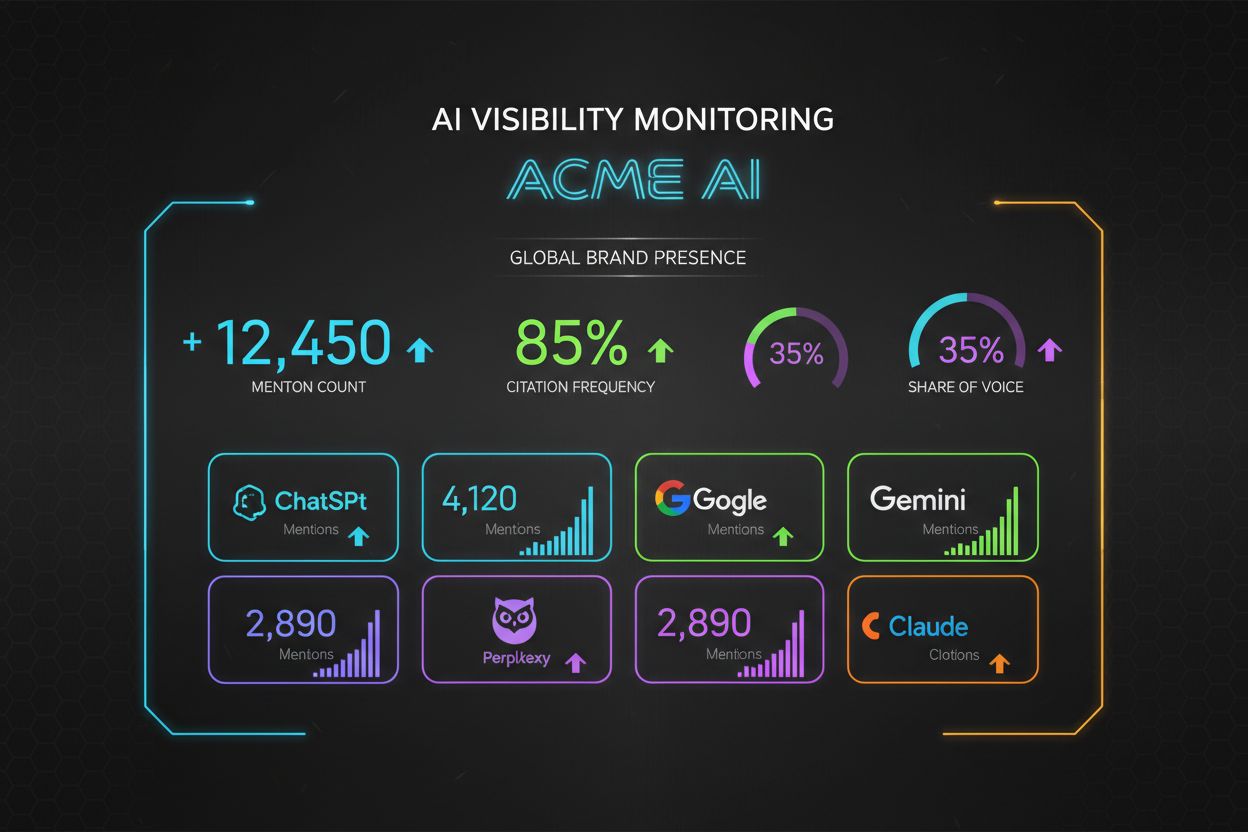
Effective management of branded search visibility requires continuous monitoring and measurement of how your brand appears in AI-generated answers. Key metrics to track include the citation rate (percentage of branded searches that include your website or listings), mention frequency (how often your brand name appears in AI responses), citation source distribution (which of your properties are being cited), and competitive positioning (how your citations compare to competitors). Monitoring tools should track performance across all major AI platforms including ChatGPT, Perplexity, Google AI Overview, Google AI Mode, and Claude, as each platform shows different citation patterns. Additionally, track sentiment and context of your mentions to ensure AI systems are citing your brand in appropriate contexts and with accurate information. Regular audits of your branded search performance help identify when AI systems are citing outdated information, missing important brand properties, or citing competitors instead of your official sources. This data-driven approach to branded search monitoring enables brands to make informed decisions about content optimization, information updates, and strategic improvements to maximize AI citation rates.
Track where your brand appears in AI-generated answers across all major AI platforms. Get real-time insights into your AI visibility and citation patterns.
Learn how to monitor AI brand mentions and citations across ChatGPT, Gemini, and Perplexity. Discover why AI visibility matters more than traditional rankings a...

Learn how to protect and control your brand reputation in AI-generated answers from ChatGPT, Perplexity, and Gemini. Discover strategies for brand visibility an...
Understand branded vs non-branded AI search queries and how ChatGPT, Perplexity, Google AI Overviews, and Claude cite brands differently. Learn optimization str...