
Author Bylines and AI: Does Authorship Improve Citation Rates?
Discover how author bylines impact AI citations. Learn why named authorship receives 1.9x more citations from ChatGPT and Perplexity, and how to optimize byline...
10 min read

Learn how author bylines impact AI citations, why named authorship increases visibility in ChatGPT and Perplexity, and how to optimize bylines for AI search engines.
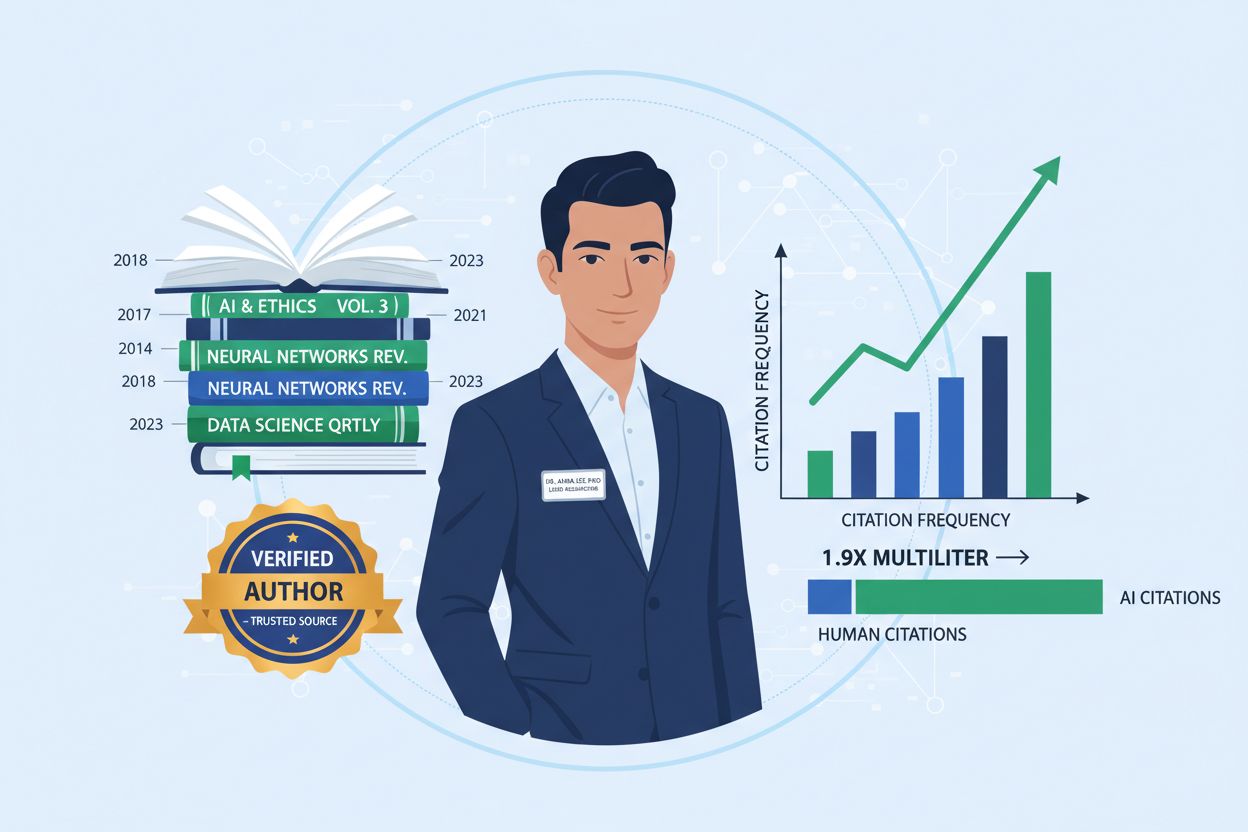
Bylines significantly impact AI citations by establishing author credibility and trust signals. Content with clear author attribution receives 1.9x more citations from AI systems like ChatGPT and Perplexity compared to anonymous or corporate-only content, as AI engines prioritize E-E-A-T (Experience, Expertise, Authoritativeness, Trust) principles.
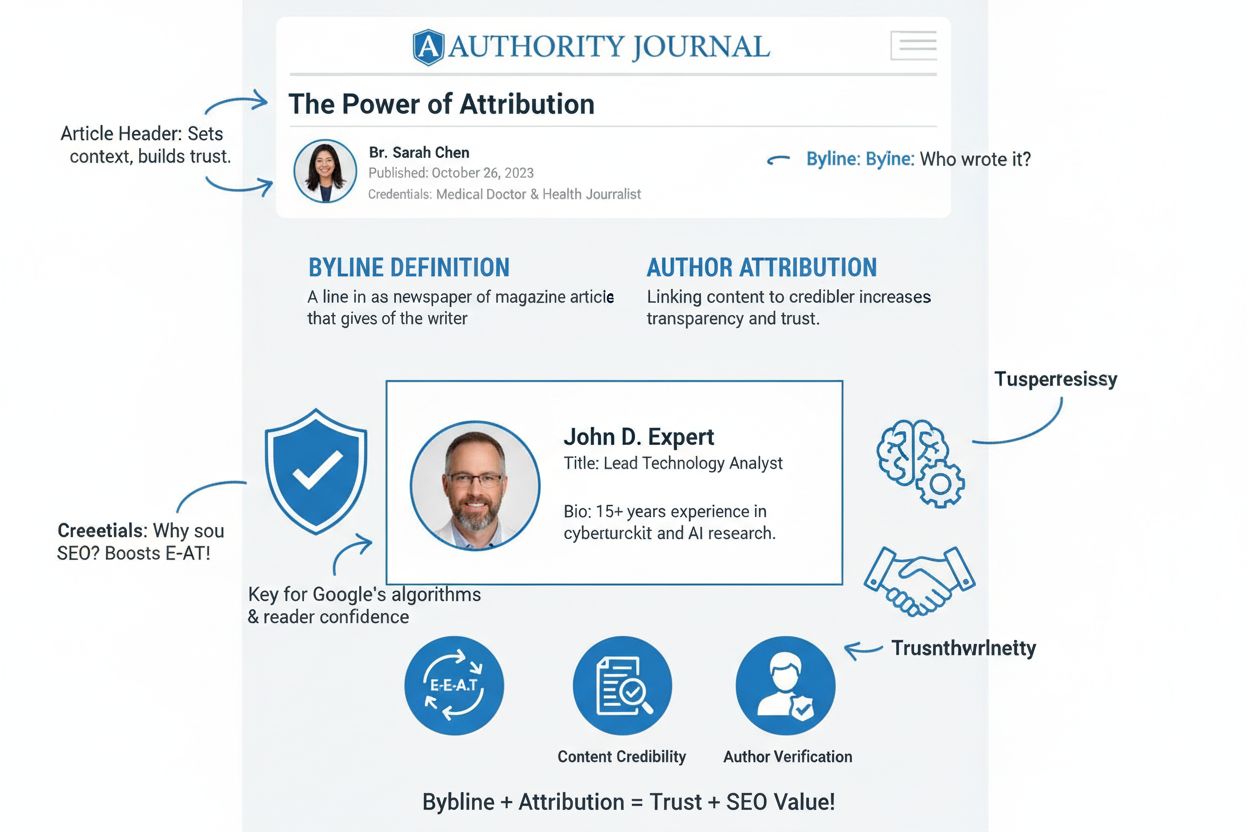
A byline is the author attribution displayed on published content, typically appearing at the beginning or end of an article with the author’s name and sometimes their credentials or organizational affiliation. In the context of AI citations, bylines serve as critical trust signals that help AI systems like ChatGPT, Perplexity, and Google AI Overviews determine whether content is authoritative and worthy of citation. When AI engines evaluate sources for inclusion in their responses, they examine multiple metadata signals, and clear author attribution is one of the most important factors in deciding whether to cite your content.
The significance of bylines in AI citation patterns has been quantified through extensive research analyzing over 100,000 AI-generated responses. Content featuring clear author bylines received 1.9 times more citations than content without named authorship. This dramatic difference reflects how AI systems are trained to prioritize content that demonstrates clear accountability and expertise. Anonymous content or material attributed only to corporate entities without individual author names are significantly less likely to be selected as sources in AI-generated answers, even if the content quality is comparable to bylined articles.
AI systems are fundamentally designed around the concept of E-E-A-T (Experience, Expertise, Authoritativeness, and Trust), a framework that originated from Google’s search quality guidelines but has become central to how all major AI engines evaluate content. Named bylines directly support three of these four pillars. When an AI system encounters content with a specific author’s name, credentials, and organizational affiliation, it can assess whether that person has genuine expertise in the subject matter. This assessment becomes impossible with anonymous content or generic corporate attributions.
The preference for named authorship reflects a deeper principle in AI training: accountability creates credibility. When a real person puts their name on content, they assume responsibility for its accuracy and quality. AI systems recognize this psychological and professional accountability as a strong indicator of content reliability. In contrast, content attributed to “Our Editorial Team” or “Company Staff” lacks the personal accountability that signals expertise. Research shows that 89.2% of frequently-cited content includes clear author attribution, compared to only 31.4% of rarely-cited content, demonstrating the stark difference this single factor makes.
Beyond simply having a name attached to content, the quality and specificity of author credentials significantly influence citation likelihood. AI systems analyze not just whether an author exists, but what qualifications, experience, and expertise that author possesses. Content authored by individuals with clearly stated credentials—such as “Dr. Sarah Chen, Healthcare Technology Specialist with 12 years of industry experience”—receives substantially more citations than content attributed to authors with no credential information.
The presence of author credentials serves multiple functions in AI citation decisions. First, it allows AI systems to verify expertise alignment with the topic being discussed. An article about medical treatments authored by a physician carries more weight than the same article attributed to a generalist writer. Second, credentials provide context that helps AI systems understand the author’s perspective and potential biases, which is important for generating balanced responses. Third, credentials enable users who click through to the cited source to quickly assess the author’s qualifications, building trust in the citation itself.
Organizations that implement detailed author profiles with professional background, education, and relevant experience see measurably higher citation rates. This is particularly important for technical, medical, financial, and scientific content where expertise verification is critical. The investment in creating comprehensive author profiles—including links to professional credentials, previous publications, and relevant certifications—directly translates to improved AI visibility and citation frequency.
One of the most significant findings from AI citation research is that bylines combined with first-person perspective dramatically increase citation likelihood. Content written in first-person (“I tested this product for six months…”) with a named author receives 67% more citations than third-person objective writing, even when the factual content is identical. This combination signals authentic personal experience, which AI systems recognize as a form of expertise that cannot be replicated through generic corporate writing.
The synergy between named authorship and first-person experience creates what researchers call “authentic expertise signals.” When readers and AI systems encounter a byline paired with personal experience narratives, they perceive the content as coming from someone who has directly engaged with the subject matter. This is particularly valuable for product reviews, how-to guides, case studies, and opinion pieces where personal experience adds credibility. AI systems trained on human-written content have learned that this combination typically indicates higher-quality, more trustworthy information.
| Content Characteristic | Citation Frequency | Impact Factor |
|---|---|---|
| Named author byline | 89.2% of cited content | 1.9x more citations |
| Author with credentials | 76.4% of cited content | 2.3x more citations |
| First-person + byline | 64.1% of cited content | 1.67x more citations |
| Anonymous/corporate only | 31.4% of cited content | Baseline |
| No author attribution | 10.8% of cited content | 89% fewer citations |
Different AI search engines and answer generators process byline information with varying levels of sophistication, but all major platforms incorporate author attribution into their citation algorithms. ChatGPT analyzes byline metadata from its training data to assess source credibility, though it doesn’t always display author information in its responses unless specifically prompted by users. Perplexity, which uses real-time web search, explicitly displays author names and publication dates alongside citations, making byline information visible to users and reinforcing its importance in the citation selection process.
Google AI Overviews extracts author information from schema markup and HTML metadata to determine source authority. When content includes proper Article schema markup with author fields populated, Google’s AI systems can more easily identify and verify authorship, increasing the likelihood of citation. Claude and other enterprise AI systems similarly prioritize content with clear authorship signals. The consistency across platforms suggests that byline prominence in AI citations is not a quirk of any single system but rather a fundamental principle of how modern AI evaluates source credibility.
The technical implementation of byline processing varies across platforms. Some systems rely on schema.org Article markup, which includes dedicated fields for author name, author URL, and author organization. Others parse byline information from the visible HTML content of web pages. The most citation-worthy content includes bylines in both visible HTML and structured data markup, ensuring that AI systems can access author information regardless of their parsing methodology.
Creating bylines that maximize AI citation potential requires attention to both content and technical implementation. An effective byline should include the author’s full name, professional title or credentials, and organizational affiliation. For example, “Dr. Michael Rodriguez, Senior Data Scientist at TechCorp Analytics” provides more citation-worthy information than simply “Michael Rodriguez.” The additional context helps AI systems understand the author’s expertise level and relevance to the topic.
Beyond the visible byline, content creators should implement proper schema markup to ensure AI systems can reliably extract author information. The Article schema from schema.org should include the author field with the author’s name, and ideally a URL linking to the author’s profile or professional page. This structured data acts as a machine-readable version of the byline, making it easier for AI systems to process and verify authorship. Content without proper schema markup may have byline information that AI systems struggle to parse, reducing the citation benefit.
Organizations should also maintain consistent author naming conventions across all published content. If an author publishes under “Sarah Chen” in one article and “S. Chen” in another, AI systems may not recognize these as the same person, fragmenting the author’s citation history and credibility signals. Consistency in author names, titles, and affiliations across all content helps AI systems build a coherent profile of the author’s expertise and track record.
Bylines contribute to content authority in ways that extend beyond simple attribution. When AI systems encounter content from an author with a strong publication history—evidenced by multiple bylined articles on related topics—they recognize this as a signal of sustained expertise. An author who has published dozens of well-researched articles on a specific subject carries more authority than a first-time contributor, even if individual articles are equally well-written.
This creates a compounding effect where authors with established bylines and publication histories receive increasingly higher citation rates over time. New authors or those publishing under inconsistent names must work harder to build this authority signal. Organizations can accelerate this process by ensuring that all author bylines are consistent, that author profiles include publication history, and that authors are encouraged to build their personal brands alongside the organization’s brand. This dual-branding approach—emphasizing both the individual author and the organization—tends to produce the highest citation rates.
The relationship between bylines and authority also extends to author expertise verification. AI systems can cross-reference author names with professional databases, academic credentials, and publication histories to verify claimed expertise. An author who claims expertise in machine learning but has no publications or professional background in that field will be recognized as less authoritative than an author with verifiable credentials. This verification process happens automatically within AI systems, making it essential that byline information be accurate and verifiable.
The effectiveness of bylines varies somewhat depending on content format, though named authorship consistently improves citations across all formats. How-to guides and tutorials with clear author bylines receive particularly high citation rates, as users and AI systems value knowing who created the instructional content. A step-by-step guide attributed to “Jennifer Park, Product Manager at SoftwareCorp” carries more weight than the same guide with no author attribution, because readers can assess whether the author has practical experience with the product or process being explained.
Listicles and comparison articles also benefit significantly from author bylines, especially when the author has relevant expertise. A “Top 10 Project Management Tools” article authored by “David Kumar, Enterprise Solutions Architect” signals that the recommendations come from someone with professional experience evaluating these tools. This is particularly important for product recommendation content, where AI systems need to assess whether the author has potential conflicts of interest or genuine expertise.
News articles and current events content present a different dynamic. While bylines remain important, news content also relies heavily on publication date and source credibility. However, named journalists with established bylines and publication histories still receive higher citation rates than anonymous news content. Opinion pieces and analysis articles benefit most dramatically from author bylines, as the author’s perspective and expertise are central to the content’s value. An opinion piece without a byline is essentially unusable as a citation source for AI systems.
To maximize the citation benefit of bylines, content creators must implement proper schema markup that clearly identifies author information to AI systems. The Article schema from schema.org provides dedicated fields for author information, including author name, author URL, and author organization. This structured data should be included in the HTML head of every published article, ensuring that AI systems can reliably extract and verify authorship.
A properly implemented Article schema with author information ensures that the author field contains the author’s name, ideally linked to an author profile page or professional website. The author organization field specifies the company or publication the author represents. The author URL field provides a direct link to the author’s profile, allowing AI systems to verify credentials and publication history. When all these fields are populated correctly, AI systems can build a comprehensive profile of the author’s expertise and authority.
Beyond Article schema, content creators should consider implementing Person schema for author profile pages. A dedicated author profile page with Person schema markup that includes the author’s name, professional title, educational background, and links to published works creates a comprehensive authority signal. AI systems can reference this profile when evaluating content authored by that person, building a stronger credibility assessment. Organizations that invest in comprehensive author profiles see measurably higher citation rates across all content authored by those individuals.
The presence of a byline functions as a trust signal that influences how AI systems evaluate content reliability. Trust signals are factors that indicate whether content comes from a reliable, authoritative source. Bylines are one of several trust signals that AI systems evaluate, alongside factors like domain authority, content freshness, HTTPS security, and external citations. However, bylines are unique because they provide personal accountability, which AI systems recognize as a powerful indicator of content quality.
Research shows that content with bylines receives higher trust scores from AI systems, which translates directly to higher citation likelihood. This is particularly important for content in sensitive domains like health, finance, and legal information, where trust is paramount. A health article about treatment options authored by “Dr. Lisa Wong, Board-Certified Cardiologist” carries substantially more trust weight than the same article with no author attribution. AI systems are trained to be especially cautious about health and financial information, making author credentials and bylines even more critical in these domains.
The trust signal provided by bylines also extends to user behavior. When users see that content is authored by a named individual with credentials, they’re more likely to trust the information and click through to the source. This increased click-through rate from AI citations creates a positive feedback loop: higher-quality content with bylines gets cited more often, receives more traffic, and builds stronger authority signals, leading to even more citations in the future.
Many organizations undermine the citation potential of their content through byline implementation errors. One common mistake is using inconsistent author names across different articles. If an author publishes as “John Smith” in one article and “J. Smith” in another, AI systems may not recognize these as the same person, fragmenting their authority signals. Consistency in author naming is essential for building cumulative citation benefits over time.
Another frequent error is including bylines without credentials or context. A byline that simply states “By Sarah Johnson” provides minimal value to AI systems trying to assess expertise. The same byline enhanced with “By Sarah Johnson, Senior Marketing Strategist with 15 years of B2B experience” provides substantially more information that helps AI systems evaluate the author’s relevance to the content topic. Organizations should establish byline standards that require author title, relevant experience, or credentials.
A third mistake is failing to implement schema markup for author information. Even if bylines are prominently displayed on the page, if the author information isn’t included in Article schema markup, AI systems may struggle to reliably extract and verify authorship. This is particularly problematic for AI systems that rely on structured data to parse content. Organizations should audit their content to ensure that all bylines are properly represented in schema markup.
Finally, some organizations make the error of attributing content to generic corporate entities rather than individual authors. Content attributed to “The Marketing Team” or “Our Editorial Staff” lacks the personal accountability that signals expertise. Even when content is genuinely collaborative, selecting one primary author to receive byline credit—while acknowledging contributors in a separate section—produces better citation results than generic corporate attribution.
Track how your content appears in AI-generated answers across ChatGPT, Perplexity, and other AI search engines. Get real-time insights into your citation performance and visibility.
Discover how author bylines impact AI citations. Learn why named authorship receives 1.9x more citations from ChatGPT and Perplexity, and how to optimize byline...

Community discussion on research showing author bylines increase AI citations by 1.9x. Marketers share experiences implementing author attribution strategies an...
Learn what a byline is, why author attribution matters for SEO and E-E-A-T signals, and how bylines establish credibility in journalism and digital publishing.