
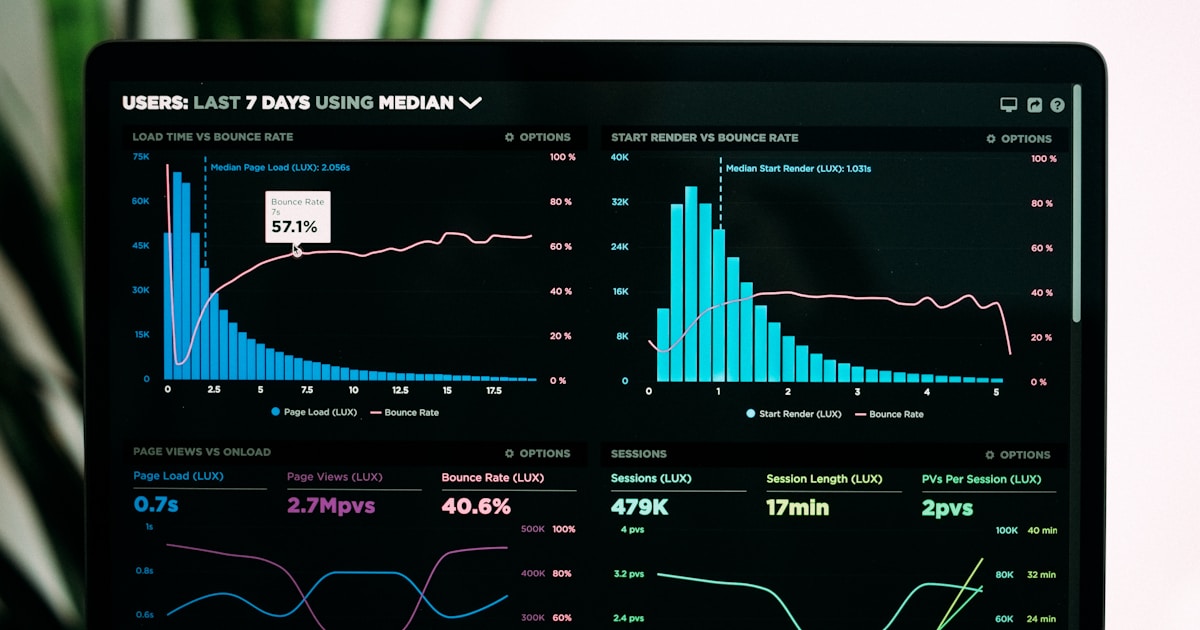
Core Web Vitals
Core Web Vitals are Google's three key metrics measuring page loading, interactivity, and visual stability. Learn LCP, INP, CLS thresholds and their impact on S...
11 min read

Discover how Core Web Vitals affect your visibility in AI-powered search engines like ChatGPT, Perplexity, and Google Gemini. Learn the technical metrics that influence AI citations and brand mentions.
Core Web Vitals significantly impact AI citations by influencing crawlability, indexation, and source selection. Pages with strong Core Web Vitals metrics are 30-47% more likely to be cited in AI-generated answers, as AI engines prioritize fast-loading, responsive, and visually stable content when selecting authoritative sources.
Core Web Vitals represent a fundamental shift in how search engines and AI systems evaluate website quality. These metrics measure real-world user experience across three critical dimensions: loading performance, interactivity, and visual stability. Unlike traditional SEO metrics that focus primarily on content relevance and backlinks, Core Web Vitals directly assess how users experience your website in real-time. This distinction becomes increasingly important as AI-powered search engines like ChatGPT, Perplexity, and Google Gemini become primary discovery channels for information. When AI systems crawl and analyze websites to generate answers, they encounter the same performance barriers that frustrate human visitors. Pages that load slowly, respond sluggishly to user interactions, or shift unexpectedly during rendering present technical obstacles that AI crawlers must navigate. Understanding this connection is essential for any brand seeking visibility in AI-generated answers.
The three Core Web Vitals metrics work together to create a comprehensive picture of user experience quality. Largest Contentful Paint (LCP) measures loading performance by tracking when the largest visible element on a page becomes fully rendered. Google recommends achieving an LCP of 2.5 seconds or less, as research shows that pages loading within this timeframe convert significantly better than slower alternatives. Interaction to Next Paint (INP) replaced First Input Delay and measures responsiveness by tracking the time between a user’s interaction and the browser’s visual response. The target threshold is less than 200 milliseconds, ensuring that clicks, taps, and keyboard inputs feel instantaneous. Cumulative Layout Shift (CLS) quantifies visual stability by measuring unexpected layout changes during page load. A CLS score below 0.1 indicates minimal visual disruption, preventing the frustrating experience of content moving unexpectedly as images and ads load. These three metrics collectively determine whether a page receives a “passing” grade in Google Search Console and, critically, whether AI systems prioritize it as a reliable source.
| Core Web Vital | Metric | Good Threshold | Impact on AI Citations |
|---|---|---|---|
| Largest Contentful Paint (LCP) | Loading Speed | ≤ 2.5 seconds | 50% higher likelihood of AI inclusion |
| Interaction to Next Paint (INP) | Responsiveness | < 200 milliseconds | 7% increase in citation density |
| Cumulative Layout Shift (CLS) | Visual Stability | ≤ 0.1 | 29.8% more frequent AI mentions |
AI-powered answer engines employ sophisticated algorithms to identify trustworthy sources for generating responses. While the exact mechanisms remain proprietary, research analyzing over 2,138 websites reveals that Core Web Vitals signals directly influence source selection. When AI systems like Perplexity crawl the web in real-time to answer user queries, they encounter performance metrics that affect both crawlability and perceived source quality. Pages that fail Core Web Vitals thresholds present technical friction—slower crawling, incomplete rendering, and potential timeouts. This friction reduces the likelihood that AI systems will fully process and index the content. More importantly, AI systems appear to interpret strong Core Web Vitals as a quality signal, similar to how they evaluate domain authority and content freshness. A website that loads quickly, responds instantly to interactions, and maintains visual stability demonstrates technical competence and user-centric design—qualities that correlate with reliable, well-maintained content. This creates a powerful feedback loop where technical excellence directly translates to increased visibility in AI-generated answers.
The relationship between Core Web Vitals and AI citations is not theoretical—it’s measurable and significant. Research from SALT.agency analyzing thousands of websites found compelling evidence that performance improvements directly increase citation probability. Pages with a Cumulative Layout Shift score of 0.1 or better appear in AI summaries 29.8% more frequently than pages with poor CLS scores. This represents a substantial competitive advantage in the AI-driven search landscape. Sites with Largest Contentful Paint times of 2.5 seconds or faster are almost 50% more likely to appear in AI results compared to slower pages. When Time to First Byte (TTFB) is below 200 milliseconds, citation density increases by 22%, indicating that even millisecond-level improvements in server response time translate to measurable gains in AI visibility. Additionally, 18% of pages exceeding one megabyte in file size were abandoned entirely by AI crawlers, suggesting that performance optimization directly affects whether AI systems can even process your content. These statistics underscore a critical reality: Core Web Vitals are not optional for brands seeking AI visibility. The performance threshold that separates cited sources from invisible ones is quantifiable and achievable through systematic optimization.
AI crawlers behave differently from traditional search engine bots, and understanding these differences is crucial for optimization. When Perplexity AI crawls the web to answer user queries, it prioritizes sources that load quickly and render completely. Slow-loading pages consume crawl budget and may timeout before the crawler can extract meaningful content. This creates a natural selection bias toward fast, well-optimized websites. Google’s AI systems, including Gemini and AI Overviews, similarly favor sources that meet Core Web Vitals thresholds. The crawlers used by these systems have timeout limits and resource constraints, meaning that pages requiring excessive time to load or render may be skipped entirely. Beyond crawlability, Core Web Vitals affect how AI systems perceive source credibility. A website that provides a poor user experience—slow loading, unresponsive interactions, layout shifts—signals to AI systems that the site may be poorly maintained or unreliable. Conversely, a website with excellent Core Web Vitals demonstrates technical sophistication and user-centric design, qualities that AI systems associate with authoritative, trustworthy sources. This perception directly influences whether your content is selected as a citation source when AI systems generate answers to user queries.
E-E-A-T (Experience, Expertise, Authoritativeness, Trustworthiness) represents Google’s framework for evaluating content quality, and Core Web Vitals play a supporting role in this assessment. While E-E-A-T primarily focuses on content quality and author credentials, the technical foundation provided by strong Core Web Vitals enhances overall trustworthiness perception. A website with excellent Core Web Vitals demonstrates that the site owner invests in user experience and technical excellence. This investment signals that the organization takes its online presence seriously and maintains high standards across all aspects of the website. AI systems, which increasingly rely on E-E-A-T signals to identify authoritative sources, interpret strong Core Web Vitals as supporting evidence of trustworthiness. Additionally, Core Web Vitals affect how effectively AI systems can extract and process content. Pages with poor visual stability may have rendering issues that prevent AI systems from accurately parsing content structure. Pages with slow loading times may timeout before critical content loads. Pages with poor interactivity may indicate underlying technical problems. By contrast, pages with excellent Core Web Vitals demonstrate clean code, proper resource optimization, and technical best practices—all indicators of content quality and reliability. This technical foundation strengthens E-E-A-T signals and increases the likelihood of AI citations.
Improving Core Web Vitals requires a systematic approach addressing each metric individually. For Largest Contentful Paint (LCP), focus on optimizing server response time by upgrading hosting infrastructure, implementing content delivery networks (CDNs), and reducing server-side processing. Optimize images aggressively through compression, modern formats like WebP, and lazy loading for below-the-fold content. Minimize render-blocking resources by deferring non-critical JavaScript and CSS. Preload critical resources that are essential for rendering the largest contentful element. For Interaction to Next Paint (INP), reduce JavaScript execution time by breaking long tasks into smaller chunks and deferring non-critical processing. Optimize event listeners to respond quickly to user interactions. Use modern JavaScript frameworks that prioritize responsiveness. Monitor and reduce main thread blocking, which prevents the browser from responding to user input. For Cumulative Layout Shift (CLS), reserve space for dynamic content like ads and embeds using CSS aspect-ratio properties. Avoid inserting content above existing content unless in response to user interaction. Use transform animations instead of properties that trigger layout recalculations. Load fonts with font-display: swap to prevent text layout shifts. These optimizations require technical expertise but deliver measurable improvements in both user experience and AI citation rates.
Effective monitoring is essential for maintaining strong Core Web Vitals and tracking improvements over time. Google Search Console provides a dedicated Core Web Vitals report showing how your pages perform across real-world user data. This report segments performance by device type (mobile, desktop, tablet) and identifies specific pages that need improvement. PageSpeed Insights offers detailed recommendations for optimizing each metric, including specific code changes and resource optimization strategies. Web Vitals JavaScript library allows you to measure Core Web Vitals on your own website and send data to your analytics platform for continuous monitoring. Third-party tools like Lighthouse, WebPageTest, and Sematext provide comprehensive performance analysis and historical tracking. For AI citation monitoring specifically, platforms like Rankscale.ai and similar tools track how frequently your domain appears in AI-generated answers across different AI engines. By correlating Core Web Vitals improvements with changes in AI citation frequency, you can quantify the impact of your optimization efforts. Regular monitoring creates accountability and helps identify performance regressions before they significantly impact AI visibility.
Different AI systems weight Core Web Vitals differently based on their architecture and source selection algorithms. ChatGPT relies primarily on pre-training data and web browsing capabilities, making it less directly dependent on real-time Core Web Vitals. However, when ChatGPT uses its browse feature to access current information, it encounters the same performance barriers as other crawlers. Pages with poor Core Web Vitals may fail to load completely, preventing ChatGPT from accessing the content needed to answer user queries. Perplexity AI actively crawls the web in real-time to answer queries, making it highly sensitive to Core Web Vitals performance. Slow-loading pages consume Perplexity’s crawl budget and may timeout before content extraction completes. Pages with excellent Core Web Vitals load quickly, allowing Perplexity to extract content efficiently and cite the source in its answer. Google Gemini and AI Overviews integrate Core Web Vitals data directly from Google’s Search Console, using this information as an explicit ranking signal. Pages with strong Core Web Vitals receive preferential treatment in source selection for AI-generated answers. This direct integration makes Core Web Vitals optimization particularly important for visibility in Google’s AI features. Understanding these differences helps you prioritize optimization efforts based on which AI engines are most important for your business.
Concrete examples demonstrate the tangible business impact of Core Web Vitals optimization. Ray-Ban improved their Largest Contentful Paint metric and saw their conversion rate double, coupled with a 13% lower exit rate. This improvement directly translated to increased revenue and reduced customer abandonment. redBus improved their Interaction to Next Paint by an average of 250 milliseconds, resulting in a 7% increase in sales. This demonstrates that even millisecond-level improvements in responsiveness drive measurable business outcomes. Snapdeal achieved a three-second improvement in First Contentful Paint, resulting in 30% higher conversions and a 25% lower bounce rate. These case studies show that Core Web Vitals optimization benefits both user experience and business metrics. For AI citation visibility specifically, brands that improved their Core Web Vitals saw corresponding increases in AI mentions and citations. The correlation is clear: faster, more responsive websites receive more citations from AI systems. This creates a virtuous cycle where technical excellence drives both user engagement and AI visibility, amplifying the overall impact on business outcomes.
The landscape continues to evolve as AI systems become more sophisticated and integrated into search experiences. Google has signaled that Core Web Vitals will remain a ranking factor, with ongoing refinements to the metrics themselves. The shift from First Input Delay to Interaction to Next Paint reflects Google’s commitment to measuring responsiveness in ways that better capture real-world user experience. As AI systems become more prevalent in search, the importance of Core Web Vitals will likely increase. AI engines that crawl the web in real-time will continue to encounter performance barriers that affect source selection. AI systems that use Core Web Vitals as explicit ranking signals will continue to reward optimization efforts. The convergence of traditional SEO and AI optimization means that Core Web Vitals optimization benefits both discovery channels simultaneously. Brands that invest in Core Web Vitals improvement today position themselves for success in an increasingly AI-driven search landscape. The technical foundation provided by strong Core Web Vitals supports not only traditional search visibility but also emerging AI citation opportunities.
Track how your domain appears in AI-powered search engines and get cited more frequently. Use advanced monitoring tools to understand your AI citation performance across ChatGPT, Perplexity, and Google Gemini.
Core Web Vitals are Google's three key metrics measuring page loading, interactivity, and visual stability. Learn LCP, INP, CLS thresholds and their impact on S...
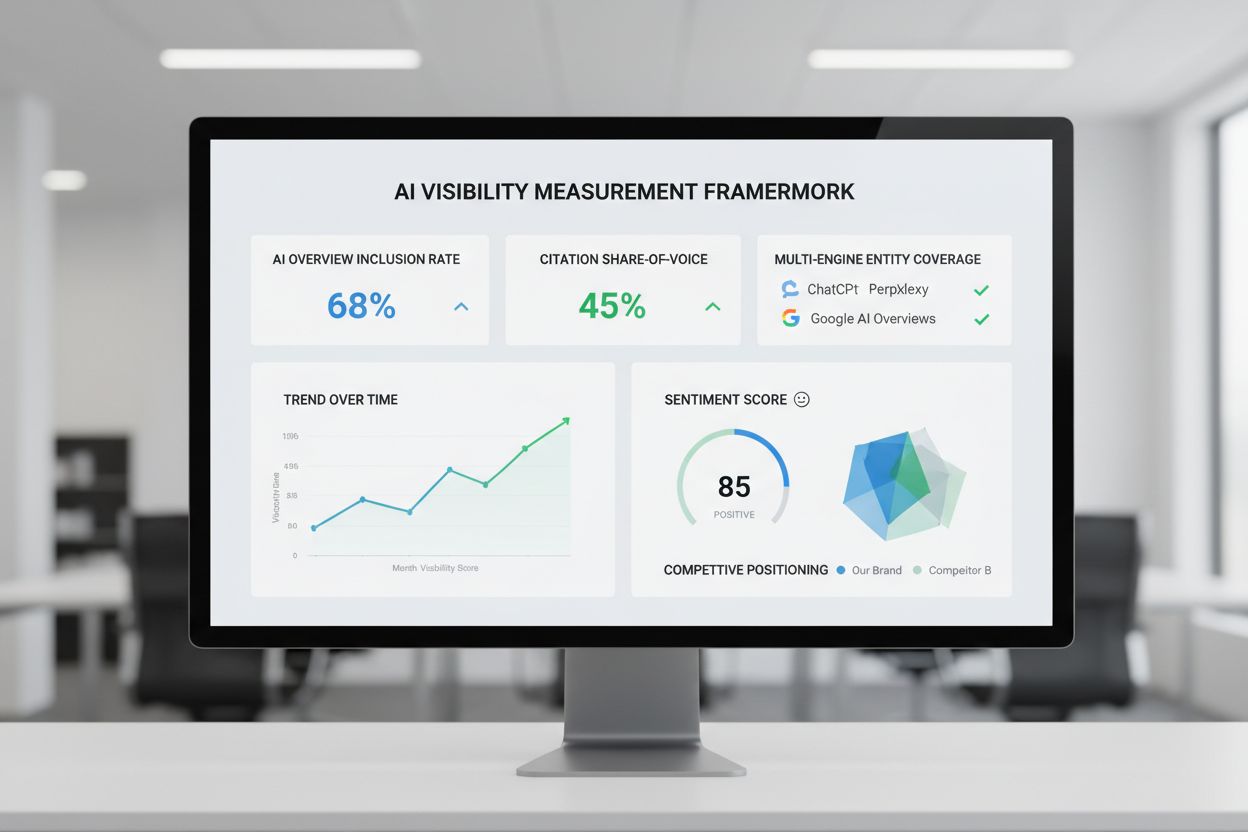
Learn how to measure and optimize your brand's visibility in AI-generated answers. Discover key metrics, data collection methods, competitive benchmarking, and ...
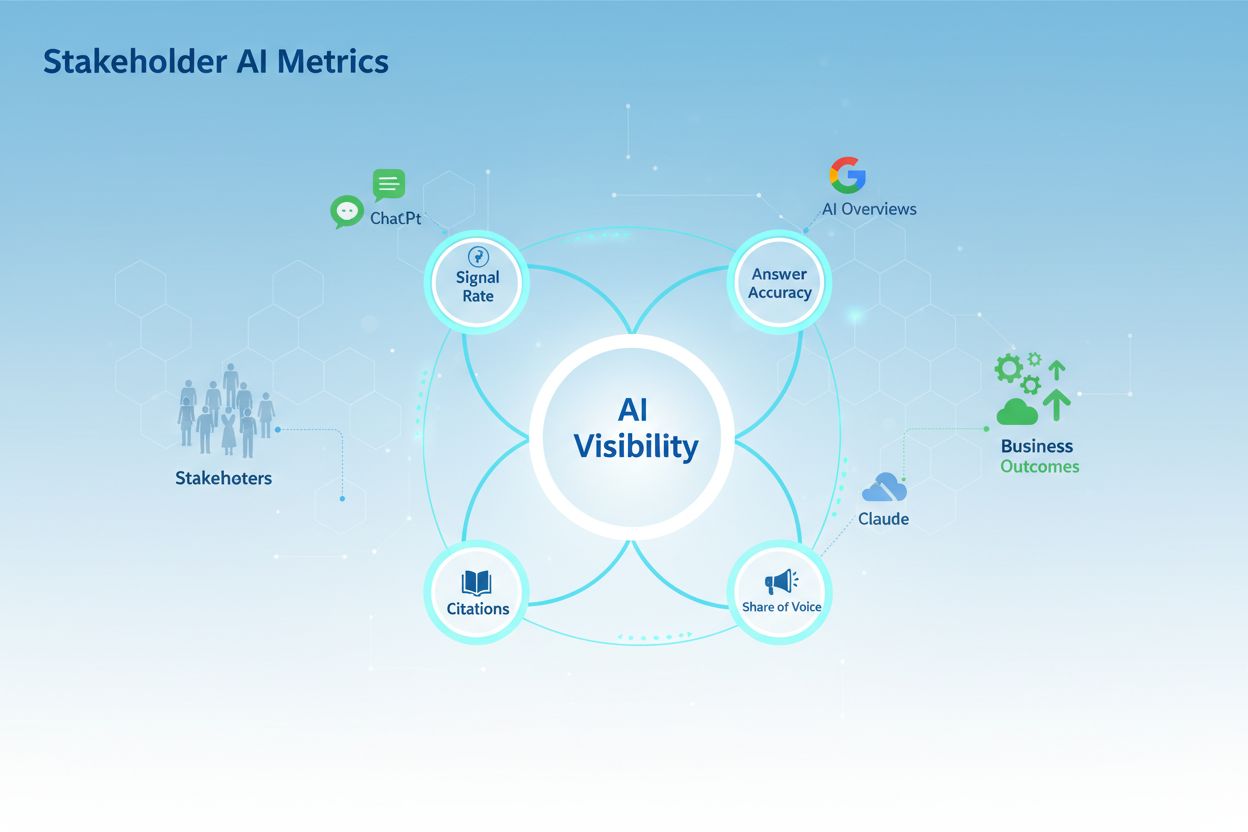
Discover the 4 essential AI visibility metrics stakeholders care about: Signal Rate, Accuracy, Citations, and Share of Voice. Learn how to measure and report AI...