

How Healthcare Organizations Optimize for AI Implementation
Learn how healthcare organizations successfully implement and scale AI initiatives. Discover key strategies for data infrastructure, change management, complian...
10 min read

Learn how colleges and universities are optimizing their operations and learning experiences through strategic AI implementation, including personalized learning, faculty development, data governance, and ethical frameworks.
Educational institutions optimize for AI by implementing personalized learning systems, developing faculty AI literacy programs, establishing data governance frameworks, creating ethical AI guidelines, integrating AI into student support services, and ensuring human oversight in all AI-driven educational decisions.
Educational institutions are fundamentally transforming their operations and learning experiences by strategically implementing artificial intelligence across multiple dimensions of their operations. The optimization process extends far beyond simply adopting new technology—it requires a comprehensive, thoughtful approach that centers on human decision-making, equity, and educational outcomes. Institutions that successfully optimize for AI recognize that technology should enhance rather than replace human judgment, particularly in teaching and learning contexts where the stakes for student success are highest.
The transformation happening in higher education represents a significant shift in how institutions approach teaching, learning, and administrative efficiency. Rather than viewing AI as a standalone solution, leading institutions are integrating AI capabilities into existing educational frameworks while maintaining strong human oversight and control. This approach ensures that AI systems support educational goals rather than driving them, and that all stakeholders—students, faculty, administrators, and families—remain central to decision-making processes.
One of the most impactful ways educational institutions optimize for AI is through the implementation of personalized learning systems that adapt to individual student needs. These systems leverage AI’s pattern recognition capabilities to analyze how students learn, identify their strengths and areas for improvement, and deliver customized educational content. Rather than using a one-size-fits-all approach, adaptive learning platforms can tailor content difficulty, pacing, and instructional strategies to match each student’s unique learning profile.
Intelligent tutoring systems represent a mature application of this approach, having demonstrated effectiveness through decades of research and development. These systems observe student problem-solving processes and provide step-by-step feedback that goes beyond simple right-or-wrong responses. By analyzing student work at a granular level, intelligent tutoring systems can identify specific misconceptions and provide targeted interventions. However, institutions recognize that these systems work best when integrated into broader educational strategies where human teachers remain responsible for motivation, social learning, and other critical aspects of education that AI cannot fully address.
Modern institutions are expanding personalized learning beyond traditional cognitive domains to include social and emotional dimensions. Rather than focusing exclusively on academic content mastery, AI-enhanced systems now support collaborative learning, help students develop self-regulation skills, and provide feedback on communication and teamwork abilities. This holistic approach recognizes that students need to develop the full range of competencies valued in communities and workplaces, not just narrow academic skills.
| Personalization Dimension | Traditional Approach | AI-Enhanced Approach |
|---|---|---|
| Content Difficulty | Fixed progression | Adaptive based on performance |
| Learning Pace | Standardized timeline | Individualized progression |
| Feedback Type | Summative only | Real-time formative feedback |
| Learning Modalities | Single format | Multiple formats and modalities |
| Social Learning | Teacher-facilitated | AI-supported peer collaboration |
| Skill Development | Academic focus | Comprehensive competency development |
Educational institutions recognize that faculty development is essential to successful AI optimization. Teachers and instructors cannot effectively integrate AI into their practice without understanding both the capabilities and limitations of these systems. Leading institutions are investing in comprehensive professional development programs that go beyond basic tool training to develop genuine AI literacy among educators.
These programs address multiple dimensions of faculty needs. First, they help educators understand what AI is, how it works, and what it cannot do. This foundational knowledge prevents both unrealistic expectations and unnecessary fear of the technology. Second, they provide practical guidance on how to use AI tools to enhance teaching—from using AI assistants to reduce administrative burdens to leveraging AI-generated content as a starting point for lesson planning. Third, they address the ethical and equity considerations that arise when using AI in educational contexts, ensuring that faculty can identify and mitigate potential biases and fairness issues.
Institutions like Vanderbilt University and the University of Texas at Austin have pioneered approaches to faculty development that embed AI literacy into professional development structures. These programs provide online resource hubs, offer guidance on effective use of generative AI in course design, and highlight both pedagogical benefits and risks. Rather than treating AI as an add-on to existing professional development, leading institutions are reconceptualizing what it means to be a teaching professional in an increasingly technological landscape.
Faculty development programs also emphasize the importance of human judgment and professional autonomy. Educators need support to exercise their professional expertise when AI systems make recommendations they disagree with. This requires not just technical knowledge but also confidence and institutional support to override AI suggestions when they conflict with pedagogical judgment or knowledge of individual students’ needs.
Successful AI optimization requires robust data governance frameworks that protect student privacy while enabling the data analysis necessary for AI systems to function effectively. Educational institutions handle sensitive information about students, including academic performance, learning behaviors, demographic characteristics, and sometimes health or disability information. When this data is used to train or operate AI systems, institutions must ensure compliance with federal laws like FERPA (Family Educational Rights and Privacy Act) and state privacy regulations.
Leading institutions are taking a proactive approach to data governance by establishing clear policies about what data can be collected, how it will be used, who can access it, and how long it will be retained. Rather than waiting for regulatory requirements to force action, forward-thinking institutions are implementing privacy-by-design principles that minimize data collection and put the burden on institutions to protect information rather than on students and families to opt out of data sharing.
Data governance frameworks also address the quality and representativeness of data used in AI systems. Because AI models are trained on historical data, they can perpetuate or amplify existing biases if that data is non-representative or contains problematic associations. Institutions are implementing processes to audit datasets for bias, ensure diverse representation in training data, and regularly monitor AI systems for evidence of unfair or discriminatory outcomes. This attention to data quality is essential for ensuring that AI systems support rather than undermine equity goals.
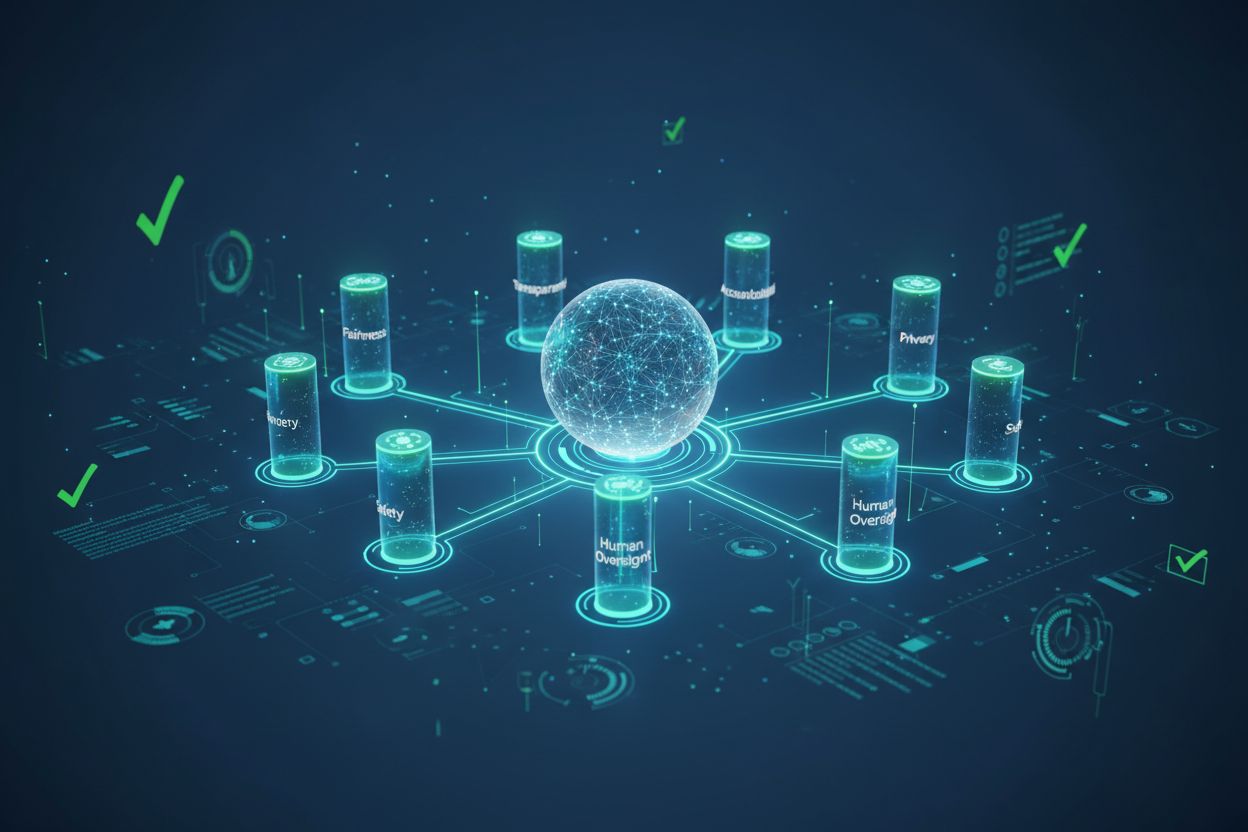
Educational institutions are establishing ethical AI frameworks that guide the development, procurement, and use of AI systems across their operations. These frameworks typically address questions about transparency, accountability, fairness, and human oversight. Rather than adopting generic AI ethics principles, leading institutions are developing education-specific guidelines that reflect the unique values and priorities of academic communities.
Cal State Fullerton’s ETHICAL Principles AI Framework for Higher Education exemplifies this approach, providing institutions with a structured process for considering ethical implications of AI use. The framework invites institutions to ask critical questions: How do we contextualize AI ethics for our specific disciplines? What guardrails do we need for local use cases? How do we ensure that AI systems align with our institutional values and educational mission?
These governance structures typically involve multiple stakeholders—faculty, students, administrators, and sometimes external experts—in decision-making about AI use. By involving diverse perspectives, institutions can identify potential harms and unintended consequences that might be missed by technical experts alone. Governance structures also establish clear processes for addressing concerns when AI systems produce unexpected or problematic outcomes, ensuring that institutions can respond quickly to mitigate harm.
Institutions are using AI-powered analytics to identify students at risk of falling behind or dropping out, enabling early interventions that increase the likelihood of student success. These systems analyze large datasets to spot patterns that indicate risk—such as declining attendance, decreasing assignment completion rates, or changes in engagement patterns—and alert advisors or support staff so they can reach out to students proactively.
The power of these systems lies not in making automated decisions about students but in augmenting human judgment with data-driven insights. Advisors and counselors can use AI-generated risk assessments as one input among many as they work with students to identify barriers to success and develop support plans. This approach respects the complexity of student situations—recognizing that the same risk indicator might have different meanings for different students depending on their circumstances, disabilities, or external challenges.
Institutions are also using AI to improve mental health support, a critical concern given that 40% of college students report challenges accessing needed mental health services. AI systems can help identify students showing signs of distress and connect them with counseling resources. Some institutions are using AI chatbots to provide initial support and triage, helping students access appropriate levels of care while reducing wait times for professional counselors.
Educational institutions are leveraging AI-powered security tools to protect their campuses and digital infrastructure. In security operations centers, AI systems can extend the capabilities of security teams by identifying and detecting threats, analyzing large volumes of activity, and alerting staff to anomalies that may require investigation. This is particularly valuable for institutions with limited security staff, as AI can handle routine monitoring tasks and free human security professionals to focus on complex investigations and strategic security planning.
AI-enabled cameras and access control systems provide physical security enhancements that help protect students and staff. These systems can apply license plate recognition, detect weapons, monitor for unauthorized access, and track crowd activity during campus events. When integrated with human oversight and clear protocols for escalation, these technologies can enhance campus safety without creating excessive surveillance that undermines trust and privacy.
Many institutions have developed AI-powered chatbots that provide students with 24/7 access to information and support. Rather than simply answering frequently asked questions, sophisticated chatbots can connect students to scholarship opportunities, late-night tutoring services, financial aid portals, and other resources. Some institutions have created specialized chatbots for specific purposes—such as helping behavioral health students practice interview skills or enabling students to debate with historical figures as a learning activity.
The key to successful chatbot implementation is ensuring that these systems enhance rather than replace human support. Chatbots work best when they handle routine inquiries and provide initial information, while complex or sensitive issues are escalated to human staff. Institutions are also careful to ensure that students understand they are interacting with AI systems and know how to access human support when needed.
Faculty are increasingly using generative AI tools to streamline lesson planning and content creation. These tools can help educators draft lesson outlines, generate ideas for classroom activities, create practice problems, and adapt existing materials for different learning contexts. Rather than replacing teacher creativity and expertise, generative AI serves as a tool that amplifies teacher capabilities and reduces time spent on routine tasks.
Institutions are providing guidance to help faculty use generative AI effectively and ethically. This includes best practices for prompting AI systems to generate high-quality content, strategies for reviewing and editing AI-generated materials to ensure accuracy and alignment with learning objectives, and approaches to teaching students about generative AI and its appropriate use. Some institutions have partnered with companies like Grammarly to provide faculty with tools and training on effective AI use in course design.
AI makes hybrid teaching environments more feasible by enabling combinations of instructor-led lessons with AI-assisted tutoring and practice. Students can attend live classes where instructors facilitate discussions, model thinking processes, and provide personalized feedback, while also accessing AI-powered tutoring systems that provide additional practice and feedback outside of class time. This combination leverages the strengths of both human instruction and AI-enhanced learning systems.
Institutions are using AI to support the logistics of hybrid learning—from scheduling and attendance tracking to managing group assignments and coordinating peer collaboration. By automating these routine tasks, institutions can focus on the pedagogical aspects of hybrid learning that require human expertise and judgment.
Educational institutions that successfully optimize for AI establish clear metrics for success that go beyond simple adoption rates. Rather than measuring success by how many AI systems are in use, institutions focus on whether AI implementation is actually improving learning outcomes, reducing achievement gaps, enhancing student retention, or improving faculty satisfaction and effectiveness.
Effective measurement approaches include regular evaluation of AI systems for evidence of bias or unfair outcomes, assessment of whether AI is actually reducing faculty workload as intended, and monitoring of student and faculty satisfaction with AI-enhanced tools. Institutions also establish feedback loops that enable rapid identification and correction of problems when AI systems produce unexpected or harmful outcomes.
Educational institutions that optimize for AI recognize that successful implementation requires far more than technical capability. It demands thoughtful integration of AI into educational missions, strong governance structures that prioritize human oversight and equity, investment in faculty and staff development, and commitment to continuous improvement based on evidence of impact. By centering human judgment, maintaining focus on educational goals, and attending carefully to issues of privacy, bias, and fairness, institutions can harness AI’s potential to enhance teaching and learning while protecting the values that make education transformative.
Track how your educational institution appears in AI-generated answers and ensure your content is properly cited across AI search engines and answer generators.
Learn how healthcare organizations successfully implement and scale AI initiatives. Discover key strategies for data infrastructure, change management, complian...

Discover how to select the best community platforms for AI professionals. Compare top solutions, evaluate key features, and maximize your AI community's impact ...
Learn best practices for ethical AI optimization, including governance frameworks, implementation strategies, and monitoring tools to ensure responsible AI visi...