Understanding Healthcare AI Optimization
Healthcare organizations face a critical inflection point in their AI adoption journey. While 92 percent of healthcare executives are experimenting with or investing in generative AI, many organizations struggle to move beyond pilot projects into enterprise-wide transformation. The challenge isn’t finding AI solutions—it’s implementing them strategically to deliver measurable value. Healthcare AI optimization requires a comprehensive approach that goes far beyond technology selection, encompassing organizational strategy, data infrastructure, workforce readiness, and regulatory compliance. Organizations that succeed in scaling AI from pilots to enterprise adoption share a common characteristic: they prioritize strategic alignment over technology adoption metrics, ensuring that every AI initiative directly addresses core organizational priorities like improving patient access, reducing costs, enhancing quality, or elevating patient experience.
The Three Patterns of Healthcare AI Adoption
Healthcare organizations typically follow one of three distinct adoption patterns, each with different outcomes and trajectories. Understanding where your organization falls on this spectrum is essential for planning your AI optimization strategy.
Followers represent organizations taking a “wait-and-see” approach, typically due to limited resources or uncertainty about implementation. These organizations currently comprise approximately 25% of the market but are expected to decrease to just 10% within five years as more providers find low-risk, modest AI investment opportunities through existing IT platforms. Most followers are actively planning to test and implement AI within the next five years, signaling an anticipated shift from the sidelines to pilot and potential scale phases.
Experimenters are actively piloting AI solutions, often driven by vendor pressure or internal champions advocating for specific technologies. These organizations currently represent about 60% of the market and will likely maintain this proportion as many health systems pilot multiple AI solutions simultaneously. However, a significant portion of experimenters risk remaining in “pilot purgatory”—unable to scale beyond initial projects due to poor integration, inadequate change management, or misalignment with broader enterprise strategy. These organizations frequently implement point solutions like ambient scribing to solve niche challenges, but these isolated pilots rarely translate into enterprise strategic value.
Transformers take a strategy-first approach, weaving AI into core activities to address organizational priorities. Currently representing approximately 15% of the market, transformers are expected to grow to 30% within five years. These organizations measure AI success not by technology adoption rates but by how effectively AI advances enterprise priorities such as access, cost, quality, and patient experience. Transformers replicate successful AI integration experiences across multiple strategic initiatives, creating measurable, enterprise-wide value and increasingly standing apart from the experimenter segment.
Ready to Monitor Your AI Visibility?
Track how AI chatbots mention your brand across ChatGPT, Perplexity, and other platforms.
Aligning AI Projects with Organizational Strategy
The most critical factor distinguishing transformers from experimenters is strategic alignment. Many organizations define AI success by technology adoption metrics—such as the number of provider licenses for ambient scribes or patient interactions with AI-enabled chatbots—but these measures fail to capture the strategic value actually derived from the technology. Transformers instead measure how AI advances enterprise priorities, creating a direct line between technology investment and organizational outcomes.
For example, rather than simply implementing an AI-powered bed assignment tool and measuring its adoption rate, transformers evaluate whether the tool reduces patient length of stay, improves patient experience, optimizes clinical team capacity, and ultimately generates return on investment. This strategic measurement approach requires clearly defining success metrics before procuring technology. Organizations should identify specific data challenges across their enterprise, prioritize which data sources to integrate, and establish clear metrics for success including cost reduction and performance improvement targets. When AI projects are aligned with these organizational objectives from inception, they’re far more likely to scale successfully and deliver measurable impact.
Investing in Data Infrastructure and Readiness
Data infrastructure represents the foundational prerequisite for successful AI implementation. Healthcare organizations generate an estimated 50 petabytes of data annually, yet much of this data remains siloed, unstructured, or locked in legacy systems. Before procuring and deploying AI technology, organizations must assess their data infrastructure and staff readiness for adoption. This assessment should evaluate the sufficiency, accuracy, integrity, and format of data that AI systems will use. Organizations must also determine whether existing data includes or is susceptible to bias that AI tools could perpetuate.
| Data Infrastructure Component | Key Considerations | Impact on AI Success |
|---|
| Data Quality & Governance | Deduplication, standardization (LOINC, ICD-10, SNOMED), validation rules | Poor data quality costs organizations up to $13 million annually in inefficiency |
| Data Integration & Interoperability | FHIR-compliant APIs, ETL/ELT processes, data mapping | Enables seamless data flow across EHRs, labs, imaging systems, and AI pipelines |
| Data Storage & Management | Cloud databases, data lakes, HIPAA-compliant infrastructure | Supports petabyte-scale data processing and real-time analytics |
| Data Security & Compliance | Encryption, access controls, audit logging, de-identification | Maintains HIPAA compliance while processing sensitive patient data |
| Real-Time Data Streaming | Apache Kafka, IoT gateways, streaming platforms | Enables continuous patient monitoring and immediate clinical alerts |
Healthcare organizations should conduct a thorough infrastructure assessment that reviews database operations, identifies inefficiencies in existing cluster management, and uncovers opportunities for cost optimization. Many organizations discover that modernizing their data platforms—moving from legacy systems to cloud-based, FHIR-compliant architectures—can reduce cloud computing costs by 33%, database costs by 45%, and management overhead by 65% while simultaneously improving data processing performance by 30%.
Stay Updated on AI Visibility Trends
Get the latest insights on AI mentions, brand monitoring, and optimization strategies.
Establishing Robust Change Management Processes
Change management is often the overlooked differentiator between successful and failed AI implementations. A common pitfall is providing initial training at launch and assuming staff no longer need adoption support. Instead, successful health systems monitor adoption trends continuously and proactively solicit feedback when gaps emerge. This might involve tracking adoption rates among different sites of care or analyzing patterns by end-user characteristics to uncover untapped opportunities or emerging concerns.
Organizations should establish change management processes that address digital literacy gaps, privacy protection concerns, and workflow pain points. When staff encounter obstacles to using AI tools effectively, organizations must quickly address these issues to prevent adoption stagnation. Successful change management also requires ensuring that staff understand the appropriate role and use of AI technology in their core functions. For instance, before implementing agentic AI tools for online patient scheduling, organizations must ensure standardized adoption of visit templates and availability of scheduling visits online across clinic sites and for a wide range of patient cohorts. Without this foundational work, the AI tool cannot deliver its intended benefits.
As AI technology scales across the organization, robust performance management becomes essential. Constant audit and refinement of AI tool outputs are critical to minimizing hallucinations—instances where AI generates plausible-sounding but incorrect information—while augmenting end-user workflows and cultivating trust in the technology. IT teams supporting AI adoption must also protect the organization against unique AI vulnerabilities including emerging cybersecurity threats and risks of bias or inequity.
A key component of performance management is calibrating AI use against approved applications. For example, an organization might deploy a large language model tool to transcribe clinical encounters and suggest potential billing codes, but appropriate use guardrails ensure staff review and confirm those codes before submitting to payers. This human-in-the-loop approach maintains accuracy while capturing efficiency gains. Organizations can proactively cultivate the skill sets needed for AI performance management by redirecting staff capacity gains from AI-enabled workflow efficiencies toward reskilling the workforce to support ongoing AI adoption and scale.
Integrating AI into Existing Workflows and Strategic Initiatives
Successful AI implementation requires seamless integration into existing care ecosystems and processes rather than deploying isolated point solutions. Transformers embed AI technology into workflows designed to address core organizational priorities. For example, some health systems are redesigning acute care bed assignment by leveraging AI tools that analyze multiple datasets to optimally place patients based on anticipated length of stay, specific care needs, the clinical team best aligned to them, and the care team’s projected capacity. This integration maximizes patient experience and outcomes while creating a more efficient acute care delivery model.
Such integrations require seamless interoperability between AI and core IT platforms like electronic health records and adjacent datasets to ensure relevant and timely information flow. They also require staff input and buy-in on the appropriate role and use of technology in their core functions. Organizations should start by redesigning processes before implementing AI, ensuring that the technology augments rather than disrupts existing workflows. This process-first approach increases adoption rates and ensures that AI delivers its intended benefits.
Healthcare organizations must establish clear criteria for deciding whether to procure platform-based AI tools or point solutions. Many organizations leverage their platform-based AI tools—such as those integrated into their EHR systems—as the primary launching point for AI adoption. However, organizations taking a strategy-first approach may consider solutions beyond what’s available in those platforms. For instance, while many EHR platforms now offer ambient scribe technology, they may not yet offer capabilities like automated referral scheduling, order processing, or billing optimization.
Rather than exclusively calibrating to platform vendors’ roadmaps, transformers build a comprehensive digital ecosystem designed to address enterprise priorities. This approach helps them capture near-term value from existing and proven AI technology while maintaining flexibility for future innovation. Organizations should evaluate whether platform-based tools adequately address their strategic priorities or whether supplementary point solutions are necessary. The key is ensuring that all tools—whether platform-based or point solutions—integrate seamlessly and contribute to overarching organizational objectives.
Addressing Regulatory and Compliance Requirements
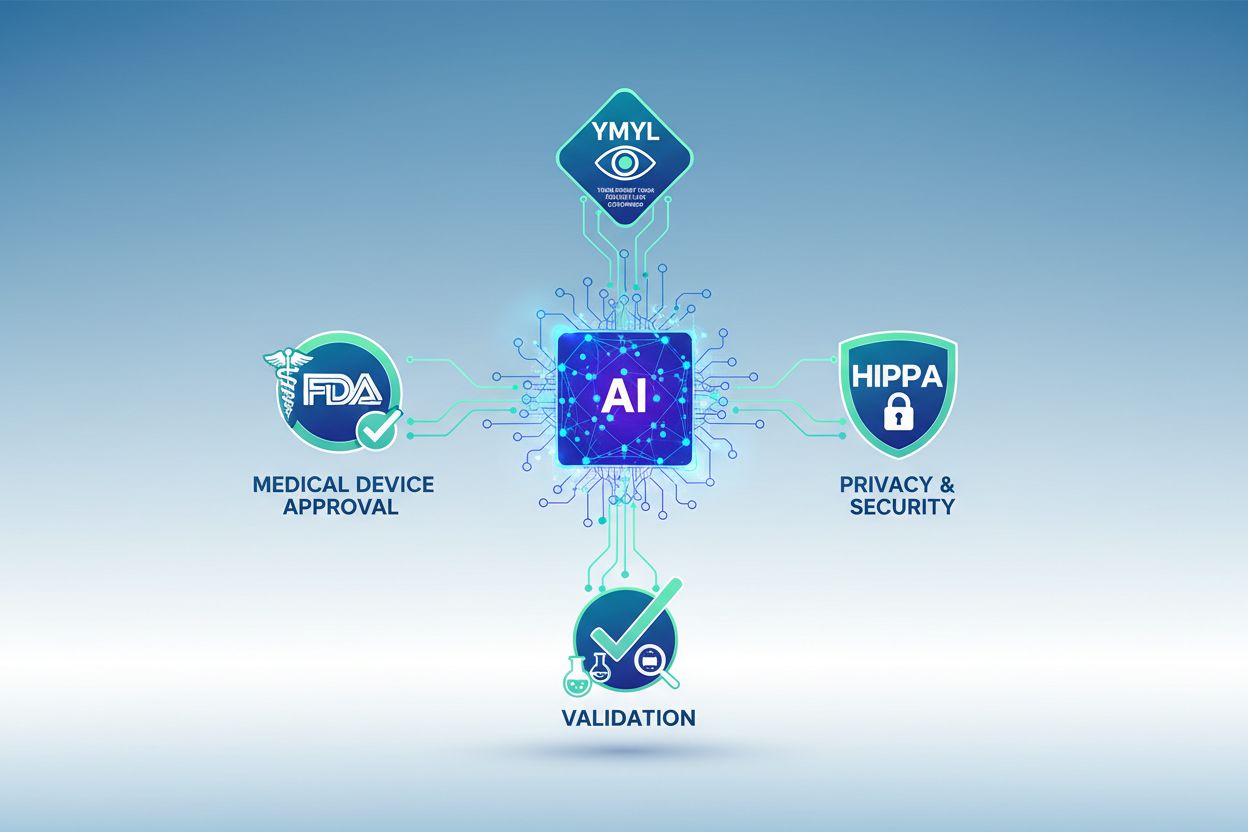
Healthcare AI optimization must account for an increasingly complex regulatory landscape. The EU AI Act, adopted in 2024, classifies most healthcare AI systems as “high-risk,” subjecting them to rigorous requirements around data governance, transparency, and risk management. In the United States, the Office of the National Coordinator’s HTI-1 Final Rule establishes algorithm transparency requirements for AI-driven clinical decision support in certified EHR systems. These regulations require that data pipelines track metadata to explain how AI reached conclusions, making explainability a core component of modern AI infrastructure.
Additionally, the 21st Century Cures Act and CMS rules mandate FHIR-standard APIs for patient data access, forcing providers to upgrade their data exchange pipelines. By 2025, all certified EHRs must support the latest data standards via FHIR API. Europe is moving toward a European Health Data Space with common standards as well. Any AI pipeline must be built on interoperable formats like FHIR to readily pull data from EHRs and other sources while maintaining compliance with privacy regulations like HIPAA and GDPR.
Measuring Success and Avoiding Pilot Purgatory
Organizations must define clear success metrics before launching AI initiatives to avoid pilot purgatory. Rather than measuring technology adoption rates, transformers measure how AI advances enterprise priorities. Success metrics might include:
- Access improvements: Net-new patients seen, reduction in next available appointment time
- Quality enhancements: Reduction in preventable falls, readmissions, or patient decompensation
- Cost optimization: Reduction in operational overhead, improved resource allocation
- Patient experience: Improved satisfaction scores, reduced wait times, enhanced engagement
- Workforce efficiency: Reduction in administrative burden, increased time for patient care
Organizations should establish baseline metrics before AI implementation, track progress regularly, and be prepared to adjust strategies based on results. This data-driven approach ensures that AI investments deliver measurable return on investment and contribute to organizational sustainability.
Conclusion
Healthcare organizations that successfully optimize for AI share a common approach: they prioritize strategy over technology, invest in foundational data infrastructure, establish robust change management processes, and maintain human oversight throughout implementation. Rather than chasing the latest AI solutions, transformers align AI initiatives with organizational priorities, integrate technology into existing workflows, and measure success by enterprise outcomes rather than adoption metrics. By following these practices, healthcare organizations can move beyond pilot purgatory and achieve meaningful, enterprise-wide AI-enabled transformation that improves patient care, reduces costs, and enhances operational efficiency.