
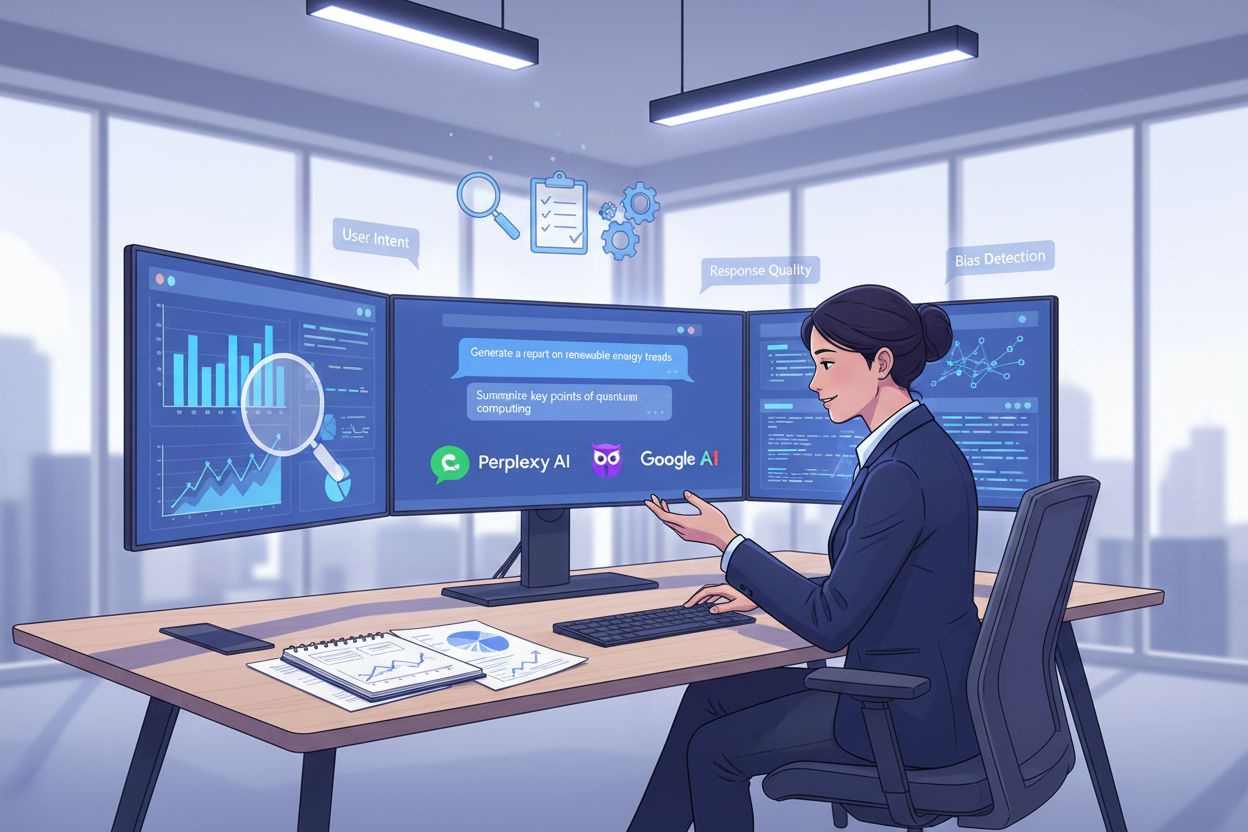
Prompt Research for AI Visibility: Understanding User Queries
Learn how to conduct effective prompt research for AI visibility. Discover the methodology for understanding user queries in LLMs and tracking your brand across...
10 min read

Discover how help centers boost AI visibility through structured Q&A content, FAQ schema markup, and strategic content optimization for ChatGPT, Perplexity, and Gemini.
Help centers significantly boost AI visibility because their Q&A format mirrors how AI systems search and cite content, with FAQ schema markup increasing citation probability by up to 3.2x in AI-generated answers.
Help centers have traditionally served as customer support repositories, often overlooked by marketing teams focused on blog traffic and brand awareness. However, in the era of AI-powered search engines like ChatGPT, Perplexity, Gemini, and Grok, help centers have emerged as one of the most valuable assets for achieving visibility in generative search results. The fundamental reason is structural: help centers are built around question-and-answer formats that perfectly align with how large language models (LLMs) search for, extract, and cite content. When users ask AI systems questions, those systems hunt for content that matches natural question phrasing and provides clear, concise answers—exactly what well-structured help centers deliver. This alignment creates a significant competitive advantage for brands that optimize their help centers for AI visibility, as these platforms become goldmines for high-intent keyword phrases and authoritative citations.
The shift from traditional search to AI-powered answer engines represents a fundamental change in content strategy. While traditional SEO focused on ranking for keywords in Google’s blue links, AI visibility optimization focuses on earning citations in AI-generated responses that users read without clicking through to source sites. Help centers excel at this because they contain the exact type of content AI systems prefer: focused, question-based articles with clear answers, structured formatting, and demonstrated expertise. According to research on generative engine optimization, help center articles are written in the precise format that LLMs like ChatGPT, Gemini, and Perplexity love—short, clear, question-and-answer content with one question per article and one comprehensive answer. This structural alignment means help centers don’t require extensive optimization to become AI-visible; they simply need proper implementation of structured data markup and content freshness signals to unlock their full potential.
The architecture of help center content creates natural advantages for AI crawlers and language models. Each help center article typically follows a consistent pattern: a question-based title, a clear answer section, and supporting details organized with headers and bullet points. This consistency signals to AI systems that the content is reliable and well-organized, making it easier for crawlers to parse and understand the relationship between questions and answers. AI crawlers don’t render JavaScript or interpret complex page designs the way human users do; they read HTML structure and look for semantic signals that indicate content hierarchy and meaning. Help centers provide these signals naturally through their Q&A format, making the crawler’s job significantly easier and increasing the likelihood that content will be extracted accurately for citations.
The HTML structure of well-designed help centers further enhances AI crawlability. When help center articles use proper heading hierarchy (H1 for the main question, H2 for answer sections, H3 for subsections), they create a clear content map that AI systems can follow. Additionally, help centers typically avoid heavy JavaScript dependencies and complex interactive elements that might obscure content from crawlers. The straightforward, text-focused design that makes help centers user-friendly also makes them crawler-friendly, creating a win-win scenario where optimization for human users simultaneously improves AI visibility. This is fundamentally different from many blog posts or marketing pages that prioritize visual design and interactive elements over structural clarity, potentially making them harder for AI systems to interpret accurately.
Large language models are trained on vast amounts of text data, and they learn patterns about how information is typically presented. One of the strongest patterns in their training data is the question-answer format, which appears extensively in sources like Wikipedia, Stack Overflow, Reddit, and FAQ pages. When LLMs encounter content structured as clear questions followed by comprehensive answers, they recognize this pattern and treat it as a reliable information source. This pattern recognition is so strong that AI systems actively prefer Q&A formatted content over other formats when multiple sources are available, because the structure reduces ambiguity and makes extraction more reliable.
The way people interact with AI systems reinforces this preference. When users ask ChatGPT, Perplexity, or Gemini a question, they’re using natural language phrasing that mirrors how help center articles are titled. A user might ask “How do I reset my password?” and the AI system searches for content that directly answers this question. Help center articles with titles like “How to Reset Your Password” match this search pattern perfectly, increasing the probability that the AI system will identify the content as relevant and cite it in its response. This alignment between user query format, AI search patterns, and help center article structure creates a natural synergy that doesn’t exist with other content types. Blog posts with titles like “Password Management Best Practices” might contain the same information, but the format mismatch makes it less likely that AI systems will extract and cite the specific answer to the user’s question.
FAQ schema markup (FAQPage structured data) is the technical implementation that explicitly tells AI systems and search engines which parts of your content are questions and which are answers. While Google restricted FAQ rich results to government and health websites in August 2023, reducing visible FAQ snippets in traditional search, AI platforms like ChatGPT, Perplexity, and Gemini actively crawl and prioritize FAQ schema markup. Research indicates that pages with FAQPage schema are 3.2x more likely to appear in Google AI Overviews compared to pages without FAQ structured data, and FAQ schema has one of the highest citation rates among all schema types in AI-generated answers. This dramatic difference in citation probability makes FAQ schema implementation one of the highest-ROI technical SEO tasks for AI visibility.
The reason FAQ schema is so valuable for AI systems is that it removes interpretive burden from natural language processing algorithms. Instead of the AI system having to infer which text is a question and which is an answer, the schema explicitly labels these relationships in machine-readable format. This clarity allows AI systems to extract answers with higher confidence and cite sources more accurately. When an AI system encounters FAQ schema markup, it can directly quote the answer text without worrying about whether it’s capturing the right information or missing important context. This reliability makes FAQ-marked content more likely to be selected for citation, especially when multiple sources are available for the same question. Additionally, FAQ schema helps AI systems understand the scope and completeness of answers, allowing them to determine whether a single answer fully addresses a user’s question or whether multiple sources need to be combined.
Help center content naturally targets high-intent keywords—search queries that indicate users are ready to take action or solve a specific problem. Unlike blog content that might target awareness-stage keywords like “what is password management,” help center articles target decision-stage keywords like “how do I reset my password” or “why isn’t my password working.” These high-intent queries have lower search volume than broad awareness keywords, but they convert at significantly higher rates because users asking these questions are actively trying to accomplish something. For AI visibility, high-intent keywords are particularly valuable because they represent the exact types of questions users ask AI systems.
The keyword targeting advantage of help centers extends beyond individual articles to the entire knowledge base. A well-organized help center covering all aspects of a product or service creates a comprehensive topical cluster that signals deep expertise to AI systems. When an AI system encounters multiple help center articles addressing different aspects of the same topic—such as “How to set up integrations,” “How to troubleshoot integration errors,” and “Which integrations are supported”—it recognizes that the domain has authoritative, comprehensive coverage of the topic. This topical authority increases the probability that the AI system will cite help center content for related queries, even if the user’s specific question doesn’t exactly match any single article. The clustering effect means that investing in help center content creates compounding returns, where each new article strengthens the authority of existing articles and increases citation probability across the entire knowledge base.
Internal linking within help centers serves multiple purposes for AI visibility. First, it creates a connected ecosystem of content that helps AI systems understand topical relationships and content hierarchy. When a help center article about “How to integrate with Slack” links to related articles like “How to troubleshoot integration errors” or “Supported integrations list,” these links signal to AI systems that the articles are thematically connected and part of a larger knowledge structure. This interconnectedness helps AI systems understand the scope of your expertise and increases the probability that they’ll cite multiple articles from your help center when addressing complex questions that require multiple perspectives.
Second, internal linking distributes link equity and crawl priority throughout the help center, ensuring that even less-promoted articles receive attention from search engines and AI crawlers. A help center article that’s linked from multiple other articles and from your main navigation receives more crawl priority than an isolated article, making it more likely to be indexed and cited by AI systems. Third, internal linking improves user experience by helping visitors discover related information without leaving your help center, reducing bounce rates and increasing engagement metrics that signal content quality to AI systems. The strategic placement of internal links—using descriptive anchor text that includes relevant keywords—also helps AI systems understand what each linked article covers, improving their ability to match user queries to the most relevant help center content.
AI systems, particularly Google AI Overviews, strongly favor recently updated content because freshness signals indicate that information is current and reliable. Help centers that maintain regular update schedules—refreshing articles every 3-6 months with new statistics, examples, and current information—send strong freshness signals to AI systems. This is fundamentally different from traditional SEO, where content freshness matters but isn’t as critical as topical authority and backlinks. For AI visibility, content freshness can be the deciding factor when multiple sources provide similar information, because AI systems optimize for delivering the most current, accurate information to users.
The implementation of freshness signals in help centers should include visible last-updated timestamps on articles, which serve as explicit freshness indicators that AI systems can parse. Additionally, help center articles should be updated with current statistics, recent examples, and timely information that reflects the current state of your product or service. When a help article about “How to use feature X” is updated to reflect recent product changes or new capabilities, the updated content becomes more valuable to AI systems than outdated content from competitors. This creates an ongoing competitive advantage for help centers that treat content maintenance as a continuous process rather than a one-time project. The combination of regular updates, visible timestamps, and current information creates a powerful freshness signal that increases citation probability in AI-generated answers.
While FAQ schema is the primary structured data type for help centers, implementing additional schema types creates a more comprehensive data structure that AI systems can leverage. Article schema (or BlogPosting schema) provides metadata about publication date, author, and article structure, helping AI systems assess content authority and freshness. Organization schema on your help center homepage establishes your company’s identity and expertise, providing context that helps AI systems understand who’s behind the content and whether they’re a credible source. HowTo schema for procedural articles that walk users through step-by-step processes helps AI systems understand the sequential nature of instructions and extract steps in the correct order.
The layering of multiple schema types creates a richer data structure that AI systems can interpret more accurately. When a help center article includes FAQ schema for the Q&A structure, Article schema for publication metadata, and HowTo schema for procedural steps, the AI system receives multiple signals about the content’s nature and quality. This redundancy actually improves accuracy because AI systems can cross-reference different schema types to verify information and ensure they’re extracting the correct content. Additionally, implementing breadcrumb schema on help center navigation helps AI systems understand your content hierarchy and the relationship between different articles and categories. The cumulative effect of proper schema implementation across multiple types is significantly greater than implementing any single schema type alone, creating a compounding advantage for help centers that take a comprehensive approach to structured data.
Different AI platforms have distinct citation patterns and content preferences that affect how help center content performs across the AI landscape. ChatGPT heavily weights authoritative, neutral, encyclopedia-style content with external citations and specific data. Help center articles that include citations to authoritative sources, quantified claims with specific numbers, and objective information are more likely to be cited by ChatGPT. The platform’s training data includes significant amounts of Wikipedia content, and it has learned to prefer similar neutral, comprehensive, well-sourced information. Help centers that adopt this tone and citation style—treating articles like mini-encyclopedias rather than marketing content—perform better in ChatGPT citations.
Perplexity AI demonstrates a different preference, favoring conversational, experience-based content with practical examples and community insights. The platform values real-world scenarios, specific use cases, and authentic examples that show how information applies in practice. Help center articles that include practical examples, customer scenarios, and actionable guidance are more likely to be cited by Perplexity. Additionally, Perplexity places higher weight on community-generated content and discussions, meaning help center articles that reference or engage with community feedback perform better on this platform. Google AI Overviews takes a balanced approach, valuing both authoritative sources and fresh, current information. The platform emphasizes E-E-A-T signals (Experience, Expertise, Authoritativeness, Trustworthiness), meaning help center articles with author credentials, publication dates, and evidence of expertise are more likely to be cited.
Gemini and Grok represent emerging AI platforms with evolving citation patterns. Gemini, being Google’s AI system, likely shares similar preferences with Google AI Overviews, favoring fresh content with strong E-E-A-T signals. Grok, Elon Musk’s AI system, emphasizes real-time information and current events, making content freshness particularly important. Help centers that maintain current information and update articles frequently will perform better on Grok. The strategic implication is that help centers optimized for all major AI platforms should balance multiple content characteristics: authoritative citations for ChatGPT, practical examples for Perplexity, fresh information for Google and Grok, and E-E-A-T signals for all platforms. This balanced approach maximizes citation probability across the entire AI landscape rather than optimizing for a single platform.
| Aspect | Traditional Help Center | AI-Optimized Help Center |
|---|---|---|
| Primary Goal | Reduce support tickets | Reduce support tickets + earn AI citations |
| Content Structure | Varied formats (articles, guides, FAQs) | Consistent Q&A format with one question per article |
| Schema Markup | Minimal or no structured data | Comprehensive FAQ, Article, and Organization schema |
| Answer Length | Variable, often 100+ words | Optimized 40-60 words with complete context |
| Citation Approach | Internal references only | External citations to authoritative sources |
| Content Freshness | Updated annually or as needed | Updated monthly with fresh statistics and examples |
| Tone | Product-focused, sometimes promotional | Neutral, informational, educational |
| Internal Linking | Minimal cross-linking | Strategic internal links between related articles |
| Author Attribution | Often anonymous | Clear author credentials and expertise signals |
| Timestamp Visibility | Hidden or not displayed | Prominent last-updated dates on all articles |
| Mobile Optimization | Basic responsive design | Optimized for voice search and mobile AI assistants |
| AI Citation Probability | Low (unstructured content) | 3.2x higher (with FAQ schema) |
| Featured Snippet Eligibility | Moderate | High (structured format + schema) |
| Voice Search Compatibility | Limited | Optimized for conversational queries |
Help centers that achieve maximum AI visibility share several critical characteristics that distinguish them from traditional support documentation. One question per article is the foundational principle—each help center article should address a single, specific question rather than attempting to cover multiple related topics. This focused approach makes it easier for AI systems to match user queries to relevant articles and extract complete answers without confusion. When a help center article tries to answer “How do I reset my password, change my email, and update my profile?” in a single piece, AI systems struggle to determine which answer applies to which question, reducing citation probability. Breaking this into three separate articles—each with a clear, specific question—dramatically improves AI visibility.
Clear, complete answers that stand alone without requiring surrounding context are essential for AI citation. Help center answers should be written with the assumption that an AI system might extract and present just that answer to a user, without any surrounding paragraphs or context. This means each answer needs to include sufficient information to be fully understood independently. For example, an answer that says “Click the button at the bottom of the form” is incomplete because it doesn’t specify which button or which form. A complete answer would be “Click the blue Submit button at the bottom of the account settings form to save your changes.” This self-contained approach ensures that even when AI systems extract individual answers out of context, they remain clear and useful.
Structured formatting with headers, bullet points, and bold emphasis helps both human readers and AI systems understand content organization. Help center articles should use H2 and H3 headers to break content into logical sections, bullet points to list steps or features, and bold formatting to highlight key terms and important information. This formatting serves multiple purposes: it improves readability for human users scanning for quick answers, it helps AI systems understand content hierarchy and identify key information, and it increases the probability of appearing in featured snippets, which feed data to AI Overviews. The combination of clear structure and proper formatting creates content that performs well across all visibility channels—traditional search, featured snippets, and AI-generated answers.
Help centers create topical authority by providing comprehensive coverage of specific topics related to your product or service. When a help center contains articles addressing every aspect of a feature—how to use it, how to troubleshoot it, how to integrate it with other tools, and common questions about it—the collection of articles signals to AI systems that your domain has deep expertise in that area. This topical authority increases the probability that AI systems will cite your help center content for related queries, even if the user’s specific question doesn’t exactly match any single article. The clustering effect means that each new help center article strengthens the authority of existing articles and increases citation probability across the entire knowledge base.
Building topical authority requires strategic planning about which topics to cover comprehensively. Rather than creating scattered help articles about random features, successful help centers identify core topics and create comprehensive article clusters around each topic. For example, a project management tool might create a cluster of articles about “Task Management” including “How to create a task,” “How to assign tasks to team members,” “How to set task deadlines,” “How to mark tasks complete,” and “How to troubleshoot task-related issues.” This comprehensive coverage signals expertise and makes it more likely that AI systems will cite multiple articles from the cluster when addressing user questions about task management. The strategic approach to topical authority also improves traditional SEO performance, as search engines reward comprehensive topic coverage with higher rankings.
Measuring the success of help center optimization for AI visibility requires different metrics than traditional SEO. While traditional SEO focuses on search rankings and organic traffic, AI visibility success focuses on citations in AI-generated answers. The challenge is that AI citations don’t generate direct traffic the way search rankings do; instead, they build brand authority and awareness among users who read AI-generated answers without clicking through to source sites. Tracking AI citations requires monitoring your brand and product mentions across ChatGPT, Perplexity, Google AI Overviews, Gemini, and Grok to see where and how your help center content is being cited.
Key metrics for measuring help center AI visibility include the following: citation frequency across major AI platforms indicates how often your help center content appears in AI-generated answers, citation context shows whether citations are positive, neutral, or negative and whether they include your brand name, featured snippet appearances reveal which help center articles appear in position zero in Google search, organic traffic to help center demonstrates traditional SEO performance which often improves alongside AI visibility, content freshness signals indicate how frequently articles are updated and whether timestamps are visible, schema validation shows the percentage of help center articles with proper FAQ schema markup, and internal linking coverage demonstrates how well articles are interconnected through strategic internal links. The most important metric is citation frequency in AI-generated answers, which directly indicates whether your help center content is being recognized and cited by AI systems. Tracking this metric requires either manual monitoring (searching your brand and product terms in ChatGPT, Perplexity, and other AI platforms) or using specialized AI visibility monitoring tools that track citations across platforms automatically. The combination of citation frequency data with traditional SEO metrics provides a complete picture of help center performance across both traditional and AI-powered search channels.
Implementing help center optimization for AI visibility requires a systematic approach that addresses content structure, technical implementation, and ongoing maintenance. Start with a content audit of your existing help center to identify which articles are performing well in traditional search and which topics have gaps. Use this audit to prioritize which articles to optimize first, focusing on high-traffic articles and articles addressing high-intent keywords. For each article, ensure it follows the one-question-per-article principle, has a clear and complete answer, and includes proper formatting with headers and bullet points.
Implement FAQ schema markup on all help center articles using JSON-LD format. Use Google’s Rich Results Test to validate your schema before publishing, ensuring that all required properties are present and correctly formatted. Test your schema on both desktop and mobile to ensure it renders correctly across devices. After implementation, monitor your help center in Google Search Console’s Rich Results report to track schema validation and identify any errors that need correction. Establish a content update schedule that refreshes help center articles every 3-6 months with current information, fresh statistics, and updated examples. Include visible last-updated timestamps on all articles to signal freshness to AI systems. When updating articles, prioritize those addressing high-intent keywords and those that have been cited by AI systems, as these updates will have the greatest impact on AI visibility.
Build internal linking strategically by identifying related articles and linking between them using descriptive anchor text. Create a “Related Articles” section at the end of each article that suggests other relevant help center content. Use your help center’s navigation and category structure to reinforce topical relationships and help both users and AI systems understand content organization. Optimize for multiple AI platforms by writing help center content that balances the preferences of different AI systems. Include authoritative citations for ChatGPT, practical examples for Perplexity, fresh information for Google AI Overviews, and E-E-A-T signals for all platforms. This balanced approach maximizes citation probability across the entire AI landscape rather than optimizing for a single platform.
Help centers have evolved from overlooked customer support repositories into critical assets for AI visibility and brand authority. The alignment between help center Q&A structure and how AI systems search for and cite content creates a natural advantage that other content types struggle to match. By implementing proper FAQ schema markup, maintaining consistent content structure, updating articles regularly with fresh information, and building topical authority through comprehensive coverage, help centers become powerful engines for earning citations in AI-generated answers across ChatGPT, Perplexity, Gemini, Grok, and Google AI Overviews.
The data is compelling: pages with FAQ schema are 3.2x more likely to appear in Google AI Overviews, and FAQ schema has one of the highest citation rates among all structured data types. With only a small percentage of websites currently implementing comprehensive help center optimization for AI visibility, early adopters gain significant competitive advantage. The investment in help center optimization pays dividends twice—first through improved traditional SEO performance and reduced support ticket volume, and second through increased brand visibility and authority in AI-generated answers that reach millions of users daily.
The future of search is increasingly AI-powered, and help centers are positioned to be the most valuable content asset in this new landscape. By treating help center optimization as a strategic priority and implementing the best practices outlined in this guide, brands can ensure their expertise is recognized and cited by AI systems, building authority and visibility in the channels where users increasingly discover information.
Track where and how AI systems cite your help center content across ChatGPT, Perplexity, Gemini, and Google AI Overviews with real-time monitoring.
Learn how to conduct effective prompt research for AI visibility. Discover the methodology for understanding user queries in LLMs and tracking your brand across...

Learn proven strategies to improve your brand's visibility in AI search engines like ChatGPT, Perplexity, and Gemini. Discover content optimization, entity cons...
Complete guide for marketing agencies to understand, implement, and offer AI visibility services to clients. Learn monitoring strategies, tools, and ROI measure...