
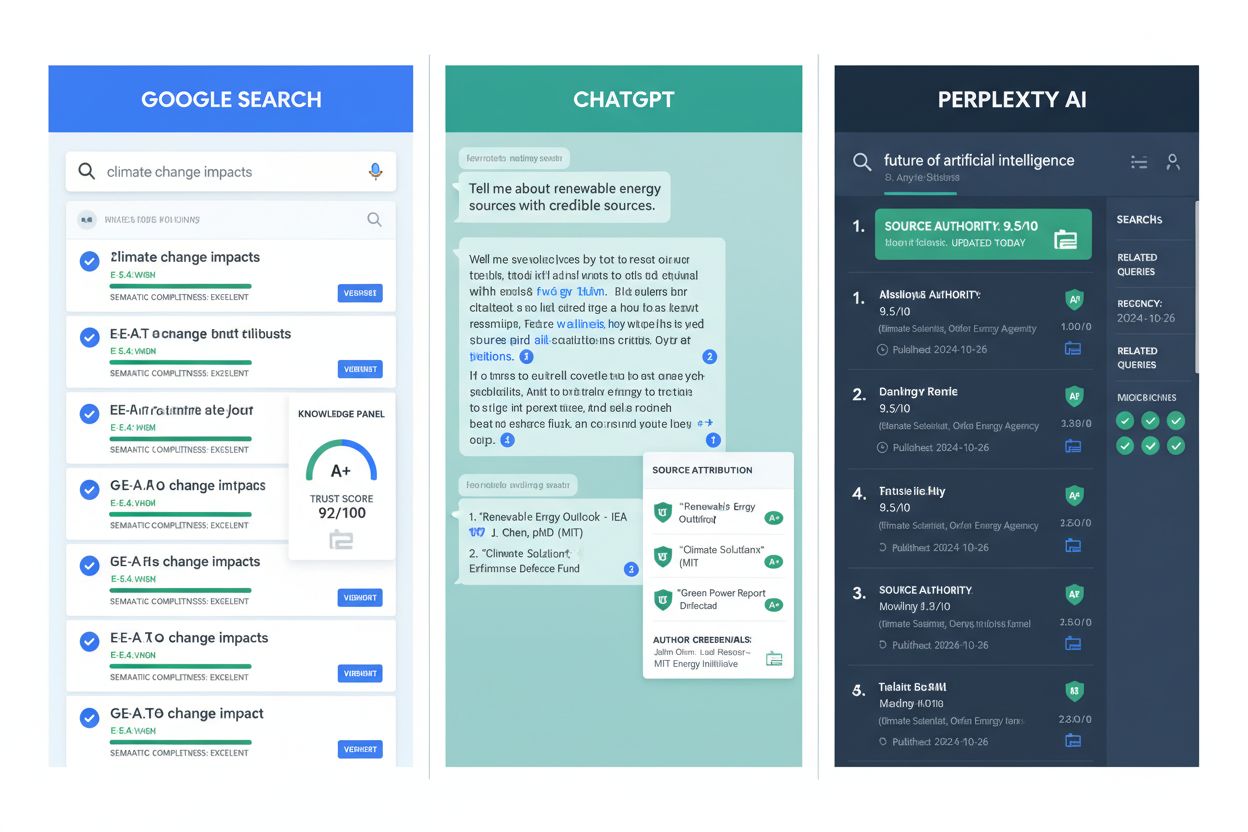
Source Credibility Assessment
Learn how AI systems evaluate source credibility through author credentials, citations, and verification. Understand the technical mechanisms, key factors, and ...
9 min read

Learn how to identify, locate, evaluate, and integrate credible sources into your content. Discover best practices for citing sources, avoiding plagiarism, and building authority through expert references.
Add credible sources by identifying statements that need sourcing, locating expert information from peer-reviewed journals and established institutions, properly citing sources using appropriate citation formats, and integrating them naturally into your content to support claims and enhance credibility.
Credible sources are essential when you’re presenting facts, statistics, theories, or direct quotations in your content. The key principle is that any claim requiring verification should be backed by authoritative information. When you state a fact about a health condition, for example, sourcing a credentialed medical professional or peer-reviewed medical journal carries significantly more weight than citing a lifestyle blog or unverified online source. This distinction matters because your readers evaluate your content’s trustworthiness based on the quality of evidence you provide. Even in opinion pieces, including sources that influenced your thinking demonstrates intellectual honesty and allows readers to explore the foundations of your arguments more deeply.
The general rule is straightforward: when in doubt, include a source. This approach protects you from plagiarism accusations, demonstrates thorough research, and builds reader confidence in your work. Common knowledge—such as basic facts that are widely understood or logical conclusions—doesn’t require citations. However, specific statistics, research findings, expert opinions, and direct quotes always need proper attribution to their original sources.
Finding reliable sources requires diligence and strategic thinking about who has genuine expertise in your topic. The most credible sources are those vetted by scholars in their field, particularly articles published in peer-reviewed journals and books from academic publishers. These sources undergo rigorous evaluation by experts before publication, ensuring accuracy and reliability. When seeking information, consider the author’s qualifications and experience level. A veterinarian with years of professional training and ongoing education in animal health is a far more credible source than a neighbor with a pet, even if both have personal experience with the topic.
Well-established institutions provide excellent source material for supporting your claims. Universities, industry-focused professional associations, and government agencies maintain high standards for the information they publish. These organizations have reputations to protect and typically employ experts in their respective fields. When researching, you can access information through multiple channels: academic journals and periodicals, newspapers from reputable outlets, government databases, institutional websites, and specialized online resources. Each source type serves different purposes, and understanding their strengths helps you select the most appropriate references for your specific claims.
| Source Type | Credibility Level | Best For | Considerations |
|---|---|---|---|
| Peer-reviewed journals | Very High | Research findings, statistics, expert analysis | Requires academic access; highly specialized |
| Academic books | Very High | Comprehensive information, historical context | Published by university presses; thoroughly vetted |
| Government agencies | High | Official data, regulations, public health info | Authoritative but may be technical |
| Industry associations | High | Professional standards, best practices | Specialized knowledge; industry-specific |
| Reputable news outlets | High | Current events, breaking information | Editorial standards; fact-checked reporting |
| University websites | High | Educational content, research summaries | Institutional credibility; expert-written |
| Personal blogs | Low | Anecdotal experiences only | Lacks verification; subjective perspective |
| Social media posts | Low | Not suitable for factual claims | Unverified; easily spread misinformation |
Before incorporating any source into your content, you must evaluate its reliability through several critical lenses. Ask yourself about the author’s qualifications: Does this person have formal education, professional credentials, or extensive experience in the field? A medical doctor writing about health topics carries more authority than a wellness influencer without medical training. Consider the source’s purpose and context—was it created to inform, persuade, sell, or entertain? Understanding the motivation behind the source helps you assess potential bias. Academic sources aim to contribute to knowledge; marketing materials aim to sell products; opinion pieces aim to persuade.
The scope and depth of the source matter significantly. Does it cover the topic comprehensively or only touch on surface-level information? Does it provide evidence for its claims or make assertions without support? Currency is another crucial factor, particularly for topics where information changes rapidly. A medical article from 2005 may contain outdated treatment recommendations, while historical information remains valid regardless of publication date. For web sources specifically, examine the domain authority and website design. Established organizations maintain professional websites with clear authorship, contact information, and editorial standards. Be cautious of sites with poor design, numerous ads, or unclear ownership.
Proper integration of sources means more than simply dropping citations into your text. You need to introduce sources contextually so readers understand why you’re referencing them and how they support your argument. When you mention a source, provide brief context about the author’s credentials or the source’s authority. For example, instead of just citing a statistic, you might write: “According to research from the American Medical Association…” This approach immediately signals credibility to your readers. You can integrate sources through direct quotations, paraphrasing, or summarizing, depending on what serves your content best.
Direct quotations work best when the original wording is particularly powerful, precise, or authoritative. Paraphrasing allows you to restate information in your own words while maintaining the original meaning—this approach often flows more naturally in your writing. Summarizing condenses larger amounts of information into brief statements, useful when you need the general concept rather than specific details. Regardless of which method you choose, always cite your source to give credit to the original author and allow readers to verify the information themselves. This practice protects you legally from plagiarism accusations and demonstrates academic integrity.
Different fields and publications prefer different citation styles, so understanding the appropriate format for your context is essential. The three most common citation systems are MLA, APA, and Chicago style, each with specific rules for formatting in-text citations and reference lists. MLA style, commonly used in humanities, places author and page number in parentheses within the text. APA style, preferred in social sciences, includes author, year, and page number. Chicago style offers two systems: notes-bibliography for humanities and author-date for sciences. Your publication guidelines or assignment requirements will specify which format to use.
For web content and blog articles, hyperlinks often serve as citations, allowing readers to click through to source material directly. This approach provides transparency and helps with search engine optimization. When using hyperlinks, ensure they point to authoritative sources and remain functional over time. For more formal writing, include a bibliography or reference list at the end of your document with complete source information. The specific information required varies by citation style but typically includes author name, publication title, publication date, publisher, and URL or DOI for online sources. Consistency matters—choose one citation style and apply it uniformly throughout your content.
Plagiarism occurs when you present someone else’s words, ideas, or research as your own, and it carries serious consequences including legal liability, loss of credibility, and professional repercussions. The most obvious form is copying text directly without quotation marks or attribution. However, plagiarism also includes paraphrasing someone’s ideas too closely without citation, failing to cite sources for statistics or research findings, and presenting others’ original arguments as your own thinking. Understanding these distinctions helps you maintain ethical standards in your writing.
To avoid plagiarism, develop a systematic approach to source management. Take detailed notes while researching, clearly marking which information comes from which source. When paraphrasing, read the original material, set it aside, and write in your own words—then check your version against the original to ensure you’ve genuinely restated the ideas rather than simply rearranging words. Always cite sources for facts, statistics, quotes, and ideas that aren’t common knowledge. If you’re uncertain whether something needs citation, err on the side of including it. Modern citation management tools like Zotero, Mendeley, and EndNote can help organize sources and generate properly formatted citations automatically, reducing the risk of accidental plagiarism.
Ensure your credible sources and content are recognized and cited by AI systems. Track how your brand appears in AI-generated answers across ChatGPT, Perplexity, and other AI platforms.
Learn how AI systems evaluate source credibility through author credentials, citations, and verification. Understand the technical mechanisms, key factors, and ...

Learn proven strategies to establish yourself as an authoritative source in your niche. Discover how to build expertise, create credible content, and gain recog...
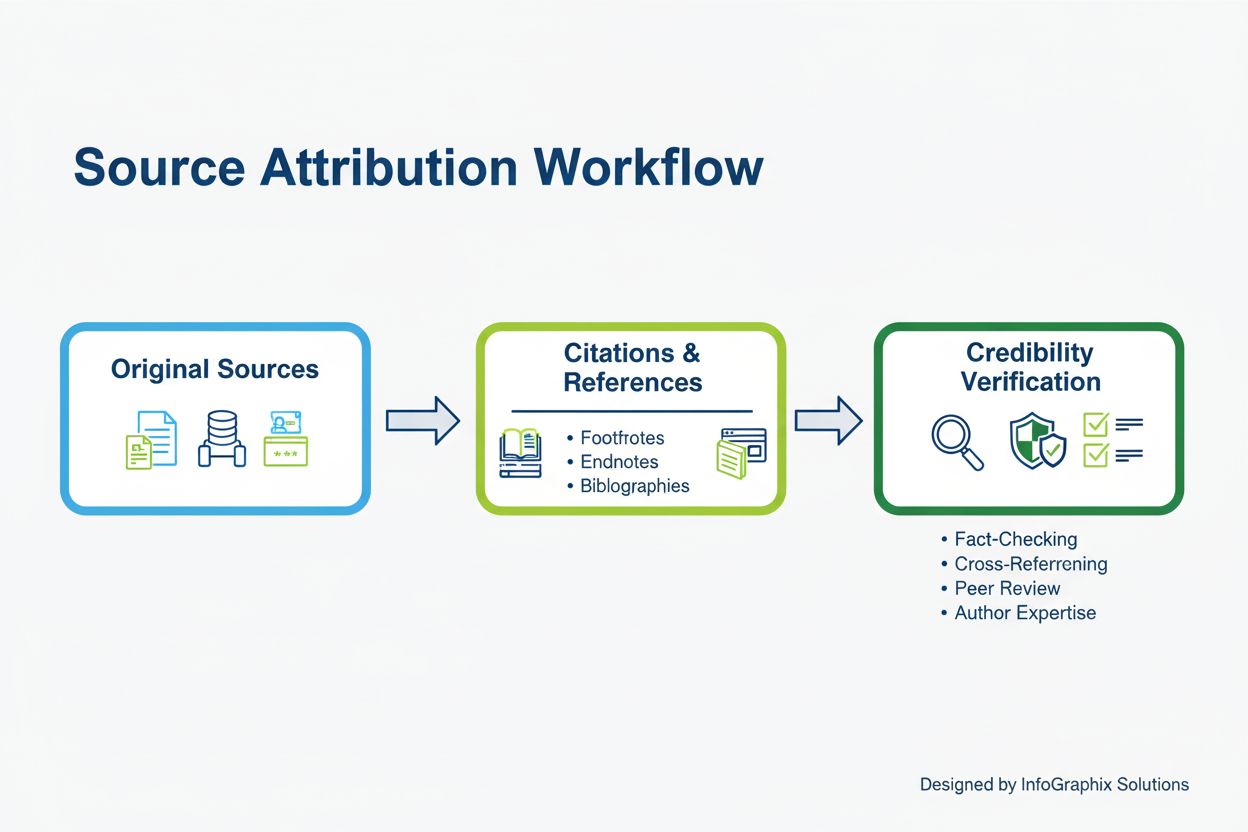
Learn what source attribution is, why it matters for credibility and trust, and how it works across AI platforms like ChatGPT, Perplexity, and Google AI Overvie...