
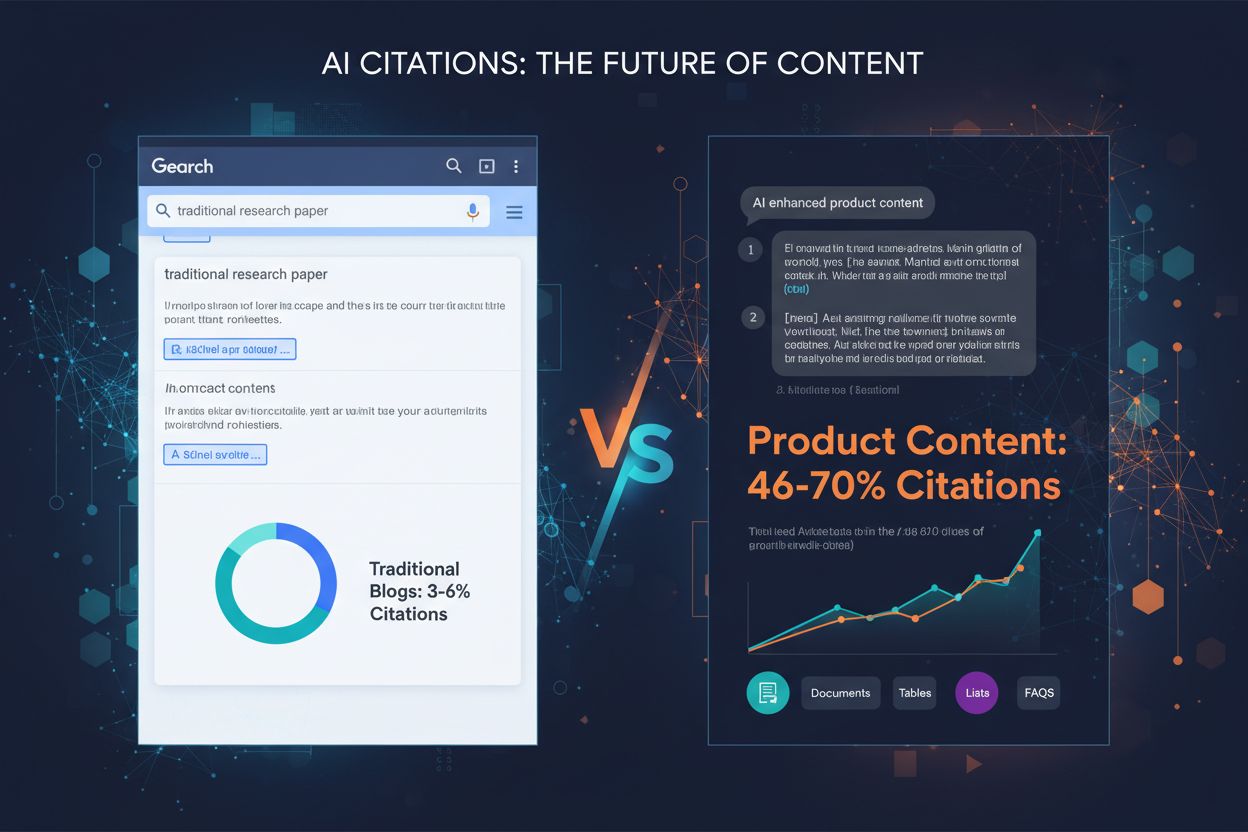
Which Content Formats Get More AI Citations? Data Analysis
Discover which content formats get cited most by AI models. Analyze data from 768,000+ AI citations to optimize your content strategy for ChatGPT, Perplexity, a...
10 min read

Learn how to use statistics and data-backed insights to improve your brand’s visibility in AI search engines like ChatGPT, Perplexity, and Google Gemini. Discover proven strategies to increase AI citations.
Add statistics to improve AI citations by incorporating quantifiable data, research findings, and original metrics into your content. AI models prioritize data-backed insights because they're easier to verify and cite. Use structured data markup, create comparison tables, publish original research, and ensure your statistics are recent and well-sourced to increase citation likelihood across ChatGPT, Perplexity, and other AI answer engines.
Statistics and quantifiable data have become critical factors in determining whether AI models cite your content. When AI systems like ChatGPT, Perplexity, and Google Gemini generate answers, they prioritize sources that provide concrete, measurable information over vague claims. Research shows that AI platforms cite content that is 25.7% fresher than traditional search results, and this freshness often correlates with updated statistics and recent data points. The reason is straightforward: AI models are engineered to extract meaning, detect reliable sources, and synthesize content across multiple domains to generate contextually accurate answers. When your content includes specific numbers, percentages, and research findings, it becomes significantly easier for these systems to verify, understand, and ultimately cite your work.
The shift toward data-driven content represents a fundamental change in how AI evaluates trustworthiness. Unlike traditional search engines that rely heavily on backlinks and keyword density, AI systems use semantic analysis to understand whether your statistics are credible and relevant. This means that simply adding random numbers to your content won’t improve citations—the data must be accurate, well-sourced, and directly relevant to the questions your audience is asking. When you provide original research, industry benchmarks, or proprietary data, you’re giving AI systems exactly what they need to confidently reference your content as an authoritative source.
AI systems evaluate statistical content through multiple layers of verification and context analysis. When an AI model encounters your content, it doesn’t just read the numbers—it analyzes the source of those statistics, checks whether similar data appears across other reputable websites, and determines whether the information aligns with established facts in its training data. This cross-verification process means that statistics appearing consistently across multiple authoritative sources are more likely to be cited than isolated claims. If your data appears only on your website and nowhere else, AI models may struggle to confirm its reliability, even if the information is accurate.
The most effective approach involves creating statistics that are inherently citable because they fill information gaps or provide unique insights. Consider the difference between stating “customer satisfaction is important” versus publishing actual survey data showing “78% of customers prioritize response time over price.” The second example is immediately useful to AI systems because it’s specific, measurable, and can be directly quoted or paraphrased in responses. AI models also evaluate whether your statistics are presented in structured formats like tables, lists, or clearly labeled data points, which makes extraction and citation significantly easier.
| Factor | Impact on AI Citations | Implementation Strategy |
|---|---|---|
| Data Freshness | High - AI favors recent statistics | Update statistics quarterly and add publication dates |
| Source Transparency | High - Clear attribution increases trust | Cite original research and link to data sources |
| Structured Format | High - Tables and lists are easier to cite | Use schema markup and organized data presentation |
| Cross-Platform Validation | Medium-High - Consistency across sources matters | Publish statistics on multiple authoritative platforms |
| Original Research | Very High - Unique data stands out | Conduct surveys, studies, or proprietary analysis |
| Numerical Specificity | High - Precise numbers are more citable | Avoid rounded figures; use exact percentages and metrics |
Original research is one of the most effective ways to increase AI citations because it provides information that other websites cannot easily duplicate. When you conduct proprietary surveys, publish industry benchmarks, or release original data analysis, you’re creating content that AI systems will naturally reference because it’s the primary source. This approach works particularly well for companies that have access to unique datasets—whether that’s customer behavior data, transaction information, or industry-specific metrics that competitors don’t have.
The process of creating citable statistics begins with identifying gaps in your industry’s knowledge base. What questions do your customers ask that don’t have clear answers? What metrics would help professionals in your field make better decisions? Once you’ve identified these gaps, you can design research to fill them. This might involve conducting customer surveys, analyzing your own operational data, or partnering with industry organizations to publish joint research. The key is ensuring that your research methodology is transparent and your findings are presented in a way that makes them easy for AI systems to understand and cite.
When publishing original research, structure your findings to maximize AI discoverability. Use clear headings that describe what the data shows, present statistics in tables or bullet-point formats, and always include context about your research methodology. For example, instead of simply stating “productivity increased by 34%,” explain that this finding comes from a survey of 500 enterprise customers conducted over six months, with a 95% confidence level. This additional context helps AI systems verify the credibility of your statistics and increases the likelihood they’ll be cited in responses to relevant queries.
Optimizing statistics for AI visibility requires a different approach than traditional SEO because AI systems prioritize clarity, structure, and verifiability over keyword optimization. The first step is ensuring that your statistics are presented in formats that AI can easily parse and understand. This means using structured data markup like Schema.org to label your statistics, creating comparison tables that clearly show numerical relationships, and using consistent formatting throughout your content.
Schema markup is particularly important because it tells AI systems exactly what information you’re presenting and how it should be interpreted. When you mark up a statistic with proper schema, you’re essentially providing a translation guide that helps AI models understand not just the number itself, but its context, source, and relevance. For example, using the DataSet schema to describe a research finding makes it significantly easier for AI systems to extract and cite that information accurately. Similarly, using Table schema for comparison data helps AI models understand the relationships between different data points.
Beyond technical markup, the presentation of your statistics matters enormously. AI systems favor content that uses clear subheadings, bullet points, and short paragraphs to organize information. When you present statistics in this format, you’re making it easier for AI to identify, extract, and cite specific data points. Instead of burying statistics in long paragraphs, create dedicated sections that highlight key findings. Use formatting like bold text to emphasize important numbers, and always provide context about what the statistic means and why it matters.
Authority in the AI era is built through consistent, data-backed insights that demonstrate expertise and trustworthiness. When you regularly publish content supported by statistics, research, and original data, you establish yourself as a reliable source that AI systems can confidently cite. This authority building is cumulative—each piece of well-researched, statistic-supported content adds to your overall credibility in your industry.
The most effective approach involves creating content hubs around specific topics, with each piece of content supported by relevant statistics and data. For example, if you’re in the marketing technology space, you might create a comprehensive guide about email marketing ROI, supported by industry benchmarks, case studies with specific metrics, and original research about how different companies use email marketing. Each piece of content in this hub reinforces the others, and together they establish you as an authoritative source on the topic.
Building authority also requires ensuring that your statistics are consistent across all your content. If you cite different numbers for the same metric in different articles, AI systems will flag this inconsistency and reduce their trust in your content. Maintain a central repository of your key statistics and ensure that all your content references the same verified data. This consistency signals to AI systems that you’re a reliable source that has done the work to verify and validate your claims.
The visibility of your statistics increases dramatically when they appear across multiple authoritative platforms, not just your own website. AI systems use cross-platform validation as a trust signal—when the same statistic appears on your website, in industry publications, and in reputable news outlets, AI models become more confident that the information is accurate and worth citing. This distribution strategy is particularly important for original research, which should be published not just on your own site but also through press releases, industry publications, and partner websites.
When distributing statistics, focus on platforms that AI systems trust most. For B2B content, this includes industry-specific publications, LinkedIn articles, and professional directories. For B2C content, mainstream media outlets, consumer review sites, and popular blogs carry significant weight. The goal is to create multiple touchpoints where AI systems encounter your statistics, each reinforcing the credibility of the data. This approach also increases the likelihood that when AI systems cite your statistics, they’ll reference the most authoritative version of the information.
Guest posting is an effective distribution strategy that serves dual purposes: it gets your statistics in front of new audiences and it creates additional sources that AI systems can use to verify your data. When you publish an article containing your statistics on a respected industry publication, you’re essentially creating a second source that validates your original research. This makes it significantly more likely that AI systems will cite your statistics in their responses.
Tracking whether your statistics are being cited by AI systems requires a combination of manual monitoring and strategic testing. While there’s no single tool that automatically shows all your AI citations across platforms, you can establish a baseline by regularly testing the questions your audience asks and reviewing the AI-generated responses. Create a simple tracking system with columns for the date, platform tested, question asked, whether your content was cited, and which competitors appeared in the response.
The most effective tracking approach involves identifying the key questions your target audience asks and monitoring how AI systems answer them over time. If you’ve published statistics about a specific topic, search for related questions on ChatGPT, Perplexity, Google Gemini, and Google’s AI Overviews. Document whether your content appears in the responses and note any patterns. For example, you might discover that your statistics are cited when questions are phrased a certain way, or that they appear more frequently in responses from one AI platform than another.
Pay particular attention to how your statistics are being used in AI responses. Are they being quoted directly, paraphrased, or used as supporting evidence for broader claims? Understanding how AI systems use your data helps you optimize future statistics for maximum citation potential. If you notice that certain types of statistics are cited more frequently, focus on creating more content in that format. If your statistics are being paraphrased rather than directly quoted, consider whether your presentation could be clearer or more concise.
The most citable statistics share several key characteristics that make them attractive to AI systems. First, they must be recent and regularly updated. AI systems prioritize fresh information, so statistics from five years ago are significantly less likely to be cited than current data. Establish a schedule for reviewing and updating your key statistics, and always include publication dates so AI systems can assess the freshness of your data.
Second, statistics must be specific and precise rather than rounded or approximate. Instead of saying “approximately 50% of customers,” provide the exact figure: “47.3% of surveyed customers.” This specificity signals to AI systems that you’ve done careful research and verification. It also makes your statistics more useful for AI-generated responses because they can be quoted with confidence.
Third, always provide context and methodology for your statistics. Explain how the data was collected, what sample size was used, what time period it covers, and any limitations or caveats. This transparency helps AI systems verify the credibility of your statistics and increases their confidence in citing them. For example, instead of simply stating a statistic, provide a brief explanation: “In our 2024 survey of 1,200 enterprise customers, 68% reported that integration capabilities were their primary selection criterion for new software vendors.”
Finally, ensure that your statistics directly answer questions your audience is asking. The most citable statistics are those that provide clear, actionable answers to specific questions. If your audience wants to know about ROI, provide statistics about return on investment. If they’re concerned about implementation time, share data about deployment timelines. This alignment between audience questions and your statistics dramatically increases the likelihood of AI citations.
Track how often your brand appears in AI-generated answers across ChatGPT, Perplexity, and Google Gemini. Get actionable insights to improve your visibility in AI search results.
Discover which content formats get cited most by AI models. Analyze data from 768,000+ AI citations to optimize your content strategy for ChatGPT, Perplexity, a...

Learn the optimal content depth, structure, and detail requirements for getting cited by ChatGPT, Perplexity, and Google AI. Discover what makes content citatio...
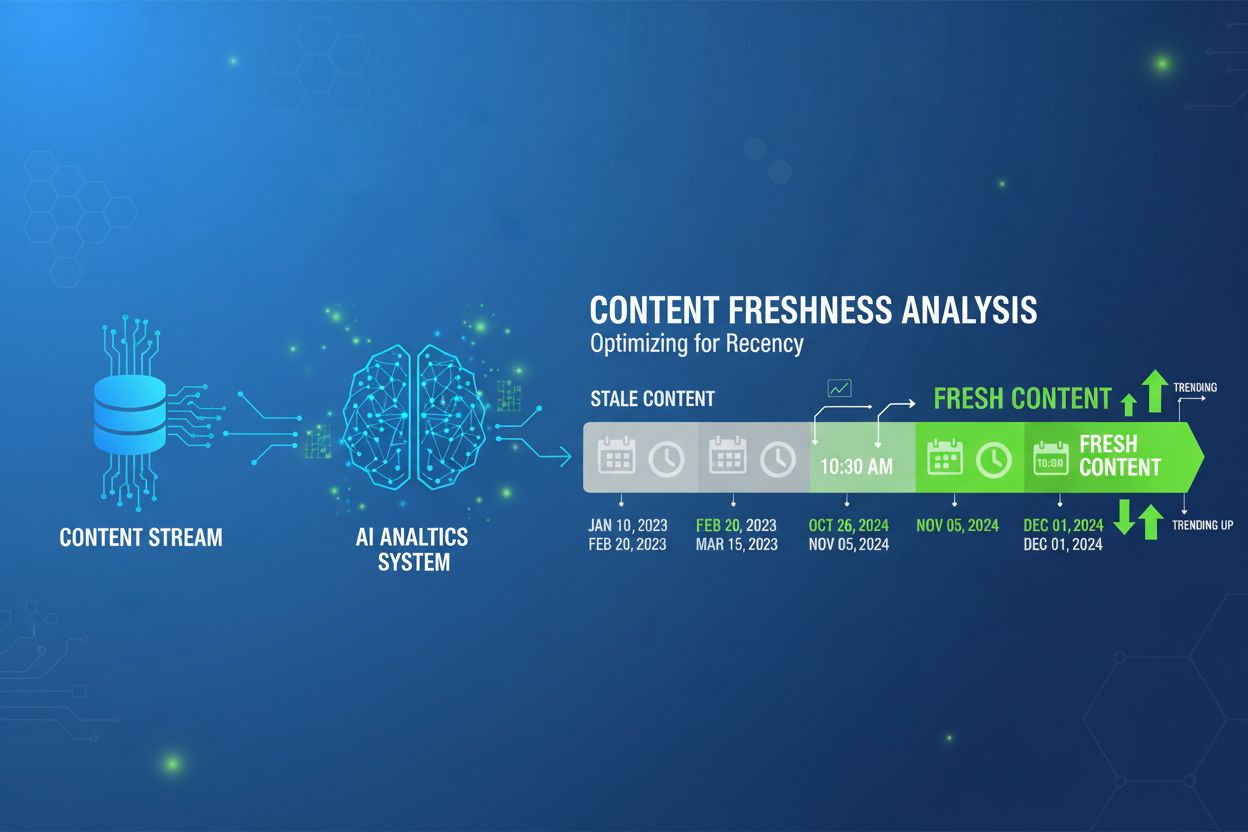
Learn when and how to update your content for AI visibility. Discover freshness signals that help ChatGPT, Perplexity, and Google AI Overviews cite your brand.