
AI-Powered GEO: Using AI to Optimize for AI
Learn how AI-powered tools optimize content for AI search engines like ChatGPT, Perplexity, and Google AI Overviews. Discover automated GEO strategies and measu...
12 min read

Learn how to align SEO and GEO teams for maximum visibility across traditional and AI search. Discover organizational structures, shared metrics, and unified strategies for competing in both search landscapes.
Align SEO and GEO teams by reframing strategy around user behavior rather than platforms, building unified content ecosystems, establishing shared metrics beyond traditional rankings, implementing strategic schema markup, and applying core SEO fundamentals to AI search optimization. This requires breaking down organizational silos and creating hybrid roles that bridge traditional search optimization with generative engine optimization.
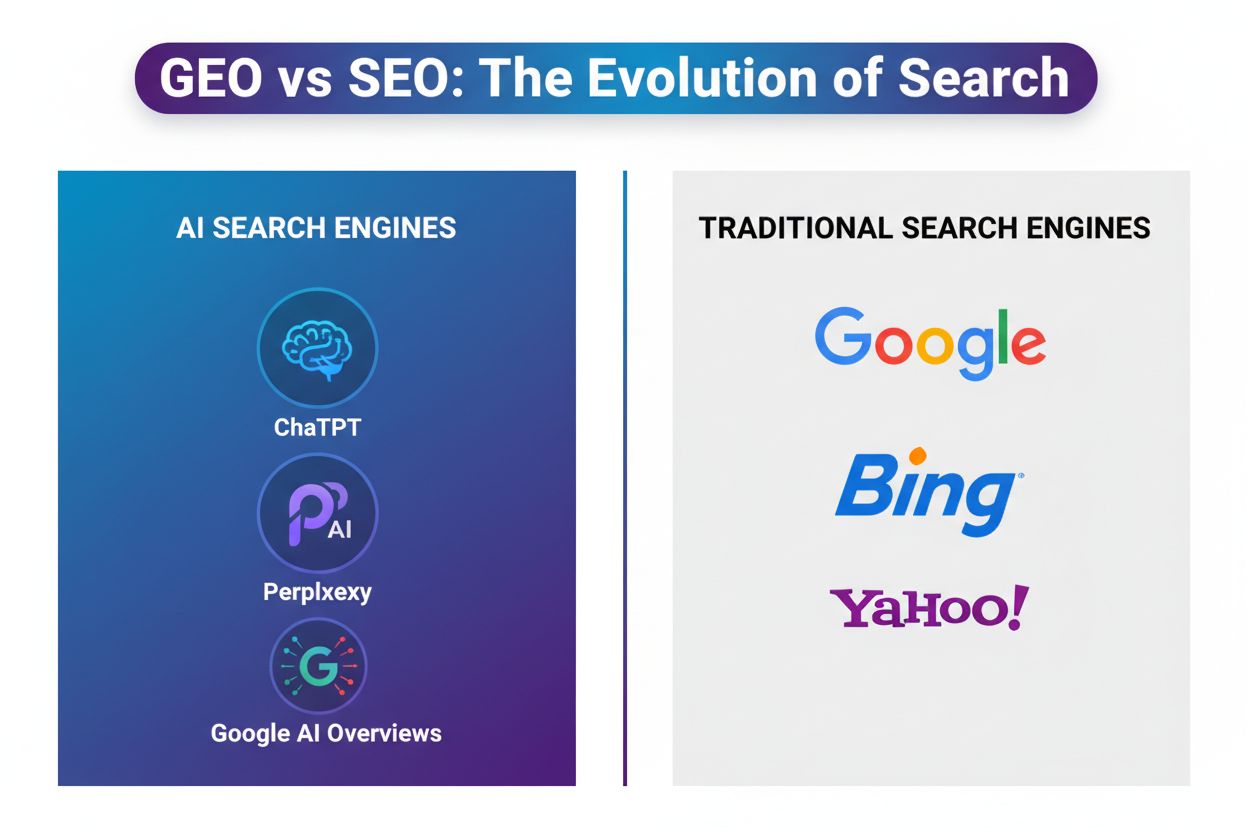
The digital search landscape is undergoing a seismic transformation that requires organizations to fundamentally rethink how they structure their teams and measure success. Search Engine Optimization (SEO) has traditionally focused on optimizing websites for traditional search engines like Google and Bing, where success was measured primarily through rankings and click-through rates. Generative Engine Optimization (GEO), by contrast, targets the emerging ecosystem of AI-powered platforms including ChatGPT, Perplexity, Claude, and AI Overviews within Google itself. The critical insight that separates successful organizations from those struggling with this transition is recognizing that these are not separate challenges requiring separate teams—they are interconnected strategies that must be unified around a single principle: user behavior, not platforms.
The traditional approach of building isolated teams for each channel has become obsolete. When users search for information, they no longer distinguish between Google, ChatGPT, or Perplexity. They simply want answers, regardless of where those answers come from. This behavioral reality demands that your SEO and GEO teams operate with complete alignment, shared goals, and integrated workflows. The organizations winning in today’s fragmented search landscape are those that have stopped asking “How do we optimize for ChatGPT versus Google?” and started asking “What content do our users need, regardless of where they search?” This reframe changes everything about team structure, content strategy, and success metrics.
The first and most critical step in aligning SEO and GEO teams is eliminating the structural silos that keep them operating independently. Many organizations still maintain separate teams with different reporting structures, budgets, and KPIs. This fragmentation creates inefficiencies, duplicated efforts, and conflicting priorities. Instead, forward-thinking companies are creating unified organizational structures where SEO and GEO professionals work together from the beginning, not as afterthoughts to each other’s strategies.
The most effective approach involves establishing a single leadership position—often titled Head of Generative Engine Optimization or Head of Organic Growth—that oversees both traditional SEO and GEO initiatives. This leader reports directly to the Chief Marketing Officer or Head of Growth, ensuring that search visibility strategy is treated as a core business function rather than a tactical channel. Beneath this leadership, teams should be organized by function rather than by platform. Instead of having a “Google SEO team” and a “ChatGPT optimization team,” structure teams around core competencies: Relevance Engineering, Content Optimization, Technical Infrastructure, Analytics and Measurement, and Brand Authority Building. Each of these functions contributes to visibility across all search platforms simultaneously.
| Team Function | Primary Responsibility | Impact on SEO | Impact on GEO |
|---|---|---|---|
| Relevance Engineering | Building semantic content architecture and optimizing for AI retrieval | Improves keyword rankings and content clarity | Ensures content is structured for LLM understanding and citation |
| Content Optimization | Creating and refining content for user intent | Drives organic traffic through targeted keywords | Increases likelihood of AI synthesis and citation |
| Technical Infrastructure | Managing site speed, crawlability, and indexing | Ensures Google can crawl and index efficiently | Enables AI bots to discover and process content |
| Analytics & Measurement | Tracking performance across platforms | Monitors rankings, traffic, and conversions | Tracks citations, bot activity, and AI visibility |
| Brand Authority | Building backlinks and brand signals | Improves domain authority and rankings | Increases likelihood of being cited as authoritative source |
This functional organization ensures that every team member understands how their work contributes to visibility across all search platforms. A content optimizer working on a product page isn’t just thinking about keyword rankings—they’re simultaneously optimizing for semantic understanding by AI systems. A technical specialist implementing structured data isn’t just helping Google understand the page—they’re providing the contextual information that AI systems need to confidently cite the content.
One of the biggest obstacles to team alignment is the mismatch between traditional SEO metrics and GEO metrics. SEO teams have historically measured success through rankings, organic traffic, and conversions. These metrics made sense in a world where users clicked through to websites. However, in an AI-driven search environment, these traditional metrics become incomplete or even misleading. When users get their answers directly from ChatGPT or Perplexity without visiting your website, traditional traffic metrics don’t capture the value you’re providing.
Successful organizations are expanding their measurement frameworks to include new performance indicators that matter in the AI era. Rather than abandoning traditional metrics, they’re layering new ones on top. Bot crawl frequency from ChatGPT, Perplexity, and other AI platforms indicates whether your content is resonating with AI systems. Citation tracking reveals where and how your brand appears in AI responses, including the context and sentiment of those mentions. Impression-to-engagement ratios measure how visibility translates to meaningful interactions beyond simple page views. Sentiment analysis from LLM outputs shows whether AI systems represent your brand positively, neutrally, or negatively.
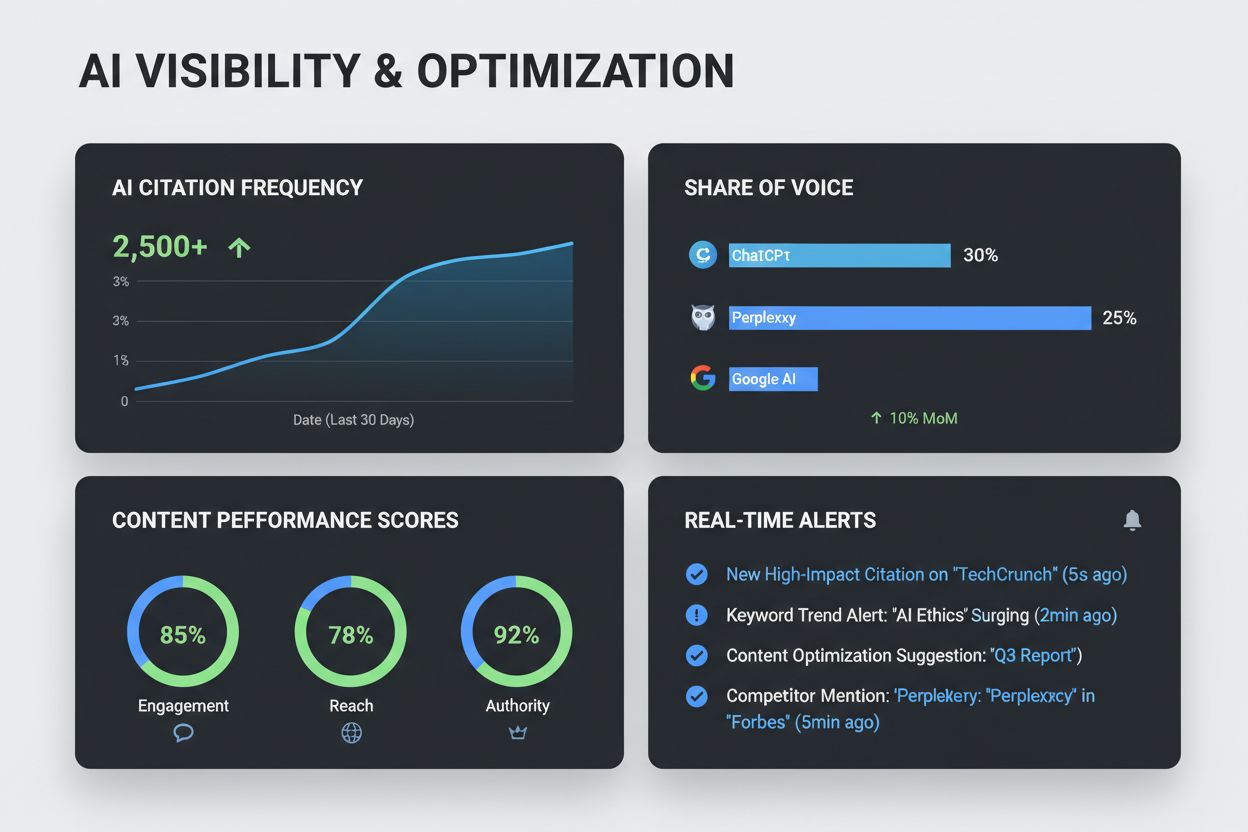
The key to alignment is establishing these metrics at the organizational level and making them visible to both SEO and GEO teams. When both teams are measured against the same KPIs—including traditional metrics like conversions alongside new metrics like AI citation count—they naturally begin to collaborate rather than compete. A unified dashboard showing performance across all search platforms creates accountability and encourages cross-functional problem-solving. If citations are declining while rankings remain stable, the team can investigate whether the issue is content structure, brand authority, or changes in how AI systems are sourcing information.
The most significant operational change required for team alignment is moving from creating isolated content pieces to building interconnected content ecosystems. Traditional SEO often resulted in siloed content: a blog post targeting one keyword, a product page targeting another, with minimal connection between them. This approach fails in the AI era because AI systems need to understand how different pieces of content relate to each other and support a coherent knowledge structure.
Unified content strategy requires creating cornerstone content—substantial, authoritative pieces that serve as destinations—supported by complementary assets across all channels. For example, a comprehensive guide on “sustainable business practices” becomes the cornerstone. Supporting this are blog posts on specific aspects, social media content highlighting key points, FAQ pages addressing common questions, and video content explaining concepts visually. When AI systems encounter this ecosystem, they can synthesize information from multiple sources while understanding the relationships between them. This interconnected approach increases the likelihood that your brand becomes the primary source cited in AI responses.
The alignment challenge here is ensuring that content teams, SEO specialists, and GEO specialists collaborate on content planning rather than working independently. A content calendar should explicitly map how different pieces support each other and contribute to overall visibility across platforms. When a blog post is created, the team should simultaneously consider: How does this support our cornerstone content? What semantic relationships should we establish? How should this be structured for AI systems to easily extract and cite? What complementary content should we create? This integrated thinking prevents the creation of redundant or conflicting content and ensures maximum impact across all search platforms.
Structured data has always been important for SEO, but it becomes absolutely critical for GEO alignment. Generic article markup is insufficient for AI systems. They need deep, contextual structured data to understand what your content truly represents and why it’s authoritative. This is where SEO and GEO teams must work together most closely, because the schema implementation strategy must serve both traditional search and AI systems simultaneously.
Strategic schema markup goes far beyond simply adding JSON-LD to your pages. It requires thoughtful implementation that reflects the depth and complexity of your actual content. For healthcare content, this might mean implementing schema that specifies the credentials of the author, the date the content was medically reviewed, and the specific conditions or treatments discussed. For eCommerce, it means providing detailed product information including availability, pricing, reviews, and specifications in a structured format. For financial services, it means clearly marking disclaimers, regulatory information, and the qualifications of advisors.
The alignment between SEO and GEO teams happens when both understand that schema serves a dual purpose: it helps traditional search engines display rich results, and it helps AI systems understand context and make confident citation decisions. When an AI system encounters well-implemented schema, it can confidently cite your content because the structured data provides verification of claims and context. A Relevance Engineer and an SEO specialist should work together to map schema requirements for each content type, ensuring that implementation is consistent, accurate, and comprehensive. Regular validation of schema markup catches errors before they confuse AI crawlers and reduce citation likelihood.
A critical insight for team alignment is recognizing that core SEO fundamentals remain valid in the AI era. The myth that “SEO is dead” resurfaces with every major algorithm shift, but it’s wrong again. Keywords still matter. Quality content still matters. Authority still matters. The difference is that these fundamentals now extend beyond traditional search to encompass AI search as well. This realization is what allows SEO professionals to transition into GEO roles without abandoning their expertise—they’re applying proven principles to a new platform.
Keyword tracking remains essential because if you rank on page one of Google for a target keyword, you’re significantly more likely to be cited in LLMs and AI Overviews. The strategy hasn’t changed; it’s simply extended. SEO professionals are uniquely positioned to lead this transition because they understand how to work with ambiguity, collaborate across teams, and interpret imperfect data—exactly what organizations need right now. The core responsibility remains identical: educating search systems about what your content represents and why it matters. Whether you’re optimizing for Google’s algorithm or ChatGPT’s retrieval system, the fundamental job is the same.
This alignment principle means that SEO teams shouldn’t be asked to abandon their expertise or their metrics. Instead, they should be asked to expand their thinking. A keyword ranking strategy that worked for Google also creates the foundation for AI visibility. Content that ranks well for a query is content that AI systems are likely to retrieve and cite. Technical SEO improvements that help Google crawl your site also help AI bots discover and process your content. By framing GEO as an extension of SEO rather than a replacement, organizations can leverage existing expertise while building new capabilities.
The alignment of SEO and GEO teams requires creating new roles that bridge traditional and generative search expertise. Organizations can’t simply rename their SEO specialists as “GEO specialists” and expect success. New skills are required, but they build on existing SEO foundations. The most critical new role is the Relevance Engineer, who combines traditional technical SEO knowledge with understanding of how AI systems process and retrieve information. This person understands semantic search, natural language processing, vector embeddings, and how to structure content for machine comprehension while maintaining human readability.
A Retrieval Analyst specializes in understanding how AI systems select, synthesize, and cite information. They analyze why competitors’ content gets cited over yours, track passage-level performance across AI platforms, and translate findings into optimization strategies. An AI Strategist leads the overall plan for how a brand shows up across the entire AI ecosystem, connecting business goals with technical execution. These roles don’t replace traditional SEO specialists; they complement them. A Content Optimization Specialist still focuses on semantic markup and entity optimization, but now with explicit consideration for how AI systems will parse and understand the content.
The skill development required for team alignment includes Natural Language Processing (NLP) understanding, Python for data analysis and automation, prompt engineering, vector embeddings and semantic search, and data science fundamentals. Not every team member needs all these skills, but the team collectively should have depth in each area. Organizations should invest in training existing SEO professionals in these new areas rather than exclusively hiring externally. An experienced SEO specialist with five years of Google algorithm knowledge can learn NLP concepts and vector embeddings more quickly than a junior data scientist can learn SEO strategy. This approach preserves institutional knowledge while building new capabilities.
Practical alignment requires establishing shared communication channels and workflows that prevent SEO and GEO teams from operating in isolation. Weekly cross-functional meetings where both teams review performance data, discuss optimization opportunities, and align on priorities are essential. These meetings should include representatives from content, technical, analytics, and brand authority teams to ensure holistic decision-making. When a decline in AI citations is detected, the entire team should investigate together rather than each team assuming it’s someone else’s problem.
Shared documentation and knowledge bases prevent duplication of effort and ensure that learnings from one team benefit the other. When a Relevance Engineer discovers that a particular content structure significantly improves AI retrieval, that finding should be documented and applied across all content creation. When an SEO specialist identifies a keyword opportunity with high search volume, the GEO team should simultaneously evaluate its potential for AI visibility. Shared project management tools that track initiatives across both SEO and GEO ensure that priorities are aligned and resources are allocated efficiently.
The most successful organizations establish a unified content calendar that maps how different pieces of content support each other and contribute to visibility across all platforms. Rather than separate calendars for blog posts, product pages, and social content, a unified calendar shows how these pieces interconnect and support overall strategy. This prevents the creation of conflicting content and ensures that every piece of content is optimized for maximum impact across all search platforms. Regular retrospectives where the team analyzes what worked and what didn’t—across both traditional and AI search—create a continuous improvement cycle that benefits both functions.
The ultimate measure of SEO and GEO team alignment is the creation of an integrated performance dashboard that shows how both functions contribute to overall business objectives. This dashboard should display traditional SEO metrics like rankings and organic traffic alongside new GEO metrics like citation count and bot activity. It should show how content performs across different search platforms and how changes in one area affect performance in others. When leadership can see that a content optimization initiative simultaneously improved rankings, increased organic traffic, and boosted AI citations, the value of alignment becomes undeniable.
The dashboard should also highlight the relationships between metrics. When rankings improve but citations don’t, it signals that the content might be ranking for the right keywords but isn’t structured in a way that AI systems prefer to cite. When citations increase but traffic doesn’t, it suggests that AI systems are using your content but not linking to it, which might indicate a need for stronger brand authority signals. These insights can only emerge when SEO and GEO teams are looking at data together and asking questions collaboratively.
Success in aligning SEO and GEO teams ultimately means creating an organization where search visibility strategy is unified, where teams collaborate rather than compete, and where every decision is made with consideration for how it affects visibility across all platforms where customers search. This alignment doesn’t happen overnight, but organizations that commit to breaking down silos, establishing shared metrics, and building integrated workflows will find themselves far ahead of competitors still operating with fragmented search strategies.
Track how your brand appears in ChatGPT, Perplexity, and other AI answer engines. Get real-time insights into your AI search visibility and optimize your presence where customers are finding answers.
Learn how AI-powered tools optimize content for AI search engines like ChatGPT, Perplexity, and Google AI Overviews. Discover automated GEO strategies and measu...

Learn how to effectively balance SEO and GEO efforts to maximize visibility in both traditional search results and AI-generated answers. Discover unified strate...
Understand the critical differences between Generative Engine Optimization (GEO) and traditional SEO. Learn how to optimize for AI search engines like ChatGPT, ...