
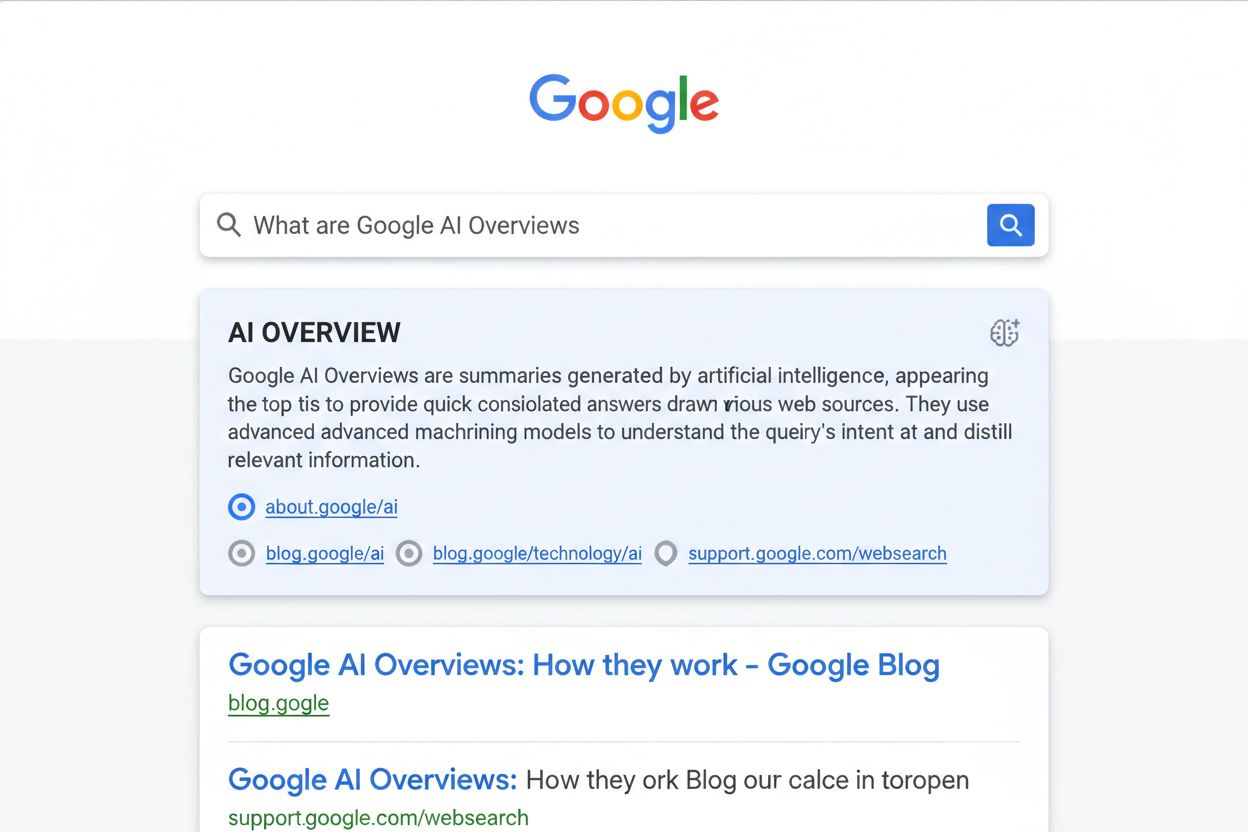
Google AI Overviews: The Complete Optimization Guide
Master Google AI Overviews optimization in 2025. Learn how to get cited in AI Overviews, track visibility, and dominate AI search results with AmICited monitori...
6 min read

Learn how to optimize your website to appear in Google AI Overviews. Discover ranking factors, technical requirements, and proven strategies to increase visibility in AI-powered search results.
To appear in Google AI Overviews, focus on creating unique, high-quality content that ranks well in traditional Google Search. Ensure your pages meet technical requirements, provide excellent user experience, use structured data, and target informational keywords with clear search intent. There are no special optimizations required beyond standard SEO best practices.
Google AI Overviews represent a fundamental shift in how search results are presented to users. These AI-generated summaries appear at the top of search results, providing users with comprehensive answers to their queries before they click through to individual websites. Unlike traditional search results that display a list of blue links, AI Overviews synthesize information from multiple sources to create a cohesive answer, making them a critical visibility opportunity for modern websites. The feature uses advanced language models including PaLM2, MUM, and Gemini to understand user intent and generate relevant responses that help people find information more efficiently.
The introduction of AI Overviews has fundamentally changed the search landscape. Rather than simply ranking on the first page of Google, websites now need to optimize for inclusion within these AI-generated summaries. This represents a new frontier in search engine optimization, where appearing in an AI Overview can drive higher-quality traffic than traditional organic rankings. Users who click from AI Overviews tend to spend more time on websites and engage more deeply with content, indicating that these visitors are more qualified and intentional in their search behavior.
The most important principle to understand about appearing in Google AI Overviews is that there are no special requirements beyond standard SEO best practices. Google explicitly states that the same foundational SEO principles that help websites rank in traditional search results also apply to AI Overviews. This means that if your website already performs well in Google Search, you’re already positioned to appear in AI Overviews. The core ranking systems that power traditional search—including the Helpful Content System, Link Analysis Systems, Spam Detection Systems, and Reviews System—directly influence which websites Google’s AI models reference when generating overview responses.
Your website must first meet Google’s technical requirements for search, which include ensuring that Googlebot can crawl your pages, your site returns HTTP 200 status codes, and your content is indexable. Beyond these technical foundations, focus on creating unique, non-commodity content that visitors will find helpful and satisfying. This people-first approach to content creation is the cornerstone of visibility in both traditional search and AI Overviews. Websites that invest in original research, unique perspectives, and comprehensive information are far more likely to be selected as sources for AI-generated summaries.
Research into Google’s AI Overviews has identified seven primary factors that influence which websites appear in these summaries. Understanding these factors helps you strategically optimize your content for maximum visibility in AI-powered search results.
| Ranking Factor | Impact Level | Confirmation Status | Key Consideration |
|---|---|---|---|
| AI Models (PaLM2, MUM, Gemini) | High | Confirmed | Multiple LLMs power AI Overviews for different use cases |
| Core Ranking Systems | High | Confirmed | Traditional SEO factors directly influence AI Overview inclusion |
| Databases (Knowledge Graph, Shopping Graph) | Medium | Confirmed | Structured data and merchant information matter significantly |
| Topic & YMYL Sensitivity | Medium | Confirmed | Sensitive topics face stricter scrutiny for accuracy |
| Search Intent Matching | High | Confirmed | Content must align with what users are actually searching for |
| Multimedia Content | Low | Likely | Images and videos enhance AI Overview presentations |
| Structured Data | Medium | Likely | Schema markup helps AI models understand your content |
Content quality and relevance form the bedrock of AI Overview visibility. When creating content for AI Overviews, focus on answering the complete user question comprehensively. AI Overviews often appear for complex, multi-faceted queries where users are seeking detailed information. Your content should address not just the primary question but also related subtopics and follow-up questions that users might naturally ask. For example, if someone searches for “how to choose a roof,” your content should cover roofing materials, their characteristics, durability, cost considerations, and maintenance requirements—essentially creating a complete guide that anticipates the user’s entire information journey.
Readability and clarity significantly impact your chances of appearing in AI Overviews. Research shows that simplifying language and using an 8th to 11th-grade reading level improves visibility in AI-generated results. This doesn’t mean dumbing down your content; rather, it means explaining complex concepts in accessible language that both humans and AI models can easily understand. Break information into clear sections with descriptive headings, use short paragraphs, and define technical terms when you first introduce them. The easier your content is to understand, the more likely AI models are to reference it when generating summaries.
Authority and credibility are paramount, especially for sensitive topics. Research demonstrates that adding citations, quotes from reputable sources, and data points can increase AI Overview visibility by 65-132%. When you cite trusted sources, back up claims with statistics, and demonstrate expertise through authoritative language, you signal to AI models that your content is reliable and worthy of inclusion. This is particularly important for YMYL (Your Money or Your Life) topics like healthcare, finance, legal matters, and government information, where Google applies stricter scrutiny to ensure accuracy.
Structured data implementation helps AI models better understand your content and offerings. While not explicitly required, structured data provides explicit clues about page meaning that both search engines and AI models use to contextualize information. Implement relevant schema markup such as Product markup for e-commerce sites, LocalBusiness markup for service providers, Organization markup to establish business credibility, and FAQ markup for question-and-answer content. This structured information helps AI models more accurately represent your content in generated summaries and increases the likelihood of inclusion.
Page experience remains critical for AI Overview visibility. Ensure your website loads quickly, displays properly on mobile devices, and provides an intuitive user experience. Users who click from AI Overviews to your website should immediately find the information they’re seeking without navigating through cluttered layouts or intrusive ads. Google’s Core Web Vitals—measuring loading speed, interactivity, and visual stability—continue to influence rankings in both traditional search and AI Overviews. A fast, mobile-friendly website with clear content hierarchy signals quality to both search algorithms and AI models.
Crawlability and indexability must be verified and maintained. Ensure that Googlebot isn’t blocked by robots.txt files, CDN settings, or hosting infrastructure. Your website should return proper HTTP status codes, have a clean site architecture with logical internal linking, and include a valid XML sitemap. These technical foundations allow Google to discover, crawl, and index your content, which is a prerequisite for inclusion in AI Overviews.
Informational keywords are more likely to trigger AI Overviews than transactional or navigational queries. Focus your content strategy on questions and topics where users are seeking knowledge and understanding rather than trying to make a purchase or find a specific brand. Queries like “how to,” “what is,” “why,” and “best practices” are prime candidates for AI Overview inclusion. These queries often have higher search volume and represent users at the top of the information funnel who are exploring topics and gathering knowledge.
Long-tail and specific keywords perform better in AI Overviews than broad, generic terms. Rather than targeting “shoes,” target “best running shoes for flat feet” or “how to choose hiking boots for different terrains.” These specific queries indicate clear user intent and allow you to create comprehensive content that directly addresses what users are searching for. AI Overviews are designed to handle complex, multi-part questions, so your content should anticipate and answer the nuanced variations of user queries.
Search intent alignment is crucial for visibility. Analyze existing AI Overviews for your target keywords to understand what information Google’s AI models are prioritizing. Look at which sources are cited, what information is highlighted, and what jumping-off points are provided. Then create content that comprehensively covers these topics while adding unique value through original research, expert insights, or different perspectives. Your content should serve as a natural source for AI models to reference when generating summaries.
Images and videos enhance your chances of appearing in AI Overviews, particularly as Google’s AI models become increasingly multimodal. When relevant to your content, include high-quality images that illustrate concepts, show products, or demonstrate processes. Host videos on YouTube rather than just embedding them, as YouTube videos appear more frequently in AI Overviews than embedded videos. Ensure all images have descriptive alt text that helps AI models understand visual content, and optimize images for fast loading by compressing file sizes without sacrificing quality.
Visual search intent represents an often-overlooked opportunity. Many users searching for topics like “types of garage doors,” “roofing materials,” or “kitchen cabinet styles” are looking for visual examples. By including relevant, high-quality images in your content, you increase the likelihood of appearing in AI Overviews that incorporate visual elements. This is particularly important as AI models become more sophisticated at understanding and generating multimodal responses that combine text, images, and video.
Preview controls allow you to manage how your content appears in AI Overviews. Use meta tags like nosnippet, data-nosnippet, max-snippet, or noindex to control content visibility. If you want to limit how much of your content appears in AI Overviews while still allowing traditional search visibility, use max-snippet to specify character limits. For sensitive content that shouldn’t appear in AI summaries, use nosnippet. These controls give you granular management over your content’s presentation in AI-powered search results.
Monitoring and measurement are essential for understanding your AI Overview performance. Use Google Search Console to track how your content performs in search results, including AI Overviews. Look for changes in click-through rates and user engagement metrics. Note that clicks from AI Overviews tend to be higher quality, with users spending more time on pages and engaging more deeply with content. Rather than focusing solely on click volume, evaluate the overall value these visits bring to your business through conversions, engagement, and customer acquisition.
E-E-A-T signals (Experience, Expertise, Authoritativeness, Trustworthiness) are particularly important for sensitive topics. Demonstrate your expertise through author bios that establish credentials, include quotes and citations from recognized experts, and build a body of work that establishes your authority in your field. For healthcare topics, cite medical research and expert sources. For financial topics, reference regulatory bodies and established financial institutions. For legal topics, cite relevant laws and legal precedents. These signals help AI models assess content reliability and determine whether to include it in summaries for sensitive queries.
Building a Knowledge Panel for your business or brand can enhance your visibility in AI Overviews. A Knowledge Panel provides AI models with authoritative information about your organization, including your description, contact information, and key facts. To earn a Knowledge Panel, create an entity page (typically your homepage or about page), add organization schema markup, include external links from reputable sources, and earn backlinks from authoritative websites like Wikipedia or industry directories.
Continuous optimization is necessary as AI search continues to evolve. Google regularly updates its AI models and ranking systems, so your optimization strategy should be dynamic rather than static. Monitor changes in how AI Overviews present information for your target keywords, stay informed about Google’s official guidance on AI features, and experiment with different content approaches to see what resonates with AI models. The websites that succeed in AI Overviews will be those that treat this as an ongoing optimization effort rather than a one-time implementation.
Diversifying your visibility across multiple AI platforms is increasingly important. While Google AI Overviews are the most prominent, other AI search engines like Perplexity, ChatGPT, and others are gaining traction. The content strategies that work for Google AI Overviews—high-quality, authoritative, comprehensive information—also work for these other platforms. By focusing on creating genuinely valuable content that serves user needs, you position your website for visibility across the entire AI search landscape.
Track how your brand, domain, and URLs appear across Google AI Overviews, ChatGPT, Perplexity, and other AI answer generators. Get real-time insights into your AI search visibility and stay ahead of competitors.
Master Google AI Overviews optimization in 2025. Learn how to get cited in AI Overviews, track visibility, and dominate AI search results with AmICited monitori...

Learn what Google AI Overviews are, how they work, their impact on search traffic, and how to optimize your content to appear in AI-generated summaries.
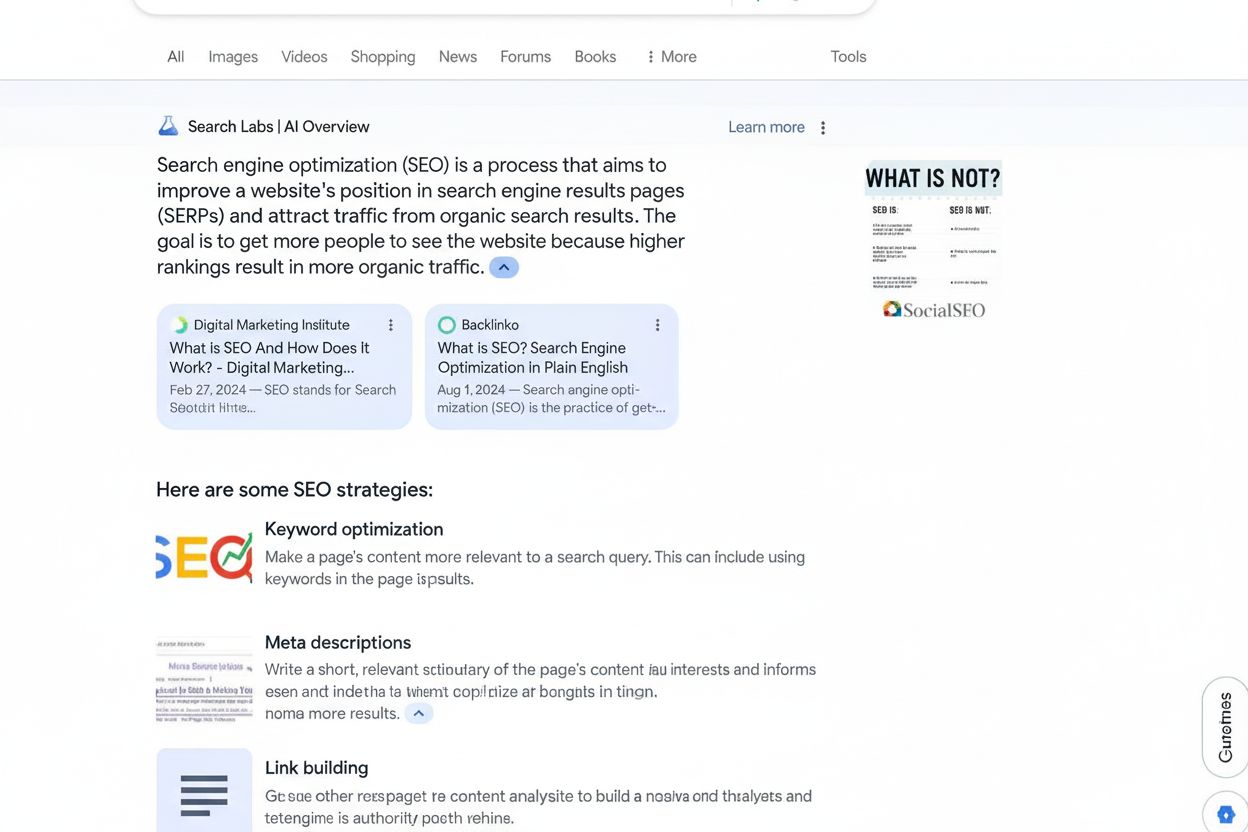
Learn what AI Overviews are, how they impact SEO and organic traffic, and strategies to optimize your content for visibility in Google's AI-generated search sum...